Greenwich Sustainability Committee
COMMUNITY NEWS
Advancing sustainability and climate resiliency
| | |
A Forest the Size of a Tennis Court?
What if you could grow a forest in the space of a singles tennis court?
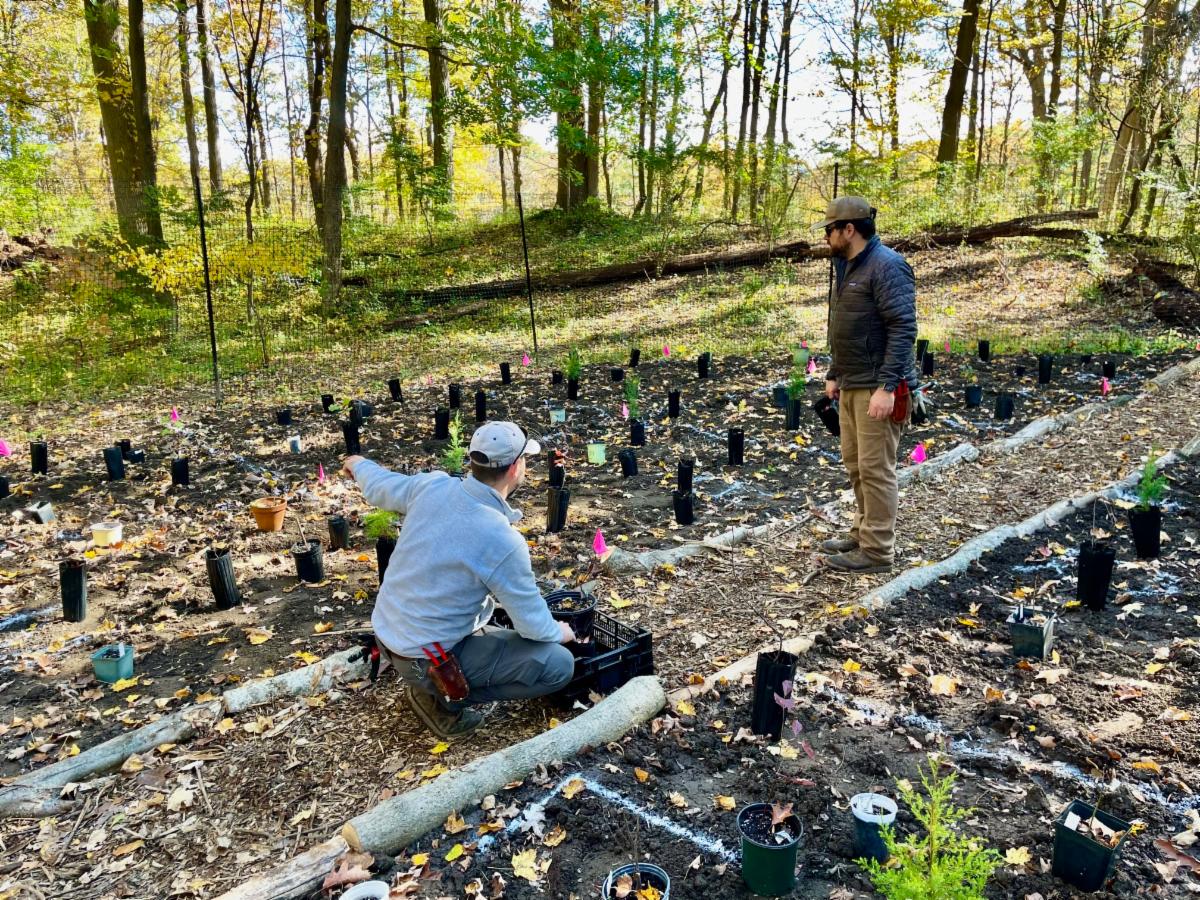
That is the idea behind the Guild Forest, a project of Greenwich Pollinator Pathway in partnership with Greenwich Audubon. In a forest clearing of approximately 2,500 square feet at the Audubon Main Sanctuary, volunteers have planted 766 native trees and shrubs across more than 67 different species.
The project uses an innovative approach to forest restoration developed by Japanese botanist Dr. Akira Miyawaki. Rather than planting trees individually and waiting for a forest to develop through natural succession, the Miyawaki method recreates the structure and diversity of an established native forest in a fraction of the time. By planting a dense, carefully selected mix of native canopy trees, understory trees and shrubs, the forest has the potential to reach climax height in the space of a generation, rather than hundreds of years. Read more here.
| | | |
Corporate Volunteers Plant Native Trees to Launch New Guild Forest Project
When corporate volunteerism meets local ecological innovation, a single day of service can leave a decade-long footprint.
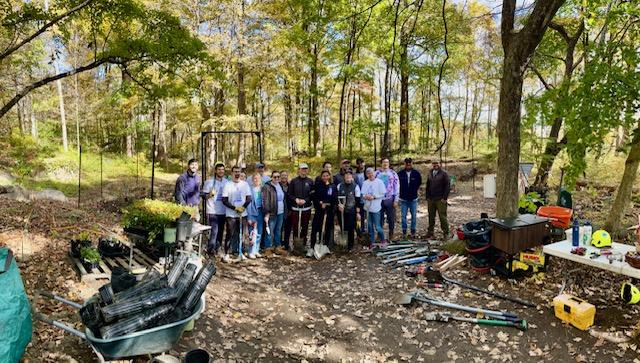
On October 21, employee volunteers from Tarrytown-based Regeneron Pharmaceuticals joined forces with the Greenwich Audubon Center and Greenwich Pollinator Pathway to break ground on a new conservation initiative: the Guild Forest.
The project took place during Regeneron’s 10th annual Day for Doing Good, a global week of service coordinated regionally with Volunteer New York! that mobilizes thousands of employees across more than 120 community organizations.
A Fast-Track Approach to Forest Restoration
Rather than traditional tree planting, the Greenwich Guild Forest uses a dense, multi-layered afforestation technique inspired by the Miyawaki method. Working inside a cleared, invasive-free forest gap on the Greenwich Audubon sanctuary grounds, Regeneron volunteers planted hundreds of native trees and shrubs in a single day.
By clustering native canopy trees, understory plants, and shrubs close together, the method encourages healthy competition and rapid root development. Ecologists expect the plot to grow into a dense, self-sustaining ecosystem by 2030—creating a vital habitat corridor for native birds, pollinators, and local wildlife in a fraction of the time required by conventional reforestation.
The Guild Forest installation serves as a standout model for how regional employers and environmental nonprofits can collaborate on measurable, high-impact sustainability goals:
-
Tangible Ecological ROI: Prior to the planting, Greenwich Audubon staff and student interns cleared invasive porcelain-berry and prepped the soil, ensuring the corporate volunteer hours translated directly into long-term habitat recovery.
-
Data-Driven Monitoring: Project partners plan to use acoustic monitoring to track bird activity over time, measuring the real-world biodiversity return as the canopy matures.
-
Scalable Community Impact: Designed as a replicable blueprint, the site will serve as a model for regenerating forests gaps that would otherwise undermine the health of the larger forest.
| |
Trees Come to Byram
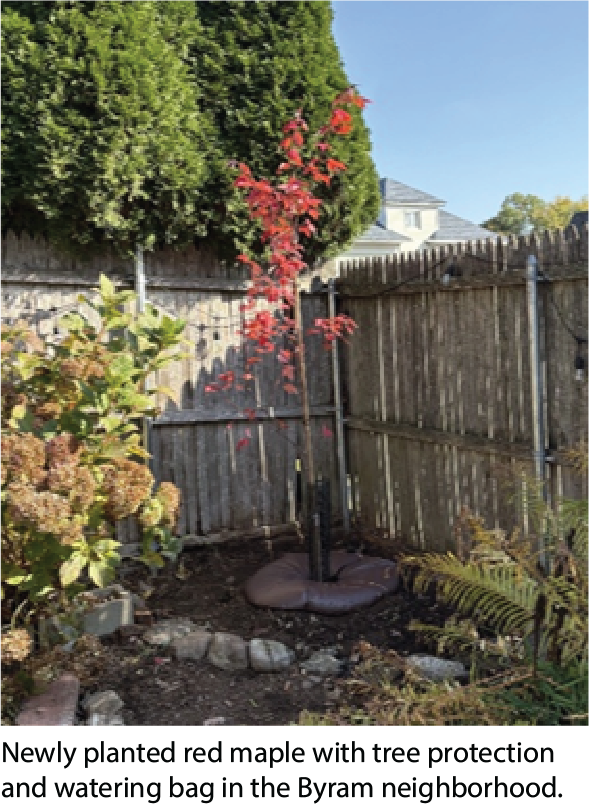
The Greenwich Conservation Department and Greenwich Parks & Recreation’s Byram Branches initiative is growing the neighborhood’s tree canopy through native tree plantings, homeowner education, and community collaboration.
This fall, 37 trees were planted, including trees at 29 homes and six at New Lebanon School, with support from Sam Bridge Nurseries, the Greenwich Tree Conservancy, and the Connecticut Department of Energy and Environmental Protection.
Residents also participated in outreach and educational programs focused on tree care, winter gardening, and future planting locations. Together, these efforts are helping create a greener, healthier, and more climate-resilient Byram.
| |
Fall Feature Food
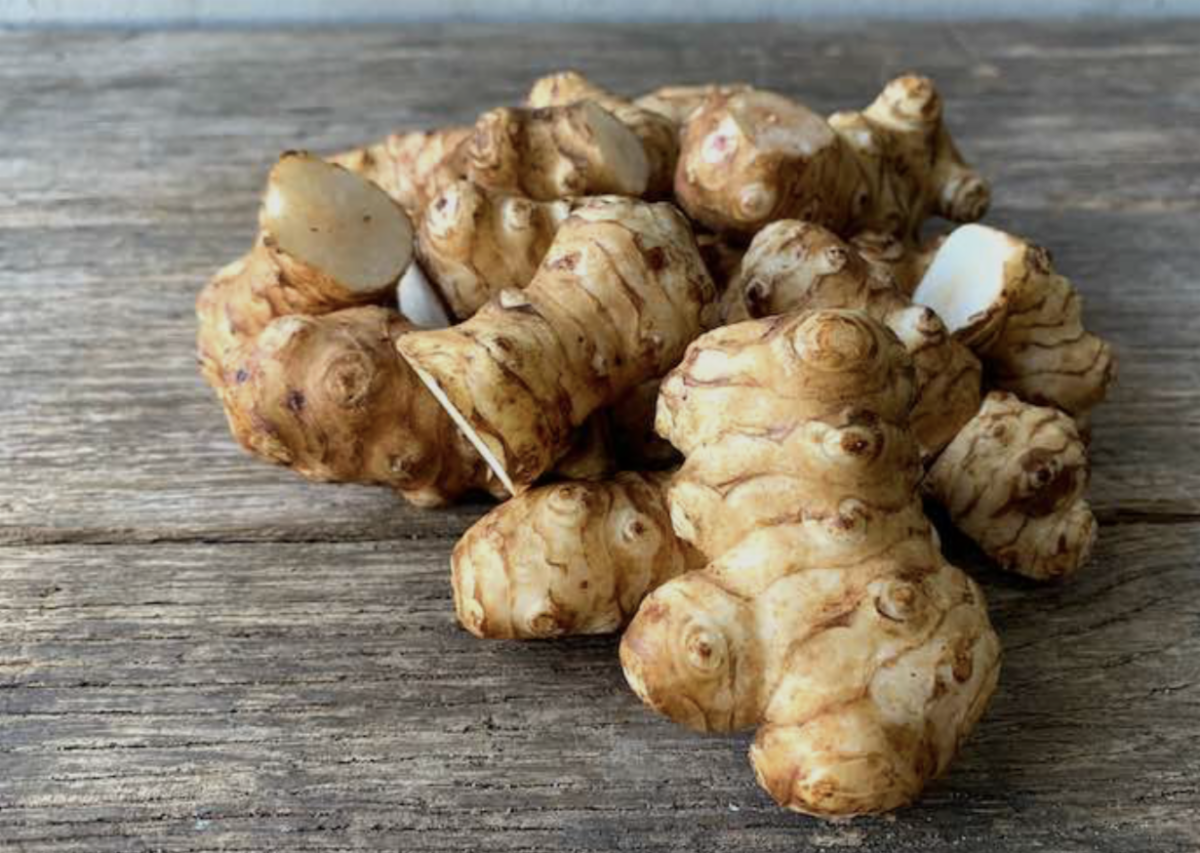
Sunchokes (also known as Jerusalem artichokes), are knobby, potato-like tubers from a native species of perennial sunflower.
They have a crisp, nutty, and slightly sweet flavor when eaten raw (resembling water chestnuts or jicama), and become smooth, creamy, and mild when roasted or mashed.
You can scrub and slice them raw into salads, roast them whole or chopped, boil and mash them like potatoes, or blend them into creamy soups. Or you can try this fabulous Slow-Roasted Sunchokes with Mushrooms recipe for your fall table.
| | |
What Happens When the Leaves Fall?
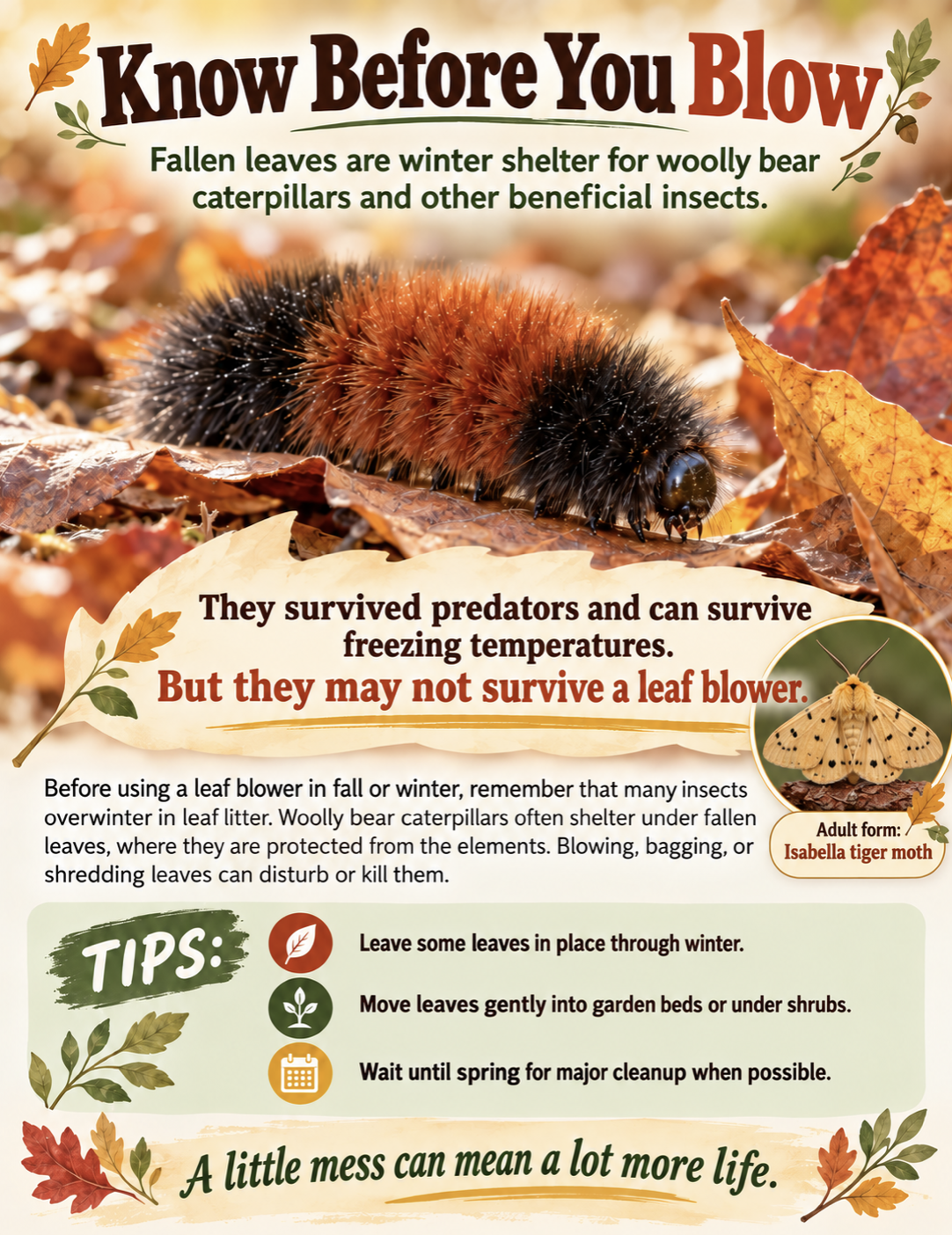
As the trees shed their leaves each autumn, an important natural process begins. What may look like a layer of debris on the ground is actually part of a living system that helps sustain healthy landscapes.
As leaves break down, they return nutrients and organic matter to the soil, help retain moisture, and support the organisms that keep soil healthy. The layer of leaves also provides shelter through the winter for many small creatures, including native bees, butterflies and moths, beetles, spiders, and other insects. These organisms, in turn, are part of the food web that supports birds and other wildlife.
There are several simple ways homeowners can work with this natural process:
-
Leave some leaves under trees and shrubs. These areas provide valuable winter shelter for insects and other small wildlife.
-
Use leaves in garden beds. A layer of leaves can help protect soil and plant roots through the winter.
-
Keep leaves out of streets and storm drains. Leaves that accumulate in drainage systems can contribute to blockages and localized flooding.
-
Wait until spring is well underway before clearing garden beds. Many beneficial insects need the protection of leaf litter until temperatures are consistently warmer.
For more information and practical guidance, see Love ’Em and Leave ’Em, a regional educational initiative that encourages residents and landscapers to make better use of fallen leaves.
| | |
State Grants Available for Nonprofit Infrastructure Improvements
Connecticut is making $19.5 million in state funding available to eligible nonprofit health and human service organizations through its Nonprofit Grant Program.
Grants can support building repairs and renovations, energy-efficiency improvements, health and safety upgrades, accessibility improvements, and technology infrastructure.
For nonprofits, energy-efficiency investments can be particularly valuable, reducing utility costs and freeing up resources for the services they provide to the community.
Application deadline: January 5, 2027, at 4:00 p.m.
Eligibility requirements and application information are available through the Connecticut Nonprofit Grant Program.
| | |
Leading the Charge: Branford Public Schools Launches CT’s First 100% Electric Bus Fleet
Branford is setting the pace for clean student transport.
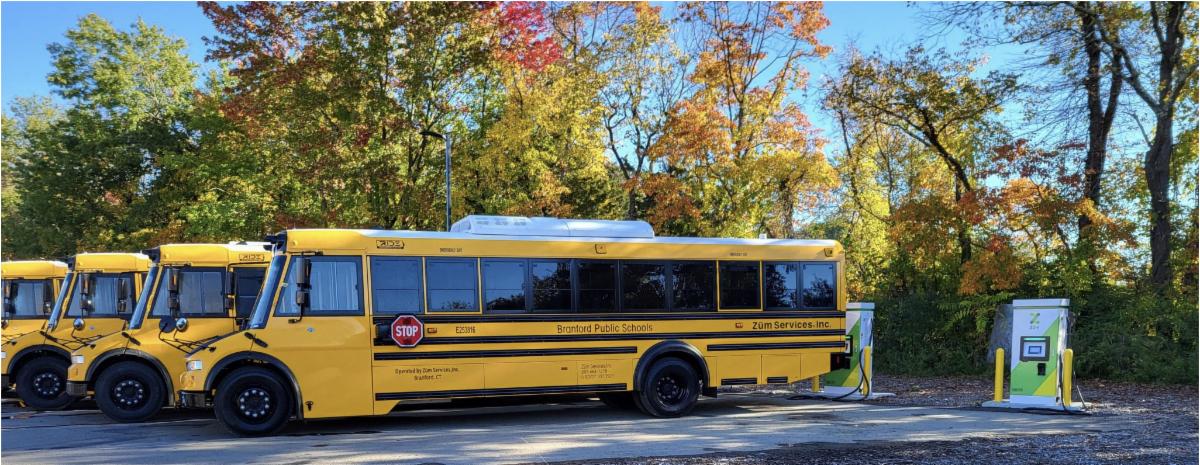
This school year, Branford Public Schools made state history by rolling out Connecticut’s very first fully electric school bus fleet. Through an innovative partnership with student transportation leader Zum, the district has replaced traditional diesel buses with 46 zero-emission electric buses, safely carrying approximately 2,500 students to and from school every day.
More Than Just a Clean Ride
The impact of this transition goes far beyond eliminating tailpipe emissions along neighborhood streets and school drop-off zones. At Zum’s Branford bus yard, 49 Vehicle-to-Grid (V2G) bi-directional chargers have been installed.
When the buses aren't on their daily routes, their batteries act as a massive, clean energy storage resource—capable of sending stored electricity back into the local power grid during times of peak energy demand. This helps stabilize the grid and supports broader community resilience.
Smart Tech for Families
Alongside greener commutes, the new fleet brings modern technology directly to parents and caregivers. Families can use the Zum app for real-time bus tracking and route status updates, offering extra peace of mind during morning and afternoon pickups.
Made Possible Through Strategic Partnerships
Completing this transition ahead of schedule was made possible through a smart blend of federal, state, and local support—minimizing the burden on local taxpayers while maximizing environmental impact:
-
Federal Support: Over $6.3 million from the U.S. EPA’s Clean Heavy-Duty Vehicles Grant Program.
-
State Financing: $11.3 million in combined low-cost capital and grants through the Connecticut Green Bank, alongside backing from the Connecticut Clean School Bus Program.
-
Long-Term Commitment: A 10-year operational partnership with Zum to ensure reliable, modern, and sustainable student transit for years to come.
Help bring this blueprint to Greenwich! Forward this newsletter to a fellow parent, Greenwich Board of Education member or your RTM District rep and share Branford’s success story to spark a conversation about clean student transport. Together, we can encourage local leaders to explore green fleet partnerships that protect our kids' health and lower town emissions.
| | |
Less Waste, More Joy: A Guide to a Greener Holiday
Between Thanksgiving and New Year’s, Americans generate an extra one million tons of trash - a holiday tradition that belongs on the naughty list. Fortunately, Waste Free Greenwich and the Greenwich Conservation Commission have shared easy ways to celebrate sustainably without sacrificing the festive spirit:
-
Entertain mindfully: Plan menus ahead to avoid overbuying, lean into plant-forward dishes, and break out your reusable china instead of single-use tableware. Pack leftovers for guests in reusable containers and compost scraps via Greenwich’s Scraps to Soil food scrap recycling program, a hauling service, or a backyard bin.
-
Decorate naturally: Choose secondhand decor, homemade crafts, or gourds, evergreen clippings and pinecones. Opt for real Christmas trees, which can be recycled into mulch at local parks (Byram, Bruce, Greenwich Point, or Holly Hill) from December 26 through January 31, and switch to energy-saving LED lights, recycling broken strands at Holly Hill.
-
Gift experiences over stuff: Cut clutter by gifting cooking classes, museum memberships, local restaurant or CSA gift cards, homemade treats, or a coupon book of your time. If you buy physical items, focus on quality over quantity by shopping secondhand, supporting local makers, or choosing consumables. Check out our 2026 Gift Guide for more ideas!
-
Wrap and recycle right: Skip non-recyclable foil and glitter papers in favor of reusable bags, tea towels, old maps, or newsprint topped with a sprig of fresh greenery.
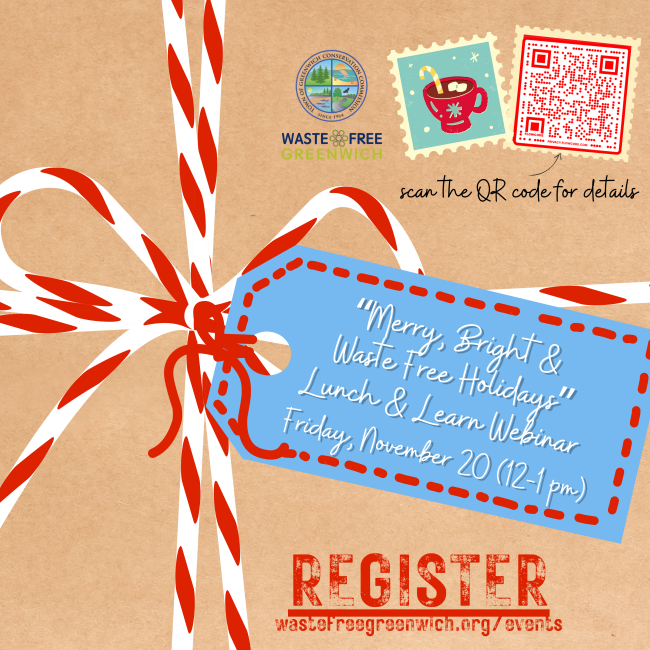
By making just a few intentional swaps this season, you can keep your celebrations merry, bright, and remarkably low-waste. For more tips and ideas, join the Greenwich Conservation Commission and Waste Free Greenwich:
"Merry, Bright, & Waste Free Holidays."
Lunch and Learn Webinar
Friday, November 20
12-1 pm
For details and registration, click here
| | |
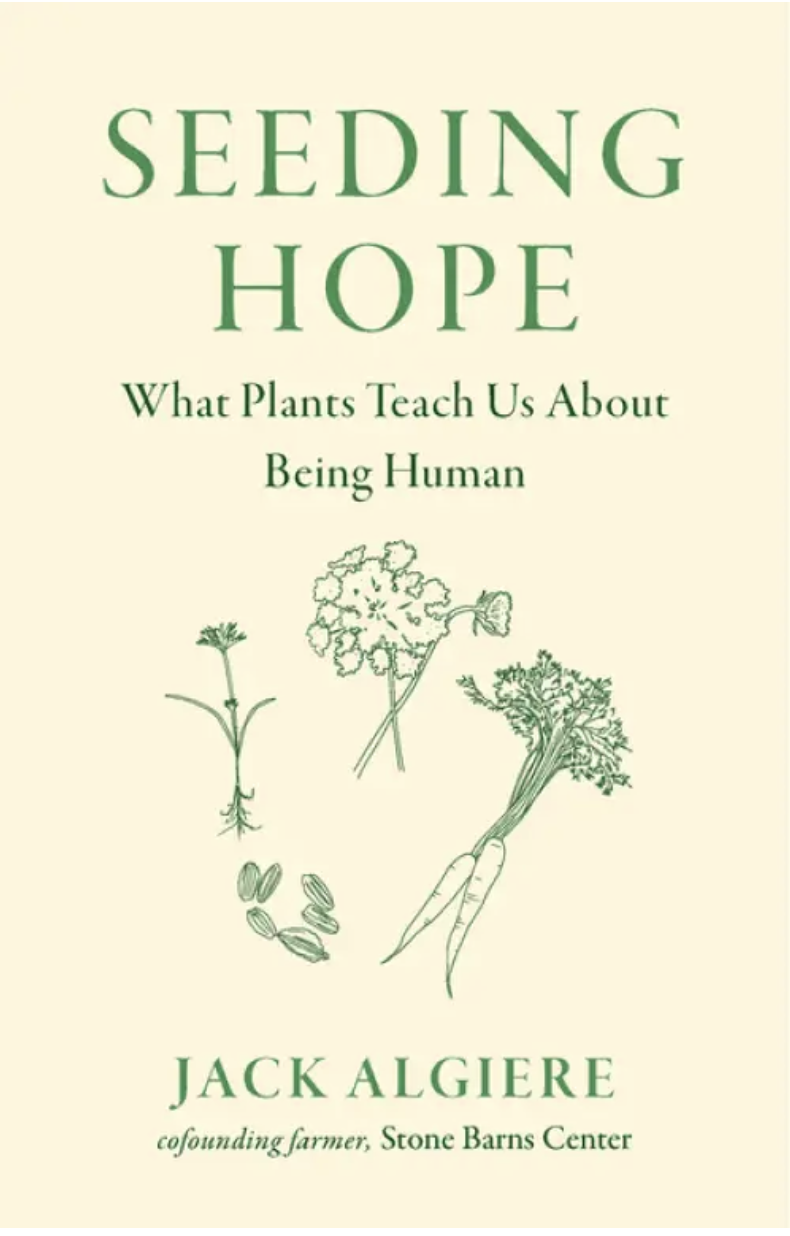
Join author Jack Algiere for a conversation about Seeding Hope
Monday, November 30
7 PM
Perrot Library
Perrot Library in partnership with The Foodshed Forum. The discussion will explore hopeful, community-centered approaches to food, farming, and a more sustainable future.
Register HERE
| | Your feedback is valuable to sustainability! | | | | |