Free To Teach = Liberated To Learn

November/December 2026

What's New This Month(s)

Final Two Mini-Reflective Courses


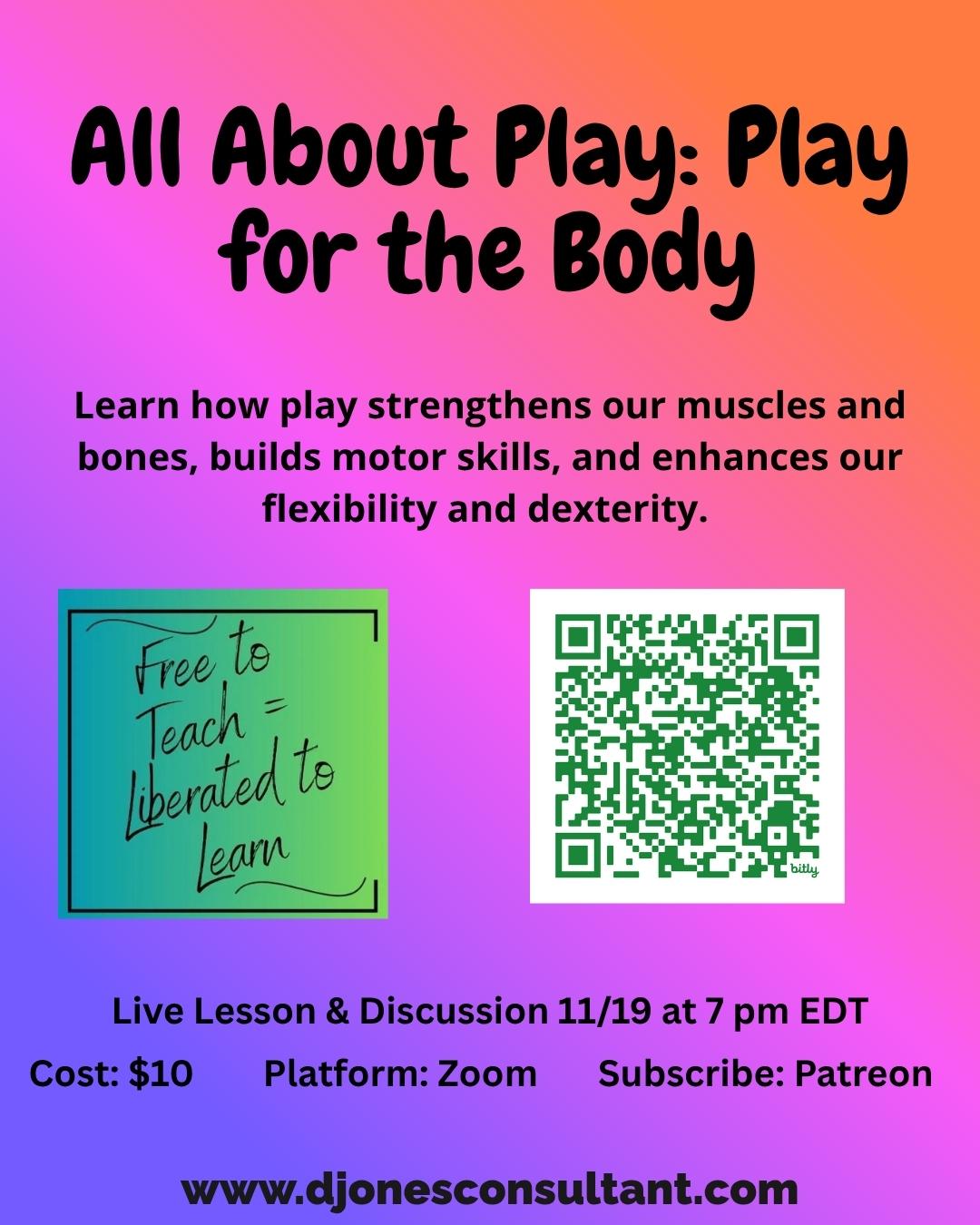
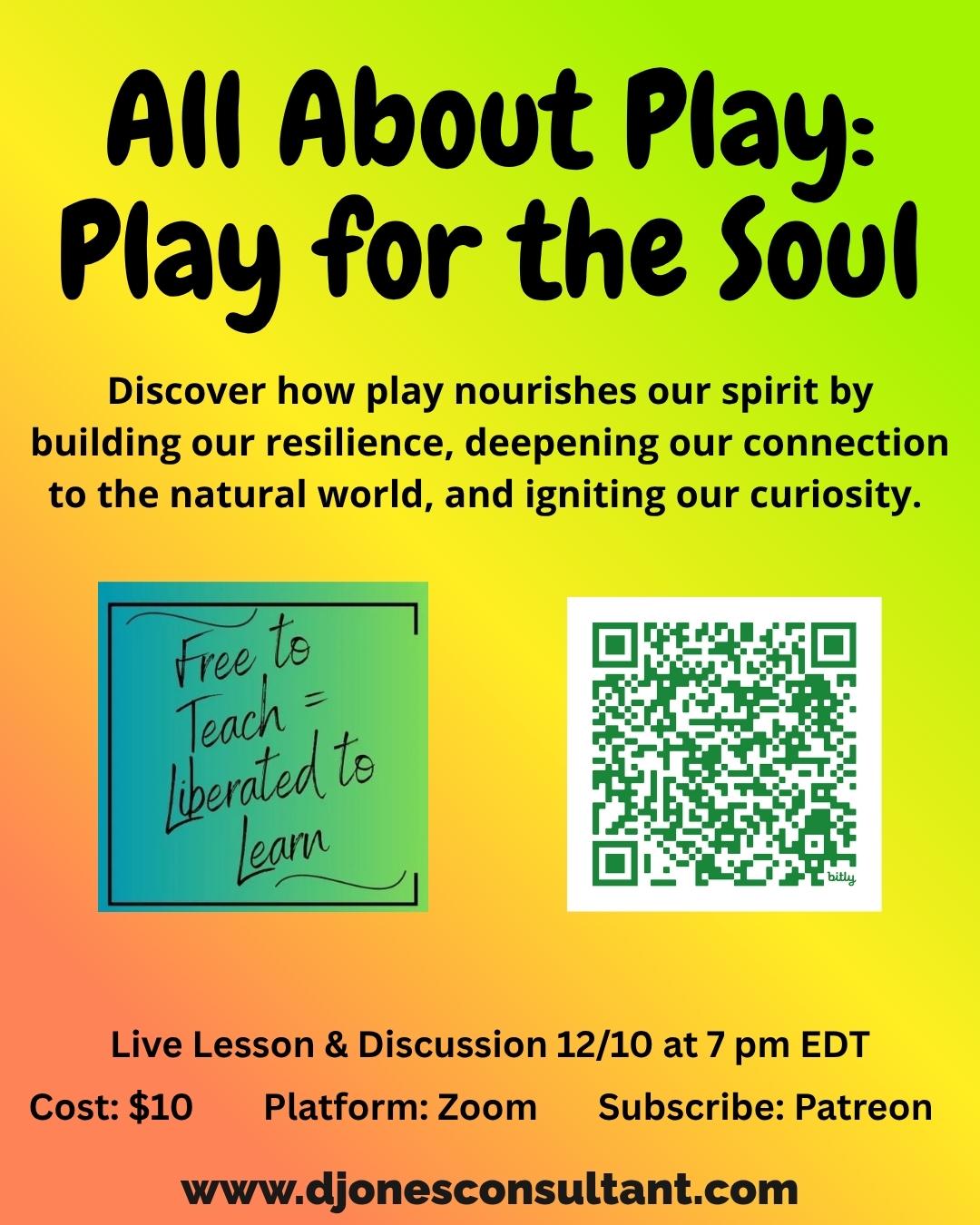
Two mini-reflective courses remain in my All About Play Series. On Thursday, November 19th at 7 pm EST, I will host a live lesson and guided discussion for Play for the Body. And on December 10th at 7 pm EDT, I will host the live lesson and guided discussion for Play for the Soul! You can purchase the entire All About Play series with three mini-reflective courses for $25! You will receive access to the recorded lesson and guided discussion for Play for the Mind. And each course comes with a Reflective Workbook to deepen your thinking. Click the link below to buy this series today!

Guided Reflective Prompt and End-of-the-Year Bundle


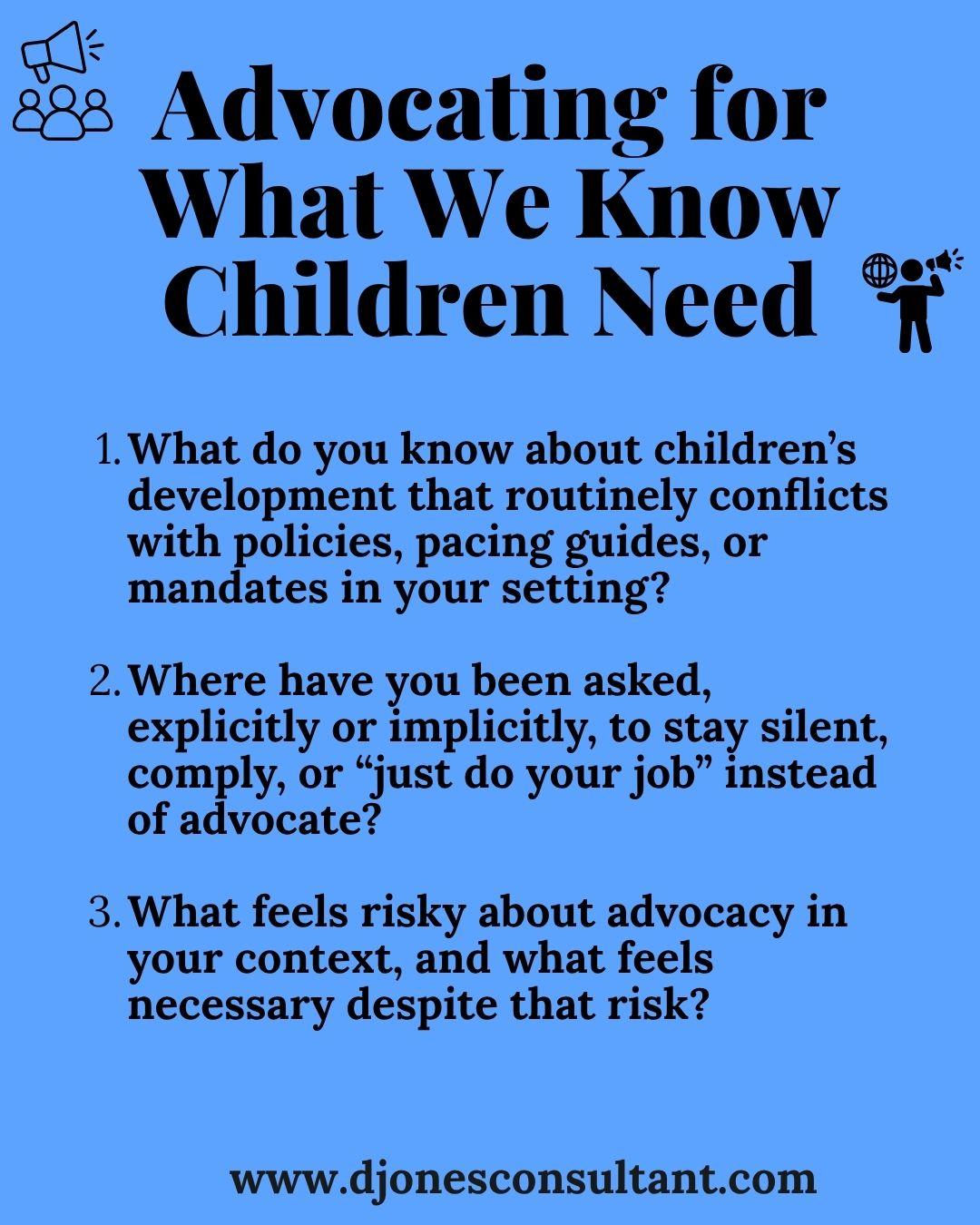
This month we are reflecting on Advocating for What We Know Child Need. Each month, I offer short guided reflective videos for each prompt and Reflective Worksheets to deepen your thinking. Two more guided reflections are coming in 2026: Thriving in ECEC and Play & Nature!


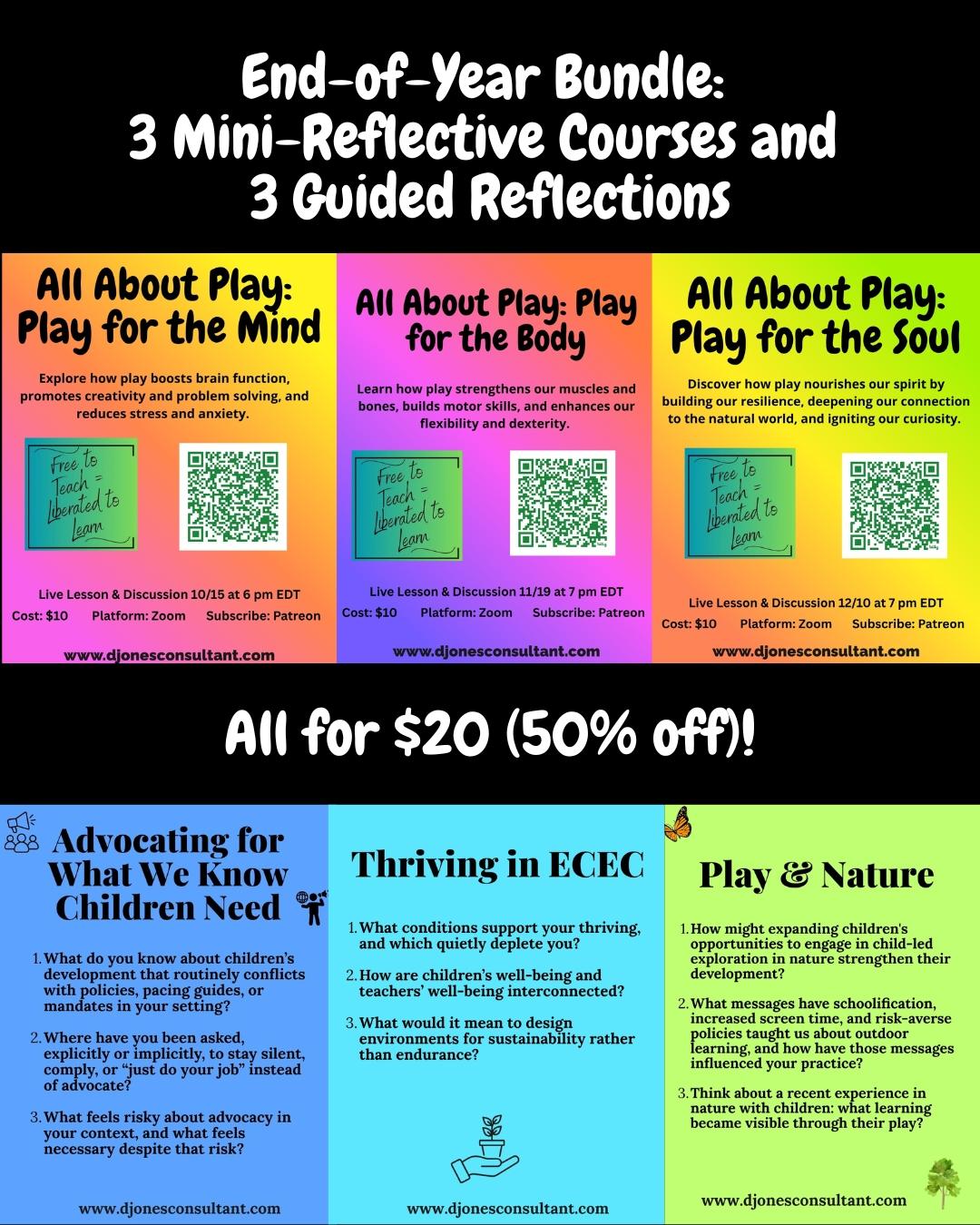
I'm wrapping up the first year of my community's offerings, Free to Teach = Liberated to Learn, with a 50% discount! For a limited time, you can purchase access to my final All About Play three mini-reflective course series and my final three guided reflections. Each mini-reflective course includes a live lesson, guided discussion, and reflective workbook (Play for the Mind includes a recording of the live lesson and guided discussion). Each guided reflection includes a short reflective video and a reflective worksheet for each prompt! Get this bundle by November 19th for $20! Click on the link below or the Linktree in my bio to get your discounted bundle today! 

Play is... - Play Science Institute

Defining play seems simple, but it turns out to be rather complex. That's because play can mean different things to different people. In a chapter I wrote in 2021, I noted that “most early childhood experts agree that play is any self-directed activity, freely chosen by the person engaging in it, without any external rules, and brings about joy or personal fulfillment” (p. 50). It is much easier to define play by characteristics, because play can look different even among a group of children playing together. 

The Play Science Institute has its own newsletter that includes the blog and more. Do you want to receive this newsletter directly? Click the link below to subscribe!

Join me at NAEYC!


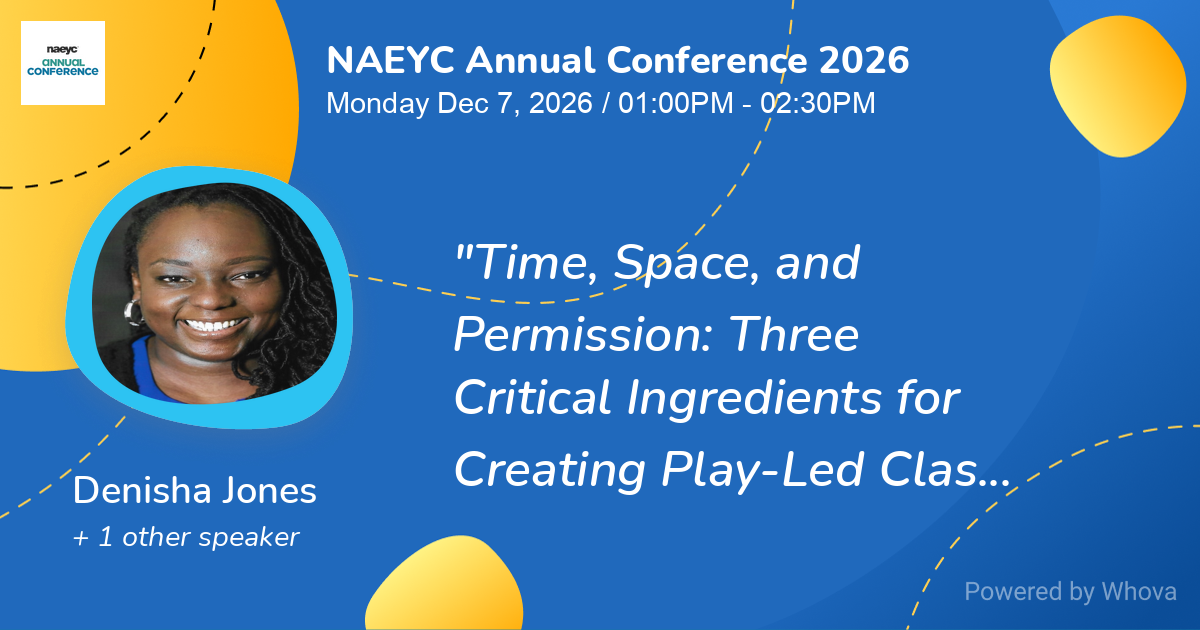
Are you attending the NAEYC national meeting in Washington, DC, December 5-8? If so please plan to attend my session, Time, Space, and Permission: Three Critical Ingredients for Creating Play-Led Classrooms. I will be joined by my co-presenter, Kisha Reid. Our session is on Monday, December 7th, from 1-2:30 pm in Room 150B, Walter E. Washington Convention Center.

#NewPubAlert


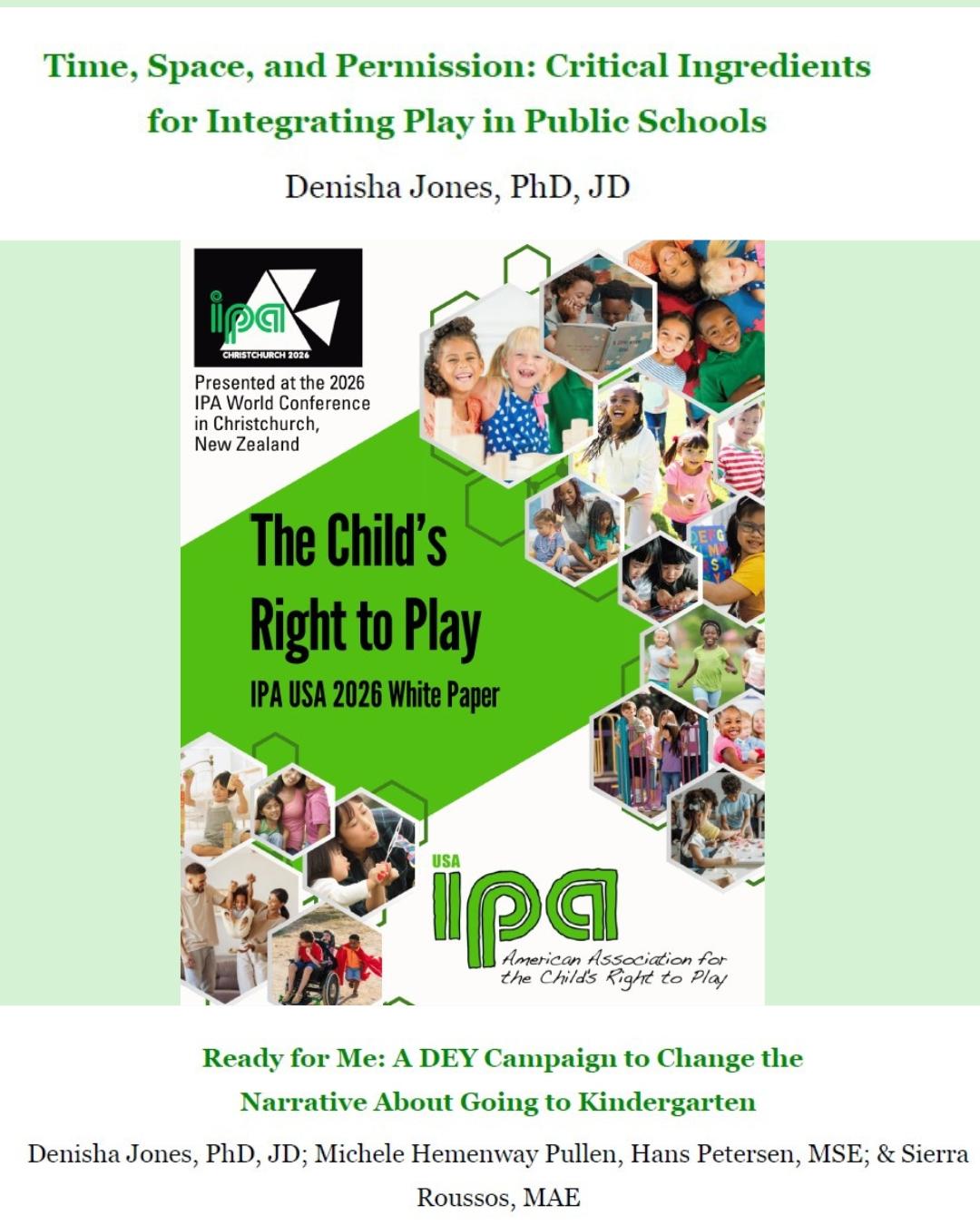
I was disappointed when I failed to submit a paper to the IPA USA 2025 50th Anniversary White Paper... so this time, I got two papers published! You can find Time, Space, & Permission: Critical Ingredients for Integrating Play in Public Schools and Ready for Me: A DEY Campaign to Change the Narrative About Going to Kindergarten (co-authored with Michele Hemenway, Hans Petersen, & Sierra Roussos) in Part 4: Leading for Play! Click on the link below to access the 2026 IPA White Paper!

What is Moral Injury in Early Childhood Work?

In a 2026 article co-written with Brianne Kramer and Clint Broadbent, Denisha Jones explores the idea of moral injury in our work in the early childhood profession, writing: "Many teachers view their profession as a calling, so they take their work as a personal mission to educate students. Because of this, it is a moral affront to teachers to face daily ‘circumstances that challenge their moral conscience, vocational identity, and the values that got them into teaching in the first place’ (Keefe-Perry, 2018). Santoro (2011) theorized about moral injury by asking ‘What happens when experienced teachers who are fueled by the moral dimension of teaching find they can no longer access the moral rewards embedded in their work?’ Santoro goes on to (2011) argue the moral and ethical dimensions of teaching involve both required and prohibited practices (moral dimensions) and teachers' recognition that their work is in service to a better world (ethical dimensions). Often these are inseparable so that if a teacher is repeatedly forced to do something that they believe is harmful to their students, they may feel they are bad at their job or their job is bad for the world (Santoro, 2011). This creates a moral injury that plagues teachers daily.”


In our conversation in this episode, Denisha defines moral injury and explains how it may be more useful to reframe our current “burnout” conversation as moral injury.

D. Jones Consultant

Facebook  Instagram  Web