|
|
WVPCA Weekly Outlook Newsletter
A Newsletter on Community Centered Healthcare
|
|
We offer this publication as a member service of the West Virginia Primary Care Association (WVPCA).
If you have questions regarding our organization, WVPCA membership, or if you have content to suggest for this newsletter, please contact
Pam Moore, Member Relations Coordinator, by email or by phone at (304) 346-0032.
Sincerely,
West Virginia Primary Care Association
1700 MacCorkle Avenue
Charleston, WV 25314-1518
304-346-0032
1-877-WVA-HLTH
|
Quick Links: In This Issue.....
|
|
November is National Diabetes Month
|
Find all of the resources you'll need to to promote heart health this November
here.
|
|
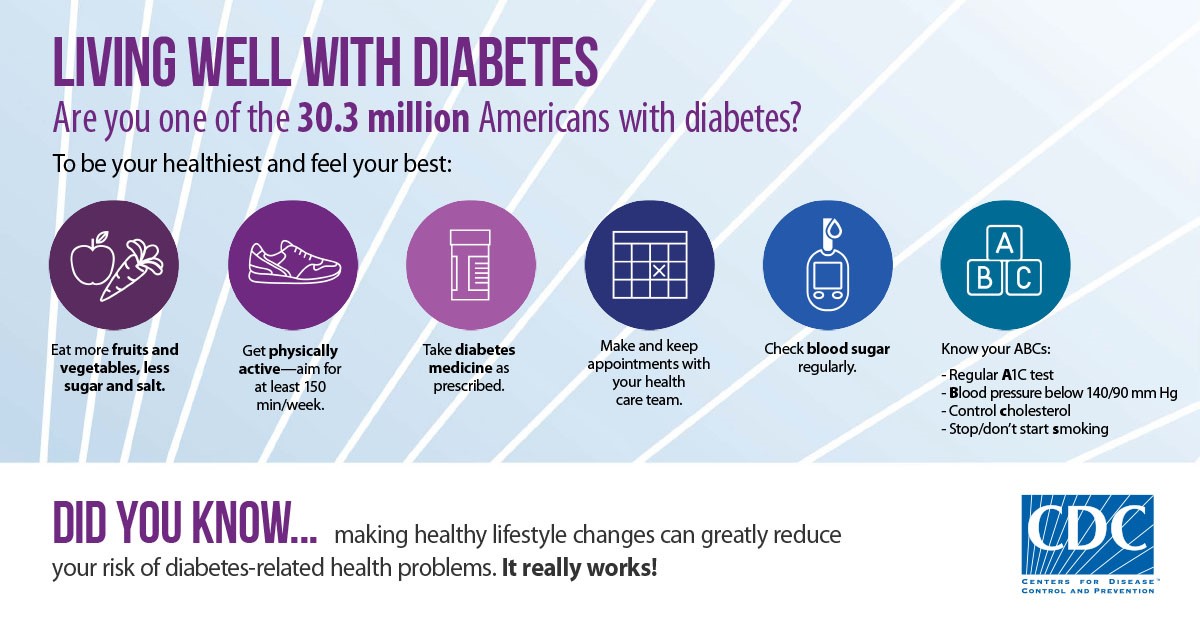
Living Well with Diabetes
|
|
As the WVPCA continues to share resources for National Diabetes Month, please access the links below from the CDC.
November is National Diabetes Month. In the United States, 30 million adults aged ≥18 years are living with diabetes and 84 million with prediabetes (1). Among persons aged ≥65 years, one in four is estimated to have diabetes, and one in two has prediabetes (1). Persons with prediabetes are at risk for developing type 2 diabetes, heart disease, and stroke (2). However, type 2 diabetes can be prevented or delayed through a structured lifestyle change program that promotes weight loss, healthy eating, and increased physical activity (2). A report on diabetes among Medicare beneficiaries is included in this issue of MMWR (3).
CDC plays a crucial role in preventing type 2 diabetes and diabetes complications. The National Diabetes Prevention Program (National DPP)
is a public-private partnership building a nationwide system to deliver an affordable, evidence-based lifestyle change program to prevent or delay type 2 diabetes. In 2018, the National DPP lifestyle change program became a covered service for Medicare beneficiaries with pre-diabetes. The first national pre-diabetes awareness campaign, DoIHavePrediabetes.org, done in collaboration with partners, encourages persons to learn their pre-diabetes risk. CDC also works to increase access to diabetes self-management education and support services to help persons with diabetes manage their daily diabetes care
.
|
 |
|
Hot Topic Webinar Invitation
|
Please join us for our last "Hot Topic" webinar of 2019! Hot Topic webinars are webinars where we hear from the experts-assisters on the ground- on a variety of topics which impact Marketplace enrollment, outreach and education. Jan Plummer from Mountain Projects in NC and Connie Dunavin from Cherokee Nation in OK will present their tips for building connections with tribal members and leaders and the importance of outreach and education. If you've always wanted to learn more about how you can assist tribal members, this is your chance. So mark your calendars to join us on November 14th, 2019 at 2:00 p.m. to 3:00 p.m. EST for an informative session.
Who Should Attend:
Navigators and certified application counselors (CACs).
When: Thursday, November 14 from 2:00 pm to 3:00 pm ET
RSVP: To facilitate a quicker registration process on the day of the event, please register for the session by visiting the following
link.
Space is limited - we strongly encourage individuals from the same organization to gather in a common room and participate as a group using a single computer.
The audio portion of the webinar will be delivered via your computer. Please check your computer settings in advance to ensure that your speaker volume is adjusted appropriately. Using Google Chrome as your internet browser seems to work best. Please be sure to push the blue "play" icon on the left side near the Alternate Audio tab. If you cannot hear audio through your computer speakers, please refer to the Alternate Audio tab on the left side of the webinar screen for more tips.
Please try to log in 5 minutes in advance so that audio links can be made.
|
|
The 2020 Assister Readiness Webinar Series - On Demand
|
Just a reminder that CMS has on-demand webinars to supplement the 2020 web-based Assister Certification Training:
The remaining training schedule is as follows:
- Friday, November 22nd at 2 pm ET
- Friday, December 6th at 2 pm ET
You can access Week 1 and 2's on-demand modules online.
We are happy to bring you this supplemental training and hope you will join us for the Assister Readiness Webinar Series. We hope these videos are a useful tool to help you get ready for Open Enrollment!
Additional resources to assist in your Outreach and Enrollment efforts can be found on the WVPCA website
as well as on the WV Office of the Insurance Commissioner (WVOIC) website.
|
|
School-Based Medical Home Recognition: Program Retirement
|
NCQA has retired the School-Based Medical Home Recognition Program effective October 25, 2019. Organizations that have already earned accreditation will maintain their status through their expiration date. For a listing of the organizations currently accredited, visit the NCQA Report Cards.
The School-Based Medical Home Recognition Program was built on the patient-centered medical home (PCMH) model, which puts patients first. It emphasizes team-based care, effective communication and coordination and helps foster relationships between patients and their clinical care teams.
That's why we are recommending school-based health centers pursue either the Patient-Centered Medical Home or Patient-Centered Connected Care Recognition programs as alternatives. A PCMH pursuit would require that you serve as the primary care provider for a large majority of your patient population. The Patient-Centered Connected Care program follows a similar model, but it does not include the patient proportion requirement.
|
|
|
The attention and research being done around ACEs continues to grow and inform many different systems and the work being done in health centers.
The official release of the CDC Vital Signs is no available to the public through their
website
.
The CDC did an analysis of 25 states, including West Virginia, use to inform the CDC ACEs survey as part of the Behavioral Risk Factor Surveillance System (BRFSS). The data was collected between 2015 and 2017 through the BRFSS from more than 144,000 adults.
Here are some of the takeaways from the study:
- ACEs are common-nearly 61% of all respondents experienced at least one type of ACEs. Additionally, nearly one in six respondents (16%) reported four or more types of ACEs.
- The effects of ACEs add up over time and impact our health and life outcomes. The more types of adversities you experience, the higher your risk of experiencing poor health outcomes, like depression, overweight/obesity, and cardiovascular disease. Also, you are more likely to engage in health risk behaviors, such as smoking and heavy drinking, and to experience poor socioeconomic outcomes, such as unemployment. For example, odds of depression were five times higher among adults with high levels of ACEs exposure verses those reporting no ACEs exposure.
- At least five of the top ten leading causes of death are associated with ACEs
- This study found that preventing ACEs could potentially result in a:
- 44% reduction in depression
- 26% reduction in COPD
- 24% reduction in heavy drinking
- Almost 13% reduction in coronary heart disease, the leading cause of death in the US
- Applied to national estimates in 2017, this translates to up to 1.9 million cases of coronary heart disease...
- 2.5 million cases of overweight or obesity
- 1.5 million instances of high school non-completion, and
- 21 million cases of depression that would have been potentially avoided by preventing ACEs
- Plus, reductions in socioeconomic challenges, including a nearly 15% reduction in unemployment.
- ACEs are preventable.
- Creating the conditions for safe, stable, nurturing relationships for children, families, and entire communities are fundamental to preventing ACEs. There are many ways to achieve this:
- Strengthening economic supports for families (EITC and family-friendly work policies)
- Promoting social norms that protect against violence and adversity (public education campaigns);
- Ensuring a strong start for children (high quality child care and home visiting programs, such as Healthy Families America);
- Enhancing skills to help adults and youth handle stress, manage emotions and tackle everyday challenges;
- Connecting youth to caring adults and activities (mentoring and programs)
- Intervening to lessen immediate and long-term harms (e.g., enhanced primary care to identify and address ACEs exposures through screenings, referrals, and supports)
If you have any questions about ACEs or other Behavioral Health topics, contact WVPCA's
School Based/Behavioral Health Coordinator,
John Kennedy.
|
State News
|
|
Healthcare Provider Broadband Survey - Your Input is Needed!
|
|
The West Virginia Broadband Enhancement Council has initiated the development of the 2020-2025 State Broadband Plan and requests input from the healthcare community through a brief survey regarding broadband in West Virginia. We appreciate your input and responses are requested before November 29, 2019.
The survey should take 5-10 minutes to complete and the link is found
here.
The State Broadband Plan will build upon current broadband initiatives and incorporate input from residential and business users, local governments, internet service providers and key stakeholders. If you have any questions about the survey, please contact CarolAnn Williams in the West Virginia Development Office at
CarolAnn.Williams@wv.gov
.
Below are a set of links to all surveys regarding the availability of High Speed Internet in WV. Each survey is tailored to a specific sector of government, business. The General survey is intended for the general WV citizen's home.
Survey Links-Available for Distribution:
Thank you for your assistance in helping us improve broadband service in West Virginia!
|
|
American Heart Association's West Virginia Stroke Conference
|
|
|
|
T
he American Heart Association is thrilled to offer The West Virginia Stroke Conference, jointly with CAMC and The Greater Kanawha Valley Foundation, providing new and exciting topics designed exclusively for the Stroke Team, Stroke Coordinator, Quality Improvement Specialist, Physicians, and other professionals who want to be all that they can be through collaboration, partnership and mentoring!
This conference will provide the best foundation of resources to improve stroke care and will promote networking with others across the region. Make plans now to attend with your colleagues - this will be an event you won't want to miss!
Where:
Embassy Suites - Hilton, 300 Court Street, Charleston, WV 25301
When:
December 5, 2019
Registration: 7:15am- 7:55am
Lecture: 7:55am-4:55pm
Registration Fee:
$15
Lunch and Breaks provided to all attendees.
Free parking at the Embassy Suites-Hilton provided for attendees to the conference.
To register, click here, or for more information, check out the conference flyer here.
|
HRSA | Supporting Aging in Place Programs: The Role of Community Health Workers
11.21.19 | 2:00-3:00 p.m. ET
Hosted by MHP Salud and the National Center for Equitable Care for Elders, both HRSA-funded NCAs
______________________________
Addressing the Opioid Crisis in Rural Communities: Leveraging Technology Innovations to Support Maternal and Child Health Care
11.19.19 | 12:00 - 1:00 p.m. ET
Call-in: 888-989-5313
Passcode: 6171831
|
|
WV DHHR | West Virginia Cancer Survivorship Resource Summit
11.15.2019 | 9:30am - 3:30pm
Registration is available here.
This program is presented in collaboration by the American Cancer Society and the West Virginia Bureau for Public Health/Division of Health Promotion and Chronic Disease/Comprehensive Cancer Control Program.
|
|
Funding Opportunity
|
|
The Center for Active WV Offering Mini grants for physical activity
|
|
The Center for ActiveWV is launching a new Grant Program. West Virginia University College of Physical Activity and Sport Sciences, through a partnership with West Virginia Health Promotion and Chronic Disease, is funding projects statewide to increase physical activity. These one-time mini-grants range from $1000-$5000.
Successful mini-grant applications will propose a plan to improve the health of communities in West Virginia through increased opportunities for physical activity in the following areas:
- Increase physical activity opportunities for children throughout the school day and beyond
- Increase and/or improve pedestrian and bike infrastructure within West Virginia
- Implement programming and/or create opportunities for physical activity through clinical practice and community outreach
Please consider applying yourself or sharing this email with a friend or colleague. For more information contact the Project Coordinator, Rachel Byrne, at
rbyrne2@mail.wvu.edu
, or 304-293-6981.
|
National News
|
|
HRSA Gears Up for National Rural Health Day, November 21
|
The
National Organization of State Offices of Rural Health
created National Rural Health Day as a way to applaud the ongoing efforts, contributions, and collaborations occurring in rural communities to address the unique challenges in accessing and delivering health care services. HRSA and other HHS entities will host events for this annual commemoration.
Get more information
, including a detailed schedule for HRSA's day-long celebration.
|
|
|
PrEP Program Webinar: Next Week/Register Now
|
Join Tammy Beckham, DVM, PhD, and Harold Phillips, MRP, of the
Office of Infectious Disease and HIV/AIDS Policy
(OIDP) in the
Office of the Assistant Secretary for Health
, and federal officials from the Health Resources and Services Administration and the Centers for Disease Control and Prevention. This informational webinar covers the new HHS program that provides pre-exposure prophylaxis (PrEP) for people with no prescription drug coverage who can benefit from using PrEP!
Dr. Beckham, who directs OIDP, and Mr. Phillips, who serves as OIDP's Senior HIV Advisor and Chief Operating Officer for the
Ending the HIV Epidemic: A Plan for America (EHE) initiative, will lead the webinar, which will provide information on:
- The EHE initiative and how the new PrEP program supports that effort
- The role of PrEP as a tool to help end the HIV epidemic in the United States
- Goals, qualifications, and resources for the program
The webinar will also include a Q&A session.
When: Friday,
November 15, 2019,
2:30-3:30 p.m. (ET)
|
|
DEA issues warning over counterfeit prescription pills from Mexico
|
|
The Drug Enforcement Administration is alerting the public of dangerous counterfeit pills killing Americans. Mexican drug cartels are manufacturing mass quantities of counterfeit prescription pills containing fentanyl, a dangerous synthetic opioid that is lethal in minute doses, for distribution throughout North America.
Based on a sampling of tablets seized nationwide between January and March 2019, DEA found that 27 percent contained potentially lethal doses of fentanyl.
"Capitalizing on the opioid epidemic and prescription drug abuse in the United States, drug trafficking organizations are now sending counterfeit pills made with fentanyl in bulk to the United States for distribution," said DEA Acting Administrator Uttam Dhillon. "Counterfeit pills that contain fentanyl and fentanyl-laced heroin are responsible for thousands of opioid-related deaths in the United States each year."
Fentanyl and other highly potent synthetic opioids remain the primary driver behind the ongoing opioid crisis, with fentanyl involved in more deaths than any other illicit drug.
A lethal dose of fentanyl is estimated to be about two milligrams, but can vary based on an individual's body size, tolerance, amount of previous usage and other factors. The full Fentanyl Signature Profiling Program Report on the recent drug sampling and testing is available on the DEA.gov.
|
Community Health Center Resources
|
|
|
The WVPCA has retained the law firm of Jackson Kelly, PLLC to provide legal guidance to the WV Primary Care Association and its members.
Jackson Kelly attorneys provide limited consultation to all members of the WVPCA at no charge, as part of the WVPCA contract. There is no limit to the number of calls which any member may make. All inquiries within the scope of professional competence of firm attorneys will be addressed. Inquiries which require expertise not available through the firm will be promptly identified and, when requested, Jackson Kelly will assist in referring the matter to accounting firms, insurance agents, or others as circumstances warrant.
All inquiries, responses and consultation services provided by the firm lawyers will be provided without additional charge beyond the retainer amount, except for matters which require formal opinions, representation of record in litigation, transactional work, e.g. the purchase or sale of real property, or matters which require continued representation, research or consultation beyond a single inquiry or document review.
Justin M. Harrison is a labor & employment lawyer with Jackson Kelly PLLC. He is available for consultation through a special retainer relationship with the WVPCA.
Justin can be reached at 304.340.1358 and via email at justin.harrison@jacksonkelly.com.
|
Risk Management Manual for Health Centers Now Available!
The
Risk Management Manual for Health Centers is now available on the ECRI Institute Clinical Risk Management Program website! Designed to support a proactive approach to risk management at health centers and free clinics, the Manual provides background, tips, and how-tos in a manageable format.
Specific areas that are covered include:
- Risk Management Program
- Role of the Risk Manager
- Risk Management Plan
- Credentialing and Privileging
- Communication with Patients
- Tracking Systems for Diagnostic Tests, Referrals, and Hospitalizations
- Patient Grievances and Complaints
- Communication among Providers, Staff, and Community Partners
- Claims and Lawsuits
- And more!
|
ECRI Institute
The
ECRI Institute
offers numerous policy templates that can be used as guidance consistent with the needs of community health centers. To take a look at their library of policy templates, click
here
.
If you are not an ECRI member, creating a free account before accessing these materials is required. ECRI Institute resources are provided for free on behalf of HRSA.
To Access Policies:
- From the main page, click on the clinical risk management link on the left hand side of the page
- Click sample policies and tools listed under tool-kits on left side of page
Click on the + sign to access individual templates.
|
|
WVPCA Staff
Debra Boyd | Chief Financial/Chief Operations Officer
|
|
To sign up to receive the WVPCA Weekly Newsletter, click
HERE
|
|
|
West Virginia Primary Care Association
1700 MacCorkle Ave. Charleston, WV 25314| (304) 346-0032 |
WWW.WVPCA.ORG
|
|
|
|
|