 |
Greetings from PCAP!
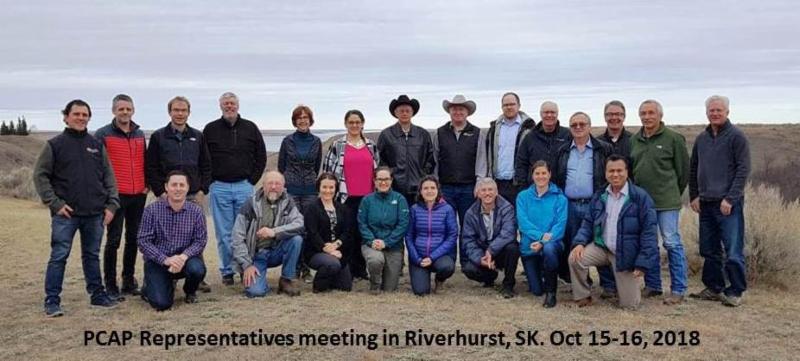
PCAP partner representatives met in Riverhurst on October 15 and 16, to start working in the renewal of the PCAP Framework. The new 2019-2023 Framework will outline the PCAP's strategies and focus areas for the mid-term future. Thank you all PCAP partners for your time and commitment!
As every year, PCAP will be present in the upcoming Canadian Western Agribition in Regina (November 19-24), in this opportunity with a Display Booth and by delivering an interactive activity planned for Grades 3-6 students,"The pitch for pipits and plovers game show". Thanks to all the registered volunteers! If you are interesting on helping out, please let me know.
As per our
N
ative Prairie Speaker Series
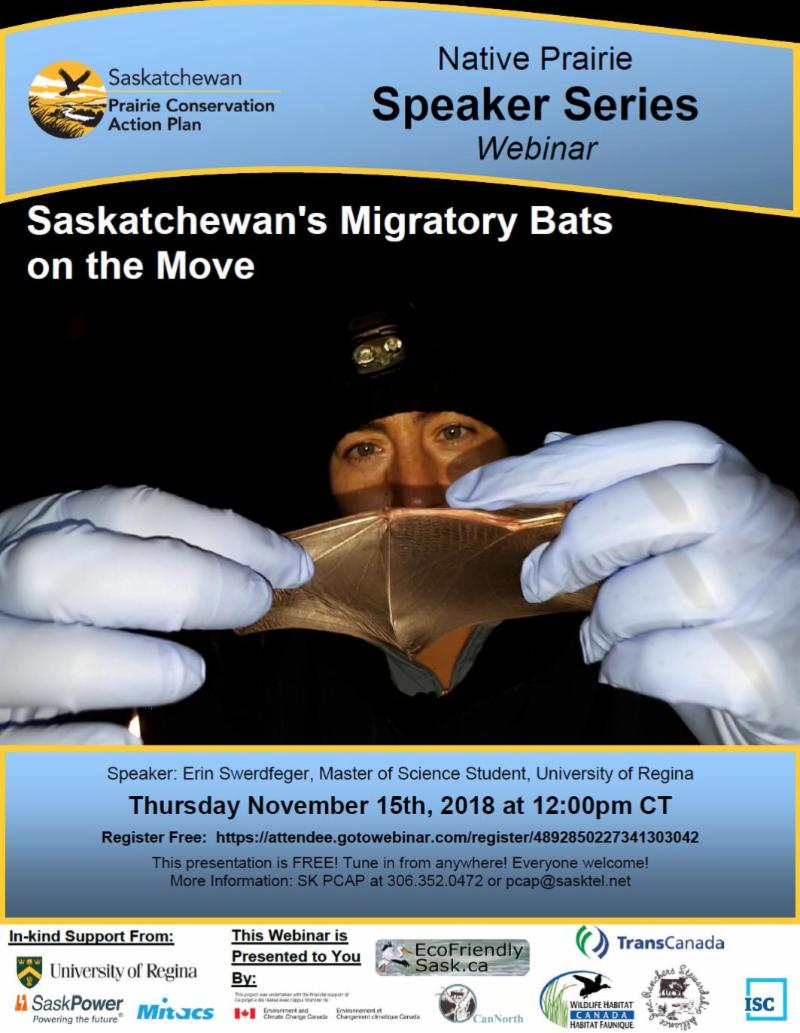
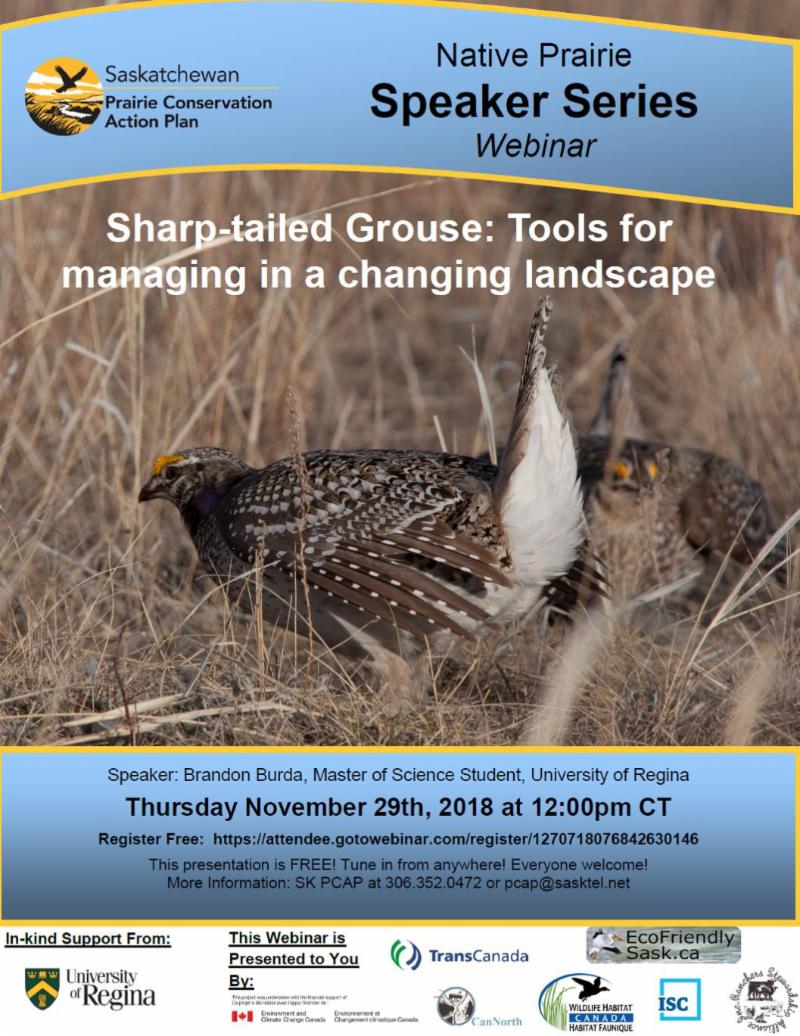
, this month we are hosting four presentations!, two webinars and two in-person presentations. On November 15th, Erin Swerdfeger will be presenting a webinar about her UofR research on Saskatchewan's Migratory Bats. On November 26th, Parks Canada's Ecologists will present in Val Marie an update on the Species at Risk at Grassland National Park. November 27th will be the turn for Beatriz Prieto (SK Minister of Environment) to present in Glentworth SK, an update from her work team on Grater Sage-grouse. Finally on November 29th, Brandon Burda, graduate student at the U of R, will present a webinar about tools for managing for Sharp-tailed Grouse.
Please let us know if you have a venue or event that reaches landowners, where we could host a speaker series talk about pipits, burrowing owls, northern leopard frogs, shrikes, or plovers (specific funding is available).
I
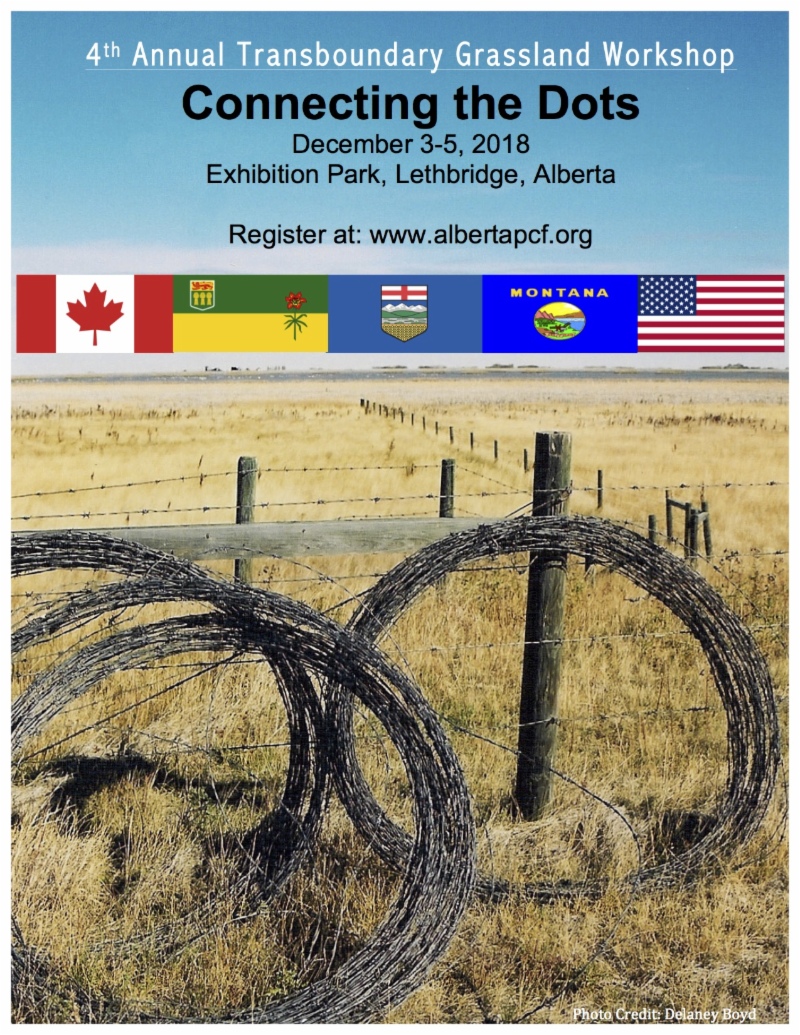
would also like to draw your attention on the 4th Annual Transboundary Grasslands Workshop that will take place on December 3-4 in Lethbridge, AB. This event will feature presentations on transboundary connectivity and breakout sessions on priority areas in the shared grasslands landscape of Alberta, Saskatchewan and Montana. The workshop is organized by a collaborative transboundary partnership between numerous organizations from Montana, Alberta and Saskatchewan, including PCAP, and is being funded by the Alberta Prairie Conservation Forum. Take some time and register
today
!
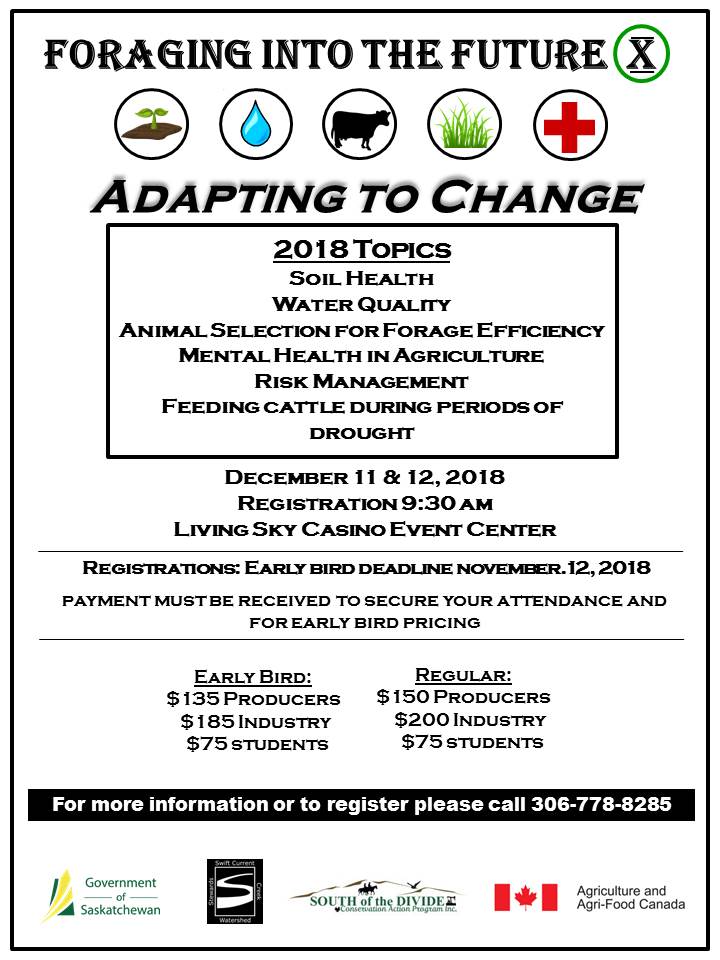
PCAP is sponsoring the "Foraging Into The Future" conference on December 11-12 that will take place in Swift Current, SK. Please plan to attend!
PCAP is also collaborating in the organization of the 2019 "Prairie Conservation and Endangered Species Conference" (PCESC), which will take place in February 19-21, 2019, in Winnipeg, MB. E
arly bird
registration to the 2019 PCESC here.
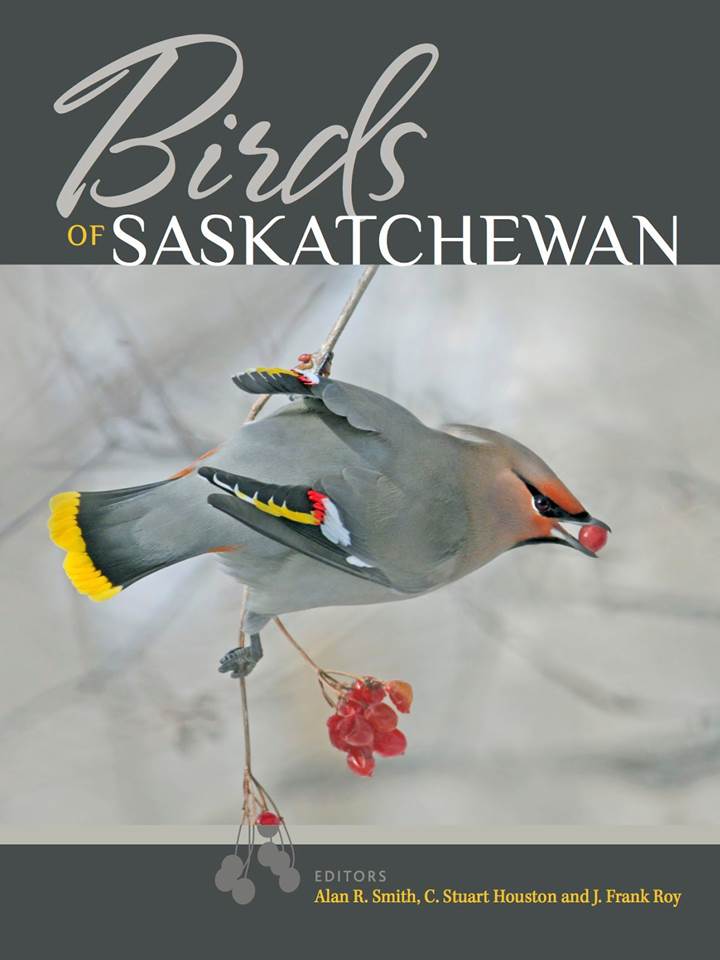
To close, I would like to spread the word about a recent publication from Nature Saskatchewan: Birds of Saskatchewan, a full-colour, comprehensive look at all of the birds that call Saskatchewan home. 437 species of birds are documented in this 800 page compendium, a result of over ten years of work and several lifetimes of observation, research, and writing. Pre-orders are now being accepted, more information here.
Please feel free to contact me at any time; I'm pleased to receive your questions, comments or ideas.
Diego Steinaker
SK PCAP Manager
306 352 0472
pcap@sasktel.net
|
Transboundary Grassland Workshop
December 3-5, 2018 -
Lethbridge, AB
|
PCAP WEBINAR Presentations
"Saskatchewan's Migratory Bats on the Move",
by
Erin Swerdfeger (U of R).
|
P
rairie Conservation and Endangered Species Conference - PCESC 2019
February 19-21, 2019. Winnipeg, MB
Early bird, until January 15, 2019
For details on the Conference Program please click here
|
|
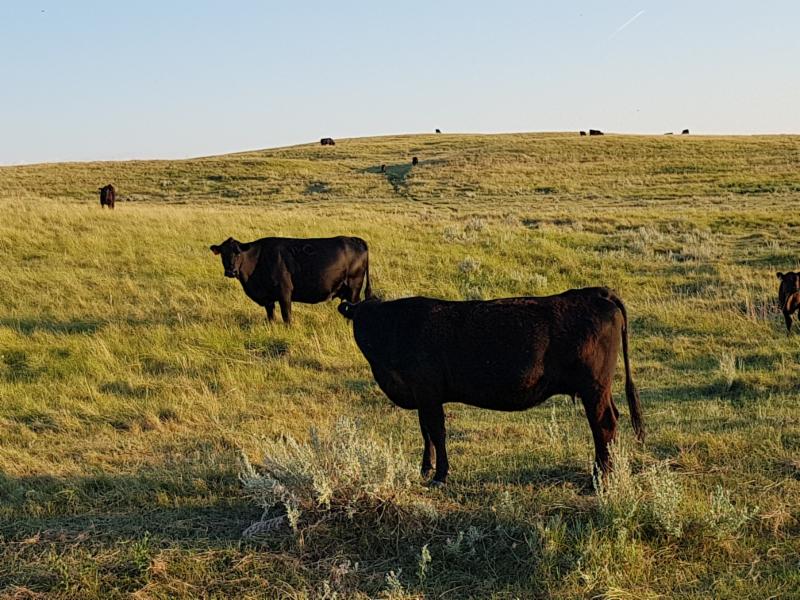
Cattle grazing is essential to sustainable agriculture in Western Canada
by Terry Kowalchuk, Provincial Specialist, Forage Crops, SK Ministry of Agriculture
The Prairie Provinces are blessed with almost 85 per cent of the agricultural land in Canada. About a third of this land grows forage. Forage land includes native prairie (sometimes referred to as rangeland), tame hayland, and tame pasture. These so called "marginal lands" are not suitable for annual crops because of physical or climatic limitations and are therefore used for feeding cattle.
Current marketing wisdom holds that cattle are bad for the environment and plant-based protein is the way to save our planet. However, ruminant livestock and the forage sector, particularly in Western Canada, play a key role in preserving biodiversity, reducing soil degradation, and maintaining or improving soil health.
Grasses, legumes and forbes on our rangelands evolved under periodic grazing by bison. Grazing by cattle helps maintain native prairie in its natural state by cycling nutrients and by creating diverse ecological niches for plants and animals. Without grazing, overall plant and animal diversity declines as range health declines.
The same is true for hay and pasture land. The soil on these lands is often sandy with low organic matter content, little soil structure, and poor ability to hold moisture. Hay and pasture lands may also have steep topography. When cultivated, these soils are prone to wind and/or water erosion. In both cases, perennial forage and haying or grazing is the best use of this land to prevent soil degradation.
Even producers on lands that are suitable for cropping could benefit from inclusion of forages and cattle in their operations. Forages help break disease cycles and are especially useful for control of herbicide resistant weeds.
Legumes in forage stands help reduce the need for fertilizer and many studies have shown that forage in a crop rotation improves soil health by increasing soil organic matter content.
Increasing organic matter helps offset methane production from cattle while improving the physical and biological properties of the soils. When grazing is included most of the nutrients ingested by ruminants are returned to the land as urine or feces which are then reused by subsequent crops. Digestion within the rumen helps accelerate residue decomposition and nutrient cycling in soils.
Over time this process enhances microbial dynamics (especially under wet and warm conditions) and increases the accumulation of stable organic materials in soils making them more resilient to physical and climatic influences.
Plant-based proteins offer a unique opportunity to diversify sources of protein in our diets. However, forage and livestock production systems must continue to be an important component of sustainable prairie agriculture ecosystems in order to maintain biodiversity, reduce soil degradation and improve soil health.
|
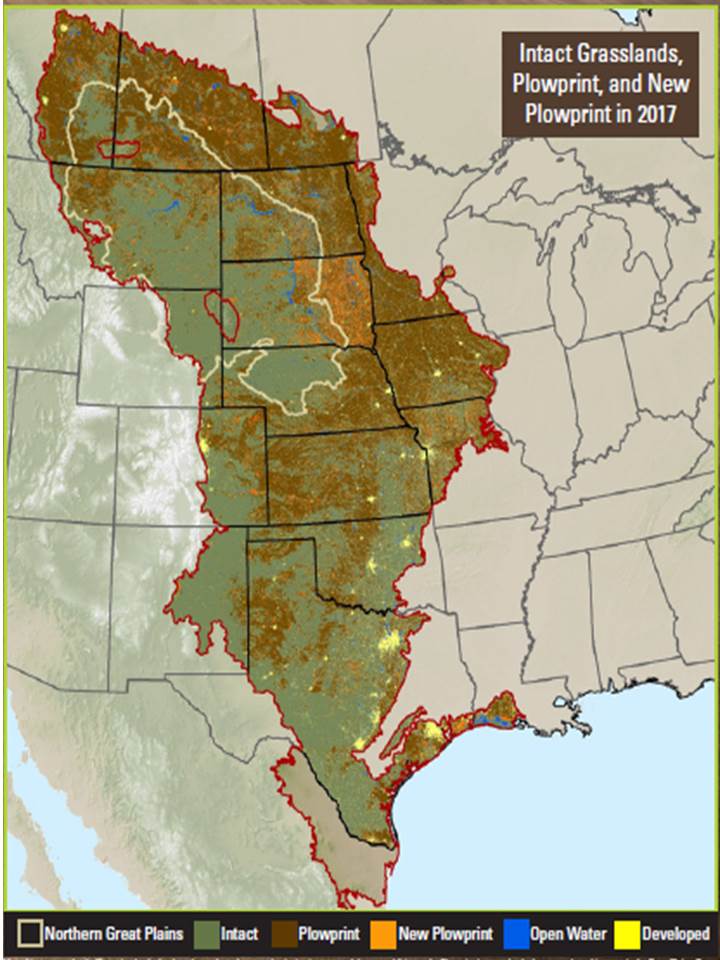
Temperate grasslands are being lost worldwide and North American grasslands are no exception. The leading cause of this loss is the conversion of grasslands to cropland.
The conversion of intact grasslands represents a significant ecological loss that cannot easily be recovered.
The purpose of the Plowprint analysis made every year by the World Wildlife Fund (WWF) is to identify remaining intact habitat across the Great Plains.
The Good News
: plow-up decreased
across the Great Plains in 2017. On average, over 800,000 fewer acres were converted to cropland across the Great Plains in 2017.
The Bad News: 1.7 million acres of grassland were lost across the entire Great Plains (
as compared to over 2.5 million acres in 2016).
Overall, approximately 53% of the Great Plains is still intact.
To track grassland loss, WWF used the USDA National Agricultural Statistics Service Cropland Data Layer in the U.S. and the Agriculture and Agri-Food Canada Annual Crop Inventory in Canada.
For this analysis, Grasslands refer to grasslands, shrubland, and wetland cover, and Cropland is defined as any annually planted agricultural commodity or fallow agricultural land.
Perennial Grass Cover: Gain & Loss
In 2017, perennial grass cover increased in the NGP portion of Saskatchewan, Alberta, Montana, Wyoming, North Dakota, and Nebraska, but decreased by 9,000 acres in South Dakota. Conversion of grassland to cropland, although damaging to native ecosystems, is not necessarily permanent, and cropland can rotate back into perennial grass cover through restoration or abandonment. Restoration and rotations into perennial cover, while important, are not always enough to conserve biological diversity.
In the Northern Great Plain, about 71% of the lands that have been plowed are on high quality soils. This means that almost 30% of NGP plow-up, or 15 million acres, is on low and marginal-quality soils.
Grassland Conversion Effect on Drinking Water
In Intact grasslands are important for protecting source water areas for downstream communities. Recent studies indicate that communities are spending hundreds of thousands, if not millions, of dollars to counteract the impact of increased sediment and nutrient loading.
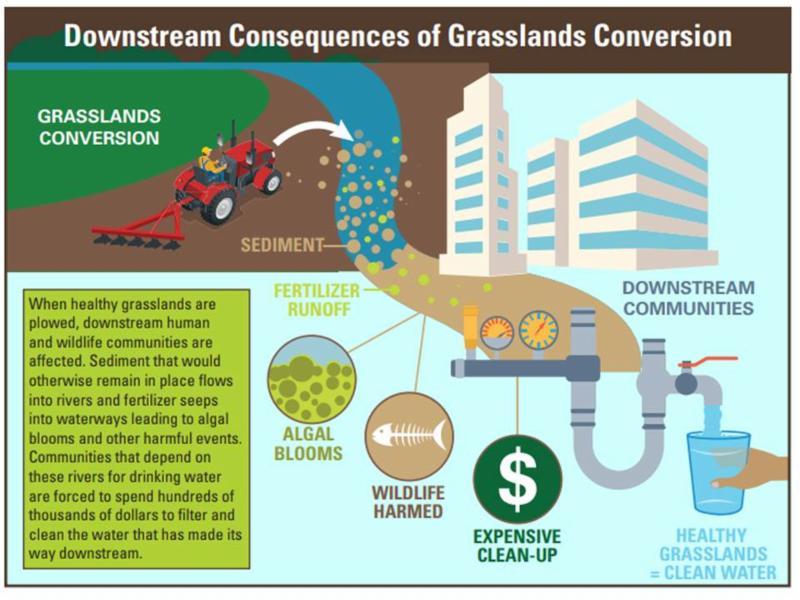
One study (1) found that farm fertilizer was the biggest contributor to nitrogen loading in water bodies, representing more than half of the total nitrogen loading. This study also suggested that small communities bear an unfair burden in dealing with the costs of removing nitrogen pollution from their drinking water
The second study in US (2) showed that communities located downstream from areas converted to cropland are spending significant amounts of money to combat the problem.
Keeping grasslands intact rather than plowing up marginal lands for farming is one obvious way to stop this trend.
(1) Vedachalam, S., Mandelia, A.J., and Heath, E.A. 2018. Source Water Quality and the Cost of Nitrate Treatment in the Mississippi River Basin, Northeast-Midwest Institute Report, 44 pp., http://www.nemw.org/
(2) LimnoTech. 2018. Assessing the Impacts of Land Conversion on Drinking Water in the Northern Great Plains, 34 pp.
|
|
|
|
PCAP Native Prairie Speaker Series
In-person Presentation: "
Update on Species at Risk in Grasslands National Park",
by
GNP.
November 26, 7 pm, in Val Marie, SK.
In-person Presentation
: "
Update on Greater Sage-grouse",
by
Beatriz Prieto (SK MoE).
November 27, 7 pm, in Glentworth, SK.
|
|
Upcoming Events!
November 19-24, 2018
Regina, SK
Organized by Manitoba Forage & Grasslands Association
November 27-28, 2018
Brandon, MB
Transboundary Grasslands Workshop
December 3-5, 2018
Lethbridge, AB
SFC, Adopt Field Day
Dec 5, 2018
South of Clavet, SK
Foraging Into The Future X
December 11-12, 2018
Swift
Current, SK
February 19-21, 2019
Winnipeg, MB
|
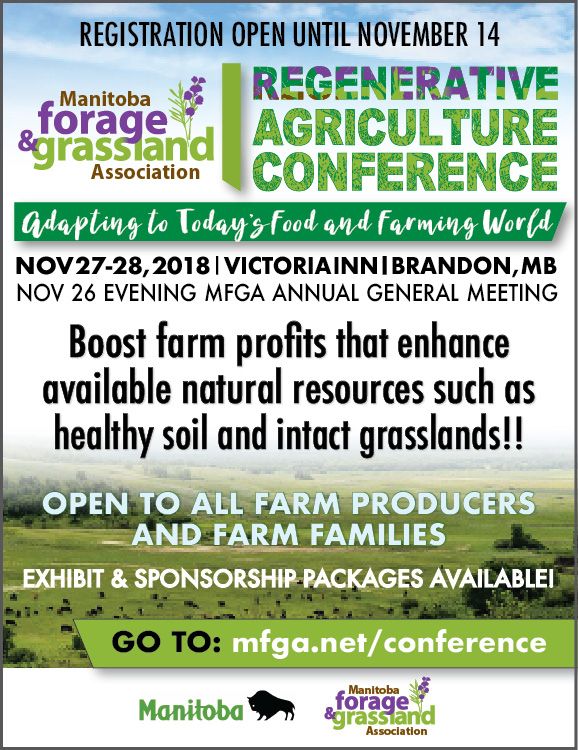
Regenerative Agriculture Conference
November 27-28. Brandon, MB
|
Foraging Into The Future X
11-12 December, 2018
Swift Current, SK
|
Birds of Saskatchewan
from Nature Saskatchewan
Nature Saskatchewan is excited to announce a long anticipated publication: "Birds of Saskatchewan". This is a full-colour, comprehensive look at all of the birds that call Saskatchewan home. 437 species of birds are documented in this 800 page compendium, a result of over ten years of work and several lifetimes of observation, research, and writing.
This fantastic book is now available for pre-orders until December 15, at a price of $64.95 + shipping. After December 15 the purchase price will be $79.95 + shipping. Orders will be accepted via online,
or via telephone at 306-780-9273 or 1-800-667-4668.
|
Nature Conservancy of Canada
Nature Conservancy of Canada (NCC)
| |