|
|
Because Digestive Health Matters |
International Foundation for Gastrointestinal Disorders
November 2020 eNewsletter
|
|
|
Greetings!
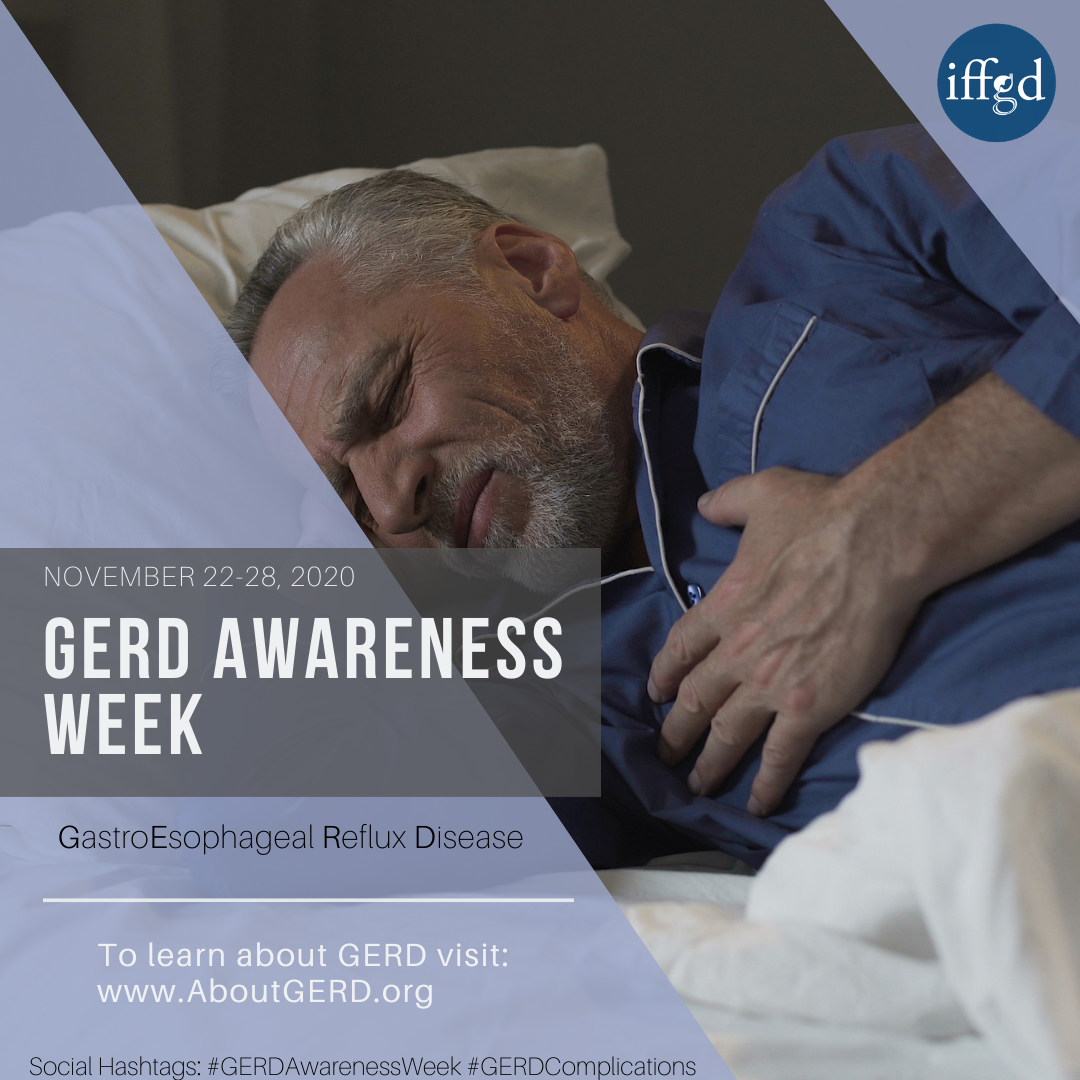
1 in 5 people suffer from GERD in the United States, and close to 5 million people are admitted into the hospital each year for chest pains. While just about everyone experiences episodes of heartburn or "indigestion" from time to time, heartburn that occurs more than once a week or takes place at night and wakes you from sleep may indicate something more severe. An underlying condition, such as gastroesophageal reflux disease (GERD) could be the cause.
In recognition of GERD Awareness Week, IFFGD will launch a campaign which acknowledges the daily complications of GERD for patients — using the hashtags #GERDComplications and #GERDAwarenessWeek.
|
|
|
|
November 22nd-28th is GERD Awareness Week.
This year we have created a social media toolkit, which contains information and resources to amplify the voices within the patient community and help spread awareness about GERD.
In the toolkit, you will find key messaging, ways to raise awareness using your platform, social media content, social media images, and posters.
Click here to download the 2020 GERD Awareness Week media toolkit.
|
|
Sugar can be naturally occurring, meaning it can be found commonly in foods such as fruit. Added sugars are sugars and syrups placed in foods during preparation or processing or even added at the table.
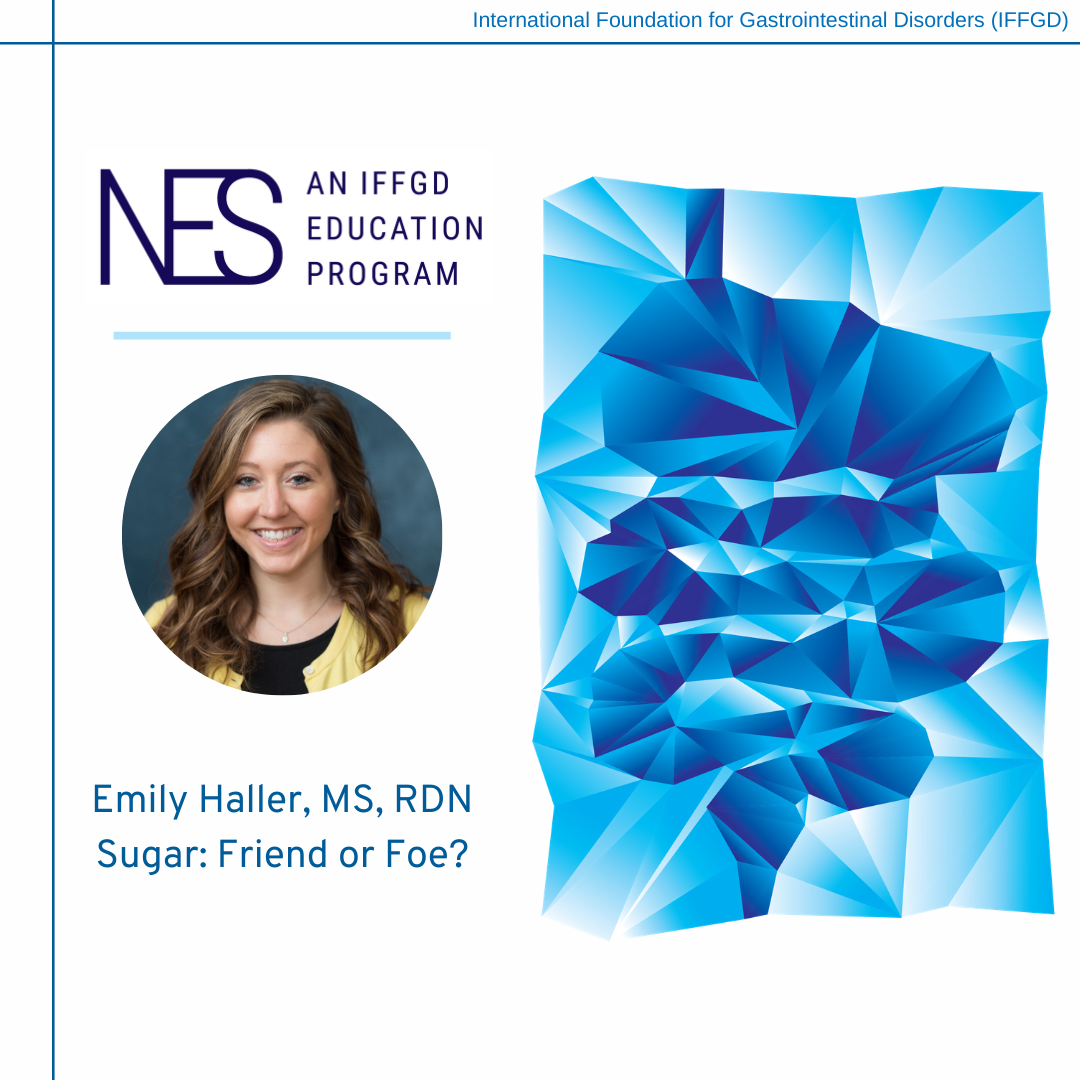
During our inaugural Nancy and Bill Norton Patient Education Series, Emily Haller, MS, RDN, shared an overview of the different sugars and their impact on the human body.
Click the button below to learn about the different types of sugar, how much we should consume, how the body processes them, and how they could impact gastrointestinal (GI) symptoms.
|
|
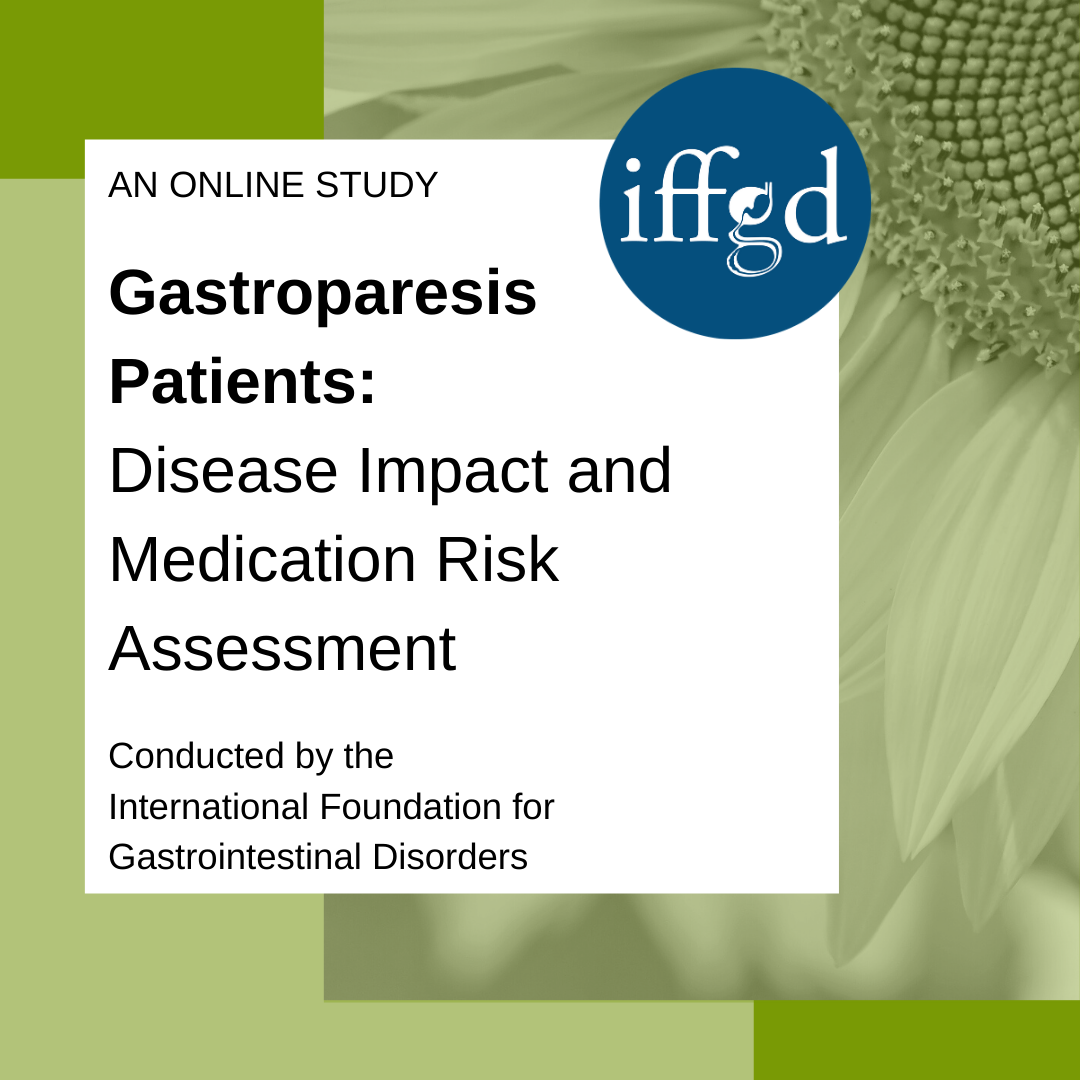
IFFGD conducted a short survey of the gastroparesis community to study the quality of life, disease severity, and patient risk assessment when considering medications and clinical trials.
This survey is named the “Gastroparesis Disease Impact and Medication Risk Assessment.”
Behind every response in this survey is a person struggling to understand and manage gastroparesis daily. We have created a document highlighting the valuable insight gathered from this survey.
We thank the survey participants for their help as we seek a better understanding of community needs.
Click the button below to view the Gastroparesis Disease Impact and Medication Risk Assessment.
|
|
|
|
Want want to thank those of you who were able to tune in to our inaugural Norton Education Series event that was live streamed from the Food for Life Kitchen at the University of Michigan, on October 11th.
For those of your were unable to watch live, all of the presentations from the event are available to view online. Some of the talks include; "Sugar: Friend or Foe?", "Living your Best IBS Life", and a cooking demonstration.
Visit our event page or follow us on social media for updates on future NES events.
|
|
|
GivingTuesday is a global day of giving that harnesses the collective power of individuals, communities, and organizations to encourage philanthropy and to celebrate generosity worldwide.
This #GivingTuesday, IFFGD will celebrate the season of giving on December 1st, with a campaign using hashtags #GIvingTuesdayIFFGD and #iGive4Education, to raise awareness about the educational resources and information supporting those impacted by chronic gastrointestinal disorders.
Click the button below for images to support the IFFGD GivingTuesday campaign.
Click here to learn about the Giving Tuesday movement.
|
|
December is Constipation awareness month. Most people experience bouts of constipation from time to time. But, for millions of Americans, constipation isn't something that goes away. Chronic constipation affects up to 20% of adults and 16% of children in just the United States alone.
Increasing public knowledge of this common yet often misunderstood GI condition is the first step in helping patients achieve an accurate diagnosis.
This December for Constipation Awareness month, we will launch a campaign that acknowledges the dilemmas that so many face — using the hashtags #ConstipationDilemma and #ConstipationAwarenessMonth.
Click the button below to download the 2020 Constipation Awareness Month media toolkit.
|
|
Clinical trials and research studies help to improve our understanding of the underlying mechanisms of diseases and advance the development of new and better treatment options. By participating in a study, you can help further the advancement of research and learn more about your condition.
Here are 3 studies currently recruiting participants:
|
|
As we recognize the critical role of research in advancing the understanding and care of chronic gastrointestinal (GI) illnesses in adults and children, this month, we are highlighting IFFGD's 2020 Clinical Research Recognition Award Winner, Kyle Staller, MD, MPH.
Kyle Staller, MD, MPH is a gastroenterologist and the director of the Gastrointestinal Motility Laboratory at Mass General. He is also an assistant professor of medicine at Harvard Medical School and a member of Clinical and Translational Epidemiology Unit.
|
|
|
Dr. Staller specializes in disorders of gastrointestinal motility and neurogastroenterology and is a faculty member of the MGH Center for Neurointestinal Health and the MGH Center for Pelvic Floor Disorders. His clinical practice is devoted to treating patients with GI motility disorders and disorders of brain-gut interaction.
Dr. Staller’s research interests include clinical and epidemiologic research in neurogastroenterology and motility with particular interest in chronic constipation, irritable bowel syndrome (IBS), fecal incontinence, eating disorders, and women’s health in functional GI diseases. His research has been published in medical journals across the spectrum of GI, and he also serves as a medical liaison to the media with appearances in national news outlets as well as health and wellness magazines.
Dr. Staller received his medical degree from Harvard Medical School and trained at Massachusetts General Hospital (MGH) for residency and gastroenterology (GI) fellowship. He also completed formal training in epidemiology culminating in a Masters of Public Health from the Harvard School of Public Health and subspecialty training in neurogastroenterology and motility at MGH before joining the faculty.
|
|
IFFGD is a nonprofit organization. We rely on donor support to fund research and to provide reliable information and support to those affected by chronic gastrointestinal disorders.
|
|
|
|
|
|
|