Long Island Swimming Officials Association 
Serving Long Island Swimmers for over 60 years! 
November 2020
Let's see how this goes ...

This month (November) I worked five swim meets at four different venues. Over the course of those meets I worked with association members Jacky Spierer (who also worked a National Swim meet -Toyota U.S Open - in Richmond, Virginia, this month), Nelson Gonzalez, Howard Andersen, and Jeff Chu.

The Nassau County Aquatic Center meet began at 8:00 a.m. and ran for nine hours (I officiated for five hours). East Hampton YMCA - from 7:30 a.m. to 4:00 p.m. (Howie Andersen clocked over 4000 steps that day). Connetquot High School twice for four hours each time, and The Stony Brook School from 7:30 a.m. to 3:00 p.m.

Each meet was run safely. The swimmers ranged from 6 years old to 18 years old. The officials were from 35 to 80 years old. NCAC allowed spectators in the stands. Over the last six months, the teams and the venues have figured out how to operate swim meets in an effective, safe manner. They follow the guidelines and enforce the rules. The swimmers are conditioned to wear their masks when they are not swimming and put them on as they exit the pools.

There were from 65 to hundreds of swimmers at these meets, but only 10, 6, 5 - whatever the number of lanes in the pool - on the pool deck at one time. Groups were scheduled in one to two hour waves or sessions so as not to exceed the facility 50% capacity.

The meets were managed well. The swimmers were distanced from the deck when not swimming, only coaches and timers on the deck, spectators in the stands or not allowed. We did our job, as always and enjoyed ourselves. So far next month, I will be working two swim meets - NCAC and The Stony Brook School.

No one wants to be sick or catch anything - so, in my experience, everyone is intent on doing the right thing.

Thank you,
George Fleckenstein
president 
LISOA Safety Plan
Please review the Safety Guidelines for the Upcoming Season


Includes: General, Arrival, PPE, Meet Procedures and Operation Guidelines.
Section Updates
Section VIII

Winter Sports Season
January 12, 2021 - February 26, 2021

The Varsity swim meets are scheduled and posted and will begin on January 12.

The Section is assigning the officials - so make sure that your availability is up to date.

Most days there will be a need for 10-16 officials - on February 2 and 5 we will need 22 and 24 officials.

Jr. High/Modified Dive of the Week
Week of January 10 - 100
Week of January 17 - 100 (repeated)
Week of January 24 - 200
Week of January 31 - 400
Section XI

Winter Sports Season, January 12 - February 27

Section XI is currently assigning the officials. If you officiate Suffolk County meets, please maintain your availability.
We continue working with the Sections to Safely Return to Swimming and Diving Meets.
LISOA DIVING CLINIC
MONDAY, DECEMBER 14, 2020
7:00 p.m.
on ZOOM
Presented by Cyna Buckley
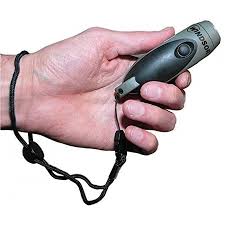
A new Windsor Electronic Whistle will be given to each member at the January 6 Association Meeting as decided by the our LISOA Board of Directors.
LISOA Meeting Dates 

Diving Clinic - December 14, 7:00 p.m. - ZOOM Meeting

WINTER BOY'S SWIMMING AND DIVING SEASON - January 12 - February 27

Pre-Season and Nominating Meeting -Wednesday, January 6, 2021 

Annual Meeting -Thursday, January 21, 2021

Recognition Dinner Meeting - March 2021 
diving-board.jpg
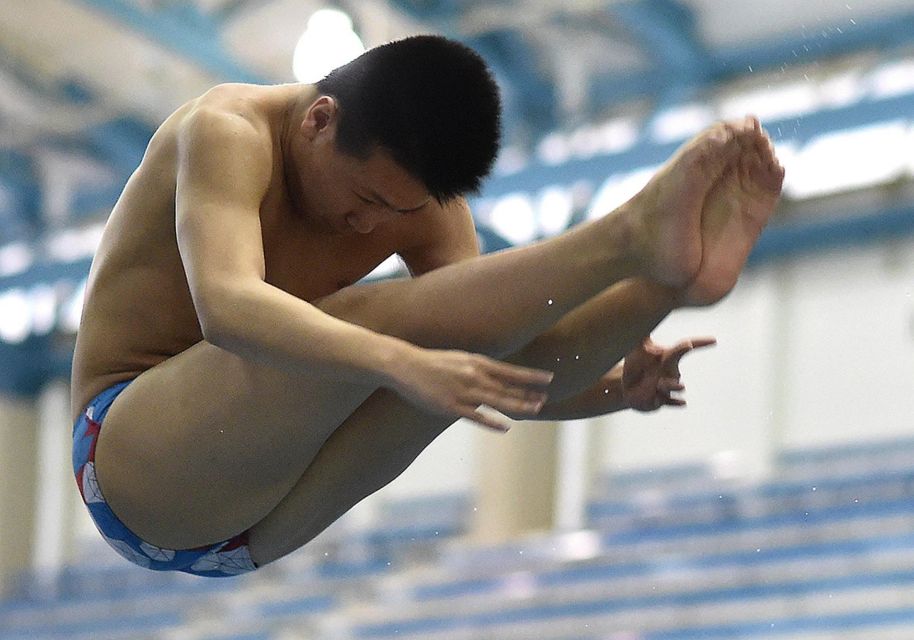
Things Every Diving Judge Should Know...

... Any dive from a group may be designated as a voluntary dive. It will receive its assigned DD through 1.8. Any voluntary dive with a DD greater than 1.8 will be assigned a DD of 1.8.

The dive is completed and scored when the body passes through the surface of the water. What happens after the diver passes through the surface of the water should not affect the judges score

Properly executed dives should be performed a safe distance from the board and walls.

Two elements a judge should not consider are the approach to the starting position of a dive and a diver’s movements beneath the surface of the water.
WELCOME NEW MEMBERS
Roy Smalling
Errol Vega
Boris Yasinov
LISOA NOMINATING MEETING
WEDNESDAY, JANUARY 6, 2021

ANNUAL MEETING AND ELECTION
THURSDAY, JANUARY 21, 2021
Mitigation Efforts Intensify as Winter Sports Begin

Dr. Karissa Niehoff, Executive Director NFHS
November 2020

To play or not to play winter high school sports and other activity programs – that is the decision being considered by state high school associations, state health and education departments, and state governments.

While 35 states offered football this fall – with 30 leading to state championships – and another 10 states were able to sponsor other fall sports, the outlook for traditional winter sports and activities held indoors is proving to be one of the toughest decisions since the COVID-19 pandemic wiped out two-thirds of state basketball finals last spring.

According to the NFHS 2020-21 Basketball Seasons Modifications Map, 22 states have plans to conduct high school basketball in a fairly normal timeframe, while 29 (28 states plus the District of Columbia) have announced modifications for the season, many of which include delays to later in the year. 

With the number of positive COVID-19 cases rising across the country, two of the core issues in making these winter sports decisions are determining how prevalent the transmission of the virus is in actual competition and the mitigation strategies necessary for indoor activities.

And to make these decisions even more difficult, while the physical health and safety of participants must remain the No. 1 criterion, there continues to be the social, emotional and mental health concerns if students are unable to participate in sports and performing arts. In short, these decisions are about the value of involvement in education-based activities vs. the concerns of no involvement in these life-changing programs.

The shift to indoor sports (basketball, wrestling, ice hockey, swimming and diving) this winter has elevated concerns about virus spread as participants will be in close proximity in enclosed settings. While there have been a few cases of large-scale virus spread reportedly traced to sport contact, we know from communication with state high school association leaders throughout the fall that, in fact, quarantines were more often enacted due to team members contracting the virus in other settings and bringing it into practices or games.

While at least one statewide survey seemed to support these reports from state associations that actual sport contact has not been the primary source of virus transmission, the NFHS Sports Medicine Advisory Committee is involved in gathering national data about the risk of COVID-19 spread from direct contact in sports competition this fall.

Regarding performing arts programs, the unprecedented aerosol study commissioned by the NFHS, the College Band Directors National Association and more than 125 other groups has demonstrated – through scientific research – that music activities can be successfully conducted by following several mitigation strategies.

In those schools with in-person learning, if participants playing wind instruments wear surgical-style masks with a slit for the mouthpiece, and use an appropriate bell cover, aerosol emission is reduced between 60 and 90 percent.

Mitigation strategies outlined in the first two releases of the aerosol study have helped to keep music programs going this fall in several states, and the third round of results released last week hopefully will enable more schools to feel confident in continuing music programs – in those schools where students are engaged in in-person learning – because the scientific data has become more refined.

As high school sports and other activities move indoors in the coming weeks, there are a number of mitigation efforts that schools must have in place if events are going to happen successfully.

In addition to the core protective elements of wearing masks, social distancing and proper hygiene, indoor activities will require the additional precautionary tasks of proper facility management and crowd management. Facilities must be properly sanitized, and ventilation systems must be in working order.

Crowds must be managed to accommodate the necessary distancing of spectators, and plans must be in place to keep fans from congregating, such as at halftime or following the game. One idea to enhance social distancing is to eliminate concession stands this year – or at least package items in a manner that improves the flow and lessens the chance of fan interaction.

Certainly, there are situations in some states where state health or government leaders are making decisions to return schools – and sports and activities – to virtual learning due to spiking positivity rates. And focusing on the physical health and safety of students, coaches, officials and spectators must come first.

However, in these cases, we encourage individuals to keep the faith and have plans in place when that next opportunity comes. High school sports have been a part of our nation’s schools for more than 100 years. They have survived world wars, natural disasters and countless funding challenges, and they will survive the COVID-19 pandemic.
NYSPHSAA Return To Interscholastic Athletics 2020-2021

Considerations For Officials

OFFICIALS’ GUIDELINES WHEN RETURNING TO OFFICIATE CONTACT THE HOST SCHOOL:
• Contact should be made with school athletic administration leading up to the contest about
(1) school expectations,
(2) to determine where you should enter the host school’s property and
(3) to obtain other information that you or the school may want to communicate to each other prior to your arrival.
o Officiating crews should designate one crew member to contact the host school and provide information to other members of the crew.
• Request hand sanitizer be available at scorer’s table, if applicable, and use it between periods and during time outs; officials are encouraged to bring their own in the event none is available.
• Conversations should occur with the host school administration regarding the size of changing areas or locker rooms to ensure social distancing can occur.
• When possible, officials should come to contests fully dressed in uniform.

GENERAL OFFICIAL GUIDELINES:
• Officials are not responsible for monitoring activities on the sidelines, such as social distancing, face coverings, hand washing, symptoms of illnesses and other such issues. This monitoring obligation remains with the coaching staff and school personnel.
• Be prepared to have a health screening conducted upon arrival at a school campus.
• In accordance with NYSDOH guidance (Interim COVID-19 Guidance for Sports and Recreation), responsible parties must ensure a distance of at least six feet is maintained among individuals at all times, whether indoor or outdoor, unless safety or the core activity (e.g. practicing, playing) requires a shorter distance. If a shorter distance is required, individuals must wear acceptable face coverings, unless players are unable to tolerate a face covering for the physical activity (e.g. practicing, playing); provided, however, that coaches, trainers, and other individuals who are not directly engaged in physical activity are required to wear a face covering. (Pg. 5)
• Upon conclusion of the contest, officials should leave the contest area and not interact with others.
• Officials must pay special attention to playing rules that require distances between players during play. • Reminders should be issued for situations that involve hygiene (spitting, etc.).
• Officials should maintain distance from players if an altercation occurs and minimize the times they are within six feet of others.
• Officials should be aware of the location of medical personnel while on school property.
• Limit the exchanging of documents between officials and others.
• Once the contest begins, avoid conversations within six feet with coaches.
• Wash hands frequently.
• Officials’ Uniforms and Equipment.
o Electronic whistles are permissible.
 Choose a whistle whose tone will carry outside.
 Be aware of the increased risk of inadvertent whistles.
o Bring own towels and hygiene materials. Do not share them with others.

GAME DAY:
• Complete a personal health assessment on the day of the contest.
• Communicate with school athletic administrator prior to the contest pertaining to school expectations.
• Upon arrival at the host site and throughout the contest, officials should wash and sanitize hands.
• When traveling to contests, considerations should be given to limiting carpooling or traveling with other individuals.
• Do not share uniforms, towels, apparel and equipment.
• Maintain social distancing of six feet at all times, including while in the locker room and/or on the court/field.
• Bring own water bottle or rehydration beverages.
• Use a mask when communicating verbally within six feet of others.
• To maintain social distancing, officiating positions may need to be changed in a manner that are not necessarily in conformance with standard officiating mechanics.

PREGAME CONFERENCE:
• Limit attendees to one official, the head coach from each team, and a single captain from each team, while maintaining social distance.
• Pre-contest official crew meetings should be held outside when possible and where social distancing is more easily accomplished.
• Coin Toss – should involve only the Head Referee (wearing a face covering) and 1 captain and head coach from each team.
• Move the location of the pregame conference to the center of the court/field. All individuals should maintain a social distance of six feet.
• No handshakes are permitted.
• Maintain social distancing while performing all pregame responsibilities.

OFFICIALS’ TABLE:
• Limit the table to essential personnel, including the home team scorer and timer. Visiting team personnel (scorer, statisticians, etc.) are not deemed essential and may need to find an alternative location. Space availability at the table is a variable in determining the number of individuals permitted at the officials’ table and observing social distancing requirements.

PREGAME AND POSTGAME CEREMONY:
• No shaking hands during introductions. • Traditional pre-game introductions should be altered to ensure social distancing occurs. • No postgame handshakes.

PERSONAL RESPONSIBILITIES:
• Training
o Review current and past year rule and case books.
o Attend online and in-person meetings to review the rules for the coming year.
The primary role of the official is to ensure fair competition which is conducted in a positive, safe and healthy environment and that actions of the competitors, coaches and other team personnel are in compliance with the rules.
The purpose and goals of the LISOA and its members shall be to:  
Officiate all meets in a competent and professional manner.
Have its members actively work to improve interscholastic swimming and diving officiating.
Provide a consistent interpretation and administration of interscholastic swimming and diving rules.
Service and collaborate with the swimming and diving community for the improvement of swimming and diving.
The official must establish the best possible competitive climate for fair competition with the attention on the athletes, rather than on the official. The conduct of each official affects the public’s attitude toward all officials. Therefore, every official must uphold the honor, integrity and dignity of the profession.
OUR OFFICERS
President:
George Fleckenstein
Vice President:
Cyna Buckley
Secretary:
Chris Zimmet
Treasurer:
Barbara Wendt
Directors:
Doug Virkus
Larry Wachter
]
Rules Interpreter:
Bob Kersch
Past President:
Frank Dowd
OUR FOUNDING MEMBERS (1957)

Charlie Schlegal
George Columbo
Jim McAllister
Dick Atwater
Jack Reilly
Frank Krayer


NYSCSO Distinguished Service Award Members

Laurette Tekverk (2020)
Jim McAllister (2019)
Doug Virkus (2011)
Mush Masters (2008)
Pete Moeschen (2004)
Stan Adler (1993)
Bob Kersch (1990)

liswimofficials.com