Amistad is committed to collecting, preserving and providing open access to original materials that reference the social and cultural importance of America's ethnic and racial history, the African Diaspora, human relations and civil rights. |
|
Support Amistad’s Legacy during Giving Tuesday |
During this past year, the Amistad Research Center was incredibly fortunate to be recognized as one of six recipients of the National Medal for Museum and Library Services. This recognition was based not on a single achievement or statistic, but on Amistad’s decades-long legacy as a cultural heritage institution with a reputation for providing access to its outstanding collections, for creating thought-provoking public programming and educational outreach, and for supporting organizations and individuals seeking to highlight the histories of marginalized communities in order to spark dialogue and change.
|
|
Help us continue to preserve and tell the stories of the individuals, families and organizations who have sought to ensure that equality, freedom and social justice are not just topics of the past, but the way forward in the future.
This isn’t solely our legacy to protect; it is yours. We are counting on you to take your place in history. Make an online financial contribution to the Amistad Research Center here. Other options for support are available here. |
|
New Collection Documents Legacy of Music Education |
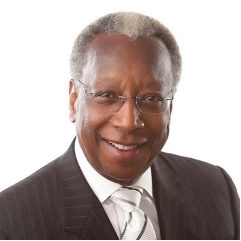
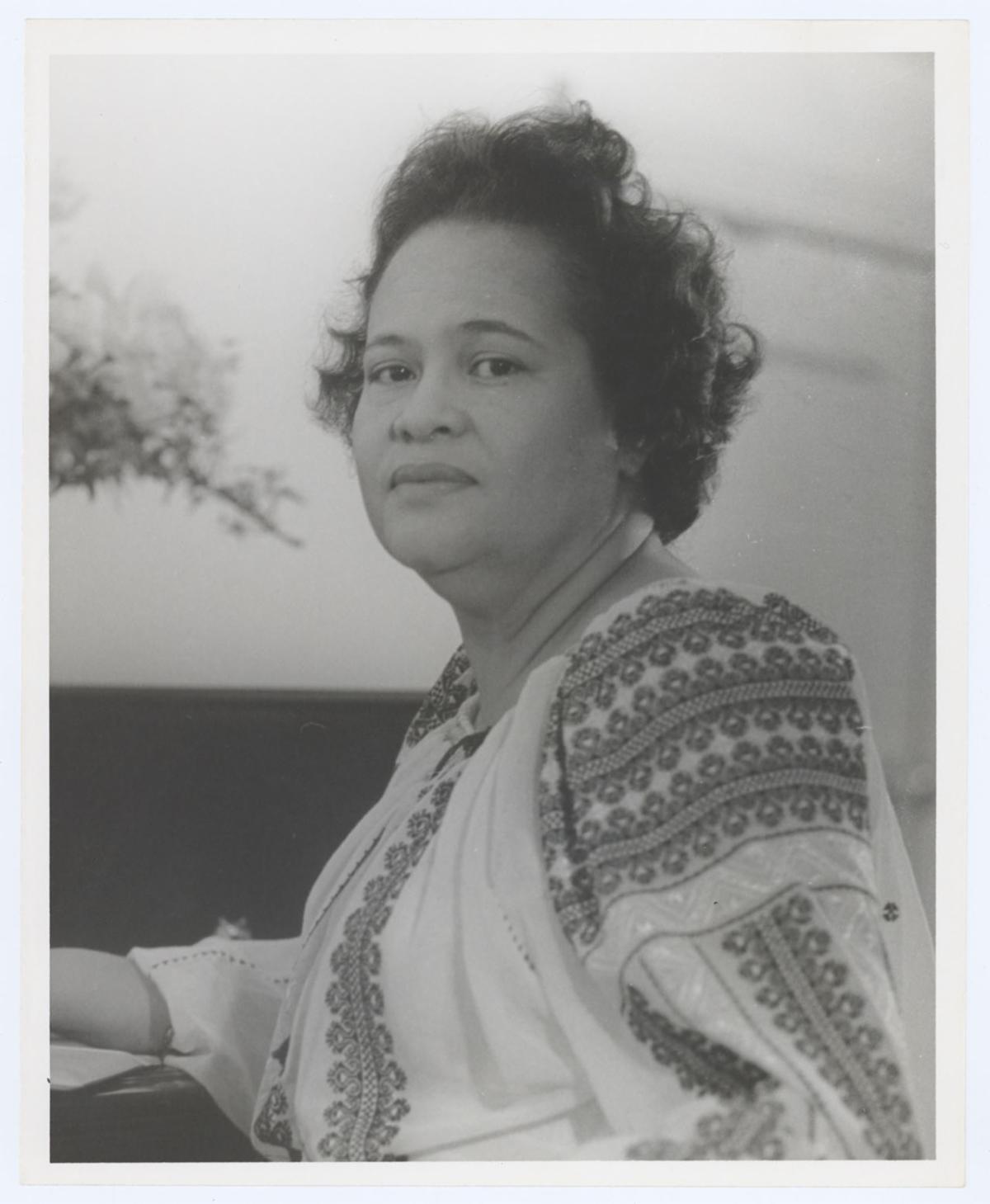
The beauty of music and the joy of teaching were two of the guiding principles in the life and career of Dr. Walter Harris, Jr., whose papers and book collection are now housed at the Amistad Research Center thanks to a generous donation by his wife, Dr. Henrietta Augustus Harris. Donated over the course of this previous year, Dr. Harris’ work with Amistad to preserve her husband’s legacy ensures that scholars, music lovers and students of gospel and spiritual music will have access to this important collection.
|
|
Walter Harris, Jr. Photo courtesy of Dr. Henrietta Augustus Harris. |
|
Sorority History Highlighted at Amistad |
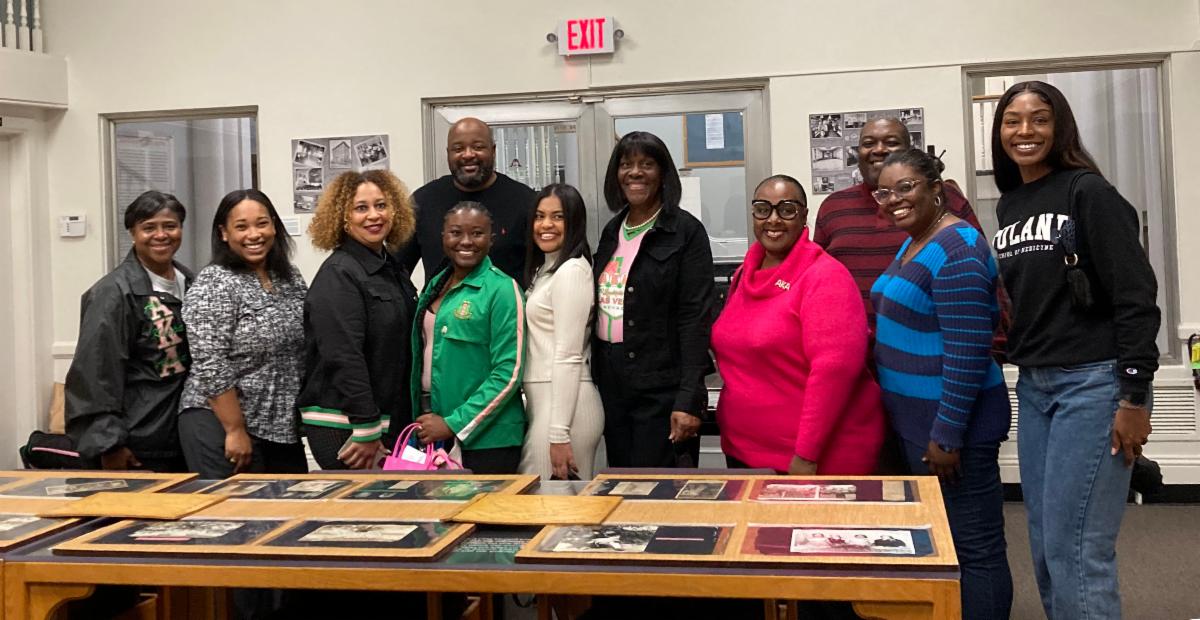
Historical information on various African American Greek-letter organizations can be found throughout Amistad’s holdings. One of the most extensive collections is the records of the Alpha Beta Omega chapter of Alpha Kappa Alpha, which was chartered in New Orleans in 1927. Amistad was pleased to host chapter members and guests on a recent Saturday to view portions of the chapter’s records. We look forward to continuing to work with the chapter to preserve its history and legacy. |
|
Guests and Members of the Alpha Beta Omega chapter of Alpha Kappa Alpha visit Amistad. |
A special thank you to Trina Parker, chair of the chapter’s archives committee, for her assistance in coordinating the visit. Read more about the collection here. |
|
Amistad’s Collections Depend on Your Support |
Amistad’s mission to collect, preserve and provide access to historical documents is made possible by generous donations from individuals, families and organizations. Please consider becoming a recurring donor through our Network for Good page.
|
|
Do You Have Materials to Donate? |
Interested in donating personal papers, organizational records, works of art, books or other materials to Amistad? Please visit our collection development policy available here to learn more about how you may donate, or contact us at 504.862.3222 (ext. 3) or info@amistadresearchcenter.org.
|
|
Amistad Partners with Bridgeman Images to License Content |
|
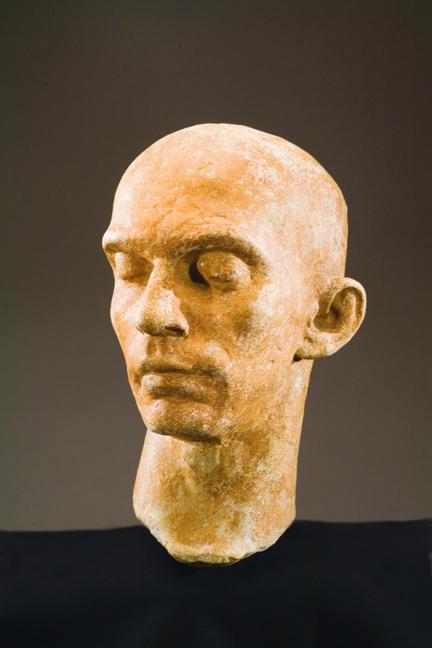
The Amistad Research Center is now represented by Bridgeman Images, the world’s leading specialist in delivering fine art, and cultural and historical media for reproduction. Researchers, publishers and the public can now find a significant portion of Amistad’s fine art collection and a growing number of images from the Center’s archival collections available for use and licensing via Bridgeman’s online catalog. Look for more content as Amistad continues to contribute additional images and footage from its collections. In the meantime, you can learn more about this partnership here. |
|
Head of a Man/Harold Kreutzberg by Richmond Barthe, terra cotta, ca. 1937.
|
|
It is with great sadness that we share the passing of two individuals who were instrumental in documenting Louisiana’s African American heritage and arts. Writer, educator and filmmaker Maurice Martinez passed away on September 12, 2022, at the age of 88. Martinez documented New Orleans’ masking culture with the 1976 documentary The Black Indians of New Orleans, and his work in this area continued over many years. His mother, Mildred Martinez, founded the influential Martinez Kindergarten School in New Orleans. You can read more about his life here.
|
|
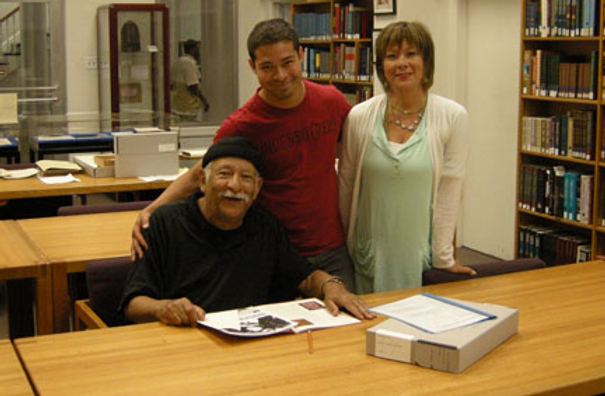
Maurice Martinez and family visit to review his collection, May 2013 |
|
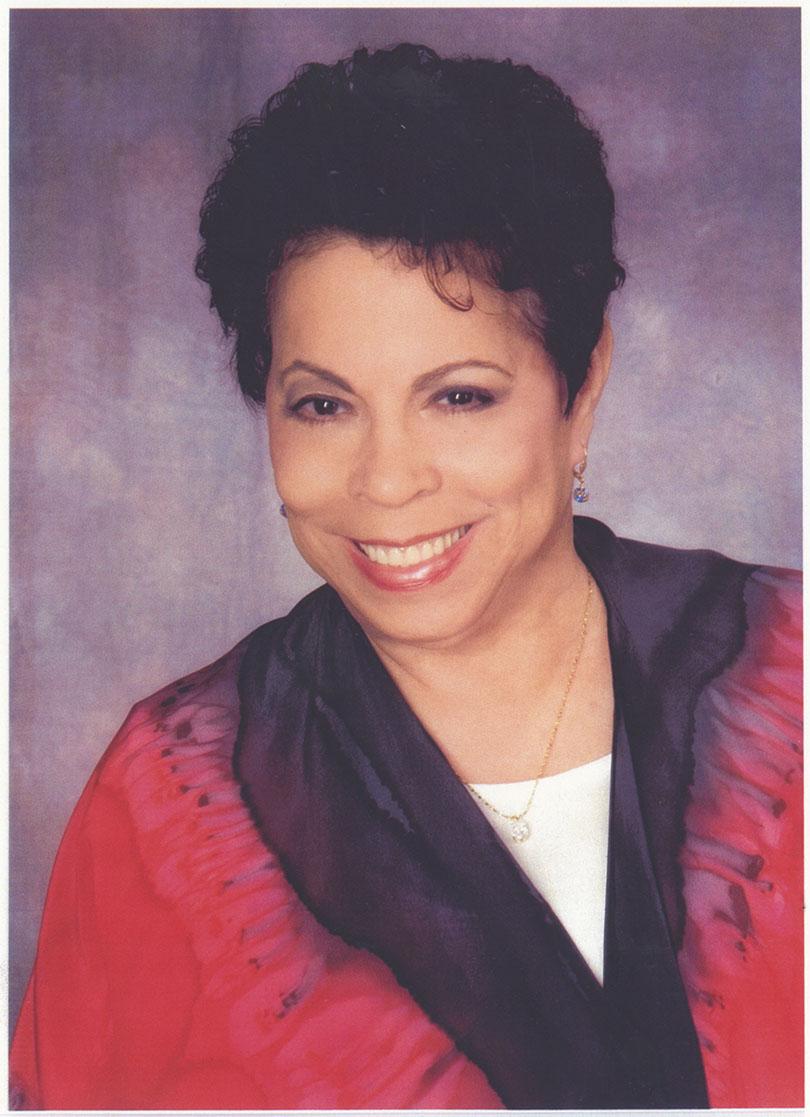
Fellow poet, musician and scholar Consuela Moore Provost, known professionally as Sybil Kein, was noted for her work in documenting and celebrating Louisiana’s Creole culture and history. She passed away on October 28, 2022 at the age of 87. She edited the book Creole: The History and Legacy of Louisiana’s Free People of Color and authored the poetry collection Gumbo People (among many other poetry volumes) and the children’s book Maw-Maw’s Creole ABC Book, as well as producing several recordings of Creole music. More on Provost’s life can be found here. |
|
xxxxxxConsuela Moore Provost
|
|
Conversations in Color Series Part of Community Partnership |
In partnership with New Orleans Airlift and Third Eye Theatre Interdisciplinary and Improvisational Performance Company, Amistad Research Center hosted three Conversations in Color discussions in September as part of the lead-up to Liberation Vibrations, a collaborative music and healing event held at Music Box Village in October. The three discussions included historians Dr. Laura Rosanne Adderley and Leon Waters, educators Freddi Williams Evans and Dr. Joyce M. Jackson, and artist Katrina Andry and art curator and historian Dr. Mora Beauchamp-Byrd. All three talks are now available on Amistad’s Vimeo page.
|
|
|
Amistad and Rivers Institute Co-host Artists Talk |
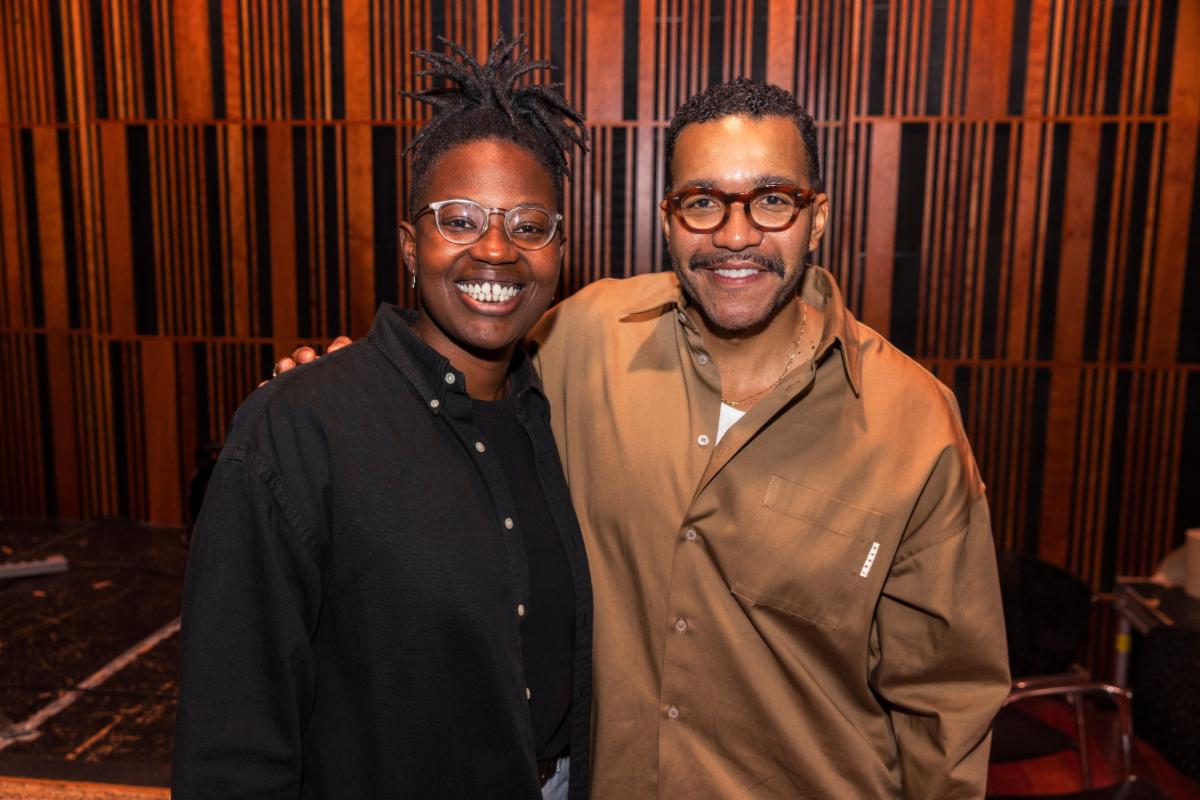
The Amistad Research Center and Rivers Institute for Contemporary Art & Thought hosted an evening of conversation with our second Amistad-Rivers Research Resident, Troy Montes Michie. Montes Michie returned to New Orleans as part of an artist residency program sponsored by the Mellon Foundation. Art enthusiasts filled the New Orleans Jazz Museum’s Performance Center on Thursday, October 20th to listen to Montes Michie’s conversation with New Orleans-based artist Ashley Teamer. Montes Michie and Teamer both use collage as a point of departure to engage with past histories and build new futures. Founding director and curator of Rivers, Andrea Andersson, moderated the conversation and wove questions about both artists’ practice throughout the presentation. |
|
Artists Ashley Teamer and Troy Montes Michie |
Following the conversation, guests joined us for refreshments catered by Lil Dizzy’s Cafe, a nod to one of Montes Michie’s favorite spots to grab a bite to eat while visiting New Orleans. On behalf of Amistad and Rivers, we thank Arkesha Baquet and the wonderful staff at Lil Dizzy’s Cafe and the New Orleans Jazz Museum for their continued hospitality, as well as Tammie Hill, Bernadette Gildspinel, Dwayne Conrad and Alex Marks for their support in making this event a success!
The conversation between Troy Montes Michie and Ashley Teamer can be viewed here. |
|
New Digital Exhibitions Highlight Stories of Immigration |
As we emerge from another election cycle, the topic of immigration remains a hot button issue in the United States both with politicians and the voting public. Just prior to the COVID-19 pandemic, Amistad installed an exhibition titled I Know Them as People, Not as Figures: Narratives and Images of American Immigration, which proved quite popular before it was closed prematurely.
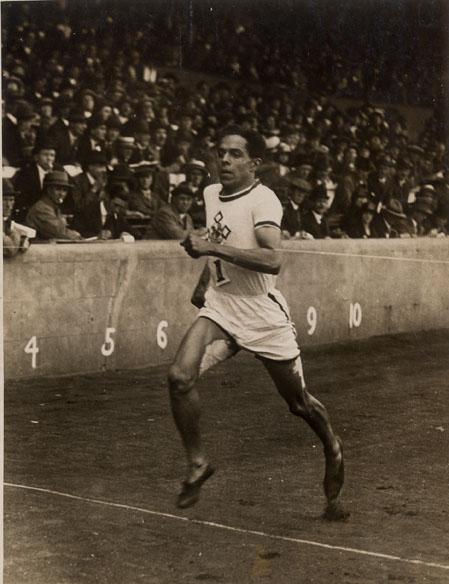
Amistad is proud to see this exhibition continue in part through new online exhibitions examining the lives of three individuals: Tsuyoshi Matsumoto, a Japanese man living in Alabama at the time of the Pearl Harbor bombing; Jennie F. Pratt, who worked as a school teacher on Ellis Island for many years; and Harry F.V. Edward, a man whose varied life embodied internationalism.
|
|
Harry F.V. Edward racing at the Amateur Athletic Association championships in Great Britain, 1922 |
Explore how these stories reflect the history of immigration in the United States throughout the 20 th century by visiting Amistad’s digital exhibitions and exploring the Stories section. |
|
Amistad Awarded Grant to Support Digital Preservation |
|
Digital preservation is an increasingly important focus for many archives as they work to preserve and provide access to born-digital and electronic documents. Amistad is proud to announce receipt of a Museums for America grant in the amount of $100,700 from the Institute of Museum and Library Services (IMLS) for “Metadata Remediation and Digital Asset Management: A Phase II Project.” This two-year project will support Amistad’s staff as they continue to enter digital materials into a content management system in order to provide efficient access to researchers, with a special focus on Amistad’s many digitized audiovisual holdings. We thank IMLS for their continued support of these efforts. |
|
Now Dig This! The Opening of the Senga Nengudi Papers |
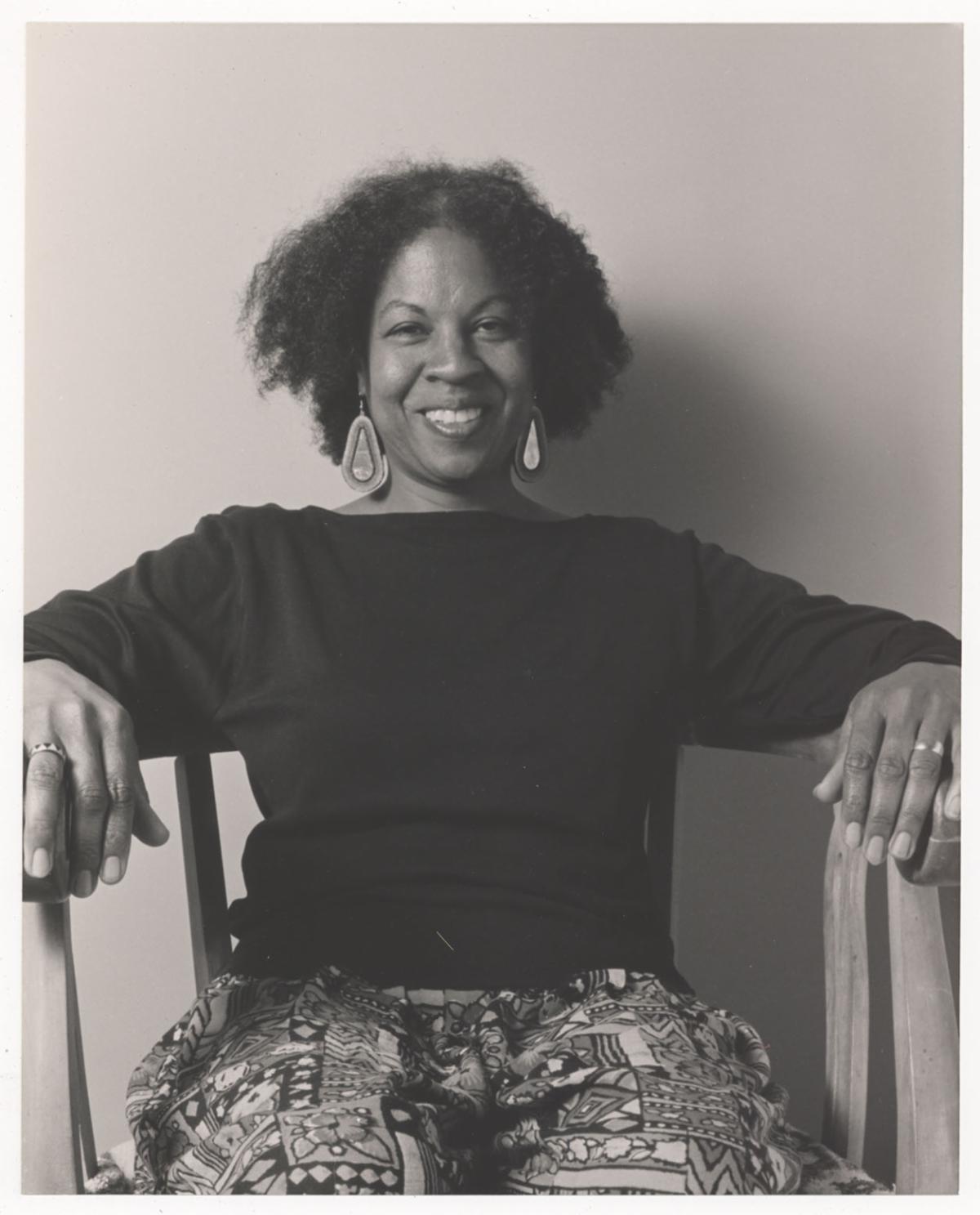
The Senga Nengudi papers are finally preserved and available to researchers globally! The papers, preserved with funding assistance from the Institute of Museum and Library Services (IMLS), are one of the 16 collections representing African American women leaders in a variety of fields, and are part of the IMLS grant project, “A Range of Experiences: Documenting African American Women’s History and Achievements.” Senga Nengudi is a visual and performance artist, arts educator and Black avant-garde artist from the 1960s and 1970s Los Angeles and New York City.
|
|
Black and white photograph of Senga Nengudi, undated. |
|
Celestine Cook: A Portrait of Civic and Economic Engagement |
The Amistad Research Center is proud to announce that the Celestine Cook Papers are now open and available for research. They offer a fascinating look at mid-twentieth century life in both Galveston, Texas and Cook’s adopted home of New Orleans, Louisiana.
|
|
Portrait of Celestine Cook by Larry Songy, undated. |
|
The Amistad Research Center is pleased to announce the promotion of two staff members to leadership positions. Lisa C. Moore became Head of Research Services in September, while Felicia D. Render was promoted to Curator of Manuscripts earlier this month. Congratulations to both Lisa and Felicia!
Amistad would also like to welcome Lisa Dahlke as our new Archives Project Assistant. Lisa received her master's degree in library and information science with a concentration in archival studies from Louisiana State University. She is currently pursuing a second graduate certificate in records and information management. Her undergraduate degree is in communication studies from Gustavus Adolphus College in St. Peter, MN. Prior to arriving at Amistad, she worked at the New Orleans Public Library. She is helping to organize the Federation of Southern Cooperatives/Land Assistance Fund and Emergency Land Fund collections and the Junebug Productions records.
Interim Executive Director Christopher Harter and Curator Brenda Flora attended the Council on Library and Information Resources' (CLIR) 2022 Digitizing Hidden Collections Symposium in Baltimore, Maryland. They presented on ARC's recent project Digitizing the Unseen Civil Rights Movement: The Ed Pincus Film Collection at Amistad Research Center, which was administered by CLIR and supported by the Mellon Foundation.
Felicia D. Render, Curator of Manuscripts, and Jasmaine Talley, who previously served as Curator, helped to coordinate and, with great enthusiasm, excitedly attended the Louisiana Archives and Manuscripts Association (LAMA) annual meeting, held on November 4, 2022, in New Orleans. Both staff members, along with a small conference committee team, coordinated the annual meeting. The annual meeting’s theme, "Reimagine," represented the ways in which archivists have utilized their collections and resources in order to change our interactions with communities, increase accessibility and correct injustices in Louisiana and beyond.
Head of Research Services Lisa C. Moore recently joined cultural historian Malik Bartholomew (Know NOLA Tours); writer, arts educator and researcher Freddi Williams Evans (Congo Square: African Roots in New Orleans), writer and researcher Fatima Shaik (Economy Hall: The Hidden History of a Free, Black Brotherhood) and curator Melissa Weber (Hogan Archive of New Orleans Music and New Orleans Jazz) for a panel at the American Studies Association conference in New Orleans on November 4, 2022. The panel, “Whose Archive? Addressing Gaps in Black History and Memory in Archives,” was moderated by Suzanne Mobley of Monument Lab, and explored the promise and precarity of archiving, researching and documenting Black history in New Orleans.
|
|
Find. Follow. LIke. Let's Be Friends!
|
|
Support for the Amistad Research Center comes from |
|
|
|
|
|
|