A newsletter from the Prince William Sound Science Center | |
|
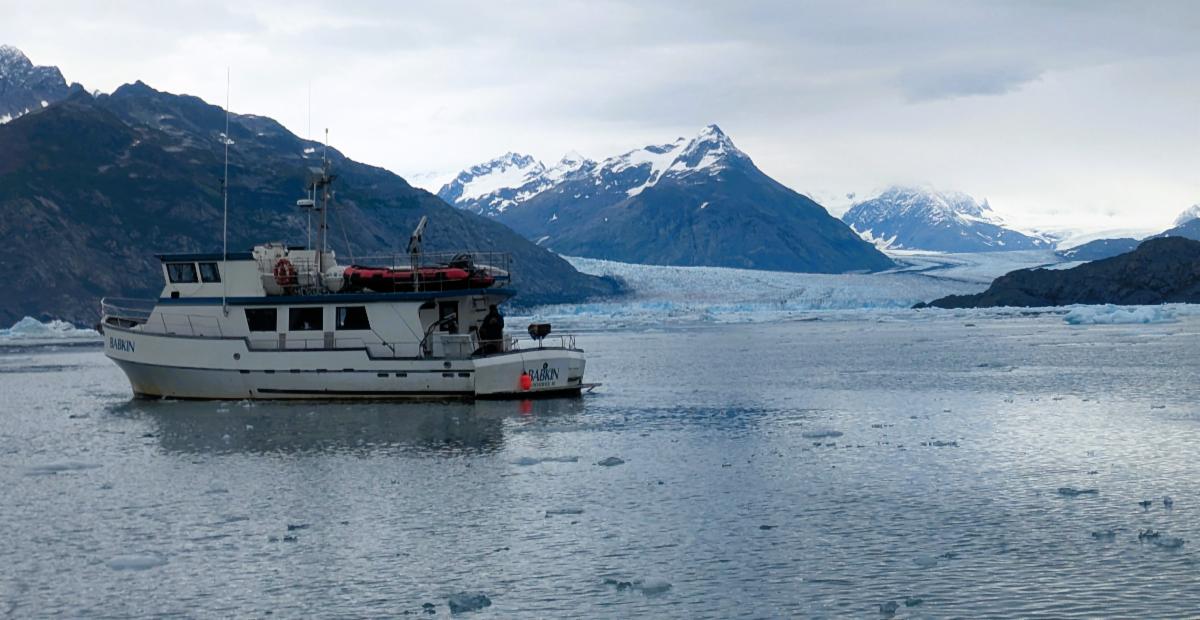
The Babkin in front of a Columbia Glacier during a recent Gulf Watch Alaska research cruise. Photo by Anne Schaefer. | |
WHALE AND SEABIRD INTERACTIONS | |
|
Avian research associate Anne Schaefer recently returned from the annual Gulf Watch Alaska Integrated Predator Prey (IPP) Survey in Prince William Sound. During the survey, a crew of researchers in two boats documented the interactions between upper-trophic-level predators (humpback whales and seabirds) and their prey (forage fish and krill). They recorded whale and seabird distribution, abundance, and behavior simultaneously with surveys that used hydroacoustic equipment to document fish and krill below the surface.
One of the questions Anne and the other IPP researchers are trying to understand is how humpback whales and seabirds interact to locate prey. For example, sometimes seabirds take advantage of feeding whales that drive fish upwards toward the surface and, therefore, closer to the waiting seabirds. In other instances, whales cue in on foraging flocks of seabirds diving on schools of fish. In Prince William Sound, researchers have mostly observed the latter behavior - whales seem to notice when flocks of seabirds are diving on a school, then the whales swim through the school to join in on the tasty treats (aka - eat all the fish)!
| |
ANNUAL MEETINGS IN CORDOVA | |
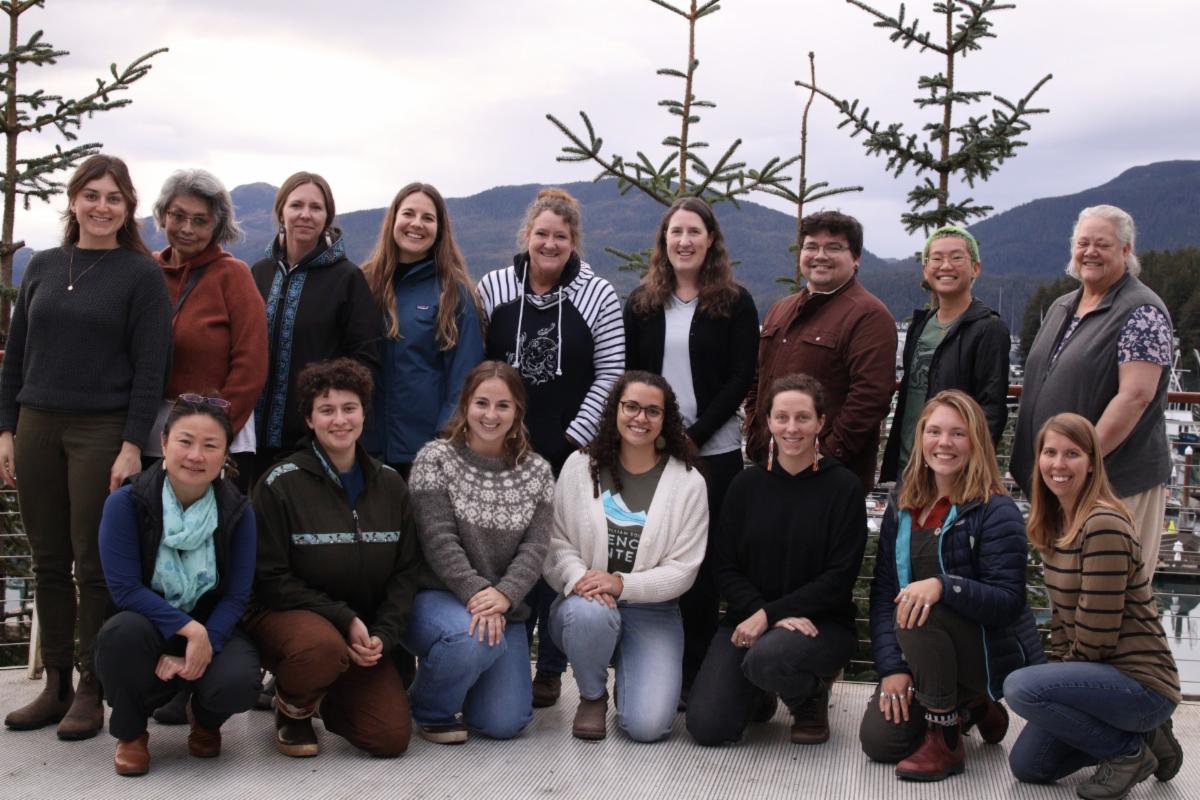
CORaL Network participants. | |
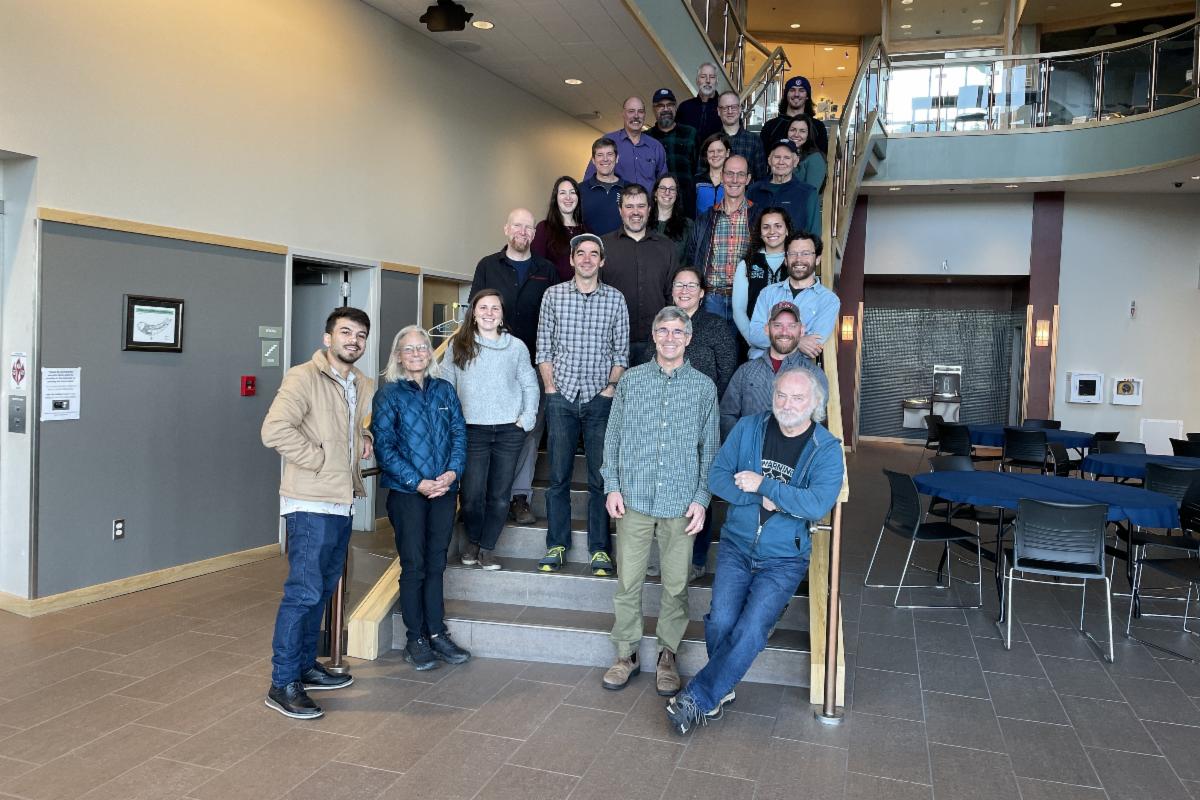
Gulf Watch Alaska-LTRM participants. | |
|
Last month, the Prince William Sound Science Center hosted two annual meetings.
The first was a meeting of the Community Organized Restoration and Learning (CORaL) Network: a partnership between Alaska Sea Grant, Alaska SeaLife Center, Alutiiq Museum and Archaeological Repository, Chugach Regional Resources Commission, Center for Alaskan Coastal Studies, and Prince William Sound Science Center. The CORaL Network empowers our region by collaborating, learning from one another, and sharing scientific, cultural, and traditional knowledge. They foster community co-creation and responsiveness to meet the needs of our partners and their service communities.
The next was a meeting of the Gulf Watch Alaska Long-Term Research and Monitoring (GWA-LTRM) Program. Primary Investigators (PIs) from partner organizations across Alaska came to Cordova, bringing their individual work together to place it in the context of the larger regional picture. Gulf Watch Alaska LTRM aims to provide sound scientific data and products that inform management agencies and the public of environmental changes and the impacts of these changes on injured resources. This program has developed and sustained a long-term time series of data about the EVOS-affected regions of the Gulf of Alaska. These data are synthesized into products to assist management actions, inform the public, and guide further monitoring priorities.
| |
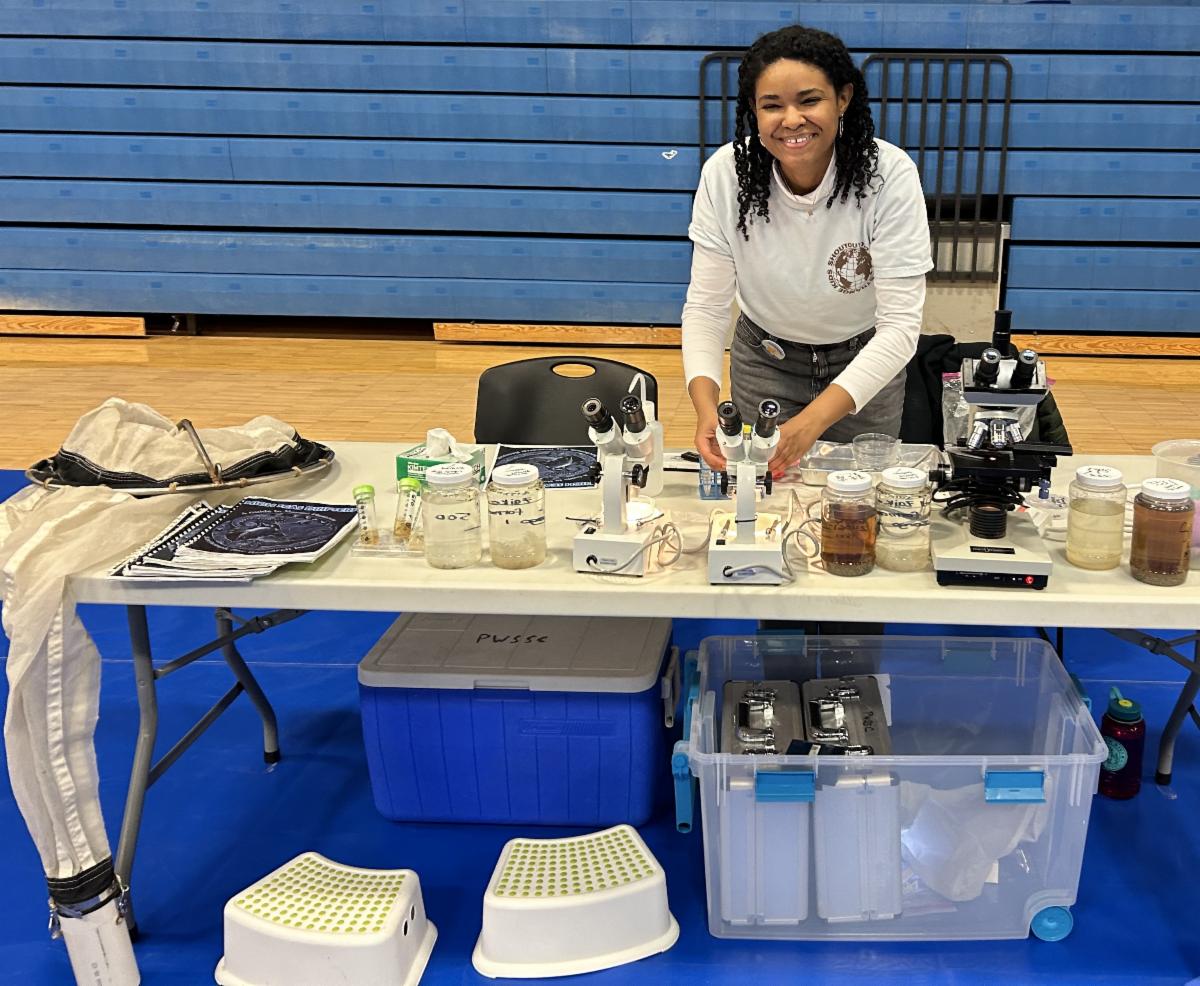
PWSSC Lab Technician Shelby Barnes discussed zooplankton research with the students. | |
|
A collaboration of ocean science, ocean industry, and place-based learning took place at the Cordova Jr/Sr High School during the Ocean Sciences Festival on Friday, October 18. This event was held for students to increase their understanding and awareness of ocean-related research, industry, and careers in the region.
Science Center staff worked with visiting researchers of the Gulf Watch Alaska Long Term Research and Monitoring Program to create engaging, hands-on activities highlighting research happening in Prince William Sound. One hundred and sixty-seven students in grades 3-12 learned about aerial monitoring, plankton, salmon tagging, herring disease, fish stomach dissections, humpback whale tracking, seabird surveys, the kelp lifecycle, and sea otter behavioral studies.
Presenters from the Native Village of Eyak, Chugach Regional Resources Commission, Cordova District Fishermen United, Prince William Sound Aquaculture Corporation, Alaska Sea Grant, Copper River Watershed Project, U.S. Forest Service, Prince William Sound Economic Development District, Prince William Sound College, and the U.S. Coast Guard also led activities about their work.
The Ocean Sciences Festival is part of the work of the CORaL Network, funded by the Exxon Valdez Oil Spill Trustee Council.
| |
COMMUNITY EVENTS FOR NOVEMBER | |
|
We hope you can join us this month for some educational fun! Different programs are intended for specific ages, as noted below. Younger participants need to be accompanied by a caregiver. Everyone is welcome to attend. A current calendar of events can be found on our website. Subscribe here if you'd like to receive email notifications for upcoming community education programs.
November 14 (7-8 pm) THURSDAY Night Talk: Shepard Point
Collin Bronson of the Native Village of Eyak will present on the Shepard Point Oil Spill Response Facility. Representatives from the construction team will be on hand to discuss the project, current progress, long range scheduling and other construction details to the public. This meeting is open to the public.
November 17 (7-8 pm) Nature Yoga: Breathwork and Barnacles
Join Aviva at the Science Center for a nature yoga session. This session will help you feel more rooted as we explore the one and only barnacle! Please arrive five minutes early and bring a yoga mat. Don't have a mat? Don't worry! Let us know and we can bring extras.
November 19 (7-8 pm) Tuesday Night Talk: Travel in Southeast Asia
This night's talk will be a meeting of the Prince William Sound Audubon Society. Aaron Bowman will talk about his trip to Southeast Asia as he searched for birds, mountains, and sanity. This meeting is open to the public.
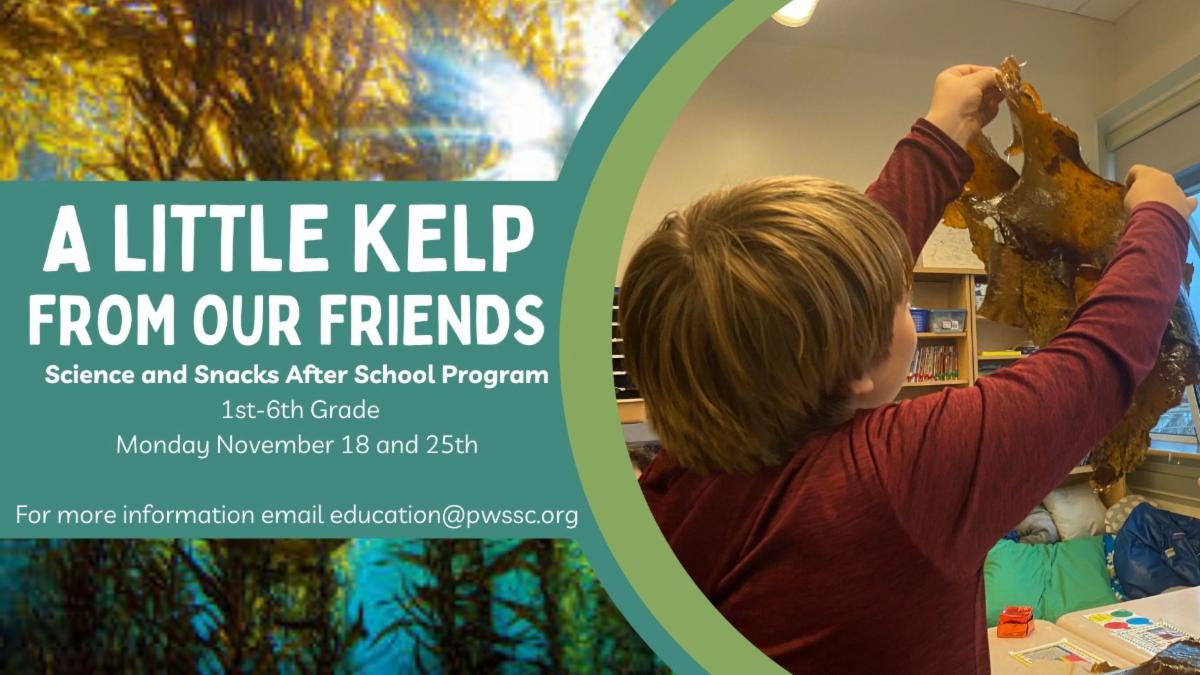
November 18 and 25 (3:30-5:00 pm) Science and Snacks: Kelp
Our new bimonthly after-school program where kids get a healthy snack and engage with hands-on science. This month, dive into all things kelp with a kelp-touch tank, seaweed crafts, and a cooking lesson! Kids will learn to cook with kelp as they prepare a kelpy snack.
This program is limited to 10 children in grades 1-6. Registration in advance is required. To register, please email education@pwssc.org. We will respond with confirmation about availability and send you a permission form.
November 26 (4-4:45 pm) Candlelit Gratitude Walk
Join us at Odiak Pond as we celebrate a season of gratitude with our community. We will meet at the grassy field right before sunset for a gentle nature walk focused on gratitude. This program is designed for community members of all ages.
| |
OCTOBER EDUCATION UPDATES | |
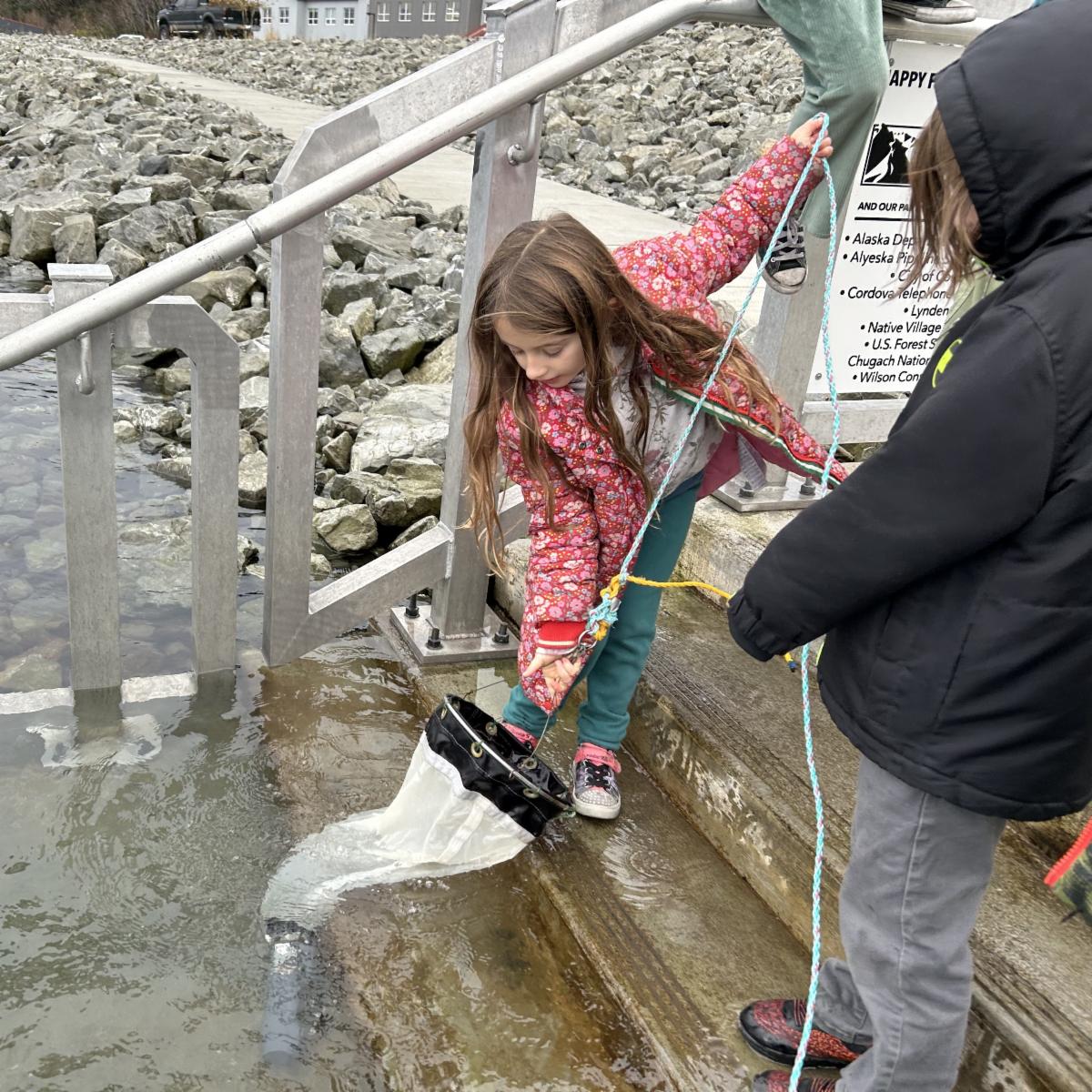
Towing for plankton near the PWSSC during our Science & Snacks afterschool program. | |
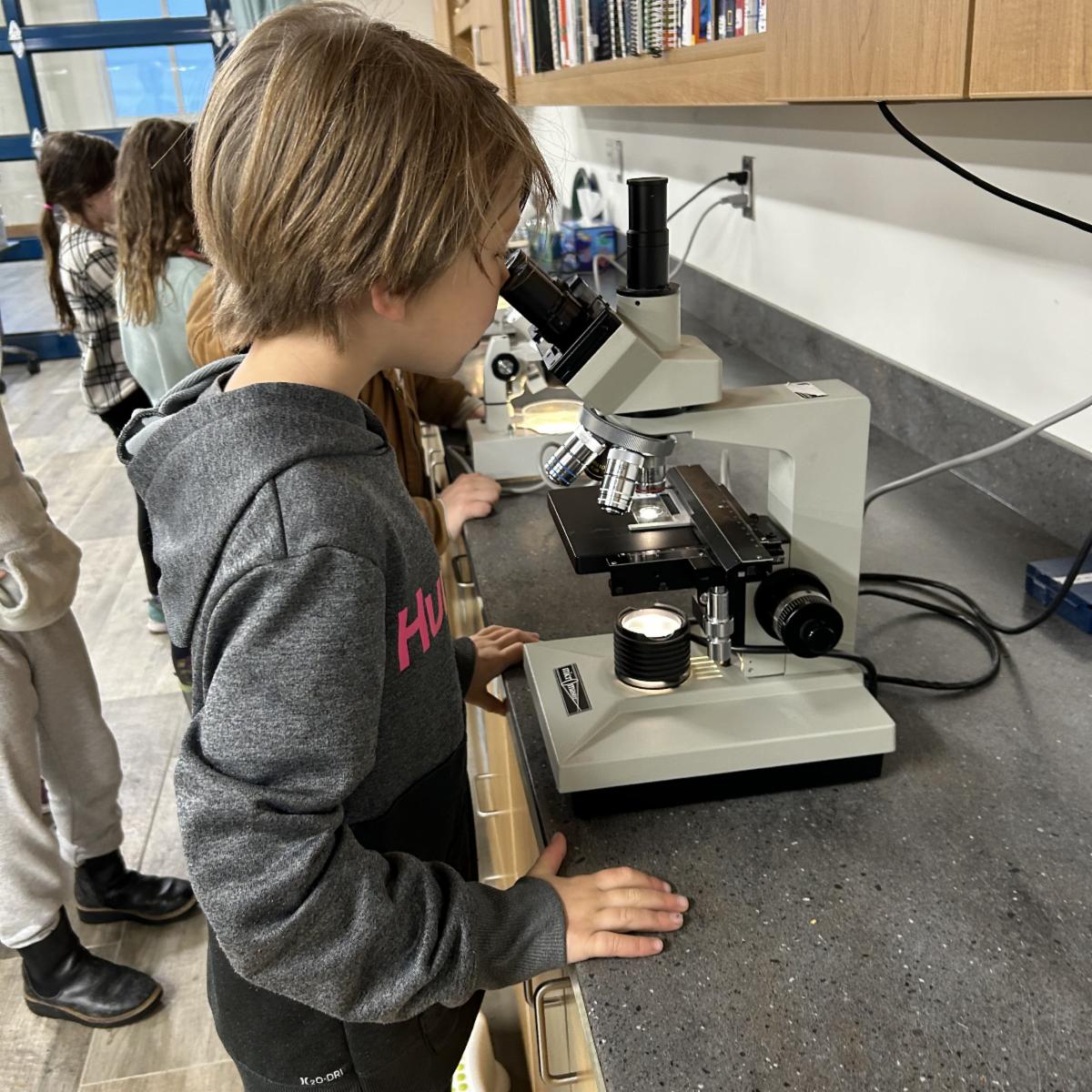
Looking at plankton under the microscope collected across the street from the PWSSC. | |
|
Are you curious about what our education team has been up to this fall? If so, check out their updates below.
Sea Squirts explored the life cycle of moths and butterflies with a game of tag and a dress-up experience and practiced their fine motor skills with a sorting game.
Little Dippers have been exploring the forest, including trees, moss, lichen, rocks, and fungi. They have been using their senses to investigate shapes, sounds, and textures while hiking and exploring Cordova. We’ve had many sunny days and some rainy and cold days too!
Our Science & Snacks after-school program focused on plankton. We took the students across the street from our facility, where they conducted a plankton tow. After collecting plankton, we returned to the Science Center to observe them under the microscope.
We hosted two sessions of Nature Yoga this month. In the first session, participants learned that plankton provides a strong foundation for the marine food web while building their own strong foundation with a core workout.
We hosted a Tuesday Night Talk every Tuesday in October (plus one bonus session) for a total of six talks. You can watch them by visiting our YouTube Channel and clicking on the Lecture Series playlist. See below for a summary.
In October, our educators met with grades 1-6 as part of our Discovery Room program.
-
First Grade learned how sound is created by vibration. They felt sound waves with tuning forks, saw sound waves with an oscilloscope, and got creative by making sound waves with drumsticks on different natural materials in the woods.
-
Second Grade explored the adaptations of seeds and how seeds can travel. They planted lettuce seeds and had an introduction to the hydroponic system that will be in their classroom for the rest of the year.
-
Third Grade continued their study of the bird life cycle with the courtship phase. They learned how birds use colors to attract mates, danced like different courting birds, and defended their “territory” in an active nesting tag game.
-
Fourth Grade started their climb up the food chain by learning about plankton, the base of the ocean food web. They observed the various shapes that plankton have to help them survive. Then, they competed in plankton races by designing their own plankton and testing how well they did in the water.
-
Fifth Grade went on their annual salmon egg-take field trip. The class ventured out the road and, with the help of Prince William Sound Aquaculture Corporation, collected eggs and milt from spawning salmon. The eggs and milt were taken to the school, where the eggs were fertilized in the school Salmon Tank. Fifth graders will monitor and care for the eggs all school year as they mature into fry.
-
Sixth Grade continued learning about the properties of water in a density lab. They observed that hot water is less dense than cold water and concluded that saltwater must be denser than freshwater.
In addition to our standard Discovery Room lessons, our education team volunteered at Culture Week at Mt. Eccles Elementary School. The Native Village of Eyak leads Culture Week, which focuses on games, crafts, and learning experiences for elementary school students. In collaboration with the Native Village of Eyak, our educators volunteered to help lead Native Youth Olympic stations, assist in mask making, help in basket weaving, and more!
| |
The Prince William Sound Science Center is committed to resilient communities and healthy ecosystems. We need your help now more than ever. If you believe in our mission and care about what we do, please consider donating today. | | | | |