|
The Corresponder
The Newsletter of the Committees of Correspondence for Democracy and Socialism
| |
|
The Committees of Correspondence Socialist Education Project
4th Monday Webinar Series
Monday, November 25, 2024, 8 pm Eastern Time
THE WORLD CONDEMNS US POLICY TOWARD CUBA WHILE ENVIRONMENTAL AND ECONOMIC CATASTROPHES CONTINUE: An update on Cuba and the Solidary Movement
Merri Ansara
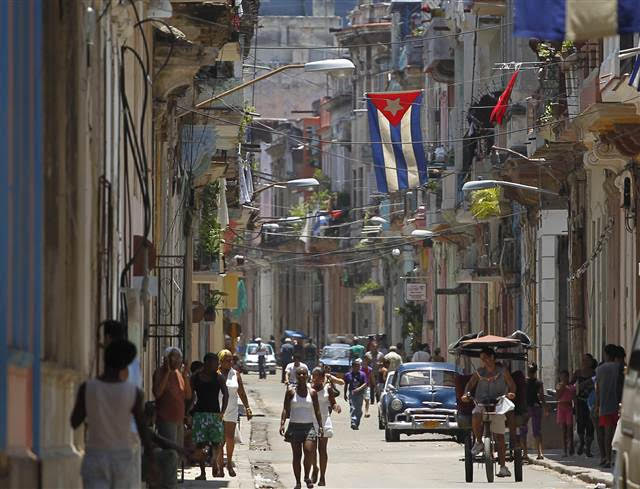
Merriam Ansara has been working for peace and justice for Cuba for 55 years, starting in 1969. She has lived and worked in Cuba, and for 20 years ran Common Ground Education & Travel which sent universities, museums, environmental organizations, academics. professional associations and individuals, librarians, lawyers and judges, churches and synagogues, children's groups and others to Cuba so that ordinary US Americans could see for themselves the social project the Cuban people have been building and understand the misinformation about and cruel effects of the policies the US government has imposed on Cuba for 63 years. She has worked with and/or started various Cuba solidarity and policy organizations, including Two Wings/Dos Alas, The Cuba Working Group, ACERE, Mass Peace Action and others. The message she brings is: Cuba prevails, the promises of History Will Absolve Me are not yet dead, the Cuban people are paying dearly for their desire for independence and sovereignty, and none of us can stand idly by. The world condemns the US Embargo 187 to 2. What can we do?
UNITED NATIONS (AP) — The U.N. General Assembly voted overwhelmingly in October, 2024 to condemn the American economic embargo of Cuba for a 32nd year after its foreign minister strongly criticized the Biden administration and expressed hope a new president would end it.The vote in the 193-member world body was 187-2, with only the United States and Israel against the resolution, and one abstention.
Register: https://us02web.zoom.us/meeting/register/tZ0sfu2hrTMqEt0IuRz7mOid8-Dn9akViK9W
| |
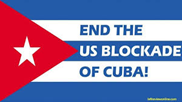
CCDS Stands with the Cuban People
All Out to Defend the Cuban Revolution
November 14,2021
On November 15th – the day that Cuba opens its schools and borders following the months-long pandemic – the U.S. government has engineered protests that are intended to subvert the economy and overthrow the Cuban government.
The operative organizing the protests through a Facebook page called Archipelago is Yunior García Aguilera, a Cuban playwright who has been exposed as a long-time U.S. agent. In an explosive interview on Cuban television, Dr. Carlos Vazquez Gonzalez revealed himself as a Cuban State Security Agent known as Fernando who has been functioning for more than 25 years in the circles of counter revolutionary Cubans. He has evidence to prove Garcia’s links to the U.S. government and the anti-Cuban mafia in Miami, also funded by the U.S. (See the report in Gramna: https://en.granma.cu/cuba/2021-11-05/agent-fernando-exposes-us-trained-counterrevolutionary)
The counter-revolutionary scheme, exposed by Dr. Gonzalez, is also connected to far right and fascist organizations internationally – and has been in the works for many years.
No country in the world allows its citizens to ally with foreign governments to overthrow its own government.
The Committees of Correspondence for Democracy and Socialism stands with the Cuban people and demands that the U.S. cease its subversive plans which are being paid for with U.S. taxpayer money in the millions of dollars funneled through NGO organizations and media outlets.
The cruel and inhumane, illegal economic blockade of Cuba and the additional brutal sanctions of the Trump administration are meant to inflict maximum suffering on the Cuban people in the hopes they will join a counterrevolutionary protest movement. The overthrow of the socialist government of Cuba has long been the goal of U.S. corporate interests and the far right who want to regain what they lost when the US-supported dictator Batista was overthrown in 1959.
Public opinion polls show that the U.S. people, by a large majority, support a return to diplomacy and a path towards normalization of relations with Cuba. President Biden was elected with a promise to repeal the onerous sanctions of the Trump administration and return to the diplomatic path set by his predecessor in the White House. We are waiting for him to live up to his campaign promise.
President Biden, we demand you lift the sanctions and end the economic warfare waged on Cuba, end the travel ban that prevents people to people contact, and normalize relations. To that end, CCDS urges its members and friends to:
1) Call your Member of Congress, and ask them to sign on to a Dear Colleague letter to President Biden issued by Reps. McGovern (D-MA), Bobby Rush (D-IL), Barbara Lee (D-CA), and Gregory Meeks (D-NY). It asks President Biden to change U.S. policy towards Cuba and return to diplomacy including the lifting of the embargo. See letter here: letterhttps://bit.ly/2YHcBAu
2) Help mobilize and join protests of U.S. policy in solidarity with Cuba on November 15th.
3) Continue to build support for legislation in Congress to end the embargo and travel ban – and make plans to visit Cuba.
| |
|
Wednesday, December 31, 2008
Happy 50th Anniversary Cuba!
Reflections on the Cuban Revolution Today
This month the world will celebrate the 50th anniversary of the Cuban revolution. This
revolution, and its bigger than life heroes and heroines, has been an inspiration to peoples from
the Global South, and progressives, particularly youth, in developed countries. For all its flaws,
the Cuban Revolution validates the slogan of international activists who chant: "Another World is
Possible"
Harry Targ
President Bush now travels through the African continent trumpeting the United States as a
model for the peoples of the Global South. At the same time Fidel Castro steps down as Cuba’s
chief of state stimulating reflections on the role of the Cuban revolution at home and abroad.
Which country has had a more progressive impact on the historical development of the world?
Despite enormous changes and advances since the 1959 Cuban revolution, Cuba remains part
of the Global South (what used to be referred to as “Third World” or “developing countries”), a
world which has been shaped and distorted in its economics and politics for 400 years by the
global capitalist system. Cuba, while in many ways a developed and even industrialized country,
remains closer in economic profile and diplomatic standing and possibility to the nations of Asia,
Africa, the Middle East, and Latin America than the industrial capitalist countries of North
America, Europe, and Japan.
In the words of C. Wright Mills reflecting on the Cuban revolution at its outset, Cuba remains
part of the “hungry bloc,” not in the sense of poverty and scarcity as he meant it-Cuba is part of
the developed world in these terms- but in the sense of still struggling to achieve its right and
capacity to define its own destiny. In fact, it could be argued that Cuba’s “hunger” for self-
determination, its spirit of nationalism, is what drove the revolution in the nineteenth century, in the 1930s, in 1959 and still drives the revolution today.
The spirit of revolution links Cuba’s past to its present. There have been other continuities in
Cuban history as well, particularly since 1959. The most obvious one has been the hatred and
aggressive stance of the United States. The United States suspended formal diplomatic
relations with the island nation before President Eisenhower left office, launched a full-scale
economic blockade of Cuba in the Kennedy period, initiated a long-term program of subversion
and sabotage of the islands economy and polity, and extended the blockade to pressure other
countries to cut their ties to the island’s economy.
The hostile United States policy since the 1950s has been driven by the needs and hopes of
capitalism; cold war fears of “communism;” the “realpolitic” philosophy which says that Cuba is
within the U.S. sphere of influence; and the historically claimed right of the U.S. to control
Cuba’s destiny enshrined in the Monroe Doctrine of the 1820s.
Despite this hostility, since 1959 there has been a high level of support for the revolution among
Cubans because it provided substantial economic advances for the people and satisfied their
thirst for self-determination. Consequently, even during the “special period” of the 1990s
support, while declining, held because the revolution continued to represent the spirit of
nationalism for the vast majority of the Cuban people.
Finally, a continuous element of the Cuban revolution has been change and a pragmatic spirit
that addresses needs, possibilities, and dangers as they arise. Cuba has been one vast
laboratory experiment in which new policies, priorities, and programs have been introduced to
meet the exigencies of the moment. Alongside inevitable dogmatisms and bureaucratic
resistances has been the willingness of Cubans to throw out the old, the unworkable, the
threatened, and replace it with the new as history requires (shifting from fertilizer, pesticides,
and hybrid seeds to organic agriculture for example). Over its long history the revolution ended
foreign ownership of the Cuban economy. It created an egalitarian society. It provided health
care, education, jobs, and a rich cultural life for most of its citizens.
At the most fundamental level, the revolution fulfilled all of the economic and social goals Fidel
Castro articulated in his 1953 “History Will Absolve Me” speech. For most Cubans alive before
1959, there is no question that the revolution has been an outstanding success. This is true for
their sons and daughters if one could compare what would have been their possibilities before
1959 with what they have achieved today. The revolution has worked.
And finally, in the great debate between the U.S. and Cuba as inspirations and models for most
of the citizens of the globe, Fidel Castro might say again “History Will Absolve Me.”
Harry Targ taught U.S. foreign policy and political economy at Purdue University. His book on
Cuba is called Cuba and the USA: A New World Order?, International Publishers, 1992.g!
| |
|
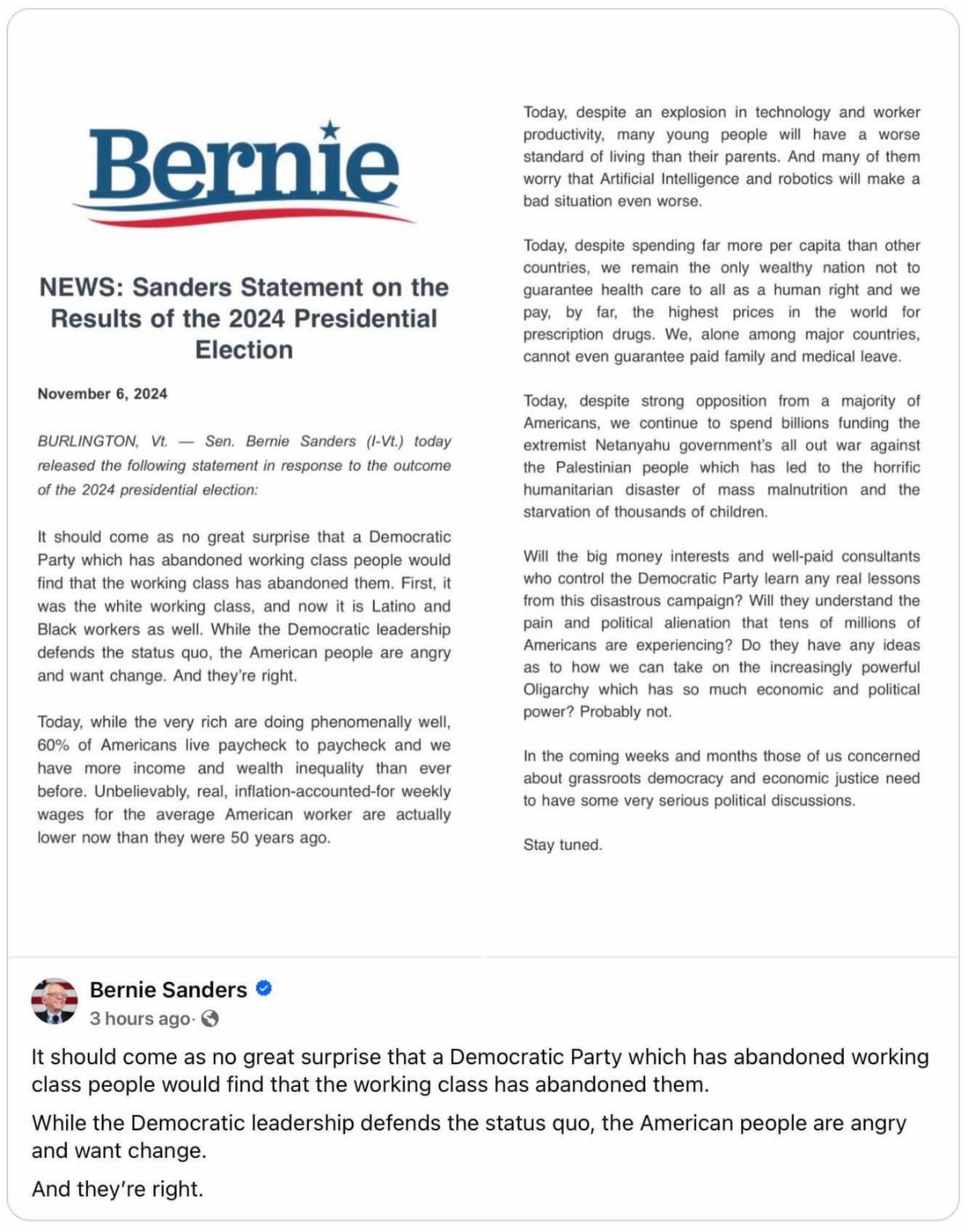
With the winning of the Trump/Vance ticket along with the far right in leadership of all 3 branches of government we need to bury our differences and build the left and the Progressive Majority, a majority that we know exists on most issues of public policy.
We need to build our organizations to defend democracy, in our communities and at the state and national levels including progressive gains won over several decades.
IN GENERAL WE NEED TO REBUILD OUR LEFT: PEACE ACTIVISTS, FEMINISTS, WORKERS, ENVIRONMENTALISTS, AND ALL HUMANISTS WHO UNDERSTAND THAT. (HOWEVER WEAK) US DEMOCRATIC INSTITUTIONS ARE UNDER ATTACK AND THE VERY PEACE AND ENVIRONMENTAL CONDITION OF THE WORLD ARE UNDER ATTACK
Harry Targ
| |
CCDS CONDEMNS ISRAEL’S
GENOCIDAL POLICY
The Committees of Correspondence for Democracy and Socialism (CCDS) joins peace and solidarity organizations in the United States and around the world in deploring the attacks on Israeli citizens on October 7 as well as the subsequent violence against the Palestinian people. Further, CCDS joins the worldwide call of peace and justice organizations demanding that Israel stop its genocidal war on the Palestinian people. Particularly we urge the Biden Administration to stop encouraging and arming the murderous Israeli government.
We recognize the fundamental role the United States has played in the Israel/Palestine conflict and the long-standing Israeli vision of a “Greater Israel” empire in the Middle East. And we recognize the need for a movement of progressives to mobilize to end US complicity with Israel’s violent policies. For 75 years, the United States has supported the victimization of the Palestinian people. And we recognize that Israel’s policies continue to expose its citizens to terrorist retribution and have fueled the rise of antisemitism and Islamophobia everywhere.
As Dr. Martin Luther King said long ago still holds true: “The chain reaction of evil–wars producing more wars — must be broken, or we shall be plunged into the dark abyss of annihilation.”
For now we say that peace and justice movements must expand their educating, organizing, pressuring politicians, and hitting the streets demanding that the Biden administration end its support of Israeli militarism and promote the liberation of the Palestinian people. Further, we ask all peace and justice-loving people and organizations to urge President Biden and the UN to take bold and immediate steps to discuss and implement plans for the self-determination of the Palestinian people.
| |
|
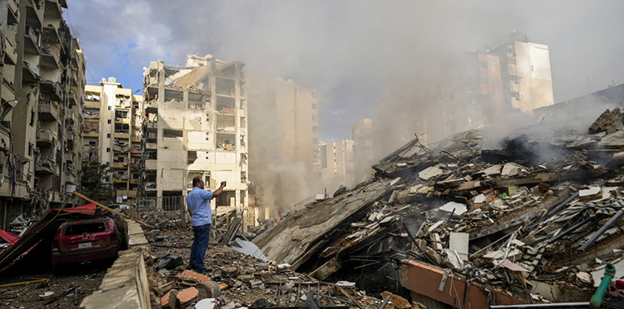
CCDS CONDEMNS THE WIDENING WAR IN LEBANON
The Committees of Correspondence for Democracy and Socialism (CCDS) condemns the widening war initiated by Israel with its ground invasion of Lebanon and its campaign of assassinations directed at Hamas, Hezbollah, and the Popular Front for the Liberation of Palestine, all aided and abetted by the U.S. government.
To date, the Israeli escalation is primarily a campaign of indiscriminate bombing of the civilian
populations of Lebanon, Gaza, and the West Bank, a continuation of the war crimes and
campaign of genocide initiated one year ago in response to the Oct. 7, 2023 Hamas attack
although more may come, such as a direct attack on Iran. Israel used 2,000 pound bombs to
assassinate Hezbollah leader Hassan Nasrallah, killing hundreds of civilians and destroying an
entire city block in the Dahiya suburb of Lebanon’s capital, Beirut. It activated hundreds of
explosive-laden pagers and walkie-talkies in assassination attempts, an act that even former
Central Intelligence Agency director Leon Panetta labeled “terrorism.”
Rather than condemn the widening of the war and the bombing of civilians, the U.S. government
continued to furnish weapons to the Israeli government of Benjamin Netanyahu and promised to
aid in its defense by sending more warplanes and even U.S. troops to the region. The Biden
administration labeled legitimate political movements such as Hamas and Hezbollah as terrorist
groups and even promised to take part in air attacks against the Islamic Republic of Iran, which
responded to Israel’s assassinations and invasion of Lebanon by firing nearly 200 ballistic
missiles at Israeli military targets. The US government has already been directly involved in
Israel’s campaign, through missiles launched by US Naval vessels. If nothing else, more of the
same should be anticipated, with increased US missile, drone, and aircraft strikes.
CCDS calls on all progressives to support the resolution introduced by U.S. Senator Bernie
Sanders to impose an arms embargo on the state of Israel with the aim of achieving a
regionwide ceasefire. Only an arms embargo can persuade Israel to end its genocidal attacks
which seek to end the aspirations of the Palestinian people for self-determination and equal
rights. It is no secret that Netanyahu is striving to remain head of his openly apartheid coalition
to avoid going to prison on corruption charges while also hoping for the election of Donald
Trump as U.S. president.
Israeli and U.S. militarism are twin evils that threaten not only the peoples of southwest Asia but
also the entire world as they pursue regional and world hegemony. U.S. imperialism in particular
has long seen the settler-colonial state of Israel as an asset for protecting its access to oil
resources in the region. It has chosen not just to ignore but to oppose the legitimate national
aspirations of the Palestinian people, and is willing to support a genocide and undermine
international law in the process.
| |
|
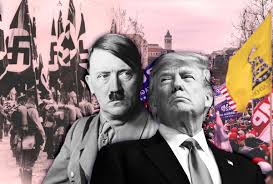
Fascism – Why and What It Is
by Jay D. Jurie
“As things stand today capitalist civilization cannot continue; we must either move forward into socialism or fall back into barbarism.” –Karl Kautsky, The Erfurt Program, 1892, (often attributed to Rosa Luxemburg in the Junius Pamphlet, 1915).
Fascism is usually described according to its characteristics, which will be addressed in this paper, but of preliminary and greater importance is the question: why has fascism appeared on the social and political landscape? Even where the term is defined, with some notable exceptions, the reasons for its existence are frequently not considered. Seeking to understand why fascism has emerged, and continues to occur, goes a considerable distance to defining what it is.
Fascism springs from the specific political economy of capitalism, a system driven by the imperative of private capital accumulation and profit maximization. Central to capitalism is the control of the productive forces of society by a relatively small number of capitalists, a capitalist class. Opposed to this class is the much larger working class whose labor is exploited, those who actually produce but do not control the wealth of society.
Consequently, this system is contradictory. Instability and conflict are inherent. While often latent, class conflict may at times it may break out into open class warfare. There can be no fascism without these dynamics, that is, without capitalism there can be no fascism.
This is primarily why fascism exists, to suppress class conflict, to ensure stability and maintain order in the face of inequitable class relations, to uphold the dominance of socioeconomic relations based on capitalist class control. Suppression is carried out by two means, which can be deployed simultaneously or interchangeably. One is force, subjugation and threats of violence that can be, and at times are carried out, or are used to instill fear. The other means involve diversion and deflection. Class antagonism and discontent is supplanted by nationalism and right-wing populism, also known as faux populism, which will be considered further below.
Fascism is implicitly hierarchical, authoritarian, and anti-democratic. it is a social construct deployed as an explicit reaction to progressive socioeconomic change and democratic values. Even where such change is not readily feasible or imminent, the imagined, or fabricated, threat of such change can be used to galvanize a response and conjure into being a fascist movement.
Classical fascism originated in post-World War I Europe, where even the victorious nations had undergone serious destabilization and decline, and social ferment was widespread. As was first demonstrated during that period, a potential fascist leader and incipient movement can convince or persuade ruling elites of their ability to forestall progressive changes that threaten their dominance and control.
Beyond underlying economic conditions, a successful fascist movement leader must have several attributes. The leader must possess the cunning to comprehend when underlying conditions are ripe. The leader must have the charisma necessary to attract a relatively competent inner circle, a core of subalterns and a sizable number of followers.
Such a leader must also have an insatiable lust for power and the skills needed to manipulate and exploit others in pursuit of such power. A fascist political party will be formed, or an existing right-wing movement or party will be taken over and turned into an expression of the leader’s will and fascist ideology. Such a party must be capable of fashioning and steering the fascist movement, taking control of the state apparatus, and governing in at least a semi-coherent fashion.
A distinguishing feature that sets fascism apart from other forms of authoritarianism is its creation of, and basis in, a broad right-wing secular and faux populist movement. Other forms of authoritarianism, such as monarchism, military dictatorship, or theocracy, may command popular support, but such support as a defined and readily identifiable foundation of a regime is a unique hallmark of fascism. Without the cultivation and participation of a large sector of the population actively engaged as an open and highly visible constituency there can be no fascism.
Construction of such a constituency has several components. Appeals are made to members of intermediate classes who seek to elevate their social status or who identify with those higher on the socioeconomic ladder. Similar appeals are made to the unemployed, underemployed, or those otherwise disaffected among the working class.
Most particularly in this latter regard, fascist ideology aims to undercut and supplant progressive values and attract supporters with promises of economic improvements based on national, cultural, or other values that divert attention away from class and class struggle. Fascism offers comparatively cosmetic standard of living improvements under false pretenses. Fascists promise to level the economic playing field, however, they not only fail to deliver on this commitment but instead, institute regressive measures under a pro-working class veneer.
All of this is manifested in various ways. Governmental institutions will be subverted and reconfigured. School curricula will be brought into conformance with fascist ideology. Capture or servile compliance of mass media and channels of social influence with fascist propaganda will take place. Various forms of spectacle and public display, such as parades, become pronounced, and especially mass rallies showcasing the oratory of the leadership.
Outward expressions of the regime will markedly increase, such as the number of banners and patriotic flags and their ubiquitous display. Fascist culture and influence will penetrate sectors of civil society, including the entertainment industry, the arts, sports, and civic associations of all sorts. Specialized clothing, such as uniforms or bearing fascist symbols or slogans, will likely appear in widespread circulation.
While reliant on the use of force or the threat of violence to gain and maintain power, because of the broader base of appeal it cultivates, there is less need for fascism to rely on a conventional military to preserve social order. Creation of a police state as well as reliance on paramilitaries or bands of thugs may well suffice. However, while not an innate characteristic, fascist regimes will likely prefer a substantial military apparatus, if needed, it provides a backstop.
The trappings of militarism may serve to bolster and burnish the image of a fascist regime in other ways than the direct use of force, such as the projection of power, hierarchical social regimentation, and the use of military drills, pomp, and ceremony to rouse public support and enthusiasm. The military may also serve functions external to domestic purposes, such as conveying a foreign sense of strength and the possible exertion of expansionist aims.
“…the people can always be brought to the bidding of the leaders. That is easy. All you have to do is tell them they are being attacked and denounce the peacemakers for lack of patriotism and exposing the country to danger. It works the same in any country.” --Hermann Goering, quoted in an interview following his conviction for crimes against peace and humanity at the Nuremberg Trials, April, 1946.
A final defining characteristic of fascism is ultranationalism. Underlying social reality is obscured and workers and the public at-large are heavily propagandized so as to identify with the nation-state rather than with their own class or a democratic interpretation of the public interest. Ultranationalism conceals the key imperative of fascism; it protects and furthers the interests of the ruling capitalist class. An inequitable social order is concealed, and synonymously, the values of the fascist leader and party aligned with that order are served. Thus, ultranationalism provides not only the appeal and much of the ideology, but the glue that binds people to the fascist movement.
The national identity is redefined in accordance with the fascist reconfiguration of the nation-state and its purposes. Any who take exception to such redefinition are deemed “unpatriotic” and may be subject to state-backed intimidation or violence. To accomplish these purposes a strong, centralized, state is imperative. This differentiates fascism from traditional conservatism, which favors a state limited largely to preserving laissez-faire capitalist economics.
Although not invariably inherent to fascism, various forms of oppression, such as racism, nativism, and xenophobia can be used by fascists to create an ultranationalistic sense of “us” versus “them,” with “them” typically being sectors of the most powerless or marginalized. “Them” can be any group deviating from the social norm, in other words, that can be demonized and subjected to fear mongering and scapegoating. These irrationalities may be combined with conflicted thinking and mixed consciousness. A variety of disjointed beliefs and fragmented perceptions may become jumbled together with mystical, occult, and conspiratorial delusions, all of which are subject to manipulation.
In conclusion, there are a wide variety of definitions as to what constitutes fascism. This paper does not make claim to being the final word on the subject. It does claim that while all fascism is authoritarian, not all authoritarianism is fascist. Nor, contrary to other commentators, is fascism anything they may choose to dislike.
Of course there are variants among various fascist approaches. One possible consideration is religion. Most typically fascist states have accommodated themselves to conservative forms of religion, either utilizing or consigning religion to the traditional role it has played in society. In particular circumstances religion has played a more prominent role than others. However, if a particular religion seizes control of the state, such a regime would not be fascist, it would be a theocracy.
Another variant, or even possible hybrid, might have to do with the capitalist class. But as with religion, if the uppermost business elites were to supplant or take direct control of the state, that would not be fascism, it would be a plutocracy.
This paper seeks to provide some insight as to why fascism has occurred and why it remains of active concern. It has sought to provide some consideration as to what is unique about fascism as opposed to other forms of authoritarianism. It further seeks to make the case that fascism has three essential defining characteristics: first, its basic purpose is explicitly anti-progressive and anti-democratic, second, it requires a significant social movement, and third, it requires the establishment of a widely-adopted ultranationalist public consciousness.
Why is understanding these characteristics important? Fascism presents a unique and ongoing threat to the realization of human potential and advancement, indeed, it presents an existential threat to the human species. In order to effectively counter these threats it is necessary to be both accurate and precise. Carefully defining a phenomenon establishes the conceptual groundwork for its comprehension and is the essential precursor to effective challenge and meaningful change. Read more
| |
|
A Hurricane Silver Lining
by Jay D. Jurie
If there’s any silver lining to hurricanes, it’s the public service
deficiencies they lay bare.
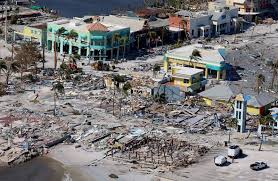
When Hurricane Milton swept across Central and North Florida in October 2024, municipally-owned utilities that had hardened their electrical grids and committed themselves to high-quality public
service were cast into sharp relief. A TV Weather Channel
reporter in downtown Orlando repeatedly remarked how the lights
were still on at the height of the storm whereas surrounding areas
had darkened.
The neighboring city of Winter Park was similarly highlighted. A
number of years ago, tired of the shoddy service the municipality
had been receiving under contract from a private provider, a
measure was placed on the ballot to regain public ownership and
control. Not long after its passage, the new public utility
embarked on a program to bury its power lines, safeguarding
them from the high winds and falling trees of hurricanes.
In Winter Park, burying these lines is an ongoing program that
most likely would not have been carried out under the previous
investor-owned utility, as the needed funds would have flowed
into the pockets of shareholders rather than strengthening the grid
and improving service. Very few Winter Park customers lost
electricity during Hurricane Milton.
During this same period, Milton outage rates for utility customers
in Jacksonville-Duval County, served by the publicly-owned
Jacksonville Electrical Authority (JEA), were reported as much
lower than for customers of privately-owned utilities. JEA has
made a commitment to the reliable provision of electrical service.
These are several examples of the ability of publicly-owned
utilities to offer improved service to their customers over that of
their private counterparts. A key reason for this, as alluded to in
the Winter Park example, is the enhanced ability to plow customer
rate payments into service upgrades and improvements that
would otherwise be paid as investor dividends. At the same time,
the publicly-owned utilities have been able to offer their customers
high-quality service at lower rates than those charged by private
firms.
Public utilities have been at the forefront of alternative energy
production and deployment. While individual alternative energy
solutions, such as rooftop solar cells are often touted in the
media, not all electrical provision by those means is feasible, so
there remains a need for a locally-sourced electrical grid. Public
utilities can simultaneously facilitate better service to individuals
through individual power-generation rate reductions by
mechanisms such as net metering, alongside the wider expansion
of green energy to others.
Finally, public utilities provide a huge benefit by way of enhanced
accountability and democracy. Most public utilities are governed
by a board composed of members appointed by a local city
council or county commission. This alone is superior to private
utility boards that are only accountable to investors, and which
may be governed at best by a regulatory agency which has
frequently been ”captured” by the utility industry. These boards
could be further improved through local direct election along with
the election of regional and statewide entities.
Public ownership of energy production and distribution should be
pursued by all interested in the effective delivery of essential
goods and services. .Read more
| |
Thursday, November 7, 2024
ESSAYS ON THE RISE OF TRUMPISM: ECONOMICS, POLITICS, RACISM
Harry Targ
1.The Trump Phenomena: How Does It Apply to 2024
The comments below have been adapted and edited from an earlier assessment of the constellation of political forces that led to the surprise victory and support for Donald Trump, first in 2016 and now.
Trump’s core constituency all along has been sectors of finance capital, insurance, real estate, the military/industrial complex, and drug companies whose profits have come from domestic investments or sales and speculation overseas. It also includes portions of small and medium-sized businesses whose viabilities have been threatened, not by big government, but by the further monopolization of the economy.
In addition, some workers displaced by the underside of neoliberalism, including capital flight, automation, and trade, have supported Trump because they saw no positive economic future in a Hillary Clinton presidency in 2016 or a Kamala Harris presidency in 2024. Finally, the Trump constituency has included a percentage of voters who are ideological legatees of white supremacy.
Therefore, the Trump coalition from 2016 to today has consisted of fractions of capital who gain from a more muscular and economically nationalist policy agenda, marginalized portions of the so-called “middle class,” sectors of the working class, and portions of all of these whose political learning has centered on the history and consciousness of white supremacy (“make America great again”).
Trump’s major adversaries have come from a core sector of the ruling class that has dominated the policy process at least since the 1980s, the neoliberal globalists. In response to the squeeze on profits of the 1970s, the capitalist elites began to promote a dramatic shift in the character of the economy in the direction of “neoliberalism.” Drawing upon an economic ideology with a long history from Adam Smith, to Milton Friedman, to mainstream neoclassical economists of the late twentieth century, every administration from Carter to Trump has engaged in deregulation of economic life, reduced or modified government programs that help the poor and working classes, weakened rights of workers and their unions, and the privatization of public institutions. The Republicans have advocated the privatization of Social Security and the postal service. Note these policies have been tepidly opposed by sectors of the Democratic Party at the national level but have been fiercely institutionalized in many of the 50 states, mostly red states.
The neoliberals in both Democratic and Republican administrations “went global;” developing a network of economic ties via trade agreements, the globalization of production, and integrating corporate boards. Capitalist elites from every continent began to develop common approaches to national policy via such informal organizations as the Trilateral Commission, meetings of the G7 countries, and the annual World Economic Forum.
Debt poor countries were the first to be forced to embrace neoliberal policies, followed by the former Socialist Bloc countries, then the Western European social democracies, and finally the United States. A significant portion of this qualitative change in the way capitalism works has involved increased financial speculation (as a proportion of the total gross domestic product), dramatic increases in global inequality in wealth and income, and increasing economic marginalization of workers, particularly women, people of color and immigrants.
Candidate Donald Trump in 2016 orchestrated a campaign against the neoliberal globalists who dominated the political process in the United States since the 1980s. While he epitomizes finance capital, albeit domestic as well as foreign, and represents the less than one percent who rule the world, he presented himself as a spokesperson for the economically marginalized. He attacked some of the capitalist class of which he is a member. In addition, he blamed the marginalization of the vast majority on some of their own; people of color, women, and immigrants. Of course, this was the centerpiece of his 2024 campaign, drawing on the history of White Supremacy and American Exceptionalism embedded in US history.
Resistance to Trump, 2017 to 2020
Since the November 2016 election, masses of people mobilized in a variety of ways against the agenda of the newly elected president. The women’s marches and rallies of January 21, 2017 and International Women’s Day on March 8 were historic in size and global reach. During the rest of Trump’s first term, there were huge mobilizations to reduce the use of fossil fuels and prevent climate disaster, to support immigrant rights, to provide basic health care, and around police killings.
A multiplicity of groups formed or increased in size since January, 2017: former Bernie Sanders supporters; anti-racists mobilizations particularly against police violence; those calling for sanctuary cities and defending the human rights of immigrants; progressive Democratic organizations; climate change activists, and women’s organizations.
Traditional left organizations, such as the Democratic Socialists of America, benefiting from the Sanders campaign, tripled in size between 2016 and 2020. And organizations such as The American Civil Liberties Union and Planned Parenthood reported large increases in financial contributions. Since the 2016 election the mobilization of millions of people bolstered the spirits of progressives everywhere. They felt that at this point in history a new progressivism was about to be born. But the story has been made complicated by the nature of the opposition to Trumpism.
Oppositions to Trumpism: Neoliberal and Progressive
Paradoxically, while 1996-2020 was “a teachable moment” as well as a movement building moment, progressive forces continued to struggle to be organized. In and around the Democratic Party there were conflicts over the vision and the politics it ought to embrace at that time and in the coming period. The Sanders supporters, inside and outside the Democratic Party, and progressive Congress persons such as the “Squad” marshalled much support for a progressive agenda: single-payer health care, a green jobs agenda, protecting the environment, tax reform, building not destroying immigrant rights, defending women’s rights, and cutting military spending. With the brutal policies advocated and already instituted by the Trump administration, progressive democrats and their allies on the left worked mightily to articulate a program, and create some organizational unity to challenge Trumpism. And that struggle remained relevant after the 2020 election of Joe Biden, who supported some of these policies. But candidate Trump in 2020 received in excess of 70 million votes for reelection and exceeded that number in 2024.
The dilemma for progressives is that opposition to Trumpism and all it stands for has been and must be a key component of reigniting a progressive majority in the coming decade. But if it does not address the fundamental failures of the neoliberal agenda, including challenging neoliberal globalization, including support for war, convert interventions, and militarism, the current phase of capitalism, Trump’s grassroots support will continue as he occupies the White House in 2025. Working people who ordinarily would vote for more liberal candidates for public office need to believe that future candidates from the local to the national level are prepared to address the issues, often economic, that concern them.
Therefore, the fundamental project for progressives today, 2024, includes mobilizing against Trumpism while articulating an alternative political and economic analysis of the current state of capitalist development. In concrete terms, this approach means challenging the legitimacy of the legacy of the Trump administration and its allies in Congress while articulating the perspective that mainstream Democrats, the neoliberal globalists, are part of the problem, not the solution.
This alternative analysis requires a bold challenge inside the electoral arena and in the streets that calls for progressive reforms: single-payer health care; cutting the military-budget; creating government programs to put people to work on living wage jobs in infrastructure, social services, and public education; addressing climate change: and fiscal and regulatory policies that reduce the grotesque inequality of wealth and income which has increased since the 1980s. It might boldly include discussions of a guaranteed income for all and/or the right to a job for every member of the society.
The tasks are challenging but another world is still possible.
| |
|
2.Transforming Politics and Elections
Writers have identified the onset of capitalism with slavery, land grabs, brutal violence, and globalization. Out of this came an industrial revolution that over two hundred years rearranged the processes of extraction of raw materials, manufacturing, the global distribution of goods and services, and the accumulation of incredible wealth by small global ruling classes and the expansion of human misery for the vast majority. In the twentieth century, banks assumed great power and control of national economies and political systems.
Changes in the global political economy gave rise to revolutionary ferment, socialist systems, and massive campaigns demanding economic justice including the right to form trade unions. In the twentieth century governments were forced to adjust the capital accumulation process to accommodate some worker demands. A small number of socialist states struggled to create new economic and political systems. From the 1930s to the 1970s the United States responded to massive social movements by carrying out modest political and economic reforms which combined substantial growth and ruling class wealth with policies to redistribute some of it to meet the needs of workers.
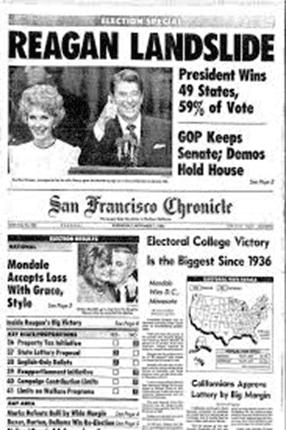
By the 1970s, because of declining profit rates, over-production and under-consumption, a state fiscal crisis, rising oil prices, and expanding worker power, the “golden age” of the welfare capitalist state was dismantled. Of particular significance was the shift from a manufacturing- based economy to financial speculation. To accommodate finance capital President Ronald Reagan in 1980 embraced a series of economic policies which transformed the system of welfare state capitalism, initiated in the period of the New Deal in the 1930s to a new economic program referred to as neoliberalism.
Reagan gutted government programs, reduced taxes for the rich, launched a frontal assault on trade unions, and increased military budgets. The official rationale for the new public policies was that “government was not the solution; government was the problem.” Inspired by Prime Minister Margaret Thatcher in England, and promoted by Western-dominated economic institutions such as the International Monetary Fund and World Bank, the so-called “Washington consensus” was imposed on the world: forcing virtually every country to cut government spending, privatize public institutions, and to produce for global rather than local markets. U.S. capital outsourced manufacturing to countries with cheap labor and expanded its direct foreign investment.
In the United States political arena, pockets of resistance to neoliberalism, or austerity, grew. The national Democratic Party, for the most part, embraced the Reagan Revolution but vibrant presidential campaigns of Reverend Jesse Jackson in 1984 and 1988 challenged the direction of change in the United States. Jackson launched a movement, the Rainbow Coalition, which was designed to mobilize workers, people of color, women, and youth to reverse the panoply of Reagan policies. Despite enormous popularity, the Jackson campaign could not break through the wall of collaboration of the Democratic Party.
On the Republican side, right-wing populist Pat Buchanan challenged the Reagan consensus, particularly on so-called free trade in 1992. Others, such as Ross Perot, ran for president primarily on the basis of opposition to the yet to be approved North America Free Trade Agreement (NAFTA). Both efforts were motivated by sectors of capital that were domestic in character, in contradistinction to the growing primacy of globalized financial capital. 1992 Democratic candidate Bill Clinton remained cautious on NAFTA as he promised American workers that he would represent their interests.
Upon election, Clinton proceeded to cajole recalcitrant Democrats in Congress to vote “yes” on NAFTA. Over the next twenty years NAFTA led to the loss of at least a million jobs in the United States and created a downward pressure on workers’ wages. Meanwhile the Mexican economy declined, relying on growing food imports and massive migration. Clinton continued the Reagan era programs by cutting modest but critical welfare programs, supporting efforts to increase the incarceration of masses of people of color who lost economic opportunity because of the neoliberal policy agenda, and worked to expand the so-called neoliberal-framed trade agenda by helping to create the World Trade Organization. While there was high tech job growth during the Clinton years (1992-2000), real wages for most workers continued their steady decline, manufacturing jobs continued to go overseas, and due to aggressive United States interventions economic migration from Latin American and Asia increased.
Reflecting on this historical overview from a political perspective several conclusions seem clear. First, the economic and political characteristics of the “golden age” of the United States, that is the growth and distribution of wealth benefiting workers between the late 1930s and the late 1960s, were anomalies.
Second, as a result of the economic crises of the 1970s, politics shifted from support of government programs for the many to austerity and wealth for the few. The Reagan Revolution of the 1980s constituted a qualitative shift from welfare to growth and from providing some benefits to the working class to extracting more from them to increase profits. The Reagan Revolution expanded the economic shift to financialization. Ideologically, pluralities of Americans were convinced that the economic problems they faced were because of too much government.
By the 1990s, the pluralities drawn to Reaganomics increased to majorities as a result of the support given to it by the Clinton Administration. NAFTA, mass incarceration, and welfare reform supported by “third wave” Democrats like Clinton legitimized the Reagan Revolution.
Based on this extrapolation from economic and political history, the 2016 presidential election campaign on the Democratic Party side was critical. Candidate Hillary Clinton spoke for the interests of financial speculation, trade regimes, privatization of public institutions, and accommodations with Reagan descendants in the United States Congress.
Candidate Bernie Sanders, however, represented a fundamentally different public policy agenda; one that began with the most marginalized rather than the economic elite. It presumed that by bolstering the economic opportunities of workers, the poor, people of color, women, and youth, a buoyant economic recovery could occur that “trickles up” from the base. His program endorsed some redistribution of wealth and the provision of health care, education, a job, and adequate housing as basic human rights. His vision also was and is of a “moral economy,” one in which every person is provided with the opportunity to achieve all of her or his human potential that is possible in the twenty-first century.
Questions remain about whether a “political” and “moral” revolution is fully achievable without fundamental structural change in the U.S. and the global political economy, but there is no question that the Sanders campaigns of 2016 and 2020 represented an effort to reverse the policies established by Presidents Reagan and Bill Clinton during the late twentieth century.
| |
|
3.Some of the Material Reasons for the Current Crisis and Alternatives
Introduction
The twenty-first century economic reality has created a new class society with a dominant class of concentrated wealth at one extreme and a growing class of economically insecure in the other. More and more of those in the latter have become political activists, particularly among the young, women, and people of color episodically in the twenty-first century.
This new class society in the United States parallels similar economic changes in both rich and poor countries. As a result of the changes in global and domestic economies social movements have arisen everywhere. From Cairo, Egypt to Madison, Wisconsin, from Greece to Chile, from Syriza and Podemos, to Minneapolis, to the Sanders campaigns, the cry for change, often a demand for socialism, has spread. The outcome of this new activism remains unclear after November 4, 2024, but the prospects for positive social and political change remain possible despite the 2024 election.
The New Class Society
In 1999, Robert Perrucci and Earl Wysong published the first of four editions of a perceptive sociological analysis that identified what the authors identified as “the new class society.” They employed a Marxist and Weberian analysis of class that combined workers’ relationships to the means of production with their organizational position.
Using data reflecting their synthetic definition of class, these authors concluded that the popular portrait of a U.S. class system consisting of a small ruling class, a large “middle class,” and a small percentage of economically and politically marginalized people was, by the 1970s, no longer an accurate way to describe society. The class system of the days of relative prosperity from the 1940s until the late 1960s, which looked like a diamond with a broad middle, had become a class system looking like a “double diamond.”
In the new class society, the first diamond, the top one, consists of the “privileged class” composed of a “super-class,” “credentialed class managers,” and “professionals.” All together these representatives of privilege constitute about 20 percent of the population. All the others constitute a “new working class,” some living in relative comfort but most engaged in wage labor with the constant threat of job loss and wage stagnation, some modestly self-employed, and a large part-time labor force. This is the second diamond representing 80 percent of the population.
In short, the political economy that emerged nearly fifty years ago is one in which a shrinking ruling class that owns or controls capital has accumulated enormous wealth and dominates today’s economy. At the other end an increasingly insecure working class in terms of jobs and income has grown exponentially.
Peter Temin, an MIT economist, confirms the earlier sociological work in his new book “The Vanishing Middle Class.” This book also identifies an emerging two-class society with wealth and power concentrated at the top and poverty and powerlessness at the bottom. In what Temin calls the “dual economy,” the ruling class consists of the finance, technology, and electronics sectors (FTE), representing the top twenty percent as opposed to “the low wage sector;” clerks, assemblers, laborers, and service workers who provide the comforts and profits for the top twenty percent.
In summary, both volumes suggest that in terms of wealth and power conflicts of interest have to be seen not between the one percent and everyone else but between the twenty percent who own/control/ or administer the capitalist system and the eighty percent who constitute increasingly marginalized labor serving the interests of the wealthy and powerful.
The Precariat
Guy Standing, a British economist, has written about the “precariat,” a growing portion of the worldwide work force, Temin’s “ low wage sector,” who live in economic insecurity. The term, precariat, refers to a synthesis of the idea of the proletariat, workers who sell their ability to provide labor to a capitalist for a wage, and precarity, or economic existence that is unpredictable, marginal, and insecure. Job scarcity and wage stagnation increasingly are experienced by workers with professional skills and credentials as well as the traditional working class.
Standing argues that all across the globe workers, particularly young workers, live in situations of economic insecurity and unpredictability, irrespective of credentials, that in the past guaranteed jobs and living wages. Of course, the precariat do not have any of the guarantees of union membership and their skills leave them often working on a part-time contract basis and in isolation from fellow workers. In addition the precariat include workers in the “informal sector.” These are workers who often will do anything to survive from day to day: for example, day labor, street vending, drug dealing, petty crime, or prostitution.
Accumulation by Dispossession
David Harvey, a Marxist geographer, revisited Marx’s description of primitive accumulation in his book, “The Seventeen Contradictions of Capitalism.” Capitalism was created on the backs of slaves, the slaughter of indigenous people, and the expropriation of already occupied land. In other words, through kidnapping, forced labor, slaughter, and occupation, capitalism was born. The expropriation of resources, people, and land led to the accumulation of wealth that spurred development and growth.
Harvey then argues that the primitive accumulation of the fifteenth century is similar in outcome to the “accumulation by dispossession,” of the twenty-first century. Today workers lose their property and their personal income in a debt system that sucks their scarce earnings and property. Examples include defaults on mortgage loans and bank repossessions and governmental decisions to confiscate property for purposes of urban redevelopment. Accumulation by dispossession, while not as violent as in the era of primitive accumulation, has the same outcome: expropriating the value of the work of the many for the riches of the few.
Growing Economic Inequality and Urban Decay and Gentrification
Virtually every study of the distribution of wealth and income in the United States demonstrates a dramatic increase in inequality. Also studies sponsored by international organizations report that despite declines in worldwide absolute poverty, the trajectory of growing inequality in wealth and income is a central feature of the global economy. In addition, declining inequality between countries, such as that between China and the countries of the European Union, have occurred while inequalities within these countries have widened. In the United States income and wealth inequality which declined from the 1930s until the 1960s has returned to levels not seen since the 1920s.
The patterns of inequality are visible in geographic spaces as well. As more and more people are forced to migrate to cities, what Mike Davis calls “global slums,” demarcations of areas of opulence and poverty become visible. Members of the top twenty percent are consumers of expensive living spaces, elite schools, and vibrant recreational facilities. They also lobby for public funds to create recreational attractions that entice tourists to bolster local economies. Gentrified city spaces are protected by fences and police.
On the other hand, the bottom eighty percent live in varying degrees of poverty. Housing stocks crumble, neighborhoods are overcrowded, public services are increasingly underfunded, and populations are left to lead lives of quiet desperation and intra-community violence. In the new class society different sectors of the population live in isolation from each other, except when political conflict and violence spread across communities.
Also in the new class society youth become pessimistic about their futures. Despite the fact that media and academic studies claim that upward mobility is tied to scholastic achievement, the schools they attend are underfunded. And the cost of higher education, the main source of credentialing the young, has become prohibitively expensive. For those who accumulate massive student debt the experience feels like a modern-day variant of indentured servitude. Jobs for those who do not attend college are scarce and reside primarily in the low-wage service sector. And so-called STEM jobs (science, technology, engineering, and mathematics) are not as plentiful as college promotional brochures suggest. Along with the precarity of the traditional working class is a rising precarity of a new working class of highly educated but unemployable young people.
Racism
Manning Marable published a perceptive essay in 2006 entitled “Globalization and Racialization.” In it he adapted, based upon the twenty-first century global political economy, the prophetic statement by W. E. B. Du Bois that the problem of the twentieth century was the color line. Marable suggested that the new global political economy was based upon capital flight, as well-paid manufacturing jobs left the United States for sweatshops in the Global South. Unemployment increased in the United States. Downward pressures on wages and benefits paid workers in poor countries reduced the economic conditions of US workers. The decline of organized labor in the United States and the Global South weakened the bargaining position of workers everywhere.
Marable suggested that the people most vulnerable to the massive changes in the global economy were the already marginalized people of color. Unemployment rates in poor and Black communities skyrocketed, particularly among youth. The new gentrification and shift in politics from welfare state capitalism to austerity led to declining public services in poor communities. This has had particularly devastating impacts on educational institutions.
With declining economic opportunities, a growing sense of hopelessness, draconian government policies such as the wars on drugs and crime, literally millions of African Americans, and other people of color, have become victims of mass incarceration, what Michelle Alexander calls “The New Jim Crow.” Finally, many states have laws that prevent former felons from voting. The Marable framework, which he refers to as “global apartheid” and “the New Racial Domain,” thus links globalization of production to racism; particularly growing unemployment and urban decay, criminalization, mass incarceration, and voter disenfranchisement.
Neoliberalism: the Latest Stage of Capitalism
The so-called “golden age of the US economy,” 1945 to 1968, may have been an anomaly in American history. The United States emerged from World War Two as the economic and military hegemonic power. The war led to a fourfold increase in United States trade compared with the late 1930s. In 1945 it produced about 2/3 of all the industrial goods manufactured in the world and US investments constituted about ¾ of all the world’s investments. With fears of stagnation accompanying the war’s end, the Truman Administration launched a massive program of military investment to forestall declining demand for US goods and services.
In terms of international relations, the United States played an instrumental role in establishing powerful international economic institutions, such as the International Monetary Fund and World Bank. It helped rebuild an anti-communist Europe through a massive financial aid system. It later established foreign assistance programs for newly “independent” countries requiring their commitment to the maintenance of a global capitalist system.
At home a United States economy was created that stimulated high mass consumption. People were socialized to believe that their self-worth was determined by the quantity and quality of goods and services they consumed. The new communication medium, television, educated viewers as to the products that were available (as well as the enemies overseas who were the threat to the domestic consumer society).
However, by the late 1960s, markets were glutted and demand for goods lessened even though wages and benefits for some workers increased. Federal and state governments had been increasing services such as education, health care, and transportation. Both profit rates and consumer demand declined. Growing political protest against the Vietnam war and racism across the country added to emerging economic stagnation.
By the 1970s, the squeeze on profits and reduced demand, was exacerbated by Middle East wars and large increases in the price of oil, which made some corporations and banks richer while economic stagnation, including both high inflation and unemployment, ensued. At this point, the United States economy began a shift to what David Harvey calls “financialization.” A small number of banks and corporations, mostly US but also European and Japanese, began to shift from encouraging manufacturing growth to financial speculation. A “new” debt system was encouraged, one in which oil-poor countries borrowed more and more money from bankers to pay for continued oil imports. In exchange debtor nations would promise to carry out new economic policies at home: cut government spending, privatize public institutions, deregulate domestic economies, and shift economic activities from production for domestic use to production for sale in the world market.
Thus, the new era of “neoliberal globalization” was initiated. The new system was driven by financial speculators, declining autonomy of nation-states, and the downsizing of wages and benefits everywhere. At the same time rates of profit for speculators increased and smaller numbers of banks and other financial institutions increasingly dominated the global economy. This system was initiated in the Global South, spread to Western Europe and after the fall of the Soviet Union and its allies to Eastern Europe. In the 1980s neoliberalism was embraced by Prime Minister Thatcher in Great Britain and President Ronald Reagan in the United States. The best way to characterize policy in the age of neoliberal globalization is “austerity,” reducing the economic opportunities of the many for the benefit of the few.
Neoliberal globalization is the systemic source of the new class society (or the dual economy), the rise of the precariat, accumulation by dispossession, growing inequality and urban gentrification, and the expansion of racism.
A Revitalized Interest in Socialism in the Twenty-First Century
As history has shown, the accumulation of wealth and power by ruling elites, or dominant classes, never goes unchecked. The drive for domination breeds resistance. And resistance takes many forms: traditional revolutionary practices, building alternative economic and political institutions, non-violent refusal to obey the institutions that support economic misery and political repression, and where practical, participation in electoral processes. Social change is many-sided and several strategies together are most likely to bring positive results.
History shows also that struggles for change are broadly political, require organization, mass mobilization, and education. Change requires analyses of the causes of the problems needing solution and a vision of what a better future might look like. And there is an inextricable connection between the causes of the problems, the tactics needed to change the situation, and a vision of a better society.
The analyses above highlight the changing character of the global political economy, emerging class structures, and the growing vulnerabilities of literally millions of people: young and old: Black, Brown, and White; female and male; gay and straight; and at all levels of education and training. At the root of the problem is the capitalist system, a system whose reason for being is the maximization of profit. People today are talking about a new society, a socialist society. Socialism implies a political economy in which people contribute their talents, their labors, for the public good and share equitably in the product of their labor. And socialism presumes democratic participation in work places, the political system, and the community.
Read more
| | |
|  |
|
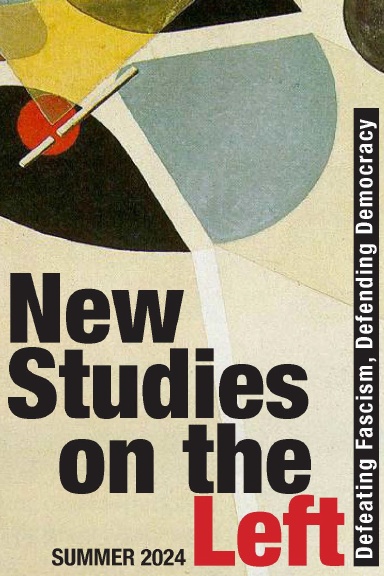
New Studies
on the Left
Paperback $19.95
...is a journal of socialist theory and practice. It is the successor to ‘Dialogue and Initiative, published as an annual journal of the Committees of Correspondence for Democracy and Socialism in book form from 2012 to 2022. It will continue the CCDS policy of left unity, including articles with a variety of left perspectives, including debates.
This issue contains over 30 articles grouped under the headings of Analysis and Global Reach, Debate and Controversy, Labor, Socialism, and Book Reviews. Some are reprinted from other sources, but many appear here for the first time.
Among the authors are David Bacon, Joan Braune, Carl Davidson, Bill Fletcher, Jr., Jerry Harris, Jay Jurie, Paul Krehbiel, Sun Liping, Adewale A. Maye, Duncan McFarland, Jasmine Payne-Patterson, Vijay Prashad, Nikhil Pal Singh, Harry Targ, and Janet Tucker.
Table of Contents
Click HERE to purchase
| | |
CHANGEMAKER PUBLICATIONS: Recent works on new paths to socialism and the solidarity economy
Remember Us for Gift Giving and Study Groups
We are a small publisher of books with big ideas. We specialize in works that show us how a better world is possible and needed. Click Gramsci below for our list.
| |
522 Valencia St.
San Francisco, CA 94110
415 863-6637
| | | | | |