|
put the needs of women and girls subject to violence at the forefront of a crisis.
Your Enduring Commitment to Women's Rights
| |
|
Last week, Americans elected Donald Trump to a second term--a convicted felon, notorious for denigrating women, taunting the disabled, and threatening immigrants and LGBTQ+ people. The day after Donald Trump won the 2024 presidential election, Afghanistan’s Taliban offered its congratulations to the American people for “not handing leadership of their great country to a woman.”
Those of us fighting for universal human rights, justice for survivors, and an end to gender-based violence, it is clear that the strength of our commitment to human equality and freedom will define our future.
This struggle is an ancient one. Those who thrive in hierarchy are relentless. Any step forward by or for the oppressed is met with rage and followed by strategic and insidious rulemaking that benefits the most powerful.
The entitled do not easily let go of their privilege. We know this at Global Rights for Women. We know that across the globe, women of all ethnicities are the largest and most violently oppressed group of humans.
In recent years, this escalation of oppression has been fierce. From the United States where women’s bodies are now controlled by the government--to Afghanistan where over 20 million women are stripped of all of their rights, including their right to live--women are being erased from civil life.
Contributing to this reality is the fact that women are only 27% of elected officials around the world, very few rising to be world leaders.
We know that in the face of these forces, persistence achieves results. Persistence. Long term. Sustained. That is what we stand for at Global Rights for Women.
You can read about the results of this persistence in our 10 Year Impact Report. Thanks to you we have partnered on 48 projects in 31 countries to change laws, create new ones, and assess the way services are delivered to victim-survivors.
All of our work is grounded in survivor-centered approaches to law and policy, and while transformation is incremental, we have seen real change across the world.
Global Rights for Women remains laser focused on its mission to end gender-based violence through legal and systemic change. As is true for so many rights-based movements, we’ll always have to work harder. Fortunately, we have you, and your commitment to ending gender-based violence means this is not something we will do alone, but in solidarity with you and so many other people. This drives our hope and purpose going into the next decade as an organization.
| |
|
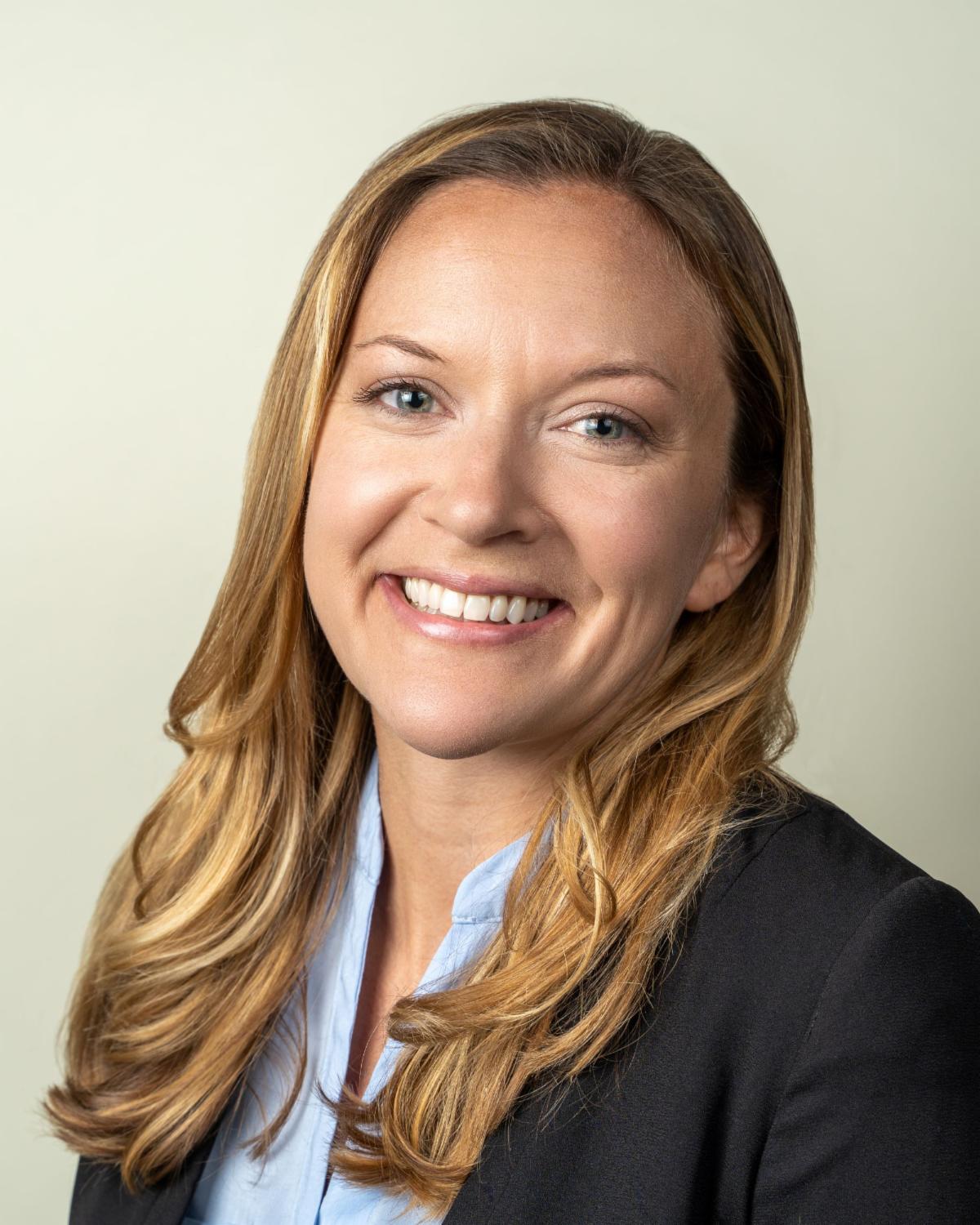
Cheryl Thomas
Founder & Executive Director
Global Rights for Women
| |
|
|
10 Year Impact Report
Ten Year Retrospective Addressing Gender-Based Violence Systems Change and Activism
Since 2014, we continue to be trailblazers in our work to address systems change.
Since our founding we have directly partnered with over a 100 NGOs and organizations across governments and civil society in 30 countries to address the root causes of gender-based violence, and address legal and systems reform.
Change is incremental, and because of our work and persistence, we have seen improvements in the last decade –strengthening current laws, and putting survivor-centered reforms in place to better serve victims of gender-based violence.
We are motivated and inspired by your involvement in this movement to advance gender-responsive strategies that address the root causes of violence against women and girls.
| |
Armenia - Assessing the Police Response to Gender Based Violence | |
|
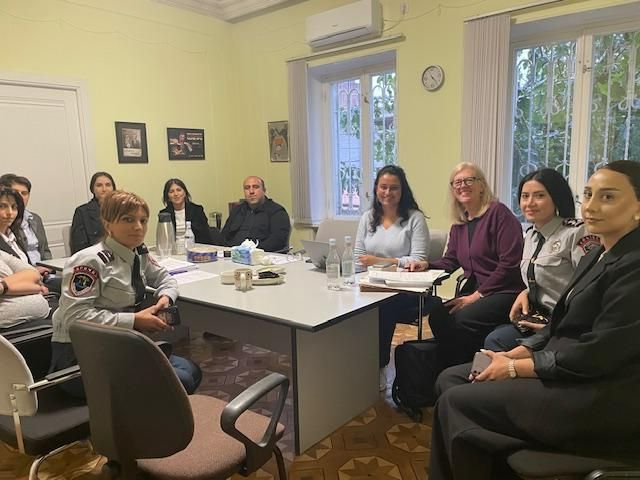
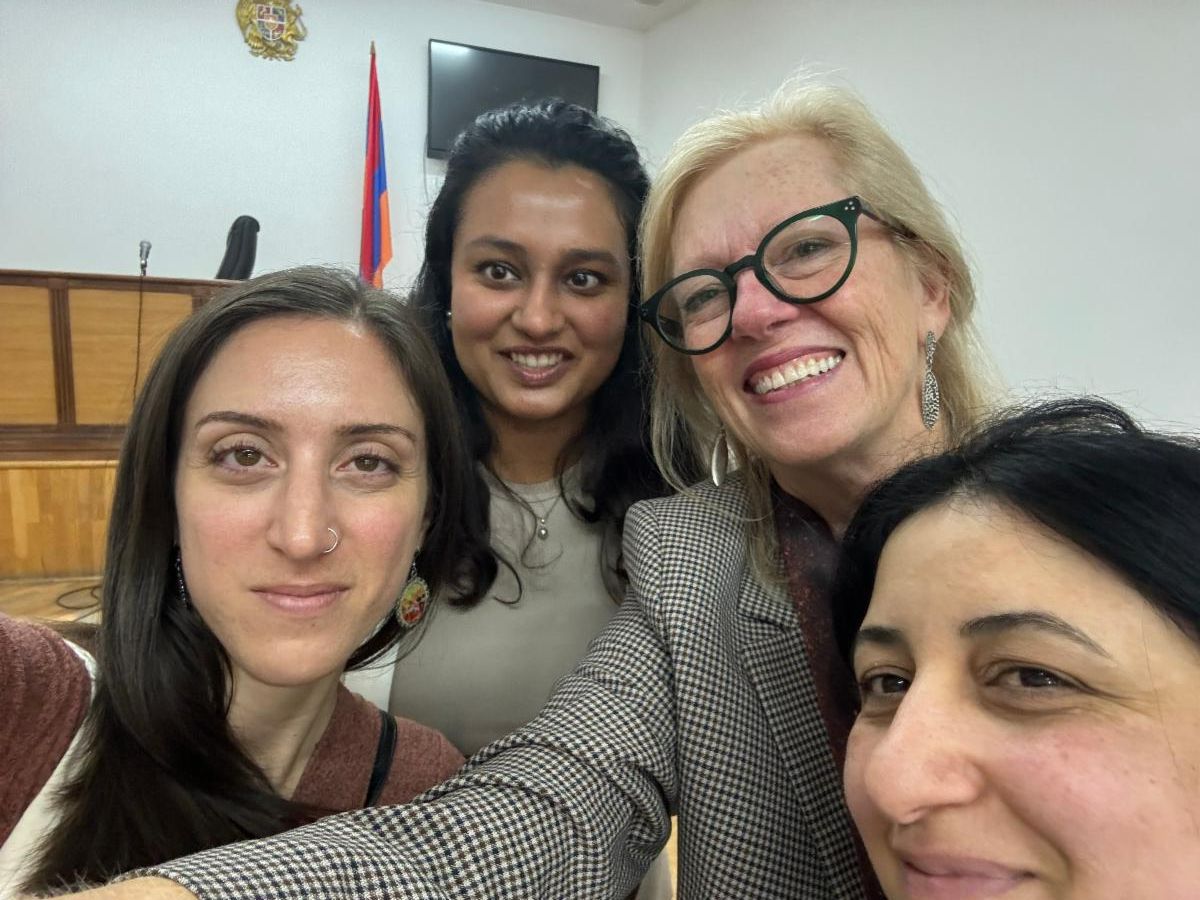
In October, Cheryl Thomas and Vayuna Gupta of Global Rights for Women, along with consultant Denise Gemache (see the following profile) traveled through three regions of Armenia: Yerevan, Gyumri, and Yeghegnadzor to meet with survivors and numerous agency and government stakeholders to conduct focus groups and interviews.
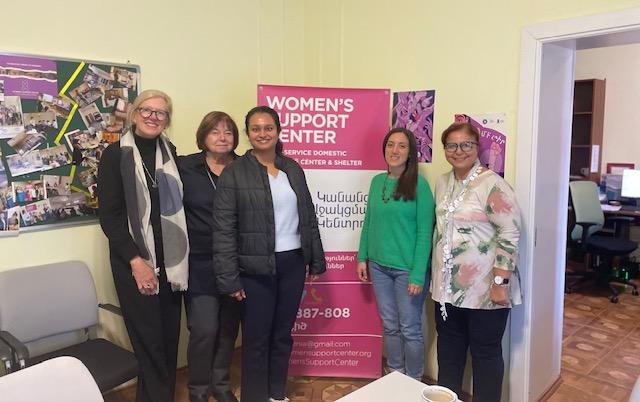
GRW was there at the invitation of our long-term partner the Women’s Support Center in Yerevan, where they work with a network of other support centers in Armenia. In addition to direct service, the Women’s Support Center has also engaged in systems change work to transform how survivors are treated when they reach out for help.
Though strong amendments have been made to laws, Armenian policy and practice promotes ‘family unity,’ over survivor safety, undermining survivors' attempts to escape abuse and leaving too many women and children in danger. Last spring, a package of amendments to the 2017 domestic violence law, criminal code, and family code were adopted.
GRW continues to work in partnership with the Women’s Support Center to move Armenia toward survivor-centered, trauma-informed law, policy and practice. GRW will publish an assessment regarding the police response to domestic violence, along with recommendations for laying the groundwork for a Coordinated Community
Response (CCR).
| |
|
Resister Spotlight:
Denise Gamache,
International Coordinated Community Response Expert
Denise Gamache (shown second left) directed the national resource center Battered Women’s Justice Project from 1996-2020, and oversaw national projects that advocated for changes in the civil justice system response to divorce and child custody cases involving domestic violence. Denise and her staff also assisted in the development of Coordinated Community Response (CCR) teams in over 150 communities across the US. She has also worked with NGOs and criminal justice professionals from Ukraine, Armenia, Moldova, and Uzbekistan, and joined Global Rights for Women on its most recent trip to Armenia as a consultant.
“It was interesting to go back to Armenia, to get a sense of the progress on responses to domestic violence. There has definitely been movement and it is heartening. The activist women are incredible, so strong and forceful, along with a realistic sense of what it takes to make changes,” Gamache said. She appreciated being in Armenia with Global Rights for Women because, “The way GRW conducts its work is to be survivor-centered and closely connected to a women’s NGO. Being sensitive to what local women want helps advocates in Armenia and elsewhere identify effective accountability measures that will work in their countries.”
| | |
“You should know you are a part of our story. You are part of our courage.”--Armenian survivor to GRW Team | | | |
|
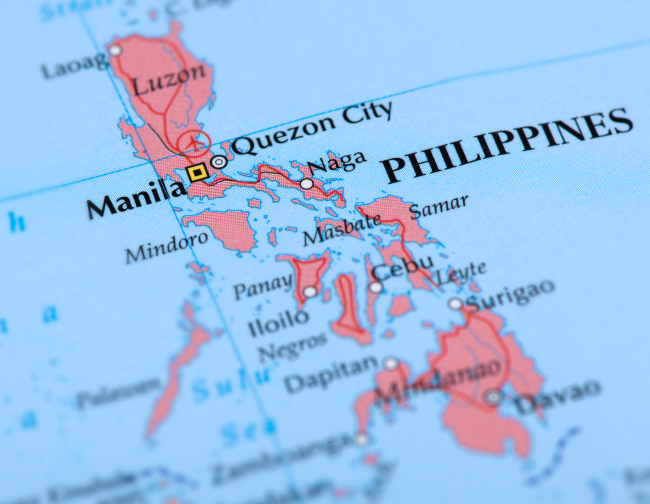
Coming Up Next in 2025--Philippines
Since 2022 we have conducted a Systems Advocacy Learning Lab (SALL) with eight women-led NGOs in the Philippines, supporting each organization’s capacity to engage in systemic advocacy within their unique focus areas and local communities. GRW staff will be traveling to Manila in February to host our last in-person conference to build on the systemic change being addressed by our partners in the Philippines.
| |
Gratitude and Recognition | |
|
We offer our thanks and appreciation to Sara Mowchan who has been with Global Rights for Women for six years before stepping down this fall. She started in 2019 as our Communications and Development Director and concluded her tenure as our Director of Operations.
We continue to be grateful for the impact she made, specifically Sara’s skills as a communicator, fundraiser, facilitator and leader, and her outstanding support for systemic change and survivor advocacy.
| |
|
The Emergent Movement to Connect Extreme GBV and
Trafficking as Non-State Torture
November 14, 2024
12:00-1:00 CDT
Presenters: Jeanne Sarson and Linda MacDonald, co-authors of Women Unsilenced, Our Refusal to Let Torturer-Traffickers Win, Elizabeth Gordon, artist-survivor, Silvia Marino, UN Working Group On Gender-Based Violence as Inflicted by Non-State Actors
Moderator: Vayuna Gupta, Legal and Policy Advisor, Global Rights for Women
When most people think of torture, they think of violence perpetrated during war or conflict by armies or agents of the state on combatants. Though it is not common to call out gender based violence as torture; frequently, it is exactly that. Gender-based violence, particularly domestic and sexual violence, is the world’s most prevalent crime against women. Because this violence usually occurs in private, rather than by state actors, the level of abuse and terror experienced by victims is minimized and obscured.
Tactics of extreme coercive control in intimate partner violence should be recognized as torture under UN Convention Against Torture and Other Cruel, Inhuman, or Degrading Treatment or Punishment (CAT) based on interpretations by international courts and the definition provided in the Rome Statute. In this groundbreaking conversation we will revisit the concept of torture as it relates to gender-based violence, and speak with those leading an emergent movement to recognize and treat domestic violence as non-state torture.
| |
|
From the Center on Women, Gender, and Public Policy at the Humphrey School of Public Affairs, University of Minnesota:
Does Women’s Empowerment Improve Socioeconomic Outcomes?
December 5, 2024
12:00 p.m. CST
A committee of the U.S. National Academies of Sciences, Engineering, and Medicine recently completed a study that advances the state of knowledge on the impact of global women’s empowerment and associated population dynamics on socioeconomic development. The multi-disciplinary committee was charged with reviewing existing research and developing a comprehensive conceptual framework that describes these dynamics. The committee was also asked to identify research and data collection priorities. Join us for a presentation by two of the report’s authors. Professor Ragui Assaad of the University of Minnesota and Professor Kathryn Yount of Emory University will discuss the committee’s findings and recommendations.
| |
|
No Pet Left Behind: Intersection of DV and Animal Welfare
December 10, 2024
12:00-1:00 CST
Panelists: Madeline Bernstein, Los Angeles Society for the Prevention of Cruelty of Animals (SPCA-LA), Orazie Cook, Pralines Backyard Foundation, Jennifer Polzin, Tubman
Moderator: Patricia Cumbie, Global Rights for Women
The exploitation and abuse of animals is fundamentally related to the domination and abuse of women. Research has shown there is a direct link between cruelty to animals and abuse of people. People who abuse animals are five times more likely to engage in domestic violence, child abuse and other violent behavior impacting communities. The people who abuse both animals and people also share a common mindset of entitlement to subjugate, oppress and exploit based on a belief of superiority.
Almost half (48%) of victim-survivors experiencing domestic violence will not leave the relationship if it means leaving their pet behind. Additionally, abusers use this leverage to further coerce and control their partners, as 89% of survivors said their partners threatened, harmed or killed their animals. From that perspective, there are many connections to be made with animal rights and the anti-gender-based violence movements, including pushing for pet-friendly laws and policies that support survivors of violence. Join us for a conversation about current innovations that address this particular barrier to justice for animals and human victims of violence.
| | | | |