|
As we all know, when you work in local government, you can never fully turn off that part of your brain.
Nicole and I recently spent four days in Venice. While most visitors focused on the romance of ancient streets and historic churches, I couldn’t help but view the city through the lens of municipal operations.
When you strip away the romance, you’re looking at a municipality that has to provide modern services without a single road, standard underground pipe or traditional vehicle.
Take wastewater. Because the city is built on wooden pilings in a mud lagoon, a centralized sewer system is physically impossible. Instead, Venice relies on a wild hybrid of private mini-septic tanks, routine canal dredging, the high salinity of the Adriatic Sea and twice-daily tidal flush. Solid waste logistics are just as fascinating. There are zero trash trucks. Sanitation workers with small handcarts haul garbage over arched bridges and down narrow corridors to load specialized boats that compact and carry it off the island.
Transportation is entirely aquatic. Our trip home highlighted the logistics: a 30-minute water taxi to Marco Polo Airport’s dedicated docks followed by a one-kilometer walk to the main airport building.
For all its operational triumphs, the city is struggling under the weight of its own popularity. The explosion of short-term rentals is hollowing out the housing market, driving a severe loss of local population from a peak of 180,000 to 49,000 today. Managing the tension between celebrating tourism, preserving a global heritage site and keeping a city livable for actual residents is a monumental policy challenge.
More than 99% of the people walking around Venice don’t give a second thought to what happens when the toilet flushes in a floating city, but local government nerds can’t help but wonder.
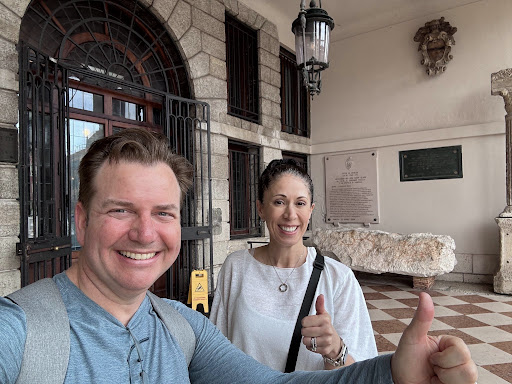
It was a beautiful vacation, but also a reminder of the important work we do. And, yes, we did manage a selfie at city hall.
Arrivederci,
|