A Roundup of Recent Ulster County Business-Related News, Views, and More
November 26th, 2025
| | |
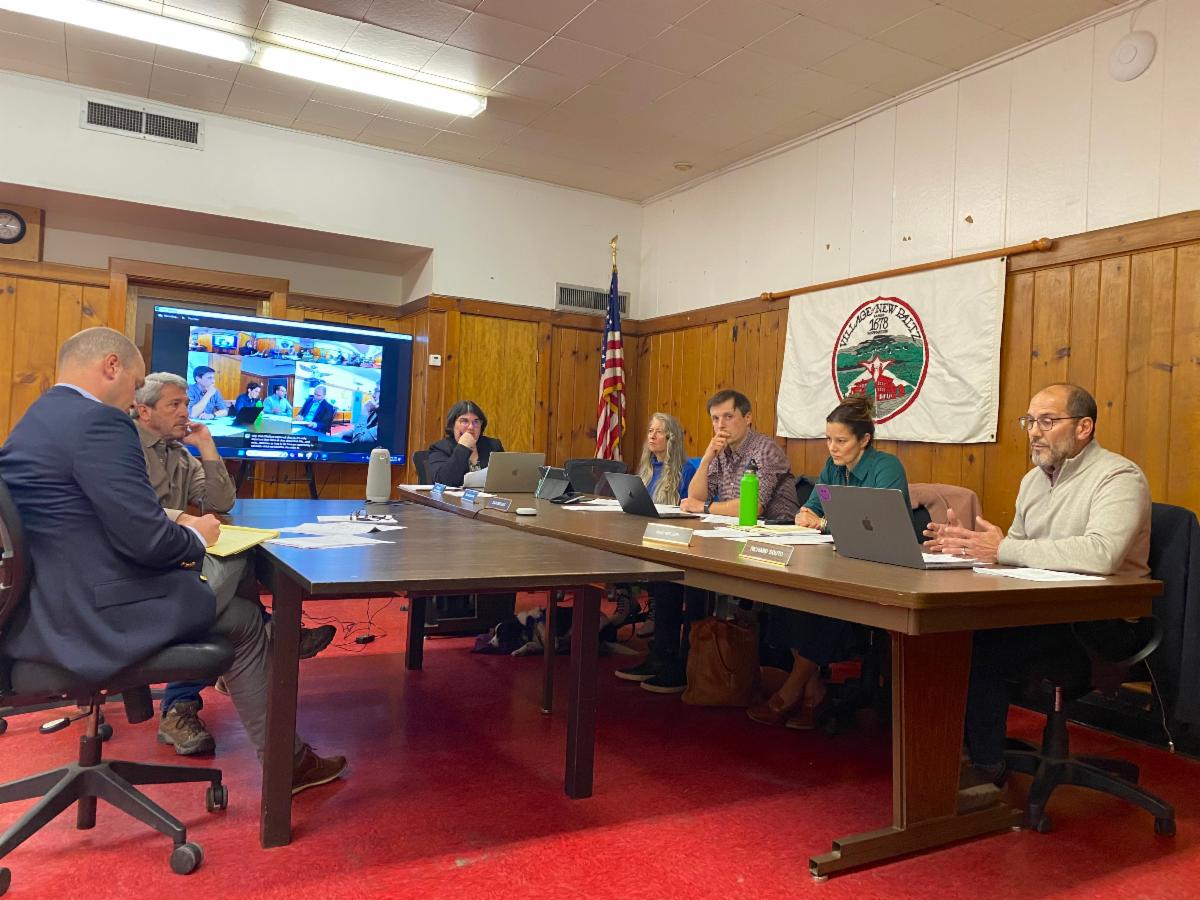
Pictured: Village of New Paltz Planning Board
Did you know that the average Thanksgiving meal ranges from 3,000 to 4,500 calories? Food for thought this holiday. Even as many of us commence holiday plans, the business of business soldiers on, and indeed some notable news is happening even now in Ulster County.
This week we got notice that the Director of Ulster County's Economic Development, Kevin Lynch, announced his resignation affective the beginning of January. We wish Kevin well. We also learned that right after being reelected, Town of Ulster Supervisor Jim Quigley announced he's finally calling it quits. Known as a champion of business, we thank him for his tenure.
This edition of the Ulster Strong Business Bulletin Newsletter includes our exclusive article on local business financing, a helpful update on development activity in New Paltz, news of students at Rondout Valley High School getting lessons on entrepreneurship, and more. We also share more results from Ulster Strong's County and Town Candidate Survey from this fall election. While business is widely supported, the devil is always in the details.
From all of us at Ulster Strong, we wish you a very festive and warm Thanksgiving holiday!
| | |
This newsletter includes the following:
Opinion: Support the New Historic Huguenot Street Visitors Center
Ulster County Hemp Conference
Show me the money:
Free counseling and community banking turns Ulster County business dreams into reality
How the Delivery of Quality Healthcare Affects Economic Development in the Hudson Valley
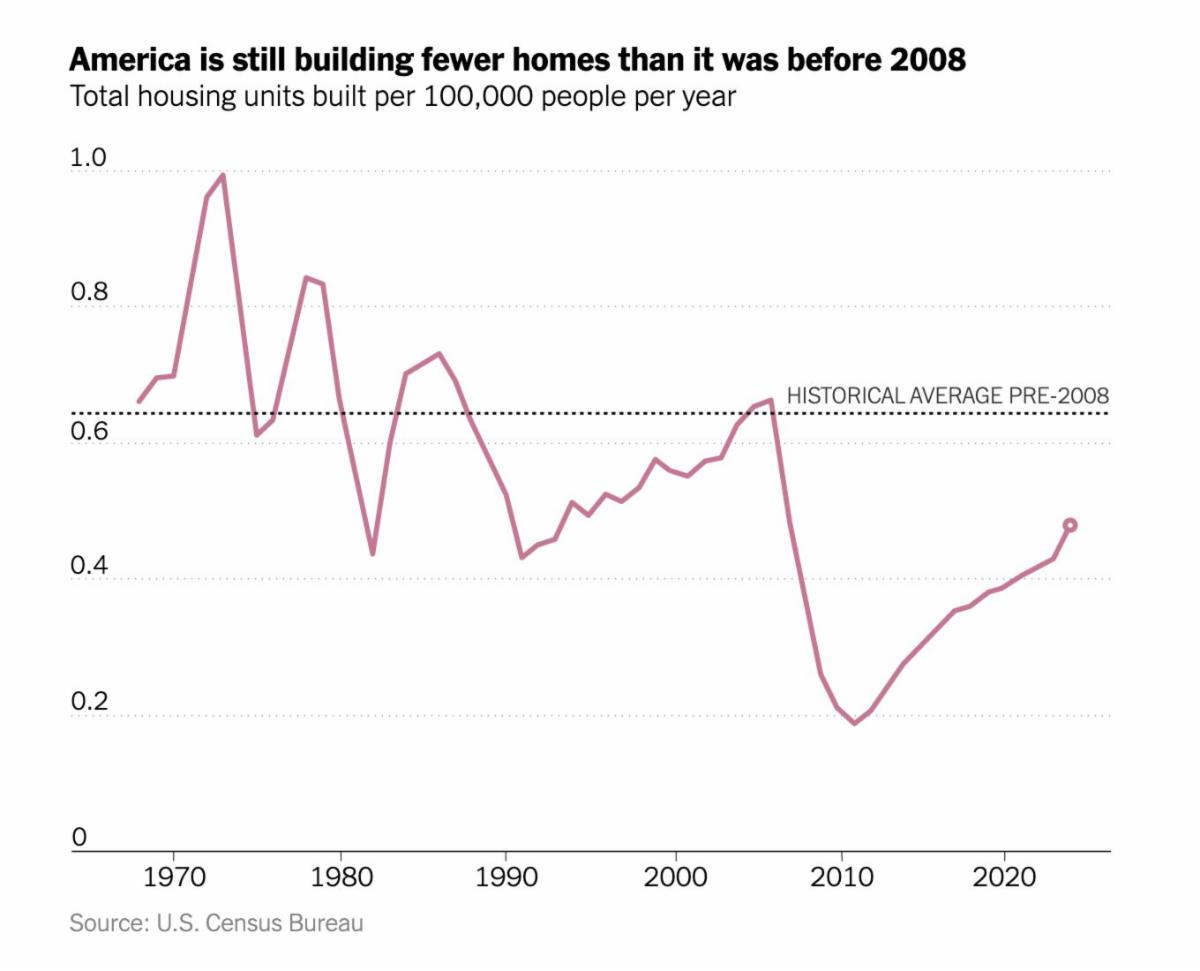
A NATIONAL HOUSING DATAPOINT
New Paltz’s latest developments in housing, tourism and infrastructure
Rondout Students Learn Business at New Cafe
DATA BITES: Ulster Strong Candidate Questionnaire Answers
QUICK BUSINESS NEWS UPDATES
| | |
Support the New Historic Huguenot Street Visitors Center
| | |
Ulster Strong supports the development plan for the new Historic Huguenot Street Education and Visitor Center. Currently under review with the Village of New Paltz, it will create new opportunities to share Historic Huguenot Street and local history with the public, and strengthen local economic and cultural contributions.
Heritage tourism is growing nationwide, and Ulster County’s historic assets are abundant. Yet surprisingly, it receives little investment in preservation, curation, education, promotion and accommodation for public visitation, especially in comparison to surrounding counties.
Visitor Center plans include a new, larger exhibition space, meeting and education rooms, archive storage, additional parking, and improved access to nearby rail trails and Wallkill waterfront. It adds numerous community benefits through enhanced public programming and engagement. It will better serve growing visitors, and deploy exciting new methods that bring history to life. The new Center will serve as a great launch point for additional exploration, encouraging visitors to stay longer, dine and shop locally, and participate in the rich cultural life of New Paltz and the surrounding region.
A small yet vocal group oppose the plan, apparently viewing Huguenot Street more as a community greenspace than a national historic treasure to be shared. We sympathize, but feel that should be addressed by the Village and Town comprehensively, and not limit this one-of-a-kind opportunity for New Paltz and Ulster.
| | Ulster County Hemp Conference | | |
CCE Ulster , in partnership with the Ulster County Office of Economic Development, is pleased to be hosting the Ulster County Hemp Conference on Tuesday, December 9, 2025, in Kingston, NY.
This initiative aims to explore the economic and agricultural opportunities related to hemp cultivation and processing in our region. The event will serve as a platform for bringing together farmers, researchers, processors, and business leaders to share knowledge, assess local potential, and strengthen regional collaboration across the hemp value chain.
Details:
Fields of Opportunity: Ulster County Hemp Conference
Date: Tuesday, December 9, 2025
Time: 9:00 AM – 6:00 PM
Location: Best Western Plus,503 Washington Ave, Kingston, NY 12401
Overview
Growing interest in the potential of hemp as a viable agricultural and economic opportunity has sparked conversations across Ulster County. To build on this momentum, the Fields of Opportunity: Ulster County Hemp Conference was created as a platform to explore the possibilities for developing a local hemp-based industry. The conference aims to bring together farmers, researchers, processors, community and business leaders to discuss the latest research, production practices, and market opportunities. By fostering dialogue and collaboration, this event seeks to lay the groundwork for a connected hemp community in the region.
Organized by Cornell Cooperative Extension of Ulster County in collaboration with the Ulster County Office of Economic Development, this full-day conference will feature expert presentations, panel discussions, and interactive sessions focused on hemp grain, fiber, and waste utilization. Participants will gain insights into current research, production practices, processing technologies, and emerging market opportunities.
Highlights:
- Updates from Cornell researchers on hemp genetics, production, and processing
- Presentations from industry leaders across the hemp value chain
- Discussions on market development, policy, and regional collaboration
- Networking opportunities to connect with peers and explore partnerships
The event will conclude with a networking reception designed to encourage collaboration and innovation across the hemp sector.
Whether you are already involved in hemp production or are exploring its potential within your business, this conference offers a unique opportunity to learn, connect, and contribute to the future of hemp in Ulster County and beyond.
To register and for additional information please visit:
https://www.cceevents.org/e/fields-of-opportunity-ulster-county-hemp-conference
With questions reach out to Uliana Ahashkova, CCE Ulster at ua38@cornell.edu.
| | |
Show me the money
Free counseling and community banking turns Ulster County business dreams into reality
by Zac Shaw for Ulster Strong
| | |
Small business owners in Ulster County are used to figuring things out themselves. Financing is different. It has rules, gatekeepers, and a learning curve that can be costly if you’re not hip to how the money game is played. The people who spend their days helping small businesses realize their goals say the same thing: do not treat financing as an afterthought. Treat it as another part of the business you can learn, with help.
“The most important thing we do is help people make good business decisions,” said Sam Kandel, director of the Mid-Hudson Small Business Development Center (SBDC). “Number one, if a business doesn’t have cash flow, it’s not going to be successful.”
Kandel has been with the program for 23 years, first as an advisor and now as director. His center, based at SUNY Ulster, is part of a national network under the umbrella of the U.S. Small Business Administration (SBA). In New York, the SBDC is funded through the federal government and the SUNY system. The Mid-Hudson center covers seven counties, including Ulster, with satellite offices in places like SUNY New Paltz, the Poughkeepsie and Orange County chambers, Port Jervis, and the Catskill Watershed Corporation.
“We provide free counseling services to small businesses,” Kandel said. “There are about 150 other advisors in the state. We have a vast knowledge base that we can use in order to help our clients with whatever comes through the door and the services are free.”
A large share of those clients first show up because a lender sent them.
“We’re a referral service, so a lot of our referrals come from lenders,” he said. “In order to apply for any kind of funding from either a commercial bank or an economic development agency or an IDA, you’re required to have a business plan. You’re required to have financial projections. A lot of what we help people do is A, to understand what the process is and B, to help them put business plans and financial projections together.”
For many owners, it is the first time they have ever written a plan.
“Some people come in with just what’s in their head and we try to get it down on paper and translate it into numbers,” Kandel said. “This is something that people do once in their lives typically, and it’s something that we do on a daily basis.”
He is blunt about what those plans are really for.
“A business plan is all about crossing t’s, dotting i’s, and supporting the financial assumptions that make businesses work,” he said. “Businesses succeed and fail on numbers. It doesn’t matter what you put in those [business plan] paragraphs. It’s basically just footnotes to the financials, because if you don’t make more money than you spend, if you don’t have positive cash flow, then your business is doomed to failure.”
One of the first myths he has to clear up is about who actually lends the money.
“People have the misnomer that SBA is a direct lender, which they’re not, except for some small micro loans that they offer,” Kandel said. “The SBA is a guarantor.”
He describes two main SBA programs that show up in local deals. An SBA 504 loan “is basically for real estate and fixed equipment and that is in partnership with the bank.” The SBA 7(a) program “provides up to an 85% guarantee to a bank… it’s a kind of a catchall for anything else that a business might need.” Those guarantees exist, he said, because “banks are risk averse and that mitigates the risk.”
Another common myth is that there are easy grants for startups.
“The first question people ask is, are there grants? And the answer to that is no,” Kandel said. “I always say that the grant, the G word, is a dirty word because typically, especially for startups, there’s no grant money around… So first they have to dispel the myth that there are grants available.”
In practice, startup capital is a mix of SBA-guaranteed loans, local loan funds, and personal money.
“Usually startup businesses are funded by loans that are guaranteed by the SBA,” he said. “And then there’s also investment. Friends, family, personal savings, home equity. If it’s not a huge amount of money and a huge risk, then sometimes people will use the equity they have in their homes to start a business. The terms are better too, because usually when you take out a 30-year home equity loan, your payments are going to be a quarter of what they would be for a five-year loan from a commercial bank.”
Kandel estimates that about 60% of his center’s work is with people “who are considering starting a business” and 40% with existing firms that want to grow, refinance, or buy a building. In Ulster County and the Catskills, that often means hospitality and service trades.
“Certainly the Catskills are very skewed towards hospitality,” he said. “I’ve worked with a hundred restaurants over the past 23 years. And other things related to hospitality: service businesses, people who are plumbers, carpenters, in the service industries.”
While securing financing is the SBA’s bread and butter, small businesses that are struggling with debt can also benefit from their sage guidance.
“It can take a rebuilding period to get to the point where you become bankable,” Kandel said. “That doesn’t mean you go out of business. It means you do the things necessary to make your business more bankable.”
Sometimes that guidance is away from the pursuit of the business entirely.
“I would say that over the years that I’ve been doing this, I’ve probably talked more people out of doing what they want to do than having them actually move forward,” he said. “It’s a big responsibility to encourage people to put their life savings into a business that doesn’t have a chance to be successful. That’s the benefit of working with people at the SBDC, so that people don’t make bad business decisions.”
Once the plan and the numbers are in good shape, the conversation usually moves to a local bank. That is where lenders like Rondout Savings Bank step in.
“The role of a community bank like Rondout Savings Bank in financing small businesses is twofold,” said Evan Rothfuss, VP Sr. Commercial Loan Officer. “First, we provide access to the capital that helps businesses start, grow, and invest in their future. But equally important, we care about our community and act as a community partner and resource. Because we’re deeply rooted in the Hudson Valley, we understand the local market and the challenges small business owners face.”
For borrowers, Rothfuss is the main human interface with the bank.
“In my role as a Commercial Loan Officer, I’m the primary point of contact for the borrower,” he said. “I walk clients through the entire loan process—from taking the application and gathering financials to explaining requirements and answering any questions they have along the way. I also coordinate closely with our underwriting department, making sure we get the information we need and keeping the customer informed so the process feels smooth and transparent.”
Many owners are surprised by how many factors go into a credit decision.
“One of the most common [challenges] is not fully understanding how a credit decision is made,” Rothfuss said. “Many borrowers assume there’s one single factor that determines approval, when in reality we look at a combination of things—cash flow, personal and business credit history, collateral, industry trends, management experience, and the overall strength of the business plan. All of these pieces come together to tell the full story of the business.”
Showing up unprepared is another pattern he sees.
“Another common challenge is approaching the bank without a detailed business plan,” he said. Owners should come in “with a clear plan of the business’s goals, a timeline for when the capital is needed, up-to-date financial documents… and an understanding of their own numbers, including cash flow and debt obligations, so they can speak confidently about their business. The more organized and transparent a borrower is, the smoother the process is for everyone, and the better positioned we are to structure a loan that fits their needs.”
Rondout often sends people back to the SBDC first if the idea needs more structure.
“Rondout Savings Bank works closely with the SBDC, as they’re an excellent resource for helping small businesses get prepared for financing,” Rothfuss said. “They assist with developing solid business plans, financial projections, market research, and overall strategy… Once they’ve worked with the SBDC and come back to us with that foundation in place, we’re able to have a much more productive conversation about financing and how we can help them move forward.”
In Ulster County and the broader Hudson Valley, Rothfuss sees clear trends in what people are trying to finance.
“With low vacancy rates and strong housing demand, we’re seeing continued interest in residential real estate investment—particularly construction financing for multifamily developments and apartment buildings,” he said. “There’s also increased demand for working-capital lines of credit, especially in the hospitality and tourism sector. Because the area has become more seasonal, many businesses appreciate having a line of credit to help manage cash flow during slower periods.”
The bank’s small business customers span restaurants, developers, contractors and trades, professional services, and small manufacturers.
“Ulster County’s economy has strengthened and diversified in recent years, so a wide range of businesses are seeking capital—whether for expansion, equipment purchases, property improvements, or simply to gain leverage as they grow,” he said.
Rothfuss says the best time to talk to a lender is before the need becomes urgent.
“My biggest advice for small businesses seeking financing is simply: don’t hesitate to start the conversation early,” he said. “We can often save businesses time by helping them prepare the right documents, think through their financing needs, and structure their plans in a way that sets them up for success.”
He also stresses candor.
“I also encourage business owners to be open and transparent,” Rothfuss said. “The more we understand about the business—its challenges, opportunities, and long-term plans—the better we can tailor financing solutions that truly fit.”
| |
How the Delivery of Quality Healthcare Affects Economic Development in the Hudson Valley
By By Paul Adler, Esq. - Rockland County Business Journal
| | |
The health of a community is inseparable from the health of its economy. Across the Hudson Valley, hospitals, medical centers, and the many businesses that support them are not only essential to our physical well-being—they are foundational to our economic vitality. The healthcare industry is one of the largest employers in every county of our region. From major hospitals like Montefiore Nyack, Garnet Health, and Westchester Medical Center, to community clinics and home care agencies, healthcare drives billions in regional economic activity, creates good-paying jobs, and anchors our local tax base.
But this vital engine of growth and stability is under threat. Pending federal legislation—specifically H.R. 1—poses a serious danger to the financial sustainability of New York’s hospitals and healthcare providers. If enacted, H.R. 1 would drastically alter the funding landscape for Medicaid and Medicare, shifting billions of dollars in coverage costs from the federal government to the states. For New York, that means an estimated $3 billion in potential cuts.
The New York State Department of Health has warned that Hudson Valley hospitals alone could face $168 million in uncompensated care losses as a result of reductions in Medicaid and Essential Plan funding. Those are not abstract numbers. They translate directly into fewer nurses, longer wait times, deferred capital projects, and diminished access to care—especially for our most vulnerable neighbors.
Hospitals like Montefiore Nyack have already sounded the alarm. They understand that H.R. 1 doesn’t just threaten the health of individual New Yorkers—it threatens the economic health of entire communities. When hospitals are forced to absorb massive federal funding cuts, the ripple effects are immediate and far-reaching. Healthcare institutions are among the largest employers in the Hudson Valley. When their financial stability is undermined, so is the stability of the thousands of families who depend on them for their livelihoods.
| | |
A NATIONAL HOUSING DATAPOINT
In sum, nationally we are not building nearly enough housing to keep up with demand.
| | |
Big things are developing in New Paltz. Over a dozen major projects were recently completed, are under construction, or are in the planning and approval stages. It’s a combination of much-needed housing (especially for students), tourist spots and infrastructure for light industry and emergency services.
There are so many ribbon cuttings, groundbreakings and public hearings to keep track of, it can be difficult to parse the cacophony of construction into a coherent bird’s-eye-view. Let’s take a moment to review all the new developments that have come or are coming to New Paltz (pending approval, of course).
North Chestnut corridor
As will be obvious to any passerby, much of the development is taking place on North Chestnut Street, essentially the gateway to New Paltz when bound there from Kingston and points north. That gateway is becoming much grander thanks to a host of housing developments, which are hard to imagine being more in demand.
Zero Place (87 N. Chestnut) — Completed in 2022, this net-zero-energy mixed-use building is a four-story flagship for renewable energy, originally built as 46 apartments atop roughly 8,000 square feet of retail space. Its many eco-friendly — and budget-friendly — utility systems are a testament to the cutting edge of green energy technology.
The more recent development? In March 2025, owners began converting the apartments into condominiums for sale. The thing is, these units were regulated by the Village of New Paltz’s affordable housing law. The Affordable Housing Board questioned how income-qualified tenants would obtain mortgages and whether the units would remain affordable; the developer said regulated tenants could remain as renters if they continue to qualify and pay. Otherwise, the condos will be for sale.
Today, Zero Place’s website indicates that residential units are fully rented. They’re seeking tenants for the first-floor commercial space, so there’s still potential for more development here.
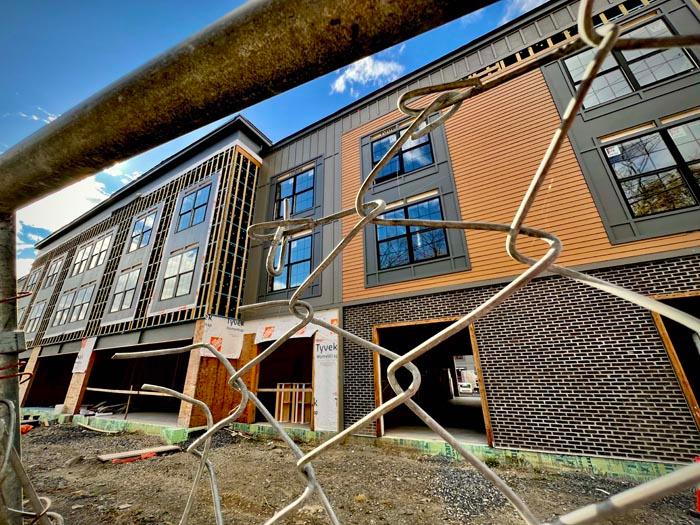
Trail Link Collective (137 & 145 N. Chestnut) — Two new mixed-use buildings are rising just steps from the Wallkill Valley Rail Trail, seeking to house renters in 68 market-rate apartments. The new structure will also include the ever-popular ground-floor commercial space concept. They’re also planning a courtyard, bike room, lounge, fitness area and in-unit laundry.
Construction is underway, early 2026 has been hinted at for its potential opening date, though nothing is official. Based on market trends, one might expect this glass castle to fill up with haste.
TBA (Westview Development) 147-151 N. Chestnut St. — A larger companion mixed-use proposal by Westview Development, LLC would merge 147–149 and 151 N. Chestnut into a single ~4.74-acre lot and construct a massive ~131,500 square-foot building with approximately 124 apartments and roughly 8,700 square feet of commercial space. The living spaces would be a mix of market-rate and affordable units.
What’s holding it up? The developer applied for financial assistance and tax exemptions from the Ulster County Industrial Development Agency (UCIDA), an organization that seeks to achieve economic development by offering financial enticements. This is common practice for many large development projects. This time, the New Paltz village board said “not so fast”, and opposed any tax exemption until a more formal agreement was reached with regard to what the developers would provide in exchange.
The project is also still undergoing other reviews as officials scrutinize size, parking, traffic and stormwater impacts, leaving its construction timeline uncertain until both the financing and site-plan issues are resolved.
Student housing in New Paltz
SUNY New Paltz’s decision to grow enrollment and expand programs has collided with a local housing market that could charitably be described as “tight”. Students recently celebrated a substantial Student Union overhaul and other modest campus upgrades, but housing remains of chief concern for matriculating renters.
Thankfully, the university finished renovations on Mohonk Hall in September, adding nearly 70 beds. This follows a successful on-campus campaign to add beds to Awosting Hall.
Off campus, the proposed New Paltz Apartments was marketed chiefly to students, boasting a whopping 612 beds, but since September 15 it remains stalled after the town board rejected annexation needed for village water and sewer. Village trustees had earlier voted to approve annexation and have said they’ll ask a court to resolve the split, with developers covering legal fees. Until this issue is resolved, it’s unclear how the project moves forward.
The 200-unit complex is planned for a site just south of the SUNY campus and would include a clubhouse, pool, fitness center and nature trail, with an additional 30 apartments set aside as affordable under village law. No UCIDA tax relief has been sought for this project to date.
Senior housing in New Paltz
With so many young adults running around the village, Harmony Hall is a 51-unit attempt to not forget about our elders. The income-restricted rental community for ages 62 and up will be located at 52–54 S. Manheim Blvd (Route 32), a close distance to bus service. It’s currently wrapping up construction.
Applications opened September 24; county officials said the project was targeting initial occupancy by fall 2025. As of today, leasing continues with move-ins expected to begin late 2025 on a rolling basis.
Other housing in New Paltz
Further greening the housing scene, a six-unit, all-electric townhome/condo project at 30–32 Cooper Street — led by developer David Shepler (a partner in Zero Place) — is designed to be similarly fossil-fuel-free. The team recently asked to subdivide the single condominium map into fee-simple town lots, which requires zoning relief.
The units are already under construction; regulatory focus has shifted to approving the subdivision and related variances so each home can be deeded individually. If subdivision variances are granted this fall, closings could follow upon issuance of individual certificates of occupancy in 2026.
Tourist attractions — new and under development
New Paltz Way (11 Water St.) — A 28-room boutique hotel with a self-guided wellness center, coffee bar, bike amenities, and a living roof is under construction on the Wallkill and adjacent to the rail trail. The Ulster County IDA unanimously approved a package of tax incentives valued at about $1.06 million in February 2025; co-developers are Jesse Halliburton and Ryan Giuliani (Way Hospitality), whose portfolio includes Woodstock Way.
Demolition of the former factory structure occurred in February/March 2025; framing and enclosure progressed through summer. The project’s website and developer materials advertise “Opening Spring 2026.” The brand plan emphasizes low-key, nature-forward design that visually breaks down massing, integrates solar on the living roof, and connects guests to the Market, the trail network, and Mohonk Preserve.
Huguenot Street Visitor/Education Center — Historic Huguenot Street (HHS) has proposed a roughly 7,400-square-foot visitor/education center within the National Historic Landmark district, with program space that includes a meeting room, classroom, exhibit/storage areas, a gift shop, accessible restrooms, and an outdoor amphitheater. The application drew significant public scrutiny in 2024–25 over size, design, archaeological impacts, and parking; in September, planning board leadership said HHS asked to be removed from the agenda while it develops changes, and the public hearing would likely remain open during that revision period. As of now, no construction timetable has been set; the project will return for further review by the planning board and Historic Preservation Commission once revised plans are submitted. Recent iterations discussed by the applicant reduced proposed parking from more than 100 spaces to about 80 spaces.
Henry W. Dubois Greenway Connector — This ~1.7-mile shared-use path segment, officially opened on June 15, 2025 with a community ribbon-cutting and walk/ride. The connector stitches the Hudson Valley Rail Trail and the Wallkill Valley Rail Trail, closing a major gap and enabling largely car-free travel through the village and beyond as part of the Empire State Trail network.
The project delivers a protected east-west spine on H.W. Dubois Drive, addressing a well-documented safety/continuity need for cyclists and pedestrians. Parks & Trails New York supported launch events and helmet distribution. Early operations included punch-list and maintenance coordination by the town and village.
New Paltz industrial and emergency infrastructure
New Paltz Firehouse (117 Henry W. Dubois Drive) – New York’s first net-zero energy fire station features all-electric systems, energy-efficient walls, and a rooftop solar array. Funded in part by the Governor’s Office of Storm Recovery to strengthen emergency infrastructure, the project took several years to complete. A public ribbon-cutting on September 21, marked its official opening. The facility includes radiant floors, a drive-through bay, indoor training space, and future battery storage capacity. It also serves as an emergency operations center.
New Paltz Industry Hub (53 North Ohioville Rd.) — A proposed multi-building light-industrial and maker campus east of the village aims to provide flexible space for small manufacturers, craft food and beverage producers, labs, and offices, along with infrastructure upgrades. First introduced in 2021 and updated in 2024 in response to planning board input, the project remains under town review. If approved, it could broaden the local tax base, support SUNY-affiliated entrepreneurship, and offer workspace for production businesses not suited to Main Street, potentially reducing out-of-town commuting. Final timing depends on environmental and site plan approvals.
| |
Rondout Students Learn Business at New Cafe
(Kingston Wire)
| | |
Students at Rondout Valley High School are getting hands-on business experience at the school's brand-new Caring Cafe. Joe Delessio and Faye Carlson-Mackenzie’s Government and Economics class devised the idea and launched the cafe last week. Students at the helm have already raised over $700.
The Caring Cafe is completely student-run, and all proceeds support the Rondout Valley Educational Fund, which helps RV students get the best education resources they can. The cafe is a way for students to build real-world skills, and fund their education while they're at it.
"The goal is for students to provide staff with quality refreshments, learn the responsibilities of managing a small business, and apply classroom lessons in economics, entrepreneurship, and civic engagement," RVHS wrote. "By serving others, they not only raise funds, but also strengthen leadership, teamwork, and community spirit within RVHS."
Sponsors have already come forward to support the project, including Phade, a company that creates sustainable alternatives to single-use plastics. My Town Market and Dunkin’ Donuts in Kerhonkson have also made donations.
| |
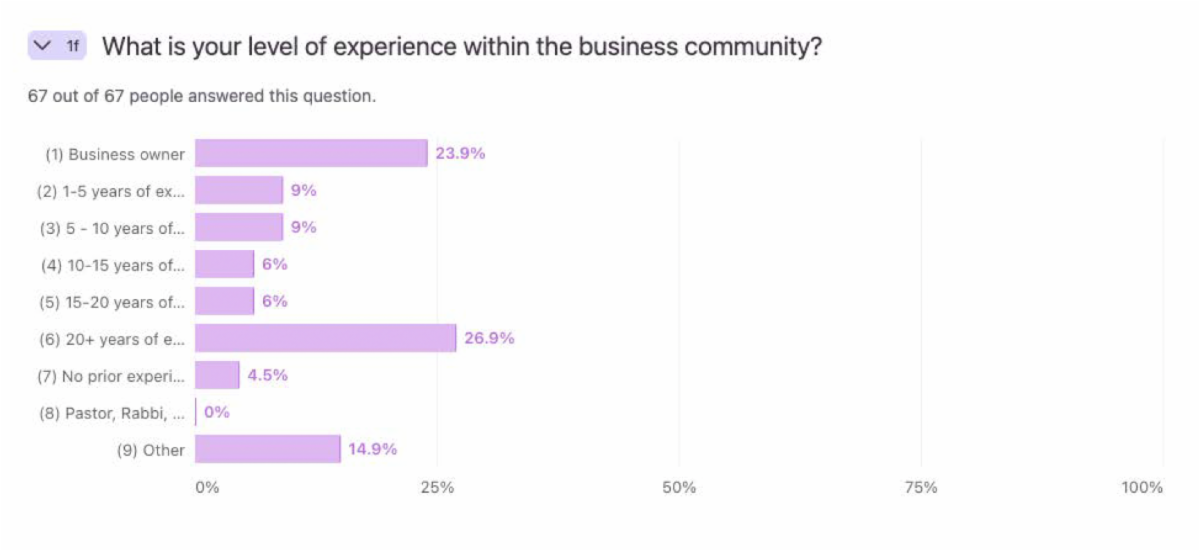
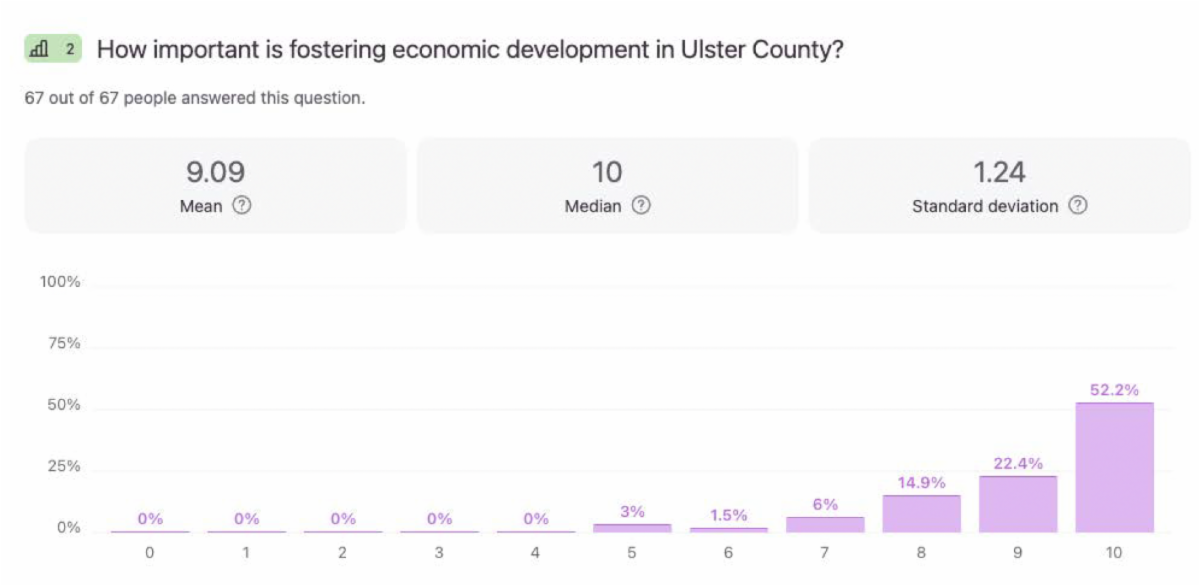
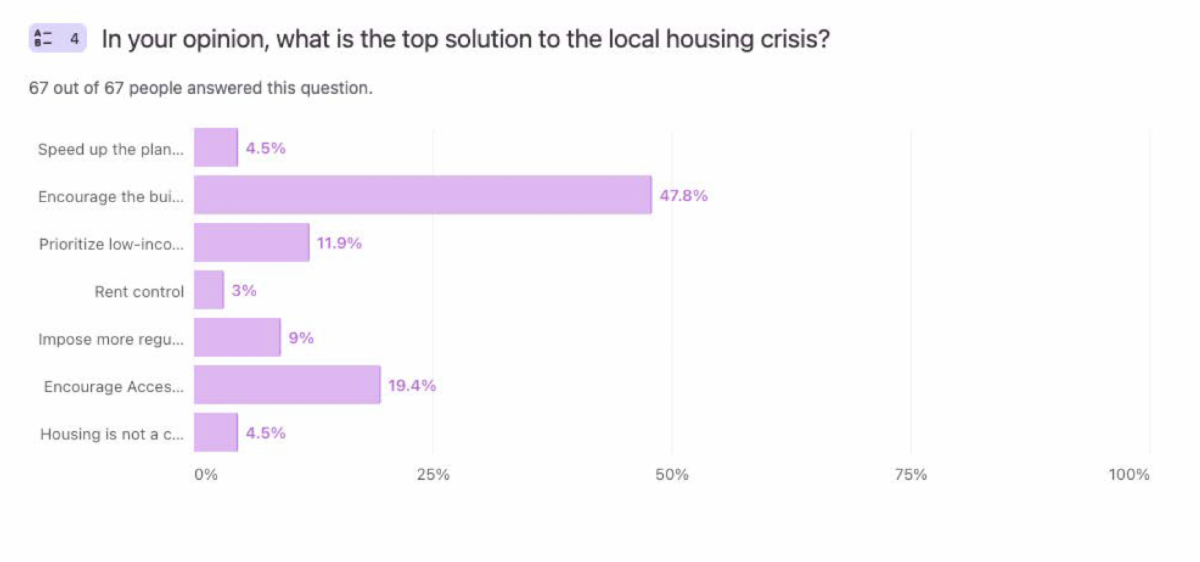
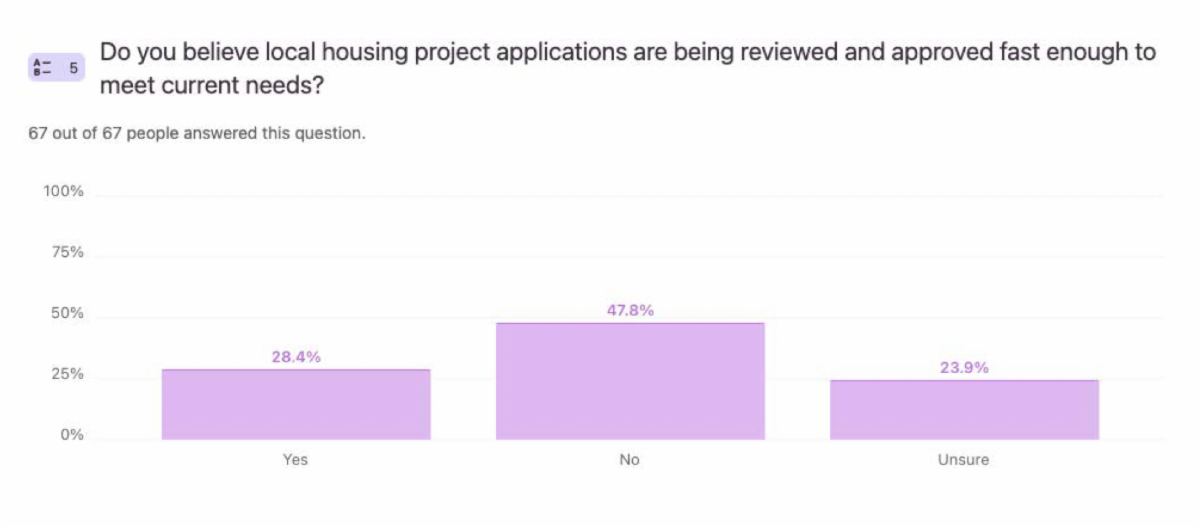
DATA BITES
Ulster Strong Candidate Questionnaire Answers
| | |
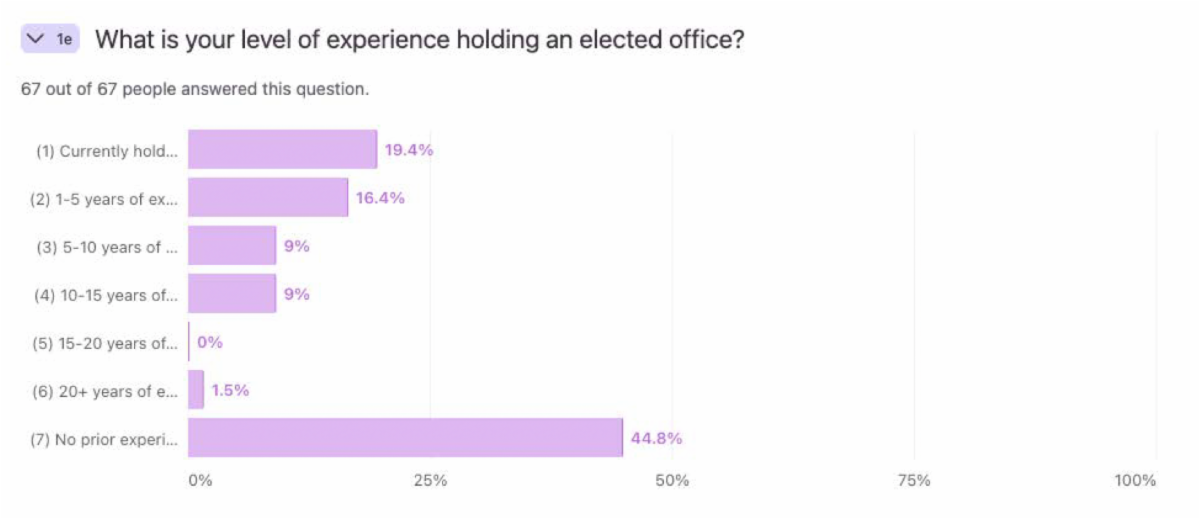
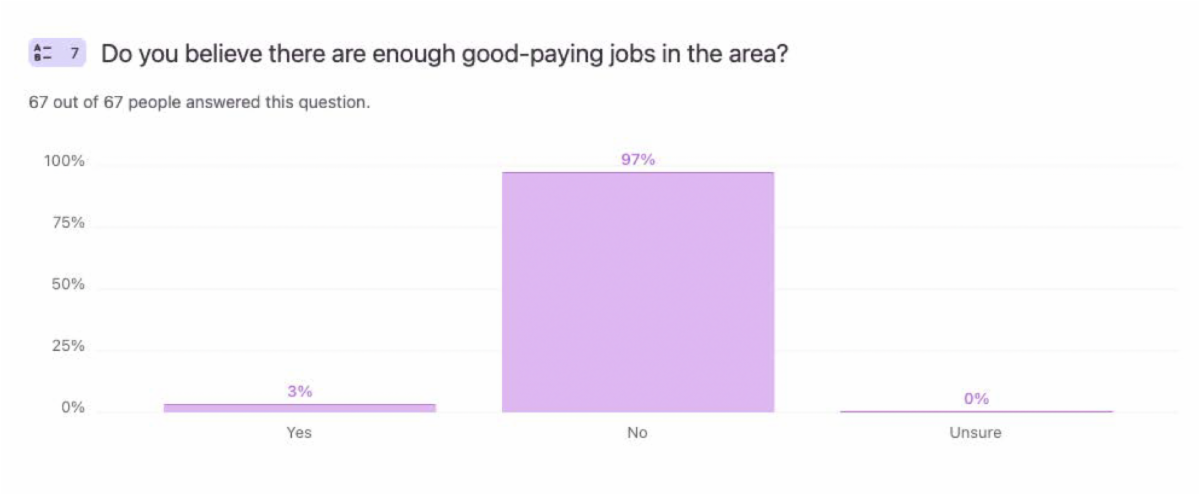
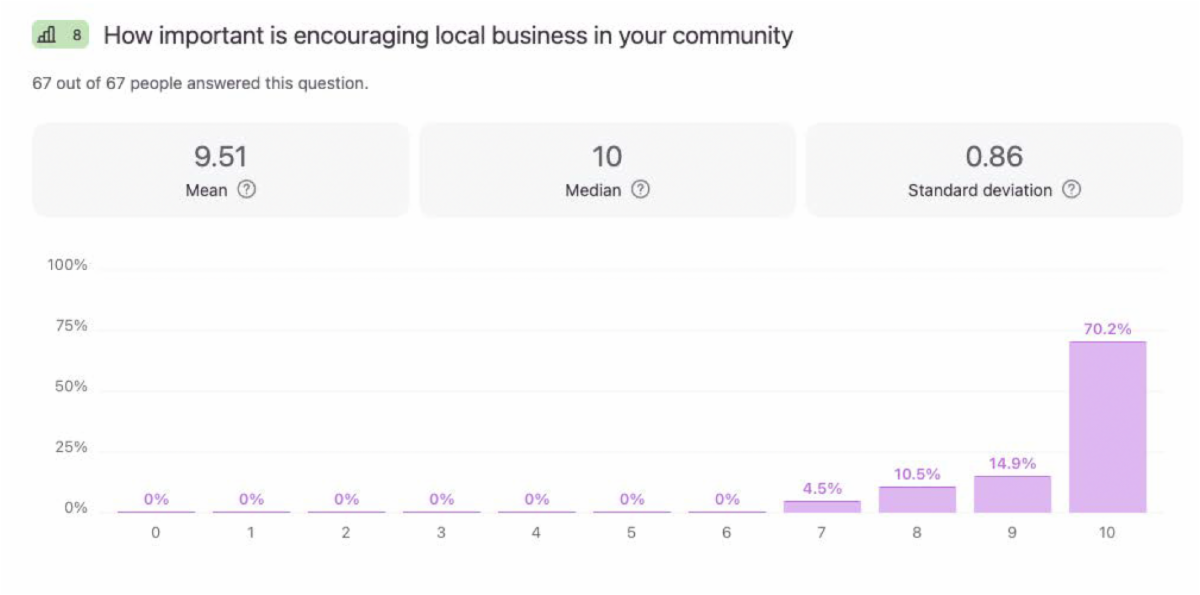
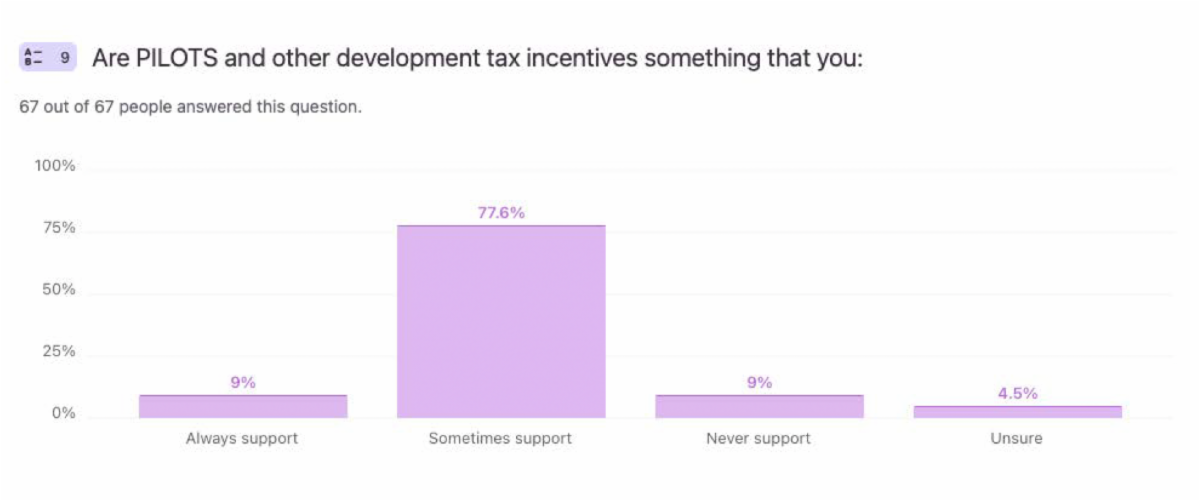
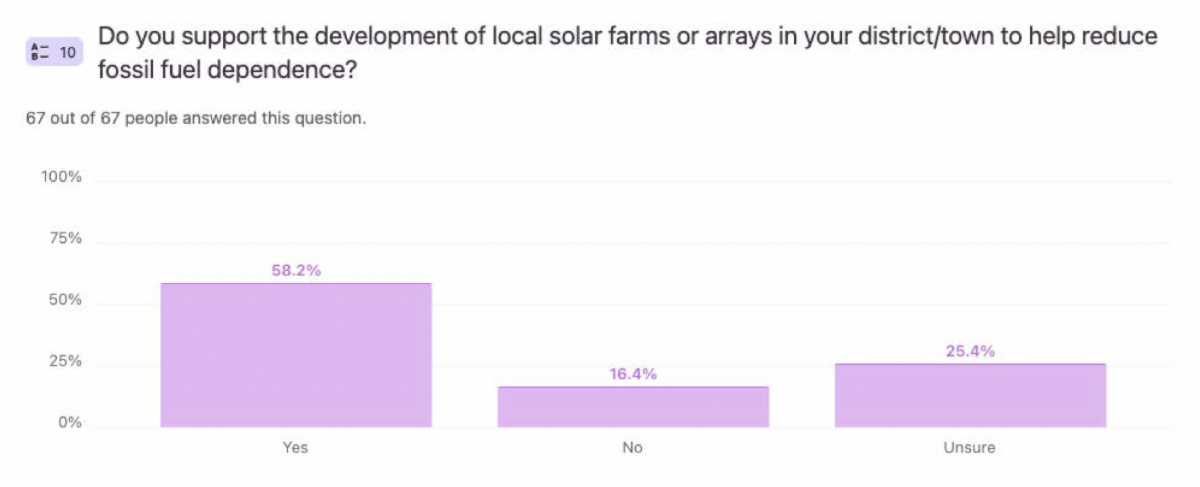
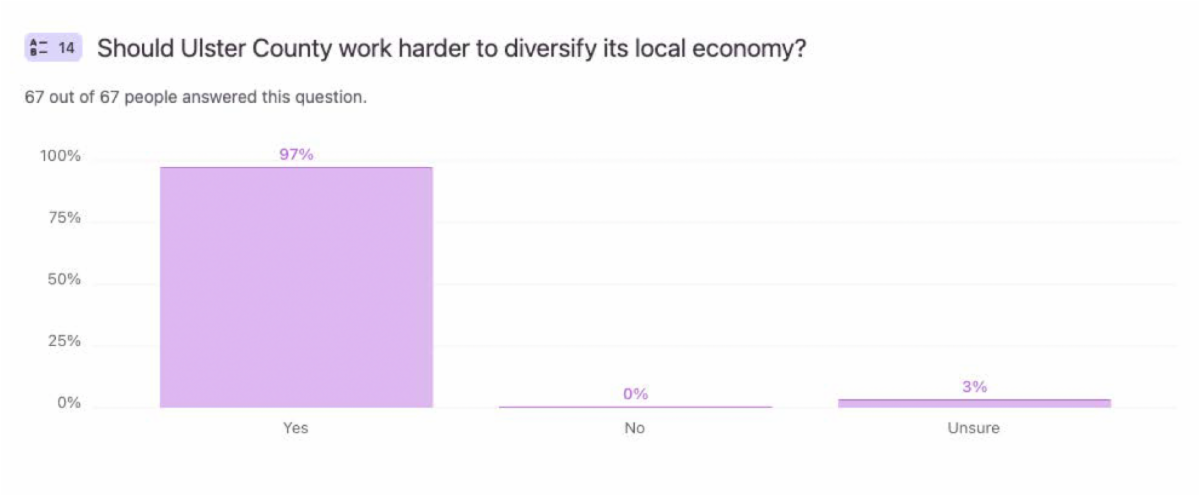
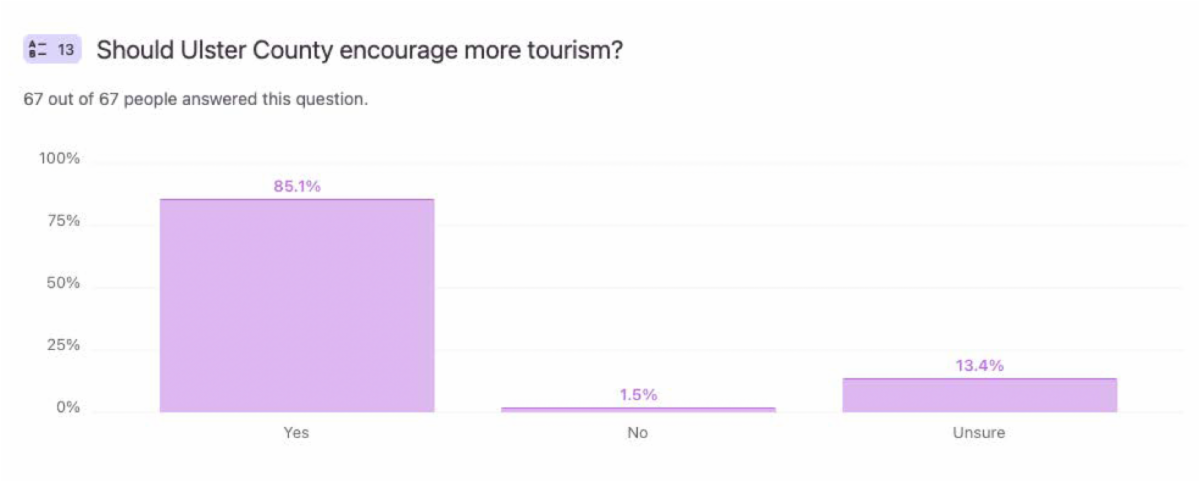
This past fall, Ulster Strong surveyed candidates for county and town elected offices. The following charts show how candidates answered overall to many of our questions
For details on how individual candidates responded, visit our webpage.
| | | |
Support local independent journalism by subscribing
Local news is a business - it not only creates jobs and supports families, it's also an essential lever to a healthy democracy.
Please consider subscribing to a local paper/news source so Ulster doesn't become a 'local news desert'.
| | | QUICK BUSINESS NEWS UPDATES | | |
(HV1)
The state Department of Environmental Conservation ruled the town of Ulster should be lead agency for environmental review of the proposed Zena Homes 30-lot housing development at the end of Eastwoods Drive.
While the developers convinced the town of Ulster to declare itself lead agency under the State Environmental Quality Review Act, the town of Woodstock made the case for leadership because the only access is through a Woodstock road.
But DEC Commissioner Amanda Lefton said Woodstock’s planning board doesn’t meet the criteria. When two parties declare themselves the lead agency, the DEC commissioner serves as the final arbiter.
(Times Union)
"In the Capital Region and Hudson Valley — home of what’s been called the Mecca of the knitting community, Rhinebeck’s Sheep & Wool Festival — tariffs have led yarn shop owners to raise prices of materials and tools and think twice before restocking. Many have also had orders delayed; others have incurred surprise charges.....
Trump’s stated purpose for the tariffs is to strengthen the domestic economy, but for yarn shops, the industry is practically nonexistent in America. New York is home to more than 80,000 sheep and lambs on 2,113 farms, but there are only five mills statewide to process the amount of wool they produce. It is cheaper to import wool than raise the sheep and process the yarn locally, said Tkaczyk, a former state senator for the 46th District and farmer who raises Jacob sheep. She started Cece’s Wool in 2015 after leaving the Senate.
“We don’t have an infrastructure in this country to develop more of our own local yarn lines because they all went overseas years ago,” Tkaczyk said. “We need to invest in rebuilding that infrastructure. Someone needs to be talking to the mills and say, ‘What do you need help with to make your business successful?’”
(Kingston Wire)
“Number one taxpayer in Ulster County” is how Milgrim put it, forking over $3,895,152 in county property taxes and $18,152,546 in school taxes in 2024, as well as local municipal taxes including $2,691,490 in property taxes to the Town of Wawarsing and $2,010,790 in property taxes to the Town of Olive.
Milgrim estimated DEP employment in Ulster at 200-250 jobs in laboratories, offices and in the field, a number likely to grow as major projects evolve. Chief among those for local impact is the Ashokan Century Program, a $1.3 billion repair and upgrade of the reservoir that has been years in the making and will touch on almost every physical aspect of the complex.
(Shawangunk Journal)
Just few years ago, it was looking like the Market Street / Center Street intersection was going to be revitalized.
The action centered at the time on a plan presented by Kingston-based architect Scott Dutton and his then-partner on the project, Kevin O’Connor. They were going to gut and renew 23 Market Street, the one-time home of the Devil Dogs Dungarees jeans brand, which back in the 1940s and ‘50s, was a thriving business in Ellenville.
The plan would see the 24,412 square foot former factory become apartments and working space for designers and creative professionals.
However, Dutton told the Shawangunk Journal this week that the current economic has changed his plans.
“This is just not a good time for me to be doing this project,” he said. “The rise in interest rates has just about doubled from where we started this. Then there’s the impact from tariffs on construction costs.”
Along the way Dutton and O’Connor parted ways. Dutton bought out his partner, so the 23 Market Street project became his alone.
“I was going to raise some capital, maybe sell off a piece of the project,” he explained. “But the tariffs have made it difficult. I expected steel and lumber to go up, but I did not expect concrete to do that. Then there’s gypsum drywall, with two 10 percent increases in the last year.”
It seems that all the numbers on the initial application are now obsolete.
(MidHudson News)
A 20-acre property, which was once occupied by the Ulster County Jail, has been transformed into Golden Hill Apartments, a 164-unit affordable housing development.
Golden Hill Apartments is a cross-generational community designed to meet the diverse needs of Ulster County residents, with nearly half of the units reserved for seniors aged 62 and older, and 48 apartments set aside for households in need of supportive services. Family of Woodstock will provide on-site services such as case management, crisis intervention, and financial counseling.
(MidHudson News)
The county arts and culture plan is the first comprehensive cultural plan for the county developed in partnership with Lord Cultural Resources. It establishes strategic priorities for supporting artists and the arts economy while defining the county government’s role in advancing arts and culture throughout the region.
| | |
Ulster Strong is a non-profit advocating a pro-growth agenda that balances good jobs and investment opportunities with the environment and sustainability.
ULSTER STRONG SUPPORTS
Adding good-paying jobs;
Diversifying the local economy so it’s more resilient;
Encouraging new investment;
Balancing the environment with local economic needs;
Growing local tax base to support community services including schools, infrastructure and emergency services;
Updating planning and development procedures to be more
transparent and timely.
MEMBERSHIP INQUIRIES
| | Our Company | Contact Us | FAQs | Privacy Policy |
| | | |