The Landscape Conservation Bulletin | |
A bi-monthly service of the Network for
Landscape Conservation
| | | |
Dear Network Friends,
As we near the closing month of the year, we are reflecting on the uncertainty and disruption that our field—and our society—has navigated over the last twelve months.
The work that you all are doing—building better futures for the landscapes and the communities that you care about—is vitally important, and I find enormous inspiration when I look away from the headlines and look instead to the ground. Over the last seven years, the Catalyst Fund has given us a unique window into the breadth of locally-led collaborative landscape conservation & stewardship efforts, as we’ve been privileged to walk alongside more than 100 community-grounded collaboratives.
Earlier this year, we initiated an impact evaluation of the Catalyst Fund, and we will be thrilled to share findings in the coming weeks—a report is in design right now. Our hope was to structure the evaluation to contribute to building the field of practice as a whole—and in this month’s Bulletin we are sharing an article, Do more, better, together: Investing in collaborative work to make a difference, that emerged in part from the Catalyst Fund evaluation.
As we look ahead, we know you all will continue to advance critical work in landscapes across the country—and hope that this article and reports like the forthcoming Catalyst Fund impact evaluation bolster our collective ability to speak to the value of the collaborative approaches that are essential to solving today’s complex challenges.
To our federal agency partners, we are so glad to know that this Bulletin reaches you at your desks, and we remain deeply grateful for your commitment to public service during challenging times. And to all of you, we hope that these closing weeks of the year include pockets of time for adventures and laughter with loved ones—and for quiet time reflecting in the landscapes that you cherish.
| | Collaborative Capacity Impact Model | Advancing Tribal Sovereignty and Stewardship | Perspectives: Conserving the Gulf, Creating Jobs | Additional Landscape Conservation News | Landscape Conservation Job Board | Webinars & Additional Resources | | |
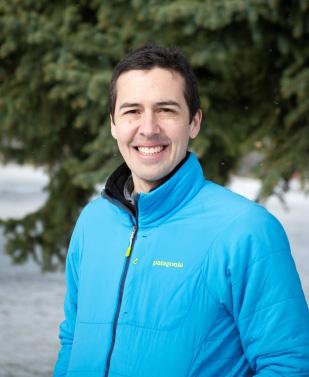
Jonathan Peterson
Director, Network for Landscape Conservation
| | Cover photo: North Cascades, Washington. Photo by Toan Chu on Unsplash. | | |
Featured News
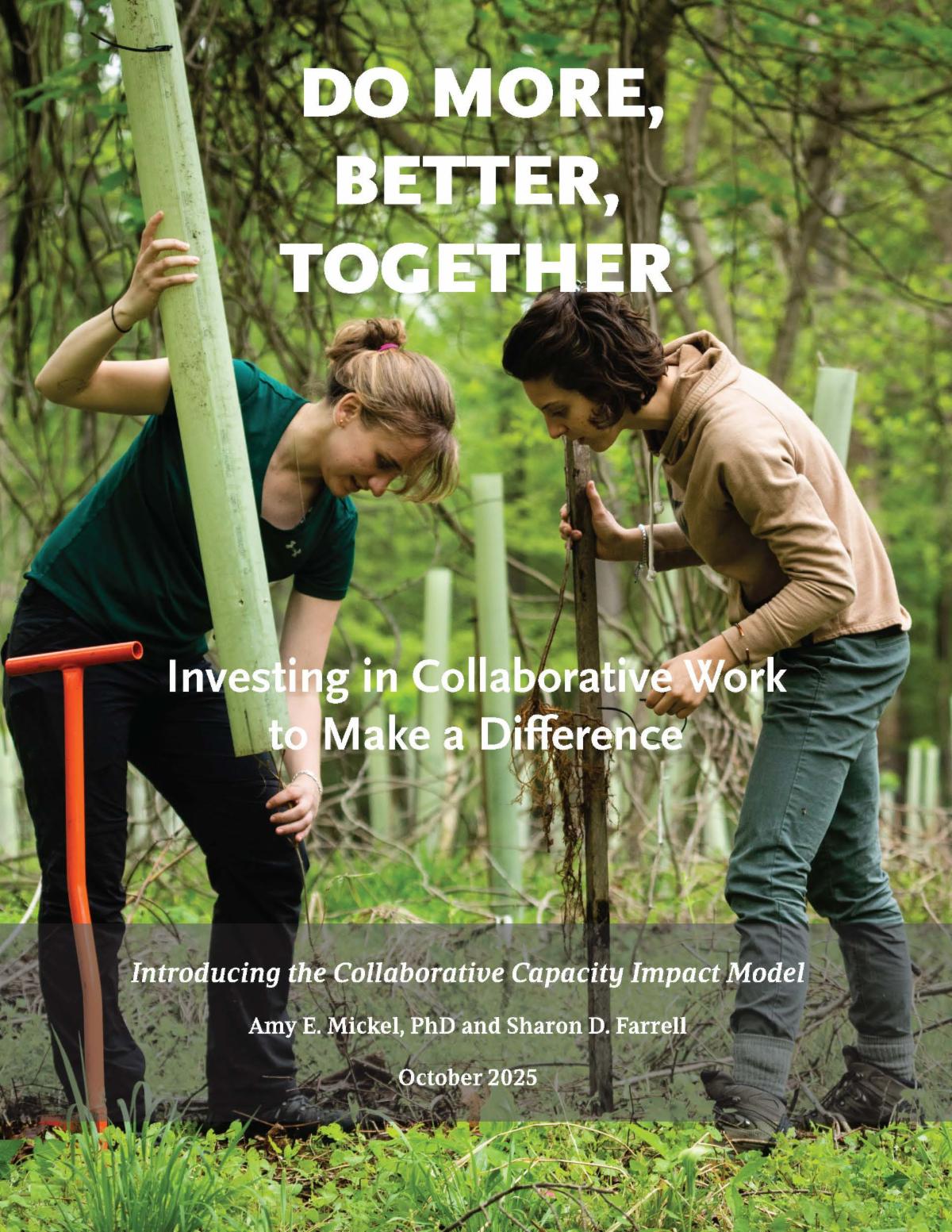
Do more, better, together: A framework for understanding and articulating the impacts of collaborative efforts
| | |
We have long observed how a “collaboration disconnect” hinders the landscape conservation and stewardship field—that is, even as it has become widely understood that working effectively at a landscape scale requires collaboration, little if any funding is available to support the actual process of collaboration. As a Catalyst Fund grantee so eloquently observed, “Grantors are typically interested in the project. It’s like they think that the part that makes the project happen, the collaborative structure that allows us to do this work—all of that just happens on its own and doesn't take any resources or investment.” A paramount question that we’ve faced then is how can we, as a field, better articulate and demonstrate the value of collaborative approaches—and what is needed to allow us to generate collaborative impacts?
In late October, an article came out that drives at that very question. In presenting a system of interconnected impacts that collaboratives can deliver, the Collaborative Capacity Impact Model provides a clear way to understand the enduring impact generated by landscape collaboratives. It can be used to help collaboratives and their partners, networks, and funders describe, assess, and demonstrate the impacts they generate, and helps us understand the process by which collaboratives scale up, accelerate, and sustain impact over the long term. The model was recently applied to evaluations of two grant programs that invest in capacity support for collaboratives working to conserve, restore, and/or steward landscapes—see here for a summary report of the evaluation of the National Fish and Wildlife Foundation’s Innovative Nutrient and Sediment Reduction Grant Program, and the summary report from our Catalyst Fund is forthcoming. What emerges from both evaluations is the observation that collaborative capacity support strengthens collaborative processes and functioning, and results in scaled up, accelerated, and sustained on-the-ground impacts—in other words, collaborative functioning and performance are linked.
We look forward to seeing how this important new resource contributes to our field of practice, and provides a helpful framework for individual collaboratives and their partners, networks, and funders to use in describing, assessing, and demonstrating impact.
| | |
Featured News
‘An ethical imperative and a practical necessity:’ New resources point to the critical importance of Indigenous leadership in landscape conservation & stewardship
| |
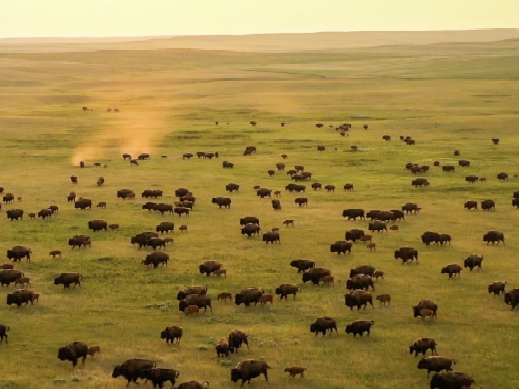
 | | In late September, two new resources were released that underscore the critical importance of Indigenous leadership in efforts to conserve, restore, and steward the landscapes in which we live. First, following a global assessment of peer-reviewed scholarship, a research team from the Harvard Kennedy School released a new paper, Experts, Not Obstacles: Indigenous Conservation Excellence and the Trap of Conservation at Any Cost. The paper highlights how, across the globe, Indigenous nations are providing expertise and leadership in stewarding landscapes to protect biodiversity, sustain ecosystems, and strengthen climate resilience—with results equaling or exceeding the outcomes of non-Indigenous stewardship efforts. The research findings underscore the key point that “supporting Indigenous self-determination and rights is both an ethical imperative and a practical necessity for addressing the planet’s ecological crises. Elsewhere, also in late September, the Yale Center for Environmental Justice released a landmark report, Tribal Co-Management on Federal Lands: Opportunities and Challenges. This white paper distills key findings from the 2023 Tribal Co-Management Symposium, calling for urgent reforms to federal land management practices that expand Tribal Nations' role in public lands stewardship. Similar to the findings of the Harvard Kennedy School research paper, the report “highlights how integrating Tribal knowledge with Western science strengthens conservation, while also supporting Tribal sovereignty, economic development, and cultural continuity.” Earlier this month, First Nations Development Institute released a new publication, Indigenous Stewardship of National Forests Case Study Report, which highlights diverse Tribal interests and pathways toward successful co-stewardship on Forest Serivce lands. Finally, bringing the insights of these reports into focus, a blogpost from our colleagues at the Native Americans in Philanthropy spotlights how the Fort Peck Assiniboine and Sioux Tribes are advancing buffalo reintroduction as an Indigenous-led, ecosystem-based approach to restoration—illustrating again that Tribal Nations are not just participants in conservation, they are leaders.
| | Perspectives: Landscape Conservation in Action | | Conserving the Gulf, creating jobs: Reflections on building GulfCorps as a landscape conservation & stewardship program that weaves together workforce development and ecological restoration | | In the wake of the BP Deepwater Horizon Oil Spill in 2010, there was widespread attention to habitat restoration across the impacted coastal landscape spanning the five Gulf states of Florida, Alabama, Mississippi, Louisiana, and Texas. Yet, even as landscape-scale restoration efforts ramped up, it was clear that young adults living along the Gulf Coast often didn’t have a voice in the restoration and broader environmental movement—even though it is their communities that are the ones impacted by the storms, flooding, and pollution threatening the landscape. | | | Launched as a collaborative effort between The Nature Conservancy and dozens of federal, state, and local partners, the GulfCorps program offers a chance for young adults in the Gulf states to be a professional in a field that manages their own environment. In this month’s Perspectives essay, Program Director Jeff DeQuattro shares the story of the GulfCorps program–and how it represents a powerful approach to improving landscape resilience through a community-led restoration approach that recognizes workforce development as a long-term strategy for advancing better futures for our lands, waters, and communities. In sharing this story, Jeff also highlights a set of insights that could be relevant to others working in differing contexts. | | Additional Landscape Conservation & Stewardship News | | |
Native Americans in Philanthropy blogpost explores how Indigenous perspectives can deepen and sustain collaboration in landscape-scale conservation and stewardship, exploring a collaborative capacity framework through an Indigenous lens of the ‘5Rs’—Respect, Relationships, Responsibility, Reciprocity, Redistribution.
Read the blog
Earlier this month, the New England Governors and Eastern Canadian Premiers adopted a new resolution on ecological connectivity and food security, calling for continued efforts to advance long-term interregional collaboration in the areas of ecological connectivity and biodiversity, and food security.
Learn more or read the resolution
New feature from the International Land Conservation Network spotlights how land conservation advocates and affordable-housing developers can join forces rather than compete, and argues that preserving open space and creating affordable housing aren’t mutually exclusive goals.
Read the feature
A reflection piece in the autumn edition of From the Ground Up examines how human and ecological communities intersect through the lens of land conservation, arguing that conservation planning must integrate people, nature, and local identity.
Read more
At the end of October, a bipartisan group of U.S. Senators launched a Senate Stewardship Caucus to focus on public lands protection and management.
Learn more here and here
A new issue paper from the IUCN World Commission on Protected Areas captures case studies on achieving conservation in an increasingly complex world, exploring how moving beyond conventional protected areas models is enabling connected networks of conserved lands to address the biodiversity and climate crises at the scale nature requires.
Explore the paper
Outdoor Recreation Roundtable releases new report documenting the economic value that public lands and waters generate from outdoor recreation--with analyses showing that public lands outdoor recreation contributes an average of more than $350 million into America's economy daily.
Learn more
New legal toolkit from the Coalition of Oregon Land Trusts provides users with practical pathways and legal mechanisms for facilitating Tribal land access and land return, and the restoration of relationships between land trusts and the original stewards of Oregon's landscapes.
View the toolkit
New framework from The Bridgespan Group offers nonprofit leaders a practical approach to strategic planning during periods of disruption and uncertainty, emphasizing scenario planning tools that prepare organizations for multiple future realities.
See the framework
In the autumn edition of From the Ground Up, a story highlights how the Building Community Strength initiative is bringing 10 small towns in rural Maine together to pool limited capacity to address shared challenges like housing, infrastructure decline, and civic fatigue.
Learn more
Story from North Country Public Radio highlights the Algonquin to Adirondacks Collaborative's proposed wildlife crossing infrastructure along Ontario's Highway 401 and the Thousand Islands Parkway–underscoring the importance of connected landscapes for allowing wildlife to adapt to shifting climate conditions.
Read the story
Oregon Governor signs Executive Order directing state agencies to integrate climate-resilient strategies across natural and working lands, setting a goal to protect or restore 10% more of the state's most climate-resilient lands and waters over the next decade.
Explore here
Article in The Narwhal examines how policy changes—including cuts to U.S. research grants, withdrawal from international climate agreements, and heightened border tensions—are disrupting decades of collaborative Canada-U.S. conservation work, threatening critical cross-border wildlife corridors and transboundary initiatives.
Read the article
A feature in The New York Times highlights how researchers are using ultra-light solar-powered sensors to track the fall migration of individual Monarch butterflies from as far north as Ontario to wintering sites in Mexico.
Learn more
In early October, the American Society of Landscape Architects released an updated action plan to address the climate and biodiversity crises as interwoven, offering detailed goals and actions for landscape architects across all practice settings.
Learn more here and explore a related new primer on how to design for biodiversity
Article from Blue Avocado compiles practical strategies from nonprofit leaders on strengthening inter-organizational collaboration, emphasizing trust-building through shared goals and transparent communication, and leveraging technology platforms for resource pooling and information sharing.
Explore the article
In an excerpt from a new memoir from the former supervisor of Banff National Park, a piece from The Revelator explores the emotional toll of witnessing decades of environmental decline, grappling with ecological grief while anchoring hope in personal connections to place.
Learn more
| | |
Upcoming Conferences & Events
* * *
March 4-6, 2026 — Shaping the Future of Fire in the Northwest
Stevenson, WA
March 19-20, 2026 — The Wallace Stegner Center’s 31st Annual Symposium
Virtual
April 13-14, 2026 — Rural Voices for Conservation Coalition Annual Meeting
Bend, OR
April 13-16, 2026 — National Conference on Ecosystem Restoration
Omaha, NE
April 14-16, 2026 — Collective Impact Action Summit
Virtual
May 4-7, 2026 — Gulf Conference 2026: The Annual Meeting of the Gulf of America Alliance
Mobile, AL
May 19-21, 2026 — Confluence 2026--the Future of Collaboration: The Power of Working Across Divides
The Western Collaborative Conservation Network is currently accepting session proposal submissions through January 15.
Fort Collins, CO
May 2026 — National Executive Forum on Health and Outdoor Recreation
Washington, D.C.
June 2-5, 2026 — Conservation Finance Bootcamp
New Haven, CT
November 4-6, 2026 — Chihuahuan Desert Conference
El Paso, TX
| | |
Landscape Conservation & Stewardship Job Board
* * *
Manager, Circuit Trails Coalition
Learn more
Estuary Program Executive Director, Choctawhatchee Bay Estuary Coalition
Learn more
This section of the Landscape Conservation Bulletin is intended to be a space to share job postings that will be specifically relevant to landscape conservation and stewardship practitioners. We welcome submissions: if your organization would like to widely distribute a posting please be in touch.
| | |
Webinars & Additional Resources
* * * *
The National Forest Foundation has released the Request for Proposals for its Matching Awards Program, which aims to advance community engagement and completion of appropriate stewardship activities to create lasting change that will allow all communities opportunities to benefit from activities on National Forest System lands or adjacent public lands. An informational webinar is scheduled for December 4, 2025.
* * * *
Navigating the Dangers to Collective Impact
A webinar from the Collective Impact Forum
December 9, 2025
Building a Culture of Trust in Collective Impact
A webinar from the Collective Impact Forum
December 16, 2025
When Humans Pull Back: How Abandoned Places Recover and Rewild
A webinar from the Northeast Wilderness Trust's Speakers Series
December 16, 2025
How to Build and Sustain Trust with Partners Workshop
A webinar from the Lacy Consulting Group.
December 17, 2025
Facilitating Engaging Meetings
A three-part virtual workshop from the Institute for Conservation Leadership
December 4, 9, & 11, 2025
Seeds of Radical Renewal Fellowship
A week-long leadership training course from Emergence Magazine
June 16-20, 2026
NatureConnect
NatureConnect is a diverse suite of services, tools, and workshops offered by the Center for Large Landscape Conservation to help partners achieve connectivity and landscape conservation goals.
Connectivity 101
A free, online course developed by the Center for Large Landscape Conservation and partners in the Wildlife Connect Initiative with technical support from UNDP Learning for Nature. Conservation professionals and other interested parties can now register for the course to learn about conserving and restoring ecological connectivity to support a healthy planet.
Conservation Finance Boot Camp Short Course
Following cancellation of the 2020 Conservation Finance Boot Camp, the Conservation Finance Network compiled a 4-part video short course, which is available via the above link.
America Adapts: The Climate Change Podcast
A weekly podcast that explores the challenges presented by adapting to climate change and the approaches the field's best minds believe are already working.
Recordings of past webinars of the Connected Conservation webinar series are available on the National Park Service Connected Conservation website.
Recordings of past NLC Landscape Conservation in Action webinars are available on the Network's Landscape Conservation in Action Webinar Series page.
| |
The Network for Landscape Conservation is the community of practice for practitioners advancing collaborative, cross-boundary conservation as an essential approach to protect nature, culture, and community in the 21st Century.
Contributions of news, upcoming events, resources, and job postings for future Bulletins are welcomed. We also welcome inquires for potential future "Perspectives: Landscapes Conservation in Action" stories; please be in touch if you are interested in sharing stories and insights from your work.
| |
The Network for Landscape Conservation is a fiscally sponsored project of the Center for Large Landscape Conservation, P.O. Box 1587, Bozeman, MT 59771
| | | | |