November/December 2025 Newsletter

VOL 32

In This Issue:

National Cannabis Research Conference 2026

Colorado Cannabis Research Roundtable

Meet Board Member Chuck Smith

Upcoming Webinars for November/December

Request for Applications (RFA) 2026

Colorado Gives Day 2025

WHOi Partnership

Journal of Cannabis Research

10th Annual

National Cannabis Research Conference

Registration is live!

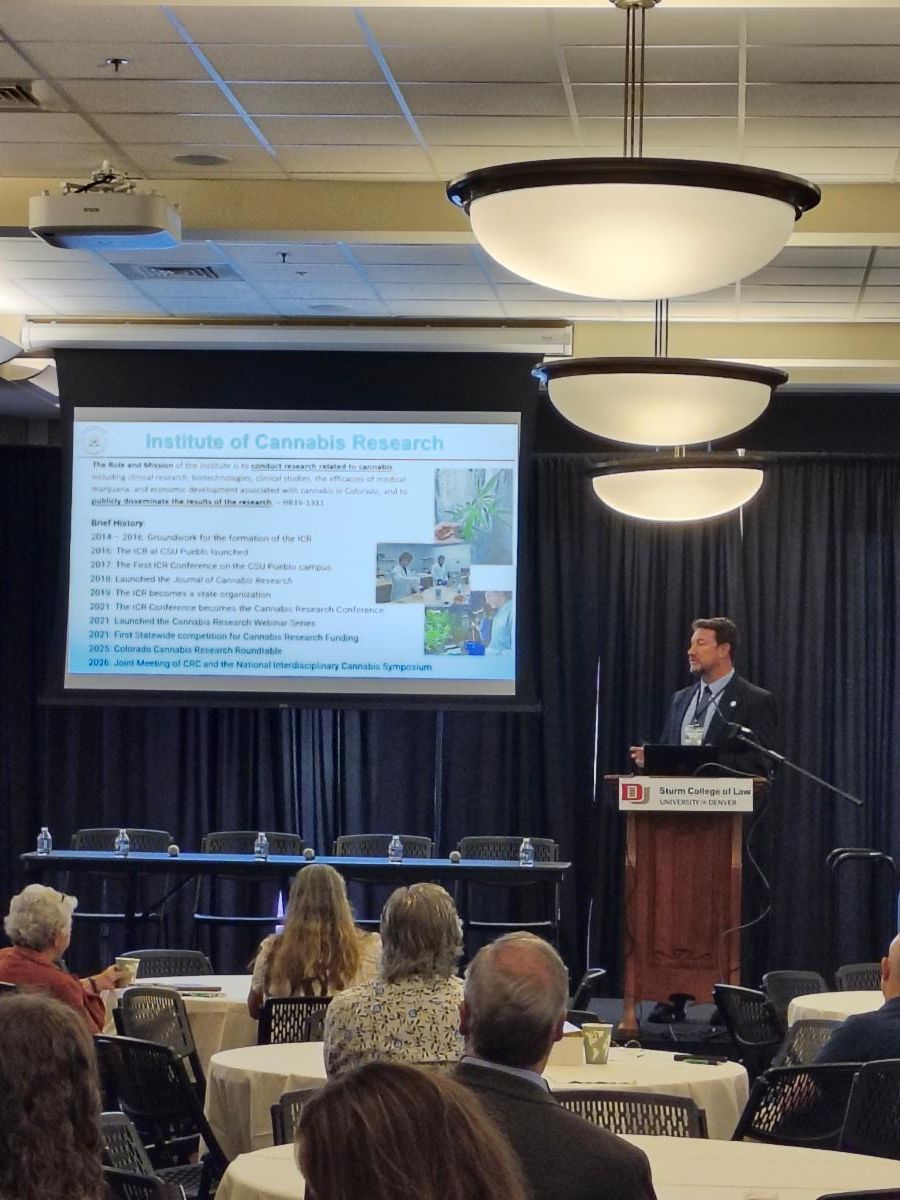
Join us in 2026 for our National Cannabis Research Conference (October 19-21) hosted by the Institute of Cannabis Research and the Global Hemp Innovation Center - in conjunction with the National Interdisciplinary Cannabis Symposium, at the DoubleTree By Hilton Hotel San Diego - Mission Valley, in San Diego, California


Don’t miss this dynamic and impactful event shaping the future of cannabis research — register today!

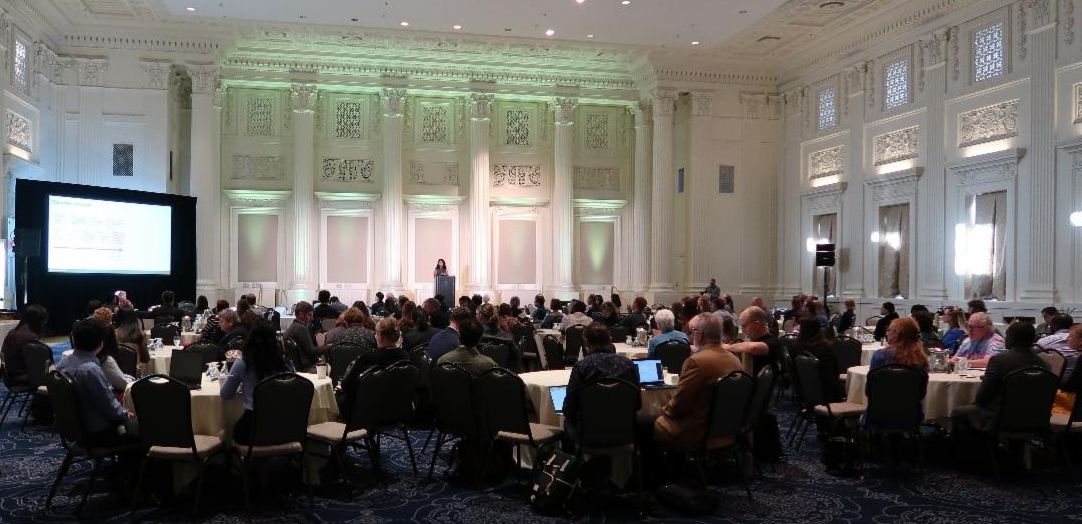
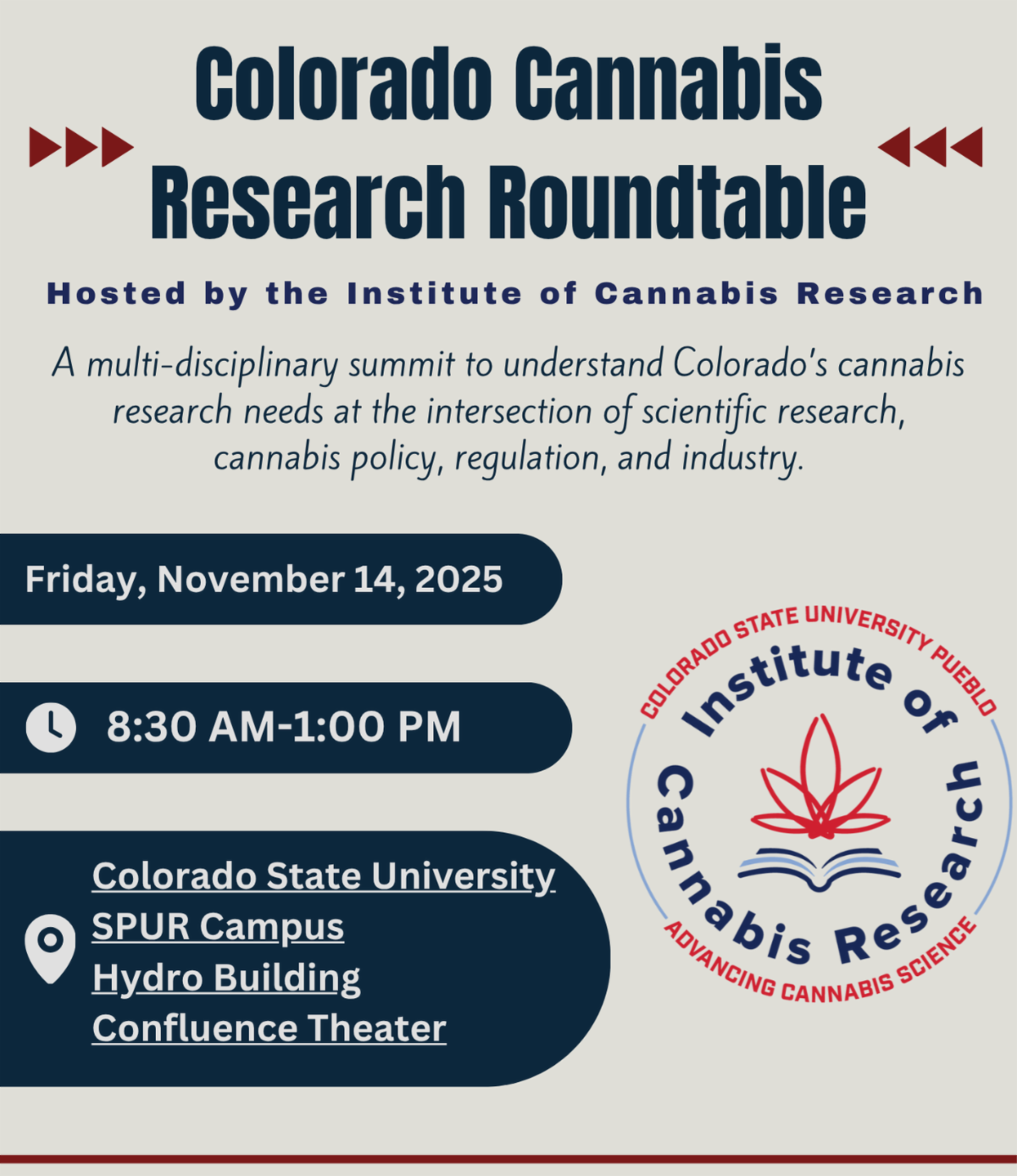
Colorado Cannabis Research Roundtable

***Registration will close Thursday, November 6th at 4PM***

Meet Governing Board Member

Chuck Smith

Chuck SmithIf there’s one thing Chuck Smith knows how to do, it’s build. Over the past two decades, he’s launched, led, and grown companies from the ground up—always with an eye on innovation, integrity, and teamwork.

You might know Chuck as one of the early trailblazers in the legal cannabis industry. Back in 2009, he co-founded Dixie Brands, and by 2015, he’d taken the reins as CEO. Under his leadership, Dixie went public in 2018 and later merged with another company to form BellRock Brands in 2021. Even after stepping down as CEO in 2022, Chuck continues to guide strategy and M&A efforts as a member of BellRock’s Board.

Today, Chuck is the CEO and Board Member of Colorado Leads, the state’s leading cannabis business coalition and trade association. With nearly 100 licensed operators as members, Colorado Leads is the trusted voice advocating for a responsible, research-driven, and consumer-safe cannabis industry.

“I believe Colorado can and should remain the epicenter of the regulated cannabis industry,” Chuck says. “Strong research and collaboration are key to helping our licensed operators thrive. I’m thrilled to be part of that movement as a Board Member of ICR.”

A proud University of Maryland graduate with an MBA from Vanderbilt, Chuck calls Denver home, where he lives with his wife Brenda. When he’s not shaping the future of the cannabis industry, you’ll likely find him on the golf course or in the kitchen experimenting with new recipes.

Upcoming November/December Webinars

Margaret Haney, Ph.D.


Cannabis Misuse and Therapeutic Potential: Placebo-controlled Laboratory Studies


Thursday, November 13th at 1:00 PM MST


Dr. Margaret (Meg) Haney is a Professor of Neurobiology (in Psychiatry) at the Columbia University Irving Medical Center. As the Director of the Cannabis Research Laboratory and of the Substance Use Research Center in the Division of Substance Use Disorders, Dr. Haney is internationally recognized for her expertise in cannabis and cannabinoids. Her current work focuses on: (1) conducting placebo-controlled studies testing the efficacy of potential treatment medications for Cannabis Use Disorder, and (2) testing the potential therapeutic effects of cannabis and its constituents for a range of indications, including pain and appetite-enhancement. Dr. Haney’s research has been continuously supported by the National Institute of Health (NIH) since 1999. She has authored over 180 scientific publications, is an Associate Editor for Cannabis and Cannabinoid Research, is an Advisory Editor for Psychopharmacology, and co-edited Neuropsychopharmacology Reviews 2018, Cannabis and Cannabinoids: From Synapse to Society. Dr. Haney has been a longstanding participant in NIH review groups and has been on several NIH advisory councils, is an elected Fellow at the American College of Neuropsychopharmacology and is a past President of the College on Problems of Drug Dependence (2019). Her contributions to research have been recognized by both the Center for Medicinal Cannabis Research and the College on Problems of Drug Dependence.

Carolyn Baglole, Ph.D.


Multi-omics dissection of the molecular and pharmacological effects of inhaled cannabis


Thursday, December 11th at 1:00 PM MST


Professor Carolyn Baglole earned her Bachelor of Science and Master of Science degrees from the University of Prince Edward Island, followed by a PhD in Physiology and Pharmacology from the University of Calgary. Dr. Baglole then completed postdoctoral training at the University of Rochester in the Department of Environmental Medicine, where she deepened her expertise in pulmonary biology and environmental health.


Since joining McGill University in 2010, Dr. Baglole has established herself as a leading researcher in the field of lung disease and inflammation, with a growing focus on the biological effects of cannabis. She served as the inaugural Director of the McGill Research Centre for Cannabis, where she led interdisciplinary efforts to advance scientific understanding of cannabis and its impact on health and society. She has authored more than 100 peer-reviewed publications in high-impact journals including FASEB Journal, American Journal of Physiology – Lung Cellular and Molecular Physiology, and Journal of Cellular Physiology. Her research is supported by major Canadian funding agencies such as the Canadian Institutes of Health Research (CIHR) and the Natural Sciences and Engineering Research Council of Canada (NSERC).


In addition to her research and leadership roles, Dr. Baglole serves on several editorial boards and government advisory panels, contributing her expertise to guide policy and scientific discourse around cannabis, tobacco, and vaping.

There are no upcoming plant science webinars scheduled until February 2026 as we take time to cultivate fresh content and prepare an engaging new session. In the meantime, you’re welcome to explore our webinar archive, where past presentations are available to view anytime. We’re germinating the next plant sciences webinar and look forward to seeing you then!

Request for Applications (RFA) 2026

The ICR is pleased to announce the 2026 Funding Opportunity


All applications require a Letter of Intent (LOI). The LOI portal opens November 12, 2025. The deadline to submit the LOI for the 2026 Funding Opportunity is December 15, 2025.


Those with an accepted LOI can begin to submit full applications beginning on January 14, 2026.


The application deadline is March 4, 2026.


For more information visit our website:

Colorado Gives Day 2025

We’re excited to share that on Tuesday, December 9, 2025, we’re joining the statewide movement of generosity that is Colorado Gives Day. This is the 24-hour giving event during which every dollar you give via Colorado Gives Foundation boosts the impact of local nonprofits—and the gift you make to the Institute of Cannabis Research (ICR) now will be counted.


Here’s how you can make the most of this opportunity:


1. Donate to ICR on Colorado Gives Day. Every contribution through the ICR’s page on ColoradoGives.org is part of a larger incentive fund driven by Colorado Gives Day, making even a modest gift more powerful.


2. Share ICR’s giving link with your network. The more people who see it—and give—the stronger our collective impact. Forward the link to friends, colleagues, and family; post it on social media; add it to your email signature. Encourage others to join this wave of generosity.


Together, we can ensure that ICR continues pioneering meaningful cannabis research right here in Colorado and beyond. Thank you for your generosity—and for helping us spread the word!

Whole Health Oncology Institute (WHOi)

The ICR has established a partnership with Whole Health Oncology Institute (WHOi) to advance cannabis research aimed at evaluating therapeutic approaches to treating cancer.


The collaboration focuses on jointly developing donor supported cannabis research targeting high-priority research areas at the intersection of cancer and cannabis. WHOi will provide human data assets, help identifying funding opportunities, and lead expertise for fundraising to support the research, while the ICR will provide scientific expertise and manage the Request for Application (RFA) process from coordination to expert review and award management.


Beyond the RFAs, the organizations also plan to explore co-authored research, data sharing initiatives, and the creation of a public-private research incubator to foster emerging cannabis scientists.


Key planned outcomes include identification of priority research themes utilizing WHOi data and supporting new research in the near term and extended future.

The Journal of Cannabis Research (JCR) is the official publication of the Institute of Cannabis Research. It is the only broadly multidisciplinary journal of research into social, business, economic, legal, environmental, and ethical impacts of cannabis use and the changing legal status of cannabis. To learn more about the aims and scope of the journal as well as submission guidelines, please visit: Journal of Cannabis Research

Recent Publication


Unlocking the Nutritional Potential of Hemp Leaves, Microgreens, and Roots


Harpal Singh, Tobias Kretzschmar, Ashley Dowell & Nadia Toppler


This study out of Australia investigated the possibility that hemp (Cannabis sativa L.), beyond just seeds, could be used for human consumption as potential nutritious food. This research investigated the nutritional value of hemp young leaves, microgreens, and roots for human consumption.


The authors discovered that both the leaves and microgreens were found to be high in protein, essential amino acids, and healthy fats like omega-3 and omega-6, while being low in carbohydrates and saturated fat. They also provided important nutrients including iron, calcium, magnesium, phosphorus, and vitamins B1, B3, and E, comparable to or exceeding levels found in common greens like spinach and lettuce. Their polyphenol content, including tannins, may offer other health benefits like antioxidant and anti-inflammatory effects.


They also found that hemp roots, although not suitable as fresh food, may be useful in teas or coffee substitutes due to their vitamin B3 content and medicinal properties. However, arsenic levels found in roots suggest a need for careful safety controls.


Finally, although only low levels of cannabinoids like CBD and THC were detected in leaves and greens, the levels exceeded current food safety limits in Australia, highlighting regulatory challenges. The conclusion of the study was that with further research and regulation, hemp’s non-seed parts could become valuable additions to a healthy, plant-based diet.

How did you like this email?
1-star        2-stars        3-stars        4-stars        5-stars
Facebook  LinkedIn  Web