|
As we move forward post-election, the spirit of collaboration remains essential to advancing our collective mission in rural America. Regardless of political outcomes, the importance of teamwork—across local, state, and national levels—will be the cornerstone of effectively supporting our rural communities. Rural communities are resilient precisely because of their history of collective problem-solving. Now more than ever, we must embrace an all-hands-on-deck approach, leveraging partnerships and resources to address complex challenges and unlock opportunities.
At RCCA, we’ve seen firsthand how teamwork can amplify our impact, whether we’re working with community colleges, legislators, or private partners. This collaborative approach is vital for tackling issues unique to rural communities, from workforce development to internet access, healthcare, and beyond.
I want to highlight three resources that can support this collective effort and foster a culture of partnership:
- Rural Community College Alliance – Alliance Learning Series
RCCA's own Alliance Learning Series provides community college professionals with tools and strategies to navigate pressing challenges. The series emphasizes collaboration by featuring case studies, expert speakers, and insights into partnership development. Our next session focuses specifically on real-world insights and practical ideas for creating an inclusive campus. Voices from the Field: Cultural Competence in Two Rural Community Colleges a timely topic as we consider how institutions can drive impactful solutions to serve their communities. This ongoing series will cover a variety of topics, and additional information can be found here.
- Center on Rural Innovation – Changing the Landscape of the Tech Economy
The Center on Rural Innovation (CORI) is reshaping the future of rural communities by building vibrant, tech-driven economies. CORI partners with leaders across rural America to drive growth through scalable entrepreneurship, tech job creation, and digital workforce development. Their Rural Innovation Network and Rural Innovation Initiative highlight successful case studies that can inspire similar strategies, offering a roadmap for communities eager to harness tech opportunities. CORI’s resources, such as the Collaboration Toolkit, showcase best practices for nurturing partnerships and fostering sustainable economic growth, providing actionable insights for any community ready to innovate and thrive.
- National Rural Higher Education Research Center – Advancing Postsecondary
Success in Rural America
The Federal Institute of Education Sciences has announced a five-year award to MDRC to develop the National Rural Postsecondary Education Research Center. The new center will assess strategies for improving rates of postsecondary enrollment and success for students from rural communities across the United States, as college-going and college completion rates are far lower in rural communities than in other geographical settings. This is the first time that IES has awarded a center focused on postsecondary education instead of K12, so we are incredibly pleased and excited to see the focus be on this important element of the educational pipeline. The studies within the center will stretch from dual enrollment in high school to college choice and college access to college completion and workforce outcomes including for rural labor market needs like nursing. In total, there are research activities in 10 states, focused on the South and the Mountain West, with practitioner and researcher advisors all across the nation.
You can get in touch with MDRC to learn more about any of the studies or projects, to share feedback or a research idea, or get involved in future work by contacting RuralHigherEd@mdrc.org to reach Alyssa Ratledge and the team! MDRC also offers tools and resources that will support the work of rural community colleges.
In this season of change, our focus at RCCA is clear: by working together, we can accomplish much more than any institution or individual could achieve alone. Supporting our rural communities through shared resources, innovative solutions, and mutual respect is not only essential but achievable. I encourage each of you to explore these resources, engage in the discussions within our Alliance, and remember that together, we can strengthen our communities and build a brighter future for rural America.
Thank you for your dedication and partnership.
| |
Northern Pennsylvania Regional College (NPRC) Serving rural PA in innovative ways | |
|
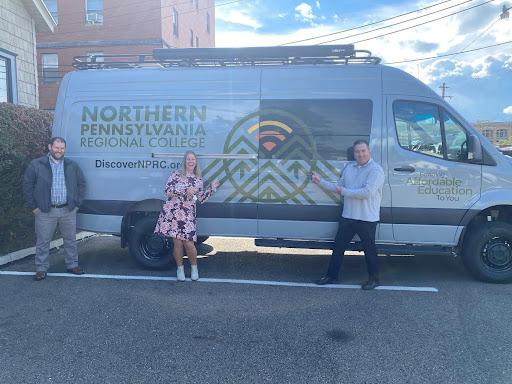
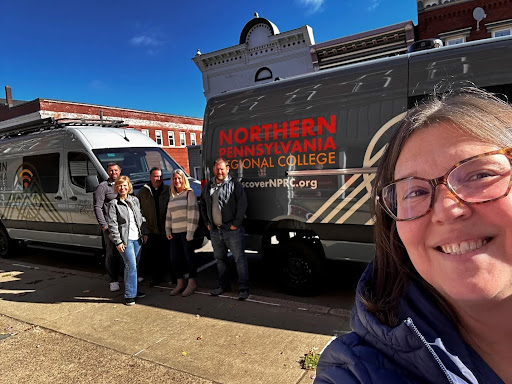
Creativity is key when it comes to serving rural regions, especially considering the changing landscape of higher education. In order to better serve our ten-county rural region, Northen Pennsylvania Regional College (NPRC) applied for and received a grant from the Appalachian Regional Commission (ARC) to purchase two vans. The vans arrived just two weeks ago, and we couldn’t be more excited.
They each serve a unique purpose. One is to be used for mobile workforce development training in order to remain flexible and avoid bricks and mortar expense along with large equipment purchases and maintenance. The other van is to be used for recruitment events and mobile science labs. Much thought went into the design to ensure optimum usage.
Not only are they decked out with Wi-Fi capabilities and a sound system but are also eco friendly with solar panels on the roof to power the vans while in use. As they travel through our region they also serve as a great marketing tool with a logo that you just can’t miss. Tune back in soon to hear about all our adventures.
| |
Adam Johnson, VP of Workforce Development, Andrea Shene, Executive Assistant to the President, and Mike Giambrone, VP of Finance and Operations | |
Up close – Jen Cummings-Tutmaher, VP of Enrollment and Student Services, Background – Ben Malczyk, VP of Academics, Susan Snelick, President; Mike Giambrone, VP of Finance and Operations, Andrea Shene, Executive Assistant to the President, and Adam Johnson, VP of Workforce Development | |
College Spotlight: Exciting Initiatives Happening at Gogebic Community College
| |
|
GCC EMS Program Receives Funding
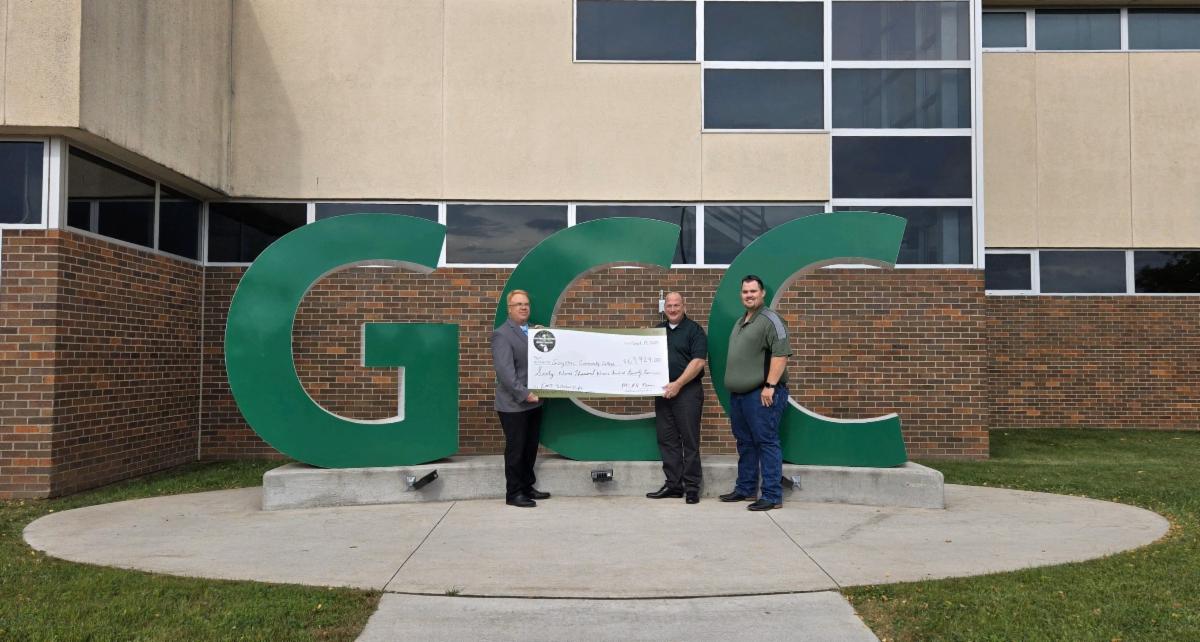
In a significant move to bolster the regional workforce, Gogebic Community College's Emergency Medical Services (EMS) program recently secured approximately $70,000 from the Michigan Center for Rural Health. This funding will fully cover tuition and provide a $950 stipend for up to 20 students in the October cohort. Additionally, the Superior Health Foundation awarded an extra $25,000 to support EMS education at GCC, enabling aspiring EMS instructors to step up and contribute to the program’s growth.
| |
|
GCC, NMU Reduce Barriers for Transfer Students
Gogebic Community College (GCC) and Northern Michigan University (NMU) have unveiled a groundbreaking agreement to simplify the transfer process for students aiming to pursue bachelor’s degrees. This new Direct Admission Program provides GCC students with simultaneous enrollment at NMU, offering seamless access to advising, resources, and student life at both institutions. With a new NMU satellite office at GCC’s Ironwood campus, transfer students will benefit from enhanced support and flexibility, making degree completion more accessible than ever.
| |  |
|
GCC receives USDA Grant
Gogebic Community College (GCC) is excited to announce it has been awarded the USDA Rural Utilities Service – Distance Learning and Telemedicine (RUS-DLT) grant, a highly competitive grant supporting rural telecommunication initiatives. With this funding, GCC aims to provide enhanced, technology-driven learning spaces to seven K-12 schools across two Michigan districts and expand distance learning options on its own campuses. This initiative will create greater educational access and bridge technology gaps for students, educators, and communities in the region.
| |
|
Next Alliance Learning Series Webinar: Voices from the Field: Cultural Competence in Two Rural Community Colleges
Join us for the next session in the Alliance Learning Series, where Elizabeth Cox Brand, Director of the Student Success Center at the Oregon Community College Association, will lead a conversation on cultural competence within rural community colleges. Elizabeth will provide a brief overview of the Rural Community College Consortium and discuss how OCCA supports rural institutions in promoting equity and inclusion.
In this webinar, Lucia Bartscher, Diversity, Equity, and Inclusion Coordinator at Rogue Community College, and Kristin Williams, Director of Library and Learning Hub at Blue Mountain Community College, will share their experiences and initiatives. Their insights will cater to both institutions with formal DEI positions and those working without dedicated roles, highlighting adaptable DEI practices that strengthen campus communities.
| | | |
|
Deep Dive: Navigating the transition from active military service to a civilian career
These organizations are helping veterans understand and apply the skills they learned to civilian jobs
Making the move from military to civilian life is a significant change, and for many veterans, the process of translating their military skills to the civilian workforce can feel challenging. An article from WorkingNation explores how key organizations are stepping up to help veterans recognize the value of their military experience and successfully apply those skills in a range of civilian careers. Discover inspiring stories and practical guidance that make this transition smoother for our veterans.
| |
Case Study Spotlight
From the City to the Country: How a Community College in West Virginia Adapter to CUNY's ASAP for Rural Success
| |
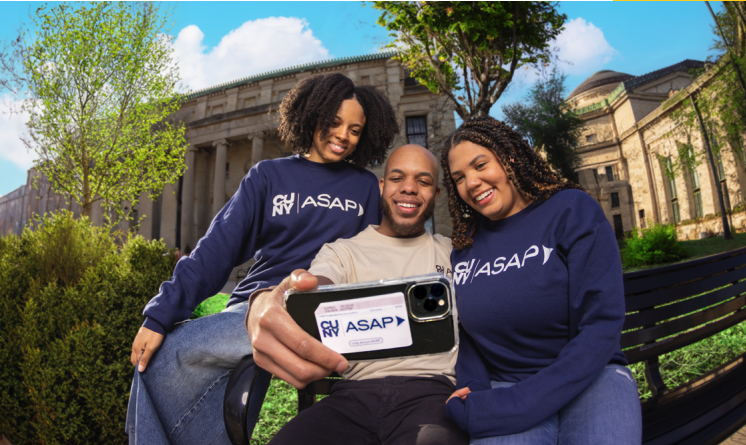
Community colleges are pillars of the American higher-education landscape, serving as economic drivers and accessible educational pathways. Yet, many community colleges face challenges, with graduation rates lagging behind national averages. This was the case for the City University of New York (CUNY), where community college graduation rates were as low as 13% prior to 2007. In response, CUNY developed the Accelerated Study in Associate Programs (ASAP), a comprehensive support initiative that has significantly improved student outcomes, leading to replication in community colleges nationwide, including West Virginia University at Parkersburg. | |
Resources and Opportunities | | |
|
Vice President of Administrative Services & Treasurer opportunity at SUNY Adirondack
SUNY Adirondack is seeking an experienced and dynamic Vice President for Administrative Services and Treasurer to join its leadership team. This role, reporting directly to the President, oversees critical administrative functions including Business, Public Safety, Facilities, Compliance, Risk Management, and Budgeting. As the Chief Financial and Administrative Officer, the Vice President will ensure the college's fiscal health and operational excellence while supporting its mission.
Key responsibilities include leading budget development, managing capital projects, maintaining compliance with policies, and advising on strategic fiscal matters. This position is ideal for professionals with a strong financial, administrative, and facilities background, demonstrated leadership in higher education, and a CPA, MBA, or MS in a related field.
Salary: $132,386 - $198,579, based on experience.
| |
 | 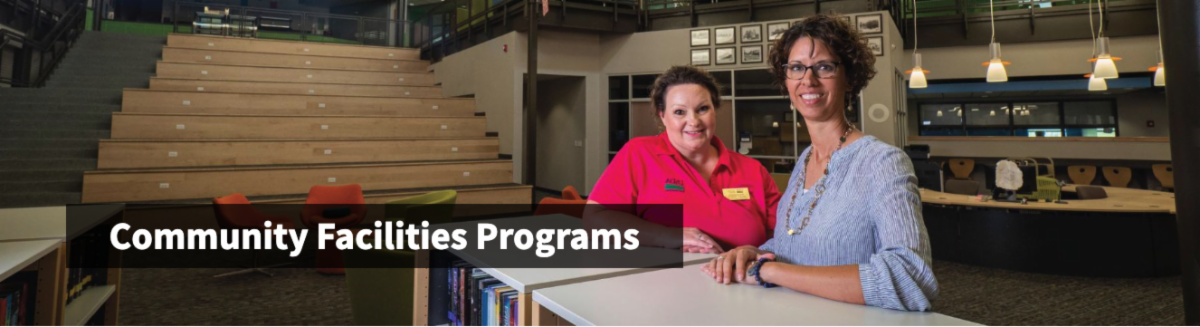 | |
Essential community infrastructure is key in ensuring that rural areas enjoy the same basic quality of life and services enjoyed by those in urban areas. Community Facilities Programs offer direct loans, loan guarantees and grants to develop or improve essential public services and facilities in communities across rural America. These amenities help increase the competitiveness of rural communities in attracting and retaining businesses that provide employment and services for their residents.
Public bodies, non-profit organizations and federally recognized American Indian Tribes can use the funds to construct, expand or improve facilities that provide health care, education, public safety, and public services. Projects include fire and rescue stations, village and town halls, health care clinics, hospitals, adult and child care centers, assisted living facilities, rehabilitation centers, public buildings, schools, libraries, and many other community-based initiatives. Financing may also cover the costs for land acquisition, professional fees, and purchase of equipment. These facilities not only improve the basic quality of life but assist in the development and sustainability of rural America.
| | |
 | |
AACC-Sponsored Webinar: U.S. Dept of State Fellowship Opportunity for Community College Students
November 19
2-3 p.m. EST
The American Association of Community Colleges (AACC) is hosting a one-hour webinar on November 19, 2024, from 2:00 pm to 3:00 pm EST, featuring speakers from the U.S. Department of State and the Foreign Affairs Information Technology (FAIT) Fellowship program. This session is ideal for faculty, advisors, and students at community colleges interested in a unique pathway to becoming a Diplomatic Technology Officer.
The FAIT Fellowship, entering its ninth year, offers qualified students up to $43,500 annually to complete the final two years of an IT-related bachelor's degree. Fellows gain valuable professional experience through internships and the opportunity to join the Foreign Service.
Attendees will learn about eligibility requirements, program benefits, and resources for promoting the FAIT Fellowship on campus. Panelists from the Department of State and past fellows will provide insights and answer questions in a live Q&A.
Don’t miss this opportunity to guide students toward an exciting career in the Foreign Service that reflects America’s diversity. Register today to secure your spot!
| |
|
Grant Opportunity: Save America’s Treasures – Preservation Grants
The National Park Service is now accepting applications for the FY2024 Save America’s Treasures – Preservation Grants. This program provides competitive grants to assist in preserving nationally significant historic properties and collections. With a total funding pool of $25.5 million, grant awards range from $125,000 to $750,000 and require a dollar-for-dollar non-federal match, which can be cash or in-kind.
Eligible applicants include public and private higher education institutions, local governments, nonprofits, tribal organizations, and more.
Applications must be submitted by December 12, 2024.
For more details, visit the Save America’s Treasures program page or contact the STLPG Staff at STLPG@nps.gov.
| | |
|
During Phase 1 (2022-2024), 16 rural community colleges from 13 states worked with community partners in their regions to implement evidence-based, institution-wide reforms grounded in the guided pathways framework. The initiative is the first of its kind in two ways: (1) it is the only pathways institute structure focused specifically on the needs of rural institutions, and (2) it is the first time community partners are deeply embedded in pathways implementation.
Phase 2 (2025-2027) will expand Rural Pathways to up to 32 colleges, including all but one of the colleges from Phase 1. During this period, the Phase 1 and Phase 2 colleges will be a single cohort that will work together to create better student experiences, increase credential attainment, and support regional economic development.
| |
Follow the RCCA Facebook Page | | | | |