RNDC's New Introduction Video is Now Live! | | Sharing Regional Food Recovery Success on the National Stage | | |
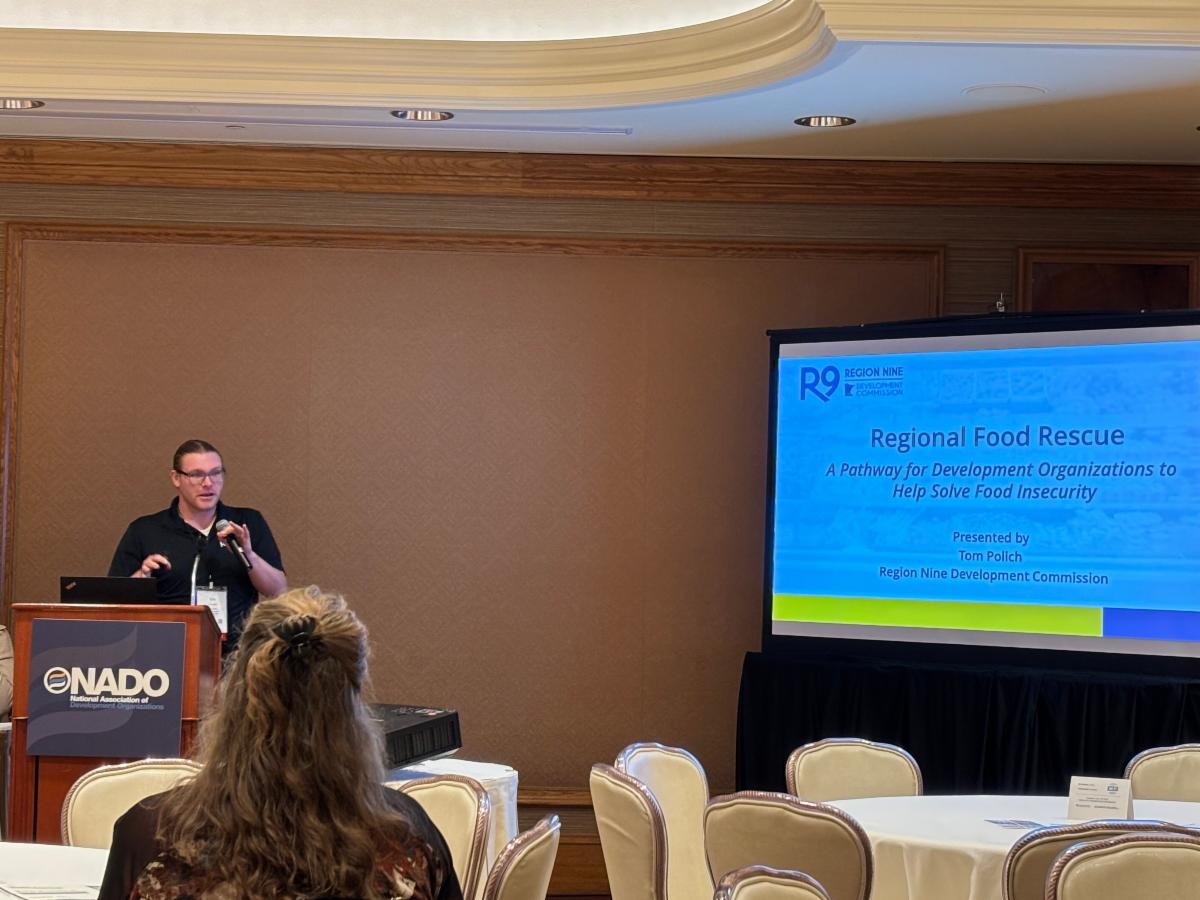
Regional Food Rescue Coordinator Tom Polich presented at the National Association of Development Organizations (NADO) Annual Training Conference in Salt Lake City, Utah. The event brought together Regional Development Organization (RDO) leaders, elected officials, and policymakers from across the country to share best practices and explore new strategies for advancing economic and community development.
Tom’s presentation highlighted the food recovery and redistribution efforts taking place across South Central Minnesota. The program was developed with the support of the Minnesota Department of Health’s Statewide Health Improvement Partnership (SHIP), the Mankato Area Foundation, and the Taylor Family Farms Foundation.
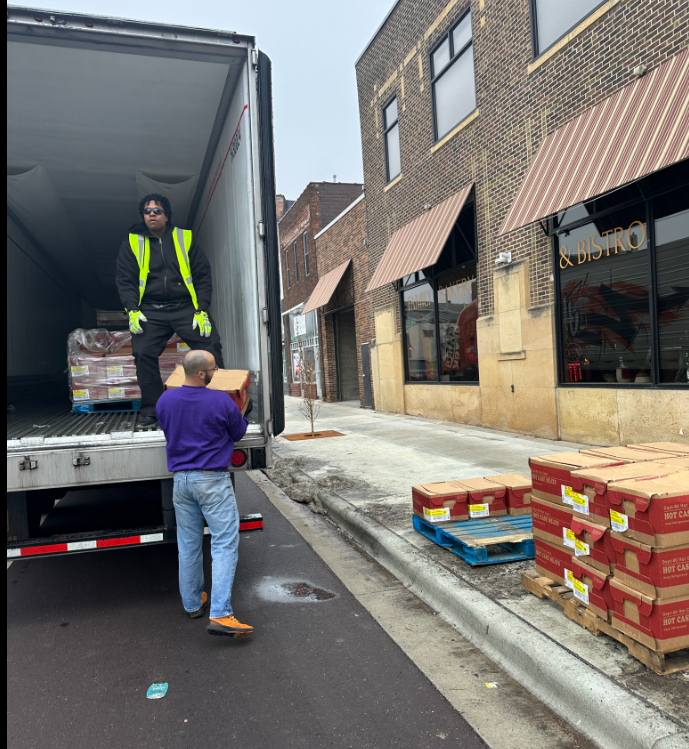
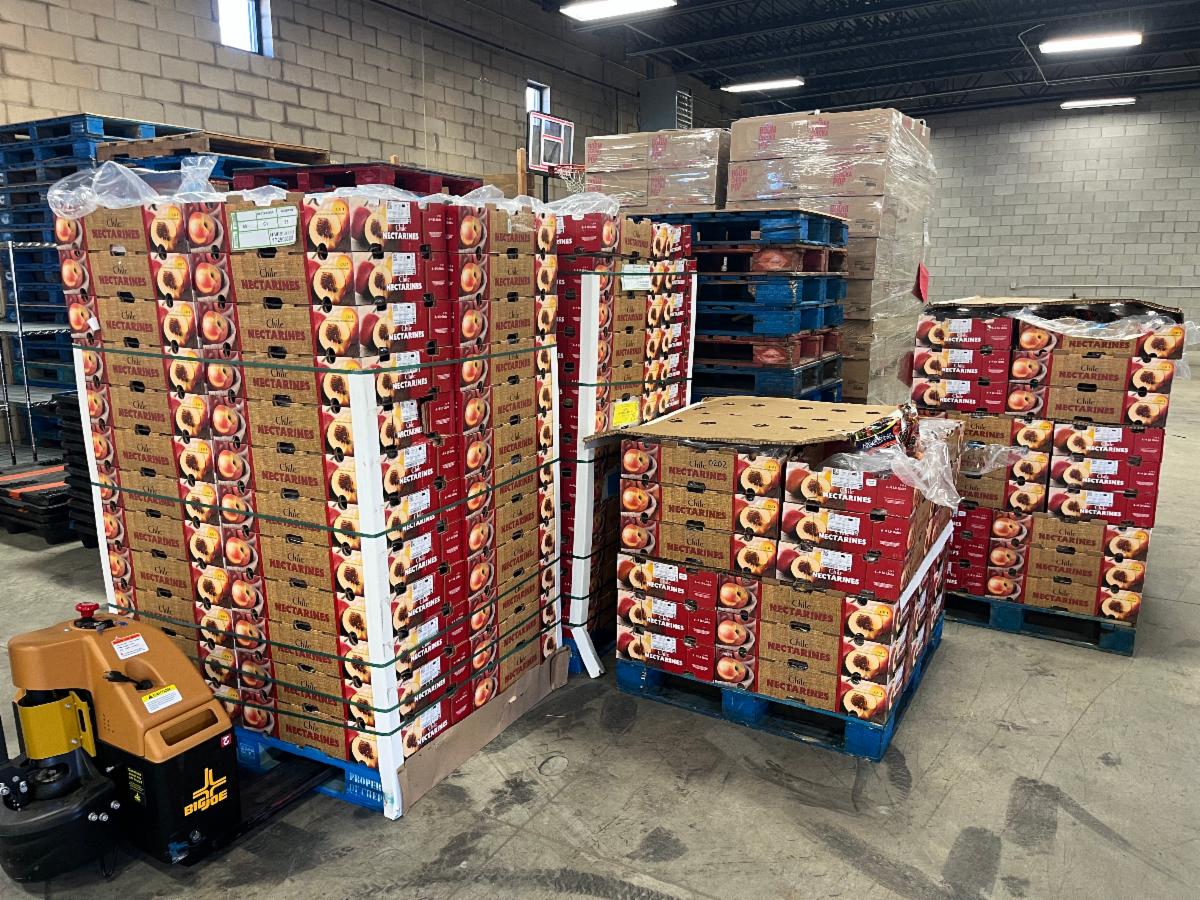
Since its launch, the program has achieved over 80 successful rescues, totaling over 62,000 pounds of food valued at nearly $93,000. This recovered food has been redistributed through regional partners, including food shelves, clinics, and community organizations. The program’s network-based approach focuses on connecting smaller-scale food access programs first to help reduce transportation challenges and strengthen collaboration among local partners.
| | |
At the NADO conference, Tom shared insights on what has made the program successful, including the emphasis on relationship-building, volunteer engagement, and responsiveness to local needs. By visiting more than 20 area food access partners, the program has identified key challenges such as transportation, volunteer coordination, and communication around available resources. Addressing these needs has helped create a stronger, more agile regional network for food recovery.
Looking ahead, RNDC aims to capture more than 75,000 pounds of food, valued at over $100,000, by the end of the year, while continuing to raise awareness about food waste prevention across South Central Minnesota.
The NADO Annual Training Conference served as an opportunity to not only share these successes but also to learn from peers nationwide. Sessions at this year’s event covered a wide range of topics, including workforce development, disaster recovery, and strategies for building organizational capacity. Attendees returned home with fresh ideas and strengthened partnerships to support community and economic development in their own regions.
Tom’s participation underscores how innovative local programs can inspire national conversations on food security and sustainability, showcasing how collaboration and creative problem-solving can make a big difference in communities both large and small.
| | Mapleton's Child Care House Ribbon Cutting Nov. 14 | | |
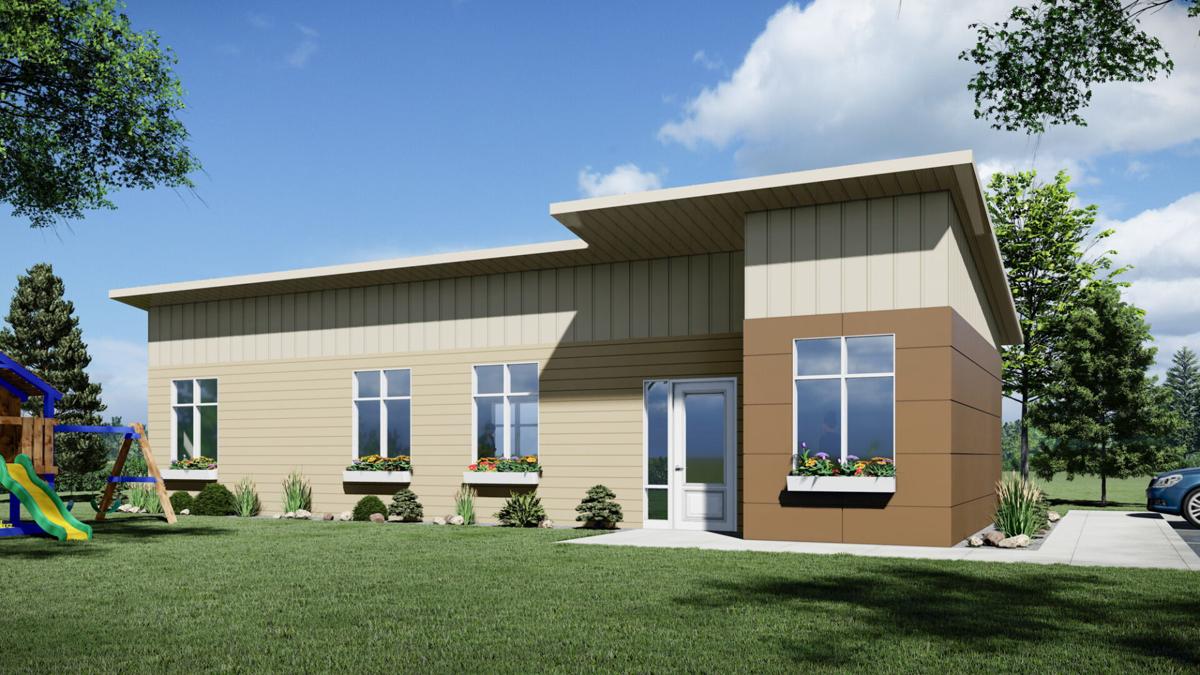
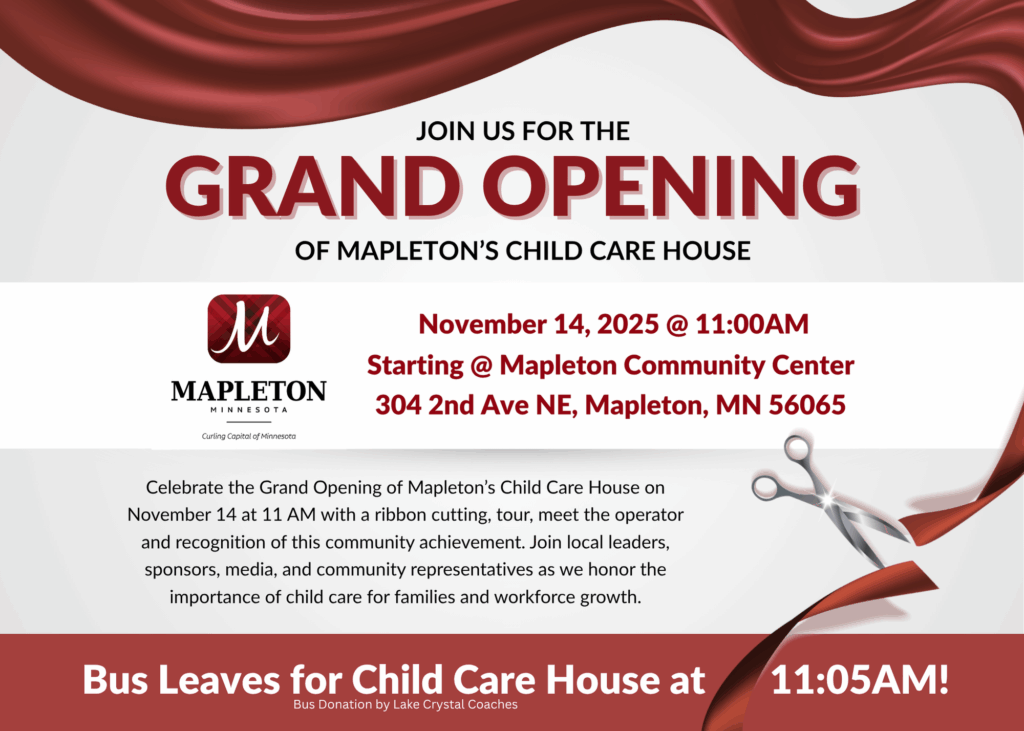
Finding accessible, high-quality child care remains one of the most pressing challenges for families and employers across South Central Minnesota. As communities strive to attract and retain a strong workforce, local solutions are essential to meet the growing demand. Mapleton is taking a bold step forward with the grand opening of its new Child Care House, a first-of-its-kind project developed in partnership with Business of Child Care.
November 14th, Tiny Roots Childcare, the facility will be operated by local provider Brooke Garvey, will begin offering licensed care for families in the Maple River area. The project represents a shared commitment by the City of Mapleton, the Mapleton Economic EDA, and local leaders like Mapleton Mayor and RNDC Commissioner Jeff Annis, to create the infrastructure needed to support both families and economic growth.
Through strong leadership and partnerships, Mapleton transformed community need into action. With support from the Southern Minnesota Initiative Foundation (SMIF) and technical assistance from Business of Child Care, the city identified a viable site, developed a sustainable business plan, and secured funding to bring the project to life. This structured, turnkey model ensures the project’s long-term success while serving as a roadmap for other rural communities facing similar challenges.
The Mapleton Child Care House will provide care for up to twelve children in a thoughtfully designed environment that supports early learning and development. Just as importantly, the project will enable more parents to participate in the workforce, reinforcing the critical link between child care access and economic vitality.
Mapleton’s commitment demonstrates how strategic collaboration and local investment can deliver a lasting impact. As the first community in the region to launch a Child Care House, Mapleton is setting a powerful example, showing that with vision and partnership, rural communities can create sustainable, high-quality child care solutions that strengthen families and economies alike.
You can celebrate the opening of the new Child Care House on November 14th at the Mapleton Community Center, 304 2nd Ave. NE, Mapleton, MN.
| | |
Wednesday, November 12th, RNDC and the Southern Minnesota Initiative Foundation (SMIF) will be hosting a Data Center Forum, co-sponsored by the Southcentral Minnesota Clean Energy Council, Great River Energy, and Greater Mankato Growth.
The forum will provide a space for education and conversations on data center development in our region. Topics will cover data center technologies and designs, impacts on water and energy usage, current Minnesota legislation, and tools communities can use to secure economic and community benefits. The event will feature expert speakers from Great River Energy, the Freshwater Society, Blue Earth Light and Water, Clean Up Our River Environment Minnesota, Dunham Associates, and more. The event will be broken up into hour and a half panel presentations and conversations as an introduction to almost everything data center related. Due to demand, a recording of the forum will be made available online.
| | Attention Young Adults in Region Nine - Become the next College-Age Commissioner! | | Funding Opportunities Now Open for Transportation Projects Across South Central Minnesota | | |
Local governments across South Central Minnesota can now apply for several key transportation funding programs managed by the South Central Minnesota Area Transportation Partnership (ATP-7). These programs—STP-Small Urban, STP-Rural, Transportation Alternatives (TA), PROTECT, and the Carbon Reduction Program (CRP)—provide support for improving infrastructure, enhancing safety, and promoting sustainability in the region’s transportation network.
Each program supports specific types of projects and funding needs:
STP–Small Urban (City Streets/Bridges)
Applications are open for fiscal year 2030 projects that improve State Aid city streets and bridges on the federal aid system. Federal funds can cover up to 80% of eligible costs, with approximately $3.2 million available. Applicants should use the District 7 STP Small Urban Application Packet, available on the ATP-7 website.
STP–Rural (County Roads/Bridges)
Counties may apply for fiscal year 2030 projects to improve county roads and bridges on the federal aid system. Similar to the Small Urban program, federal funds can cover up to 80% of eligible costs. Around $4.3 million is available for 2030 projects. Applications must be submitted using the STP Rural Application Packet found on the ATP-7 website.
Transportation Alternatives (TA)
The TA program funds projects that improve safety and accessibility for non-motorized users—such as sidewalks, trails, and Safe Routes to School infrastructure. An optional Letter of Intent (LOI) is available to confirm project eligibility and earn five bonus points toward scoring. Approximately $1.5 million is available for fiscal year 2030 projects, with federal funding covering up to 80% of construction costs.
PROTECT
Designed to make transportation systems more resilient to weather and climate impacts, the PROTECT program supports projects that integrate resilience into transportation networks. Funding is available for fiscal years 2029 and 2030, with $410,000 available each year and up to 80% of costs covered. An LOI is encouraged to verify eligibility.
Carbon Reduction Program (CRP)
The CRP aims to reduce carbon emissions from transportation sources through innovative projects. Funding is available for fiscal years 2029 and 2030, with $520,000 available each year for projects located outside the Mankato/North Mankato Area Planning Organization (MAPO) urbanized boundary. Applicants must coordinate with MnDOT District 7 staff to confirm eligibility and cost-effectiveness scores.
Applicants should submit their applications for the STP-Rural and STP-Small Urban programs to Deb Yates at debra.yates@state.mn.us. Applications for TA, PROTECT, and CRP can be submitted to angela.piltaver@state.mn.us at MnDOT District 7.
| | Free Food Safety Assessments Available for Minnesota Food Businesses | | |
Minnesota food manufacturers have a new opportunity to strengthen their operations through the Food Safety Assessment Pilot Program, administered by the Agricultural Utilization Research Institute (AURI) and funded by the Minnesota Department of Agriculture’s Resilient Food Systems Infrastructure Program. This initiative offers free, one-day food safety assessments conducted by qualified professionals. The program is open from October 13, 2025, through March 31, 2026, and limited to the first 25 businesses that apply.
Participating businesses will receive a comprehensive review of their food safety policies, procedures, and potential risks. Each participant will also receive a written report with actionable recommendations to reduce food safety risks and improve compliance with Current Good Manufacturing Practices (cGMPs). Additional benefits include expert insights into allergen management, sanitation, supply chain traceability, and record keeping, as well as connections to technical assistance and training resources. Participants will also gain a head start on future eligibility for Food Safety Cost Share programs.
Eligible applicants must be Minnesota-based, licensed food businesses operating in commercial manufacturing spaces. Products must be for human consumption and may not include THC, CBD, or primarily meat or poultry ingredients. Businesses should be ready to scale, committed to food safety, and open to making operational improvements. Cottage food producers are not eligible to apply.
The program’s goal is to help businesses develop a clear roadmap for strengthening food safety practices, identifying regulatory gaps, and connecting with long-term funding and support opportunities. Participants will also contribute valuable feedback to help shape a statewide, ongoing food safety support system for Minnesota’s food industry.
Spots are limited and will be awarded on a first-come, first-served basis to qualified applicants. To learn more or apply, click the button below.
| | SMIF Now Offering Funding Through the PROMISE Act Grant | | |
Through a partnership with the Minnesota Department of Employment and Economic Development (DEED), Southern Minnesota Initiative Foundation (SMIF) will award $1.3 million in competitive grants to businesses in southern Minnesota to invest in existing operations or planned growth.
Grant awards will range from $10,000 to $50,000 and can be used for working capital to support payroll expenses, rent or mortgage payments, utility bills, equipment, and other similar expenses that occur in the regular course of business.
Grant awards will be limited and approved on a competitive basis. Not all eligible businesses will receive a grant. Primary business operations must be located in SMIF’s region, which includes 20 counties and one Native nation. Businesses must earn $750,000 or less in gross revenue (based on prior year's (2024) taxes) to be eligible. Additional eligibility requirements are listed on SMIF’s website.
The grant cycle opens October 16, 2025 and will close on November 17, 2025. For the application and guidelines visit smifoundation.org/promise. Contact Melissa Langer (melissal@smifoundation.org) or Brian Conzemius (brianc@smifoundation.org) with questions.
| | |
Solar on Public Buildings Program
The Minnesota Department of Commerce is extending the deadline for proposals to the Minnesota Statewide Solar on Public Buildings grant program through Monday, December 1, 2025. Please note that applications will continue to be reviewed as they are received.
The Solar on Public Buildings (SPB) grant program was created to provide grants to stimulate installation of solar energy systems on or adjacent to public buildings.
Eligible applicants for this grant are local units of government owning and operating public buildings. This includes a county, city, town, or other local government jurisdiction, federally recognized Indian Tribes in Minnesota, excluding school districts eligible to receive financial assistance under the Solar for Schools program.
Applications will be open continuously until December 1, 2025, or notification from the Department that all funds have been committed, whichever occurs first. The Department anticipates responding to applicants within two weeks of submittal.
For more information about the statewide Solar on Public Buildings program, see the Commerce website for more details.
Deadline: Dec. 1, 2025
| | |
MDA Seeks Applications for Crop Research Grants
The MN Department of Agriculture is now accepting applications for the Agricultural Growth, Research, and Innovation (AGRI) Crop Research Grant. This funding is intended to generate applied crop research that will improve agricultural product quality, quantity, or value within Minnesota’s $13.5 billion crop industry.
Any Minnesota organization, research entity, individual, or business with agricultural research capabilities is eligible to apply. Applied crop research projects must have near-term benefits (three to seven years) for Minnesota’s farmers and the state’s economy, and applications must include an outreach plan describing how results will be made available to the public.
Special consideration will be given to research on crops with limited access to other research funds, as well as projects with an outreach plan describing how activities or outcomes meaningfully inform farmers or rural communities with limited economic opportunities.
The MDA expects to award $1.75 million through this round of funding, with a maximum grant amount of $250,000 per proposal. Full grant eligibility requirements and applications details are available on the AGRI Crop Research Grant webpage.
Deadline: Dec. 16, 2025
| |
Region Nine Development Commission takes great pride in working with and on behalf of counties, cities, townships, and schools throughout South Central Minnesota. Since 1972, being a partner for progress has led to the development of programs and identification of solutions in the areas of economic development, business development, healthy communities, transportation, community development, and leveraging regional resources. To learn more about our work and mission, visit www.rndc.org.
| | | Follow RNDC on social media to stay up-to-date on events, news, and more! | | | | |