Monthly newsletter from the City of Chula Vista

Office of Sustainability

business_owner_female.jpg

7 Ways to Reduce Your Business’s Heating Bill


Heating, ventilation and air conditioning (HVAC) uses around 40% of a building’s electricity. In fact, it’s one of the most significant factors in the operating expenses of a business. That’s why it pays to pinpoint HVAC energy waste and reduce it. Here are 7 popular ways to help your business become more energy-efficient and control costs. 


Tip #1: Carefully assess the area around each vent for proper ventilation 

Is air flowing from the vent circulating freely throughout the room? If there are obstructions that prevent adequate airflow, such as cabinetry or drapes, move them to allow for clear circulation. Don’t keep vents closed to save energy. This can change the way air is distributed and cause an imbalance to the operation of the HVAC system. 


Tips #2: Prevent dust and dirt from building up 

Replace air filters (or clean them if they’re reusable) monthly, especially during peak heating and cooling seasons. Keeping air filters clean can prevent dust and dirt from building up in the system. When dirt builds up, it can lead to expensive maintenance repairs or the need for a new system.


Tip #3: Check your ducts 

Make sure all the ducts that run throughout your building have duct sealant or metal-backed (foil) tape over the seams and connections. You can work with a contractor to wrap the ducts in insulation to keep them from getting hot in the summer or cold in the winter. Contractors can perform verified duct sealing using a special fan to test duct system leakage before and after sealing efforts have been made. 


Tip #4: Implement a consistent HVAC maintenance schedule 

Not all businesses require the same needs from their HVAC systems. Customized commercial HVAC maintenance plans may be offered by your preferred contractor, which will provide the specific care your system needs to boost performance. 


Tips #5: Use heat-recovery technology to transfer energy from exhaust air to incoming outside air 

This greatly reduces the energy that’s required to heat or cool incoming air. A qualified contractor can educate customers on available recovery technologies. For example, an energy recovery ventilator (ERV) can be a suitable solution for maintaining comfortable temperature, depending on area location and climate. 


Tip #6: Install advanced control sensors to improve a ventilation system’s operating power for energy efficiency 

These controls can count the number of people in a room and then adjust the heat and air conditioning accordingly. When the sensors are integrated into a building’s HVAC system, the advanced controls can reduce energy use by almost 40%. 


Tip #7: Replace your old, worn-out HVAC 

If your HVAC system is more than 10 years old, there’s a good chance you’re spending too much to heat and cool your building. Have a professional contractor give your HVAC system a checkup and see if you should upgrade to high-efficiency ENERGY STAR®-qualified equipment. 


For more ideas on how to lower your energy use, visit sdge.com/My-Business. 

Meet Our New Climate Action Fellows!


Hello! Our names are Emily Hoff and Maya Hendija and we were partnered as fellows with the San Diego Regional Climate Collaborative and Office of Sustainability here at the City of Chula Vista through a program called College Corps. College Corps is a new initiative for the 2022-2023 school year that will work to deploy 3,200+ students across the state to organizations in their communities that help support three main initiatives: climate action, food insecurity and K-12 education. As the first initiative in California of its kind, the program will work to create a generation of civic-minded leaders within their communities. Below are some introductions from each of us.

My name is Emily Hoff and I am a senior at the University of San Diego, majoring in biology with a minor in environmental and ocean sciences. I absolutely love the outdoors and spend all of the time I can near the ocean, hiking around San Diego or exploring the mountains back in my home state of Colorado. I am so excited to have the opportunity to work with the Office of Sustainability. Climate action is something I am very passionate about and I can’t wait to learn more about what the city is doing. Over the course of my fellowship, I am very excited to work on our Climate Action Challenge and help members of the community get excited about the easy ways they can start living more sustainably and climate friendly!


My name is Maya Hendija, and I am currently a senior majoring in Physics at the University of San Diego. As someone who has grown up being very outdoorsy and active, I also grew very passionate about preserving our planet. This is why I am thrilled to be working with the Office of Sustainability here in Chula Vista. Emily and I have been assigned the task of training and engaging people in the Climate Action Challenge digital platform. It is an excellent resource to educate and engage the community in sustainability and climate action and I am excited to see what we can achieve with the help of our mentors and community members.


Stay tuned to future newsletters and social media for updates on our activities in the community. And if you haven’t checked out the Climate Action Challenge yet, you can do so here. It’s easy and it’s free!

Federal Support for Electrification


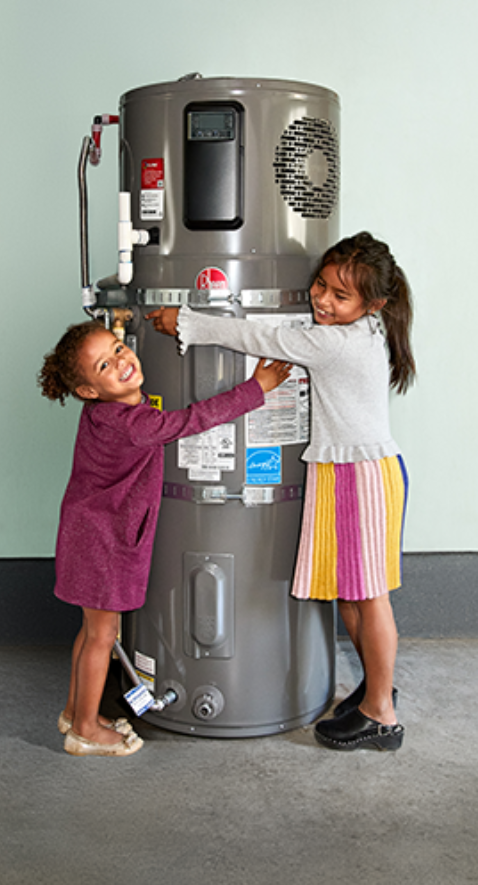
Making your home all-electric has a lot of benefits, from reducing greenhouse gas emissions and local air pollution to the opportunity to pair with solar and a battery storage to reduce monthly utility bills and have backup power. But it can also come with some high upfront costs. Luckily, the recently adopted Federal Inflation Reduction Act has some support to help homes make these important upgrades. Residents looking to install heat pump water heaters, solar with battery storage, weatherization heat pump HVAC, electrical panel/wire upgrades or electric stoves can expect to see up front discounts, as well as tax credits, for these upgrades. Additionally, tax credits for new or used electric vehicles can help you use clean electricity to get around.


If you would like to learn more about what you might qualify for starting next year please visit: www.rewiringamerica.org/app/ira-calculator or call the City’s Conservation section at 619-476-2442. If you would like to find a contractor familiar with electrifying homes, you can use the contractor network created by The Switch Is On at: https://switchison.cleanenergyconnection.org.

Fallen Leaves – a Natural Fertilizer


As seasons change, tree leaves are falling to the ground. One should not consider them waste.  As they fall to the ground and accumulate, this free resource can be put to good use in your yard and garden. Soil-friendly leaves have many productive uses which are beneficial for the environment. Using fallen leaves in your yard is a simple to implement technique of natural yard care. Here are a few environmentally friendly tips for leaves that have fallen to the ground.


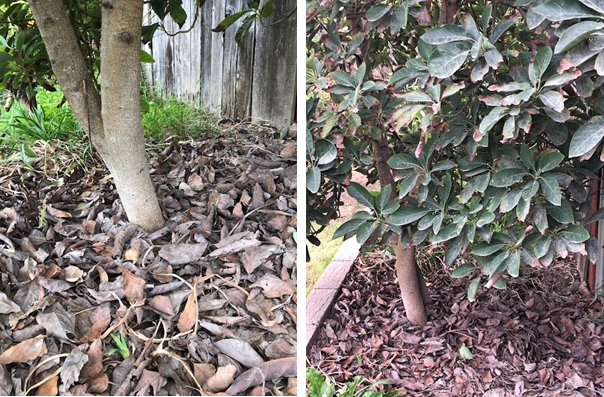
  • Let the fallen leaves rest easy under the trees, shrubs and bushes. Did you know that leaves left on the ground from trees and other leafy plants create natural fertilizer? Over time they will break down and nutrients in the leaves will be absorbed into the soil. Fallen leaves serve as a mulch and keep the soil moist and prevent it from drying out. This also conserves water since less irrigation is needed. A layer of leaves also creates a habitat for insects and small animals like lizards.


  • For leaves on your lawn, skip the raking and the bagging - just run a lawnmower over leaves to cut them into smaller pieces. When kept in place, the leaves will compost over the season into nutrients that suppress weeds and feed next year's lawn and the vast number of microbes in the soil. No need to pay for mulch and fertilizer when you can make use of this great gift that fell from the trees onto your lawn and gardens!


  • Collect leaves for use as mulch. Rake them into garden and flower beds and around plants and trees to build soil fertility. To make leaves break down faster, gather them, create a bed of leaves then mow them. Collect the smaller pieces and spread them out as mulch.


  • Use leaves in your backyard compost pile. Leaves are full of carbon, breakdown easily and balance out the mixture of lawn clippings, twigs and nitrogen-rich food scraps. Leaves are a key piece to making compost - the all-natural, nutrient-rich soil amendment that builds healthy soils and improves plant growth.


  • If your yard is comprised mostly of hardscape and there are more leaves than you can use, place them in your green food and yard waste cart. They will be composted at the Otay Compost Facility along with other yard waste and food waste. The finished compost will be used by the city to maintain medians, parks and ball fields. Compost will be available for landscapers, local farmers and other businesses throughout the community. 


To learn about the Five Steps of Natural Yard Care visit chulavistaca.gov/naturescape. For information on backyard composting visit chulavistaca.gov/compost.

SBCS’ Trolley Trestle Housing and Program Hub for Foster, Former Foster and Homeless Youth Celebrates Major New Solar Project


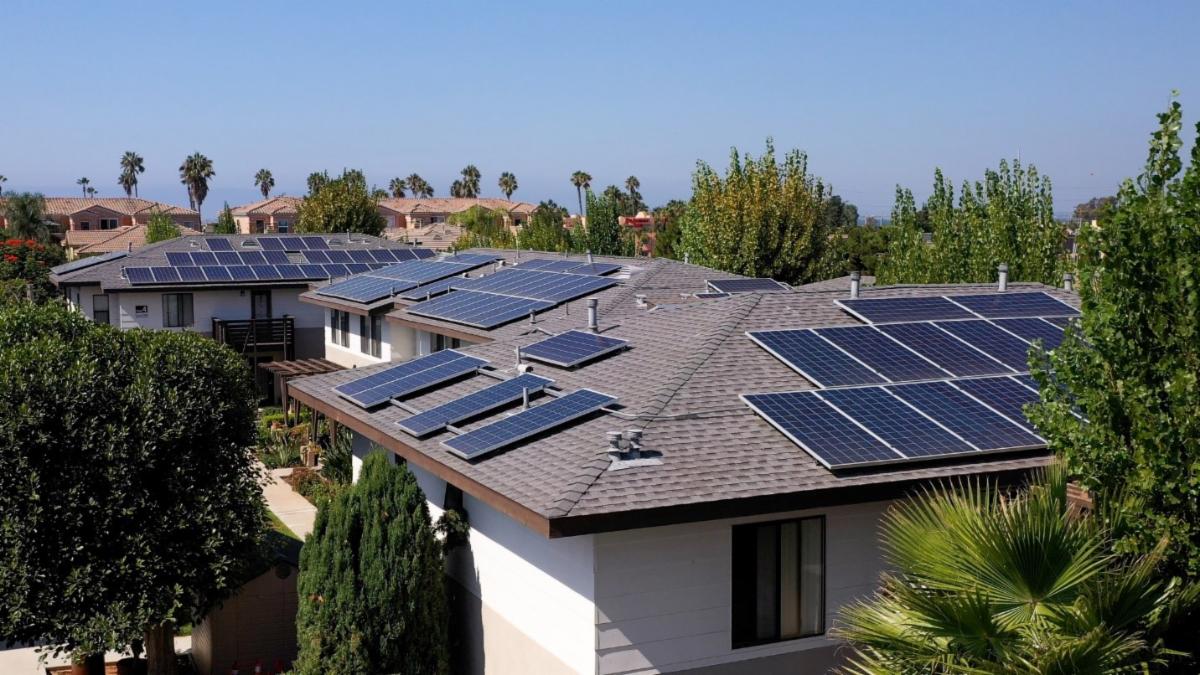
SBCS’ Trolley Trestle transitional youth housing and programming campus celebrated the installation of a new 23 kW solar project in October. The renewable energy project, worth about $300,000, is projected to redirect $60,000 - $70,000 annually into programming and supportive services for the foster youth, former foster youth and youth experiencing homelessness that the hub serves via savings on energy costs.

The idea for the solar project was brought to SBCS by solar project advocates and financers BQuest Foundation, who proposed the project and went on to facilitate it through a grant, a no-interest loan and logistics support. The project was also actively supported by GRID Alternatives, who provided application support to SBCS and acted as the contractor for the project, and the SOMAH Program, which provides financial incentives for installing photovoltaic (PV) energy systems on multifamily affordable housing, making these projects affordable for nonprofits.


“This project at Trolley Trestle Apartments is a perfect example of how solar energy projects can be built to benefit residents of environmental justice communities,” said Jae Berg, SOMAH Program Manager. “We’re proud to have awarded $250,000 for the installation of three systems, which will allow both tenants and SBCS to realize savings from energy credits for many years to come.” If you think you can benefit from adding solar to your multifamily property, please visit www.calsomah.org to learn more or apply.

New Campaign to Remind Us of the Importance of Food Waste Recycling


According to the Environmental Protection Agency, landfills are among the nation's largest sources of methane, a greenhouse gas far more potent than carbon dioxide and a major contributor to climate change. And food is the single largest category of material placed in municipal landfills. A United Nations report also found that immediate reductions in methane emissions are the swiftest chance the planet has at slowing climate change.


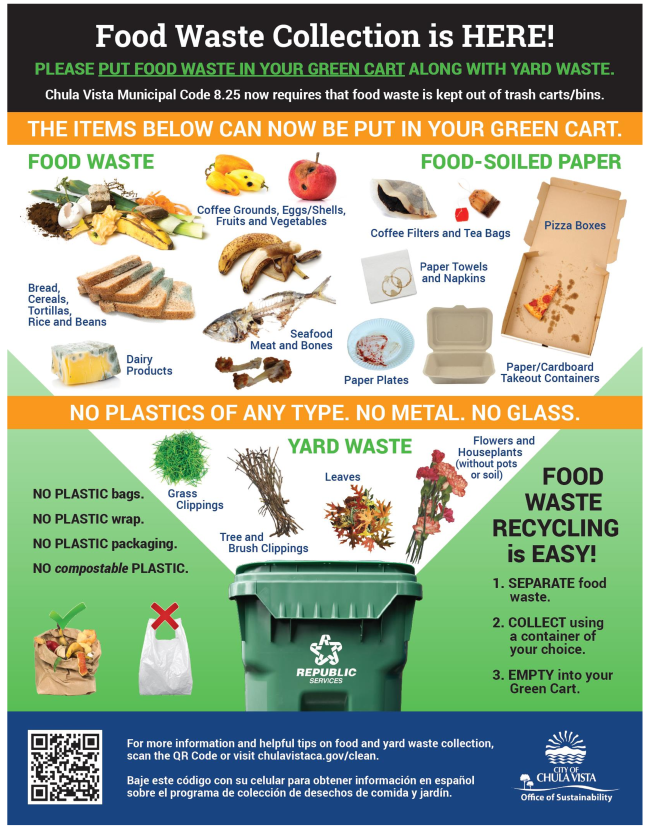
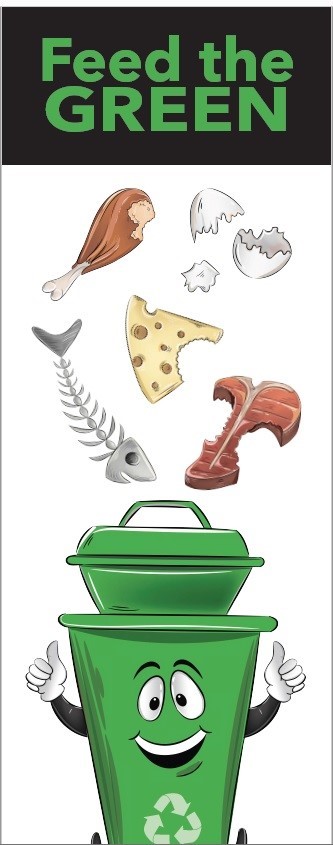
Therefore, we need to remind ourselves that separating food waste and other organic waste from the trash is now the norm in California and a new way of managing our waste in an environmentally friendly way. The City’s Office of Sustainability is working hard to remind us with a new outreach campaign called “Feed the Green” and has installed large colorful banners on streetlights throughout Chula Vista like the one pictured here.


These banners are now prominently featured in thoroughfares in Chula Vista like Otay Lakes Road, H Street and Broadway, to name a few. They feature a lovable, happy animated green (waste) cart giving you the “thumbs up” with a few examples of food waste above. This smiling green cart will complement other outreach campaigns with a friendly reminder that we should now place all food waste in our green carts or bins.


Are there other reasons to keep food waste out of our trash?

Certainty yes, most people don’t realize how much food they waste and the negative impacts on food insecurity, the environment and climate change. Safe and wholesome food that is currently thrown away could help feed hungry people. Each year, Feeding America and its network of food banks rescues around 3.6 billion pounds of food, and this represents only a small percentage of food that could be donated but ends up in a landfill.


Reducing food waste can also save money. For farmers, businesses and organizations, the financial incentives to reduce waste also include tax incentives for donating wholesome, unsold food. Financial impacts on homes is also substantial. An average typical household of four in America can waste up to $1,500 worth of food each year, which adds up to $125 per month! When food is wasted, so too is the land, water, labor, energy and other inputs that are used in producing, processing, transporting, preparing, storing and disposing of the discarded food. We can take collective action to fix this and you, too, can be part of the solution to help save food from a landfill demise. 


To learn about the new food and yard waste program and how you can prevent wasting food in your home, or business please visit chulavistaca.gov/sustainability or call (619) 691-5122.

Facebook  Twitter  Instagram  Youtube