In memoriam: Robert Guynn, MD | |
|
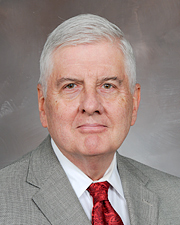
Robert Guynn, MD, professor emeritus in the Louis A. Faillace, MD, Department of Psychiatry and Behavioral Sciences at McGovern Medical School at UTHealth Houston, died Oct. 30. He was 80 years old.
Guynn was recognized nationally as a leader in psychiatric research and clinical care. He joined the medical school as a junior faculty member in 1973. He rose through the academic ranks, being appointed associate professor and professor within 10 years. He served as acting chair and chair of the Department of Psychiatry and Behavioral Sciences from 1987 to 2007. He also was the director of the UTHealth Mental Sciences Institute — the department’s outpatient center at the time — and the executive director of UTHealth Houston Harris County Psychiatric Center. He retired from McGovern Medical School in 2010, becoming professor emeritus.
“Dr. Guynn was a real gentleman, a great clinician, academician, beloved friend, and mentor to many in our field and will be sorely missed,” said Jair Soares, MD, PhD, professor and chair of the Faillace Department of Psychiatry and Behavioral Sciences, and the Pat R. Rutherford, Jr. Chair in Psychiatry at McGovern Medical School and vice president of behavioral sciences at UTHealth Houston.
“Dr. Guynn meant a lot to so many in the years he was chair,” said Katherine Loveland, PhD, professor in the department and the Landmark Charities Professor in Autism Research and Treatment at the medical school. “He was a man of integrity and sincere devotion to the well-being of patients, the training of students, and the importance of science in psychiatry.”
He earned his medical degree from Johns Hopkins University School of Medicine.
After one year of internal medicine at Case Western Reserve University Lakeside Hospital in Cleveland, Ohio, Guynn returned to Baltimore, Maryland. There, he began his psychiatric residence at the Henry Phipps Psychiatric Clinic at Johns Hopkins Hospital.
He spent three years as a clinical fellow in the U.S. Public Health Service, assigned to the National Institute of Mental Health. He spent three years in Washington, D.C., pursuing biochemical and metabolic research, focusing on the determination of the thermodynamics of enzyme catalyzed reactions and metabolic control.
“He was an incredible psychiatrist and chairman who supported so many of us early-career researchers at the time,” said Joy Schmitz, PhD, professor and Louis A. Faillace, MD, Chair in the Department of Psychiatry and Behavioral Sciences at the medical school.
He cared for patients at Memorial Hermann-Texas Medical Center, The University of Texas MD Anderson Cancer Center, UTHealth Houston Harris County Psychiatric Center, and Harris Health Lyndon B. Johnson Hospital. His teaching responsibilities included mentoring and teaching medical students, laboratory preceptors, residents, and postdocs. His research focused on the biochemistry of alcoholism and substance abuse and the biochemistry of aging, among other areas.
“He was a kind man, a supportive chair, and a leader through times of transition,” said Scott Lane, PhD, professor of psychiatry and behavioral sciences at the medical school.
He published 56 academic papers, along with 14 chapters and 39 abstracts.
He served in leadership positions for numerous academic and medical societies, including as president of the Texas Research Society on Alcoholism and president of the Houston Psychiatric Society. He was a fellow of the American Psychiatric Association and the American College of Psychiatry, and served as chair of the Scientific Program Committee for the annual meeting of the American Psychiatric Association. He was an examiner for the American Board of Psychiatric and Neurology for many years.
“A giant sequoia has fallen in the forest,” said Deborah Pearson, PhD, professor of psychiatry and behavioral sciences at the medical school. “Dr. Guynn was our psychiatry chair for 20 years, and nurtured the careers of so many of us.”
His research and teaching was recognized through numerous awards, including the Texas Society of Psychiatric Physicians Award and the Nancy C.A. Roeske, MD, Certificate of Recognition for Excellence in Medical Student Education by the American Psychiatric Association.
| |
Soares and Meyer complete phase II of study | |
|
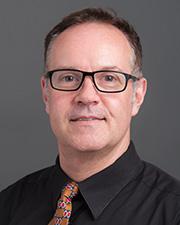
Results of a Phase II trial studying a synthetic form of psilocybin for treatment-resistant depression, which included co-investigators Jair C. Soares, MD, PhD, Pat Rutherford Jr. Chair in Psychiatry; and Thomas D. Meyer, PhD, LP, professor, were recently published in the New England Journal of Medicine.
Soares and Meyer were among an international multi-institutional group of researchers who found that a single high dose of a proprietary, synthetic form of psilocybin, a hallucinogen found in psychedelic mushrooms, combined with talk therapy, could treat severe depression.
Participants met with a therapist at least three times prior to receiving the medication to build trust, received psychoeducation, and prepare for the psychedelic experience, according to the researchers. The patients experienced a state similar to daydreaming, being in autopilot mode, or rumination, Meyer said. Afterward, participants had two integration sessions with the same therapist to discuss their experience for insights.
A total of 233 enrolled participants were randomly assigned to three doses, but only the highest dose, 25 mg, which was administered to 79 patients, showed effectiveness.
Further studies are needed to test whether an improved psychological support model aligned with a high dose of psilocybin, or a second experience with psilocybin, will result in stronger and sustained effects.
Meyer said using psychedelics as part of treatments isn’t a new concept. Many societies, including ancient civilizations, have used these types of substances in religious ceremonies and healing techniques. Scientific research on the benefits of these substances grew in the 1960s, but the research was shut down for a variety of reasons, some of which were more political than science-related. Meyer said that in the last 10-15 years, a renewed interest has surfaced, giving such projects life.
Both Soares and Meyer look forward to being part of a coming Phase III study, as well as other studies on psychedelic treatments they hope will yield additional ways to reduce the suffering related to mental health problems.
| |
|
Spotlight:
DiCarlo returns UTHealth Houston
| |
|
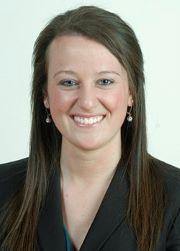
Jessica DiCarlo, MD, assistant professor, recently joined the Faillace Department of Psychiatry and Behavioral Sciences as a pediatric psychiatrist.
DiCarlo is no stranger to UTHealth Houston. She obtained her medical degree from McGovern Medical School at UTHealth Houston in 2016. She went on to do a pediatrics internship and psychiatry residency at Tufts Medical Center in Boston. She returned to Houston for a child and adolescent psychiatry fellowship at Baylor College of Medicine.
DiCarlo works closely with the PATH Program in the Department of Pediatrics at McGovern Medical School and the UTHealth Houston Texas Child Health Access Through Telemedicine (TCHATT) program. The PATH program is a day program that treats children and adolescents with complex illnesses and co-occurring emotional problems. TCHATT serves to connect kindergarten through 12th grade students to care via telemedicine.
DiCarlo is enjoying her new assignments with both the PATH and TCHATT programs. Her early training exposure to pediatrics, her natural interest in development, and her belief in the importance of the family led DiCarlo to pursue child psychiatry.
“Psychiatry has long felt like the most human of the specialties to me,” DiCarlo said. “The most rewarding aspect is spending time with my patients and watching people grow.”
While not working, DiCarlo enjoys spending time with her family and friends, as well as reading, walking, singing, and attending church.
| |
Introducing: the YAM program | |
|
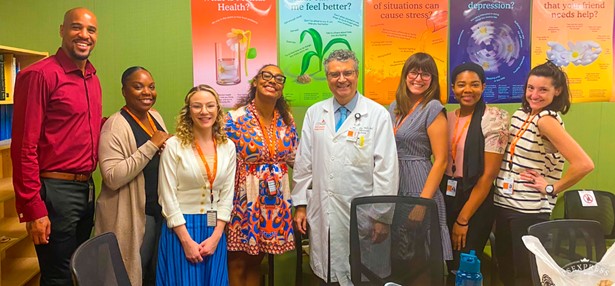
The UTHealth Houston Youth Aware of Mental Health (YAM) program is an evidence-based program delivered by certified facilitators to students in the classroom setting at no cost.
YAM is known as a preventative intervention that has demonstrated efficacy in Europe and Texas. Results have shown for every 90 adolescents or children who receive it, at least one will be prevented from attempting suicide.
Led by Jair Soares, MD, PhD, Pat Rutherford Jr. Chair in Psychiatry, and Cesar Soutullo, MD, PhD, vice chair and chief for child and adolescent psychiatry, YAM is delivered in five 45- to 60- minute interactive sessions with all adolescents in grades 8 to 12 over three to five weeks.
YAM focuses on six main themes:
- What is mental health?
- Self-help advice
- Stress and crisis
- Depression and suicidal thoughts
- Helping a friend in need
- Who can I ask for advice
So far, the program has contacted 75 Texas school districts, and signed memorandum of understandings with four of them, while 11 are in process. As of October 1, 2022, 60 students have been served.
| |
The following clinical trials are in operation, following all necessary safety guidelines. If you're interested, contact the appropriate study.
We are conducting a study to develop adaptive treatment interventions; that is, interventions that change based on how the participant is doing. Individuals seeking treatment for cocaine addiction may qualify to participate in this two-phase program.
Contact: 713-500-DRUG (3784)
This study aims to examine the safety and efficacy of allogenic mesenchymal stem cells as an adjunctive treatment of treatment-resistant bipolar depression. Patients will be assigned into a treatment or a placebo group.
Contact: 713-486-2627
The UTHealth Houston Center of Excellence on Mood Disorders at the Faillace Department of Psychiatry and Behavioral Sciences is collaborating with LivaNova, a global medical technology company, to start a new clinical trial – the “RECOVER study” – to help treat depression.
Contact: 713-486-2627
To see all open studies, visit our website.
| |
|
Single-Dose Psilocybin for a Treatment-Resistant Episode of Major Depression - New England Journal of Medicine - November 2022
Guy M. Goodwin, F.Med.Sci., Scott T. Aaronson, M.D., Oscar Alvarez, M.R.C.Psych., Peter C. Arden, M.P.H., Annie Baker, R.G.N., James C. Bennett, M.Sc., Catherine Bird, M.Sc., Renske E. Blom, M.D., Christine Brennan, M.Sc., Donna Brusch, C.C.R.C., Lisa Burke, M.Sc., Kete Campbell-Coker, R.G.N., J.C. Soares
Management of Chronic Pain and PTSD in Veterans With tDCS+Prolonged Exposure: A Pilot Study - PubMed.Gov - November 2022
Melba A Hernandez-Tejada, Kathryn E Cherry, Sheila A M Rauch, Ron Acierno, Gabriel R Fries, Wendy Muzzy, Ellen J Teng, Bethany Wangelin, Hyochol Ahn
| |
|
João de Quevedo, MD, PhD, was interviewed by Forbes Health about transcranial magnetic stimulation for treatment-resistant depression.
Consuelo Walss-Bass, PhD, was interviewed by the Houston Chronicle about the UTHealth Houston Brain Collection and her work researching the impact of drug addiction on the brain.
Walss-Bass was also quoted in a Houston Chronicle story about how researchers are developing a vaccine to combat fentanyl addiction.
Leslie Taylor, PhD, appeared on FOX 26 News to talk about how to weather holiday depression.
Ron Acierno, PhD, spoke to listeners of Doug Pike’s Fifty+ show on KPRC Radio about PTSD among veterans in recognition of Veterans Day (22:30 mark)
| |
|
Louis A. Faillace, MD, Department of Psychiatry and Behavioral Sciences at McGovern Medical School at UTHealth Houston
713-486-2500
Email
Website
| |
| | | | |