November 2026

Wisconsin Council for the Social Studies


What a way to wrap up October! Between the excitement of the World Series, the changing fall colors, and another busy month in our classrooms, Wisconsin certainly had plenty to talk about. For baseball fans across the state, it was a memorable finish to a month that reminded us how much sports, traditions, and shared experiences become part of our communities' stories.


As we turn the calendar to November, there are plenty of opportunities to connect those stories to the histories and civic questions we explore with students. Native American Heritage Month invites us to celebrate the rich histories, cultures, and contemporary experiences of Indigenous peoples. Election Day (November 3) offers a timely chance to discuss civic participation and democracy, while Veterans Day (November 11) encourages us to recognize those who have served and consider the many ways military service has shaped American history.


It's also an exciting time for WCSS! With our annual conference approaching, we're looking forward to opportunities to reconnect, share ideas, and celebrate the incredible work happening in social studies classrooms across Wisconsin. Be sure to check out information about our upcoming WCSS awards and board elections, including opportunities to recognize outstanding educators and get more involved in our organization.


And, of course, November brings Thanksgiving, with opportunities to revisit familiar stories, explore Indigenous perspectives, and consider how traditions and historical memory evolve over time. As the holiday season approaches and another busy semester moves along, we hope you'll find a few new ideas, useful resources, and reasons to reflect in this month's newsletter!


In Chuck's Corner


It's hard to believe November is already here! The first couple of months of school flew by—and having the world champion Brewers keep every day exciting definitely made time move fast.

With Thanksgiving coming up, it’s a good time to pause and reflect on what we’re grateful for. It’s so easy to get swallowed up by the endless cycle of deadlines, projects, and daily fire-drills, but taking a second to celebrate our wins—and the people who helped us get there—makes a huge difference.


For me professionally, I’m incredibly thankful to my colleagues at school who inspire me every day, my young historians who make teaching so rewarding, and my good fortune to teach at a great institution. I also have so much gratitude for our WCSS community. Our volunteer Board of Directors works cohesively to push toward our mission as an organization, our membership continues to grow, and I thank every social studies educator in our reach for what you bring to the classroom and the profession. You put in the hard work—and it truly matters.


Outside of work, I hope this season gives you a chance to slow down, recharge, and enjoy quality time with family and friends. Personally? I'm thankful for family and friends, good health, the women an men who serve out country, the beautiful fall foliage and natural beauty of Wisconsin, crisp evenings, comfortable bike weather, and an incredibly exciting time to be a sports fan. And caramel apples.


Before the end-of-year rush takes over, take a minute to send a quick thank-you to a mentor, colleague, or friend who’s had your back this year.


Wishing you and your loved ones a warm, restful, and Happy Thanksgiving!


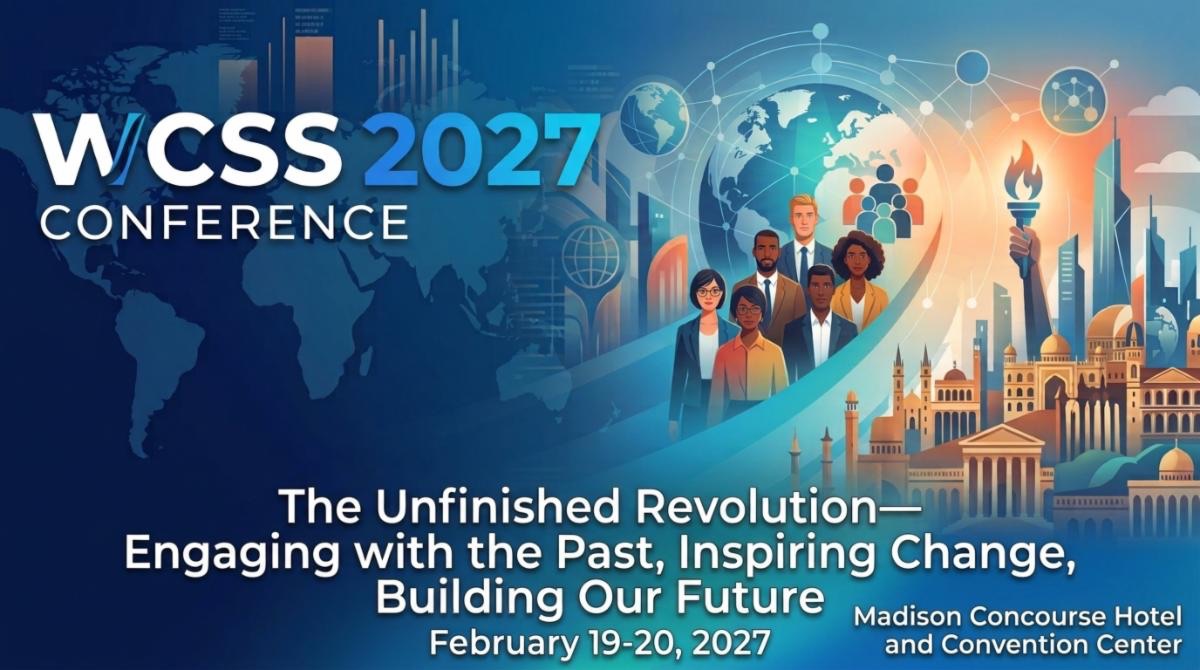
Mark your calendars and join us!

The anniversary ends in 2026. The conversation doesn't!

WCSS 2027 picks up where commemoration leaves off. The Revolution's ideas, conflicts, and consequences didn't end in 1776, and neither did the work of the people and movements who have spent the years since redefining what freedom, citizenship, and democracy actually mean in our modern world. That's the story we're digging into this year, and just as important, how we help students see that history clearly enough to find their own place in what comes next.


Session details and the full conference schedule are on the way. In the meantime, expect strong professional learning, practical classroom ideas, and plenty of time to reconnect with colleagues, old and new

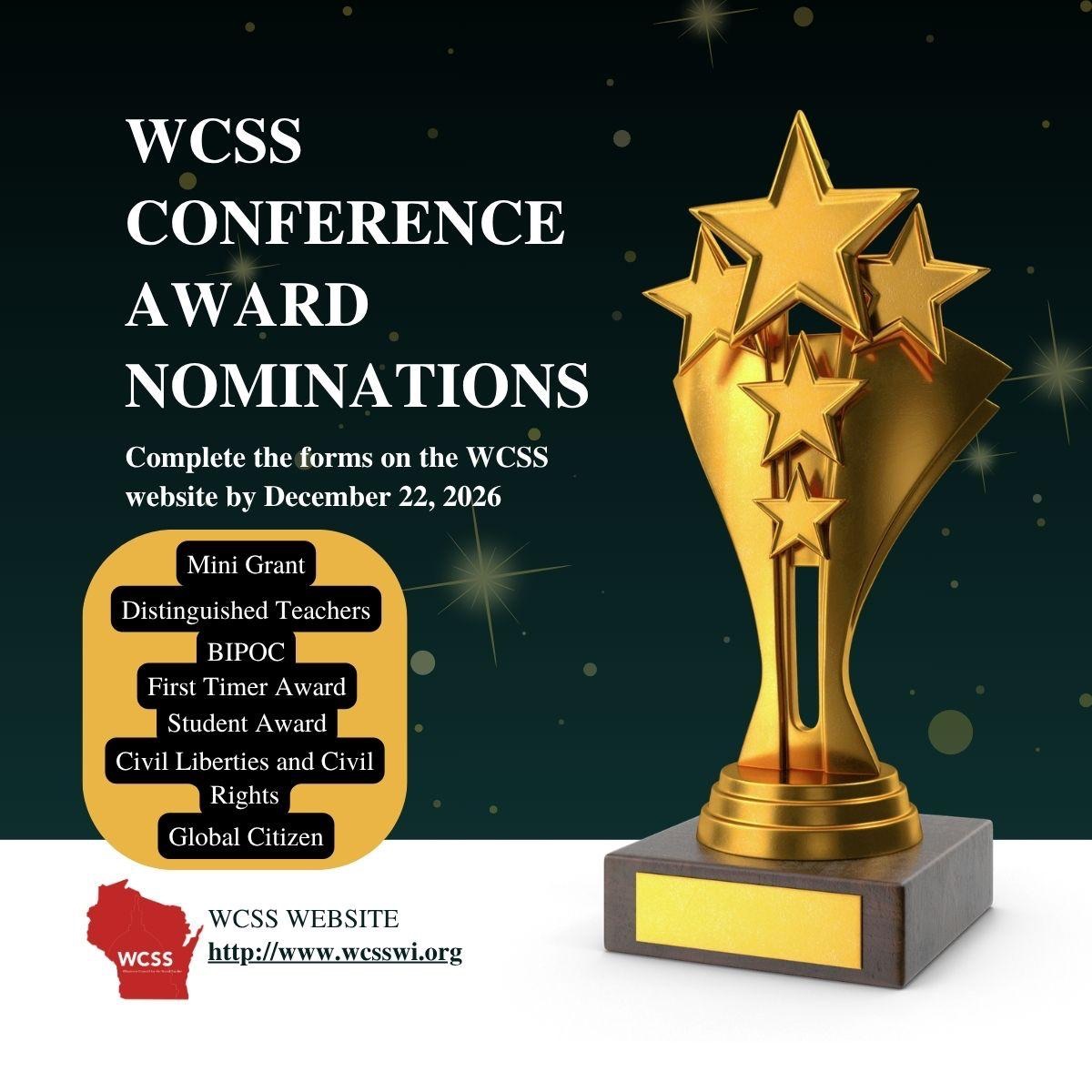
First Time attendees and BIPOC scholarships are available through our awards website!


Call for Proposals

We want to hear from you!.


We're looking for proposals connected to this year's theme, from elementary classrooms to every corner of social studies. Share a lesson you've tested, a resource you're excited about, or a hard conversation you've learned to navigate, and tell us how it fits the theme. Whether this is your first time presenting or your tenth, we'd love to have you on the schedule.


Proposal submission deadline extended to Dec. 1st.

Who deserves to be recognized by WCSS?


WCSS offers several opportunities to recognize outstanding educators, students, and community members. Our awards include the Distinguished Teacher of the Year, Global Citizenship, Civil Rights/Civil Liberties Excellence in Teaching, and Student Excellence Awards. WCSS also supports educators through BIPOC and First-Time Conference Attendee Scholarships, along with mini-grants of up to $250 for classroom projects and learning opportunities.


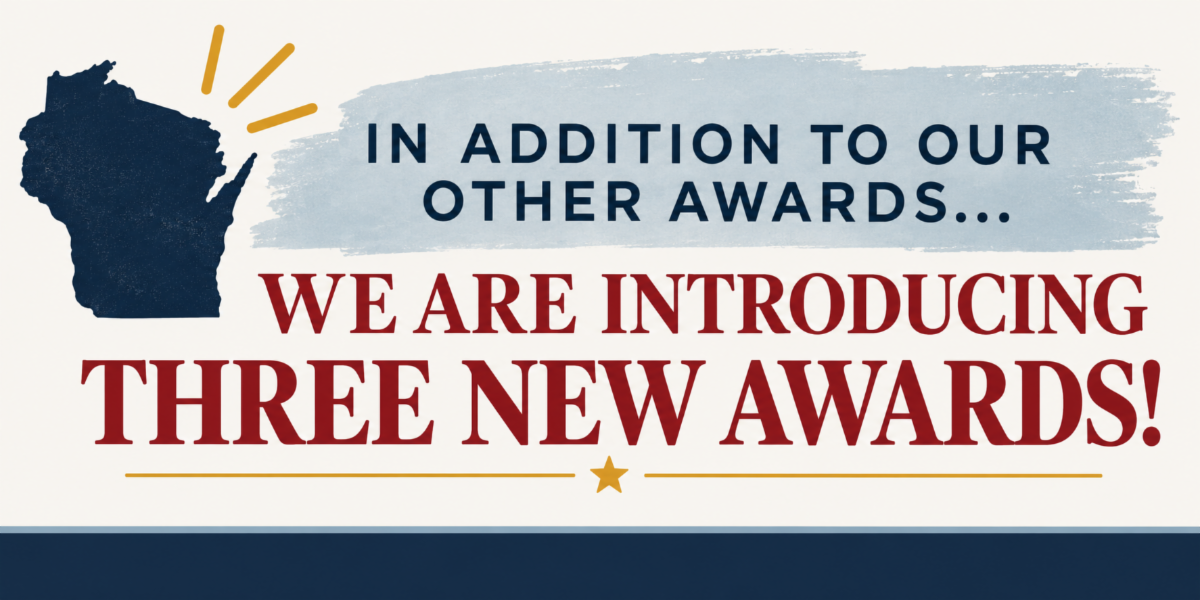
WCSS is excited to announce three new awards recognizing the many ways individuals contribute to social studies education across Wisconsin. From future teachers and university professors to community advocates, these awards celebrate those making a difference in our profession.


Higher Education Leadership Award

Recognizes an outstanding Wisconsin college or university professor whose teaching, scholarship, mentorship, and professional leadership advance social studies education and support the development of future and current educators.


Service to Social Studies Award

Honors an individual outside the teaching profession who strengthens social studies education through advocacy, community partnerships, historical preservation, public programming, or other meaningful service.


Pre-Service Teacher Award

Celebrates an outstanding future social studies educator who demonstrates leadership, scholarship, and dedication to the profession. Each Wisconsin teacher preparation institution with a social studies education program may nominate one student annually.

Know someone deserving of recognition? Nominate them for one of these new awards! Recipients will be recognized at the annual WCSS Conference.


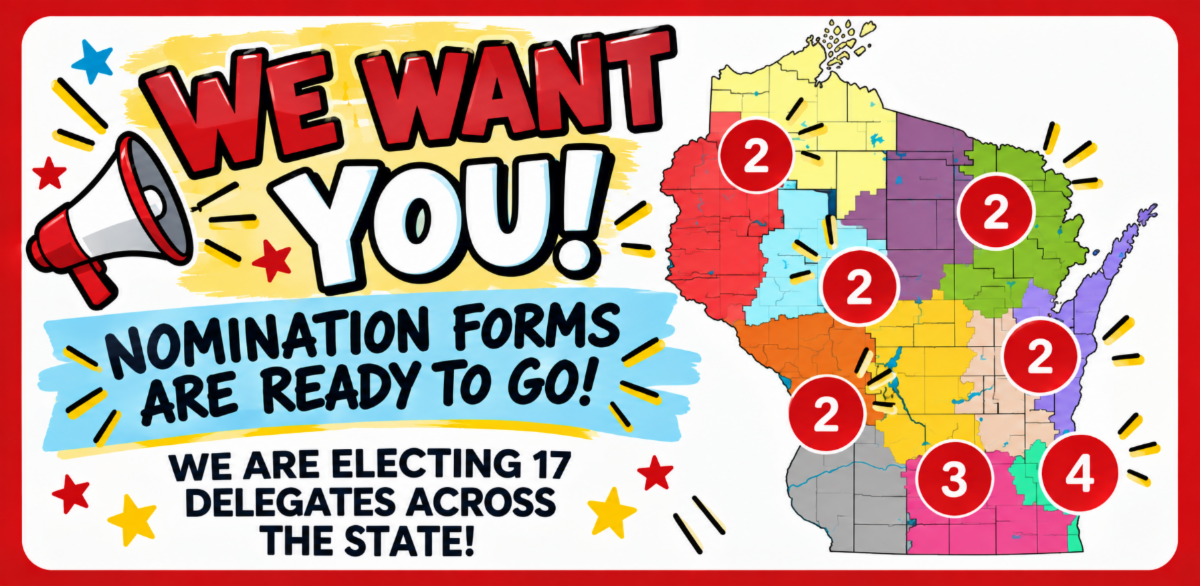
Help shape social studies education in Wisconsin! Serving on the WCSS Board is a chance to work with fellow educators, contribute your ideas, and support our social studies community. Consider nominating yourself or encouraging a colleague to bring their voice and experience to the board.


The Wisconsin Civics Games is a statewide initiative that empowers high school students to become informed citizens and future leaders. Through team-based competition, students deepen their understanding of civics and current issues while building skills in critical thinking, communication, collaboration, and leadership. 
  
Founded in 2018 by the Wisconsin NewsMedia Association with leadership from Eve Galanter, the program has grown to engage students from communities across Wisconsin. Now led by the Universities of Wisconsin, the Civics Games continue to expand their impact and bring the Wisconsin Idea to life by connecting meaningful learning opportunities with communities statewide. 
 
Attached you will find our most up-to-date Civics Games flyer. You are welcome to share with colleagues, educators, students, organizations, and others who may be interested. 
  
Program Updates 
We are excited to share several updates for the 2027 competition cycle. Please carefully review the attached PDF, titled Civics Games Updates for 2027. Here you will see what will remain the same and what will change for the upcoming year. A few to highlight:
  • There is a new logo and website. Explore the new website at https://www.wisconsin.edu/wi-civics-games/
  • Regional competitions will take place at one of four Universities of Wisconsin campuses. There are no virtual playoffs this year.
  • There will be three competition rounds instead of four to ensure time for students to explore their host campus.
  • The state competition will still be at Wisconsin's Capitol and will take place Friday, April 30th, 2027.

Registration 
We anticipate registration to open November 1, 2026. We encourage schools to begin planning now and watch for additional information in the coming weeks. Registration will take place via the WI Civics Games website. A registration link will appear there as we approach the registration date. 
 
Support Opportunities 
If you know of individuals, organizations, or businesses that may be interested in supporting the Wisconsin Civics Games through volunteer service, sponsorship, or financial contributions, please contact me. We are always grateful for partners who help make these opportunities possible for students especially during this rebuilding year. 
  
This update is intended to provide key information as we prepare for the 2027 competition season. Additional information will be distributed. The Universities of Wisconsin reserve the right to amend competition rules prior to the start of competition. Should any changes occur, registered teams will be notified promptly. 
  
On behalf of our phenomenal Civics Game Committee, thank you for your continued support of civic education and student engagement in Wisconsin! We look forward to another exciting year of the Wisconsin Civics Games and to welcoming students from across the state to participate in 2027. 


November Teaching Ideas and Resources

Native American Heritage Month

More Than a Month, More Than One Story

Whose stories do our students hear when they learn about Wisconsin? Whose voices shape their understanding of American history? And what might they discover if we look more closely at the histories of the places we call home?


November is Native American Heritage Month, a time to celebrate the histories, cultures, languages, and contributions of Indigenous peoples. For Wisconsin educators, it is also a chance to revisit familiar lessons, discover new resources, and consider how we represent Indigenous peoples throughout our social studies curriculum.


Celebrating Wisconsin's Native Nations

Wisconsin is home to 12 Native Nations and communities, each with its own history, cultural traditions, and identity:

  • Bad River Band of Lake Superior Chippewa
  • Brothertown Indian Nation
  • Forest County Potawatomi Community
  • Ho-Chunk Nation
  • Lac Courte Oreilles Band of Lake Superior Chippewa
  • Lac du Flambeau Band of Lake Superior Chippewa
  • Menominee Indian Tribe of Wisconsin
  • Oneida Nation
  • Red Cliff Band of Lake Superior Chippewa
  • Sokaogon Chippewa Community (Mole Lake)
  • St. Croix Chippewa Indians of Wisconsin
  • Stockbridge-Munsee Community Band of Mohican Indians


These nations and communities are part of Wisconsin's past, present, and future. Their histories are connected to the land beneath our schools, the communities where our students live, and the larger story of our state.


Five Questions Worth Asking About Our Teaching

Wisconsin Act 31 calls on schools to teach the histories, cultures, and tribal sovereignty of Wisconsin's American Indian Nations. But even with our best intentions, familiar lessons and inherited curriculum can leave students with incomplete understandings of Indigenous peoples.

Here are five questions worth bringing into our planning, conversations with colleagues, and classroom practice.


1. Where do Native peoples appear in our curriculum, and where do they disappear?

Think about when students encounter Indigenous peoples in their learning. Are they primarily present during exploration, colonization, treaties, or westward expansion? Do they also encounter contemporary Native authors, artists, governments, community leaders, and young people? Indigenous histories continue into the present, and our curriculum should reflect that.


2. What changes when we tell a familiar story from a different perspective?

Consider a lesson about the American Revolution, Wisconsin statehood, or westward expansion. Whose experiences usually guide the narrative? How might the story change when we examine the same events through Indigenous accounts, treaties, and oral histories? Students benefit from recognizing that historical events carried different meanings and consequences for different peoples.


3. How well do our students know the Native Nations connected to their own communities?

Place matters. Beyond identifying Native Nations on a map, students can investigate the histories of the land where they live and learn. What treaties shaped their region? What relationships have Native Nations maintained with these places? How do sovereignty, treaty rights, and tribal governments continue to shape Wisconsin today?


4. Whose voices are students learning from?

A lesson can include accurate historical information and still leave out Indigenous perspectives. Look at who authored your classroom books, whose accounts appear in your primary sources, and who speaks in the videos you share. Resources developed by Native educators, historians, and communities can help students encounter histories through the people whose experiences they represent.


5. What is one familiar lesson we might reconsider?

Sometimes a lesson we've taught for years begins to feel incomplete. We notice a missing perspective, a problematic description, or a story that seems too simple. Recognizing those moments is important, even when we don't immediately know how to address them. Revisiting our materials, asking questions, and learning with colleagues and Indigenous communities are valuable parts of improving our practice.


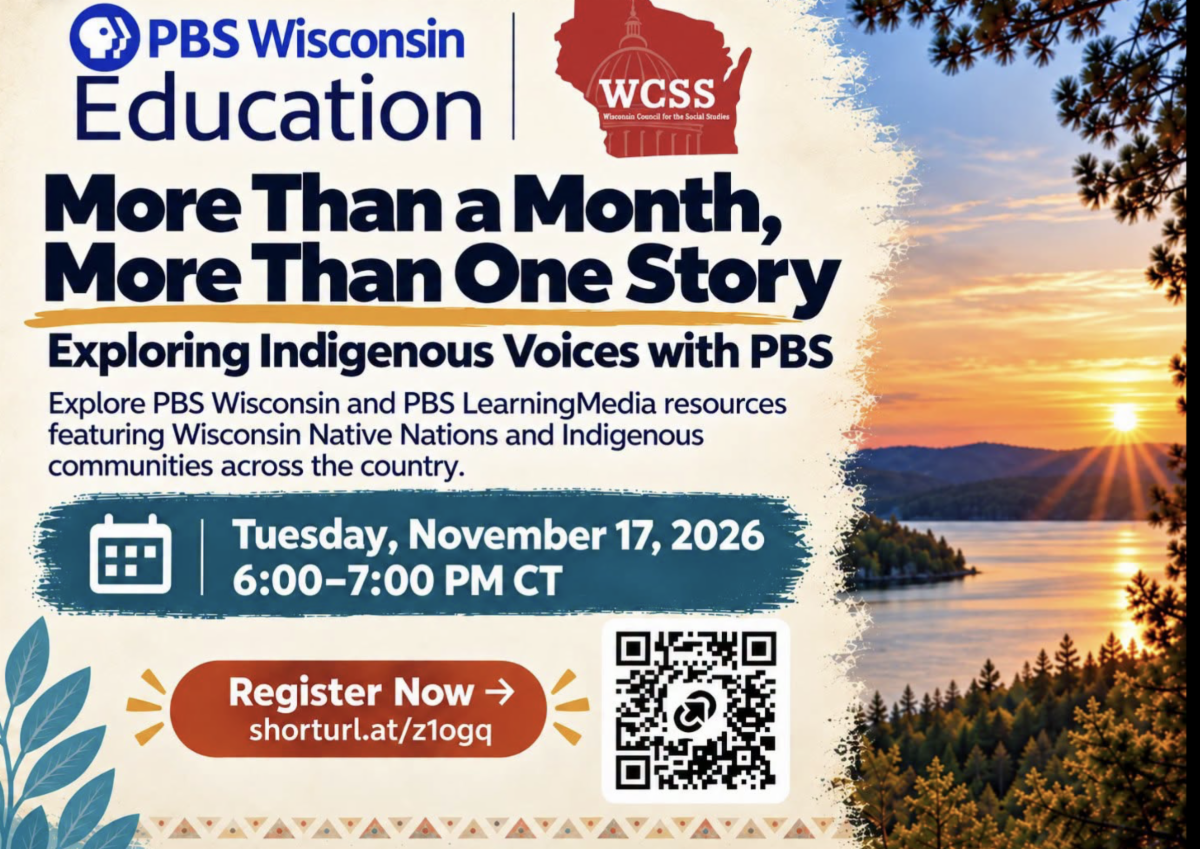
Join Us! A Special WCSS and PBS Wisconsin Workshop


Looking for new ways to bring Indigenous voices into your classroom? Join WCSS and PBS Wisconsin Education for an engaging virtual workshop exploring videos, historical sources, and classroom-ready resources from PBS Wisconsin and PBS LearningMedia.

We'll explore ways to connect national history with Wisconsin's local stories, highlight contemporary Indigenous experiences, and share resources you can use with your students throughout the school year.


Wisconsin Resources


Wisconsin First Nations: American Indian Studies in Wisconsin

Lesson plans, maps, book recommendations, videos, and resources supporting Wisconsin Act 31.


PBS Wisconsin: Tribal Histories

Hear tribal members share their nations' histories and experiences in their own words.


PBS Wisconsin: The Ways

Short films featuring contemporary Indigenous cultures, languages, and communities.


Wisconsin DPI: American Indian Studies


Act 31 guidance, instructional materials, and professional learning opportunities.


National Resources


Smithsonian: Native Knowledge 360°

Inquiry-based lessons, primary sources, and classroom materials developed with Native communities.


Native Knowledge 360°: Essential Understandings

A framework for examining common misconceptions and strengthening Indigenous education.


PBS LearningMedia

Classroom-ready videos, historical sources, and teaching materials featuring Indigenous perspectives.


Veterans Day - 11/11


Veterans Day is taught in Wisconsin to help students understand military service, the costs of war, and the ways veterans have shaped the state and nation. The observance began as Armistice Day, marking the end of fighting in World War I on November 11, 1918; Congress renamed it Veterans Day in 1954 to honor veterans of all U.S. conflicts. Teaching the day also encourages civic engagement by inviting students to reflect on service and their responsibilities as citizens. It provides an opportunity to honor living veterans in local communities and recognize their experiences.


Wisconsin’s history makes that story especially tangible. During the Civil War, thousands of Wisconsinites served in Union forces, including members of the 24th Wisconsin Infantry; the state’s soldiers also contributed to the Iron Brigade, known for its reputation as a formidable Union fighting force. Later generations include Richard Bong, born in Poplar, who became the United States’ leading American ace of World War II and received the Medal of Honor. Billy Mitchell, raised in Milwaukee, became an influential advocate for military air power. Arthur MacArthur Jr. earned the Medal of Honor in the Civil War while serving with the 24th Wisconsin Infantry, and his son Douglas MacArthur was raised in Milwaukee. Gaylord Nelson, an Army veteran, later served as Wisconsin governor and founded Earth Day. Studying veterans’ stories helps students connect national events with local history, communities, and civic memory.