Major initiative to address homelessness about to start
For anyone who lives or travels to downtown, it’s hard to miss the tragedy that has enveloped the plaza between the main library and Stranahan Park. Some 75 to 100 homeless people have pitched tents or laid out sleeping bags because they have nowhere else to go for shelter.
For too long, this encampment has stood as a symbol of our community’s inability to adequately address the issue of homelessness. These are people who need help not only in ensuring they have food and shelter, but also to find work, recover from substance abuse or overcome health issues.
Hope is on the horizon.
Over the past six months, the city has been working with Broward County, the business community, faith-based groups and non-profits to develop long-term solutions. We expect to roll out our new initiative within the next few weeks.
Our first step will be to help those in the downtown encampment find shelter and help. Then, we will address the other homeless around the city. There are some 2,000 homeless across our community.
The main component of the plan is to expand a rapid-rehousing program. Homeless individuals would be placed in supportive housing where caseworkers would link them to the social services that they need.
It’s important that we combine housing with social services otherwise many would likely return to the streets. Help will be targeted to individual circumstances beginning with immediate health care and mental health assessments followed by regular interaction with caseworkers.
The homeless shelters that we have are regularly full. We have been expanding their capacity, but this alone is insufficient and not appropriate for more than a short, emergency stay.
As a result, our homeless partnership has been working to identify apartment units or hotel rooms that can be made available. For some, the stay may be while they receive job assistance or go through recovery. But for a few, the housing will be permanent because of physical or mental health issues.
Permanent housing, though, will be a last resort as we will also look for any family members that can assist. Our partnership is committed to family reunification when it is possible.
Both the county and city are increasing how much we spend on homelessness so we can launch this program. In addition, we have received generous support from the private sector. Among the major financial contributors are AutoNation, BB&T, Bank of America and the Castle Group.
While housing is costly, it is less expensive than the current hidden costs of homelessness born by our hospitals and jails. The program should reduce emergency room visits as well as the rate of incarceration.
We plan to direct people into the housing-social services program through a couple efforts.
First, we will launch a very targeted and well-crafted outreach to the homeless to encourage them to take the assistance. Second, we are creating a special Community Court where individuals charged with offenses like panhandling or camping in public places are not jailed but instead are placed into our new network.
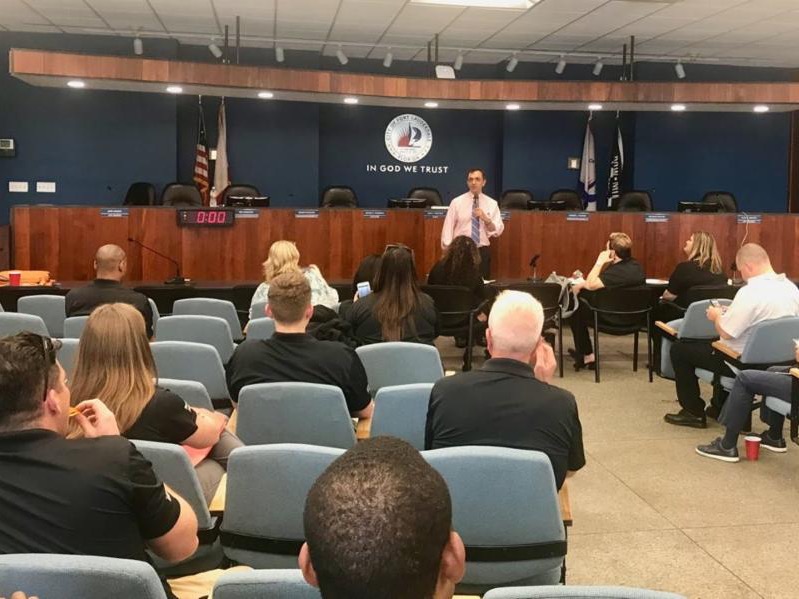
We recently conducted a successful dress rehearsal of the Community Court at City Hall in preparation for the start-up.
In addition to the rapid-rehousing and Community Court, we also have been working with the Salvation Army to provide a day respite center and with faith-based groups to create a stable program to meet daily food needs.
This is a major initiative and has taken a while to start, but we needed the time so we could try to ensure we get it right.
The last attempt that the city made in dealing with homelessness downtown failed because it was heavy-handed and did not address the complete spectrum of what is needed. There was also no buy-in from some key groups committed to supporting the homeless. We were criticized nationally and sued over what transpired. We are determined not to repeat those mistakes.
I often receive calls or emails saying bulldoze the encampment or send the police in to make mass arrests. Not only is that inhumane, it’s not legal. Federal judges have repeatedly ruled that encampments cannot be closed unless the community has provided a reasonable alternative. That’s what we are doing.
Societies are often judged by how they deal with their less fortunate. Through these efforts, we will address homelessness compassionately while also addressing the concerns about community appearance and safety that many residents and businesses have.
I would like to thank the United Way of Broward County and the Greater Fort Lauderdale Alliance for spearheading this monumental undertaking.