It’s Wednesday lunchtime. We are a few hours into the ambulance strike. So far, so good.
My biggest fear, with all NHS strikes; the interruption is going to result in a disaster for someone. For a family. If a calamity is tagged on strikers it would be a gift for HMG and the press.
However, all the evidence is, the Unions have been super-careful to make sure the strike-cover is flexible and responsive.
Taken against the background of queues and delays on normal days, who would say there is a greater risk…
… and that is the problem.
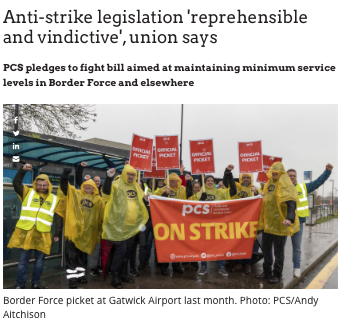
Strikes are supposed to cause damage and disruption. Fine if you’re striking at a cement factory, a car-makers or a chip shop. You can picket and dare suppliers and agency staff to cross the line.
Production grinds to a halt, orders unfulfilled, customers create hell, cash-flow dries up and in the end, the employer comes to the table. A deal is done.
Not so in the NHS. Here are a few factoids.
NHS staff are contracted by their Trusts who are broadly supportive of the strikes and who have no control over pay and conditions. That’s the DH+. Trusts will 'manage' the disruption.
The striking staff, nurses, paramedics, call handlers and others are all employed on Agenda for Change contracts. Their seniority and qualifications are recognised by their Banding (2-9) and their length of service indicated by their position in the Band.
That means a settlement for Band 6 nurses would mean a settlement for Band 6 paramedics.
The last Pay Review Body settlement was 4.75%. HMG funded 3%, leaving the Service to find a crippling £2bn to make up the difference.
The last PRB was concluded before the acceleration in inflation. It was out of sync. Out of date with what was happening in the real economy and the value of wages… hence the row.
Unpicking PRB recommendations has implications across Whitehall. HMG are unlikely to do it. The system started in 1960 for doctors and dentists. PRBs now cover about 26% of the nearly 6million, employed in the public sector.
The NHS has no wage negotiating procedure.
PRBs do not preclude collective bargaining if Ministers and staff side agree and Ministers won’t agree…
… hence we're on a road to nowhere.
Striking NHS staff dare not withdraw their labour completely, neither for very long. Everyone realises that would be a killer.
The unions can inflict inconvenience, disruption, difficulties, bother and delays to already record waiting lists but they cannot inflict damage.
They dare not do what normal strikers take for granted.
The long term impact caused by delays we don’t yet know. But, for now…
We’re on the road to nowhere.
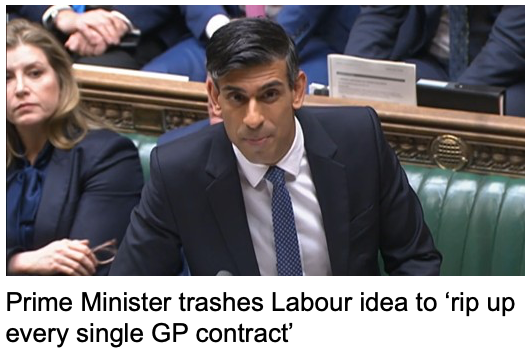
Ministers are well aware of this and all the time the strikes are ‘managed’, have no incentive to move.
There’s talk of a one-off hardship payment to reflect the lacuna in this year’s PRB outcome.
Ex-grata, maybe? When taxed and spent in the economy (VAT), may not cost HMG much?
The RCN have dismissed the idea and all staff-sides are saying they won’t participate in the next PRB…
… that’s a mistake, they should talk it up and beat HMG at their own game. Try to bring it forward.
If not, we're on the road to nowhere.
Strike leaders who are managing strike-lite, have little leverage. Strikers lose a day’s pay and everyday brings HMG closer to the April round of the next PRB machinations.
I spoke to my post lady this morning...
... she’s been on strike. Says she’s lost several day’s pay and on the return to work after Christmas, there were no Amazon parcels to deliver. They’ve gone elsewhere. She won’t vote to strike again. She knows, she's...
... on the road to nowhere.
A friend on the train from London to ‘up-north’ this morning tells me, it was all-but empty. Cars zoom up the motorway and Zoom keeps cars in the garage...
... on the road to nowhere.
Strikes in the NHS aren’t just about money, they’re about understaffing, and lack of investment, the problem, like the solution... years in the making.
There’s no way to bring this industrial unrest to the boil. At least, no safe way. So...
>> I'm hearing - some CQC staff are being redeployed back to the front line to assist during the present hiatus. They are cutting inspection visits for the rest of the winter.
>> I'm hearing - ex-police chief Stephen Otter will join South Western Ambulance Service Foundation Trust as chair, this month.
>> I'm hearing - GPs have warned that patients are being inappropriately discharged too early as the NHS seeks to free up hospital beds and relieve pressure on overstretched emergency services. Here we go again...
>> I'm hearing - the CEO of Lancashire & South Cumbria ICB is currently away on leave for 5 weeks in New Zealand. Surely not? They wouldn't go in the middle of the worst winter in NHS history.