Issue 682 - August 28, 2026

IN THIS ISSUE


  • OPINION: Task Force Fell Far Short of What Needed to Be Done to Secure Delaware’s Future
  • NEWS: Rep. Mike Smith Urges Governor to Opt State into Federal Scholarship Tax Credit Program
  • OPINION: ZOMBIES IN THE HALL -- "Skip the Stuff" Seems Likely to be Reanimated in New Session
  • NEWS: Vehicle Window Tinting Reform Balances Safety, Convenience, and Medical Needs

OPINION

Task Force Fell Far Short of What Needed to be Done to Secure Delaware’s Future


By State Rep. Jeff Hilovsky


The recent report issued by the Nuclear Energy Feasibility Task Force was profoundly disappointing and does little to ensure our state will be prepared to take advantage of this zero-carbon, dependable power source when it becomes available.


In partnership with State Sen. Bryant Richardson (R-Seaford), I sponsored the bipartisan concurrent resolution creating the task force. It was approved by the General Assembly last July.


The 25-member task force, of which I was a part, was charged with exploring the challenges and feasibility of deploying small modular reactors (SMRs) in Delaware, weighing this technology’s promise against its costs and potential environmental impacts. We also reviewed permitting, regulations, the regional power grid, appropriate operational venues, methods of financing, federal permitting, and access to available federal grants, among other topics.


Interest in SMRs has increased significantly in recent years in the United States, Europe, Russia, and China. It is easy to understand the appeal. Traditional nuclear power plants are bespoke, multi-billion-dollar projects, built on-site, often taking more than a decade to construct.


SMRs are much smaller, factory-built reactors that can be transported to building sites by truck or train. They require a fraction of the capital, can potentially be built in less than a third of the time, and are scalable. More reactor modules can be added to the site as demand increases.


While there was good reason to be enthusiastic, there was also rightful reticence about being the first to develop and deploy SMRs in the US. However, as the process takes years, and many states are already way beyond the starting stages, that reluctance seems more like an excuse than a reason not to move forward.


As a motivated member of the group, I had a front-row seat to its workings and deliberations. The task force met about a dozen times, with each session lasting approximately three hours, reviewing detailed presentations from nationwide and industry experts. Members posed thoughtful questions to energy, utility, environmental, and regulatory experts. Generally, the information we received was objective and thorough, although there were some exceptions.


The final report called for establishing a policy framework for nuclear energy, conducting additional technical studies, and holding meetings with residents and local officials—an approach best described as “kicking the can down the road.”


What the task force delivered was more of an ineffectual wish list than a blueprint for advancement. Critical to moving forward, the following list of reasonably expected deliverables was not delivered:


  • No state agency was identified as the primary office of responsibility.
  • No definitive strategy was developed to move from concept to reality.
  • No timeline was established for deploying small modular nuclear reactors.
  • No preferred list of suitable sites was determined.
  • No action plan with goals, milestones, or target dates was completed.
  • No plan was created to start the application/paperwork process for federal funding of any nuclear project.
  • No financing structure(s) were identified.
  • No electrical grid updates were planned or proposed to accommodate baseload power expansion.


What makes this planned inaction even more shameful is that our state is facing two concurrent energy crises: near-term and long-term. They are synergistic and foretell a dismal economic story. Doing nothing is not an option, and yet that is exactly what this report proposes through its purposeful inaction.


According to the U.S. Energy Information Administration (EIA), Delaware does not generate enough power domestically to meet its daily electricity needs. In fact, roughly 60% of the electricity we rely on is imported from nearby states via the regional power grid. Every mile electricity is transported degrades the energy being transported, making it less efficient. This not only makes all Delawareans less secure in the event of a crisis, but it also means that the cost of electricity delivered into constrained areas of the grid will be higher.


Many of the members of the task force publicly said they supported generating more power locally through a diverse mix of resources. In my estimation, this report reveals those statements to be nothing more than public relations lip service.


We are missing an opportunity to diversify power generation by not aggressively pursuing proven, reliable, dispatchable generation through combined-cycle natural gas turbines and SMR development. Instead, our state’s leaders seem content to bet our future on wind and solar power and, perhaps, on hydrogen gas sometime in the future.


Germany's experience offers a cautionary example of what can happen when a nation pursues an electricity supply strategy largely dependent on renewable energy while maintaining substantial system, network, and policy costs. Between 55% and 60% of the nation’s power comes from renewable resources. In 2025, the average cost of electricity topped 40 cents per kilowatt-hour (U.S.). By comparison, Delaware residential electricity customers were paying about 18 cents per kWh at the time.


The failure to capitalize on the task force's work was a missed opportunity that all Delawareans will likely pay for in the future. This is a crisis. Again, doing nothing is not an option. Delawareans deserve more.

NEWS

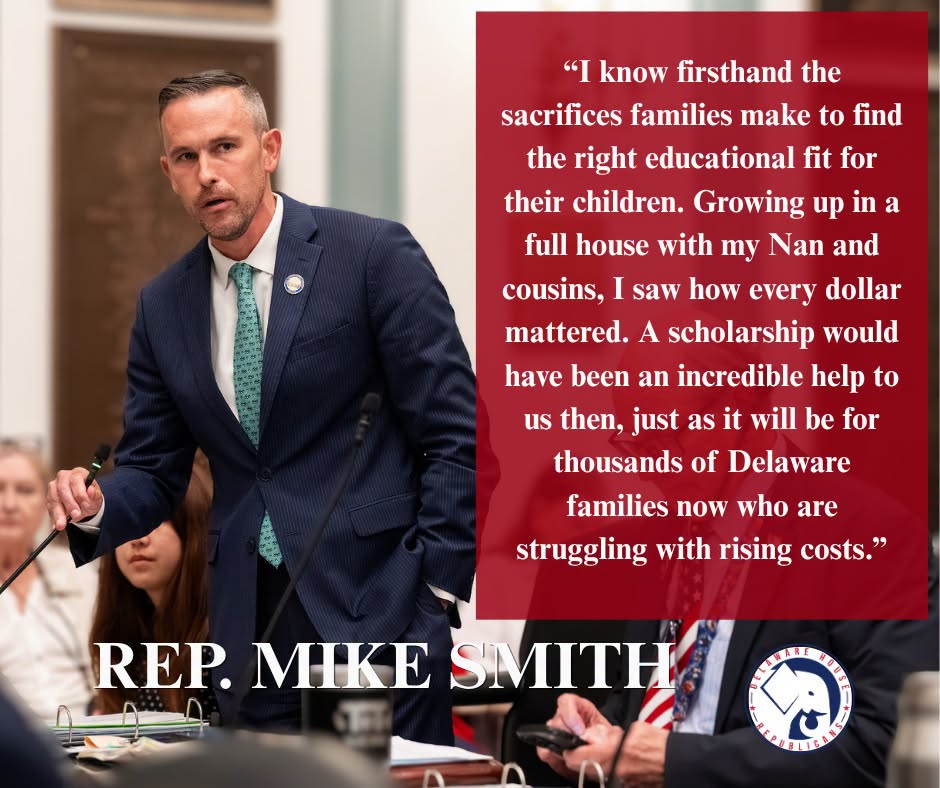
Rep. Mike Smith Urges Governor to Opt State into Federal Scholarship Tax Credit Program


State Rep. Mike Smith (R-Pike Creek Valley) recently called on Gov. Matt Meyer to secure Delaware’s participation in the federal Education Freedom Tax Credit program. In a formal letter sent earlier this month, Rep. Smith emphasized that Delaware families deserve the same educational opportunities that residents of 30 other states currently have access to.


The program allows individual taxpayers to receive a dollar-for-dollar federal tax credit of up to $1,700 for contributions made to Scholarship-Granting Organizations (SGOs). These organizations then provide scholarships to eligible students to cover tuition, tutoring, and other qualified K-12 expenses.


For Rep. Smith, the mission to expand educational choice is deeply personal. Raised by his Nan alongside his cousins, he attended a private school during his youth. Reflecting on his upbringing, Rep. Smith noted that having access to a scholarship program like this would have provided much-needed relief and support for his family.


“I know firsthand the sacrifices families make to find the right educational fit for their children,” said Rep. Smith. “Growing up in a full house with my Nan and cousins, I saw how every dollar mattered. A scholarship would have been an incredible help to us then, just as it will be for thousands of Delaware families now who are struggling with rising costs.”


In his letter to the governor, Rep. Smith urged immediate action to bring these federal resources home. “I believe Delaware should take advantage of this opportunity and invest in the future of our communities by expanding access to educational opportunities for Delaware students,” Smith wrote, noting that participation would empower local taxpayers to directly support scholarships in their communities. He respectfully asked the administration to take the necessary steps to elect participation and identify qualifying SGOs for the upcoming 2027 tax year.


Notably, the program provides families with remarkable educational flexibility, as these scholarships can cover a wide range of qualified expenses far beyond private school tuition. Eligible K-12 educational costs include academic tutoring, required textbooks, curriculum materials, and critical learning technology such as computers.


Additionally, scholarships can fund specialized educational therapies for students with disabilities, standardized testing fees, and even student transportation services to and from school, ensuring that all aspects of a child’s educational journey are supported.


Whether a Delawarean chooses to work with a local, state-based, or national state-approved SGO, the federal law requires that those specific contributions be used to fund scholarships for eligible students solely within the state. By opting in, Delaware ensures that the charitable generosity of its residents can benefit Delaware’s own children.


As of late July, leaders in 30 states have chosen to participate in the 2027 tax year.


“Because this is a national program, Delawareans’ federal tax dollars are already theoretically helping to fund these credits across the country regardless of whether our state opts in,” Rep. Smith said. “This is a no-brainer for Delaware. We can empower parents and help students succeed without costing our state taxpayers a single penny. It’s time to seize this opportunity.” 

OPINION

-- ZOMBIES IN THE HALL --

A CONTINUING OPINION FEATURE LOOKING AT BILLS THAT DIED

IN THE 153RD GENERAL ASSEMBLY...BUT MAY RISE AGAIN.

"Skip the Stuff" Seems Likely

to be Reanimated in New Session


Earlier this month, New Jersey implemented its new Skip the Stuff law, requiring restaurants and other food businesses to provide plastic utensils, condiment packets, plastic straws, and other single-use items only when customers specifically request them.


Many First State lawmakers have been working toward a similar goal.


Sponsored by State Rep. Sophie Phillips (D-Newark, Christiana), House Substitute 2 for House Bill 111 (as amended) was Delaware's Skip the Stuff proposal. As its designation indicates, the measure went through three incarnations, with two additional amendments, before receiving a House vote.


The bill hit most of the same notes as the New Jersey legislation. It would have prohibited food sellers from automatically including condiment packets, eating utensils, napkins, and beverage stirrers in fulfilled orders. Online food sales would have required a section allowing customers to request such materials. In a bid to get the bill approved, a concession was made via an amendment that would have allowed food sellers to ask customers if they wanted any of these items.


Schools, healthcare facilities, and (somewhat ironically) prisons were exempted from the proposed mandate.


Businesses caught violating the mandate would have received warnings on the first two occasions. A third transgression would have yielded a $100 fine, a fourth would have earned a $400 penalty, and subsequent violations would have incurred a $500 fine. Total fines imposed on any single business could not exceed $1,500 per year.


Advocates framed the legislation as a means of reducing litter and plastic waste that enter local water supplies and the ocean.


While acknowledging that pollution is an ongoing challenge, opponents of the measure say it micromanages small businesses, imposes another needless inconvenience on Delawareans, and degrades customer service and a food vendor's reputation when inevitable miscommunications occur.


As quoted in a 2025 Delaware Online article, Delaware Restaurant Association President and CEO Carrie Leishman said: “We’re about customer service – we want to do what’s right for them. And if they are unaware of legislation, if they don’t know what’s happening, then it’s really the restaurant that gets the bad Yelp review."


Delaware and New Jersey are not alone in their "Skip the Stuff" interest. All the cool progressive jurisdictions are doing it. California and Washington State enacted statutes several years ago. Municipalities like New York City, Denver, and Chicago have also implemented local ordinances.


Now effectively dead with the conclusion of the 153rd General Assembly's legislative session, will the Skip the Stuff proposal be resurrected in the upcoming 154th G.A.? There is a good possibility it will be.


HS 2 for HB 111 cleared the House of Representatives by a vote of 27 to 12 on June 11, along partisan lines. It was then assigned to the Senate Environment, Energy & Transportation Committee, where it spent the final three weeks without a hearing.


The Senate will have new leadership and new membership next year. It seems reasonable that the sponsors of the bill, encouraged by their progress this session, will take another run at increasing your chances of not getting a napkin and ketchup packet in a future fast food order.

NEWS

Vehicle Window Tinting Reform Balances Safety, Convenience, and Medical Needs


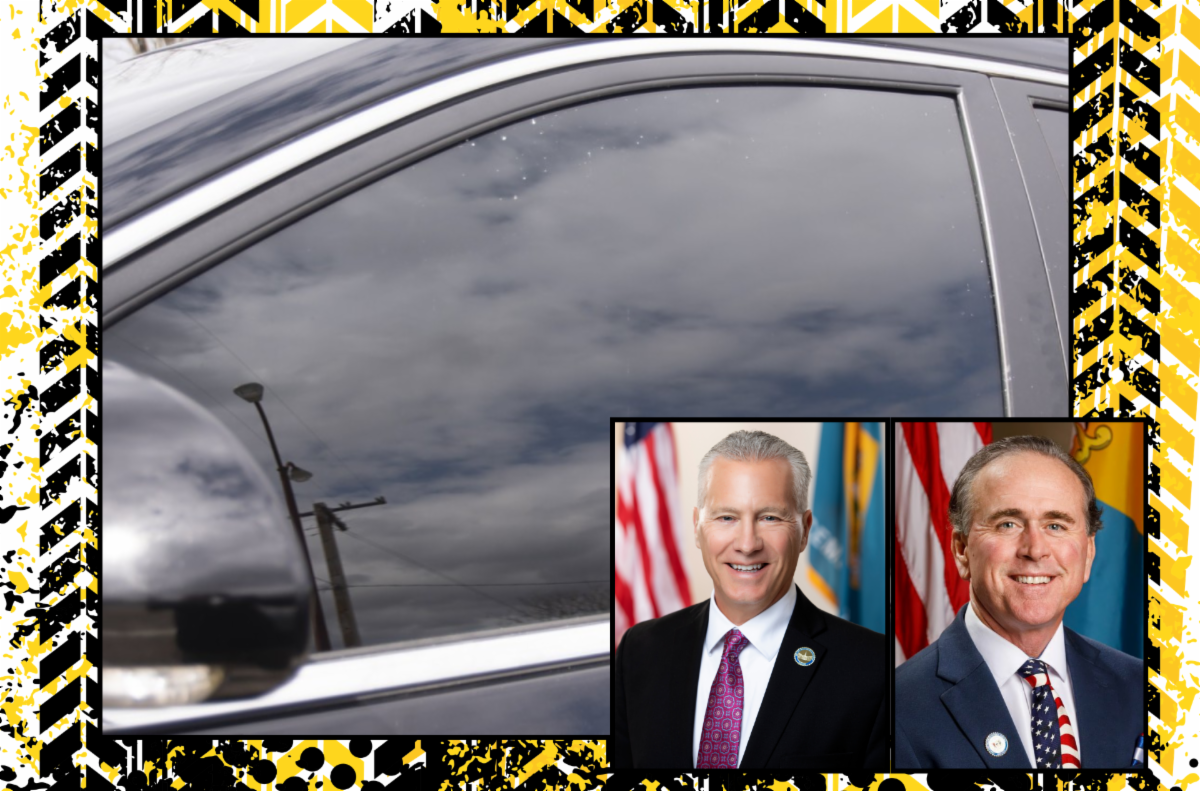
Legislation sponsored by State Sen. Eric Buckson (R–South Dover) and State Rep. Lyndon Yearick (R–Camden, Woodside) that gives Delaware drivers greater flexibility in choosing window tint for their vehicles was recently signed into law.


The level of tinting that can be legally applied to vehicle windows is not just a consumer preference but an issue with serious consequences for police, motorists, and Delawareans struggling with health issues.


Senate Substitute 1 for Senate Bill 255 changes Delaware's vehicle window tinting requirements, allowing darker tint on the front side windows of motor vehicles without requiring the vehicle owner to obtain a medical waiver.


Under the new law, front side windows may have tint that allows at least 50% of visible light to pass through. Previously, Delaware had one of the most restrictive window-tinting standards in the nation. Windows generally had to allow at least 70% of visible light through unless the owner had a medical waiver signed by a licensed Delaware physician, osteopath, or optometrist.


In writing their bill, Sen. Buckson and Rep. Yearick worked with police and healthcare professionals to reach a consensus on the new threshold. The Delaware Association of Chiefs of Police, the Delaware State Troopers Association, and the Delaware Optometric Association all support the new law.


"This is a common-sense change that gives Delaware drivers more flexibility while maintaining a clear safety standard for the windows alongside the driver," said Sen. Buckson. "For many people, darker window tint provides added comfort and privacy, and they should not have to go through the process of obtaining a medical waiver simply to use a tint that is legal in many other states."


Rep. Yearick said the change brings Delaware's law more in line with drivers' practical needs. "Senate Bill 255 makes a straightforward change to a law that has been unnecessarily restrictive for Delaware drivers," he said. "Drivers can now choose darker tint for their front windows without having to demonstrate a medical need, while still keeping a reasonable standard in place for visibility and safety."


The measure received broad bipartisan support in the General Assembly.