OACES Newsletter for May 28, 2025 | |
- Virtual Meeting - June 26
- Virtual Meeting - Sept. 25
- OACES Fall Conference, Eagle Crest, Redmond - Oct. 13-14
| | | May Legislative Update - Second Chamber Work Session Deadline Passes | | |
The “second chamber deadline” for the 2025 Legislative Session passed on May 23, and in order for a bill to continue moving through the legislative process toward becoming a law, it must have been voted out of the second chamber policy committee by this deadline. The two top priority bills for the Oregon Association of Oregon County Engineers (OACES) –- HB 3175, related to public land corner fees; and HB 2154, county safety corridors –- passed through both chambers and were signed by the governor earlier this month.
Several bills opposed by OACES and the Association of Oregon Counties (AOC) have either been amended to mitigate our concerns or will not move forward this session.
Policy bills that include a fiscal component and require state general fund allocations, move out of policy committees to the Joint Committee on Ways and Means for further consideration as the Legislature prepares its balanced biennial budget. If the budget writers intend to fund those policy bills, they will be referred to the appropriate Joint Ways and Means Subcommittees in the coming weeks. For more information on the current status of this session's bills, please refer to the 2025 OACES Bill Tracker.
Transportation package update
The co-chairs of the Joint Committee on Transportation (JCT) released a transportation package framework in early April, which included increases to existing funding mechanisms and several new mechanisms equating to a 70% increase to counties over current projected revenues. We expect to see bill language introduced during the first week of June, with public hearings likely held during the second week.
Hearings on the 2025 transportation package now move to the newly created Joint Committee on Transportation Reinvestment. Membership of the committee is the same as the regular Joint Committee on Transportation, but it is not subject to deadlines, meaning a final package can be introduced, debated, and moved out of the committee up to the final days of session.
In recent days, several legislators have suggested raising revenue – some of it dedicated to the State Highway Fund – by replacing Oregon’s Climate Protection Program with a market based “cap and invest” emissions reduction program. It is unclear how this proposal might play into transportation package negotiations, or whether it will gain the support necessary to pass this session in the few short weeks before sine die.
As this conversation and negotiation around a comprehensive transportation package evolves, AOC and OACES will continue to advocate for the principles and priorities set by AOC’s Legislative Committee.
May Revenue Forecast
The latest revenue forecast was presented to the Legislature by state economists on May 14. As some expected, projected revenues available for the 2025-2027 biennium were revised downward from last quarter –- due to a reduction in both revenue and resources –- resulting in $755 million less than previously expected for the Legislature to allocate.
However, the state’s kicker rebate has also been reduced to $1.6 billion providing a net General Fund balance of $35.7 billion. Paired with an additional $5.3 billion from lottery revenues, recreational marijuana excise tax, and Corporate Activity Tax, Oregon stands with just over $41 billion in total available funds, plus a 10.6% emergency reserve. Given Governor Kotek’s proposed 2025-2027 budget recommending $39.3 billion in funding, Oregon is in a reasonable position compared to our neighboring states to continue providing existing public services.
| | Public Land Corner Preservation Fund Modernization Bill Signed into Law | | |
House Bill 3175 passed the House and Senate with strong bipartisan support and was signed into law by the governor this month. It goes into effect on Jan. 1, 2026. The bill lifts the 40-year-old statutory cap on the document recording fees that go to county surveyors’ Public Land Corner Preservation Funds. Removing the $10 fee cap, which was set in the 1980s, allows boards of county commissioners and county courts to set a document recording fee commensurate to local needs.
County Public Land Corner Programs are struggling to meet their statutory obligations to maintain public land corners due to the decline of the $10 fee’s value - down 70% since it was set in the 1980s. Modernizing this funding mechanism has been a legislative priority for the Association of Oregon Counties (AOC) and the Oregon Association of County Engineers and Surveyors (OACES) for nearly 20 years, though past attempts to pass legislation have failed.
Oregon county surveyors have been maintaining and perpetuating the Public Land Survey System (PLSS) – critical public infrastructure established by the federal government in 1785 – since statehood. The PLSS consists of controlling property corners located every half mile, forming the foundation for all public and private real property and resource land boundaries in Oregon. Maintaining these corners is an ongoing process requiring physical inspection and establishment or reestablishment of historical corners still set in trees or with rocks. Over time, corners are destroyed and damaged by natural events, development, and careless human activity. When corners are destroyed or improperly placed, every landowner’s property lines become less certain, resulting in costly boundary disputes and litigation, disorderly development, and emergency response challenges.
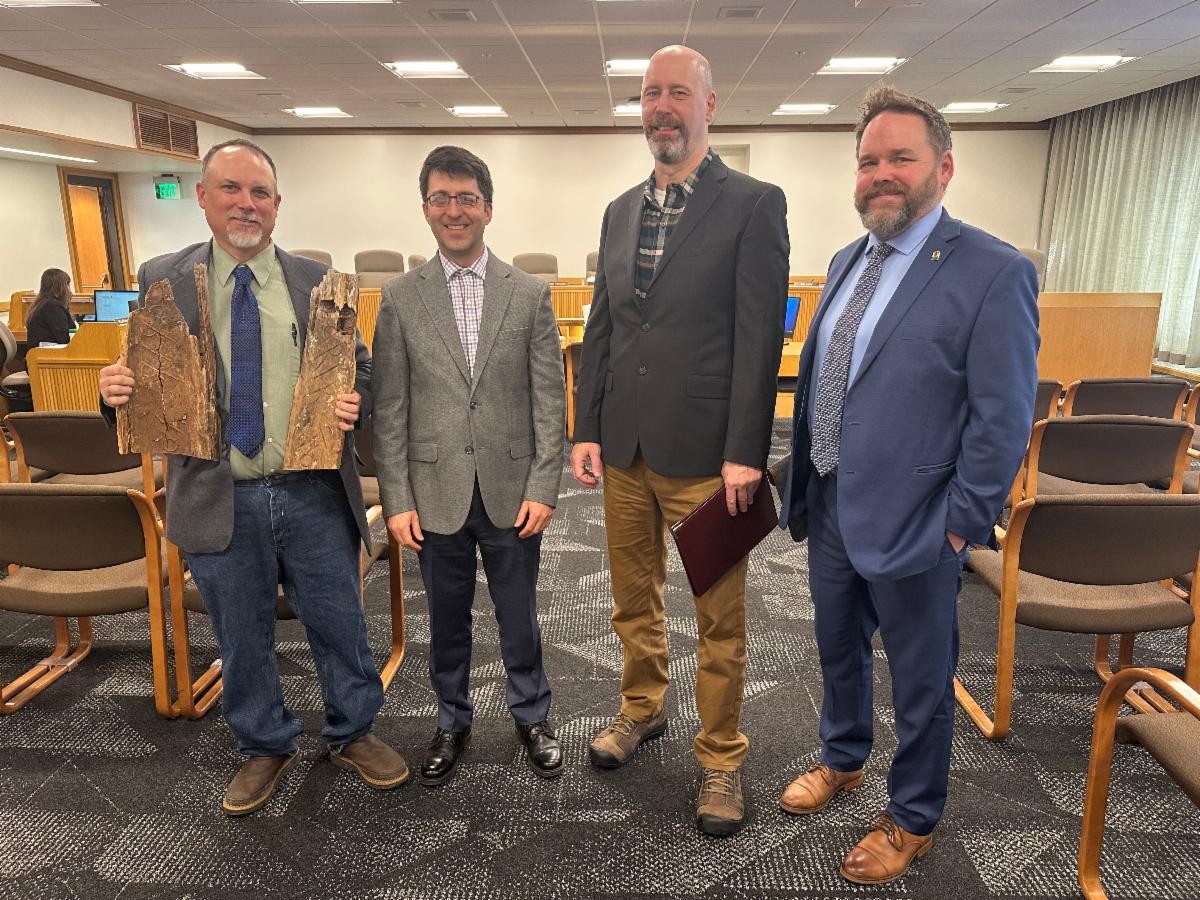
HB 3175 was introduced by Representative Marsh (D-Ashland) and Representative Gomberg (D-Otis) on behalf of the Association of Oregon Counties (AOC) and the Oregon Association of County Engineers and Surveyors (OACES). OACES members Polk County Survey Crew Chief Josh Herzberg, Lincoln County Surveyor Eli Adam, Clatsop County Surveyor Vance Swenson, Lane County Deputy County Surveyor Trevor Ross, and Wasco County Surveyor Bradley Cross, testified in the House and Senate Committees.
| | OACES Spring Conference Draws Over 80 Participants to Sunriver | | |
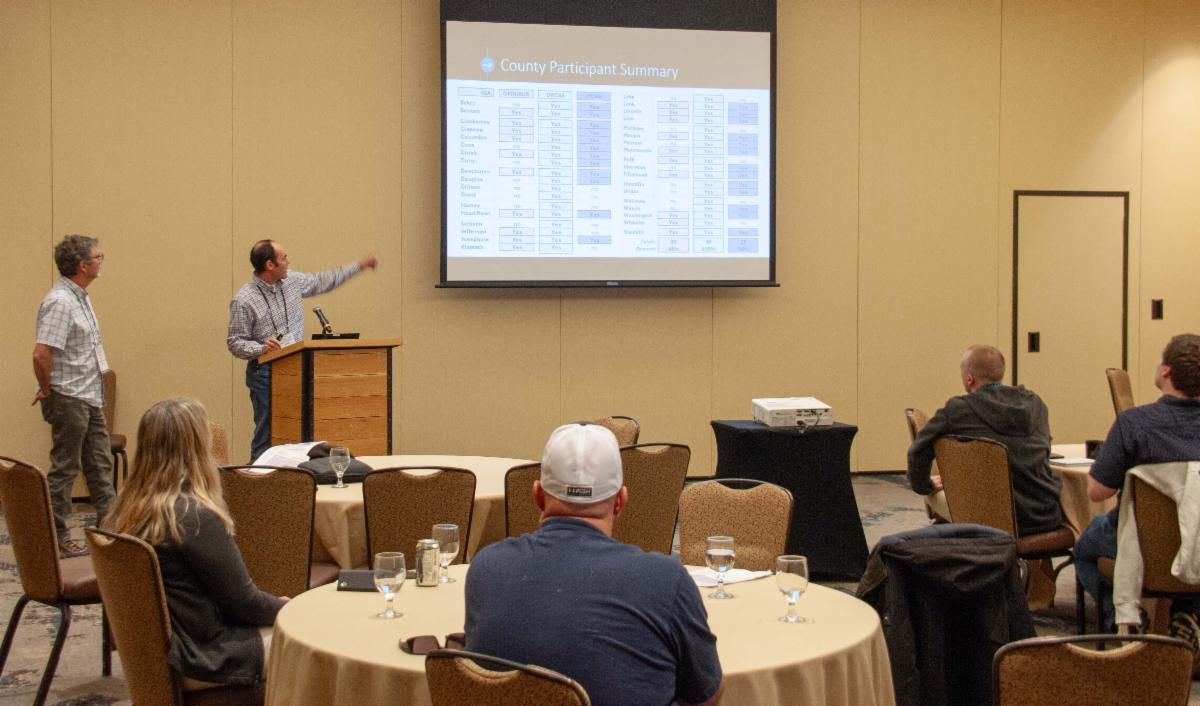
The Oregon Association of County Engineers and Surveyors (OACES) would like to thank everyone who attended this year's OACES Spring Conference at the Sunriver Resort, May 5 through 7. Over the course of two and a half days, more than 80 Oregon road officials and surveyors listened to presentations from industry experts and met to share ideas and information with their colleagues from around the state.
Thank you to all the speakers who joined this year's conference and provided presentations covering a variety of topics, including: bridge project delivery, fleet electrification plans, emergency response and disaster recovery, mutual aid agreements, middle housing, and legislative updates. In addition, OACES also held its spring Business Meeting that included semi-annual financials, committee reports, and other business.
This year's presentations are available to view and download on the OACES Conferences & Meetings page, under the Past Conference Presentations section.
Please save the date for the OACES Fall Conference, which will be held at the Eagle Crest Resort in Redmond, Oct. 13 and 14. If you would like to learn more about other upcoming meetings and events, please visit our OACES Conference & Meeting page.
| | SRS and 1908 Act 25% Payment Forecast Update | | |
The Secure Rural Schools (SRS) Act has not been reauthorized by Congress for the federal fiscal year 2024 and beyond (County Fiscal Year 2025 payment).
Counties will automatically receive 1908 Act 25% payments in lieu of SRS payments for County Fiscal Year 2025 until SRS is reauthorized by Congress.
The Association of Oregon Counties (AOC), and Oregon Association of County Engineers and Surveyors (OACES), will continue to work with our partners at the National Association of Counties (NACo), National Association of County Engineers (NACE), and Oregon’s congressional delegation to secure this vital funding source.
On May 22, the United States House of Representatives included SRS reauthorization for county fiscal years 2026 and 2027 in their reconciliation bill. There is much uncertainty surrounding the reconciliation package as it heads to the United States Senate, and reauthorization currently does not include backfill for county fiscal year 2025. ...[READ MORE]
| | USDOT Funding Opportunities | | 2025 TGM Grant Application Period Open Through July 31 | |
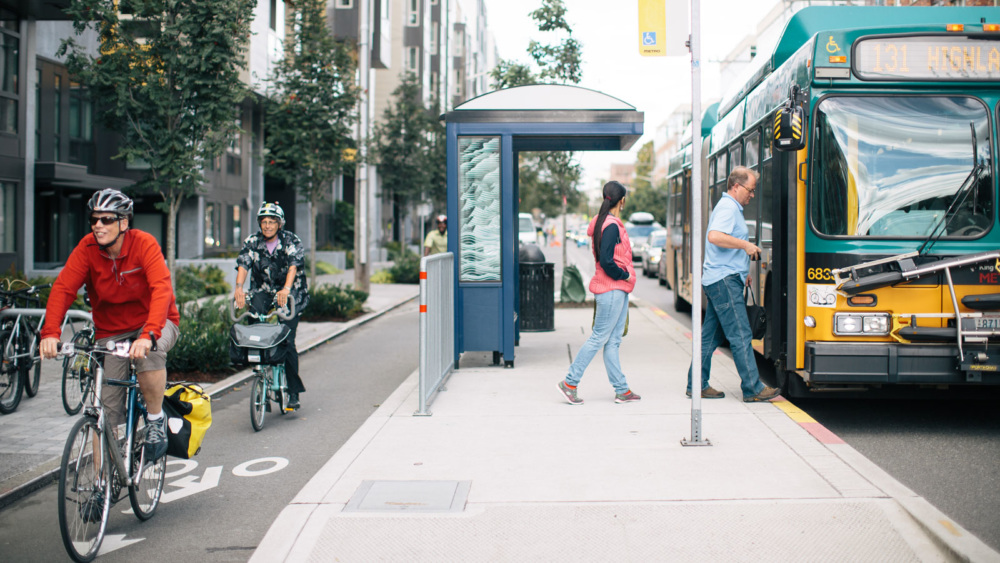
The Transportation and Growth Management (TGM) formal grant application period for 2025 opened May 5 and runs through July 31.
TGM is a joint effort of two state agencies: the Oregon Department of Transportation (ODOT) and the Oregon Department of Land Conservation and Development (DLDC). TGM grants are awarded on an annual basis to provide planning resources to help Oregon jurisdictions address transportation, land use, and growth management issues in their communities. You can learn more about the application process by visiting the TGM Planning Grants webpage.
For questions regarding this year's TGM Planning Grants, please contact ODOT TGM Program Coordinator Virginia Elandt at 503-871-6240
| | SPIRE IV Applications Now Open | |
The State Preparedness and Incident Response Equipment (SPIRE) Grant Program, which provides equipment to local governments and other recipients for emergency preparedness for the state, is now open for applications.
All application packages must be submitted online no later than 5 p.m. on Monday, June 2, 2025. Applications include letters of support from partnering agencies, so please review all the material well before the application deadline to ensure you have time to collaborate.
Please visit the SPIRE website to find:
- SPIRE Application Form
- SPIRE Guidance and Application Instructions with Equipment List
- Anticipated Equipment Specifications
- SPIRE Evaluation Criteria
- Application for review team members
Funds are made available by bond sale through the state. Applications will be reviewed in Region, Tribal and USAR categories to ensure equitable equipment distribution. This process intends to ensure that equipment granted will fill the capability gaps identified through the Threat and Hazard Identification and Risk Assessment (THIRA)/State Preparedness Report (SPR), all disciplines and regions have representation in the decision-making process, and each Region/Tribal/USAR Team is ensured the opportunity to receive equipment where it will have the greatest impact for the area.
For questions or additional information, please email oem.spire@oem.oregon.gov.
| | Certification User Group Summer Work Session to be held June 18; Registration now Open | | |
The 2025 Certification User Group (CUG) Summer Work Session is an
opportunity for the CUG community to collaborate in person and work together to foster excellence across agencies. Don’t miss this opportunity to connect, contribute, and stay informed on policy, program, and funding updates. Join our breakout sessions where you can share your experience and gain knowledge on several key topics, including consultant selection, rail and utility project certification requirements, and when and how to prepare project special provisions for ODOT Certification review.
Work Session Details
For questions or more information, please contact ODOT Certification.
| |
County Engineering, Road Department, and Surveyor Jobs
| | |
The AOC job posting page provides counties and other government organizations with a platform to advertise job opportunities while also providing a resource for job seekers looking for a new challenge.
Current engineering, road department, and surveyor postings include:
Find out more specifics for each position and how to apply on the AOC jobs postings page. If you have an open job listing to post for your county, please contact jobs@oregoncounties.org.
| | |
County Road Program Director
Legislative Director
Transportation Policy Analyst
| |  |
|
Malea Stockton
Member Services Coordinator
Robert Yde
IT Trainer and Communications Coordinator
IRIS Support
| | | | |