As Ohio's anti-sexual violence coalition, OAESV provides training and technical assistance to our state's rape crisis centers, rape crisis services in counties without local programs, and legislative advocacy. |
|
Child Sexual Abuse Victims are Getting Left Behind during COVID-19 |
|
Rape crisis programs across the state, along with national partner RAINN, are receiving increased sexual abuse hotline calls from child sexual abuse victims. As the pandemic and rape crisis funding cuts rage on, Ohio children likely will not have access to critical recovery resources. |
|
INTERPOL report highlights impact of COVID-19 on child...
LYON, France - Under-reporting of child sexual abuse and increased sharing of child exploitation material through peer-to-peer networks are among the effects of the COVID-19 pandemic according to an INTERPOL assessment. The report highlights the...
Read more
www.interpol.int
|
|
|
|
|
Child Sexual Abuse Reports Are On The Rise Amid Lockdown ...
There has been a rise in the number of minors contacting the National Sexual Assault Hotline to report abuse. That's according to RAINN, the Rape, Abuse and Incest National Network, which runs the hotline.
Read more
www.npr.org
|
|
|
|
|
|
How does COVID-19 impact intrafamilial child sexual...
The two main themes that emerged during analysis related to (1) professionals' perceptions of the dynamics of intrafamilial child sexual abuse (IFCSA) during COVID-19, including mostly negative but some positive changes between family members...
Read more
www.ncbi.nlm.nih.gov
|
|
|
|
|
'People don't want to talk about it,' but reports of...
TRENTON, N.J. - As New Jersey started locking down amid the coronavirus pandemic, a convicted rapist and registered sex offender from Oklahoma named Aaron Craiger stepped off a Greyhound bus in Atlantic City. He had a phone with child sexual...
Read more
www.usatoday.com
|
|
|
|
|
|
State of the Rape Crisis Fund |
|
Support for the Rape Crisis Fund (RCF)
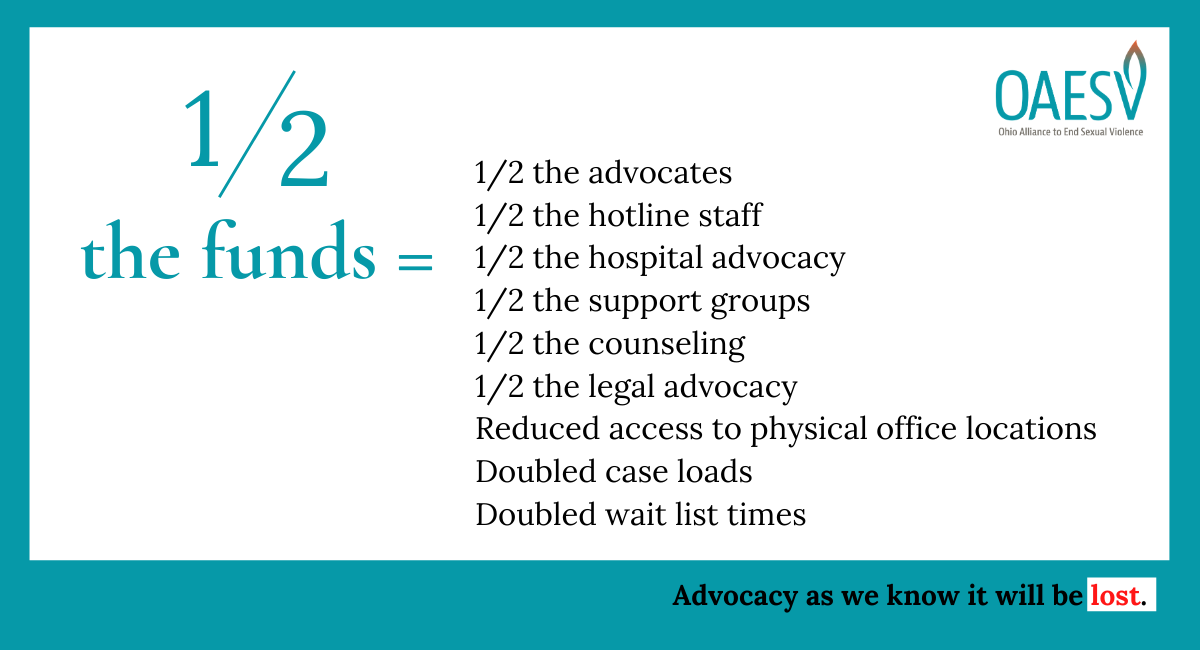
In the 133rd General Assembly, lawmakers allocated $4.8 million per fiscal year for Ohio’s Rape Crisis Center Fund. This allotment was calculated expand services to cover all 88 counties. Instead, served to stabilize existing programs and services following VOCA cuts; In FY'20, VOCA recipient rape crisis programs experienced an estimated 22%-48% reduction in funding.
Although funding has decreased for Ohio's rape crisis programs, the demand for these services has increased during the pandemic - including child sexual abuse. Programs have had to shift service delivery models and purchase equipment for remote advocacy, emergency survivor needs, and program materials for survivors who lack access to technology.
It is crucial for lawmakers to make increased investments in the Rape Crisis Center Fund. Bolstering the RCF will rape crisis centers provide essential programs and services to meet the evolving needs of all Ohio sexual violence survivors.
An increase of $10 million per fiscal year will allow programs to proceed with level services and avoid cuts to pre-2015 levels.
|
|
VOCA Funding Cuts
Federal Victims of Crime Act (VOCA) cuts in 2020 had a devastating impact on Ohio's crime victim service structure. Critical services for survivors of sexual violence are under threat again this year, with a 78% reduction in funding estimated to occur from FY'20 and FY'21.
Click here to view the Letter to Congress on the VOCA Deposits Crisis from December 2020.
|
|
On the Ground Impact
If the state rape crisis fund is not increased in the 134th General Assembly, many programs will close, leaving survivors without life saving services.
2020 data collected from Rape Crisis Centers around the state indicated that number of hotline calls and survivors who received services increased, but the amount of federal funding decreased, with a greater reliance seen on state funding.
Several agencies noted that the RCF line item funding they received was not used for new programs, services, or supplies; instead, it was used to offset VOCA cuts to sustain personnel and operating costs. We must also recognize that COVID-19 increased operating costs for many agencies with additional equipment needed to transition staff to remote work.
|
|
February is Black History Month
"OAESV has re-energized its strategic plan, opened up and reviewed our employee handbook, analyzed our trainings and programs, and focused on our mission and values with an equity lens. We have actively urged our member rape crisis programs to do the same, and are providing vigorous support to that end. We know we are not the only sector that needs to actively change to dismantle racism. Our state government must heed the strategies outlined in this proposed resolution. To dismantle anti-Black racism and oppression in all its forms, change must take place from government offices, to state agencies, to non-profit programs, education institutions and the for-profit sector."
Rosa Beltré, Executive Director, OAESV
Proponent Testimony to the Ohio Senate Health, Human Services & Medicaid Committee
Click here for more information
|
|
Needs & Action Steps for Addressing Increased Child Sexual Abuse During COVID-19
As schools across Ohio resume in-person instruction, they must be prepared to provide support to those that disclose abuse and those encountering Title IX changes alike. Please review our special report to learn more about COVID-19 challenges impacting survivors. OAESV urges lawmakers to pass Erin's Law, HB 105 (no pending Senate legislation) in preparation for supporting young survivors. |
|
Continued Support for Priority Issues |
|
Removal of Limits on Prosecuting & Proving Certain Sex Offenses
One of our priority areas is the elimination of spousal exemptions from Rape, Sexual Battery, Unlawful Sexual Conduct with a Minor, Gross Sexual Imposition, and Importuning in the ORC, as well as the removal of the statute of limitations for 2907.02 Rape. Along with executive branch endeavors to eliminate the rape kit backlog, this effort is critical to achieving justice for all survivors.
Click here for OAESV's Fact Sheet |
|
Erin's Law - HB 105
Current law does not mandate education addressing the pervasive problems of sexual abuse and sexual violence. Erin's Law would require sexual abuse prevention education in grades K-6, add sexual violence prevention education in grades 7-12, and require additional training for school personnel. Ohio is a regional outlier, as Indiana, Michigan, West Virginia, Pennsylvania, and New York have all passed Erin's Law. Erin's Law curriculum first appeared in public schools in 2009, and Ohio's legislation meets our individual state's needs for district expertise in crafting compliant lessons.
Click here for OAESV's Fact Sheet |
|
Sexual assault reports sharply increased at K-12 schools...
The Education Department found that reports of sexual assaults at elementary, middle and high schools increased sharply between 2015 and 2018, a finding advocates say underscores the need for more schools to be prepared to handle reports of...
Read more
www.washingtonpost.com
|
|
|
|
|
|
Upcoming Trainings & Events |
|
For more information, please visit our Training & Events Calendar here.
|
|
Monthly OAESV Webinar - The Birth of a Nation: Sexual Violence Against African American Women
February 10, 2021
12:00 pm — 1:00 pm
Many people know that intersectionality and racial justice are key when addressing sexual violence but if someone asked you, could you tell them why? This workshop with Olivia Montgomery will address the historical roots of sexual violence against African American women and give insight into how our current movement can provide equity for the people who created it.
|
|
OAESV's Legislative Newsletter is funded by a generous grant from the George Gund Foundation, a private Ohio non-profit
organization that has donated $722 million dollars since 1952 to projects that advance human welfare and society.
|
|
|
|
|
|
|