Scientific Investment, Advocacy and Collaboration | | |
Syilx Territory, Kelowna, B.C. – The year 2025 for the Okanagan Basin Water Board (OBWB) was a pivotal period marked by leadership transition, an intensified response to the escalating threats facing our watershed, and a doubling down on scientific and technological solutions for long-term water security.
Drought and Watershed Threats
-
The Okanagan endured its third-consecutive year of drought, leading the OBWB to launch an updated Drought Bulletin series to better inform the public and partners, clarifying the difference between local conservation measures and provincial drought designations.
-
In October, the region was hit with an unprecedented Drought Level 4—a rare and severe designation, following a record-breaking September heatwave that left streamflows dangerously low. Even with winter snow, the region ended December in drought. Even with ending the season in drought, too much rain, too fast is not a good thing. It may seems counterintuitive, but flooding often happens after periods of prolonged drought caused by the extreme dryness and compaction of the soil.
-
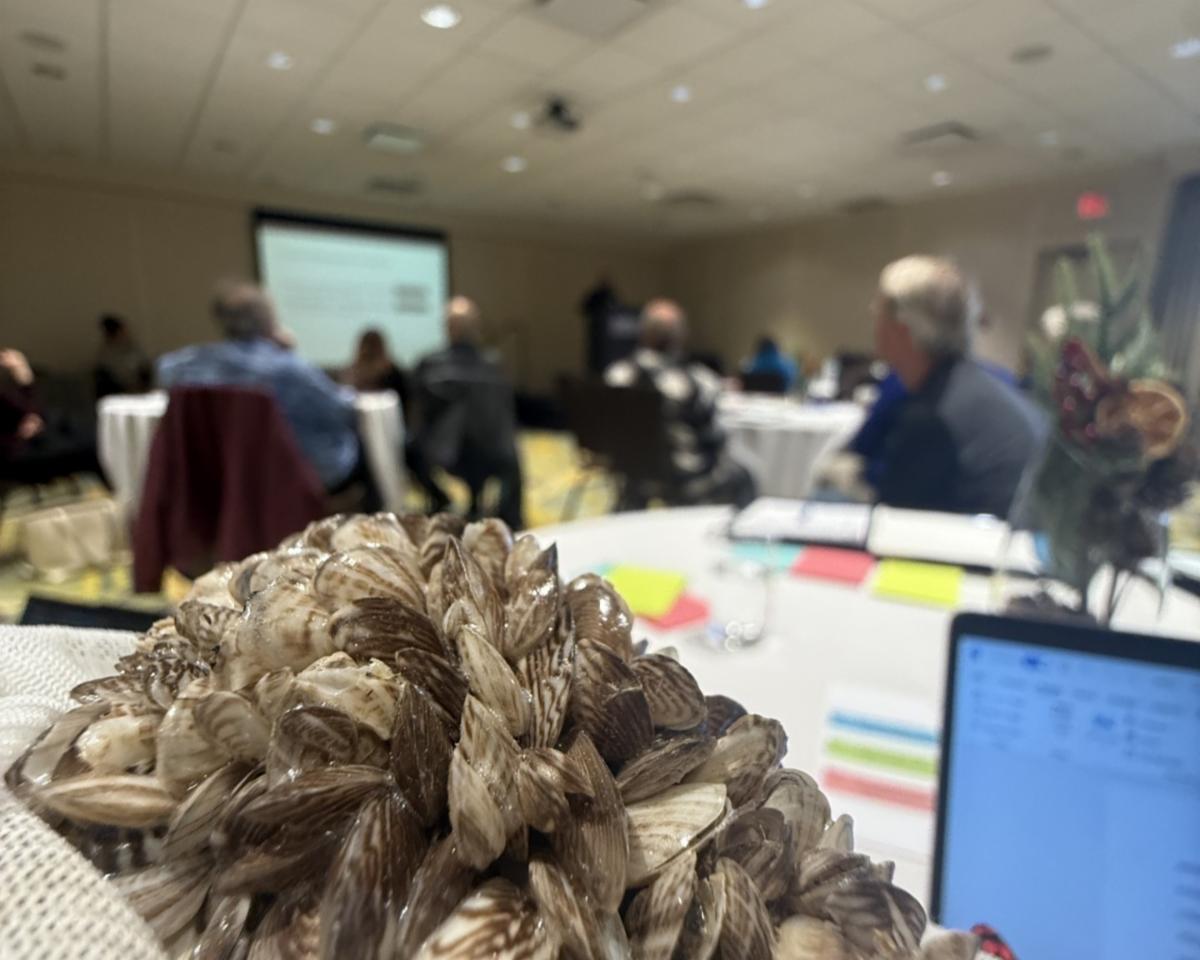
The OBWB held the second-annual Invasive Mussel Working Group, co-hosted by Okanagan Nation Alliance (ONA), in November 2025.This critical working session focused on developing clear, actionable recommendations for mandatory watercraft inspections. In collaboration with the Syilx Nation, this effort honoured the Syilx Nation’s siwɬkʷ Water Declaration and siwɬkʷ Water Strategy, grounding invasive species prevention in shared responsibility for the health of siwɬkʷ and the ecosystems it sustains.
-
In November, OBWB Chair Blair Ireland sent letters to both the federal and provincial governments outlining the OBWB’s "Calls to Action" for protecting B.C. from a devastating invasive mussel infestation. (The calls to action are detailed starting on Page 11 of October Board Agenda Package).
-
The public water conservation campaign kicked off in May with the new title “Make Water Work, Plant FireSmart™,” marking the first official partnership with FireSmartBC. This year saw the most pledges to date in the Make Water Work contest, with Osoyoos named the Make Water Work 2025 Community Champion.
-
The digital and physical Don’t Move a Mussel campaign was promoted on billboards, radio, social media, local media, YouTube, Global TV and more. Our DMM digital campaign alone reached more than 4.6 million impressions, and nearly 9,000 clicks.
| | Invasive Mussel Working Group in session on Nov. 14, 2025 in Kelowna. | |
Strategic Investments in Science and Security
The OBWB made significant financial and technological commitments to enhance water quality and combat invasive threats:
-
In early October, the OBWB committed $200,000 towards a pioneering UBC Okanagan-led research project (pending securement of the remaining $200,000). This funding aims to develop an eDNA tool, nicknamed the "Artificial Dog's Nose," to revolutionize invasive mussel detection.
-
The OBWB, in collaboration with ONA, Foresight Canada, and regional partners, launched the innovative Environmental Flow Shiny App in May. This crucial tool provides real-time information about stream water levels to help balance human water use with critical ecosystem health needs.
-
The annual Water Conservation and Quality Improvement Grant program was launched in November, offering $350,000 and prioritizing innovation in water security for the 2026 intake.
Legislative Advocacy and Operations
The OBWB actively engaged in advocacy to strengthen protection for the Okanagan:
-
In November, the OBWB joined local governments and the UBCM in sounding the alarm over Bill M 216, a Private Member's Bill believed to pose a significant threat to local watersheds and governance.
-
The OBWB acknowledged a significant step forward in May with the introduction of the Miscellaneous Statutes Amendment Act, 2025. The legislation included key changes to the Wildlife Act which align with the OBWB’s decade-long advocacy for greater efforts to prevent the spread of aquatic invasive species.
-
Advocacy was reignited in March against chemicals in Okanagan lakes, continuing a decades-long effort to protect water quality.
-
The OBWB held its Annual Meeting in September to present its Annual Report, reaffirming our mission to advance leadership and collaboration in response to mounting water challenges, including climate change, population growth, and invasive species.
| |
Leadership and Team Growth
2025 was a year of transition and fresh perspectives:
-
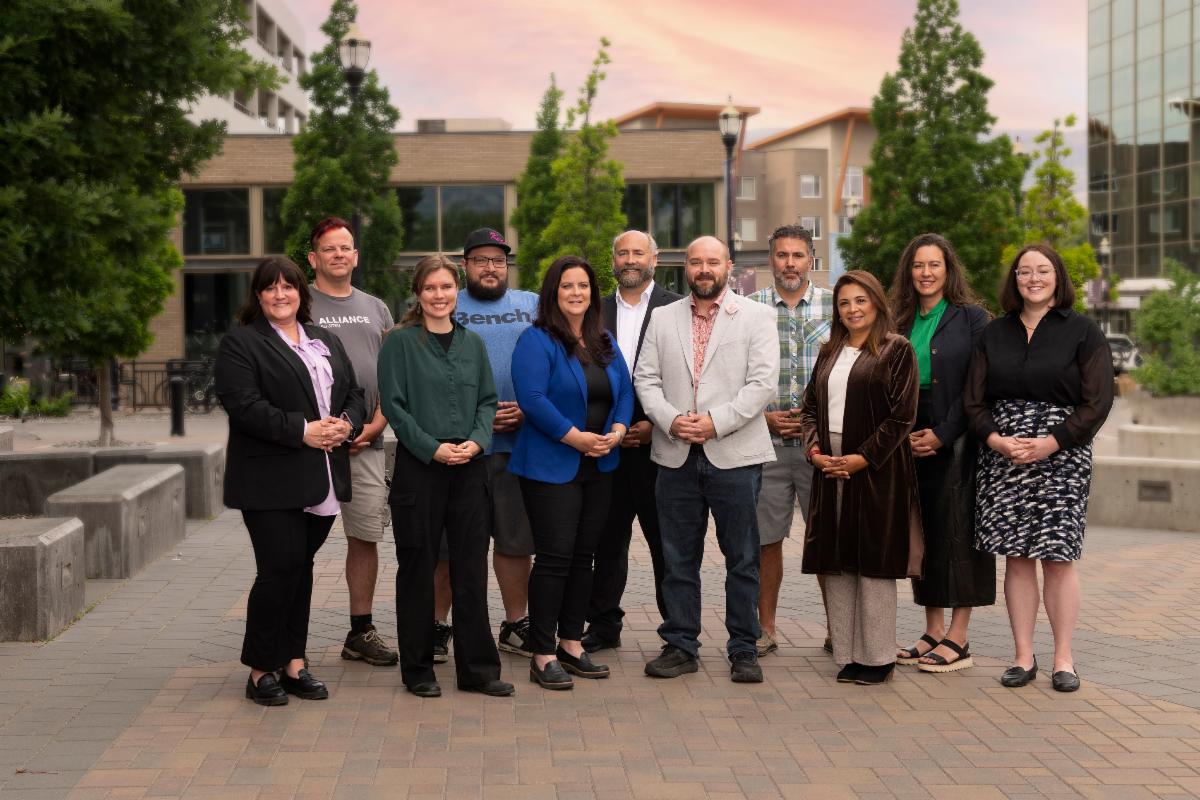
The OBWB welcomed new leadership with the appointments of Melissa Tesche as Executive Director and James Littley as Chief Operating Officer, following the retirement of Dr. Anna Warwick Sears after 19 years of dedicated service. Their oaths of office were taken at the April 1 board meeting.
-
The team also welcomed new faces: Carmen Weld (Communications Manager), Christina White (Water Quality Project Manager), and Robert Unruh (Milfoil Control Operator).
- We concluded the year saying a fond farewell to our Milfoil Control Supervisor, Pat Field, who is retiring after 34 years of dedicated service. Pat began his career with the OBWB in 1991 and has been a cornerstone of the milfoil control program ever since.
The Year to Come (2026)
We are excited about the year ahead which include some highlights like:
- The release of the new OBWB Strategic Plan.
- The Water Management Program and Water Conservation and Quality Improvement Grant's 20th Anniversary Celebration in June 2026, and,
-
The third iteration of the Environmental Flows Conference in October 2026.
| | |
About the OBWB
The OBWB is a local government agency established in 1970 to address the region’s most pressing water issues. It represents a collaborative partnership between the three Okanagan regional districts, the Okanagan Nation Alliance, the Water Supply Association of BC, and the Okanagan Water Stewardship Council.
The OBWB’s mandate is to protect and enhance water resources in the Okanagan Basin — a transboundary (Canada and US) watershed nearly 200 km long and covering 8,000 km². This unique watershed includes the headwaters of the Columbia River and six major valley-bottom lakes: Wood, Kalamalka, Okanagan, Skaha, Vaseux, and Osoyoos. Surrounded by mountains and growing communities, the region faces complex and mounting water challenges, from climate change and population growth to ecosystem degradation and water scarcity.
| | | | |