Amistad is committed to collecting, preserving, and providing open access to original materials that reference the social and cultural importance of America's ethnic and racial history, the African Diaspora, human relations, and civil rights.
|
|
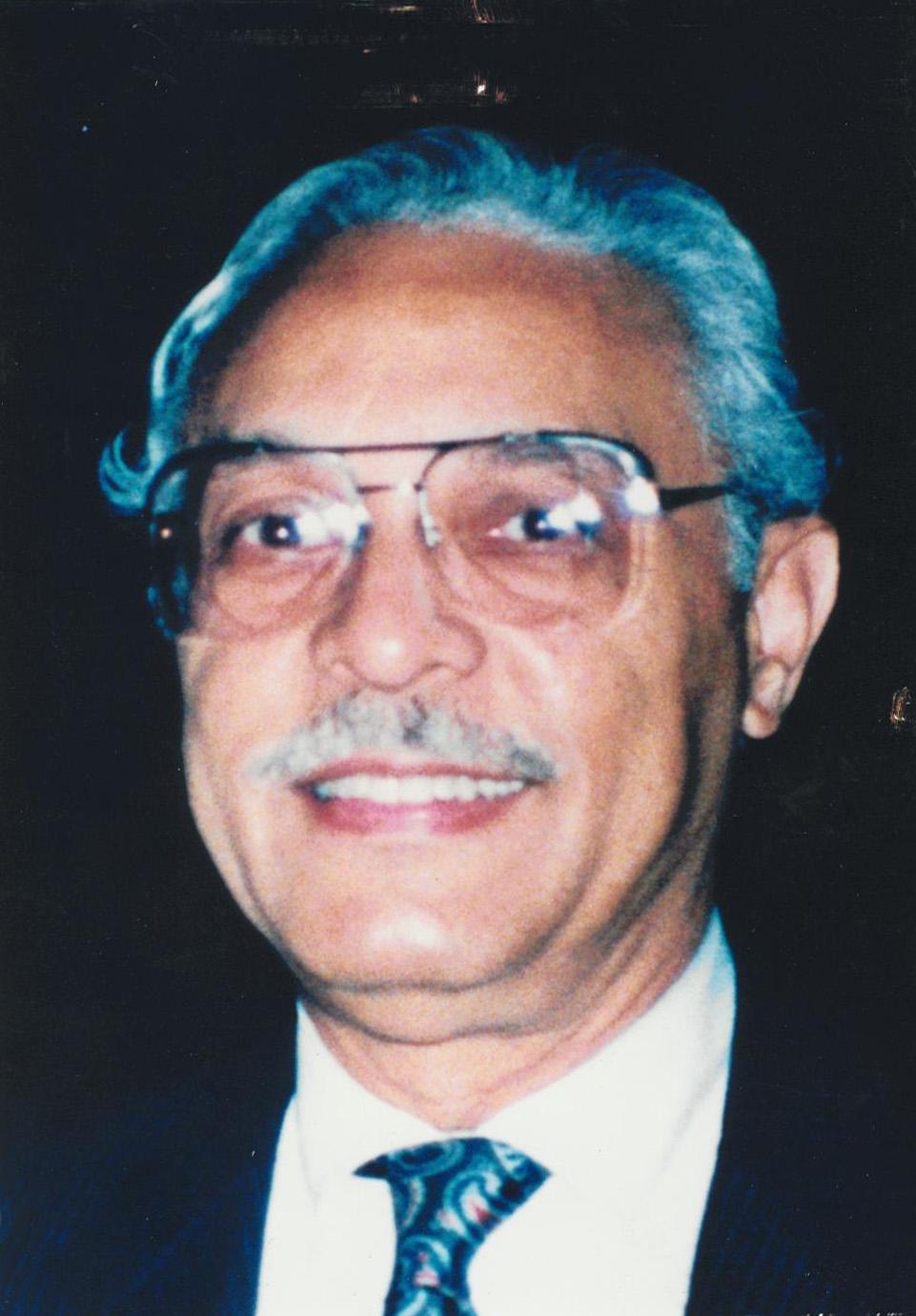
Dr. Belmont Haydel: Retired U.S. Army Major, Economist, and Diplomat
|
|
Argentina, the Dominican Republic, Uruguay, Peru, Oman and Jordan are just a few of the countries Belmont F. Haydel has worked in as an economist and diplomat. The retired U.S. Army major says he supports Amistad Research Center because it goes hand in hand with advancing U.S. cultures, as he believes Amistad offers multiple versions of people’s activities.
Determined to follow his interest in Spanish and Latin America, Dr. Haydel attended La Universidad de México in 1948, was graduated from Xavier University Preparatory School in New Orleans, 1949, and earned a bachelor’s degree in accounting from Loyola University of Chicago. In 1962, he received a master’s degree in Finance and his Ph.D., conducted jointly by North Texas State University (Denton, TX) and New York University, in Organization Theory and International Business Administration (major in economics from NYU). He served two years on active duty in the U.S. Army as an Infantry officer and 18 years in the reserves, retiring as a major.
|
|
Amistad has acquired the records of Atlanta-based Alternate ROOTS, a regional arts service organization of artists who work for social justice.
The acquisition documents 41 of the regional group’s 43 years, 1976 to 2017. Alternate ROOTS was founded in 1976 by a group of Southern-based artists and organizers “working to dismantle all forms of oppression – everywhere.” Its name, “Alternate,” means an alternative. “ROOTS” was originally an acronym for Regional Organization of Theatres South. For decades, Alternate ROOTS has served art organizations beyond theater groups, and its membership of 3,500 now consists of artists outside of the Southern region.
The grassroots focus of Alternate ROOTS, however, remains intact.
|
|
“The Alternate ROOTS collection will cover over 40 years of art and activism in the South, documenting the organization and its members’ history, legacy and contributions to community organizing. From the Civil Rights Movement to now, the archives tell the story that is simply not captured anywhere else but in these documents, video footage and other precious artifacts,” Michelle Ramos, executive director of Alternate ROOTS, said.
|
|
Original Illinois Club History
|
The history of the Original Illinois Club is making its debut at Amistad Research Center.
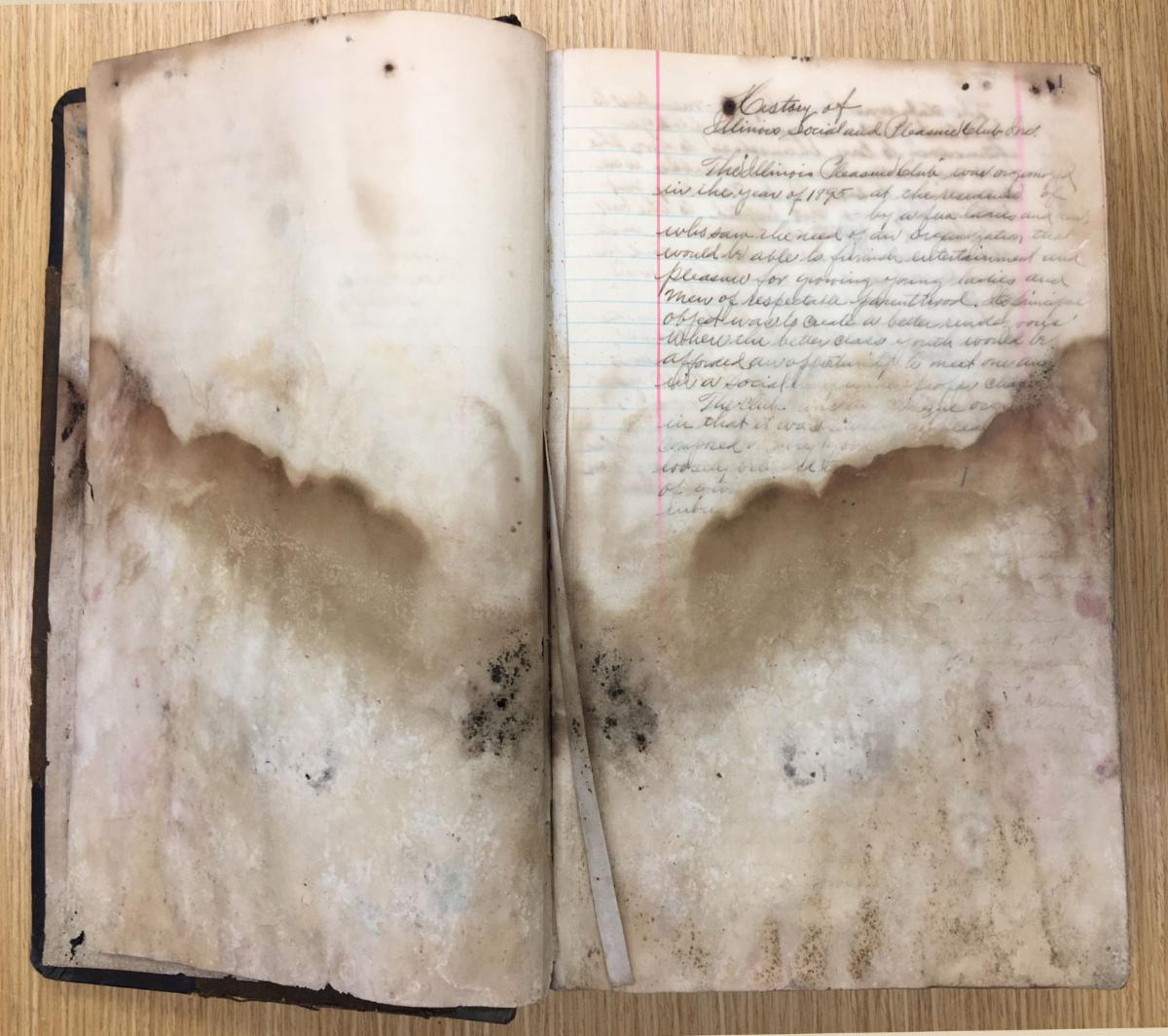
A ledger book dating from 1930 to 1949 is the oldest account of the social and pleasure club in the new collection, which was coordinated by President Tracey L. Thibodaux. The ledger contains detailed lists of officers, committees, members, and debutantes. Membership dues, a hand-script copy of the club’s charter and articles of incorporation are also included.
|
|
This Illinois Club ledger dates from the 1930s to 1940s. It was damaged in flooding after Hurricane Katrina.
|
|
Amistad’s Collections Depend on Your Support
|
Amistad’s mission to collect, preserve, and provide access to historical documents is made possible by generous donations from individuals, families, and organizations.
Do you have materials to donate? Please visit our collection development policy available
here
to learn more about how you may donate or contact us at 504.862.3222 or
info@amistadresearchcenter.org
.
|
|
Valda Lewis, Creator & Producer of "Just for the Record"
|
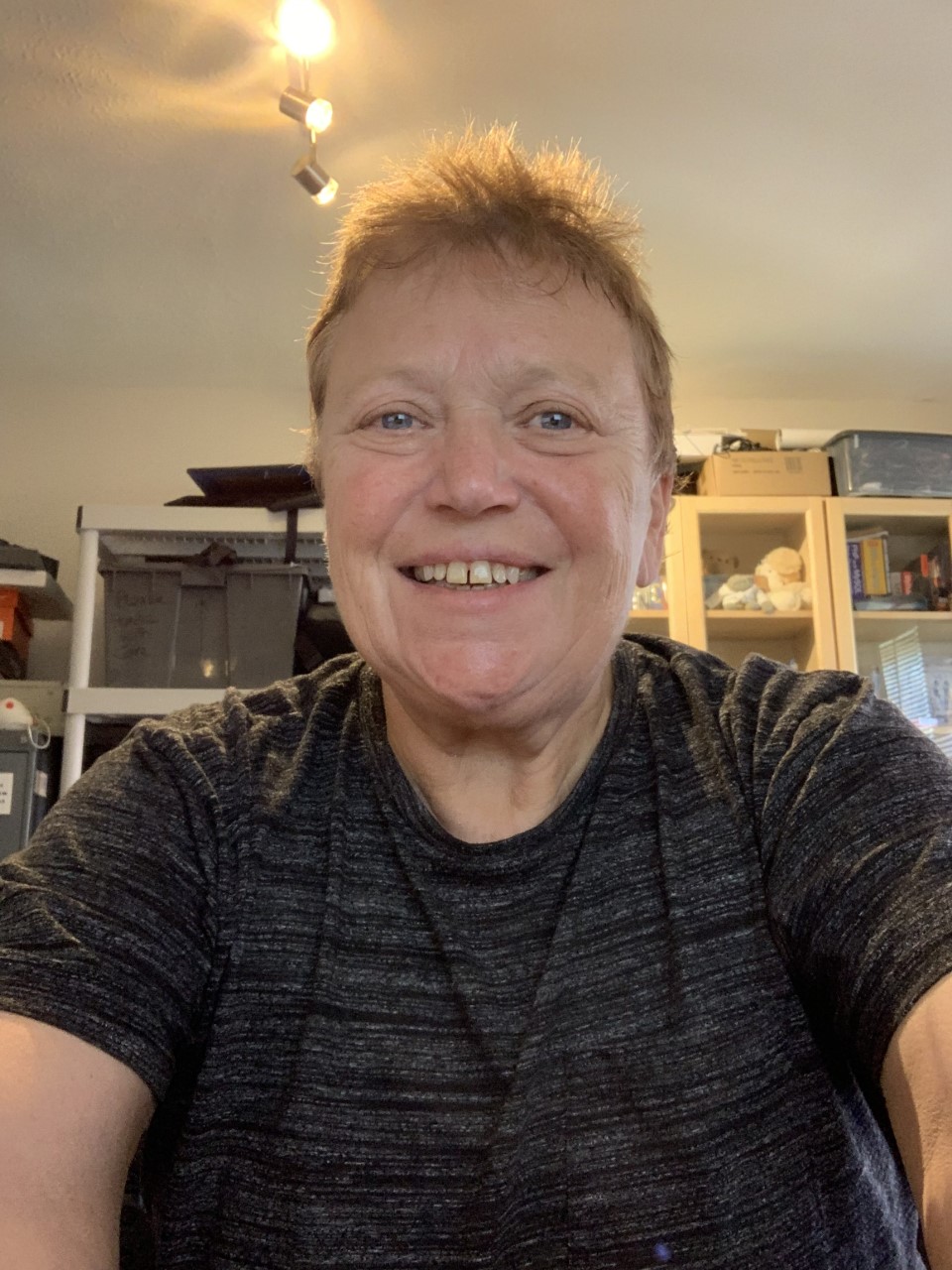
Decades before “Queer Eye for the Straight Guy,” “The ‘L’ Word” or “Pose” hit screens across America, there was “Just for the Record,” a New Orleans public affairs show on Cox Channel 49 with programming and features just for the LGBTQ community.
Behind it all was creator and producer Valda Lewis, a recent transplant to the United States, the daughter of a U.K. public relations professional. Although Lewis had never worked in broadcasting or behind the camera, she helped steer “Just for the Record” to an incredible six-year run, from 1987 to 1993.
|
|
“The show was an answer to the Great Plague [the AIDS crisis]. At the time, I was kind of driven. This was what I could do, given the crisis that was around us,” Lewis says from her Cleveland home.
|
|
Truth Telling: Nikole Hannah-Jones and the 1619 Project
|
Conversations in Color is a free public cultural series created by the Amistad Research Center that features artists, educators, and community activists in talks about their work and its impact on social change. This is event was made possible in collaboration with the Ashé Cultural Arts Center and the Louisiana Endowment for the Humanities.
The New York Times
' recent acclaimed 1619 Project has generated praise and criticism from many quarters. The Project's intention, "to correct the record, reframing the country's history by placing the consequences of slavery and the contributions of black Americans at the center of the national narrative," excited historians, educators, activists and journalists alike. The 1619 Project also
|
|
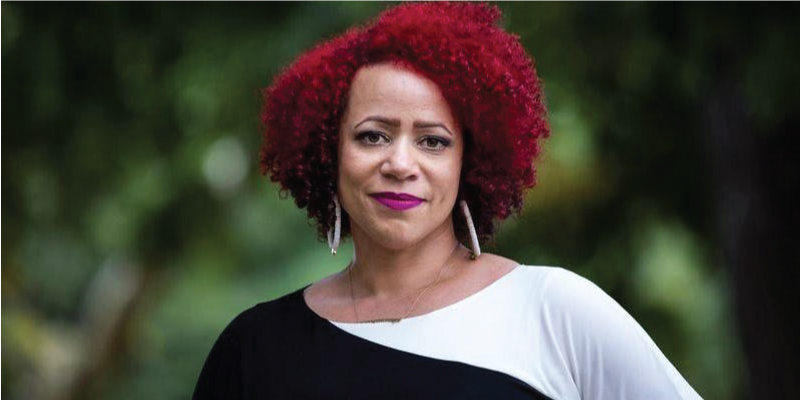
Photo of Nikole Hannah-Jones courtesy of John D. & Catherine T. MacArthur Foundation
|
rankled leading conservatives, with notables such as former House Speaker Newt Gingrich (the 1619 Project is "propaganda" and "brainwashing"), Ilya Shapiro of the Cato Institute (the Project is "grievance-mongering"), and Benjamin Weingarten of the Federalist (the Project "delegitimize[s] America") all weighing in. Join us November 8 as we welcome Nikole Hannah-Jones, creator of the 1619 Project, as she explores the truth-telling necessary in acknowledging the 400th anniversary of enslaved Africans' arrival on these shores, and in observing slavery's legacy and impact on every aspect of our nation's society.
|
|
Click
here
to register for this free event to be held on Friday, November 8, 2019.
|
|
Exhibition: "I Know Them as People, Not as Figures"
|
“I Know Them as People, Not as Figures: Narratives and Images of American Immigration,” currently on display at the Amistad Research Center, provides a counter-narrative to ongoing rhetoric about the “nameless masses at the U.S. border,” according to curator and Amistad Deputy Director Christopher Harter.
The exhibition examines four immigrant stories: Tsuyoshi Matsumoto, a Japanese-born “American pioneer from Japan,” detained in Alabama following Pearl Harbor; Harry F. V. Edward, a 1920s U.K. Olympian of Guyana-German heritage, struggling with prejudice for the first time in his life as U.S. immigrant; Barnabas Root, a Sierra Leone native who attended Knox College in Illinois in the 1860s, but ultimately returned to home after enduring Northern hostilities; and Jennie F. Pratt, a social worker and immigrant’s daughter, who worked as a teacher on Ellis Island for more than 30 years.
This is the first in Amistad’s “We The People” exhibition series, an exploration of the U.S. Constitution and its relationship to the nation’s increasingly-diverse populace.
|
|
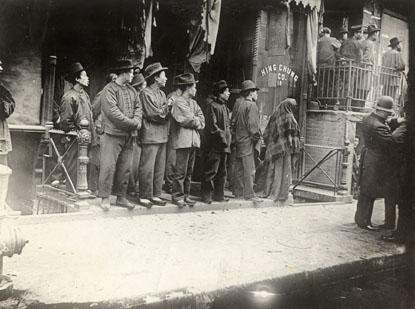
A 1914 view of Mott Street in Chinatown (New York).
|
The exhibition also examines personal narratives of immigrant and second-generation families through best-selling memoirs and self-published “zines.”
“I Know Them as People, Not as Figures” opened on September 23 and closes February 29, 2020. On view is the earliest dated photograph from the Center’s archive: an 1860 daguerreotype of 14-year-old Barnabas Root. Also noteworthy are a series of photographs of Japanese-owned businesses in pre-World War II Los Angeles and two panoramic photos of the U.S.- Mexico border, during the 19th and 21st centuries, hung side by side among the other ephemera on display.
|
|
Leslie-Lohman Museum Exhibition Loan
|
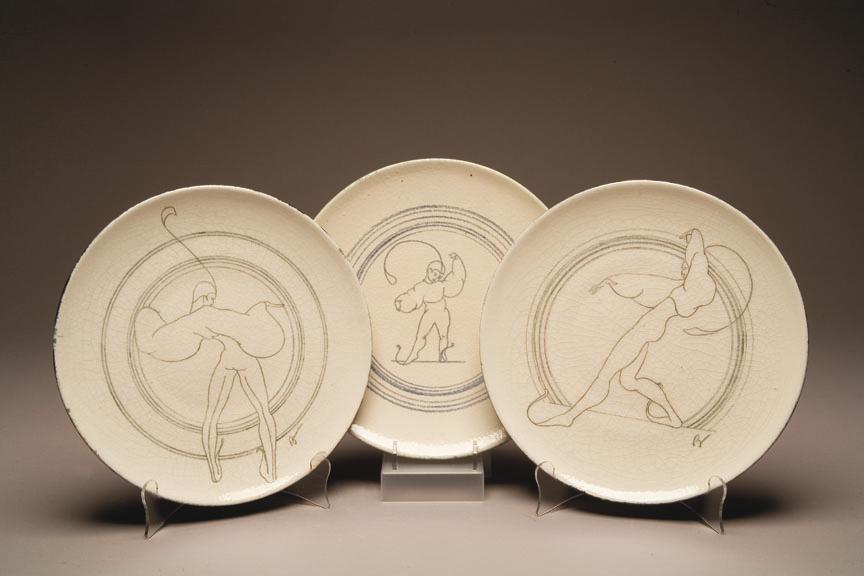
Two ink drawings and a set of ceramic plates by Bruce Nugent, a Harlem Renaissance master, are on-loan and exhibiting in Lower Manhattan at the Leslie-Lohman Museum until November.
The works on loan from Amistad are part of Paco Cao’s “Attribution” exhibition, an examination of the life of Mary Lens, a socialite, writer and art collector who engaged in “radical gender play,” according to the museum. The exhibition features new Cao works and historic works from various collections, including Amistad Research Center. Exhibition dates are August 14 to November 3.
Nugent’s whimsically flamboyant harlequin drawings on paper were created in the early 1950s. They were later used to design three, 9-inch diameter plates in 1952. Nugent lived and worked in New York City. He lived from 1906 until 1987.
|
|
A set of ceramic plates designed by Bruce Nugent, 1952. From Amistad's Fine Art Collection.
“Attribution” is an imagination of Lens’ overlooked life and work, and focuses on various themes that preoccupied Lens, including the impact of African American culture in the U.S. during the Harlem Renaissance. Cao, a Spanish artist who is “unfaithful to any particular medium,” holds a doctorate in art history. He lives and works in New York.
Information on the exhibition can be found
here
.
|
|
Lenbachhaus Exhibition Loan
|
Selections from the recently acquired papers of artist Senga Nengudi are on-loan until January in Munich, Germany.
Chicago-born Nengudi’s retrospective, “Topologies,” is on view at Lenbachhaus. Loaned materials from the Amistad Research Center archive include photographs and ephemera documenting five decades of Nengudi’s work in sculpture, performance art and dance. Exhibition dates are September 17 to January 19, 2020.
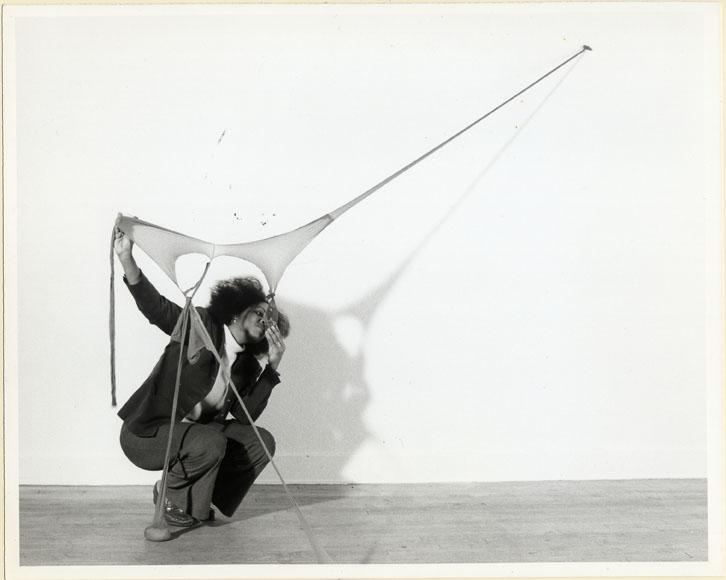
An original sketch for Nengudi’s 1978 public installation and performance, "Ceremony for Freeway Fets," is also part of the exhibition. The artist’s work combines natural objects, unconventional objects, found objects and body mechanics.
|
|
Senga Nengudi, in autumn 1976, with a sculpture from her
R.S.V. P. series.
Nengudi, 76, lives in Colorado Springs after many years creating in Los Angeles and New York City. She earned concurrent degrees in sculpture and dance. The Lenbachhaus exhibit opened the day before her birthday.
Information on the exhibition can be found
here
.
|
|
Grant Assists Access to Journalist's Papers
|
Thanks to a grant from the National Historical Publications and Records Commission, Amistad will complete archival processing of the Marguerite D. Cartwright Papers.
Cartwright (1914-1986) was an African American journalist, actress, researcher and educator. She specialized in African affairs and was a charter member of the United Nations Correspondents’ Circle. Cartwright was later appointed one of five members of the Provisional Council of the University of Nigeria in Nsukka by the Eastern Nigeria Parliament.
Manuscript materials form the thrust of Cartwright’s papers. This archive encompasses and closely parallels her vocational and personal pursuits. Her work as a U.N. correspondent for
The Pittsburgh Courier
and academic studies in sociology at Hunter College and Brooklyn College in New York City, Mills College of Education in Oakland, Calif., and the New School for
|
|
Social Research in New York are contained here. Cartwright’s career and interest in the performing arts is also chronicled. Papers specific to the Peace Corps, the black press, Overseas Press Club and African countries are contained. Cartwright was especially interested in West Africa and African American history.
|
|
Phillip Cunningham
, Head of Research Services, received the William Reese Company Scholarship to attend a week-long course on "Developing and Administering Ethnic & Cultural Heritage Resources" at California Rare Book School, held at UCLA in August 2019.
Amistad is pleased to welcome
Felicia Denice Render
to its staff as Archivist. Felicia received her Master of Science in Library and Information Science degree from the University of North Texas with a concentration in Digital Content Management. Prior to joining the Amistad Research Center, she was the Visual Culture Archivist for the Atlanta History Center, where she managed visual collections by processing over 100 photograph collections, cataloging thousands of images, and completing a grant project to digitize vintage color film footage of Atlanta. Felicia has worked as Project Archivist (Amistad Research Center, New Orleans, LA); Institute of Museum and Library Services (IMLS) Fellow (The HistoryMakers, Chicago, IL); Digital Initiatives Resident Librarian (Atlanta University Center, Robert W. Woodruff Library, Atlanta, GA); and Library Associate (Auburn Avenue Research Library on African American Culture and History, Atlanta, GA). As her work experience indicates, Felicia is passionate about preserving different aspects of culture and the ways technology is used to manage cultural heritage resources.
Curator of Manuscripts
Jasmaine Talley
and Reference Archivist
Lisa Moore
both attended the annual meeting of the Society of American Archivists in Austin, Texas (July 31st to August 5th). Jasmaine’s attendance was supported by the Marie Windell Continuing Education Scholarship, which was provided by the Louisiana Archives and Manuscripts Association. Jasmaine and Lisa attended sessions and workshops on archives management, digitization tools, designing effective internship programs, multigenerational archives, increasing representation in archives, and preserving community records.
|
|
Find. Follow. LIke. Let's Be
Friends
!
|
|
|
|
|
|
|