OECI_full-pg-wdth_Banner _1_.png

Dear Fellow Explorers,

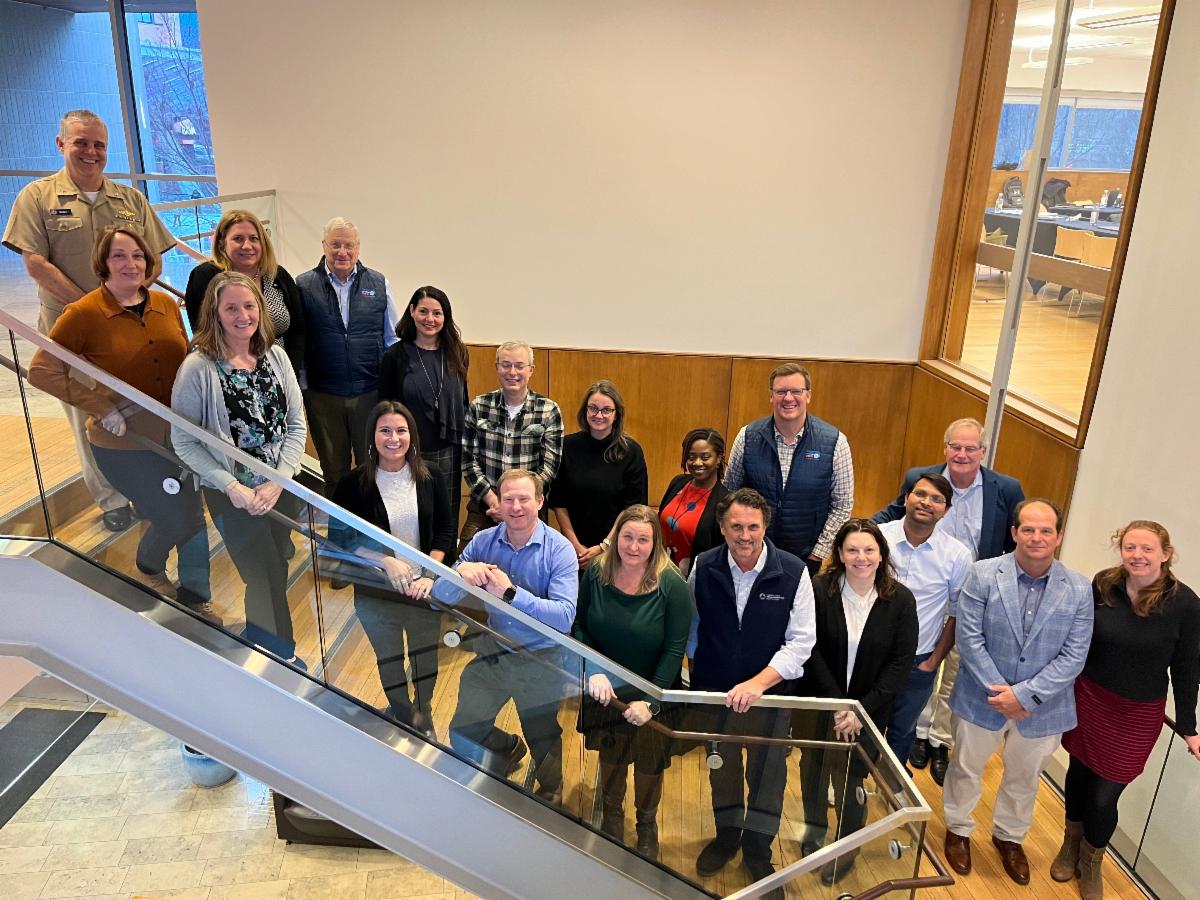
The OECI team gathered earlier this month for its annual in-person meeting in Silver Spring, MD. This meeting with colleagues and collaborators (see smiling faces below) from NOAA Ocean Exploration was a tremendous opportunity to reiterate our shared vision for ocean exploration and to begin planning how our future activities can best support NOAA and the ocean exploration and scientific community. I always leave this meeting invigorated with thinking about what’s next, and I’m excited to continue that with the amazing OECI community. Adding to this excitement is the transition from Aurora Elmore to Heather Coleman as NOAA Ocean Exploration’s CI manager. I am as thrilled to have Heather join the effort as I am sad to see Aurora move on to new opportunities (although still within Ocean Exploration). I’m looking forward to a fantastic year, and a bright future for OECI.


Deepest Regards,

Adam

Thank you, Aurora Elmore! Welcome, Heather Coleman! 


After serving as the Cooperative Institute Manager for the past 5 years, Aurora Elmore will be changing responsibilities within NOAA Ocean Exploration. All of the OECI would like to thank Aurora for her guidance, advocacy, and hard work in supporting us and for expanding the CI’s capacity and capabilities. She will be missed!


We would also like to welcome Heather Coleman who will be serving as the new Cooperative Institute Manager. Heather comes to us from the NOAA Fisheries’ Deep Sea Coral Research and Technology Program, and brings almost 10 years of NOAA experience to our cooperative institute. We look forward to working with her! 

3D Shipwreck Models from Lake Ontario National Marine Sanctuary


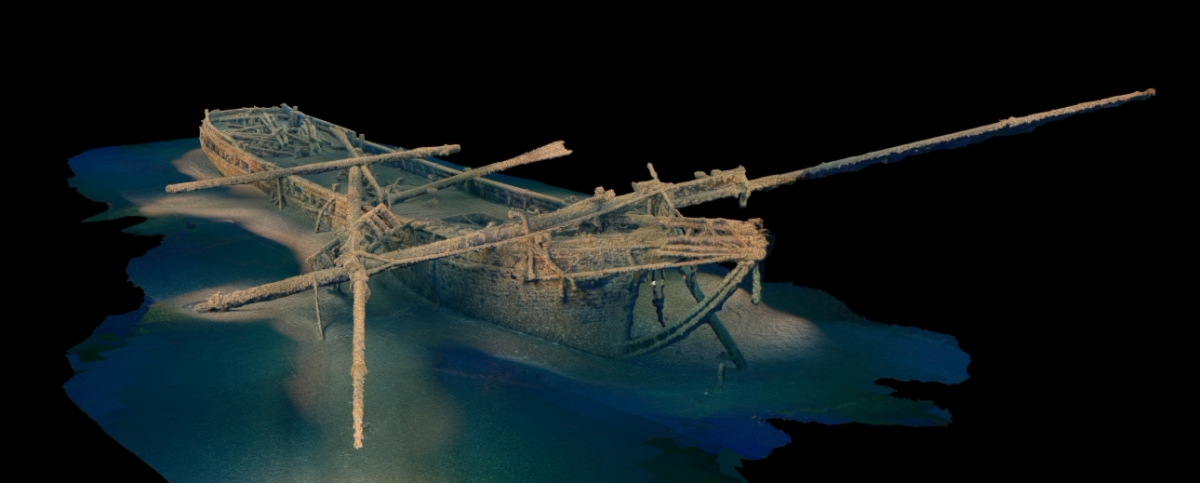
Students and engineers at URI have been working diligently to generate 3D models from data collected during a recent expedition in Lake Ontario National Marine Sanctuary. Maritime archeologists will use these high-resolution, spatially precise (millimeter-level) models to identify unknown shipwrecks like the one seen below (unknown 003). See the full gallery of 3D models at lonms.nira.app. The images used to generate these models were collected with the VOYIS Discovery Stereo camera. 

OET 2025 Field Season Summary

Before we start exploring in 2026, it is a great time to reflect on the fantastic exploration accomplishments OET and the OECI achieved in 2025. E/V Nautilus spent 113 days at sea in the Pacific documenting new species, mapping areas of unmapped seafloor within the US EEZ, and sharing the excitement of discovery with people around the world through telepresence and outreach. See the full blog post highlighting the season here. 

Announcements, Events, and Opportunities

Ocean Exploration Trust 2026 Call for Science Input

In 2026, E/V Nautilus will conduct several multidisciplinary expeditions to explore the deep sea in the Central and Western Pacific, with planned expeditions to the Hawaiian Islands, the Mariana Islands, Wake Atoll, and the Ryukyu Islands. We invite members of the science and resource management community, particularly from the geographies where expeditions will take place, to submit science priorities for these expeditions, including specific requests for seafloor mapping, remotely operated vehicle dives, physical samples, and technology integrations. Please provide your input by February 1, 2026. Information received will be used to develop expedition plans and opportunities for collaboration, which will be discussed during planning webinars held prior to expeditions.


The Ocean Exploration Trust plans to continue operating E/V Nautilus in the Western and Central Pacific for the next several years in partnership with NOAA Ocean Exploration, the Ocean Exploration Cooperative Institute, and other partners. NOAA Ocean Exploration plans to conduct additional expeditions in this region using NOAA Ship Okeanos Explorer. Priorities submitted through this call may therefore be shared with NOAA Ocean Exploration for coordinated expedition planning. 


Please help us share this call with your networks to ensure broad representation, and stay tuned to future communications from the Ocean Exploration Trust and NOAA Ocean Exploration for additional opportunities to provide input.


Submit Science Input