Throughout the school year, districts, schools, and educators shared examples of innovative and engaging instructional practices with the Office of Early Learning. This collection highlights stories that demonstrate meaningful learning experiences for students through play, exploration, creativity, family engagement, and community collaboration. These thoughtful examples were selected to celebrate the important work happening in Prekindergarten through Third grade across New York State. | |
Classroom Spotlight: Rochester City School District
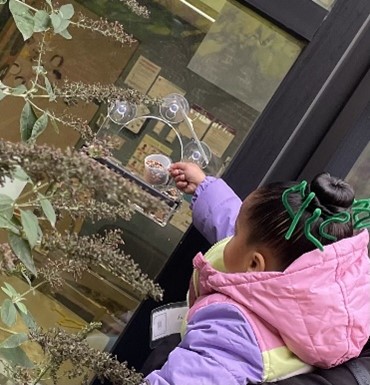
If you visit Ms. McKinstry’s UPK classroom, you will be immediately drawn to the two bird feeders attached to the window, and another hanging in the tree. The feeders were placed by the children at the beginning of September as a community-building event and quickly became a continuous shared learning experience that has also spread to other classrooms whose windows look down upon the feeders.
Each day, a different child fills the feeders. Beginning each morning as the children eat breakfast, there is always conversation about the various types of birds on the feeders and their antics as they push to find room on one of the feeders. With the feeders acting as a springboard, visitors are always drawn into child-friendly conversations.
Throughout the year, the children’s observations have become more detailed to include information on wings, beaks, feather color, size, and even the timing of the feeding visits. Data also includes tracking the various types of birds (finches, bluejays, mourning doves, red-bellied woodpeckers, and cardinals). The children ask inquiring (I wonder, what if, how come, and maybe) questions about water and shelter, which includes the weather and seasons. They find similarities in the birds’ behaviors to our own and draw thoughtful conclusions that include ideas of birds having emotions such as kindness, empathy, and family.
Learning happens in the moment and is not preplanned, yet it is created with teacher intentionality. The feeders open the world beyond the windows and provide a natural learning platform for the children to extend beyond the UPK classroom as they take flight to new learning experiences.
| | | |
| |
Classroom Spotlight: Ellicottville Central School District
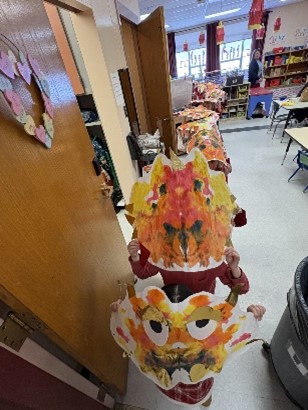
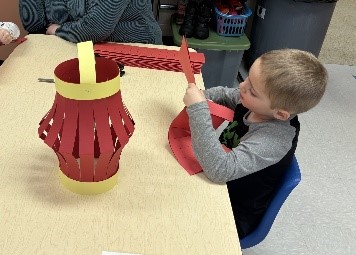
Earlier this year, Mrs. Keller’s Pre-K class at Ellicottville Central School celebrated the Chinese New Year. All the students wore red for good luck, made paper lanterns, and created individual dragon pieces that they carried around the school during a festive dragon parade. The class shared a family-style feast and made poppers that were used as “fireworks.” They also swept out the old year to welcome a fresh start for the new one.
Some students and faculty members distributed red envelopes embossed with “2026 – Year of the Horse,” along with candy, chocolates, and gold coins as symbols of good luck for the coming year. The school librarian even connected her weekly lesson to the celebration by sharing a story, showing a video, and leading students in a dragon craft activity. The class learned so much about traditional Chinese New Year customs and had a wonderful time celebrating together!
| | | |
Classroom Spotlight: Fallsburg Central School District
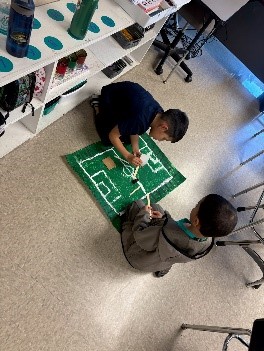
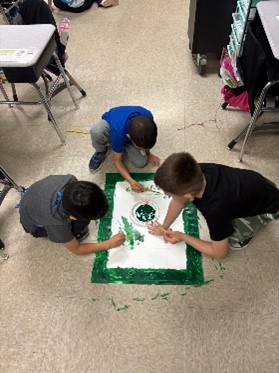
In a first-grade classroom led by Shannon Peterson, with support from Math Instructional Coach Pete Dworetsky, students engaged in a project-based learning experience centered around soccer, just in time to coincide with the June World Cup. The project was intentionally aligned to foundational mathematics standards, leveraging students’ interest in the sport to provide authentic, standards-based learning opportunities.
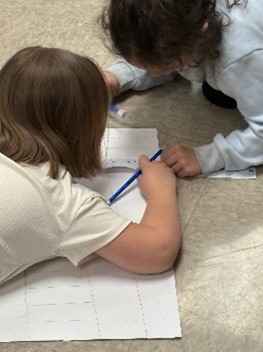
In mathematics, students designed and created soccer-themed game boards that encouraged them to apply and practice place-value concepts and counting strategies aligned to the targeted standards. Throughout the design process, students engaged in cycles of planning, testing, reflection, and modification, demonstrating growth in both content knowledge and engineering-style problem-solving skills.
Literacy activities invited students to research and write short biographical books about their favorite soccer players. Students included key details such as jersey numbers, countries of origin, and team affiliations, helping strengthen and reinforce informational writing skills. Science lessons brought students onto the field to explore force and motion. By experimenting with how the strength and direction of a kick affected the ball’s path, students were able to observe the laws of physics in action through the lens of the game.
To culminate the project, the class hosted an exhibition day for families and community members. Students took the lead in explaining their work and sharing the challenges they encountered throughout the process. Watching the first graders confidently present their games and discuss their research highlighted just how much they had grown. The project served as a powerful example of what students can achieve when learning is connected to their interests and passions.
| | |
Classroom Spotlight: Ithaca City School District
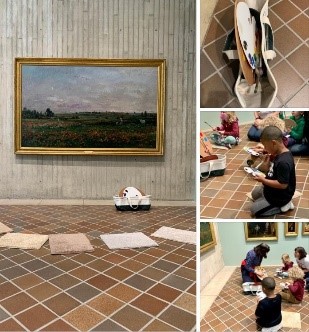
Every school year, the Ithaca City School District Early Childhood program participates in a field experience at the Johnson Museum of Art at Cornell University, where the focus of the visit is “Learning to Look, Looking to Learn.”
Prior to the preschool classrooms visiting the museum, a museum docent comes to school to introduce students to the idea of a museum and what they will see there. Educators engage students in extensive hands-on activities to help prepare them for the visit, including reading books about museums, exploring pictures and videos of the Johnson Museum, and practicing museum expectations such as walking carefully around artwork. Preschool teachers also participate in professional development at the museum earlier in the year, where they collaborate with museum educators to thoughtfully plan activity stations and hands-on learning experiences connected to the artwork.
During the field experience, students move through the museum in small groups, engaging with artwork at specially designed activity stations. Every station includes a hands-on component that encourages students to closely observe, ask questions, and connect movement, storytelling, and creativity to the artwork. For example, students studying the “Walking Man” sculpture use small art models to recreate different body positions and discuss how the figure may be feeling or where he might be going. At another station, students collaboratively rebuild a foamcore model of the “Watchtower” sculpture while exploring perspective and spatial thinking. The content of the tour changes from year to year, based on collaboration between teachers and museum educators.
The learning continues long after the museum visit. Classrooms often extend the experience through dramatic play museums, collaborative art projects, sculpture-making, painting activities, and exploration of new art materials inspired by the exhibits. Families are also encouraged to continue engaging with the museum through community events and return visits, and many are amazed by how confidently children can recognize and discuss the artwork they experienced during the trip.
The experience is made possible through the longstanding collaboration between ICSD preschool teacher Kelly Craft and Carol Hockett, Hintsa Family Manager of School and Family Programs at the Johnson Museum of Art, along with the support of the broader early childhood and museum education teams.
| | | |
Classroom Spotlight: Hamburg Central School District
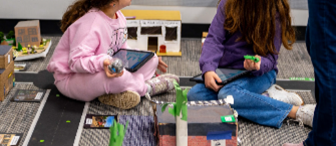
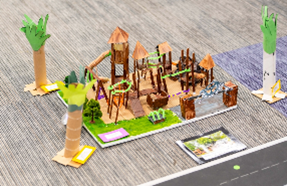
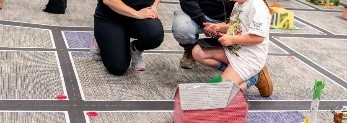
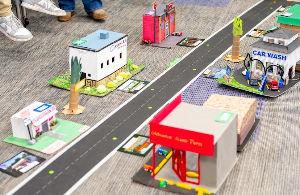
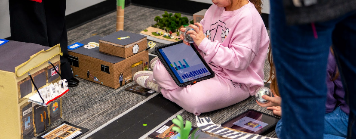
Third-grade students at Armor Elementary proudly brought their community to life through the “Hamburg School Village Project,” an innovative, hands-on learning experience that blended STEM, social studies, and the arts. Inspired by Thomas Edison’s mindset of perseverance, students designed and constructed a miniature model of the Village of Hamburg using the Tinker Tank. Each student selected a real local building—ranging from businesses to schools—and recreated it with careful attention to detail. Families were encouraged to visit these locations, strengthening the home-school connection and deepening students’ understanding of their community.
This multidisciplinary project cultivated a wide range of academic and social-emotional skills. Students applied engineering principles to ensure structural stability, used mathematical reasoning to measure distances and angles, and explored basic coding by programming Sphero robots to navigate their village. In addition, they demonstrated creativity through artistic design and gained valuable knowledge about local geography and businesses. Beyond academics, the project fostered responsibility, collaboration, and persistence, as students took ownership of their work and problem-solved through challenges.
The Hamburg School Village Project exemplifies the district’s commitment to developing modern learners who create, care, solve, and discover.
|
| |
| |
Classroom Spotlight: Portville Central School District
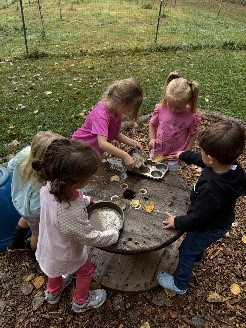
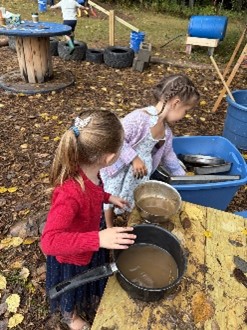
Nestled on the hill behind the school, the Pre-K “Mud Kitchen” has become one of the students’ favorite learning spaces. What began as Mrs. Molly Scott’s creative idea has blossomed into a full outdoor, play-based classroom where imagination, teamwork, and discovery come to life. Featuring a sink, prep table, and other handcrafted pieces built by the principal himself, the space allows children to use real tools, utensils, and natural materials to explore sensory play in authentic, hands-on ways. Each day brings new “recipes,” garden experiments, and opportunities to dig, mix, and plant—sometimes even garlic!
The mud kitchen encourages rich communication and cooperation as students plan together, share materials, and negotiate roles during play. It’s messy—in the very best way—and that mess reflects the deep engagement and joy that come with early learning. The project has even captured the attention of the local community, inspiring donations of pots, pans, soil, and other supplies. What started as Mrs. Scott’s vision has grown into a vibrant, community-supported hub of creativity, curiosity, and collaboration for the school’s youngest Panthers.
| | | | |
Questions?
The Office of Early Learning provides technical assistance to districts regarding Prekindergarten - Grade 3 instruction and best practices. Our office also answers questions regarding UPK funding and program implementation. You can contact us at oel@nysed.gov or (518) 474-5807.
| |
| | |
Erik Sweet, Executive Director, Office of Early Learning
Lori Smart, Director
Tanya Amodio-Kovacs, Supervisor
Tiffany Horen, Supervisor
Vicky Woods, Supervisor
James Bordis, Samantha Chobot,
Lauren Cosamano, Carly Feldman,
Eric Feml-Nelsen, Jason Gish, Meghan Hooley,
Noelle Lake, Christine Lyons, Hidaya Madi,
Chloe Ng, Terry Onofrio, Brandon Orszulak,
Madison Ramnes, Tina Rose-Turriglio, Christina Ryan,
Rachel Schlude, Greg Shaw, Michelle Sidoti,
Zak Snyder, Megan Tobiasen
| | | | | | |