APRIL 2025 | VOLUME 1 ISSUE 10 | | |
Gwendolyn Clegg
“Start where you are, use what you have, do what you can.”
- Arthur Ashe
Resources have been weighing heavy on my mind lately. Resources as a noun are defined as “a stock or supply of money, materials, staff, and other assets that can be drawn on by a person or organization in order to function effectively.” Oxford Languages. This definition resonates with me when I am thinking about the resources OFR needs to execute its mission. OFR is here to provide our contractors with resources. To that end we have begun adding our practice resources to our web page. Please go to the practice resource tab and follow the steps to register.
OFR’s practice resources are for our contractors. You will find an abundance of helpful documents in our document bank such as affidavits, applications, forms, briefs, motions, jury instructions, orders, responses, writs, state and federal case law, state and federal statutes as well other secondary sources.
But it is the second definition that stuck with me “action or strategy which may be adopted in adverse circumstances, “sometimes anger is the only resource left in a situation like this.” Oxford Languages. No circumstance is more adverse than having your children removed from your home, from your care, your custody and control.
Representing parents and children in juvenile deprived proceedings is very important and difficult work. It is to be engaged in as if you were defending your very own family. If it was your family, you would use every available resource and you would scour the earth for more resources. I dare say your anger would fuel your search for resources.
My offer to you is practice resources at your fingertips to ignite your zealous representation of Oklahoma families involved in child welfare court proceedings. Use these resources to do more for our families who are separated. Use these resources to be more proactive in your practice.
“DO THE BEST YOU CAN UNTIL YOU KNOW BETTER. THEN WHEN YOU KNOW BETTER, DO BETTER.”
-Maya Angelou
| | |
Practice resources have officially launched on our new website! 🎉🎈🥳
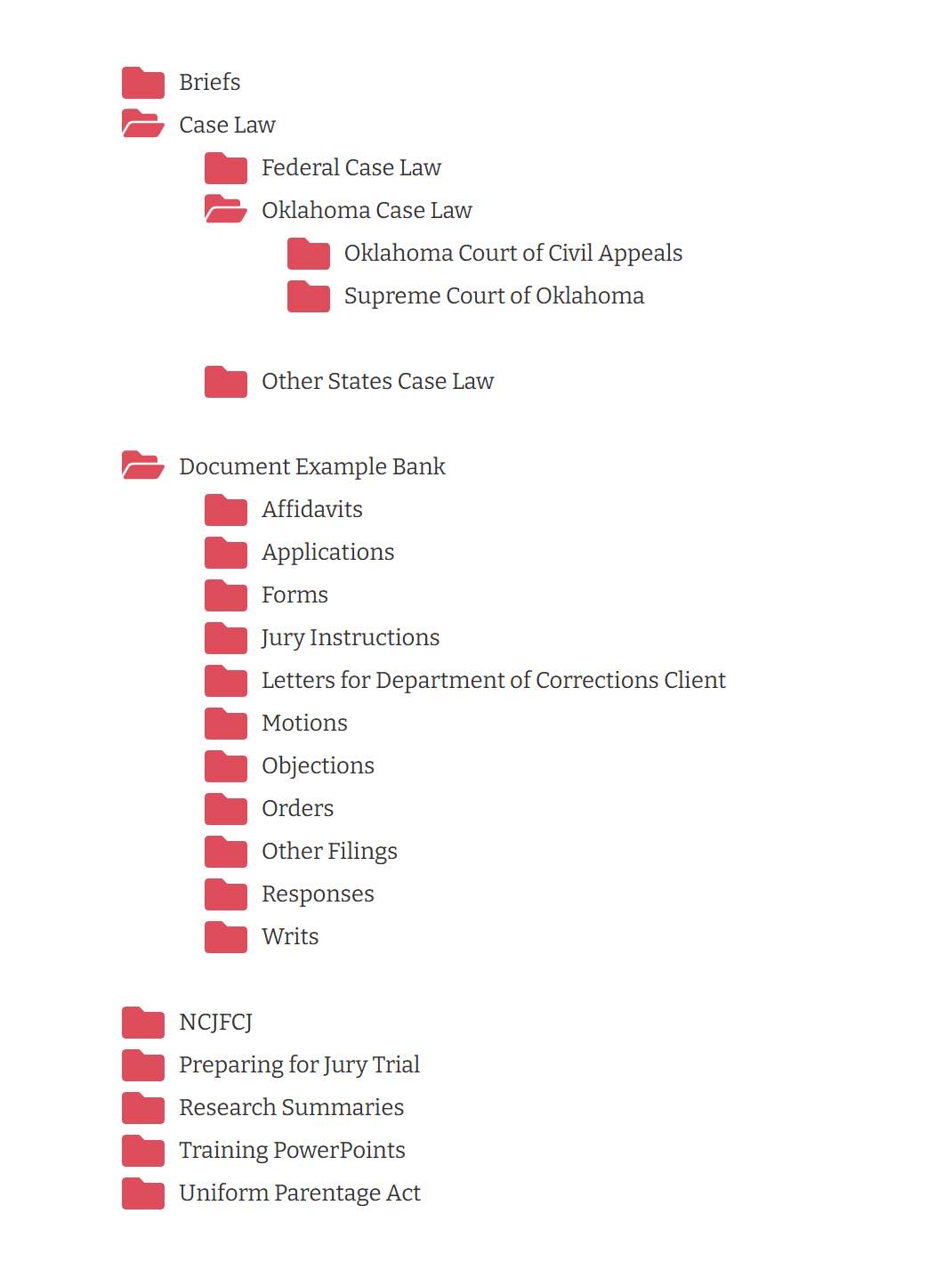
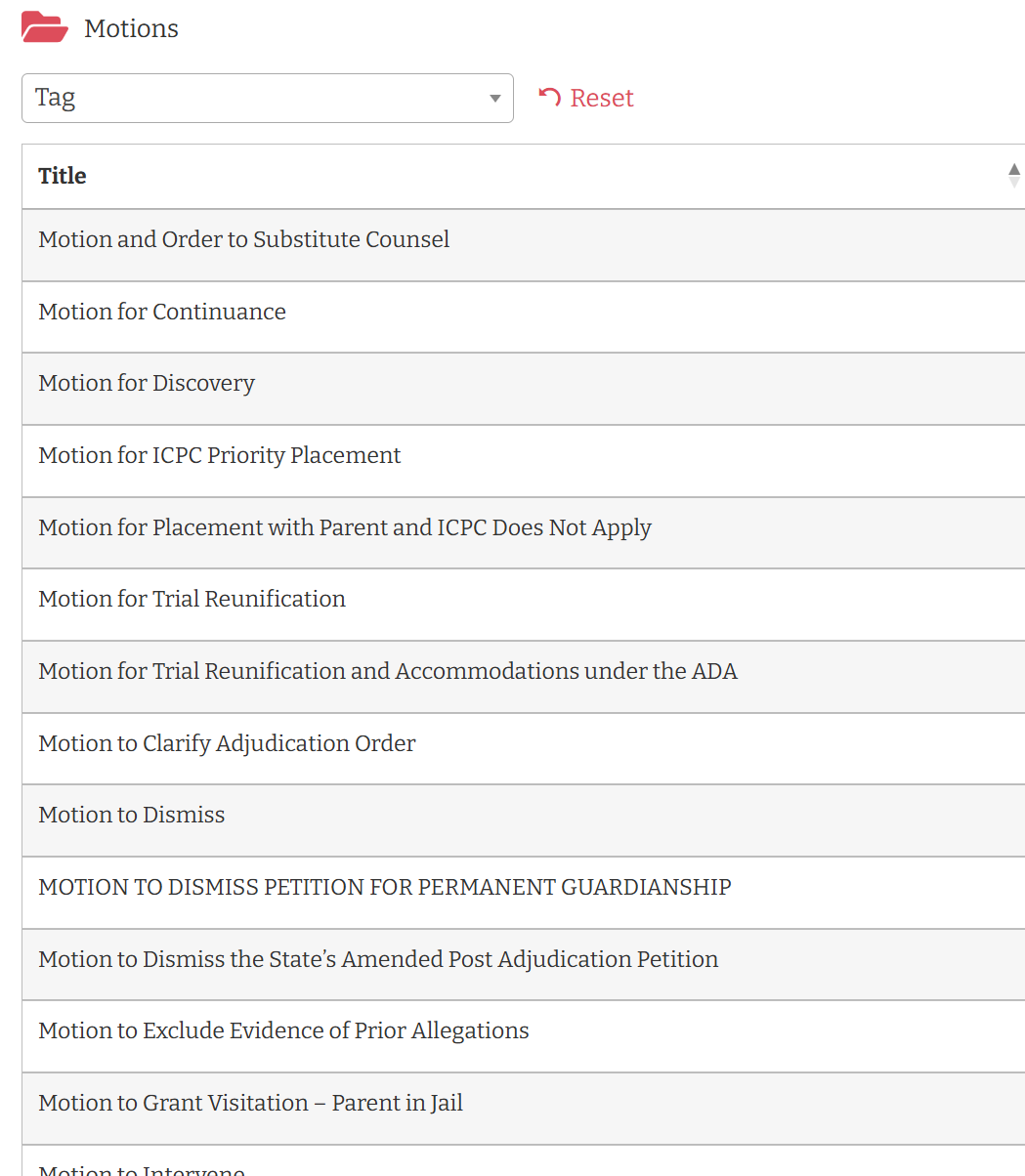
This should make them easier to access, search, and use. Below is a quick look at the new page!
| | |
All documents are filed into folders and are searchable by title, description, and tags.
Want access? Go to our website, oklahomafamilyrepresentation.org/practice-resources, and register for an account!
If you register during the workday, your account activation should be nearly immediate. Otherwise, it may take until the start of the next workday for your account to activate.
If you previously had an account on our probono.net site, you will need to create a new account on the OFR website.
We are adding more resources every day as we build this to be the most effective tool possible!
| | |
Shoutout to Constance Bear, Andrea Russell, and Linda Branstetter!
Linda said of her team: "Thank you for assigning me Constance Bear and Andrea Russell. They are doing phenomenal work. I called my client last night to see if she could meet us in my office Wednesday and she sounded great. I spoke to her for a few minutes and that is the best she has sounded since this case started. I am impressed with their effort and knowledge. Thank you for assigning them to my client. They are making a huge difference." We would also like to shoutout Linda for requesting and effectively using an IDT for this client! She is modeling the attorney-led IDT model well!
| | |
Shoutout to Brian Bush!
Brian's client is incarcerated in county jail and had not seen his children in quite a while. Brian was given the standard excuses about not conducting visits at the jail, but he worked it out with the Sherriff for the visit to take place at the courthouse, and they even removed his cuffs so his client could play with the kids.
This is a testament to what we can accomplish when we are advocating for these parents and children. It was also nice to see DHS and law enforcement work with us on something like this.
| | |
Shoutout to Audrey Huffman!
Audrey Huffman went above and beyond for a parent in a complex case in Region 2. Audrey worked tirelessly to ensure that the children were placed with her client after being in emergency custody and out of the home for 168 days. Congrats on a successful case, Audrey!
| | |
Shoutout and Welcome to Evan Humphreys!
"Just a shoutout to your team...Evan Humphreys writes fantastic appeals"
Not only does he write fantastic appeals, but he has now joined us as our Managing Attorney of Appellate Practice! Welcome, Evan!
| | | | |
Welcome to Mallory Tecmire!
Mallory is our newest Social Worker in Region 2! Mallory has extensive experience working with resource families and brings a wealth of knowledge regarding foster care to the team. Her enthusiasm about working with attorneys and clients as part of IDTs is infectious and we are thrilled to have her on board!
| | Have you done something awesome? Do you have a good story? Share it here! | | |
Tamera Reuber
Helping older youth clients prepare for adulthood is a crucial part of your advocacy. To ensure these clients are equipped for independence:
1. Ensure They Have a Transition Plan
- 10A O.S. § 1-9-107 requires a written transition plan for child clients starting at age 14.
- The plan should cover housing, employment, education, health care, and essential life skills.
-
Ask in court: Has DHS provided an updated and meaningful transition plan in the child's ISP?
2. Help Youth Obtain Essential Documents
- Ensure the client has a state-issued ID or driver’s license (many youth age out without one).
- Verify they have their Social Security card, birth certificate, and Medicaid/health insurance info.
- Ensure that they enroll in Selective Service (if male and 18+), and register to vote if they’re eligible.
3. Advocate for Extended Foster Care (If Beneficial)
- Oklahoma allows youth to stay in foster care until age 21 if they are working or in school.
- This provides housing, financial support, and case management assistance.
- If the youth wants to exit care, ensure they understand the risks and alternatives (e.g., housing insecurity).
4. Connect Them with Education & Employment Resources
- Make sure they are aware of tuition waivers for foster youth at Oklahoma colleges and vocational schools.
- Help them apply for ETV (Education and Training Vouchers) for additional financial support.
- Encourage DHS to provide job training programs, internships, and employment assistance.
5. Discuss Housing & Independent Living Options
- Ask DHS about Transitional Living Programs (TLPs) and Supervised Independent Living (SIL) programs.
- Ensure that they understand renter rights, how to budget for bills, and how to apply for public assistance if needed.
6. Teach Basic Life Skills
- Ensure they have basic financial literacy (bank accounts, budgeting, credit awareness).
- Encourage DHS or another agency to provide cooking, transportation, and time management skills training.
- Encourage DHS to discuss healthy relationships and support networks to avoid exploitation.
7. Ensure They Have Access to Health Care
- Youth aging out are eligible for Medicaid until age 26 (Former Foster Care Medicaid).
- Ensure they know how to access mental health resources, therapy, and reproductive health care.
8. Build a Support System
- Help identify mentors, supportive adults, or organizations that will remain in their life post-foster care.
- Discuss reconnecting safely with biological family if desired.
- Ensure DHS is making efforts to maintain stable relationships rather than just focusing on case closure.
9. Encourage Self-Advocacy
- Teach youth how to speak up in court and advocate for their needs.
- Encourage participation in Youth Advisory Boards or local advocacy groups.
- Make sure they understand their rights and options as they transition out of the system.
These resources provide authoritative guidance on the legal and procedural aspects of assisting older youth transitioning from foster care in Oklahoma.
Transition Planning Requirements:
Oklahoma Statutes Title 10A, Section 1-9-107: This statute outlines the "Successful Adulthood Act," detailing services available for youth transitioning from foster care.
Placement Preferences for Foster Care:
Oklahoma Statutes Title 10A, Section 1-7-106: This section addresses the placement of children into foster care, emphasizing preferences for relatives or those with a kinship relationship.
Confidentiality Provisions:
Oklahoma Statutes Title 10A, Section 1-6-107: This statute outlines confidentiality requirements and penalties related to juvenile records.
Oklahoma Department of Human Services (OKDHS) Policy Manuals:
Bridge Resource Family Handbook: This handbook provides comprehensive guidelines for foster families, including policies on transition planning for youth available at https://oklahoma.gov/content/dam/ok/en/okdhs/documents/okdhs-publication-library/09-351.pdf.
Child Welfare Services Practice Model: This document outlines the practice model for child welfare services, including policies on permanency planning and transition services available at https://cwtraining.oucpm.org/wp-content/uploads/2019/05/Practice-Model-revised-July-2018.pdf.
| | |
In Re the Adoption of P.A.A. and I.R.A.
The Oklahoma Court of Civil Appeals reversed the decision of the district court to vacate the Final Decree of Adoption. The district court issued an order vacating the adoption order on grounds of fraud or duress. Father argued that he signed the consent document with the verbal promise of continued visitation and contact with the children. District court found that the relinquishment form should have been executed before a district court judge, not a notary (as occurred here). COCA, however, decided that since the petition was not filed in the three-month limitation period, the adoption was not subject to change, and reversed the order vacating. See full opinion
| |
In the Matter of D.C. (Mother)
Mother argues the State failed to appropriately request immediate termination, and therefore she was entitled to an Individualized Service Plan. She never received a treatment plan or ISP. She also argued insufficient notice of the grounds for termination. COCA held that immediate termination was appropriate and affirmed the decision of the trial court. See full opinion
| |
In the Matter of S.W.
The Oklahoma Court of Civil Appeals affirmed a termination of parental rights, despite Mother's argument that a conflict was created by the appointment of one lawyer to represent both Mother and Father. See full opinion
| |
In the Matter of Grandparental Visitation Rights to G.C.L.
Parental rights of natural parents were terminated and Grandmother sought visitation with child. Child was subsequently adopted and adoptive parents moved to dismiss the petition for visitation. Adoptive parents argued Grandmother was not the paternal grandparent of the child as her son's rights had been terminated. However, COCA found that that Grandmother continued to possess standing to seek visitation following the termination of her son's rights. COCA found that the trial court committed error when it dismissed the pending petition for visitation. Remanded for a hearing on the merits of the visitation petition. See full opinion
| | |
In the Matter of the Adoption of E.R.W., Deprived Child
The Oklahoma Court of Civil Appeals affirmed the denial of Grandmother's petition for adoption. Grandmother argued that relative preference should have been considered. The district court and COCA both decided that adoption by the Foster Parents rather than by Grandmother was in the child's best interests. See full opinion
| |
In the Matter of D.C. (Father)
The Court of Civil Appeals affirmed the decision of the trial court. Father argued that since the state failed to file a petition for immediate termination and failed to request an extension, the child should have been returned to his custody after 7 days. The trial court granted 15 additional days to file for immediate termination. He argued he was entitled to a treatment plan and conditions to correct, but COCA found that he was not. He also argued violation of due process as the trial for immediate termination did not occur for two years after the petition was filed. COCA found that since the trial was to be an immediate termination, it was not subject to the heightened parental interest of a timely adjudication. COCA affirmed the decision of the trial court. See full opinion
| |
In the Matter of R.S. and K.S.
Father asserts error in the trial court's failure to secure counsel for him after his attorney withdrew representation. Father was without representation for several months. During this time, the visitation plan was suspended and changed to therapeutic visitation and visitation was never re-instated. Because of Father's lack of representation, the trial court dismissed the standing deprived adjudication order and the State's motion to terminate Father's parental rights. A new deprived adjudication order was entered and Father was given an ISP to give another chance to work toward correcting the conditions. Due to the actions made by the trial court to remedy the improper deprivation of counsel, COCA affirmed the termination. See full opinion
| | |
Katy Fortune
April is National Child Abuse Prevention Month, a time to acknowledge the importance of collaborating as individuals, families, communities, and systems to prevent child abuse and neglect and gain greater insight into the factors that contribute to them. One of the most powerful things we can do in our pursuit of understanding is recognize the many factors that contribute to caregivers’ ability to nurture and protect their children. Too many people and communities still view child abuse and neglect as a moral failing; in reality, the following frequently interact to influence a person’s behavior and choices, often without their knowledge or understanding:
-
societal (e.g., federal and state policies, social norms regarding parenting and family functioning, etc.)
-
systemic (e.g., collaborations or lack thereof within a jurisdiction and/or between systems such as child welfare, mental health and substance use treatment, criminal legal, juvenile deprived, etc.)
-
organizational (e.g., programs and policies within social service and other helping agencies)
-
communal (i.e., presence or absence of community members and lived experts/mentors, cultural beliefs and practices)
-
familial (i.e., customs, relationship dynamics, etc.)
-
individual (i.e., self-image, adverse childhood experiences [ACEs], etc.)
A major part of prevention is educating ourselves and our clients about these factors and talking to them about how to build protective capacities to counterbalance the effects they may have on beliefs and behaviors. For example, trauma and stress can interfere with caregivers’ ability to nurture their children; therefore, it is important to explore and acknowledge the diverse ways families can show healthy affection.
To learn more about protective capacities and strategies for addressing them with your clients, visit https://www.childwelfare.gov/preventionmonth/protective-factors-conversation-guides/
| |
Are 60,000 TPRs Necessary?
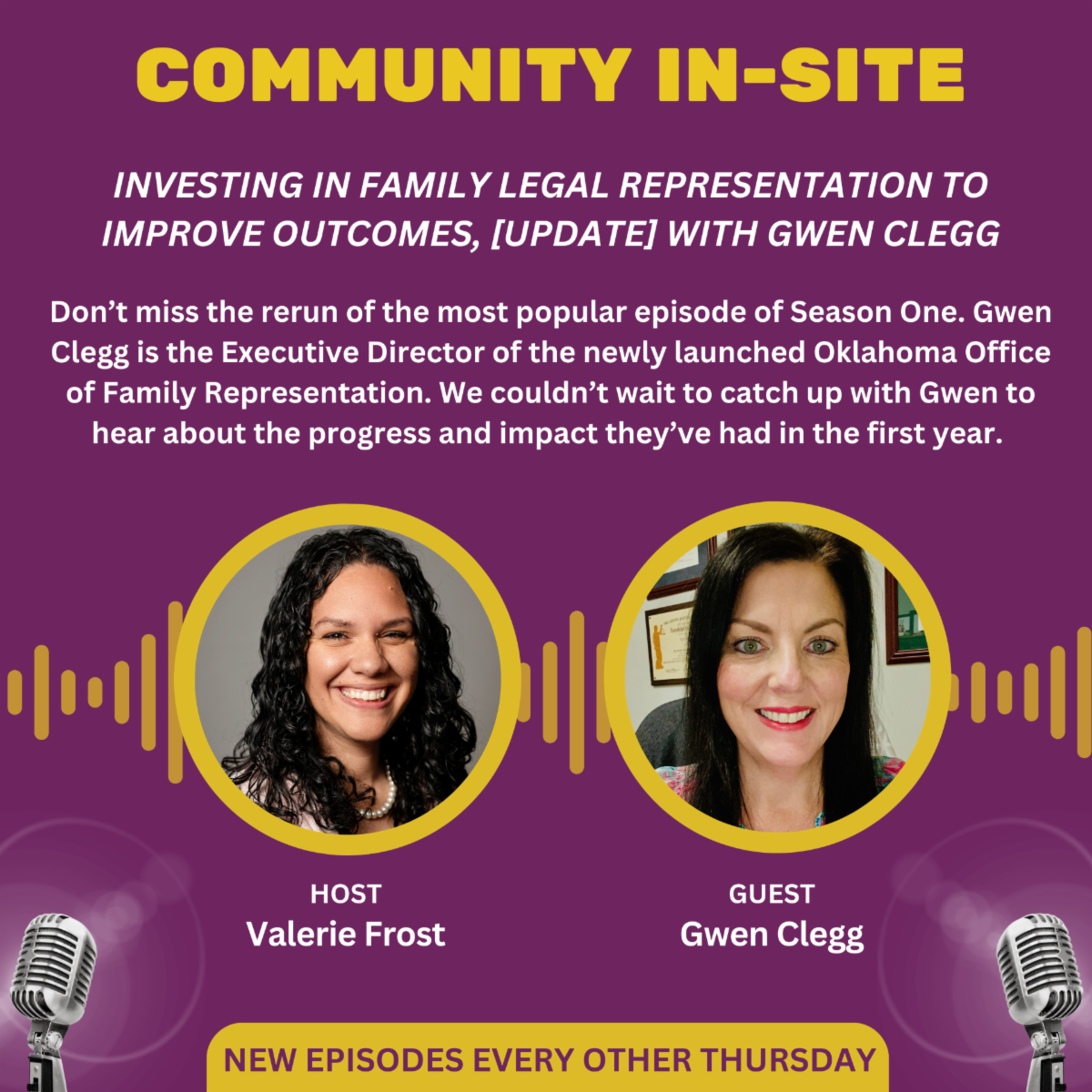
In this episode, Angela interviews Professor Vivek Sankaran, from the University of Michigan's School of Law and Clinical Professor for their Child Advocacy Law Clinic, Child Welfare Appellate Clinic, and 1L Advocacy Clinic. Professor Sankaran encourages stakeholders to question whether TPR is in the best interests of as many children as we think it is. He and Angela talk about his article, The ties that bind us: An empirical, clinical, and constitutional argument against terminating parental rights, which found over 60,000 TPRs were granted annually between 2016-2019, despite a declining foster care population. While recognizing TPR is necessary in some cases, he poses some thoughtful questions for others.
| | | | | |