JANUARY 2026 | VOLUME 2 ISSUE 7 | | |
Gwendolyn Clegg
Happy New Year!
The new year brings exciting thoughts and visions of what we can accomplish in 2026! In wishing you a Happy New Year, I recognize the extraordinary work you have accomplished in defending Oklahoma families.
2025 was an extraordinary year of growth for OFR as well as a year full of challenges for our families, from cuts to services that threaten family stability to modifications in federal policy. Through it all, I have seen you go above and beyond in your efforts to keep families safely together. Keep an eye on our social media for a year end review!
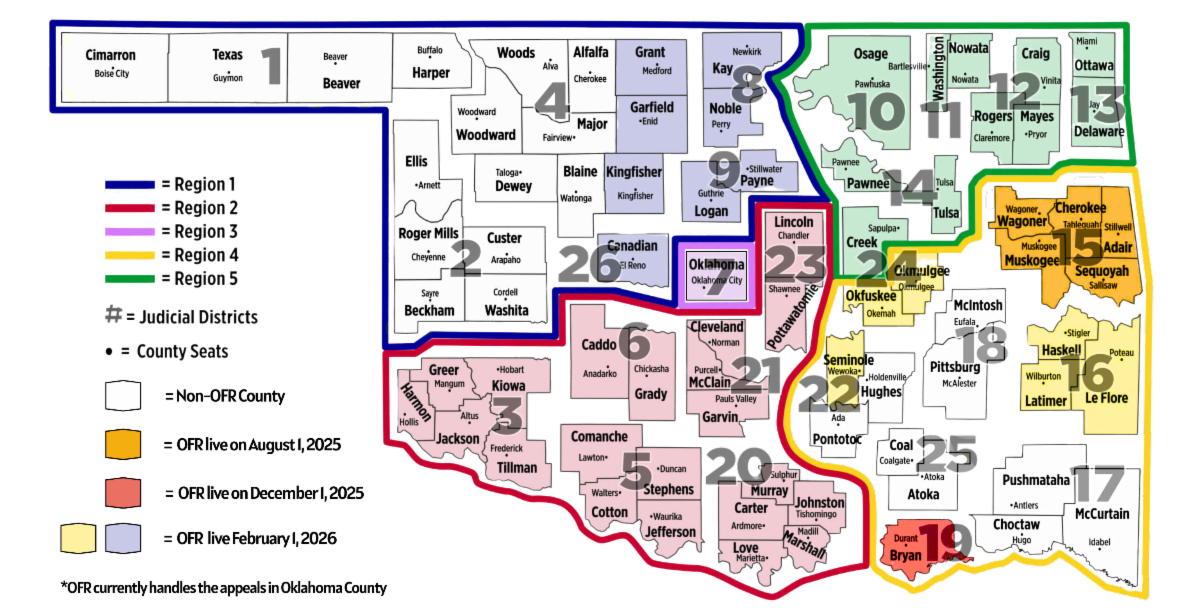
As we closed out 2025, OFR prepared for the new year by adding additional staff to implement OFR into twenty-one (21) more counties. As of February 1, 2026, OFR will be operational in fifty-one (51) of the seventy-seven (77) counties in Oklahoma, representing 66% of the State of Oklahoma.
OFR has new training opportunities posted on our website as well as opportunities for you to seek case consultations and strategies with OFR’s staff. Furthermore, OFR is continually seeking individuals with lived experience to become parent and youth mentors as well as Master level Social workers to join OFR’s interdisciplinary defense teams for parents and children.
We hope as you move into the new year you feel valued and know that your hard work is recognized. It is my sincere hope that you will use your renewed strength, compassion, and exuberance to ferociously represent your clients.
| | Your 2026 Child Representation Reminder: | | |
Timothy Michaels-Johnson
In Oklahoma, representation of an infant relies upon the Substituted Judgment model of child representation, not Best Interest. While 10A O.S. 1-4-306(A)(2)(c) includes the language “which serves the best interests of the child,” this should be read in light of the previous phrase, “attorney shall substitute his or her judgment for that of the child” and in contrast with 10A O.S. 1-4-306(B)(3)(b) which dictates specifically that a guardian ad litem shall “advocate for the best interests of the child.”
Attorneys in Oklahoma have historically been led to believe they are expected to represent the best interest of infants, but substituted judgement is the recognized model of child representation articulated under Oklahoma statute. The National Association of Counsel for Children released their Recommendations for Legal Representation of Children and Youth in Neglect and Abuse Proceedings in 2021. As these recommendations were prepared for a national audience, they provide a clear articulation of the different models of child representation seen across the country, including Guardian ad Litem (GAL)/Best Interest Representation and Substituted Judgment.
Guardian ad Litem (GAL)/Best Interest Representation: used interchangeably, these terms describe a legal professional, duly licensed by a bar association or state supreme court, who is appointed by the court to advocate for the child or youth’s best interest, based upon the attorney’s own assessment after conducting an independent investigation. Although advocates for a child’s best interests are not bound by the expressed wishes or litigation objectives of the child, in most jurisdictions they have a concomitant responsibility to inform the court of the child’s wishes. While some jurisdictions use the term “GAL” to describe a lay advocate, that is not how the term is used in this document.
Substituted Judgment: method of legal representation for clients of diminished capacity, guided by the lawyer’s understanding of what the client would request if they were able to verbalize their goals. Attorneys should make firsthand observations of the client, conduct an independent investigation, and seek guidance from collateral sources (family, supports, child development experts, and other professionals) to develop a substituted judgment position. For further information on this approach, see Recommendation I, below, and the ABA Model Act Governing the Representation of Children in Abuse, Neglect, and Dependency Proceedings.
Id. at 6-7. The NACC recommendations later explain when expressed interest representation is not possible in situations such when a client is an infant, the substituted judgement model is the preferred approach. Id. at 10-11. This aligns with the language of 10A O.S. 1-4-306(A)(1)(c) that the attorney should substitute judgment for the child. While these models may be similar, there is a key difference. Substituted Judgement ensures that the Court is able to make their best interest decision for the child (as required by 10A O.S. 1-1-102(E)) based upon consideration of what the attorney believes the child would have wanted if they had had the capacity to direct representation based upon the attorney’s independent investigation.
Since its inception, OFR has been providing training and has been trying to assist attorneys representing children to see this difference and provide substituted judgment representation of infants as articulated in statute. OFR does expect contractors to utilize the substituted judgment model in representation of infants and we are excited to see this appropriate reading of statute acknowledged even at the judicial level. By example, the Honorable Judge Gore recently explained the importance of using the substituted judgement model in representation of infants during her ethics presentation at the 2025 Children’s Court Improvement Program Tulsa Conference.
| | |
Shoutout to Emily Turner!
We have been told that Emily is incredible to work with and is doing a fantastic job representing her clients!
| |
Shoutout to Courtney Jordan and Lexie Allen!
Courtney and Lexie had a case dismissed before show cause!
| |
Shoutout to Bethany Caballero-Wilson!
Bethany's clients have spoken highly of her mentorship:
"From the beginning Bethany has always been there for me; whether it was because I needed to vent; or I didn’t understand something or I just needed advice. My team has been amazing and without them I am not sure my daughter would be back home yet. Because of the amazing team I was given ; I now want to do the job that Bethany does."
"Bethany has taught me so how to grocery shop; along with helping me learn how to advocate for myself, I think I am a better mom bc of my team."
| |
Shoutout to Carolyn Wilson!
For securing a reversal on In the Matter of T.F.!
| |
Shoutout to Sheri Johnson!
For taking on our very first children's appeal!
| | Shoutout to Graham Fishburn!
Graham had OFR's first appellate consult prior to the termination trial. Graham has had several trial court consults about this case with his managing attorney. Graham is eager to preserve all appealable issues at the termination trial scheduled for January. | |
Shoutout to Dodi Duffield, Kathy Baker, and Terry Allen!
This team won an adjudication trial on December 18, resulting in the return of a child to their parents just in time for Christmas.
| |
Shoutout from Your Case Plan:
We’d like to recognize our most engaged Oklahoma Office of Family Representation users for December: Charise Walker, Randi Mann, Kimberly Welch, and Savannah Thomas.
We’re excited to carry this momentum into the new year with thoughtful platform enhancements and new features — stay tuned.
| |
Shoutout to Stephanie Marston-Younge!
For filing OFR's first petition for extraordinary writ
| | Have you done something awesome? Do you have a good story? Share it here! | | |
The Tulsa County Bar Association once again organized the holiday gift challenge, bringing together attorneys and law firms across Tulsa to provide presents for some of our recently reunified clients.
As always, this was a beautiful event! Here are a few good stories from the TCBA Holiday Challenge:
"from a Mother…she just called me crying happy tears telling us thank you over and over again because we made them feel like they matter."
"I would like to thank each and every one of you for making my children and my Christmas come true. This year is by far the BEST Christmas for all of us! Thank you for getting us everything we wanted on our Christmas list. You guys definitely made us feel that "we're worth it", "we MEAN something", "we're NOT alone", "we're NOT left out", especially for ME. It's been a rough few years for all of us but THANK you for truly loving us, thank you for your time and investments, for appreciating my process and especially for celebrating our journey with us! Your love and support definitely help me see a better future, as well. Merry Christmas and Happy New Year from our Family to YOURS!" (photo below)
| | |
Holly Iker, Region 2 Managing Attorney for Parent Representation
“KILL THE INDIAN, SAVE THE MAN”:
WHY THE INDIAN CHILD WELFARE ACT IS STILL NECESSARY IN 2026
“Kill the Indian in him and save the man.” --Captain Richard Henry Pratt describing his philosophy of assimilation during an 1892 speech to the National Conference of Charities and Correction in Denver, Colorado. During the 1880s, Captain Pratt established the first off-reservation boarding school in Carlisle, Pennsylvania. Boarding schools were established to forcibly assimilate American Indians into the Christian and White cultural values. Boarding schools led to broken families and broken cultures by mandating that children be removed from their families, stripping them of their Native customs and traditions, and forbidding them to speak their Native language. Native children were punished for speaking their native language, banned from exercising any traditional or cultural practices, stripped of their traditional clothing, hair, and all things and behaviors reflective of their culture. By 1890, attendance was enforced through threats of cessation of rations. By 1926, nearly 83% of Indian school-age children were attending boarding schools. The Federal Indian Adoption Project operated between 1959 and 1976. The goal of this project was to have Native children adopted by non-Indians. The Native child was considered “the forgotten child, left inadequately cared for on the reservation, without a permanent home or parents he could call his own.” In April 1974, during the ICWA Congressional hearings, the testimony revealed that a minimum of 25% of all Indian children were in foster care, adoptive homes, or boarding schools. As a result of this historical and intergenerational trauma, traditional parenting skills were lost or impaired, kinship bonds were broken, a sense of identity and belonging was lost, and traditional gender roles and knowledge were compromised. These losses were compounded by the continued devaluation of American Indian peoples and the dominant culture’s failure to acknowledge the grief and loss suffered by tribal people. The prohibition of spiritual practices prevented or limited grieving in a culturally appropriate manner. This trauma led to unresolved grief and loss across many generations that still exists today.
WHAT ICWA CONTINUES TO PROVIDE:
Cultural Preservation: ICWA ensures Native children maintain their identity, language, and connection to their tribes, combating cultural erasure that occurred historically when children were removed from their homes.
Prevents Generational Trauma: ICWA addresses the legacy of forced assimilation and separation that caused immense harm, aiming to heal communities by keeping families together.
Tribal Sovereignty: ICWA recognizes tribes’ inherent right to govern their own people, allowing them jurisdiction over child welfare cases and ensuring culturally relevant care.
Best Interests of the Child: By prioritizing placements with extended family, tribal members, or other Native families, ICWA provides stability and positive outcomes for Native youth.
Corrects Systemic Bias: ICWA counteracts the disproportionate removal and non-Native placement of Indigenous children by mandating specific procedures and expert testimony in court.
Addresses Ongoing Disparities: American Indian/Alaska Native youth are still overrepresented in foster care (2.8 times the general population), making ICWA’s protective framework vital.
KEY ICWA REQUIREMENTS STILL RELEVANT:
Active Efforts: States MUST make diligent efforts to keep families together.
Tribal Notification: Tribes MUST be notified of cases involving their tribal children.
Placement Preferences: Mandates placement with extended family, tribal members or other Native families FIRST.
Expert Testimony: Requires testimony from individuals familiar with Native culture in removal cases.
In essence, ICWA is NOT just a historical “fix”. It is a crucial, living law upholding human rights, cultural survival, and effective child welfare practices for Native children in 2026 and the future.
| | |
National Mentoring Month: A New Year, A Lasting Impact
Randi Mann, DSW Region 2
January marks both National Mentoring Month and the beginning of a new year—a time of reflection, renewed purpose, and fresh starts. At the Oklahoma Office of Family Representation (OFR), we begin this year by recognizing the powerful role mentoring plays in strengthening families and supporting youth involved in the child welfare system.
Our parent and youth mentors embody the spirit of the New Year. They are living examples that growth, healing, and change are possible. By drawing from their own lived experiences, mentors offer hope and guidance to families and young people who may be facing one of the most difficult chapters of their lives.
Parent mentors walk alongside families with empathy and understanding, helping parents navigate complex systems while reminding them that they are not defined by their past. Youth mentors provide encouragement and connection, helping young people find their voices, build confidence, and envision new possibilities for their future.
As we step into a new year, OFR remains committed to fostering meaningful mentor relationships that promote dignity, empowerment, and lasting change. National Mentoring Month is a reminder that when we invest in people—especially those with lived experience—we create pathways to stronger families and brighter futures.
We are deeply grateful to our parent and youth mentors who continue to inspire hope, model resilience, and make a difference every day. Their impact is felt not only in individual lives, but across our communities as we move forward into the year ahead.
Remember to highlight and acknowledge the great work that your mentors are doing on your Interdisciplinary Teams by submitting good stories! Brag on your mentors!
| | |
In the Matter of T.F., R.F., and C.F., Alleged Deprived Children
REVERSED: Father appeals an adjudication order finding his children deprived as to him, arguing his due process rights were violated when the adjudication hearing continued in his absence after his video connection from jail was disconnected. Father was incarcerated and appearing remotely, after the break, the trial court waited briefly, noted the link remained open, and proceeded with additional witnesses and closing argument without Father present. COCA held that Father’s due process rights apply at adjudication and are not limited to termination proceedings, and continuing after Father’s live video feed was cut violated his right to participate in a meaningful way. COCA reversed the adjudication order as to Father, finding the trial court should have paused the proceedings until Father’s attendance was secured. Read full opinion
| |
In The Matter of C.F. and J.R., Alleged Deprived Children
Mother appeals a jury verdict terminating her parental rights. Mother did not challenge the statutory grounds for termination, limiting her appeal to claims that the expedited trial setting violated due process, that DHS failed to make active efforts under ICWA, and that the State failed to prove beyond a reasonable doubt that continued custody would likely result in serious emotional or physical damage to the children. COCA found Mother had notice of the termination motions well before trial, failed to object to the scheduling order or request a continuance, and announced she was ready to proceed, waiving any procedural due process claim. The record reflected extensive reunification services. COCA held ICWA does not require specific wording from the expert witness, and the expert testimony combined with the evidentiary record supported the jury’s beyond a reasonable doubt finding. COCA affirms. Read full opinion
| |
In the Matter of H.G., Deprived Child
Mother appeals the denial of her motion to vacate the judgment terminating her parental rights, arguing the State failed to prove active efforts, failed to present qualified expert testimony, and failed to support termination by clear and convincing evidence. At trial, the State presented active efforts made, including testimony and documentation of services offered, which COCA held satisfied ICWA requirements despite Mother’s claim that a written list of efforts was improperly relied upon. COCA further held Mother waived any challenge to the expert’s qualifications by failing to object at trial. COCA affirms. Read full opinion
| |
In the Matter of F.R.G., Alleged Deprived Child
Mother and Father appeal a jury verdict terminating their parental rights, arguing the State failed to prove at least one statutory ground by clear and convincing evidence, failed to prove active efforts, and failed to prove beyond a reasonable doubt that continued custody would likely result in serious emotional or physical damage to the child. COCA held the State presented sufficient evidence of active efforts through hands-on assistance, transportation, funding, and service coordination, and that ICWA does not require expert testimony to be the sole basis for the likelihood of harm finding. COCA found qualified expert testimony, combined with other evidence, supported termination and the jury’s determination. COCA affirms. Read full opinion
| | |
In the Matter of A.E., A.K., S.K., E.K., and B.K., Alleged Deprived Children
Father appeals an order appointing a permanent guardianship over his minor children, arguing the State failed to present clear and convincing evidence of parental unfitness and that his due process rights were violated when permanency hearings occurred without a court reporter. COCA found the record showed clear and convincing evidence supporting parental unfitness. COCA further held the trial court properly changed the permanency plan from adoption to guardianship where termination was not in the children’s best interests. The trial court acted within its discretion entering the Guardianship order without visitation, and there remains a practical difference between termination and guardianship even if visitation is denied, as there remains a possibility of regaining custody or modification that allows for visitation. Father failed to show prejudice from the absence of a court reporter in this case, BUT COCA finds that "the absence of a transcription could be a deprivation of a parent's due process right to a fair trial and right to defend in a deprivation proceeding." The case was remanded solely for the trial court to enter the required statutory findings supporting guardianship. Read full opinion
| |
In the Matter of R.H., Alleged Deprived Child
Father appeals a jury verdict terminating his parental rights, arguing DHS failed to make reasonable efforts, that the trial court committed fundamental error in submitting certain statutory grounds to the jury without specifying prior conditions, and that the evidence was insufficient to support termination. The record showed R.H. was adjudicated deprived shortly after birth following multiple prior terminations involving Father, ongoing domestic violence, substance abuse, housing instability, and Father’s failure to engage in services or appear at hearings. COCA held that reasonable efforts findings were supported by the record, that Father had standing to challenge those findings, and that the issue was reviewable, but that DHS’s efforts were adequate. COCA rejected Father’s due process and jury instruction arguments, finding the petition, instructions, and verdict forms sufficiently identified the conditions Father failed to correct, and held clear and convincing evidence supported termination. COCA affirms. Read full opinion
| |
In the Matter of L.G. and W.G., Alleged Deprived Children
Mother appeals a jury verdict terminating her parental rights, arguing DHS failed to provide active efforts, that inaccurate evidence regarding sexual abuse was improperly presented to the jury, and ineffective assistance of counsel. A qualified tribal expert testified that active efforts were made and were unsuccessful, and that continued custody would likely result in serious emotional or physical damage to the children. COCA held the State met its burden on active efforts and ICWA’s heightened standards, that the inaccurate reference to sexual abuse in an admitted adjudication order was harmless error because the jury instructions and verdict forms did not rely on that ground, and that counsel’s performance was not deficient. The case was remanded solely for the trial court to conform the written termination order to the jury’s verdict by checking the correct statutory grounds. Read full opinion
| | Interested in being notified as appellate decisions are made? Sign up for OSCN's mailing list using this link. | | |
Morgen Potts - Trial Attorney, Bryan County
Morgen Potts is an experienced attorney with over six years in the legal field, specializing in juvenile deprived cases and serving as a Guardian ad Litem. As the owner of a successful law firm, Morgen has managed a team while handling a diverse caseload, including family law matters such as divorces and guardianships. Known for strong leadership, critical thinking, and effective communication, Morgen brings a strategic approach to legal practice and is deeply committed to advocating for families. Her work reflects a passion for collaborative, interdisciplinary representation aimed at improving the lives of children and families.
Morgen enjoys reading, weight lifting, and spending quality time with her husband and two children.
| |
Lisa Garcia - Trial Attorney, Tulsa County
Lisa Garcia, founding partner of Tribal Justice Advocacy and Law, PLLC is a proud citizen of the Chickasaw Nation and a graduate of the University of Tulsa College of Law. For more than fifteen years, she has devoted her career to juvenile law and child welfare, advocating for children and families.
Throughout her career, Lisa has served in a variety of roles within the juvenile system, including Guardian ad Litem, prosecutor for the Cherokee Nation, and attorney for parents, the Tribe, and the State. This well-rounded experience gives her a unique perspective and informs her trauma-informed, culturally grounded approach to advocacy.
Lisa is married to her college sweetheart and together they are blessed with a beautiful family, including two precious grandbabies.
| | |
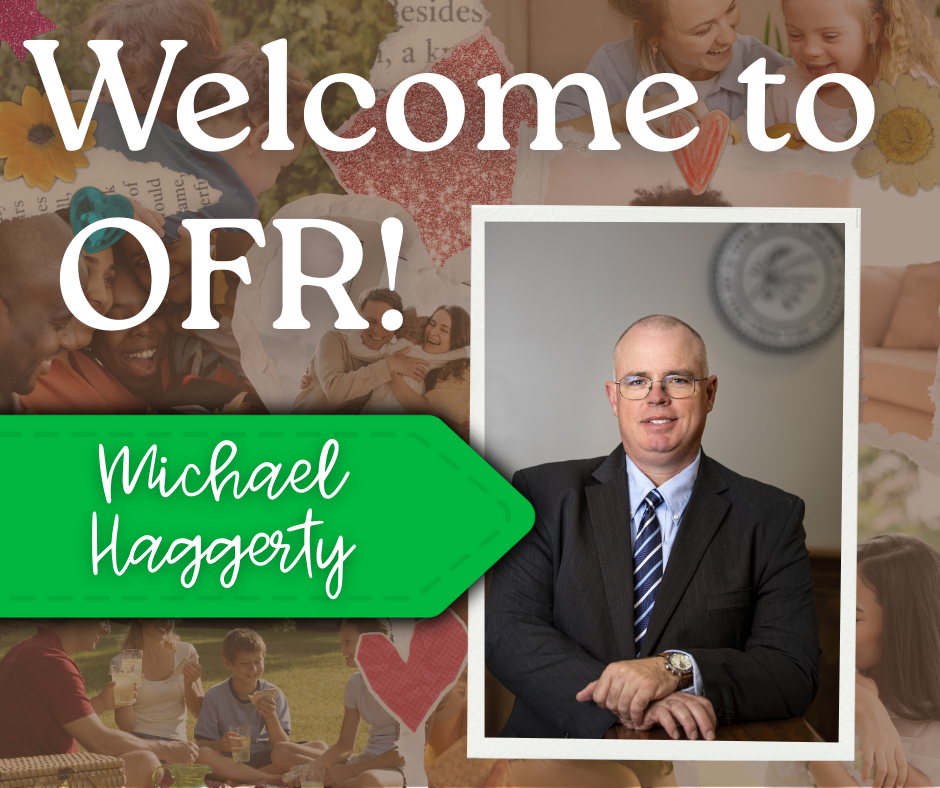
Michael Haggerty - Trial Attorney, Bryan County
D. Michael Haggerty, II, was born and raised in rural Bryan County on a family farm. He attended the University of Oklahoma as a National Merit Scholar, graduating with his Bachelor of Arts in 1993. He remained at the University of Oklahoma for law school, graduating with a Juris Doctor With Distinction in 1996, and maintained a private civil and criminal practice in Durant until 2022, when he left to join the Choctaw Nation of Oklahoma as the Criminal Division Chief for the Tribal Prosecutor’s Office. After being promoted to Tribal Prosecutor in 2024, he left the Nation in the fall of 2025, returning to private practice. Mike was a member of the Board of Directors for the Oklahoma Criminal Defense Lawyers Association from 2008-2022, having served two terms as President 2012-2014, and Treasurer 2017-2022. He is a married father of three adult sons and through his stepdaughter, a grandfather as well. Mike is a volunteer for Scouting America, serving primarily as Madill’s Scoutmaster
| |
Zach Curtis - Trial Attorney, Osage and Pawnee Counties
Zach Curtis is a born Oklahoman from Stillwater, Oklahoma. He graduated from the University of Tulsa College of Law in 2023 and has spent his legal career in the non profit sector helping Oklahoma's indigent population have access to justice and legal remedies that they normally would be unable to afford.
| |
| How did you like this email? | | | | | | |