JUNE 2026 | VOLUME 2 ISSUE 12 | | Note: If trial counsel's notice of appeal to the Managing Attorney allows fewer than 5 judicial days for the appellate attorney to commence the appeal, the trial attorney must file the All-in-One Appellate Order Form, an Entry of Appearance (EOA), and Petition in Error (PIE), in both the trial and appellate courts. Appellate counsel will be assigned after these items are filed. | | |
Gwendolyn Clegg
June is National Family Unification Month, formerly known as Reunification Month.
“The origination of Reunification Month came from a parent-centered place. A place where the work of the parent was not only honored on an individual place but also highlighted the role of parents in child welfare. This month is meant to be a social justice call to advocates – a time to highlight the importance that families receive due process, protection of parental constitutional rights and that parental voices are integrated in every decision-making moment within the life of their case - pre and post removal. Reunification events can and should celebrate the resource caregivers, attorneys, caseworkers and service providers who have fought tirelessly to support a family reunification. They are heroes in the process and are needed and valued. The issue is when we stop there; only raise up those heroes and forget the purpose of these events - to honor parents, listen to them and ask them what they need from us to keep their family unified. Rajaraman, Jey, “Why celebrating reunification month matters?” Family Justice Group, June 2023. https://www.thefamilyjusticegroup.org/post/why-celebrating-reunification-month-matters
“Each June, the ABA Center on Children and the Law has celebrated Family Reunification Month as a time to recognize the tireless efforts of parents and families working toward reunification, as well as the professionals who support them. These celebrations have uplifted families, navigating the trauma of separation and the long road toward being together again. In 2024, we intentionally broadened our focus and recognized the month of June as Family Unification Month. This shift reflects a powerful truth: family unification is not just a case outcome or a permanency goal—it’s a lifelong journey. It is more than a system's response to a family’s struggles; it is a collective responsibility to ensure families are supported, protected, and kept whole whenever possible.” https://www.americanbar.org/content/dam/aba/administrative/child_law/from-reunification-to-family-unification.pdf
Interdisciplinary legal representation of families significantly achieves more reunifications and lasting unifications. The study on the Effects of Interdisciplinary Approach to Parental Representation in Child Welfare1 “proves that we are recklessly, needlessly, unacceptably separating children from their parents all too often.” 2 The study leads to the conclusion that all families should be given interdisciplinary legal representation. 3
Researchers studied the outcomes of nearly 10,000 families, which included 18,000 children.4 Of all the families studied, the conclusion was that 12% of children in foster care would be home if they had the right kind of legal representation. If we applied that percentage in 2020 to every state in the nation, where the majority of parents did not and still do not receive interdisciplinary representation, there are likely over 50,000 children in foster care for no other reason than that their parent was not given the right kind of legal representation in the child welfare court case.5 The study’s ultimate conclusion was, “the kind of representation afforded to parents makes a dramatic difference in the length of time children spend in foster care.6
The authors of the study believed that for parents to survive and thrive through a child welfare proceeding, most likely the worst nightmares of their life, is to be in regular close contact with people who care deeply about them and their situation.7 The vision for interdisciplinary representation was clear that parents would be represented by a team of professionals comprised of lawyers, social workers, and parent mentors/advocates. The concept envisioned each parent having a team of people working closely with them throughout the case, answering their calls, proactively calling them, reminding them of court hearings, scheduled visits or requirements imposed on them by the court, giving the parent an opportunity to vent at their legal team instead of a caseworker, and to make parents feel less alone.8
“The interdisciplinary team regards the parent herself—her needs, her emotional condition, and the interactions she must regularly have with agencies out of court—as the most important focus of the work.”9
Prior to the introduction and use of interdisciplinary teams, solo lawyers always thought about child welfare as being about only advocacy in the courtroom. Whereas the interdisciplinary team knows and “sees the focus of its work as the client as a full human being.”10
Interdisciplinary representation directly correlates to a family’s reunification and continued unification. As we focus on unification this month, we should also focus on learning the intricacies of effective and meaningful interdisciplinary legal representation. The critical characteristics of an interdisciplinary team include proactive planning, anticipating next steps and developing a plan for success calculated to persuade the caseworkers or the court.11
OFR has scheduled various interdisciplinary trainings this month. I encourage you to attend the training, put down your phone, remove all distractions, actively listen and ask questions. This training will provide you with the tools and skills to provide high-quality legal representation to the families of Oklahoma. “The Interdisciplinary approach is a best practice.”12
___________________________________________________________________________________
1 Lucas A. Gerber, Yuk C. Pang, Timothy Ross, Martin Guggenheim, Peter J. Pecora, Joel Miller, Effects of an interdisciplinary approach to parental representation in child welfare, Children and Youth Services Review, Volume 102, 2019, Pages 42-55. https://www.sciencedirect.com/science/article/pii/S019074091930088X?via%3Dihub
2 How Holistic Legal Representation Supports Reunification, supra.
3 Id.
4 Lucas A. Gerber, Martin Guggenheim, Yuk C. Pang, Timothy Ross, Yana Mayevskaya, Susan Jacobs, Peter J. Pecora, Understanding the effects of an interdisciplinary approach to parental representation in child welfare, Children and Youth Services Review, Volume 116, 2020, 105163. https://www.sciencedirect.com/science/article/pii/S0190740920304643?via%3Dihub
5 How Holistic Legal Representation Supports Reunification, supra.
6 Effects of an Interdisciplinary Approach, supra, and Guggenheim, Martin, How Family Defender Offices in New York City Are Able to Safely Reduce the Time Children Spend in Foster Care, Family Law Quarterly, Volume 54, Numbers 1 & 2, 2020 at page 7. https://papers.ssrn.com/sol3/papers.cfm?abstract_id=3795603
7 How Holistic Legal Representation Supports Reunification, supra.
8 Id.
9 Id.
10 Id.
11 Guggenheim, Martin, How Family Defender Offices in New York City Are Able to Safely Reduce the Time Children Spend in Foster Care, Family Law Quarterly, Volume 54, Numbers 1 & 2, 2020 at page 30.
12 Id. At 34.
| | |
Shoutout to Leah Terrill-NesSmith and Luwana John!
For excelllently representing two parents who reside outside the United States. Leah and Luwana provided high-quality legal representation in this complicated case and maintained communication with their clients living in another country. Leah and Luwana were successful at the TPR jury trial. The parents’ rights were NOT terminated. The judge then ordered that the child be returned to the country of origin for placement with maternal grandparents. They all did fantastic on this case!
| |
Shoutout to Teressa Williams!
For her zealous advocacy of her nine-year-old client's expressed wishes in a contentious case!
| |
Shoutout to Jennifer Barton!
Resilience in Action - A huge round of applause for Jennifer Barton! Jennifer has consistently demonstrated what it means to be truly resilient and compassionate. Navigating the complexities of our work isn’t always easy, but Jennifer meets every challenge with a steady hand and a heart for our clients. Her ability to provide empathetic, high-level support to parents is an inspiration to the whole team. We are lucky to have you, Jennifer!
| |
Shoutout to Stephanie Robinson!
For defending her child client on appeal by filing an entry of appearance, response to the petition in error, and counter designation of record.
| |
Shoutout to Spencer Schroeder!
The Supreme Court granted certiorari in his appeal!
| | |
Shoutout to Courtney Jordan!
For filing an excellent and necessary objection to the establishment of a guardianship and motion for finding that OKDHS has failed to make reasonable efforts. This redacted motion is available on our practice resources page!
| |
Shoutout to Kimberly Welch!
Going Above and Beyond - We want to give a massive shoutout to Kimberly Welch! Kimberly has officially taken the lead this month with the highest number of referrals in Region 4. Beyond the numbers, her proactive approach has been a game-changer for our Interdisciplinary Teams (IDTs). Whenever there is a gap to fill or a task that needs finishing, Kimberly jumps in without hesitation to ensure our clients are supported. Thank you, Kimberly, for your hustle and dedication!
| |
Shoutout to Kara Bacon!
The Communication Pro - Shining the spotlight on Kara Bacon for her incredible work this month! Kara has hit a new milestone, participating in the most IDTs across Region 4. What stands out most, aside from her caseload, is her exceptional communication. Keeping everyone on the same page is vital to our success, and Kara makes it look easy. Thank you, Kara, for your leadership in the courtroom and within our teams!
| Shoutout to Sheri Johnson, Tanya Dutko, and Justin Pratt!
For their partial reversal in Matter of B.G. And M.G. They got multiple invalid conditions to correct vacated, greatly aiding their clients in the preservation of their parental rights. | | Have you done something awesome? Do you have a good story? Share it here! | | |
Kim Rebsamen, Region 5 Managing Attorney for Parent Representation
How do you represent a parent in a deprived proceeding while related criminal charges are pending or anticipated due to the same allegations?
This is a hard question, and unfortunately, this practice tip does not provide a definitive answer. In fact, strategy will depend entirely on the specific details of each case, and even after evaluating all aspects, some risks will remain unavoidable.
In these situations, attorneys face a crucial crossroad involving constitutional law, child welfare law, and trial strategy. The attorney must navigate a delicate balancing act, striving to protect the parent's right to reunify with their child, safeguard their liberty interests, and try to avoid the pitfall of sacrificing the client’s position in one court to protect their position in the other.
Simple, right? Ha. Not at all.
So, what can you do?
Here are some general guidelines for consideration:
Do not let your client talk to DHS, ICW, Law Enforcement, or ADAs without you or criminal counsel present
It is important to caution your client against meeting with DHS or law enforcement and to inform you of any scheduled interviews.
Instruct your client on how to interact with DHS and ICW case workers
Clients should be respectful and generally cooperative, but cautious. Parents should understand that statements made to any caseworker or service provider during assessments may later be used against them. Clients should avoid discussing the underlying allegations, signing releases, or providing written statements without first consulting counsel. Whenever possible, attorneys should be included in conversations between the client and DHS and ICW case workers.
Fifth Amendment Application
The Fifth Amendment provides that “no person shall be compelled in any criminal case to be a witness against himself.” U.S. Const. amend. V.
Oklahoma’s parallel constitutional protection is much broader, stating: “No person shall be compelled to give evidence which will tend to incriminate him…” Okla. Const. art. II, § 21.
Oklahoma courts have recognized the privilege against self-incrimination in deprived and termination proceedings, although invocation does not prevent the parent from being called to testify. Matter of C.C., 1995 OK CIV APP 127, ¶ 7.
Oklahoma courts have also recognized that adverse inferences may arise in civil proceedings when a parent invokes the Fifth Amendment. Matter of C.C., ¶ 10, 11.
Accordingly, attorneys should evaluate whether parent testimony is necessary, prepare clients regarding which questions might create exposure, assert the Fifth Amendment on each individual question when applicable, and make a clear record that invocation is constitutionally permissible and does not satisfy the State’s burden.
Additionally, In re J.M., 1993 OK CIV APP 12, ¶ 7, recognized constitutional concerns when treatment providers require admissions to criminal conduct as a condition of services. Specifically, the court in J.M. found that his admission of sexual abuse to a provider who is obligated to report it amounts to an involuntary relinquishment of his 5th Amendment right against self-incrimination. Attorneys should object to any services that require a parent to admit to a criminal act and report it, as this violates the client’s Fifth Amendment rights.
Request Appropriate Jury Instructions
When a parent invokes the Fifth Amendment, attorneys should consider requesting limiting instructions clarifying that the invocation alone does not satisfy the State’s burden. There must be actual evidence; silence alone is not enough.
Blanton v. State
Blanton v. State, 2007 OK CR 37, 172 P.3d 207, addresses when a DHS worker may be treated as an agent of law enforcement for Fifth Amendment purposes. The significance of Blanton is that constitutional protections ordinarily associated with police interrogation may apply when DHS workers function as law enforcement agents.
In Blanton, the Oklahoma Court of Criminal Appeals held that a DHS worker acted as an “agent of law enforcement” where the worker assisted police, participated in the investigation, interviewed witnesses, and became part of the investigative team. Id at ¶ 15.
Attorneys should also be on the lookout for reports that contain compelled testimonial statements, statements that were obtained through state coercion, or whether the interview constituted custodial interrogation by a state actor functioning as law enforcement and be prepared to make appropriate oral or written arguments.
Coordinate Representation
Coordinate with criminal counsel as soon as feasible. A cohesive strategy is essential and may include a decision regarding whether the parent should testify or invoke the Fifth Amendment, witness preparation, which releases will be signed and whether they can be limited, whether the parent should speak to DHS or ICW case workers, and whether any motions should be filed, such as discovery motions, motions in limine, or motions for use immunity.
Utilize a Non-Jury Trial Stipulation at Adjudication
The deprived case pressures parents to admit the allegations through several avenues. Use immunity (discussed in more detail below) is permissive, not guaranteed, so the risk that statements may later be discoverable and testimony in juvenile court may later be used for impeachment or substantive purposes, depending on the circumstances and evidentiary rules, is real.
It is hard to imagine a fact pattern in which a parent should enter a straight stipulation while a criminal proceeding is pending.
When criminal charges are pending, attorneys should consider utilizing a non-jury trial stipulation under 10A O.S. § 1-4-601(D)(2), sometimes referred to as a “10A stip” or “stipulation to offer of proof”. This allows adjudication without requiring the parent to testify or directly admit the underlying allegations. Neither the court nor the State can prohibit a client from entering this type of stipulation. However, the court or State may invoke the right to trial.
Utilize Use Immunity
Attorneys should also consider seeking use immunity under 10A O.S. § 1-4-508 for testimony, compelled records, or statements made during court-ordered evaluations or treatment. However, immunity is discretionary, not automatic as the Court of Civil Appeals recently ruled in In re L.D., Case No. 122,950 (Okla. Civ. App. Div. II, May 19, 2026).
Limit the Scope of Releases
One of the most difficult practical problems involves treatment providers, and attorneys frequently overlook the breadth of releases signed by parents during deprived proceedings. Attorneys should carefully review releases, and whenever possible, attorneys should try to:
- limit releases to information necessary for the deprived proceeding
- exclude redisclosure for criminal investigative purposes
- clarify that participation is not intended as a waiver of constitutional protections and
- file qualified protective orders to limit the scope of release and distribution.
Utilize Motion Practice
Motion practice helps inform courts and preserve issues for appeal. Depending on the facts, attorneys might consider motions in limine, motions to exclude hearsay or compelled statements, motions for protective orders limiting disclosure of information, or motions to continue when hearings are set close in time, the risk of prejudice might weigh in favor of a continuance.
These situations are hard, and they can feel overwhelming. If this issue comes up in one of your cases, don’t hesitate to reach out to your managing attorneys. We are always happy to talk through strategy, issues, and possible approaches with you!
| | |
Christopher Copeland, Director of Social Work for Region 4
Father’s Day, Juneteenth, and National Unification Month: Strengthening the Bonds of Family
June is a profound month for our work at the Oklahoma Office of Family Representation (OFR). As we observe National Unification Month, we celebrate the resilience of families working toward wholeness. It is also the month we honor Father’s Day and commemorate Juneteenth, providing us a powerful opportunity to reflect on the intersections of freedom, fatherhood, and the unique impact of interdisciplinary advocacy in supporting families.
In child welfare, the involvement of fathers is not a secondary consideration, it is a primary driver of positive outcomes. Research consistently shows that when fathers are actively engaged, children experience greater emotional stability and shorter stays in out-of-home care. Yet, fathers often face unique barriers to engagement, from societal stigmas to systemic hurdles.
At OFR, our interdisciplinary team (IDT) approach is designed to bridge these gaps. By combining the strengths of attorneys, master-level social workers, and peer mentors, we can advocate for fathers with intentionality. Our social workers help identify and mitigate the specific barriers fathers face, whether navigating employment demands or accessing specialized services, while our attorneys ensure their legal rights to parents are fiercely protected. This collaboration ensures that "reunification" isn't just a goal on a court report, but a supported reality.
Juneteenth serves as an essential historical reminder of why this intentionality matters. As a celebration of liberation and resilience, Juneteenth invites us to look honestly at the systemic inequities that historically and presently impact Black families within the child welfare system. True advocacy requires us to recognize these disparities and actively work to dismantle them, ensuring that every family is treated with dignity, equity, and a deep respect for their cultural heritage.
From a Director of Social Work perspective, June is about evaluating our "engagement equity." It means asking: Are we pursuing paternal relatives with the same vigor as maternal ones? Are our interdisciplinary strategies actively addressing the systemic barriers that keep fathers, and particularly fathers of color, from the table? By integrating clinical insights into our legal strategy, we ensure that every parent has a team that believes in their capacity to succeed.
Strong advocacy during Unification Month requires coordinated action. When our social workers and attorneys work in tandem, we don't just react to court orders; we proactively shape them to reflect the family’s true needs.
Equally important is acknowledging the emotional weight this month carries for our teams. Watching a family safely reunify is the ultimate reward of our profession, but the journey there is often long and taxing. Supporting one another through the complexities of these cases is vital. We must remain as committed to our collective well-being as we are to the families we serve, ensuring we have the energy and empathy required for this high-stakes advocacy.
This month, I encourage us all to reflect on these questions:
- How are we specifically supporting the engagement of fathers in our current caseloads?
- How does the spirit of Juneteenth inform our commitment to equity and cultural humility in our daily practice?
- In what ways is our IDT collaboration making the path to reunification clearer for our clients?
Reunification advocacy is the heartbeat of our mission. When we champion the presence of fathers, honor the legacy of freedom, and fight for the reunification of families, we aren't just closing cases, we are rebuilding the foundation of our community.
| | |
In the Matter of Z.M.
Mother appeals an order terminating her parental rights, arguing the termination order was legally deficient and that the State failed to prove by clear and convincing evidence that termination served the child's best interests. Z.M. had been outside Mother's care for roughly four years and was adjudicated deprived for substance abuse, incarceration, and lack of proper parental care. COCA held the order adequately identified the conditions Mother failed to correct, rejecting her argument, drawn from In re M.D.R., that further factual detail was required, because the adjudication order, ISP, and petition provided sufficient notice and her due process rights were met. COCA further held clear and convincing evidence supported the best-interests finding. COCA affirms. Read full opinion
| |
In the Matter of A.K.
Mother and Father appeal a jury verdict terminating their parental rights to A.K. under 10A O.S. § 1-4-904(B)(5) for failure to correct conditions of adjudication. A.K. was taken into custody at birth after testing positive for amphetamine and methamphetamine, and was adjudicated deprived for neglect, threat of harm, lack of safe and stable home, exposure to domestic violence, and substance abuse. Mother argued she lacked procedural due process notice of conditions to correct, that evidence was insufficient, and that termination was not in A.K.'s best interests; Father challenged sufficiency and best interests. COCA held the ISP gave adequate notice and Mother was responsible for lack of progress, and that clear and convincing evidence supported termination and best interests. COCA affirms. Read full opinion
| |
In the Matter of M.L.
REVERSED AND REMANDED
Mother appeals a jury verdict terminating her parental rights to M.L. under 10A O.S. § 1-4-904(B)(5), arguing that she was denied due process under In re T.T.S. because the State inconsistently identified the conditions she allegedly failed to correct. M.L. was adjudicated deprived in March 2024 based on "lack of proper parental care and guardianship," but the State's petition to terminate cited entirely different conditions (failure to protect, threat of harm, exposure to inappropriate caregivers, and mental health instability) before the jury instructions and verdict forms reverted to the adjudication ground. COCA reviewed for fundamental error and held that T.T.S. requires the conditions allegedly not corrected to be specified consistently in the petition to terminate, jury instructions, verdict forms, and final order, and that the State's inconsistencies deprived Mother of due process. COCA reverses and remands. Read full opinion
| |
In the Matter of S.S.R.
Father appeals an order terminating his parental rights, arguing the trial court lacked subject matter jurisdiction under the UCCJEA, that his due process rights were violated when the court communicated with the Missouri court without allowing the parties to participate, that the court erred in excluding his drug screening results, and that the verdict was against the clear weight of the evidence. The Child, who resided with Father in Missouri under a 2024 Missouri paternity decree granting Father sole custody, disclosed weekly sexual abuse during a forensic interview and testified he wanted no relationship with Father. Although the trial court did not strictly comply with 43 O.S. § 551-110 by excluding the parties from the inter-court communication, COCA held Father waived the challenge by failing to object for over six months after being notified, and that Missouri's deferral of jurisdiction satisfied the UCCJEA notwithstanding the absence of detailed findings under In the Matter of H.M.A. COCA further held the excluded drug screenings were not properly authenticated and did not substantially affect Father's rights because termination rested on sexual abuse, not drug use, and that the Child's testimony, the forensic interview, and caseworker observations constituted clear and convincing evidence. COCA affirms. Read full opinion
| |
In the Matter of D.V.
Father appeals a jury verdict terminating his parental rights under 10A O.S. § 1-4-904(B)(9) for failure to protect from heinous and shocking sexual abuse, arguing the trial court abused its discretion by admitting testimony from an OHS caseworker and a detective that improperly commented on his truthfulness on specific occasions in violation of 12 O.S. § 2608, and that the State failed to present clear and convincing evidence he knew or should have known of the abuse. The child disclosed in a forensic interview and at trial that a non-relative living in the home who slept in the children's bedroom, sexually abused him and that he told his parents, who saw the touching. COCA held Father waived the § 2608 challenge by objecting only on speculation grounds at trial, and that he showed neither prejudice nor fundamental error given the child's consistent disclosures and corroborating testimony from the forensic interviewer, counselor, OHS workers, and the detective regarding known intoxication, violence, and presence in the children's bedroom. COCA further held the jury reasonably found clear and convincing evidence that Father knew or should have known of the abuse and that termination served the child's best interests. COCA affirms. Read full opinion
| | |
In the Matter of W.K.
Mother and Father appeal a jury verdict terminating their parental rights to W.K. under 10A O.S. § 1-4-904(B)(14), based on a prior sibling's deprived adjudication for the same conditions. Mother argued she was denied procedural due process because the State did not afford her an ISP or opportunity to correct conditions in W.K.'s case, that the evidence was insufficient, and that termination was not in W.K.'s best interests; Father challenged sufficiency and best interests. COCA held § 1-4-904(B)(14) does not require a second ISP or new correction period( the statute presupposes prior reasonable efforts have failed) and that clear and convincing evidence, including W.K.'s bonded foster placement with his siblings, supported both termination and the best-interests finding. COCA affirms. Read full opinion
| |
In the Matter of J.S., N.A., and M.A.
The Children appeal the trial court's deprived adjudication, arguing fundamental error because counsel was not appointed for Mother before adjudication, the order lacked sworn testimony or documentary support, and Mother's licensed medical marijuana use was improperly deemed a condition to correct. Mother had stipulated pro se to the petition's allegations (including drug use, domestic violence exposure, and leaving the Children overnight with registered sex offenders) and reaffirmed those stipulations after counsel was appointed at disposition. COCA held the Children had standing to assert Mother's right to counsel because their familial integrity is constitutionally protected, but any error was cured and rendered moot by Mother's later counseled reaffirmation. Mother's stipulations constituted competent evidence - which is why we must be intentional in counsel to clients around stipulations. COCA affirms. Read full opinion
| |
In the Matter of N.P. and H.T.
Mother appeals a jury verdict terminating her parental rights under 10A O.S. § 1-4-904(B)(5), challenging the sufficiency of the evidence supporting the grounds for termination and best interests, and arguing she was deprived of due process because she lacked notice that "inappropriate caregivers" included anyone other than Malik Hodge. N.P. and H.T. were adjudicated deprived based on Mother's failure to protect, placement with inappropriate caregivers, and threat of harm, stemming from Mother's continued relationship with Hodge after N.P. disclosed his sexually inappropriate behavior and from Mother's pattern of allowing unsafe family members around the children. COCA held clear and convincing evidence supported termination and best interests, distinguished the companion case In re M.L. because the State's filings here were consistent with In re T.T.S., and rejected the due process claim because Mother's own testimony showed she knew unsafe family members were the central issue. COCA affirms. Read full opinion
| |
In the Matter of L.D.
Father appeals the trial court's denial of his oral motion for use immunity under 10A O.S. § 1-4-508, arguing the statute requires the trial court to grant a parent's request for use immunity upon application alone. The State alleged Father sexually abused L.D. in a heinous and shocking manner and that Mother failed to protect the child after disclosure; Father was incarcerated awaiting formal arraignment on related criminal charges at the time of the immunity hearing. The trial court denied Father's request, granted Mother's, and advised Father he retained his Fifth Amendment rights, which he invoked multiple times during testimony. Applying de novo review and the plain language of § 1-4-508, COCA held the statute's use of "may apply for use immunity" permits a parent to seek immunity but does not mandate the trial court grant it, and that reading a mandatory requirement into the statute would impermissibly add terms the Legislature declined to include. COCA emphasized that granting immunity to a principal malefactor in every case would allow such parents to escape criminal consequences, and that "asking is not invoking." COCA affirms. Read full opinion
| |
In the Matter of B.G. and M.G.
Father, Mother G, and Mother M appeal an order adjudicating their respective children deprived, arguing the district court violated due process by adjudicating on conditions not pled in the State's March 2025 petition, and that the evidence was insufficient to support the pled grounds. The court had sua sponte added categories including failure to correct, lack of proper parental care, threat of harm, psychological abuse, failure to provide financial support, illegal drug use, and failure to protect, then ordered the State to file a conforming amended petition. Applying de novo review, COCA held this violated 10A O.S. § 1-4-302(B), which prohibits a court from amending the adjudicatory category prayed for in the petition and deprived parents of a reasonable opportunity to prepare. On sufficiency, COCA affirmed the pled findings of alcohol abuse as to Father, alcohol abuse and abandonment as to Mother G, and abandonment, failure to support, and failure to protect as to Mother M, but reversed the illicit drugs/alcohol finding as to Mother M because the State conceded no evidence of current substance abuse. COCA affirms in part, reverses in part, and remands with instructions. Read full opinion
| | Interested in being notified as appellate decisions are made? Sign up for OSCN's mailing list using this link. | | |
Catherine Hensley - Trial Attorney, Tulsa County
Catherine Hensley represents parents and spouses in some of the most consequential moments of their lives, and she has built her practice around being genuinely prepared for them. She completed the eight-day Family Law Trial Advocacy Institute at the National Family Law Trial Institute, an immersive, nationally recognized program in which she was trained, evaluated, and critiqued on direct and cross-examination, opening statements, and closing arguments by some of the country's leading trial lawyers. Only a small fraction of practicing family law attorneys ever submit their skills to that level of scrutiny. Catherine sought it out.
She is a member of the Association of Family and Conciliation Courts (AFCC), the leading international, interdisciplinary organization devoted to the resolution of family conflict. Her membership reflects an ongoing commitment to staying current on the research and practice that actually shape outcomes for parents, children, and families, and to finding constructive resolutions wherever they are available without sacrificing readiness for trial when they are not.
Catherine grew up in Clinton, Oklahoma. She earned her B.A. in Public Relations with a minor in Social Justice from the University of Oklahoma and continued on to graduate from the University of Oklahoma College of Law. Throughout law school she distinguished herself as both a leader and an advocate. She served as president of the Asian Pacific American Law Student Association and the Dean's Walking Club and held positions with the Student Board of Governors, the Graduate Student Senate, and the American Constitution Society. In advocacy competitions she earned induction into the Oklahoma Order of Solicitors and received the David Swank Professionalism Award, a recognition reserved for students who demonstrate the character and judgment the profession depends on.
Her practical experience began before she ever joined a firm. In the Civil Legal Clinic she represented clients in family law matters under faculty supervision, learning early what it means to carry another person's case. She later worked with the Tulsa County District Attorney's Special Victims Unit, supporting cases involving some of the most vulnerable members of the community. That work that sharpened her ability to handle sensitive facts with the seriousness they deserve.
Catherine is licensed to practice law in Oklahoma, Missouri, and Arkansas.
| | |
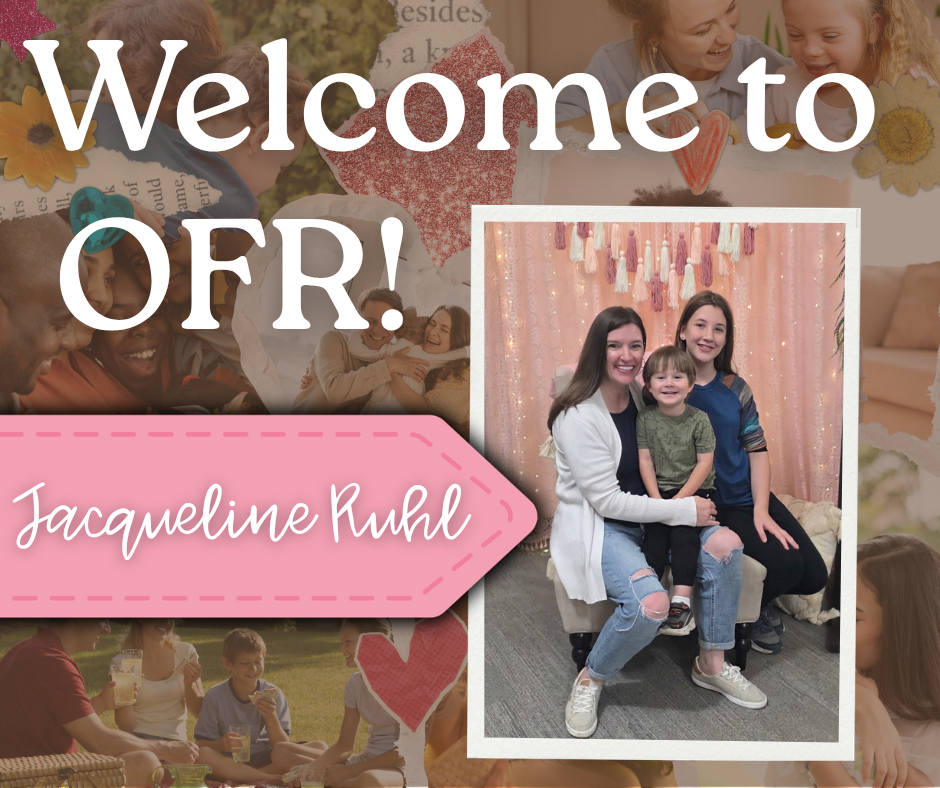
Jacqueline Ruhl - Trial Attorney, Tulsa County
Jacqueline Ruhl ("Jacque") is an attorney who is dedicated to representing parents in juvenile deprived proceedings and is honored to have the opportunity to advocate for families navigating some of the most difficult moments of their lives.
Jacque earned her bachelor’s degree in Political Science with a minor in History from Northwestern Oklahoma State University in 2019 before obtaining her Juris Doctor from the University of Tulsa College of Law in 2025. While attending law school, Jacque interned with Tulsa Lawyers for Children, where she discovered her passion for juvenile deprived law and child welfare proceedings. Through that experience, she found the work deeply rewarding as she assisted in efforts toward family reunification and alternative placements when necessary.
Jacque is especially grateful for the opportunity to work alongside a team that values collaboration, support, and mentorship. She is thankful for the guidance and encouragement she has already received from colleagues and mentors as she continues learning and growing in this area of practice.
Outside of work, Jacque enjoys hiking, wakeboarding, and spending time with friends. Jacque is the mother of 5 kids: Destiny (27), Drake (25), Jared (22), Jonathan (21), and Bethany (12); and a grandmother to 3-year-old little boy and a granddaughter due in August. Jacque is passionate about parent advocacy and hopes to make a meaningful difference in the lives of Oklahoma families through compassionate and effective representation.
| |
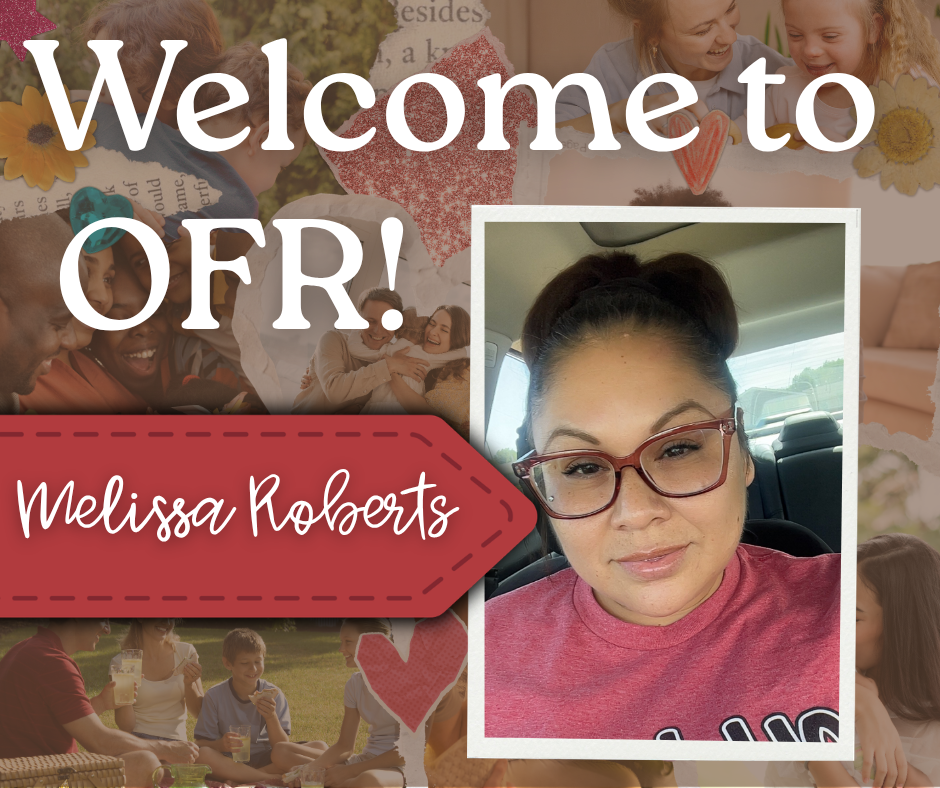
Melissa Roberts - Parent Mentor, Region 2
As a Native American and parent mentor with firsthand experience in the child welfare system through DHS and ICW, I bring a deep understanding of family dynamics and cultural resilience. I’m passionate about empowering parents, fostering trust, and helping families build strong, healthy foundations rooted in respect and growth.
| | |
NACC Events Calendar!
NACC’s 49th National Child Welfare Law Conference will be in Portland, Oregon! Learn more and register!
Onsite in Portland
Wednesday, August 12 through Friday, August 14, 2026
Pre-conference Tuesday, August 11, 2026
Hilton Portland Downtown
Online in October
Wednesday, October 14 through Friday, October 16, 2026
From the comfort of your home or office!
Check out NACC’s Resource Center! Filter by topic area, resource type, and view NACC’s Information Hubs:
NACC Resource Center
Race Equity Hub
Student Hub
| |
Holly Iker, Region 2 Managing Attorney for Parent Representation
Oklahoma Regional Meeting Notes – NICWA 2026
During the NICWA Conference 2026, Randi Mann (Region 2 Director of Social Work) and I attended the regional/state convening for Oklahoma. Oklahoma’s meeting focused on strengthening implementation of the Indian Child Welfare Act in Oklahoma and surrounding tribal communities. Participants included tribal child welfare professionals and advocates, state partners, and legal representatives.
Purpose of the Meeting
The meeting centered on the ICWA 2050 initiative, developed in response to challenges such as the Haaland v. Brackeen decision and earlier threats to ICWA. The initiative's goal is to achieve full ICWA compliance across all states through collaboration, accountability, and systemic improvements.
Major Themes Discussed
1. Strengthening Tribal–State Collaboration
- Conduct ICWA staffing meetings with state agencies.
- Maintain Tribal-State Work Groups (TSWGs).
- Expand collaboration between tribes, courts, and state child welfare agencies.
- Re-establish expired Tribal-State agreements.
- Increase tribal presence in court proceedings and policy discussions.
2. Training and Workforce Development
- ICWA training for state workers.
- Development of Qualified Expert Witness (QEW) programs and toolkits.
- Cultural literacy and cultural competency training.
- Recruitment and retention of child welfare staff through higher salaries and professional development opportunities.
3. Funding Inequities
- Tribal programs receive a disproportionately small share of available funding.
- Tribes need coordinated advocacy and lobbying efforts.
- Increased federal, state, TANF, IV-E, and Children’s Bureau funding is necessary.
- More resources are needed for foster care, prevention services, reunification efforts, staffing, and family support.
4. Accountability for ICWA Compliance
- ICWA violations often have few consequences.
- State compliance remains inconsistent.
- Additional enforcement mechanisms and stronger Tribal-State agreements are needed.
- Courts and agencies should be held accountable for noncompliance.
5. Data and Information Systems
- Better quantitative data collection.
- Improved access to data for tribes.
- Data sovereignty and governance protections.
- Better identification of tribal affiliation during intake and child welfare investigations.
- Standardized reporting systems to support funding requests and policy decisions.
6. Preserving Culture and Family Connections
- Keeping Native children connected to family, tribe, and culture.
- Increasing culturally based services.
- Expanding tribal foster homes.
- Utilizing elders, cultural programs, and mentoring initiatives.
- Supporting reunification whenever safely possible.
Key Takeaway
The meeting revealed broad agreement that Oklahoma has made meaningful progress through Tribal-State partnerships, ICWA training, specialized court initiatives, and intertribal collaboration. However, participants identified persistent challenges related to funding, enforcement, staffing, data systems, and accountability. The strongest consensus was that future success will depend on increased resources, stronger Tribal-State agreements, better compliance mechanisms, and continued commitment to keeping Native children connected to their families, tribes, and cultures.
| | | | | |