MAY 2026 | VOLUME 2 ISSUE 11 | | |
Gwendolyn Clegg
Have you ever attended a court review nine (9) months into a case and the first thing you hear is a person in the courtroom say:
“Judge, we need to add services to the parents’ treatment plan.” “We have concerns for the parent’s mental health.”
You quickly review the Petition, the Adjudication discovery, the Adjudication Order, and the Dispositional Order all of which indicate that mental health was never a reason for the investigation, nor was this concern mentioned let alone substantiated by DHS, it was never pled in the Petition, was never ordered as a condition for the parent to correct and was never ordered in the Dispositional Order (no mental health services were listed on the parent’s individual service plan to complete).
As the attorney for this parent, what do you do? Everyone in the courtroom is agreeing your client’s individual service plan needs to be amended by the Court1 to add mental health services. Do you object? Do you ask to inquire about the concerns? Do you file a motion sometime in the future? Do you just agree and go along with the consensus? Do you ask to stop the proceedings and confer with your client? Do you stay silent?
While pondering your next steps, thirty seconds later you hear the assistant district attorney announce:
“Judge, we are just going to amend our petition and add mental health allegations.”
What do you do now? Do you agree with the Amending of the Petition that was adjudicated over seven (7) months ago? Is that even legal? Do you object? What do you say in your objection?
The Oklahoma’s Children Code provides the answer.
Title 10 A Section 1-4-302 - Amendment of Petition - Postadjudication Petition ---
B. The court shall liberally allow the petition to be amended at any time to add, modify, or supplement factual allegations that form the basis for the cause of action up until seven (7) days prior to the adjudicatory hearing. The court may grant leave to amend the petition upon a showing of good cause after that date and prior to the adjudicatory hearing. The court may allow amendment of the petition to conform with the evidence at any time prior to the adjudicatory ruling of the court. In all cases in which the court has granted leave to amend based on new evidence or new allegations, the court shall permit the respondent a reasonable and adequate opportunity to prepare as may be required to insure a full and fair hearing. The court shall not amend the adjudicatory category prayed for in the petition.
C. In any case in which the allegations contained within the original petition have been sustained and a child is found to be a deprived child, if the state subsequently alleges new facts, or different conditions are discovered to be sufficient, if sustained, to support a finding that the child is a deprived child, then the state may file a subsequent petition entitled "Postadjudication Petition". This section shall not apply if the jurisdiction of the juvenile court has been terminated prior to the new allegations.
D. All procedures and hearings required for an original petition are applicable to a postadjudication petition filed under this section. The postadjudication petition shall be filed in the same case as the original petition.
Case law has not been developed in Oklahoma to address or explain this particular statutory pleading in existing deprived actions. However, in 2015 I argued this issue before the Court. The Court found as follows:
| | The pleadings and the Court’s advisory ruling from my case can be found on the OFR’s practice resource page. Search “post-adjudication petition.” | | |
Shoutout to Teressa Williams!
protected our youth interdisciplinary team members from being forced to testify against their client
| |
Shoutout to Kim Rebsamen!
A CASA mentioned how much Kim's title 10A training meant to her. Something Kim said made her rethink her recommendation and she had to go back after the class and change her court report where she was recommending termination. Kim's training made an immediate impact! It got the CASAs thinking and they said it was "an excellent reminder that we have to look outside of the lens of our middle-class bubble."
| |
Shoutout to Larry Balcerak!
Larry provided high-quality legal representation to a child client entering a 10A guardianship. Larry explained everything so the child could understand a 10A guardianship and what it meant for his future. Larry did a great job preparing the child to testify at the hearing on the 10A Guardianship.
| |
Shoutout to Larra Williams!
Larra recently represented a mother at a review hearing. The State and DHS wanted to reduce the mother's visits due to a scheduling issue. Larra successfully argued for alternate respite care, which allowed the mother to maintain visits.
| |
Shoutout to our IDT Teams!
One of our attorneys spoke very highly of our IDTs, saying: IDTs have been instrumentally helpful in assisting the parent in navigating the system. They were demonstrably helpful as a buffer between the client and DHS and sometimes even the attorney as the clients tend to identify more easily with the IDT members than with other members of the system that they sometimes perceive as working against them. Clients are put at ease with the peer mentor as they are someone that has been in their shoes and can relate to them on a level that others cannot. The IDT is a useful tool and should be used in any case that qualifies.
| |
Shoutout to Michael Taubman!
For his appointment to Special Judge in Tulsa County!
| |
Shoutout to John Young!
John Young did an outstanding job representing his incarcerated client in a termination bench trial. Colleagues who witnessed his closing argument said it was standing ovation worthy!
| | |
Shoutout to Lexie Allen!
She is an IDT ROCKSTAR with 16 teams!
| |
Shoutout to Jana Knott!
She has been called thorough, knowledgeable, and great to work with on cases. One of our trial attorneys reported that she has done a great job on all of his appeals assigned to her.
| |
Shoutout Katlyn Lantrip!
For insisting that a post-adjudication petition be filed when the State/DHS attempted to add mental health services. MH services were not in the State's Petition. The mother was not adjudicated as to MH issues. MH services were not on the ISP which was previously ordered. Katlyn was calm, professional, confident and successful in her arguments.
| |
Shoutout to Mallory Tecmire!
One of our contractors had to say of Mallory: "Mallory is absolutely amazing and a wonderful resource for the parents she helps me with. Mallory is able to help my clients get records from their service providers when they aren’t being provided to me or the Court. She’s also just able to be a listening ear to clients, especially mothers, who want or need to talk to someone that’s not involved in the case directly. I think a lot of time parents are just frustrated and untrusting of the court process and those of us who are in court with them, even their own attorneys occasionally. Mallory is able to help them understand that what their attorney is telling them is accurate etc and it just helps bridge the gap that an initial lack of trust creates between the clients and their attorneys."
| |
Shoutout to Graham Fishburn!
Graham recently represented a parent and argued successfully for placement with a family member and increased visitation.
| |
Shoutout to Cheyenne Donatello!
DHS wanted to start TR on 2 of the kids and stagger the rest. Cheyenne was able to argue all the kids should be returned, so TR began at the same time for all of the siblings!
| |
Shoutout to Tanya Dobbs!
Tanya Dobbs did an incredible job advocating for her intellectually delayed client to receive specialized parenting services and support when DHS was reporting concerns of her client’s lack of knowledge/ability to care for her infant during visits.
| | Have you done something awesome? Do you have a good story? Share it here! | | |
Tamera Reuber, Region 2 Managing Attorney for Child Representation
Representing Young Children
Early childhood is a period of extraordinary brain growth and emotional development. Experiences during the first years of life shape a child’s cognitive, emotional, social, and moral capacities well into adulthood. For young children involved in the child welfare system, exposure to abuse, neglect, or separation from primary caregivers during this critical stage can profoundly disrupt development. Attorneys representing young children therefore play a uniquely important role - one that requires child-centered advocacy grounded in developmental science, careful observation, and ethical legal practice.
Principles of Child-Centered Advocacy
Effective representation of young children begins with a commitment to seeing the case through the child’s eyes. Unlike older youth, infants and toddlers often cannot verbalize their experiences, preferences, or fears. Attorneys must instead rely on substituted judgment – a comprehensive understanding of the child’s history, observed behaviors, and current developmental functioning to guide advocacy.
Building a meaningful relationship with a young child takes time and intentionality. Regular, developmentally appropriate visits allow attorneys to observe how the child responds to caregivers, how they regulate emotions, and whether they appear safe and comfortable in their environment. Simple activities—playing on the floor, reading a book, or observing routine caregiving tasks—can provide critical insight into a child’s well-being that cannot be gleaned from reports alone. These visits build trust, support continuity, and allow advocates to collect first-hand information critical to informed legal strategy.
Reinforcing the importance of early, direct engagement with child clients, 10A 1-4-306(A)(2)(b) requires that the child’s attorney meet with the child as soon as possible after receiving notification of the appointment. The attorney shall meet with the child prior to any hearing in such proceeding.
Health, Developmental, and Mental Health Advocacy
Young children in foster care face a heightened risk of unmet medical and developmental needs. Best practice requires advocating for comprehensive health, developmental, and mental health assessments. Early screening is essential to identifying delays in language, motor skills, cognitive development, or emotional regulation.
While taking action to identify these issues and make any necessary referrals fall within the purview of OHS, advocacy for your client requires you to ensure that the referrals are made, services are initiated promptly, and progress is monitored over time.
Attachment and Caregiver Relationships
Attachment is the foundation of a young child’s emotional and social health. Through consistent, nurturing relationships, children learn about safety, trust, and connection. When those relationships are disrupted, children may exhibit regression, anxiety, or behavioral challenges that are often misunderstood. Make no mistake, being removed from the child’s home – no matter how bad the situation in the home may be is itself a disruption to the child. Often, a child’s behavioral challenges may be attributed to subsequent contact with a parent when it may actually be a biproduct of the removal itself.
Assessing Parent-Child Interactions
Evaluating the quality of parent-child relationships requires direct observation and a child-focused lens. Attorneys should assess whether parents are responsive, engaged, and able to manage typical age-appropriate behaviors such as crying, exploration, or boundary testing. A parent’s ability to soothe a distressed child or follow the child’s lead during play provides valuable insight into the bond between the parent and child. This information simply cannot be gleaned merely from speaking with the caseworker or the child’s caregivers. Unfortunately, direct observation of the parent(s) and the child may not always be possible. However, when it is possible, it is the best practice to do so – particularly in situations in which the parent(s) is making demonstrable progress, but the caseworker and/or caretaker reports indicate the parent’s behavior has not changed or the child is not bonding with the parent(s).
When interactions appear unresponsive, inconsistent, or concerning, attorneys should consider advocating for supportive interventions rather than assuming lack of capacity. Services such as family therapy and targeted parent education can help strengthen attachment and improve relational functioning while supporting reunification goals.
Ethical Communication with Parents and Caregivers
Representing young children also requires careful navigation of ethical boundaries. Under Rule 4.2 of the Rules of Professional Conduct, attorneys may not engage in substantive communication with parties represented by counsel without consent or a court order. When communication with represented parents is necessary, advocates must ensure proper authorization.
When interacting with unrepresented parents, attorneys should clearly explain their role as counsel for the child, avoid implying neutrality, and encourage parents to seek independent legal advice - particularly when discussing case-related matters. Transparency and ethical clarity protect both the attorney and the integrity of the child’s representation.
Visitation, Placement, and Permanency
Placement and visitation decisions should always prioritize the child’s attachments, stability, and developmental needs. Frequent, meaningful visitation supports attachment and emotional security, especially for infants and toddlers. Children do best when parents have stable and meaningful involvement in their children's lives. Thus, absent a legitimate safety threat, children should have frequent, structured, routine time with their parents. Visitation plans should be responsive to the child’s age and routine. While it is important to remember that each child is an individual and that as an individual your client may develop at a different rate, consider your child’s development when advocating for family time.
Birth to Nine Months
Babies learn very quickly during the first months of life. They learn to trust and feel safe through consistent, loving care. When caregivers regularly hold, feed, comfort, play with, and respond to a baby’s needs, the baby forms secure attachments. If the parent is not allowed to perform these activities, it may be hard for the child to form a bond with the parent. Because babies cannot remember an absent parent for long, frequent contact is more important than long visits. Around six months of age, babies start to recognize familiar caregivers and may become uncomfortable around strangers.
For this age, several visits per week are recommended. If possible, these visits should involve everyday caregiving, such as feeding, bathing, playing, soothing, and putting the baby to sleep. If a parent has not previously been involved in caregiving, shorter visits every few days help build skills and strengthen the bond. As that bond grows, visit time can gradually increase.
Nine to Eighteen Months
Between nine and eighteen months, babies gradually become toddlers. During this time, they develop rapidly - learning to crawl, stand, walk, communicate with sounds and words, and express emotions like affection, fear, and anger.
Consistency and predictability are still very important. Babies can adapt to more than one caregiver when their routines for eating, sleeping, and waking remain steady and caregivers respond sensitively to their needs. Separation from familiar caregivers can still cause anxiety, so frequent contact with the parent(s) is essential. Longer separations can interfere with the child’s attachment. Again, the more actively involved in the child’s daily routines a parent is, the stronger the bond between the child and parent.
Eighteen to Thirty-Six Months
This stage involves rapid physical, emotional, and social growth. Toddlers become more curious, independent, and aware of their surroundings. They form strong attachments to caregivers and begin learning how to comfort themselves, often through favorite toys or routines.
Toddlers often assert independence by saying “no” and may struggle with separations. Resistance during transitions between caregiver and parent (such as crying or clinging) is normal and does not mean the child does not enjoy being with the parent. Sometimes it helps if the caregiver helps handle the transition, as this makes the transition calmer and shows support for the parent. Maintaining consistent routines, minimizing conflict, and supporting the child’s relationships all make transitions easier. Toddlers are very sensitive to tension.
At this age, regular phone contact can be reassuring, and once children are able, calling the parent at scheduled times for short periods may be considered. Keeping photos of the parent(s) can also help.
Three to Five Years
Preschool-aged children go through many developmental changes but still need structure, guidance, and reassurance. They often see themselves as the center of everything and think very literally. Nightmares and fears are common at this age, as imagination grows faster than coping skills.
Young children may say what they think a caregiver or person in authority wants to hear, which does not always reflect their true experience. Longer visits such as several hours in a day during the week or including a full weekend day can help build the relationship and develop caregiving skills.
Centering the Child
Ultimately, representing young children demands more than legal skills. It requires patience and an unwavering commitment to the child’s developmental well-being. By prioritizing early screening, access to services, attachment, ethical communication, stable placements, and frequent appropriate visitation, a child advocate will help mitigate the harm of maltreatment and create conditions for healing and resilience. Child-centered advocacy ensures that even the youngest voices are heard, protected, and championed within the legal system.
| | |
Randi Mann, Region 2 Director of Social Work
Mental Health Awareness Month: Supporting Families, Strengthening Advocacy
May is Mental Health Awareness Month—a time to recognize the vital role mental health plays in the lives of the children, parents, and families we serve, and in the work we do every day at the Oklahoma Office of Family Representation (OFR).
In child welfare, mental health is not a side issue—it is often at the center of the case. Parents navigating system involvement may be managing trauma, depression, anxiety, or substance use challenges. Children may be coping with grief, separation, and instability. These experiences are not isolated—they shape engagement, decision-making, and outcomes.
At OFR, our interdisciplinary team approach positions us to respond to these realities with intention and compassion. Attorneys, master-level social workers, and peer mentors each bring a critical lens to understanding and addressing mental health needs. This collaboration allows us to advocate more effectively—not just for case outcomes, but for meaningful, sustainable well-being.
Mental Health Awareness Month is also a reminder of the importance of reducing stigma. Families should not feel judged or dismissed for experiencing mental health challenges. Instead, they deserve advocacy that recognizes their full humanity, honors their strengths, and connects them to appropriate, culturally responsive supports.
From a Director of Social Work perspective, this month is also about accountability—ensuring that our teams are not only identifying mental health needs but actively integrating that understanding into advocacy strategy. It means asking: Are we translating clinical insight into legal advocacy? Are we equipping our social workers and peer mentors with the tools, supervision, and support they need to navigate complex mental health dynamics? And are we creating space within our teams to process the emotional weight of this work in a way that strengthens, rather than depletes, our capacity?
Strong advocacy requires more than awareness—it requires intentional integration. When social work perspectives are fully embedded into case strategy, we see more informed recommendations, more effective engagement with families, and ultimately, better outcomes.
Equally important is the well-being of those doing this work. Secondary trauma, compassion fatigue, and burnout are real risks in child welfare practice. Taking time to prioritize self-care, seek support, and utilize team-based approaches is not optional—it is essential to sustaining this work and showing up fully for families.
This month, we encourage reflection on a few key questions:
- How are we identifying and responding to mental health needs in our cases?
- Are we advocating for services that are timely, appropriate, and accessible?
- How are we supporting one another as professionals in this work?
Mental health advocacy is family advocacy. When we center mental health, we strengthen families, improve outcomes, and move closer to a system that is both just and humane.
| | |
In the Matter of A.J.S.
Mother appeals a jury verdict terminating her parental rights based on length of time in foster care. On appeal, Mother argued the State filed its termination motion before Child had been in foster care for 22 months as required by statute (filing in the 21st month), and that "threat of harm" was improperly included in jury instructions because it was not checked in the adjudication order. COCA held the length-of-time ground was harmless error because clear and convincing evidence independently supported failure to correct, and that a termination order may be affirmed on a single statutory ground. COCA further held threat of harm was properly included because the adjudication order found all petition allegations proved at bench trial, including that condition. COCA affirms. Read full opinion
| |
In the Matter of J.K.M. AND M.J.SM.
Mother appeals a bench trial order terminating her parental rights to two children on grounds of prior involuntary termination and failure to correct the same condition under 10A O.S. §1-4-904(B)(6), failure to correct after adjudication under (B)(5), recurrence of conditions from a prior sibling proceeding under (B)(14), and length of time in foster care under (B)(17) as to J.K.M. The uncorrected condition across all grounds was Mother's longstanding failure to properly supervise, which had persisted since her rights to two older children were terminated in 2007 for the same reason. On appeal, Mother challenged evidentiary sufficiency, argued DHS failed to provide reasonable efforts, and contended that service of the amended petition on her attorney rather than personally violated due process. COCA held that prior terminations excused the reasonable efforts requirement, and that service on counsel before trial with Mother's actual notice and full participation defeated the due process claim. COCA affirms. Read full opinion
| |
In the Matter of C.N.
Father appeals a bench trial adjudication order finding his nearly sixteen-year-old child deprived based on domestic violence, failure to protect, and threat of harm. Father raised five propositions of error: that the ISP improperly included a substance abuse assessment despite the court finding substance abuse unproven; that an unendorsed witness was improperly allowed to testify; that the caseworker's references to unnamed sources constituted inadmissible hearsay; that the CWS administrative appeal process conflicted with the deprived adjudication process; and that the adjudication findings were unsupported by competent evidence. COCA disposed of the first issue as moot, as Father's motion had already resulted in removal of the substance abuse requirement from the ISP. The second and third issues were waived for failure to preserve a timely, specific objection at trial. COCA rejected the fourth, noting the CWS appeal process is unavailable once a deprived petition is filed and proceeds to adjudication, eliminating any alleged conflict. On the merits, COCA held the adjudication was supported by a preponderance of the evidence, including eyewitness testimony of domestic violence, multiple protective orders filed by Mother, and Father's own admission that he continued allowing C.N. to be around Mother despite knowing she had stabbed him and physically abused the child. COCA affirms. Read full opinion
| |
In the Matter of L.R.M.
Father appeals an order terminating his parental rights to one-year-old L.R.M. for failure to correct conditions of abusive alcohol consumption and lack of proper parental care under 10A O.S. §1-4-904(B)(5), and for length of time in foster care under (B)(17). Father did not challenge the statutory grounds on appeal; his sole argument was that the State failed to present clear and convincing evidence that termination was in L.R.M.'s best interests. COCA disagreed, finding the record supported the best interests finding. COCA affirms.
Judge Prince specially concurred to note that while Father's immigration status surfaced at trial, the trial court properly based its decision on factors unrelated to that status, and that the relevance of immigration status warrants case-by-case judicial handling. Read full opinion
| | |
In the Matter of J.R.S.
REMANDED
Mother appeals a jury verdict terminating her parental rights to J.R.S. because the same conditions were the subject of a prior deprived adjudication involving J.R.S.'s sibling under 10A O.S. §1-4-904(B)(14). Mother argued the termination order erroneously included "abandonment" as a condition she failed to correct, that the verdict form for the (B)(14) ground did not specify which conditions recurred, and that it was unjust to apply (B)(14) when she had not been given adequate time to correct conditions in the first proceeding. COCA held the abandonment inclusion was a scrivener's error requiring correction on remand, that (B)(14) does not require the verdict form to enumerate specific recurring conditions, and that the statutory requirements were plainly met given Mother had over a year and a half to correct conditions before the termination motion was filed. COCA affirms and remands for entry of a corrected termination order. Read full opinion
| |
In the Matter of P.P.
Mother appeals a jury verdict terminating her parental rights for failure to correct ISP conditions. Mother raised four arguments on appeal: (1) due process was violated when trial proceeded during her absences; (2) DHS failed to meet ICWA's active efforts requirement; (3) evidence was insufficient to support termination; and (4) trial counsel was ineffective. COCA rejected each claim. On due process, COCA held the trial court had no obligation to proactively offer video conference attendance. On active efforts, COCA found DHS's efforts, including driving to Mother's home to transport her to trial on days she was absent, constituted active efforts. On sufficiency, COCA determined that Mother's testimony, combined with Cherokee Nation expert testimony, supported the jury's findings beyond a reasonable doubt. On ineffective assistance, COCA finds counsel's performance fell within the wide range of professional assistance. COCA affirms. Read full opinion
| |
In the Matter of J.L.T.
Mother appeals the second termination order of her parental rights to J.L.T., an Indian child, following a prior reversal by COCA after finding the State failed to properly designate a qualified ICWA expert witness. On remand, the trial court held an evidentiary hearing, found the social worker in the trial qualified as an expert, and entered an amended termination order under 10A O.S. §§ 1-4-904(B)(5), (15), and (17). Mother raised three propositions: that the State failed to prove beyond a reasonable doubt that continued custody would result in serious emotional harm to J.L.T.; that the prior remand required a full new trial rather than an evidentiary hearing; and that the social worker was not a qualified expert. COCA rejected all three. On the ICWA harm finding, COCA held the social worker's use of "I think" did not undermine her testimony that continued custody by Mother was likely to result in emotional harm, distinguishing Matter of I.W. where the expert never made an affirmative finding at all. On remand scope, COCA held this Court's prior opinion directed only an evidentiary hearing on the social worker's qualifications, not a new trial. On expert qualifications, the claim was waived for failure to object and, alternatively, COCA decided social worker's testimony demonstrated expertise beyond standard social worker qualifications. COCA affirms. Read full opinion
| | Interested in being notified as appellate decisions are made? Sign up for OSCN's mailing list using this link. | | |
Corban "CJ" Palma - Youth Mentor Region 2
Hello, my name is Corban, a youth mentor with OFR and a barber of almost 20 years who still keeps the clippers buzzing while transitioning into this new role and higher calling. I grew up in a foster home where my mom ran a ministry for kids whose mothers were incarcerated, which led to me being adopted and seeing the system up close with kids from all kinds of backgrounds.
As a barber and youth leader, I've learned how to listen, build trust, and meet people where they're at. off the clock, I'm usually on a road trip with good music blasting or at a concert pretending I don't have to be up early. I try to show up for people the way my mom showed up for hers, with honesty, humor, and just enough chaos to keep things interesting, all while paying forward the blessing that was given to me.
| |
Cailee Dean - Parent Mentor, Region 1
My name is Cailee Dean and I am the incredibly blessed mom of two precious children. I have experience on both sides of the child welfare system; as a former child welfare specialist and then as a mom who went through her own DHS case. Because of this I have a unique perspective and a deep empathy for parents walking through the child welfare system. I am excited about sharing not only my knowledge of the system, but also my lived experience to help guide parents through the process, and to offer hope in a situation that can often feel confusing and hopeless. I am also in recovery from substance abuse and mental health struggles and a have passion for helping others see their potential to overcome!
| |
Lacey Knox - Parent Mentor, Region 2
My name is Lacey Knox, and I am a parent mentor. I was raised in rural southwest Oklahoma, and I am a happily married mom of eight wonderful children. My youngest has special needs, so I know firsthand what it’s like to navigate complex systems and advocate for a child who needs extra support.
That personal experience shapes everything I do. I take a trauma-informed approach because I understand that families don’t come to the child welfare system by accident — they come with pain, fear, and often a deep desire to do better. I’m passionate about recovery, not just from substances or situations, but from the hurt that gets in the way of being the parent you want to be.
I know reunification can feel like an uphill climb, but I’m here to help. My job is to walk alongside parents as they navigate the system, fight for their kids, and build a whole new life for their family. No judgment. Just real support, practical guidance, and the belief that change is possible
| | |
Denny Horsechief - Parent Mentor, Region 2
My name is Denny I am a passionate supporter of recovery and community growth, driven by my own recovery journey. As a chairperson of a recovery group in my community I help create safe, sober spaces where people can heal and connect. I am especially passionate about guiding and uplifting mothers who face challenges that I have overcome myself. Guided by God, I strive to lead by example in my community and in my family as I also help my children make healthy, meaningful choices. I look forward to serving as a mentor and source of support for other families along the way. I am committed to making a lasting impact on families by helping them build stronger, healthier foundations for future generations.
| |
Amanda Dill - Parent Mentor, Region 2
Hello! My name is Amanda. I am a mother to four daughters. I am coming from a probation office and worked there for 5 1/2 years. I have always enjoyed helping people but particularly parents struggling with addiction and domestic violence history. I look forward to being able to help individuals navigate a pathway and be the most successful they can be.
| |
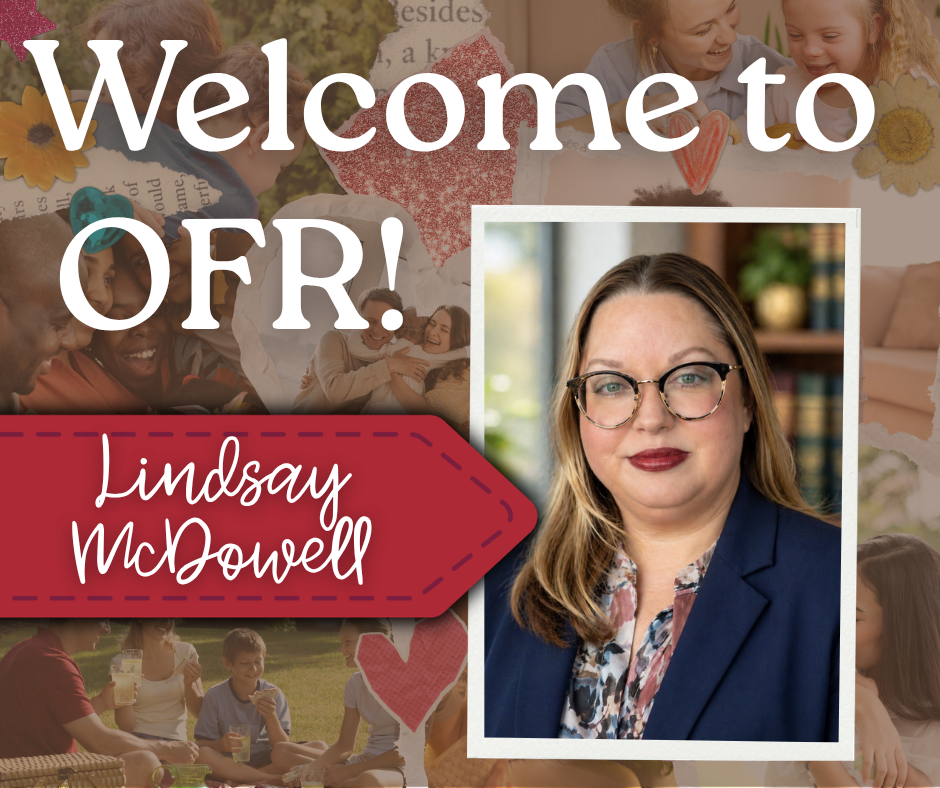
Lindsay McDowell - Trial Attorney, Osage, Pawnee, and Tulsa Counties
Lindsay graduated from Oklahoma State University in 1999 and from the University of Oklahoma College of Law in 2003. She joined Rhodes Hieronymus in Tulsa after graduation, focusing on litigation defense in the areas of employment law, products liability and transportation. During her eleven years with the firm she tried cases before both Tulsa and Oklahoma county juries, as well as in the Northern, Eastern and Western US District Courts of Oklahoma. After taking time off while her daughter was in school, she returned to practicing law in 2022 with a new focus on family law, guardianships, protective orders and related matters in Tulsa, Rogers and surrounding counties.
Lindsay grew up in Sand Springs, Oklahoma, and has lived in Owasso with her husband since 2003. They have one daughter. She is an avid reader and Oklahoma State sports fan.
| | |
NACC Events Calendar!
NACC’s 49th National Child Welfare Law Conference will be in Portland, Oregon! Learn more and register!
Onsite in Portland
Wednesday, August 12 through Friday, August 14, 2026
Pre-conference Tuesday, August 11, 2026
Hilton Portland Downtown
Online in October
Wednesday, October 14 through Friday, October 16, 2026
From the comfort of your home or office!
Check out NACC’s Resource Center! Filter by topic area, resource type, and view NACC’s Information Hubs:
NACC Resource Center
Race Equity Hub
Student Hub
| |
Holly Iker, Managing Attorney for Region 2
Halito! Chahta sia hoke! Hello! I am Choctaw!
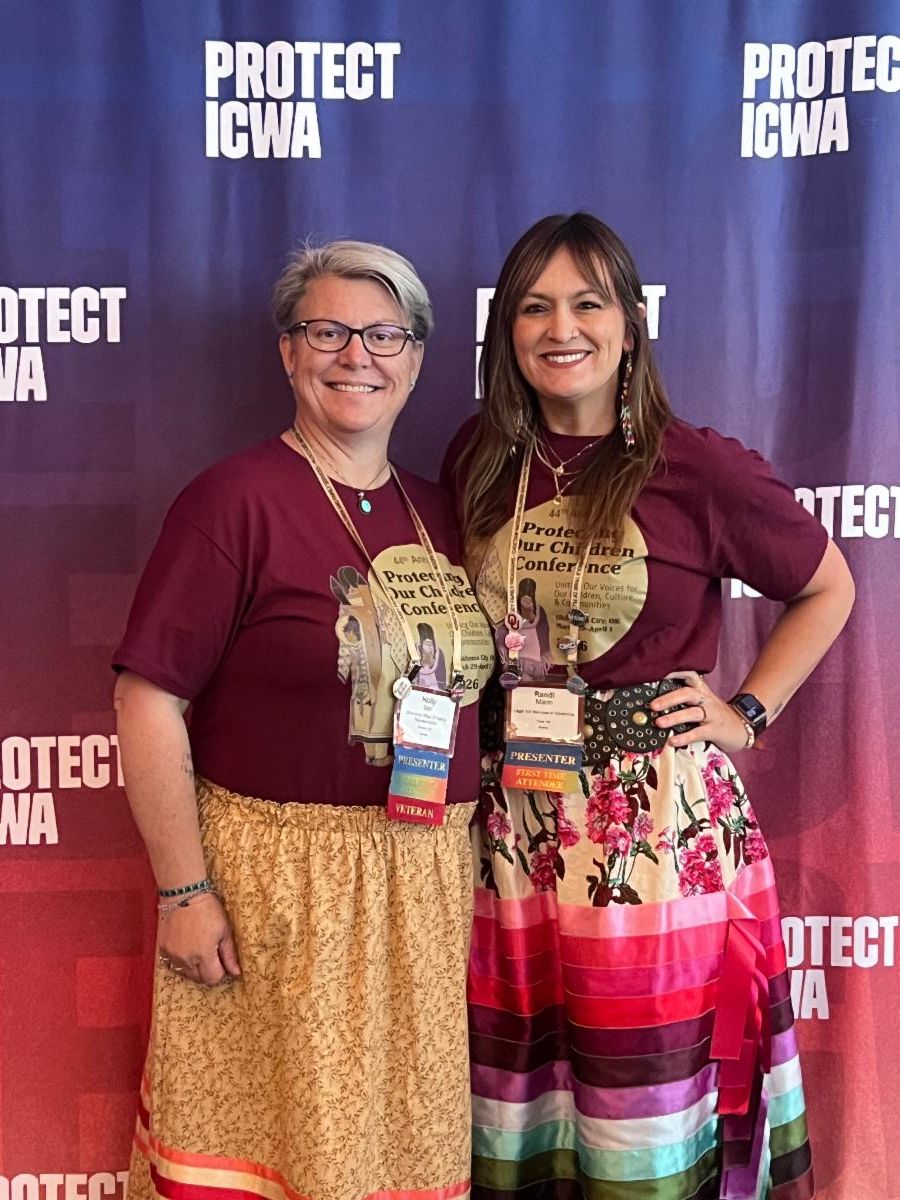
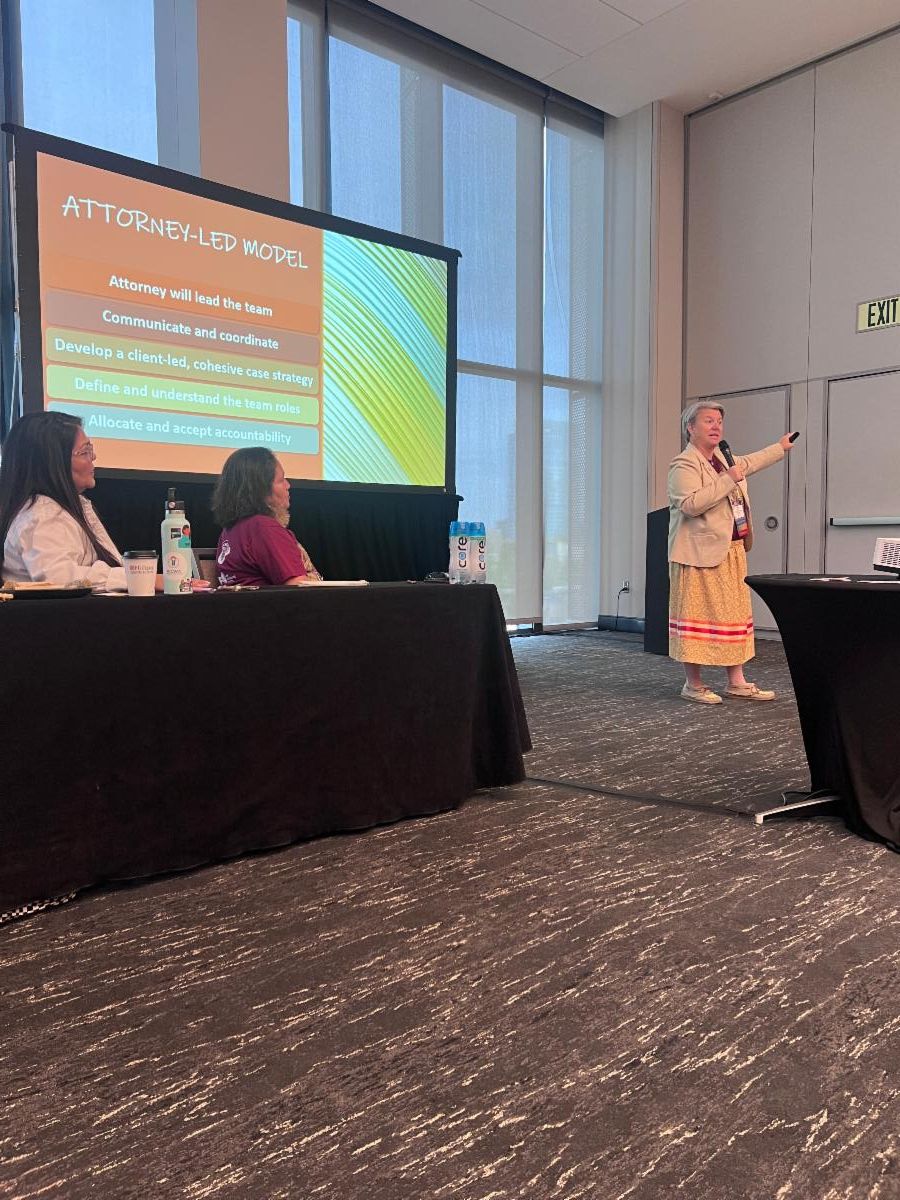
On March 29-April 1, 2026, Region 2 DSW Randi Mann and I were honored to attend and present at our first National Indian Child Welfare Association Conference at the Oklahoma City Convention Center. We were proud to represent OFR and LASO. We were proud to represent our Choctaw Nation of Oklahoma.
Randi and I led a workshop with a lived experience expert/parent advocate and social worker/QEW from Colorado’s Office of Parent Representation, entitled “Upholding the Gold Standard of ICWA Through Multi-Disciplinary Teams and Parent Advocates with Lived Experiences.”
Being our first time attending, Randi and I did not know what to expect. Our experience there was top-notch. Oklahoma City Convention Center and Scissortail Park were fantastic settings for the conference.
The conference brought together an amazing group of people from many tribes and many states. There was even an indigenous child welfare professional from Australia in attendance. There was a large number who traveled from Alaska. People came from every corner of the United States to attend this special conference. They traveled because it was worth the trip. They traveled because Native parents, children, and families need this level of collaboration, discussion, and support.
The conference was holistic. Our discussions with others, the presentations we listened to, the workshop we led with two other strong, confident Native women from Oklahoma and Colorado, the children dancing in beautiful regalia, the smudging ceremonies, the shared meals, and shared ideas fed our hearts and our minds.
The specific presentations, ideas, and discussions are too many to list in a short article. Randi and I walked away with a deeper understanding of the reason ICWA exists, the history of ICWA, and the future and current need for ICWA.
The Federal and State ICWAs are important and must be maintained and followed. ICWA is still necessary because the effects of the past treatment of Native parents, children, and families are still affecting Native parents, children, and families today.
NICWA announced “ICWA2025: Protect, Preserve, Progress” in late 2024 to celebrate the 46th anniversary of ICWA.
ICWA2050 is a 25-year strategic plan launched by the Protect ICWA Campaign to strengthen the Indian Child Welfare Act and tribal child welfare capacity. It aims to ensure Native children remain connected to their culture, enhance tribal-federal partnerships, and improve tribal capacity to manage child welfare services over the next generation.
--PROTECT the safety, well-being, and spiritual strength of current and future generations of Native families.
--PRESERVE the Indian Child Welfare Act as the gold standard of child welfare policy and bolster inherent tribal sovereignty.
--PROGRESS and strengthen ICWA; move beyond the status quo to expand tribal capacity and funding in service of tribal self-determination.
https://www.nicwa.org/wp-content/uploads/2025/04/ICWA-2050_One-pager_030725.pdf
NEXT YEAR’S CONFERENCE will be in Albuquerque, New Mexico, on April 4-7, 2027.
Please consider attending a NICWA or OICWA event soon and/or becoming a member of these organizations. www.nicwa.org www.oicwa.org
| | | | | |