OCTOBER 2025 | VOLUME 2 ISSUE 4 | | |
Gwendolyn Clegg
It is time for an update. Let’s review where OFR started and where OFR is going?
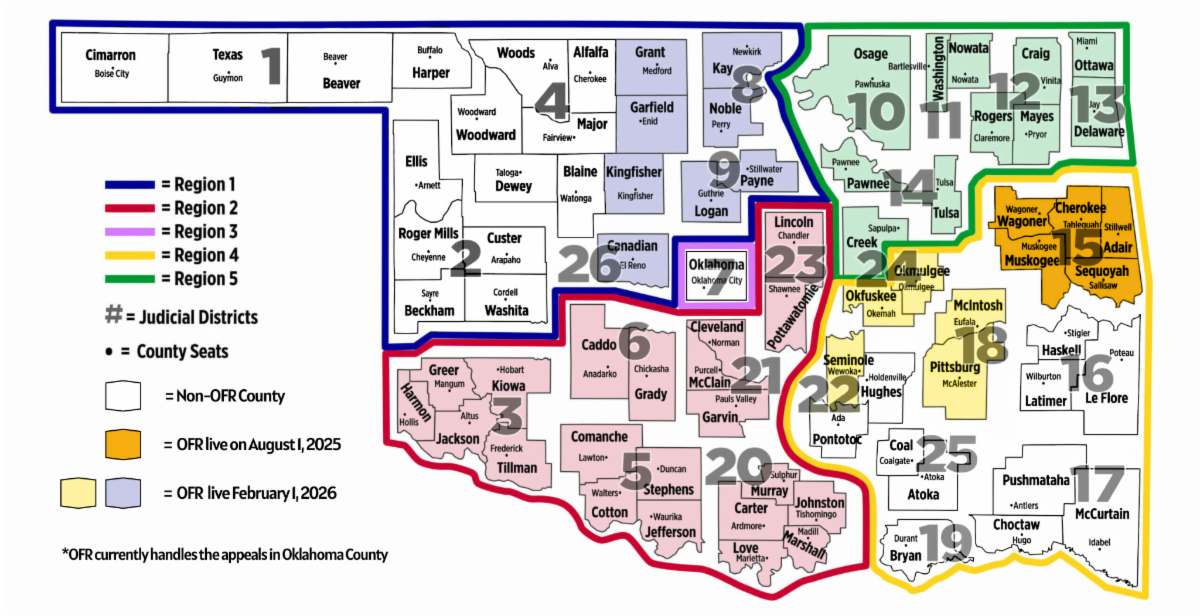
Where is OFR operating?
OFR rolled out to 30 counties on July 1, 2024.
OFR expanded into two (2) counties in July and five (5) counties in August 2025.
As of September 1, 2025, OFR is operating in 37 counties (48% of OK).
OFR will be expanding again in a few short months to thirteen (13) additional counties on February 1, 2026.
As of March 1, 2026, OFR will be operating in 50 counties (65% of OK).
The map below illustrates OFR’s current and future SFY26 operations.
| | |
Attorneys, Social Workers, and Mentors:
OFR contracts with Oklahoma attorneys to provide high-quality legal representation to children and indigent parents in each county. Currently we have contracted with:
- 91 Trial Attorneys
- 11 Appellate Attorneys
- OFR has eliminated the attorney deserts in the counties OFR is operating!
OFR contracts with Master Social Workers, Parent and Youth Mentors to form interdisciplinary teams to assist the attorneys in providing high-quality legal representation.
- Master Social Workers = 4
- Mentors = 12 Mentors
Case and Client numbers from January 1, 2025 to August 25, 2025:
- Region 2 - 1188 open cases representing 2340 clients; 262 closed cases involving 425 clients.
- Region 4 – 196 cases open cases representing 216 clients, 3 closed cases involving 3 clients (from August 1, 2025 to August 25, 2025).
- Region 5 – 1066 open cases representing 1688 clients; 420 closed cases involving 627 clients.
- Appellate panel – 65 filed appeals (from July 1, 2024 to August 25, 2025).
**Reminder to update your LegalServer with ALL of your new, current and closed cases!!!!!
**LegalServer equals FUNDING!
FRAP/OFR Impact:
- Judge T. Dreiling stated: “I can tell the cases in my court resolve quicker when the parent has an OFR IDT.”
- Judge requested OFR be implemented in his county as early as possible. Judge B. Butner stated, “I just think we would really benefit from OFR.”
- Judge T. McDaniel: “Thank you for ALL OF YOUR HARD WORK - I appreciate the assistance that OFR can and does provide to attorneys and families.”
Training:
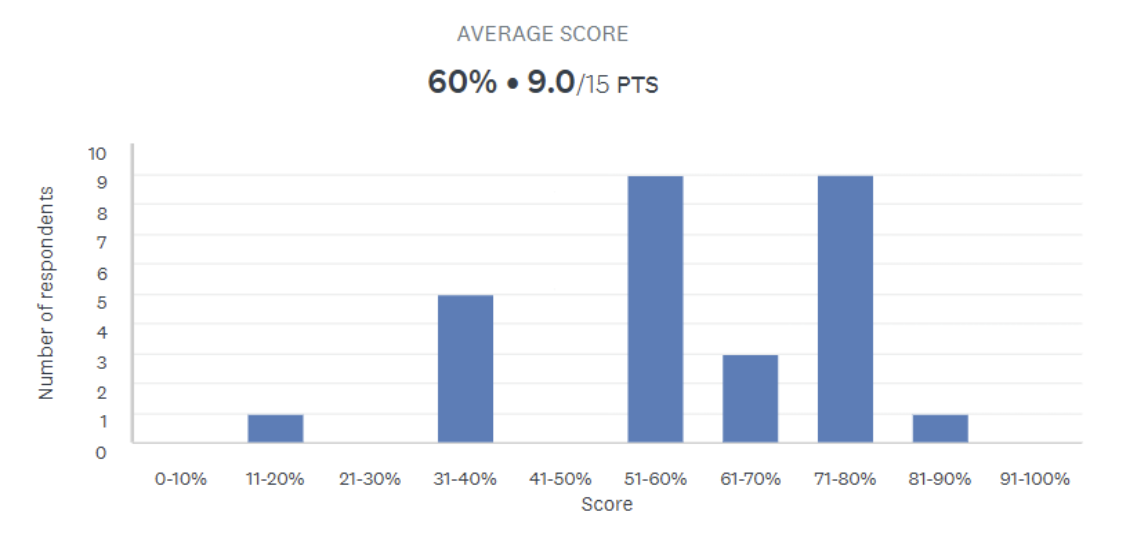
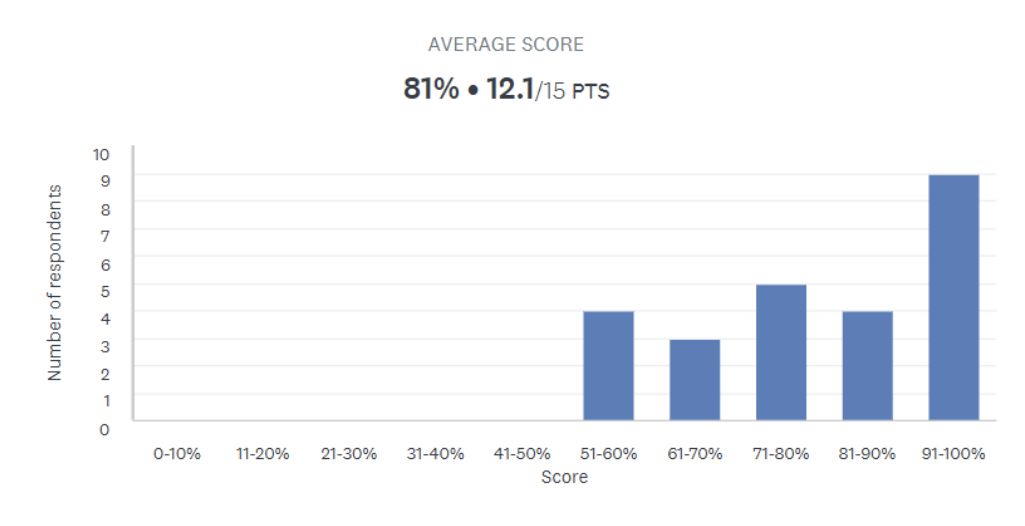
- SFY25 provided 188 hours of Free Continuing Legal Education provided by OFR
- Training success – knowledge is being transferred
| | |
Shoutout to Cristine Atkinson!
She was able to get the permanency plan changed back to concurrent so CHBS can be put in place. She is having OHS to get a referral redone and contacted the CHBS director herself to stay on top of it being done ASAP for this family. She may very well get this 2023 case back on track for reunification!
| |
Shoutout to Kacie Cresswell and Brianna Willis!
Kacie Cresswell and Briana Willis negotiated a post adoption contact agreement between their clients (parents) and the foster parents in mediation. The parents now have relief that there is an agreement for continued contact no matter what happens with the status of the case.
| |
Shoutout to Cole McMahan and Rana Womack!
For their zealous advocacy in Tillman County!
| |
Shoutout to Rana Womack!
For excellent LegalServer maintenance and client contact. Rana did not have a single error or omission in her LegalServer entries and every single entry included the last client contact date - almost all of which were within the present quarter!
| | |
Shoutout to Brianna Willis!
Brianna has had some huge wins!
She requested a show cause on behalf of a grandmother and WON, allowing the child to go home to grandma.
She won a good cause hearing and the children are going to stay in the home they have known their entire life and that will keep connections with the biological family, including her client, the mother.
She has a client who had a bad case to start (and he may end up in prison for a period of time), but has done extremely well and has been clean and sober. Working together with his criminal defense attorney and the DA, she got the no contact order dropped, got the bails bondsman up there the next day to sign off on it, and yesterday that dad had his first visit in a long time. He bawled and the pictures of him and the kids are absolutely fantastic.
| |
Shoutout to Brian Bush!
Brian Bush got therapeutic visits started for a mother that has not had any contact with her son in 3 years!
| | Have you done something awesome? Do you have a good story? Share it here! | | |
Kim Rebsamen, Region 5 Managing Attorney for Parent Representation
The ISP is a Roadmap, Not a Destination
Attorneys must remember and clearly argue that completion of the Individualized Service Plan (ISP) is not the legal standard. The statutory and case law framework requires an evidence-based evaluation of whether the conditions leading to adjudication have been corrected.
Legal Authorities:
Statutes
- 10A O.S. § 1-4-904(B)(5): Termination requires “[a] finding that the parent has failed to correct the condition which led to the deprived adjudication of the child.”
- 10A O.S. § 1-4-704: Governs the written ISP.
- 10A O.S. § 1-4-707 (A)(6)(b): “A court may not deny visitation based solely on the failure of a parent to prove that the parent has not used legal or illegal substances or complied with an aspect of the court-ordered individualized service plan.”
Policy
- DHS Policy 40.4: ISPs are planning tools. They can be modified as circumstances change and must be directly tied to adjudicated conditions.
Federal Guidance
- ASFA, 42 U.S.C. § 675: Requires written case plans but emphasizes outcomes, not mechanical compliance.
Case Law:
In the Matter of J.M., 1993 OK CIV APP 121
This case is an absolute gem and serves as a cautionary example of the dangers of relying too heavily on ISP compliance. The father was ordered into a sex offender treatment program, the “only game in town” for indigent clients. The program required admission of guilt, which would be reported to law enforcement. The Court emphasized the impossible situation the parent was put in:
-
“Because it is clear that Bethesda was the only game in town for indigent people, in this instance, Bethesda is impermissibly imbued with powers greater than the Constitution. If Mr. M. were guilty of sexual abuse, then his admission would amount to an involuntary relinquishment of his 5th Amendment right against self-incrimination… If he is, or is not, guilty of such conduct, and denies the conduct, he is terminated from the program and risks the loss of his parental rights to his children.” ¶ 7.
The Court went on:
-
“A court may not ground the termination on failure to comply with the plan, rather than failure to correct the conditions which led to the adjudication. A court may not allow private agencies who volunteer to take part in the plan implementation to modify the plan without a modification of the court order.” ¶ 9.
The record also showed that counseling services were terminated unilaterally by a provider, with missed visits mischaracterized as noncompliance. The Court emphasized:
-
“Once again, agents of the court are modifying the court order without judicial imprimatur or notice to Appellants that these modifications may be used as evidence against them in the termination hearing.” ¶ 10.
Finally, the Court held that the trial court abdicated its duty by allowing state and private agencies to dictate outcomes:
-
“The court, by relying on compliance with the plan as the ground for termination, and then by allowing the private and State agencies to modify the plan at Appellant's peril, has delegated its authority to those without authority to accept it.” ¶ 17.
J.M. emphasizes that ISPs are tools, and neither state nor private actors can unilaterally change an ISP ordered by the court.
Matter of T.T.S., 2015 OK 51, ¶ 16: “Failure to complete an individualized service plan alone is not a basis to terminate parental rights, but it is evidence that the jury may consider in determining whether the conditions have been corrected.”
In re A.F.K., 2013 OK CIV APP, ¶ 21 (citing Matter of L.S., 2013 OK CIV APP 21, ¶ 14): “Failure to comply with an ISP is not, in itself, grounds for termination… but noncompliance may be considered as evidence that parental rights should be terminated because the parent has been unable to correct conditions leading to the child’s deprived status.”
The Smoking Hypothetical:
Think about it this way: if you were told to quit smoking, you might attend therapy, join a support group, or try nicotine patches and still find yourself lighting up. On the other hand, you might decide to quit “cold turkey” without ever completing a program.
Both scenarios illustrate the same point: compliance with services is not equivalent to correcting conditions. A parent can complete each component of the ISP without correcting the conditions. Conversely, a parent may not initiate or finish any services on the ISP but can still correct the conditions that led to adjudication.
Practice Tips:
-
Evidence of Change: Insist that DHS/state provide evidence showing ongoing unsafe conditions, not just a checklist of missed services. This evidence should be in reports to the court or discussed during hearings. Remember, during permanency hearings, you have the right to present evidence (although rules of evidence do not apply) and cross-examine witnesses – this is the ideal time to ferret out compliance versus correction. Permanency Hearing. You can also submit reports to the court that provide detailed evidence in support of your client’s change. We have example reports available in our practice resource bank! Practice Resources - Oklahoma Office of Family Representation
-
Challenge Misconceptions: Appellate courts rely heavily on the ISP/reports filed by DHS. Push back when DHS equates ISP noncompliance with failure to correct conditions. Challenge this presumption through response to DHS court reports, in court hearings (on the record), or through appropriate motion practice. Ensure that reports submitted to the court for consideration do not rely on mere lack of compliance. Reports/information to the court should provide evidence that supports DHS’s recommendations. Ask to strike inappropriate conclusions by DHS or the state. Cite statutes, policy, and case law. If you need assistance or would like to discuss these issues, your Managing Attorneys are more than happy to help.
-
Modify as Needed: Request ISP modifications when circumstances change to keep requirements relevant to the conditions.
Remember: The ISP is a roadmap, not the destination. The law requires proof that adjudicated conditions are corrected, not that every ISP task is completed.
| | |
Randi Mann, Region 2 Director of Social Work
Assessment of Child Safety Training - Coming Soon!!
What is “safe” really?
Oklahoma Human Services-Child Welfare defines safe as “a child(ren) that is in an environment where there is no identifiable safety threat or a person responsible for the child (PRFC) has sufficient protective capacities to prevent the child from being harmed.”
This training will primarily focus on Child Welfare policies and procedures surrounding a thorough child safety assessment. We will discuss how to properly engage with clients from all different backgrounds and utilize motivational interviewing techniques to enhance communication with them. Most importantly, the training will help to increase your understanding of how Child Welfare assesses the conditions of a family’s home or environment, how those conditions cross the safety threshold, what safety threats are present, and if the parents responsible exhibit any protective capacities that might help to mitigate the safety risks. We will combine the existing knowledge and expertise of the attendees with their new familiarity of the current best practices and standards of Child Welfare to achieve the best possible outcomes for the children and families we so diligently fight for.
The training is TBA currently, but I hope to tentatively see you all there!!
| | |
Case law highlight:
In the Matter of V.B., Alleged Deprived Child
"A clear standard of review for permanent guardianships appears to present a matter of first impression before this Court. Although a permanent guardianship does not entail the termination of parental rights, we believe appellate review of a permanent guardianship order necessitates a heightened standard akin to the standard of review applied to termination cases. Accordingly, we will affirm a trial court's order granting permanent guardianship only where the State met its burden of proving by clear and convincing evidence that a permanent guardianship would serve the best interests of the child." See full opinion
| | |
In the Matter of: S.S.G., S.E.F., S.B.F.,T.R.W. and T.B.W., Deprived Children
Mother raises three claims of error: (1) the evidence at trial was insufficient to meet the heightened burden of proof; (2) the trial court erred in finding active efforts failed; and (3) Mother received ineffective assistance of counsel. COCA is unconvinced by these arguments and affirms. However, important to note is the discussion of ICWA in this case: Mother argues the State failed to present evidence that established a causal relationship between the particular conditions in the home and the likelihood that continued custody of the children will result in serious emotional or physical damage to the children. COCA assumes this refers to the guidelines established by US BIA, and is therefore not binding on the court, BUT it refers to a federal regulation - 25 CFR 23.121, "For a foster-care placement or termination of parental rights, the evidence must show a causal relationship between the particular conditions in the home and the likelihood that continued custody of the child will result in serious emotional or physical damage to the particular child who is the subject of the child-custody proceeding." - which is, in fact, binding to the court. Read full opinion
| |
In the Matter of E.G.L., Alleged Deprived Child
Father appeals from an Adjudication Order finding child deprived as to Father. Child was found to be deprived as to Mother in 2023. No deprived petition was filed against Father. In 2024, Father filed a Motion to Remand for Adjudication Hearing. At the nonjury trial, Foster Parents filed a motion to intervene that was granted by the court. Father argues the trial court erred in granting this motion. While COCA determined the trial court did not err in allowing Foster Parent intervention, we are unsure of this finding. A petition for certiorari is being filed with the Oklahoma Supreme Court. Read full opinion
| | |
In the Matter of: A.H., В.Н., B.D., & H.H., Alleged Deprived Children
Mother appeals the termination of her parental rights. She asserts State failed to establish a statutory ground for termination by clear and convincing evidence, but COCA finds the trial court's decisions as to domestic violence, lack of proper parental care, and threat of harm were supported by clear and convincing evidence. Mother further argues that she was denied a fair trial due to admission of certain evidence, but COCA found it to not be reversible error. Finally, COCA found that the final order required revision but not reversal. Mother argues error in the final order because the trial court checked the box "Other" and added a notation to "SEE PETITION." The addition of "Other SEE PETITION" is not alone sufficient to support a failure to correct a condition. COCA affirms but remands for revision. Read full opinion
| |
In The Matter of K.H. and R.H., Alleged Deprived Children
Father argues State's evidence failed to prove that beyond a reasonable doubt that continued custody would result in serious physical or emotional damage, that active efforts were not made to prevent the breakup of the Indian family, that he was denied due process of law when the court failed to continue the trial when the court was advised that Father was in drug court in Missouri, that he was denied due process when the court denied his motion for an expert witness at State's expense, and failure to meet its burden with clear and convincing evidence. COCA is unconvinced by these arguments and finds the State's evidence was sufficient, that active efforts were made, and that there was no denial of due process. Read full opinion
| | |
In The Matter of N.H. and S.H., Alleged Deprived Children
Mother and two fathers all appeal from the orders terminating their parental rights. Critically, Mother and Father 1 raise the error of the trial court not granting the motion to disqualify Children's counsel due to conflict of interest. Two of the children did not want their Mother's rights terminated. Children's counsel continued to advocate for all children as one unit, and advocated against the child's wish to testify on behalf of Mother. COCA did not find this conflict to be reversible error. HOWEVER, OFR would like to remind all attorneys that children with conflicting interests MUST be represented by separate counsel. Father 1 argues failure to present clear and convincing evidence that the conditions had not been corrected, failure to present clear and convincing evidence that termination was in best interests, and error in granting the State's oral motion to add additional conditions mid-trial. He further argues that he did not have adequate time to correct conditions as therapeutic visits were suspended when he requested a new counselor and he spent a year on a waiting list for a new counselor. Mother and Father 2, in addition to the error of not disqualifying Children's counsel, argue their motion for mistrial based on State eliciting perjury. The DHS worker was found to have lied, but COCA finds this to not be abuse of discretion. Father 2 also argues that his criminal history was irrelevant and should not have been presented to the jury, that there was error in allowing the petition to be amended at trial without notice, insufficient evidence, and that termination was not in the best interests. Mother argues ineffective assistance of counsel, denial of due process due to the granting of the State's motion in limine precluding Mother from testifying or cross examining witnesses about her alleged sexual exploitation by a former foster father for her children. She also argues sufficiency of evidence in support of termination and best interests. COCA affirms the termination orders as to all three parents, finding that any error was inconsequential. Read full opinion
| | Interested in being notified as appellate decisions are made? Sign up for OSCN's mailing list using this link. | | |
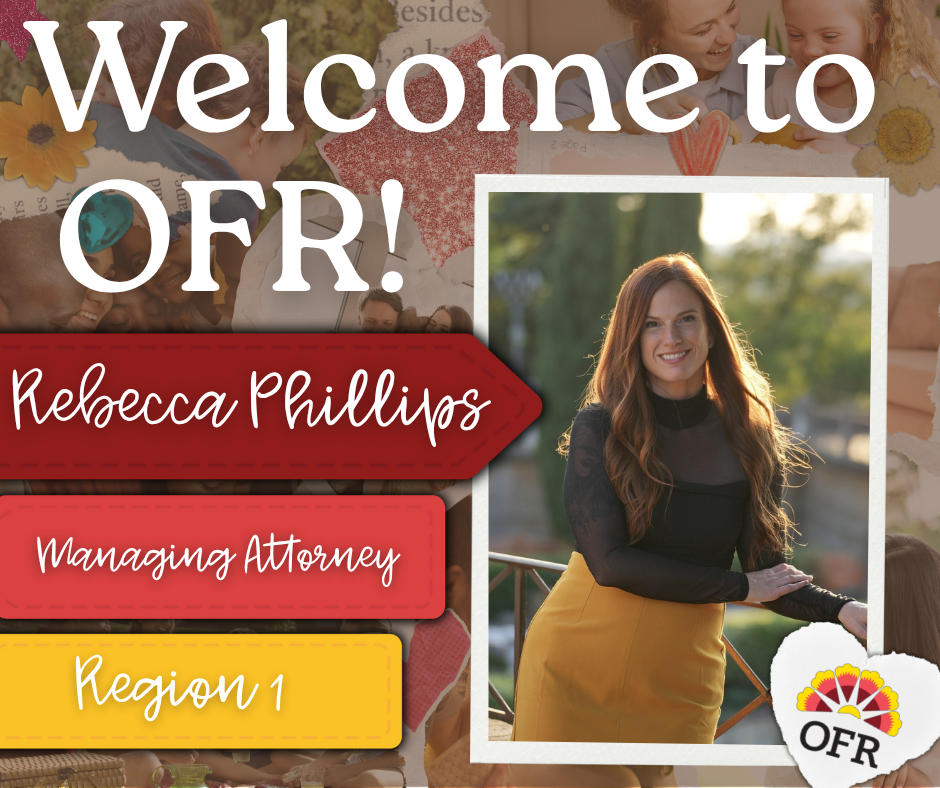
Welcome to Rebecca Phillips - Managing Attorney, Region 1
Rebecca Phillips achieved her Juris Doctor from the University of Oklahoma in 2015, also completing the Interdisciplinary Training Program for child abuse and neglect through the OU Child Study Center. Following law school, Rebecca stepped into the role of Assistant District Attorney for Logan County, and in 2016, Rebecca took a job in the Oklahoma County Juvenile Division, where she prosecuted both delinquent and deprived cases. It was during that time that Rebecca quickly realized her passion was parent advocacy. Rebecca started her solo private practice in October 2018 and has carried multiple parent and child representation contracts, focusing her practice on helping Oklahoma parents rebuild their lives and regain custody of their children.
When she isn’t working on parent representation, Rebecca enjoys talking about parent representation with other attorneys in the field, or anyone willing to listen. Rebecca also enjoys traveling, spending time with her family, and teaching classes at Pure Barre.
Rebecca is honored to have this opportunity to serve the families in her region by facilitating the contracting, coordination, and support of high quality parent representation in child welfare cases.
| | |
Welcome to Kimberly Kay Welch - Social Worker, Region 4
Kimberly Welch is a proud University of Oklahoma graduate, lifelong college football enthusiast, and devoted mom to two daughters currently pursuing degrees at OU—one working toward her Master’s and the other completing her Bachelor’s. She also homeschooled her sons for 15 years, a testament to her dedication to education, adaptability, and intentional family leadership.
As a former foster mom, while expanding their bio family of four children, Kimberly carries deep insight into the layered realities of the foster care system. She understands the unique needs of foster children, the profound heart and sacrifice of foster parents, and the often-overlooked plight of biological parents—many of whom are hoping for foster families to co-labor with them in restoring their children to a safe and loving home.
Professionally, Kimberly brings over two decades of experience in social work, team management, and organizational support. Her trauma-informed approach, strategic mindset, and compassionate leadership have made her a trusted advocate and collaborator across healthcare, education, and tech sectors. Whether supporting communities or streamlining operations, Kimberly leads with empathy, purpose, and a commitment to uplifting others.
| | |
Welcome to Stephanie Marston Younge - Appellate Attorney
Stephanie received her Bachelor of Arts Degree in Law Enforcement Administration from the University of Oklahoma in 1995. She then received her Master of Liberal Arts from Oklahoma City University in 1997. Stephanie then attended the Oklahoma City University School of Law and graduated in 2001. Stephanie has been practicing law since 2002, and is admitted to the State Bar of Oklahoma, the United States District Court for the Western District of Oklahoma, the United States District Court for the Eastern District of Oklahoma, and the Cheyenne-Arapaho Tribal Court. Stephanie primarily focuses her practice on family law, juvenile deprived cases, guardianships, adoptions, and appellate work. When she’s not working, she likes to spend time with her daughter and husband.
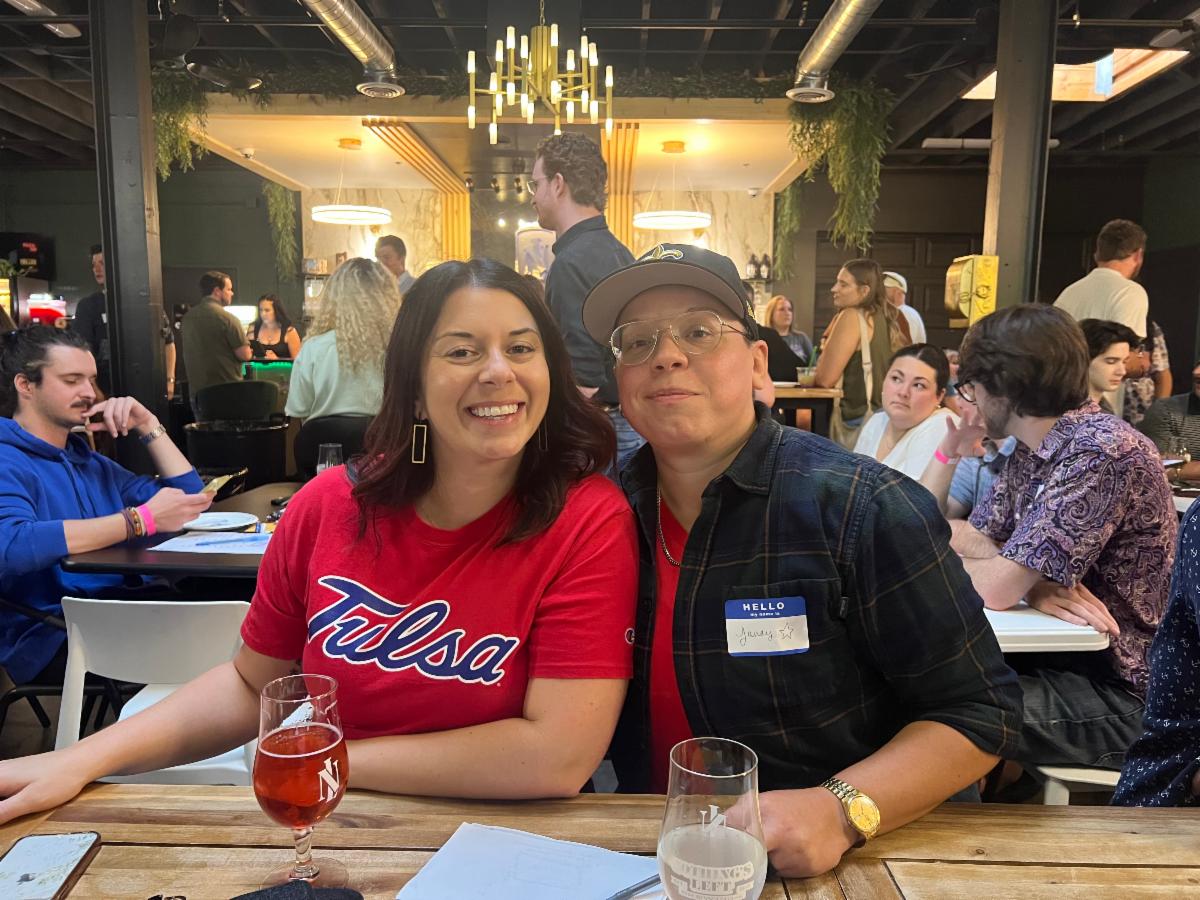
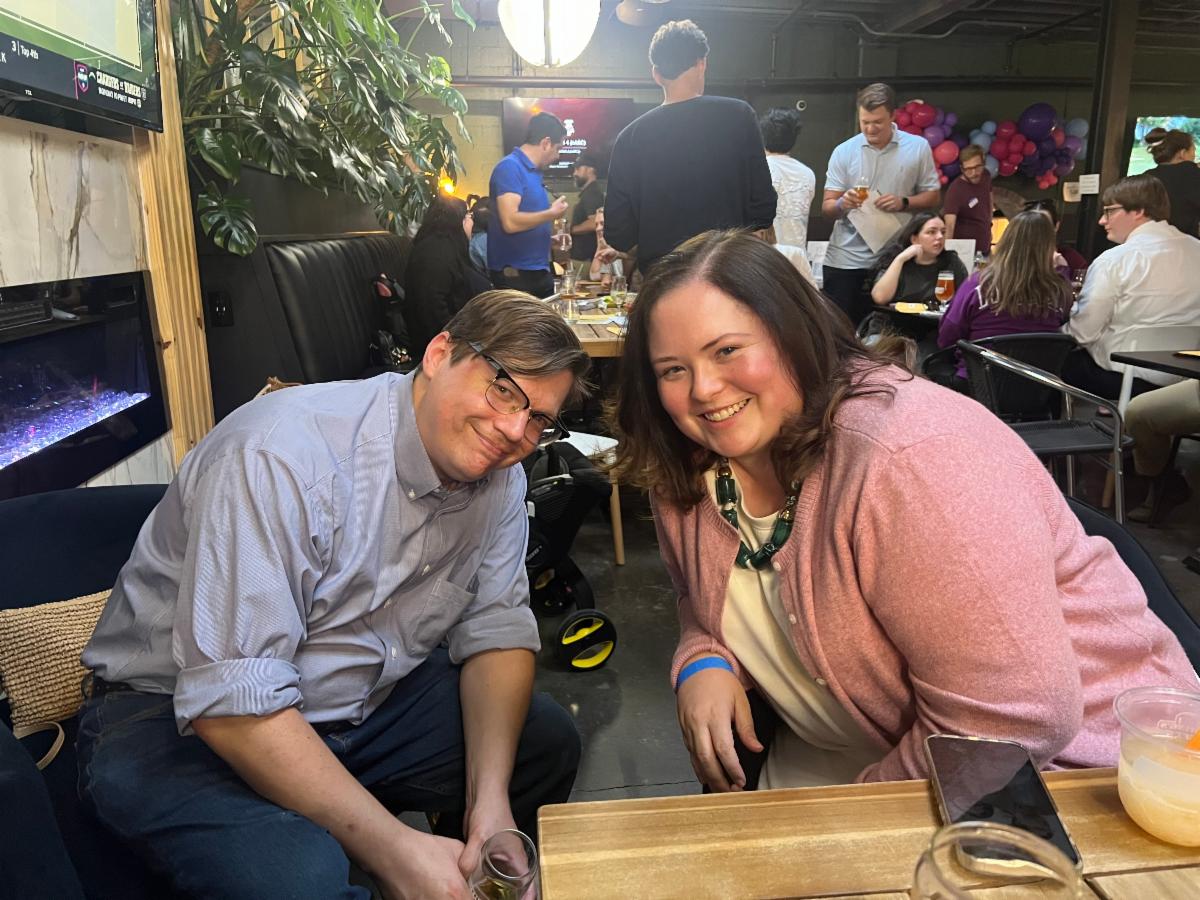
| | Enjoy these photos of OFR at Trivia Night benefitting TU's Public Interest Program! Thank you to all contractors and staff that joined us! | |
| How did you like this email? | | | | | | |