THE ISLAND GARDENER
March ~ 2026
| | |
|
- President's Message
- Garden Club Program
- Upcoming Events
- Cultivating Friendships
- Volunteers Needed
- Beyond the Trowel
- Rainy Day Reads
- Reflections and Recipes
- What's Up, Buttercup?
- Embrace the Seasonal Rhythm
- Garden Creatures and Where to Find Them
- How to Nurture Seedlings
- Fun Facts
- Dirt on Our Roots
- Member Raffle and Meeting Door Prize
- Made You Smile
- Membership Update - Here we Grow!
| | |
March in the garden is always a bit of a tug-of-war between patience and pure excitement. Even after all these years, I still find myself getting swept up in the "spring fever" that hits right after a trip to the NW Flower and Garden Show. It’s so easy to let a few sunny days lull you into planting early, only to have a sudden chilly night remind you Mother Nature’s in charge! But even the mistakes we make as gardeners usually turn into a good story eventually.
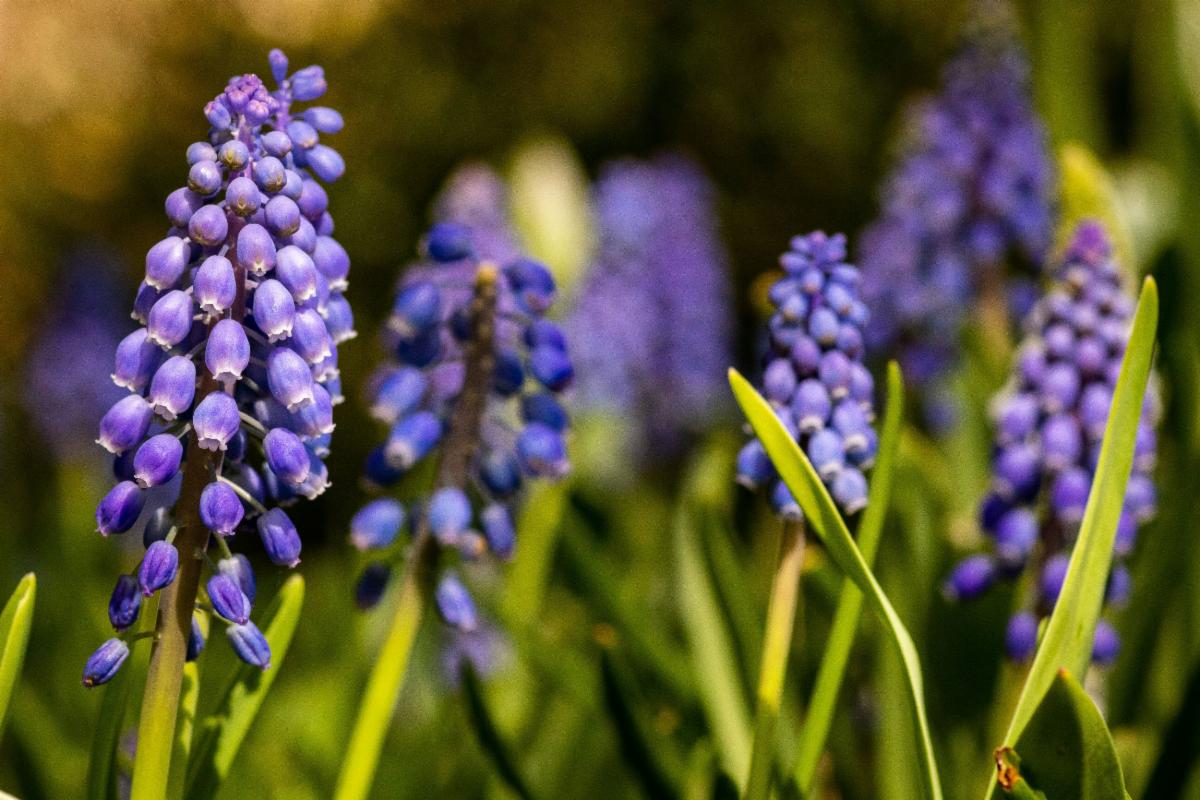
If you look closely, though, the real signs of spring are already here. I’ve been watching the bumblebees—so silly and clumsy—foraging in the bright blue muscari. My flowering currants are in full bloom, and the fritillaria are just about to pop. These steady, predictable moments are such a lovely reminder that the season is finally turning.
Spring always feels like a chance to start a fresh chapter. Whether you’re moving a plant to a sunnier spot, rotating your veggies, or adding more native plants to help our pollinators, it’s the perfect time to put everything we’ve learned into practice.
We’re bringing that same spirit of "new beginnings" to the club too. We’ve got some fun new things happening, like our walking group, the "tater project," and "Coffee with the Presidents." Be sure to check the club calendar for where Robin and I will be meeting on the first and last Mondays of the month—we’d love to see you there!
I recently came across that famous Mary Oliver quote: "Tell me, what is it you plan to do with your one wild and precious life?" It really got me thinking... what do you plan to do with your wild and precious garden? March is a little uncertain and a little exciting all at once. As we keep a close eye on the thermometer each day, let's try to enjoy the lesson in flexibility and calmness this month brings.
Laura
| | Garden Club Program ~ March 18th | | |
Orcas Island Garden Club
presents
Lori Ann David
PNW Winter Growing for Food Security
at the Orcas Center and via zoom
Join us for coffee and social time at 9:30 before the program starts at 10:00 and REMEMBER TO BRING SOMETHING FOR THE SHARING TABLE
| |
Please note, this presentation will not be recorded, though we encourage you to join via Zoom, if you are unable to attend in-person. | | |
Make it easier for people to remember your name and make connections at the garden club gatherings. We'll even keep them for you so you won't have to remember them! The cost is just $15 per name tag.
| | |
-
April 15th: The Cultural History of Violas and Pansies with Brenna Estrada at the Orcas Center
-
April 18th: The Great Island Clean Up in conjunction with The Exchange
-
April 25th: The Garden Club & The Master Gardeners Celebrate Earth Day in Eastsound
-
April 29th: The Cultural History of Yellow Island with Madrona Murphy of Kwiáht, Doors open at 4:30 PM at the Westsound Community Center
-
May 1st & 4th: Yellow Island Excursions courtesy of our friends, the Orcas Yacht Club
-
May 20th: What is Permaculture with Taja Wicks, 10:00AM at the Orcas Center
-
May 15th: May Book Club at the Orcas island Public Library
-
May 26th: Indralaya Forest Walk and learning how to monitor pollinators
-
June 17th: Orcas Island Garden Club Picnic
-
June 27-28th: Orcas Island Garden Club Tour
Join us for these and many other exciting events!
More details can be found on our new Club Calendar!
|
| | | |
Walk and Talk Gardeners
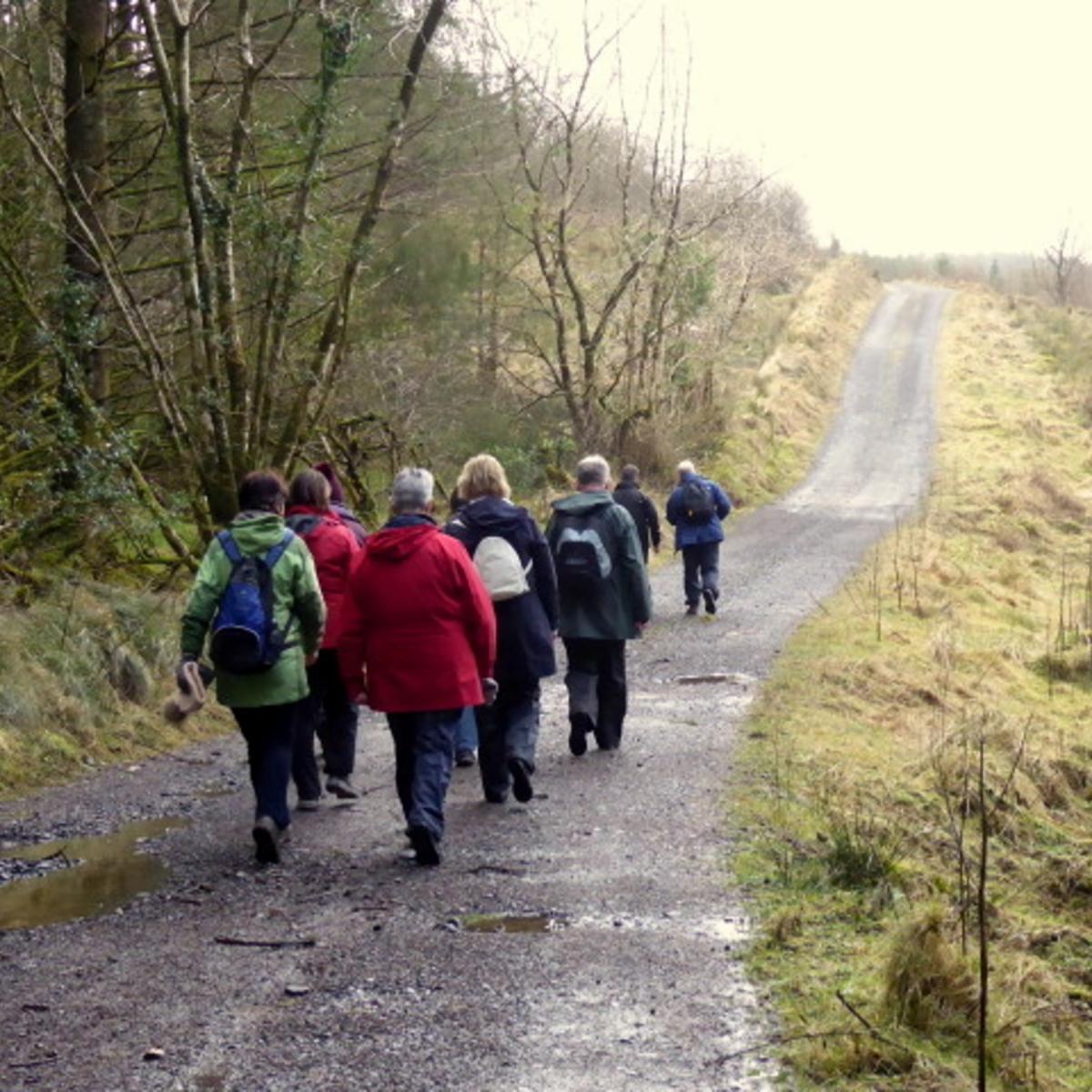
Join us for some exercise and enjoyment of the natural beauty of the San Juan Islands. Each month, we’ll meet up on a few Thursdays at 11:00am for an easy hike (around 3 miles). Occasionally, we’ll be joined by one of the local land stewards for a guided tour. Walks, along with details (distance and difficulty), will be posted in the Club Calendar.
If you have any questions or would like to “host” us for a tour, contact CommunicationsOIGC@gmail.com
| | |
Getting to know Hillary Willis
Interviewed by Perri Gibbons
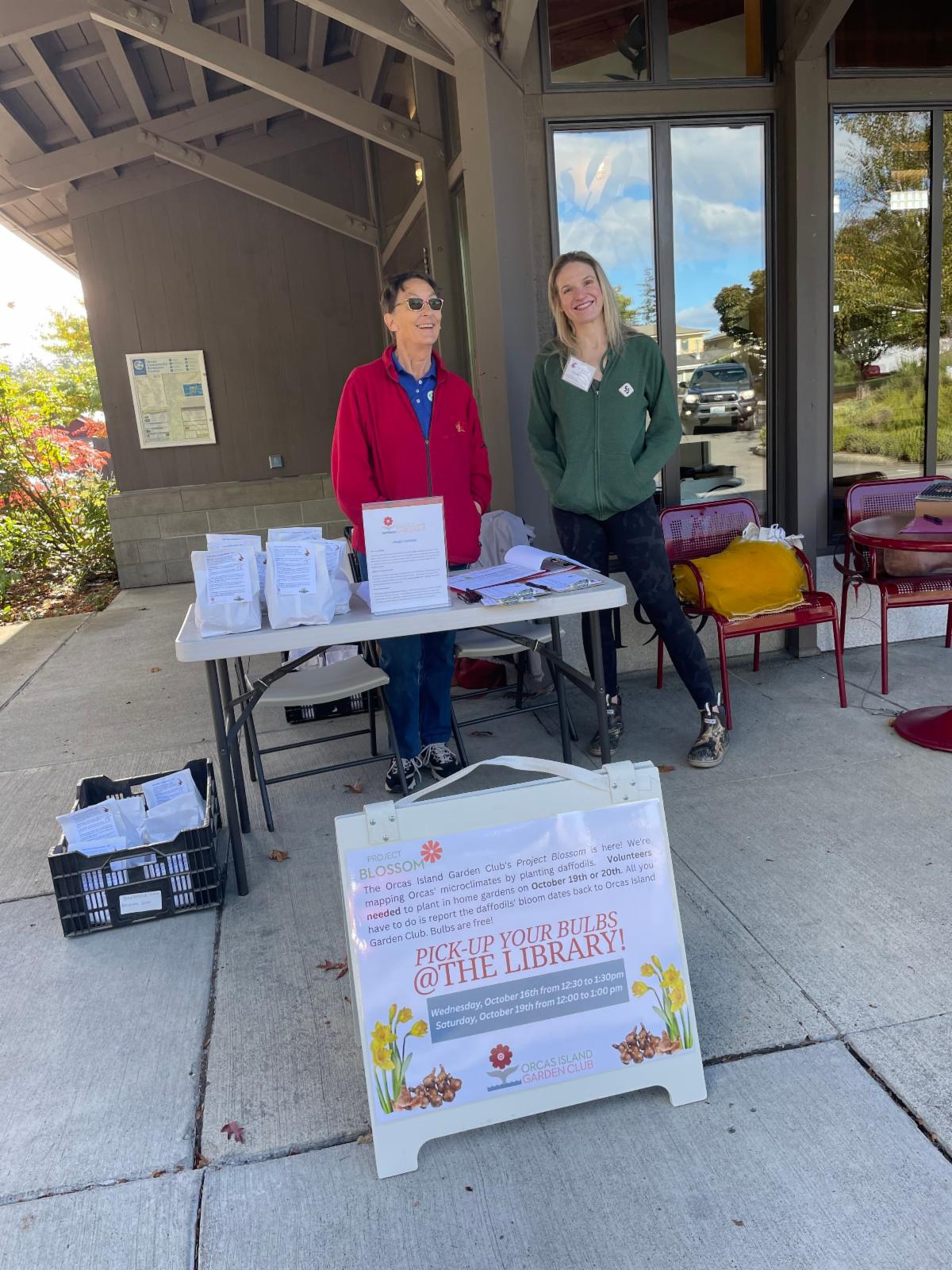
I first met Hillary when we were paired to distribute daffodil bulbs for Project Blossom in 2024. I was immediately impressed with her plant knowledge and natural ebullience. [Photo Attached?]
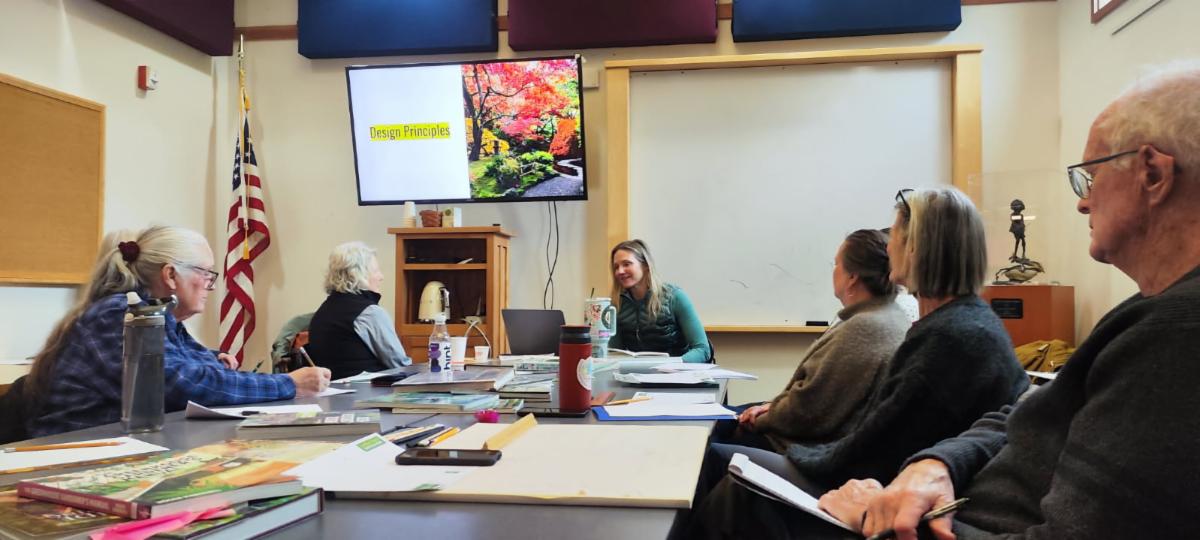
Some of you may have attended her Garden Planning Seminar presented to GC members in January.
I’m delighted with the opportunity to get to know Hillary better and to introduce her to our readers.
Hillary has been a long time hobby gardener since school days to supplement a college student diet, then container gardening at rental houses in Kirkland while she worked in real estate. When she was looking to escape the crowded Seattle area, she discovered her new passion and home here on Orcas.
| | It’s interesting to see how past experiences and learning intersect to find new ways of living. Hillary’s studies in Visual Communication Design surely helped train her eye for pleasing plant composition. Similarly, her studies in Linguistics have made learning Latin botanical names much easier. And, it was Hillary‘s real estate work, helping her clients stage their home exterior, which sparked her desire for landscaping and design. She realized how much she enjoyed shaping a property for maximum aesthetics and functionality. | |
Self-taught, Hillary’s natural curiosity and drive to learn has led to an appreciative clientele base. She values the training she received through the SJC Master Gardener’s program and the impact it’s had on her work. The combination of knowledge and experience complements Hillary’s approach to landscape design. She enjoys a certain freedom of expression, combining experimental design within an artistic framework. .
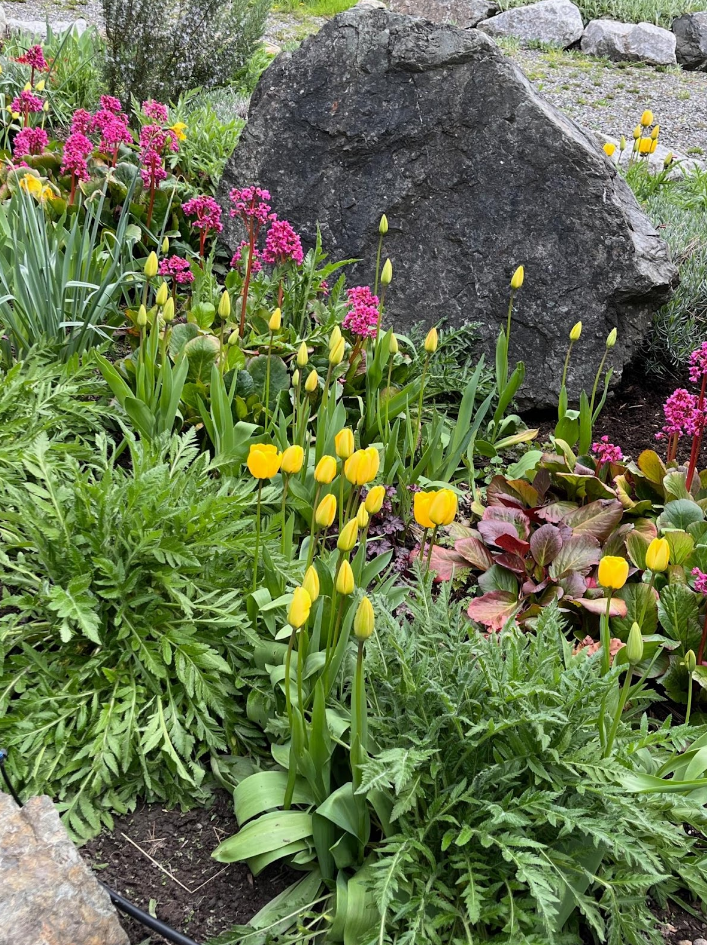
On the Garden Tour, June, 27th and 28th, we’ll have the opportunity to visit a Hillary Willis designed garden. In a three-month time frame, Paul Holmes entrusted Hillary to create a garden wedding venue for his son. She developed a low-maintenance garden on a deer-exposed property to complement the beautiful new outbuilding Paul built for the occasion.
I think the results are stunning. Come see for yourself!
| | |
Great Island Clean Up
The Great Island Clean Up (GICU) is a county-wide effort organized to clean our roads and beaches twice a year, in Spring and Fall. On Orcas Island, this initiative is sponsored by The Exchange and will take place on Saturday, April 18th from 10am-2pm. Volunteers will be provided with long grabbers, a plastic bag, and an orange vest, and can choose which section of road they would like to clean. As a thank you, The Exchange hosts all volunteers after the event at Island Hoppin’ Brewery for a free beer!
There are FOUR areas to choose from to get more involved. Sign-up sheets will be available at upcoming program meeting and via the button below. Please consider joining us!
| | Together, these dedicated groups and the Orcas Island Garden Club are making a significant impact in keeping our beautiful island clean and preserving its natural beauty for future generations. Join us in this noble cause and help make Orcas Island a cleaner, greener place to live! | | |
|
Annual Orcas Island Garden Club Garden Tour
By Sally Hodson
This year’s Garden Tour selections offer a wide range of gardens that reflect our theme of Gardens with a Purpose. We hope you'll join us for the annual event, happening on Saturday, June 27th and Sunday, June 28th, from 11am to 5pm.
Each garden offers unique characteristics with a variety of interactive and educational opportunities at each location.
- Wander a hillside garden filled with beautiful flowers
- Enjoy a healing garden with a lovely waterfall
- Learn about culinary and medicinal plants
- Find out about deer and drought resistant plants for your garden.
Please bring your family, friends and visitors to enjoy these island garden treasures and learn more about growing all kinds of different plants. We also need lots of volunteers at each garden to welcome guests, help with special events and parking, and share information about the garden’s plants.
We encourage you to volunteer! We couldn’t do the Garden Tour without your help.
To show our thanks, each volunteer will receive a free Garden Tour ticket.
We’ll also schedule a mini pre tour for each team just before the tour weekend to help docents and captains learn about their garden, meet their team and the garden owners.
Volunteers like each of you bring the heart and energy that makes our garden tour so successful!
| | |
The Top Five Reasons to Become a Garden Tour Volunteer!
By Perri Gibbons
5. Receive a complimentary ticket for the tour
4. Volunteer for a short term commitment
3. Meet with property owners to get an insider’s scoop
2. Join a fun team showcasing a tour property
1. Contribute to Garden Club success with our biggest fundraiser of the year. The tour funds programs, presentations and grants shared with the Orcas Island community and beyond!
Docents set the tone for each garden through the relationship they develop with both garden owners and tour guests. They attend a pre-tour orientation at their assigned garden. During the tour, docents work either Saturday or Sunday in three hour shifts to provide warm welcome to arriving guests, as well as guidance to the gardens and special events.
Double the fun and sign up for TWO SHIFTS. That would make TEN reasons to volunteer!
NO GARDEN EXPERTISE IS NEEDED ~ We are looking for friendly, energized volunteers.
Haven DePietro havendp@gmail.com
Garden Tour Leader in Training
Perri Gibbons OrcasPear@gmail.com
Volunteer Co-Coordinators
Ginger Moore Ginger@orcasonline.com
Volunteer Co-Coordinators
| | |
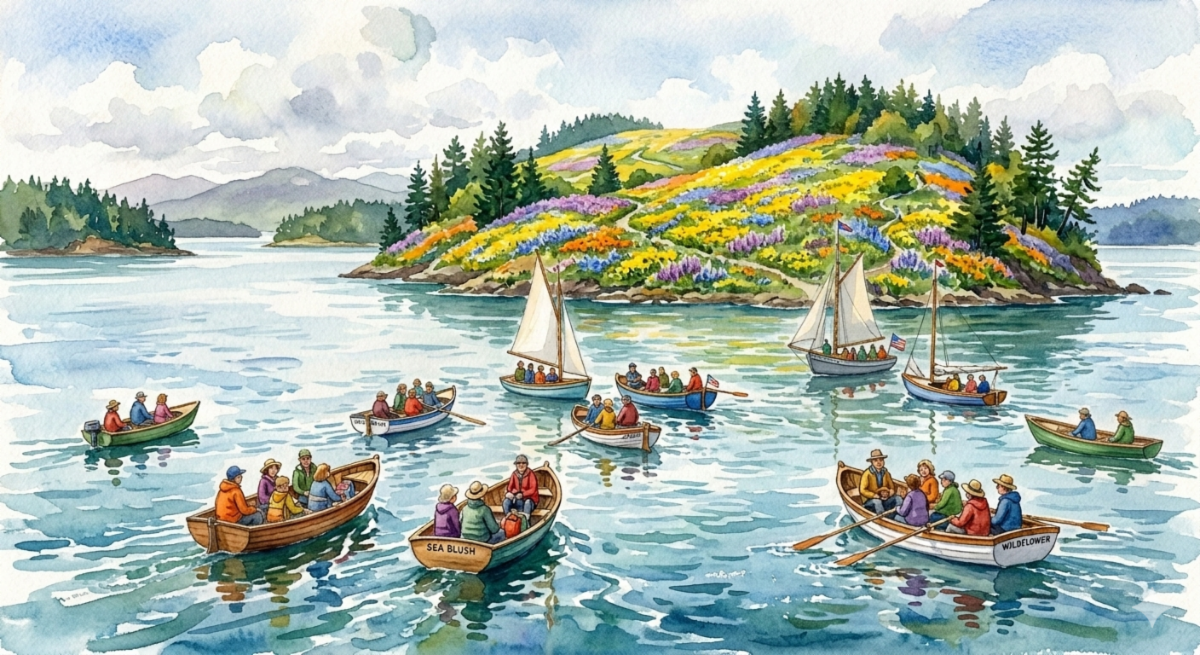
SAVE THE DATE - Yellow Island Talk & Excursions
We are currently working on a spring field trip to Yellow Island on May 1st and 4th, thanks to our generous neighbors at the Orcas Island Yacht Club!
If you’ve never been there but always wanted to go, this is your opportunity to join in! Yellow Island is widely known for its exceptional spring wildflower display. Open meadows bursting with color is home to more than 50 species of wildflowers blooming in brilliant abundance. With no resident deer or grazing animals, the flowers thrive undisturbed. We’ll be on the lookout for broadleafed shooting star, hairy Indian paintbrush, chocolate lily, camas, stonecrop, and even brittle prickly pear cactus—the only cactus native to western Washington. While many of these beauties grow throughout the San Juan Islands, nowhere do they put on a show quite like this.
| To get us even more excited,plan to join us on April 29th at the Westsound Community Center for a fun evening talk about the island’s history plus a wildflower preview with Madrona Murphy. It’s all coming together for a truly special spring adventure. The Yacht Club will be ferrying us over in groups of 20 over two days, so space is extremely limited! We’ll have a reservation button for the field trip as well as the evening discussion available soon so keep an eye out and be ready to grab your spot! Wildflowers, island history, and a ride in the fresh air-spring doesnt get any better than this in the San Juans!! | | | |
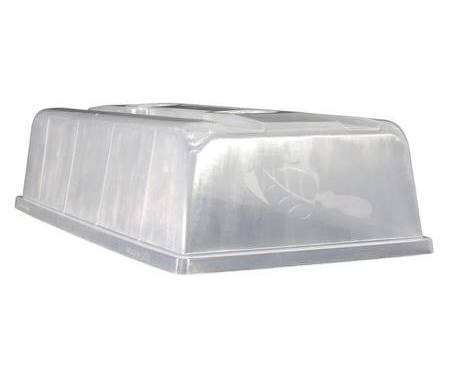
Humidity Domes - Your Mini Greenhouse!
by Laura Walker
Newly sowed seeds require consistent water, and too much can impact the germination process. That's where a humidity dome comes in. Once you’ve planted your seeds in pots, place a dome over the top of the plants to create a stable microclimate that traps the surplus moisture and prevents your seeds from becoming dry. You’ll use less water too!
| |
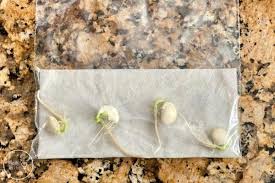
Bonus Tool - Sealable Plastic Bags
I hope you’ve taken advantage of all the recent community seed exchanges but how do you know if the seeds you’ve recently acquired are viable? Seed viability varies from one variety to another but testing to see if your seeds will grow is easy and will save you time during our short growing season on Orcas.
| | |
To conduct this experiment, grab a small sample of seeds, paper towels, and resealable plastic bags. Mist the paper towel with water until it is consistently moist. Then, spread the seeds across the paper towel and fold. Place the folded paper towel into the sealed bag. Label the bag with the seed type and the day that it was started then move the bag to a warm location. Viable seeds will germinate between five days to two weeks. Be sure that the paper towel stays damp during the process.
| | |
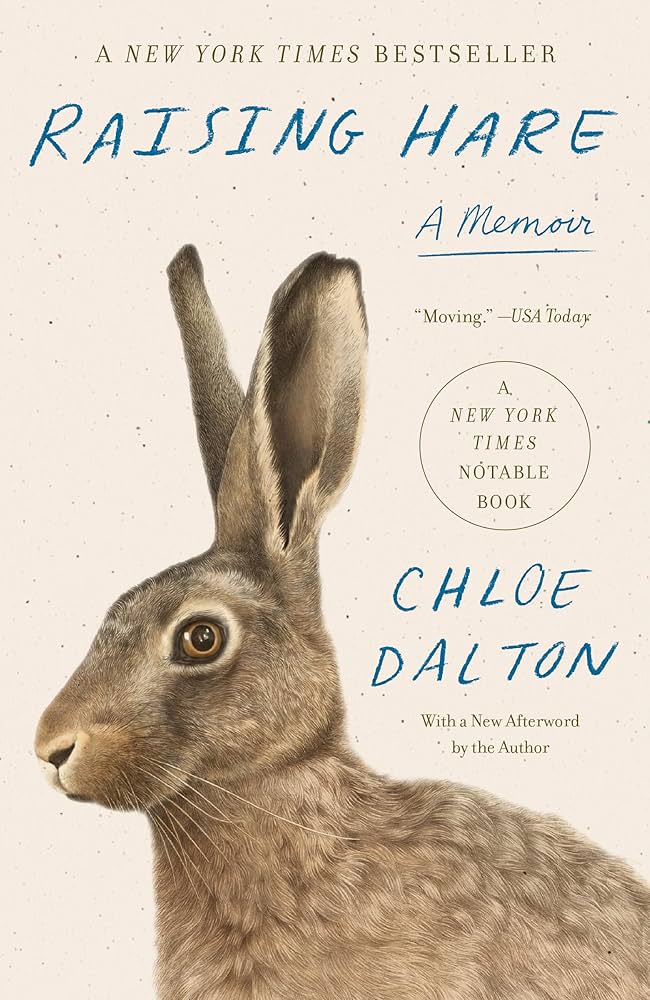
"Raising Hare" ~ A Book Review
Reviewed by Adrienne Walker
Imagine you’re walking along a lane by your house, minding your own business, and notice movement near your foot. You look down to see a tiny baby hare, completely out in the open. If there is a mother nearby you can’t see her. What would you do?
If you’re Chloe Dalton, author of “Raising Hare”, you have a lengthy conversation with yourself about the likelihood of the hare’s mother being nearby, the possibility that the dog you just heard freaking out may have dropped the baby here, the fear that a car coming along this lane will crush the baby, that it’s never a good idea to move a baby animal……and eventually you keep walking, hoping you’re doing the right thing.
| | For those interested in learning more about the book or in joining the book club, Adrienne welcomes inquiries and is happy to provide additional information directly. | | The OIGC mission is to cultivate a love of gardening through education and hands-on experiences, to inspire and empower our community to create beautiful and sustainable gardens, and to protect as well as conserve the land as entrusted stewards. | | |
Potato Leek Soup - Just the Thing for Welcoming Spring
by Robin Sullivan
On Orcas Island, early spring is the prime window for harvesting leeks. After overwintering in the island’s cool maritime climate, their long pale stems develop a delicate sweetness and supple texture. Light frosts concentrate their sugars, giving them a refined, almost buttery allium flavor. Harvesting before they send up flower stalks preserves their tenderness and prevents the fibrous texture that comes with rising temperatures and lengthening days.
Despite their rustic reputation, leeks carry deep culinary and cultural weight. In Wales, they are a national emblem associated with Saint David, and for centuries they formed the aromatic base of broths, and stews across Europe. Their gentle, layered flavor has long anchored peasant and courtly kitchens alike, proving that subtlety can be as sustaining as extravagance.
A classic potato leek soup showcases their finesse and delicate flavor. Gently sweat sliced leeks in butter until translucent and fragrant, avoiding caramelization. Add garlic, stir often. Add diced Yukon Gold potatoes, thyme, salt, pepper to chicken stock, then simmer about 15 minutes until velvety tender. Purée to a silky consistency, adjust seasoning, and finish with cream for richness. Adjust the thickness based on desired consistency. Garnish with flavorful chopped chives. The result is smooth, aromatic, and deeply comforting—an elegant expression of early spring on Orcas Island.
| |
Potato Leek Soup ~ Serves 12
- 3 tablespoons butter
- 4 leeks, white and light green parts only, well washed and roughly chopped
- 3 cloves garlic, peeled and smashed
- 2 pounds Yukon Gold potatoes, peeled and roughly chopped into 1/2-inch pieces
- 7 cups low sodium chicken stock
- 1 sprig fresh thyme
- 1 teaspoon salt
- 1/4 teaspoon ground black pepper
- 1 cup heavy cream
- Chives, finely chopped
| | |
Orcas Island Garden Club Sticker Contest
The Orcas Island Garden Club is creating a new sticker, and we’d love your artistic touch!
Whether you’re a seasoned designer or someone who just loves to doodle, we invite you to submit a design that celebrates our club’s mission to cultivate a love of
gardening through education and hands-on experiences, to inspire and empower our community to create beautiful and sustainable gardens, and to protect as well as
conserve the land as entrusted stewards.
Think blooms, pollinators, island charm or surprise us with your own creative twist. All ages and skill levels are welcome. Help us grow something beautiful together!
Prizes include bragging rights and a lovely plant for your garden.
| | |
Please submit your designs by May 31st at the Orcas Public Library Community Box c/o Orcas Island Garden Club or mail them directly to us at: Orcas Island Garden Club, PO Box 452, Eastsound, WA 98245.
If you have questions or concerns, feel free to reach out to us at CommunicationsOIGC@gmail.com
| | | | |
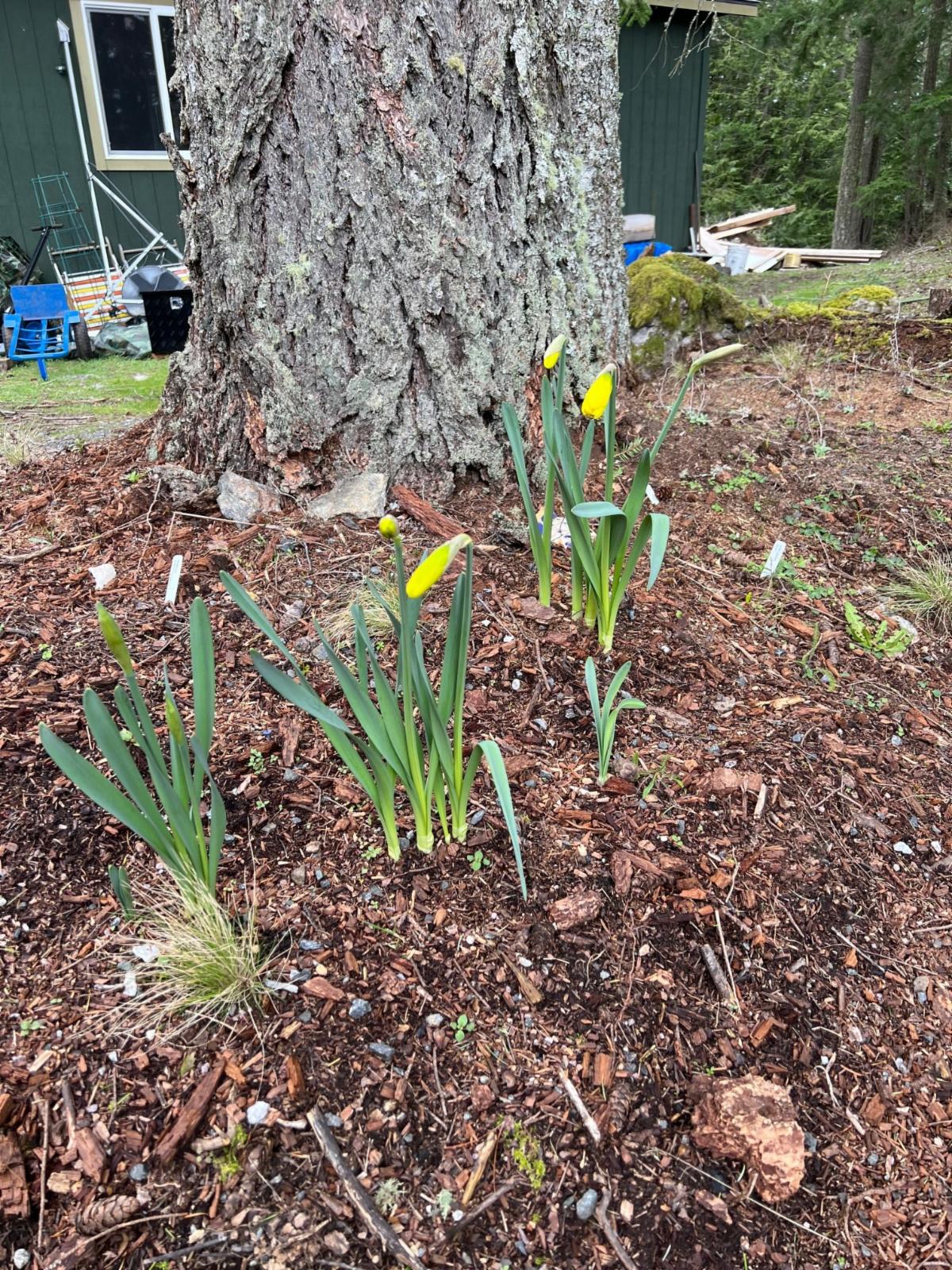
Daffodils Sprouting from Project Blossom
Teresa shared her daffodils on Spring Hill Road blooming this year on March 1st. Last year, the same location bloomed on March 20th.
She said, "Fun to observe!!"
Thanks for sending in your picture Teresa!
Do you have pictures you'd like shared, and possible featured in the newsletter? Email us!
| | Embrace the Seasonal Rhythm | | |
Springing Forward
by Suzette Lamb
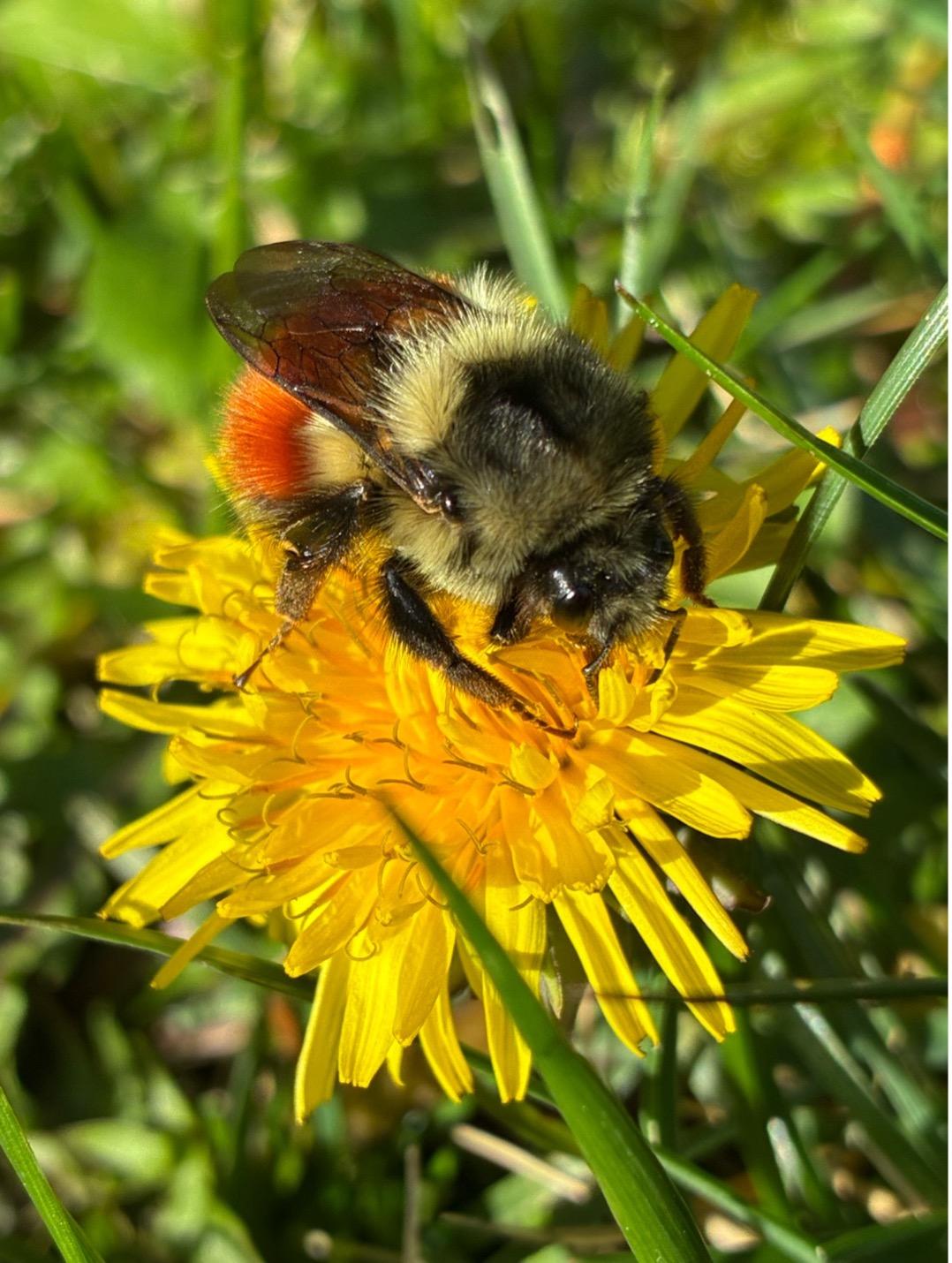
Having recently gone through the sometimes jarring reset of moving our clocks ahead, I’ve been thinking about the concept of “springing forward.” As I look around our property and drive to and from town, there are signs of nature moving into the next season everywhere: daffodils, cherry blossoms, young green leaves on our blackberry and raspberry canes, and even some delightfully plump orange-bottomed bumblebees lazily feasting on bright yellow dandelions. They are all lighting up the landscape.
And yet the blustery wind still blows a lot, a spectrum of gray clouds is ever present, and the sense that rain could turn to sleet is never quite out of the realm of possibility.
Nature is moving forward anyway.
| | |
The context clues that winter may not be quite over aren’t enough to thwart the urge to grow or emerge into the next inherent cycle. Nature springs forward anyway.
Watching this unfold makes me wonder why we humans sometimes hesitate to do the same.
So how can we, as people who often look around to see if what we are about to do next is the right or safe thing, spring forward even when the emotional weather of our lives looms overhead?
I believe we are inherently designed to move toward growth and health. The adversity we face can be tough, but it also helps us gain new skills, adaptations, and resilience. (Think “a smooth sea never made a skilled sailor” or “bloom where you are planted.”)
I find myself in this ambivalence currently—part of me wanting to stay safe and in place, and another knowing it is time to spring into the next cycle of my life even though conditions are not quite right and the future is impossible to predict.
I know that whatever happens next, I can figure it out with self-trust and the support of my friends, family, and community.
Nature doesn’t wait for perfect conditions to grow. Perhaps we don’t have to either.
| | | |
|
BELOVED
Please forgive me for forgetting,
I wanted to go outside and look for you.
I was told that was not possible.
I was instructed to stay indoors.
But my words for you need sun.
My heart needs air.
I love you, Spring.
I miss your warmth.
Come unlock my door.
E. Ethelburt Miller
| | |
See, Do, Learn, Grow
by Abby Deskins
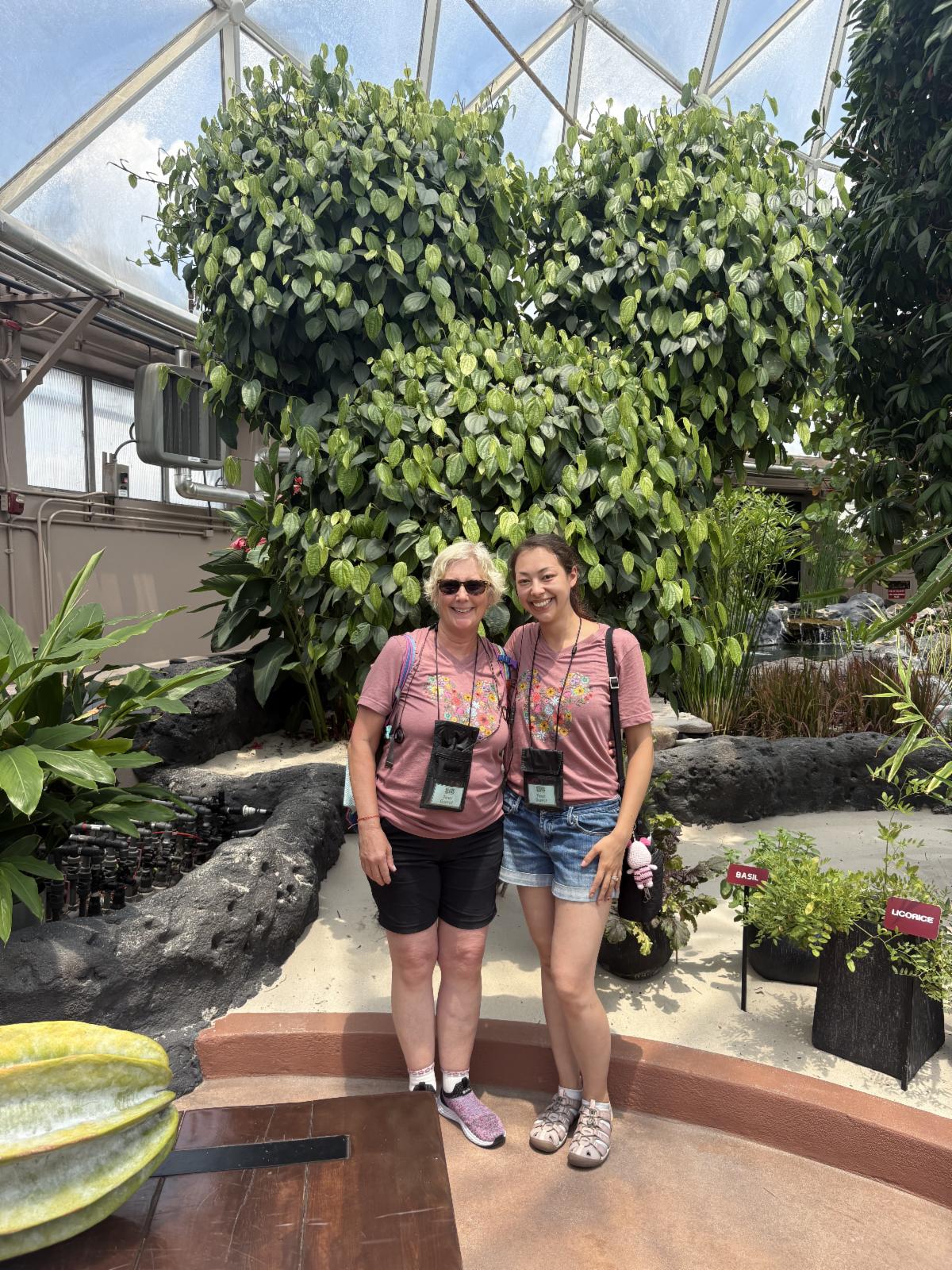
This month is all about getting creative with your greenhouses! March program speaker and expert farmer, Lori Ann David, will be sharing her ways of how to grow food in high tunnels and greenhouses. Additionally, Garden Club member and newsletter contributor, Carol Owens (pictured alongside Nancy Reas), has been growing towers inside her house which she uses to grow salads! Check out her incredible tower in the picture to the right! Keep your eye out and there just might be an article on this in the future…
As we dive into the topic of greenhouses this month, I thought, what better way to tie in than with an article about the ‘Behind the Seeds’ tour at Disney World.
| | Garden Creatures and Where to Find Them | | |
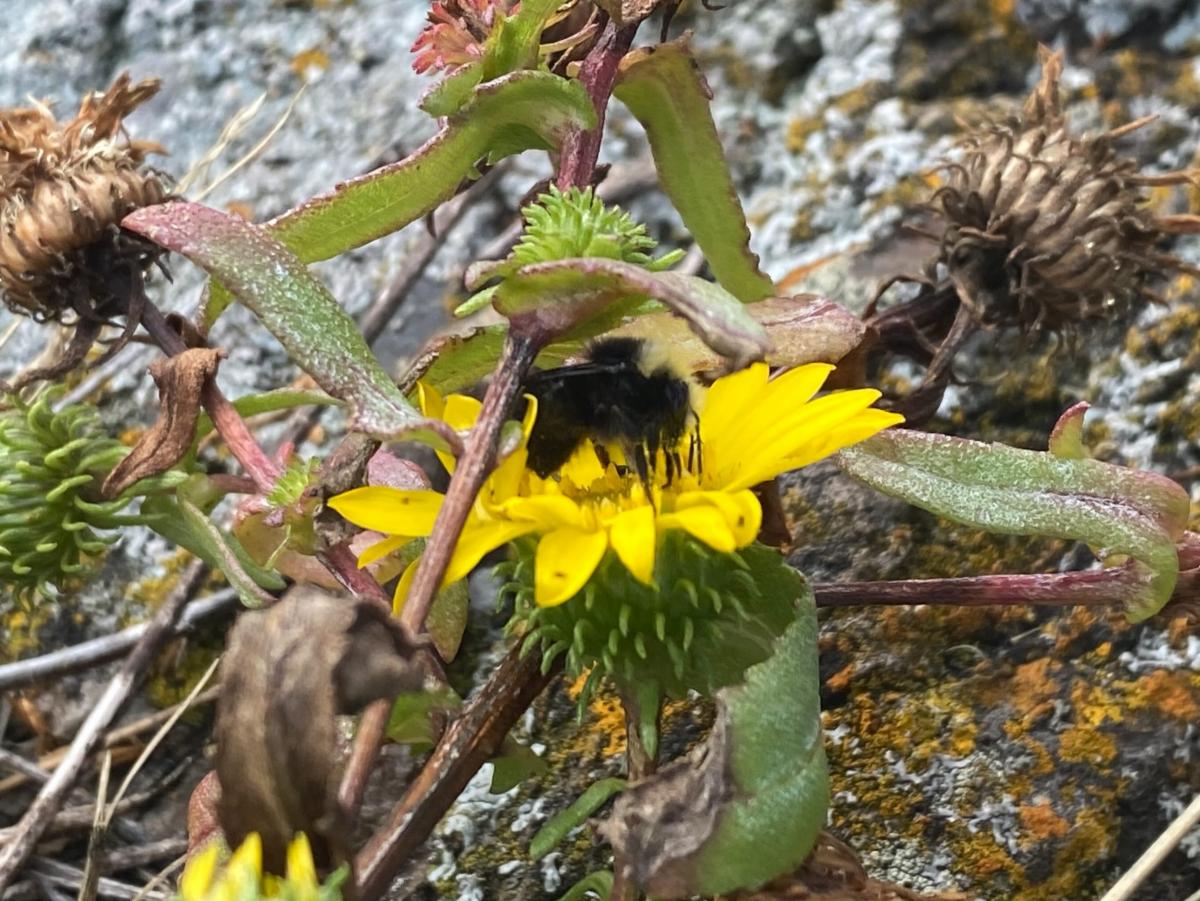
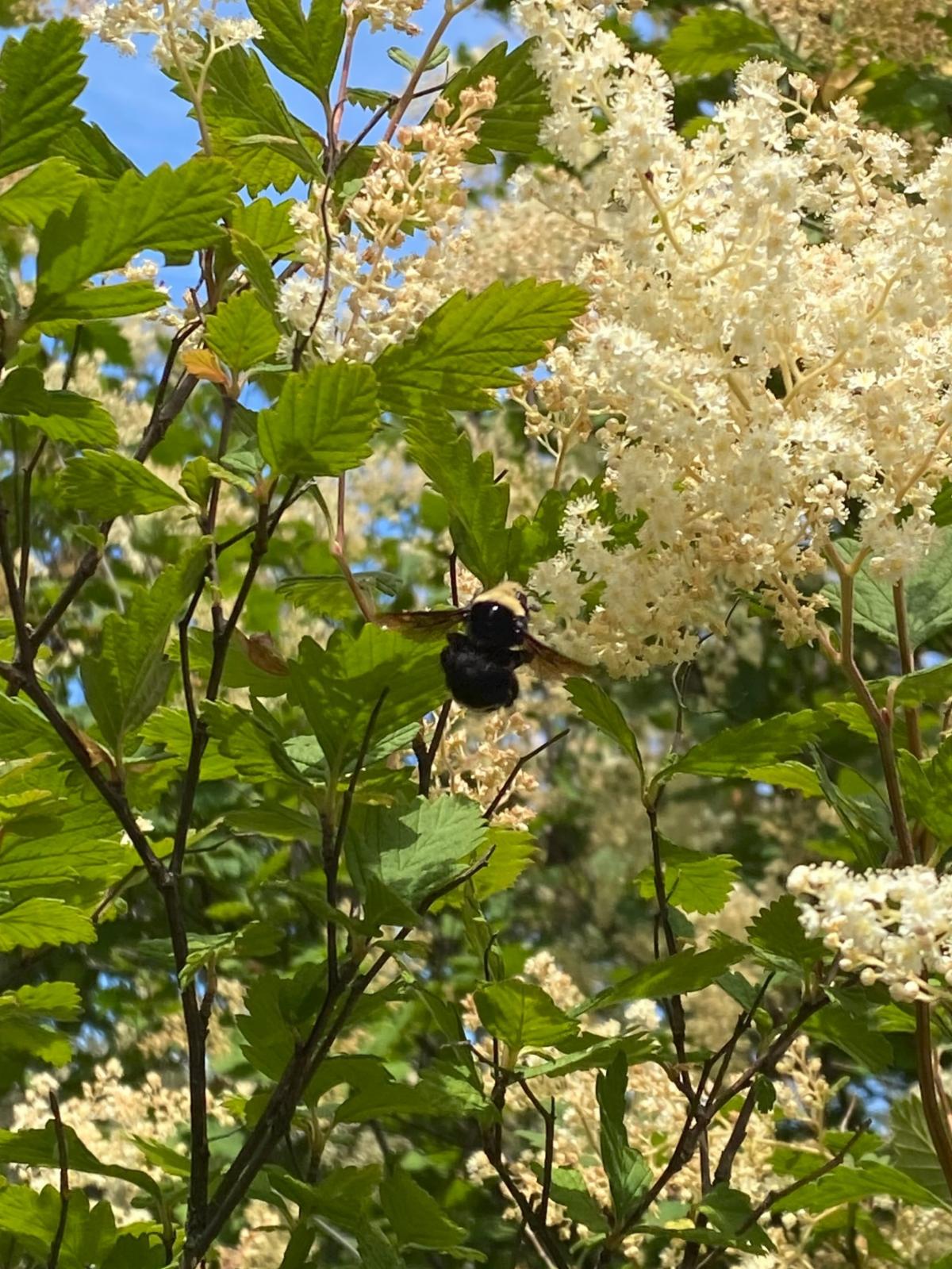
B. vosnesenskii
on Puget Sound Gumweed
| | |
Buzzing Bombus and Their Broods
by Christian Oldham
One of our earliest spring-emerging native pollinators is the Yellow-faced Bumblebee (Bombus vosnesenskii). These large, fuzzy, black-and-yellow bees are relatively easy to identify and to observe on Orcas, as they are one of our most common bumblebees.
| | |
This species, also known as the Vosnesensky Bumblebee, eagerly buzzes through gardens, wildflower meadows, and flowering shrubbery from early spring through fall. Now is the opportune time to observe the currently-active queen bees as they awaken and begin to search for subterranean burrows within which to lay eggs. Once settled into their new homes alongside their brood, these queen bees begin a month-long incubation of the first worker generation for the season. Incubation is facilitated by the queens’ ability to raise their body temperature while in contact with the eggs. These future colony sites may be inadvertently discovered or disturbed in orchard or garden soils during routine horticultural work or by moving rocks or woody debris that camouflage nest entrances.
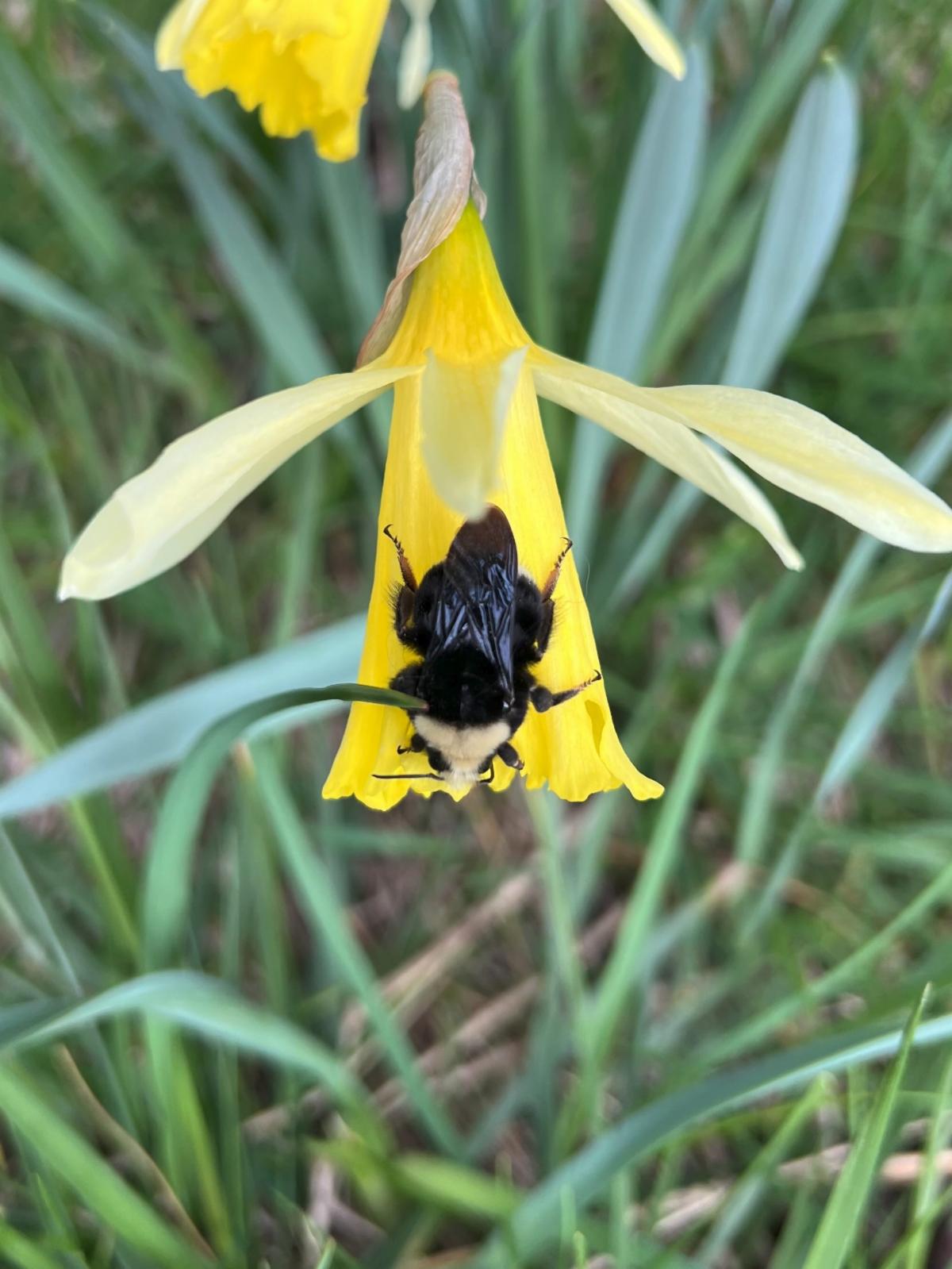
During regular cool early spring temperature spells, queen bees can often be caught napping; nestled snugly into open early season flowers, waiting to warm up sufficiently for flight. Once their wing muscles have warmed, they will resume their intrepid searches for nest sites or to forage on a variety of both native and nonnative flowers. Early daffodils are prime bumblebee hotels – as daffodil aficionados may be surprised to see when bringing cut flowers into their warm homes! This particular species, unlike some other native bees and pollinators, appears to be not just stable in population along the west coast of North America, but expanding to occupy the niche vacuum left by the declines of other native bee species. The Yellow-faced Bumblebee is famous among cultivators for its uncanny ability to pollinate tomatoes with great efficacy (including use by large greenhouse tomato growers). As such, these industrious insects are one of the few captive-bred bumblebee species in the United States available for commercial pollination services.
| | B. vosnesenskii on Daffodil | | B. vosnesenskii on Oceanspray | | In the fall, towards the end of the active season, the number of workers within each colony declines and a new generation of queens will hatch. These new queens will leave the nest in search of reproductive males who have likewise departed from their own colonies, at which point they will mate and the new queens begin overwintering hibernation before awakening the following spring to begin their own search for suitable nesting locations. | | |
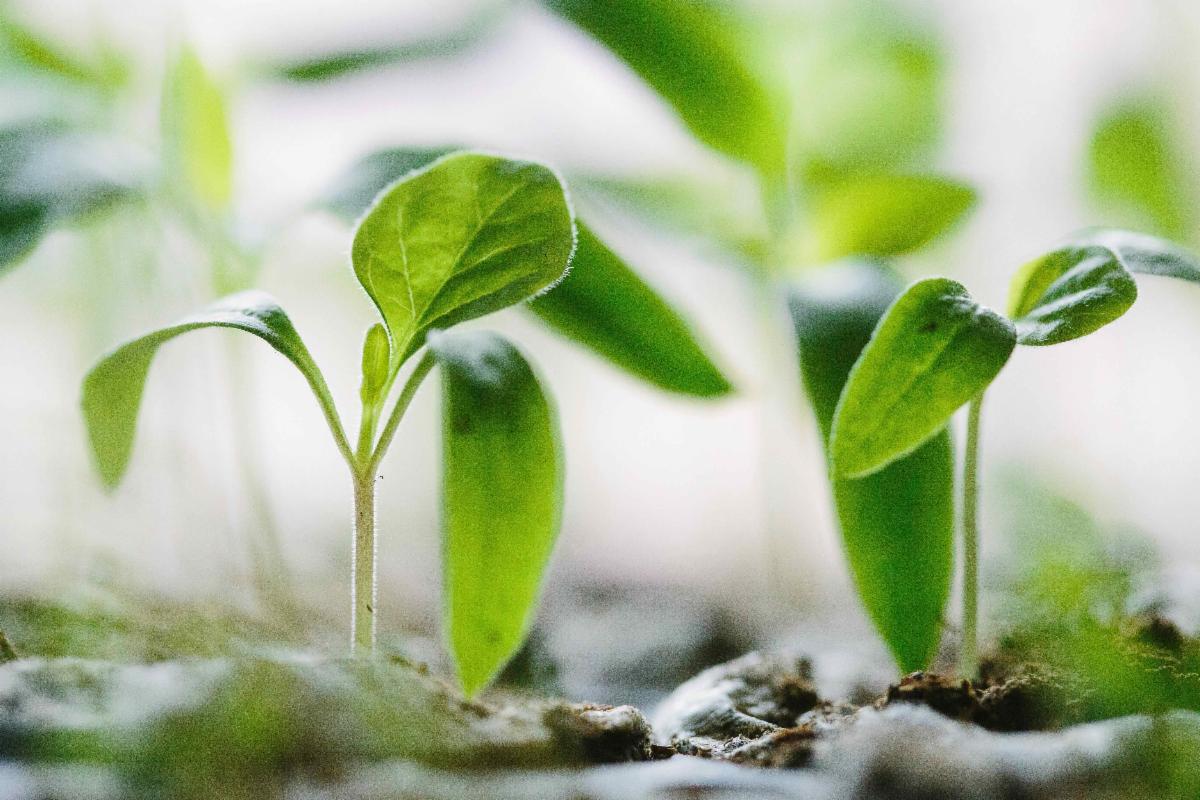
Ensure your seedlings get off to the right start before transplanting them into your garden. Here are a few tips when caring for seedlings.
Temperature
Heat mats are helpful for germination in a cold environment. Ongoing bottom heat is helpful for peppers, melons, and tomatoes and aid in root growth. Seed Savers states that the top of the fridge also works well as a heat mat for seedlings.
Light
Some seeds don’t need light to germinate but once growth appears light is needed for continued growth. Seedlings need 12-16 hours of consistent light each day to develop strong, healthy stems. Natural sunlight from a window usually isn’t adequate, so it’s best to use supplemental lighting, such as LED grow lights or fluorescent bulbs. Keep the grow lights a few inches above the seedlings and adjust the height as the plant grows.
Water
Check the plants daily to assess their need for water. Overwatering can be more detrimental than underwatering. As seedlings start to emerge, use a watering can or hose with a light stream. Bottom watering is ideal and doesn’t damage your seedlings. The water will slowly move up the soil.
Ventilation
After your seedlings sprout, set up a small fan by your seedlings. Running the fan on low will provide airflow which helps prevent disease and it will also make your plants stronger and better prepared for life out in the garden.
Fertilizer
Fertilize only as needed, typically four to six weeks after sowing. Liquid fertilizer, like fish emulsion, is best because it is easy to apply and produces quick results. Make sure that you read the instructions on the bottle and dilute the mix; too much fertilizer can burn your plants.
Source: Seed Savers
| | |
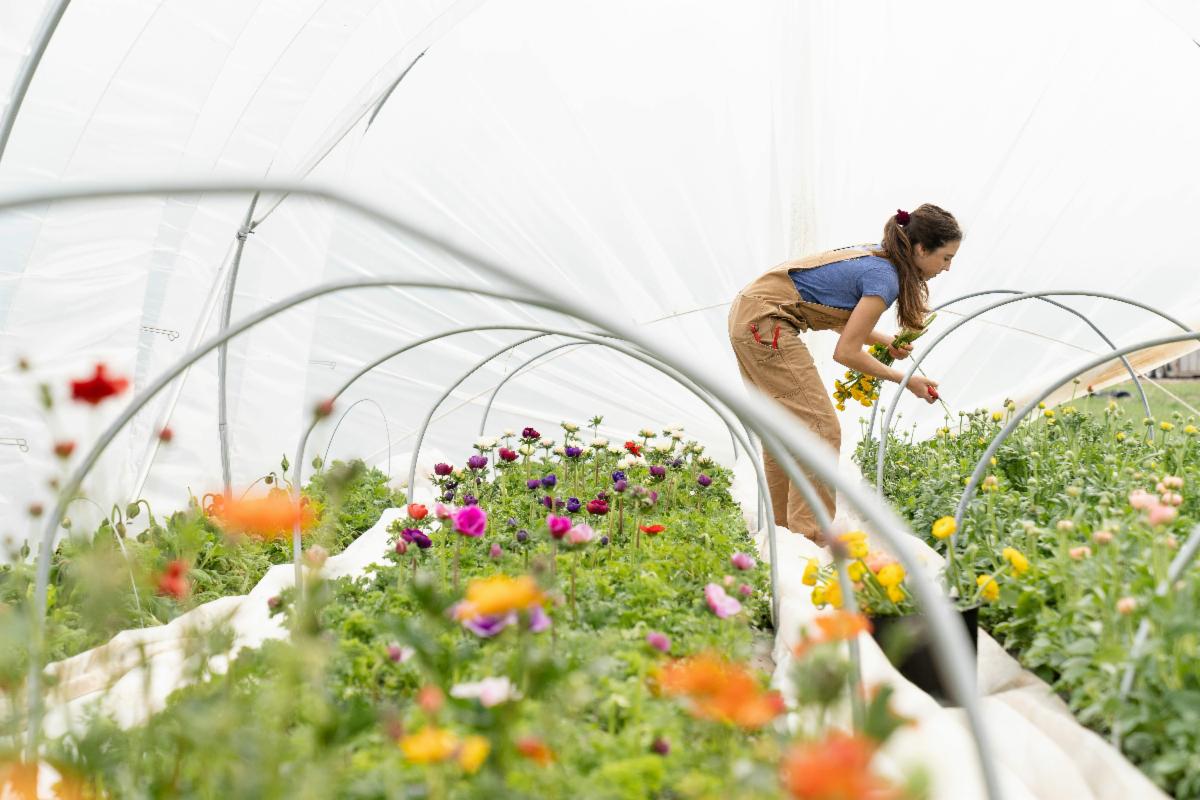
Greenhouses and cold frames maximize gardening potential by extending the growing season and protecting plants from harsh weather. Extending the growing season in the Pacific Northwest (PNW) is an important strategy for both commercial farmers and home gardeners, enabling productivity during the region's cool, wet spring and autumn months. By utilizing greenhouses,high tunnels, row covers, and cold frames, growers can create warmer, protected microclimates that stretch the growing season by 4–8 weeks.
Here are some fun and interesting facts About Greenhouses and Coldframes to exercise your gardener's brain. See the bottom of the newsletter for the answers!
| | Select the correct answers to this month's challenge... | | |
1. The first documented greenhouse was built in 30 AD in: A) China, B) Greece, C) Rome, D) Japan
2. The two primary crops grown in that greenhouse were: A) tomatoes and squash, B) cucumbers and melons, C) basil and tomatoes
3. The first heated greenhouse was established in the 1450s in: A) China, B) England, C) Japan, D) Korea
4. The first American greenhouse was built in 1737 in: A) New York City, B) Philadelphia, C) Boston, D) Roanoke Virginia
5. A coldframe is useful to the gardener because it: A) keeps plants cooler than the surrounding air, B) keeps plants warmer than the surrounding air
6. According to garden writer Eliot Coleman, a coldframe ‘moves the garden’: A) 100 miles south, B) 500 miles south, C) 1000 miles south
7. The biggest food-production greenhouse in the world is located in: A) Spain, B) China, C) United States, D) England
8. The biggest US food-production greenhouse is located in: A) Kansas, B) Pennsylvania, C) Iowa, D) Kentucky, E) Virginia
| | |
Gardens and Libraries Growing Together
by Perri Gibbons
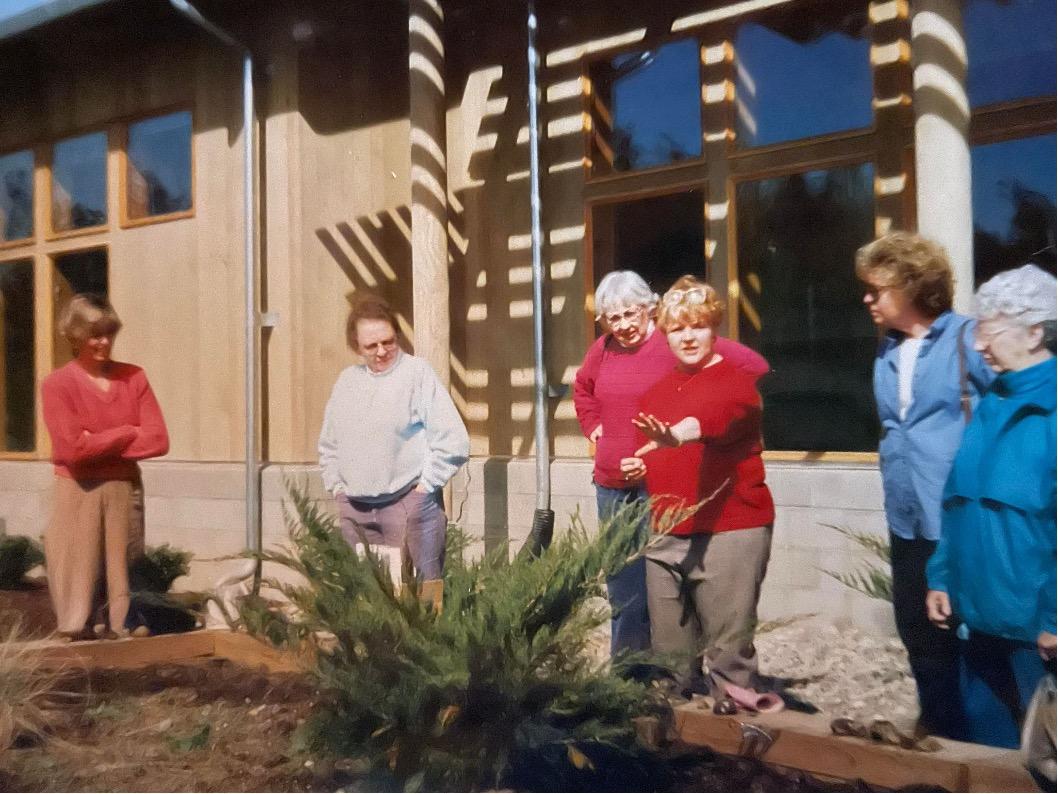
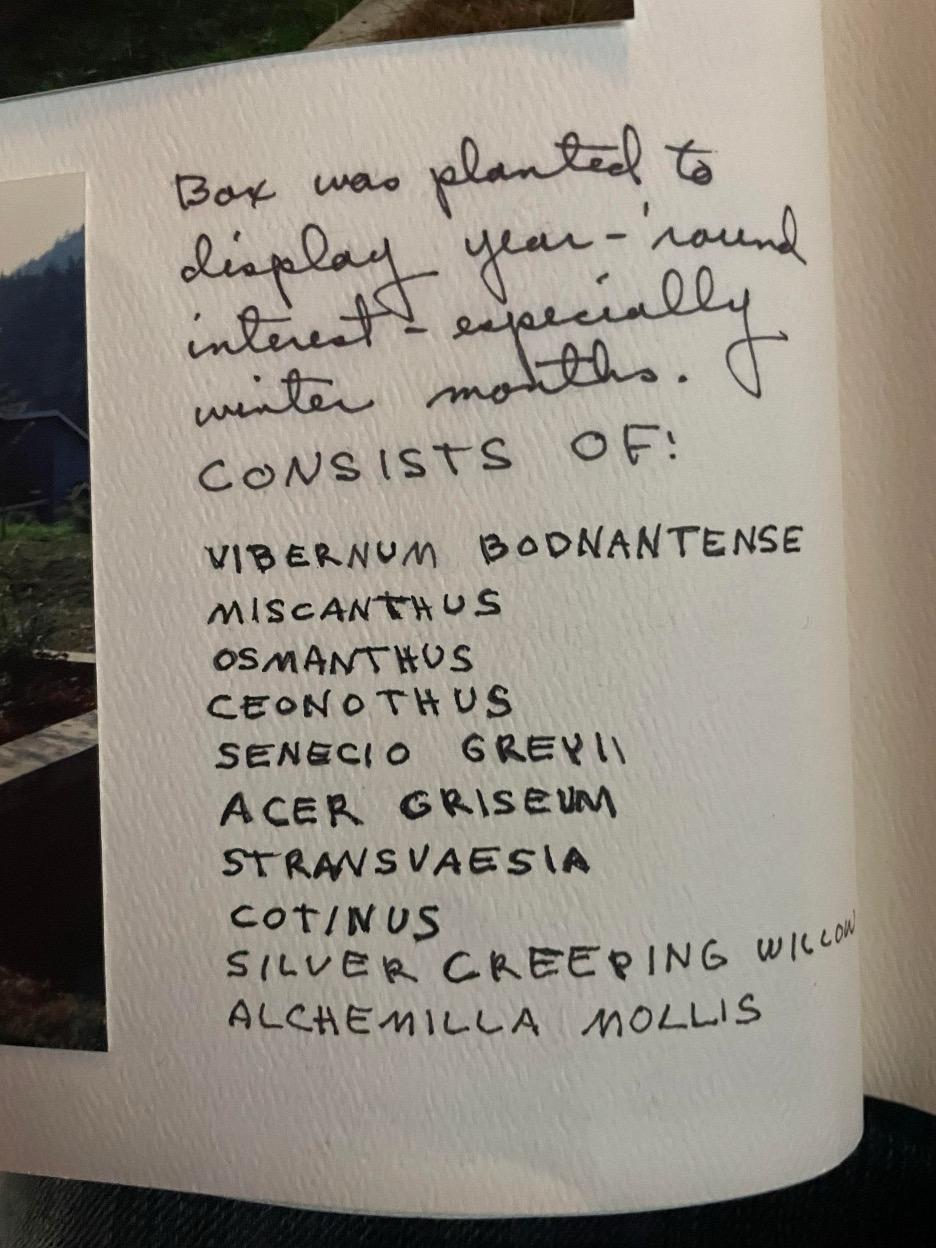
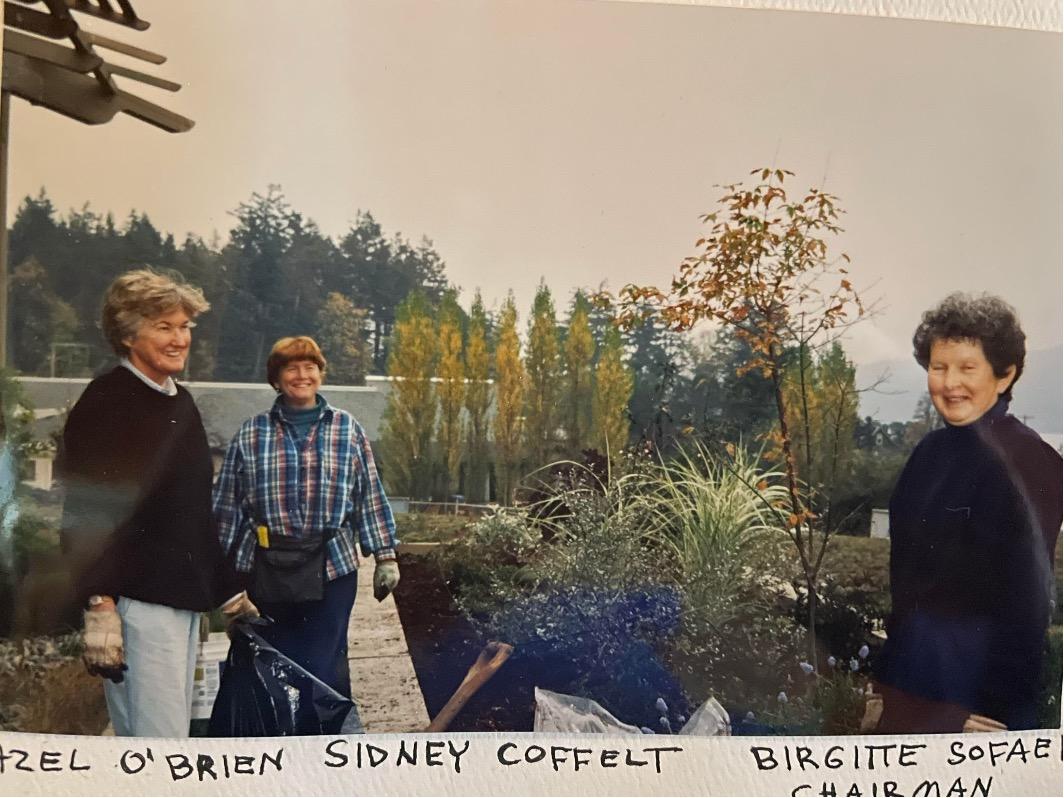
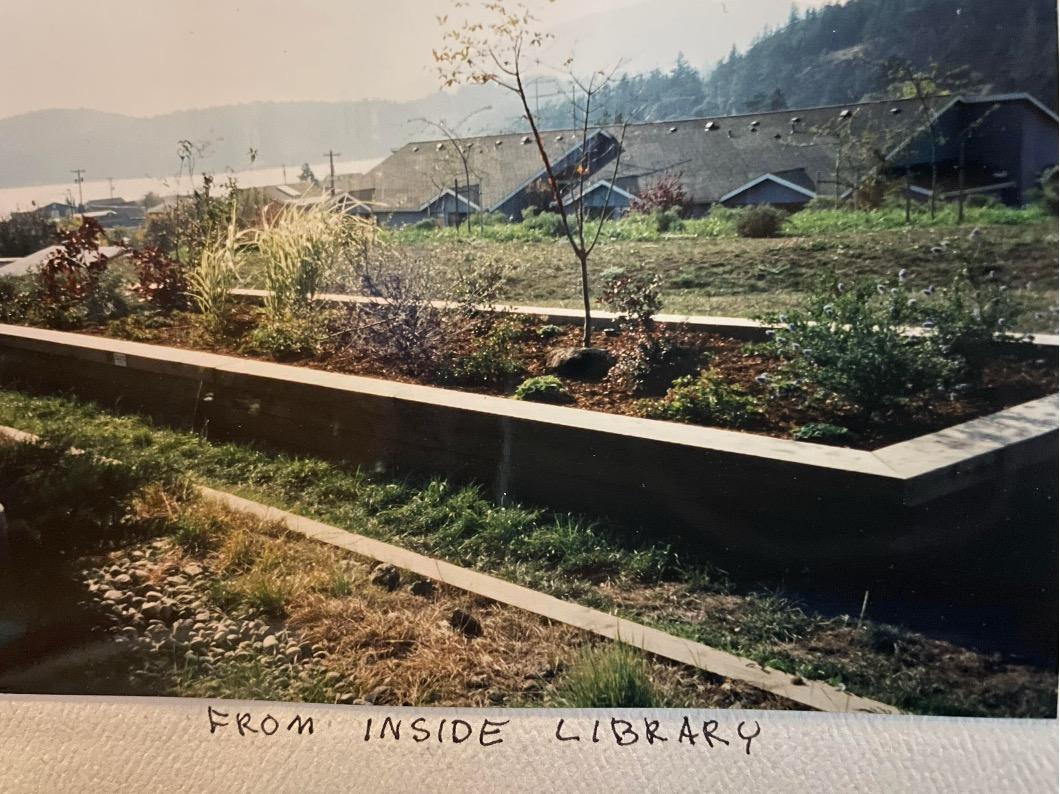
The OIGC has been so enthusiastic about our new garden plot at the library! You may be following the progress featured in the newsletter or stopping by to admire it in person. As with so many Garden Club activities, there is a historical precedent for our involvement. One scrapbook documented library garden collaboration occurred in 1993. Here’s a planning meeting in April with Victoria Parker, Anne Boone, Elaine Granville, Chairman Sherri Harpham, Brenda Gasbar, and Agnes Forbes.
| | |
Victoria was the Library Director and is a current member! She shares with us, “I do remember this wonderful planter box situated right outside the Sun Room. It was big! Its edges were wide enough to sit on; many people did so with a book in hand and perhaps a cup of tea. At some point many of the plants outgrew their original placement; I think this photo caught a number of us considering next steps for that very reason.”
An Islands Sounder article in September reads in part, “A perennial/evergreen garden designed and planted by the OIGC, is the most recent addition to the OI Library grounds. The landscaping project is made up of a variety of shapes, colors and textures, and can be seen from the library’s picture window.
| | Final weeding and preparation for winter in October by worker bees, Hazel O’Brien, Sidney Coffelt and Birgitte Sofaer. | | Current and longtime Garden Club member, Sidney, says she loves these pictures and her dear friends. Final Result! | | |
We’re having a grand opening/ celebration of our new garden. Wouldn’t it be fun to have past participants and members from 1993 come and join in the fun?
Stay tuned for more details!
| | Have some stories? photos? Share them with us! Contact: Perri Gibbons | | Member Raffle and Meeting Door Prize | | |
Thank You Market Garden!
Our thanks goes out to the Market Garden for the plant donation!
Browse their beautiful plant selection, visit Market Garden across from the Island Market.
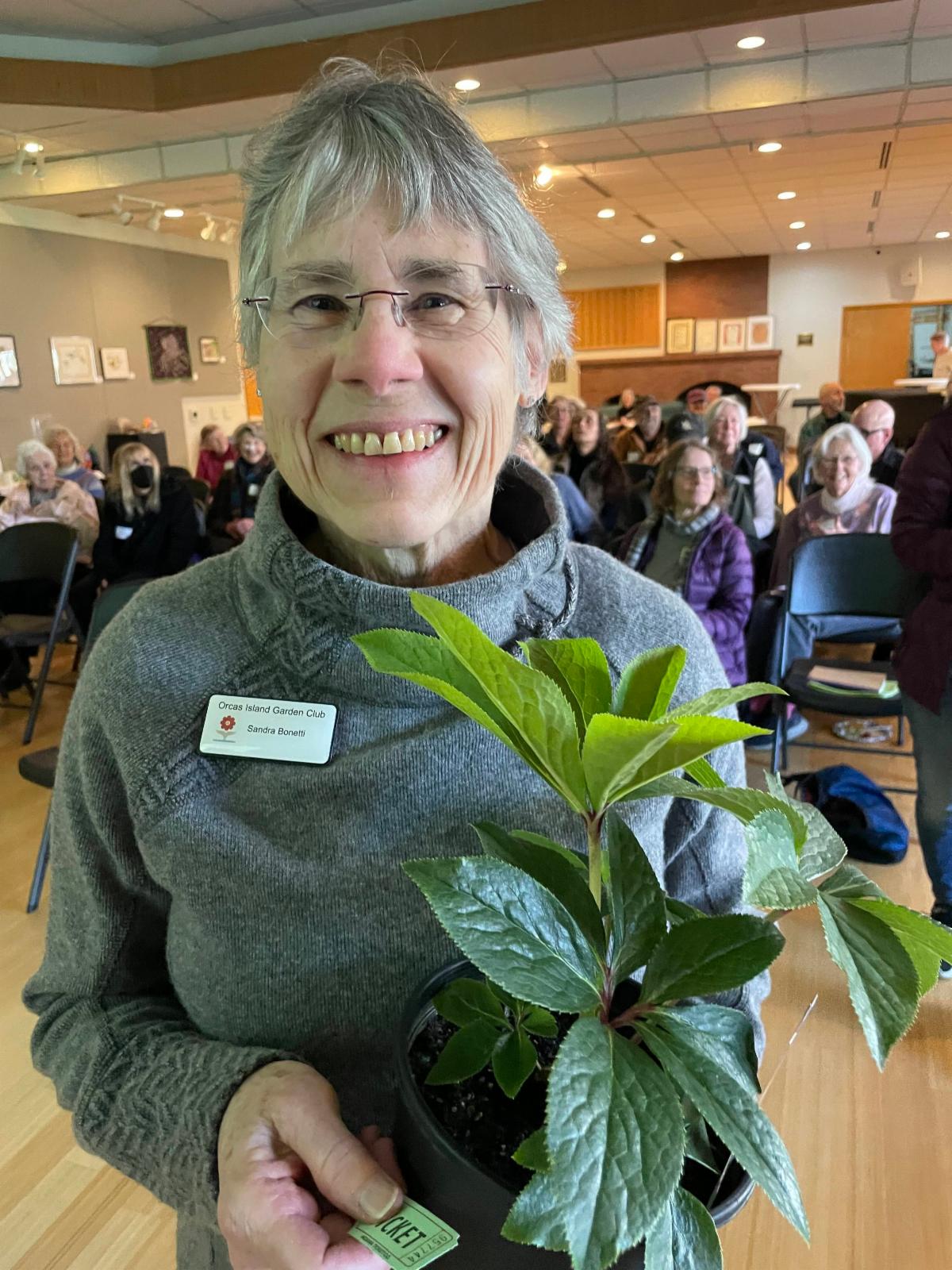
| | Our February lucky door prize winner was Sandra Bonetti who won a beautiful Hellebore Plant donated by Market Garden! | | | |
|
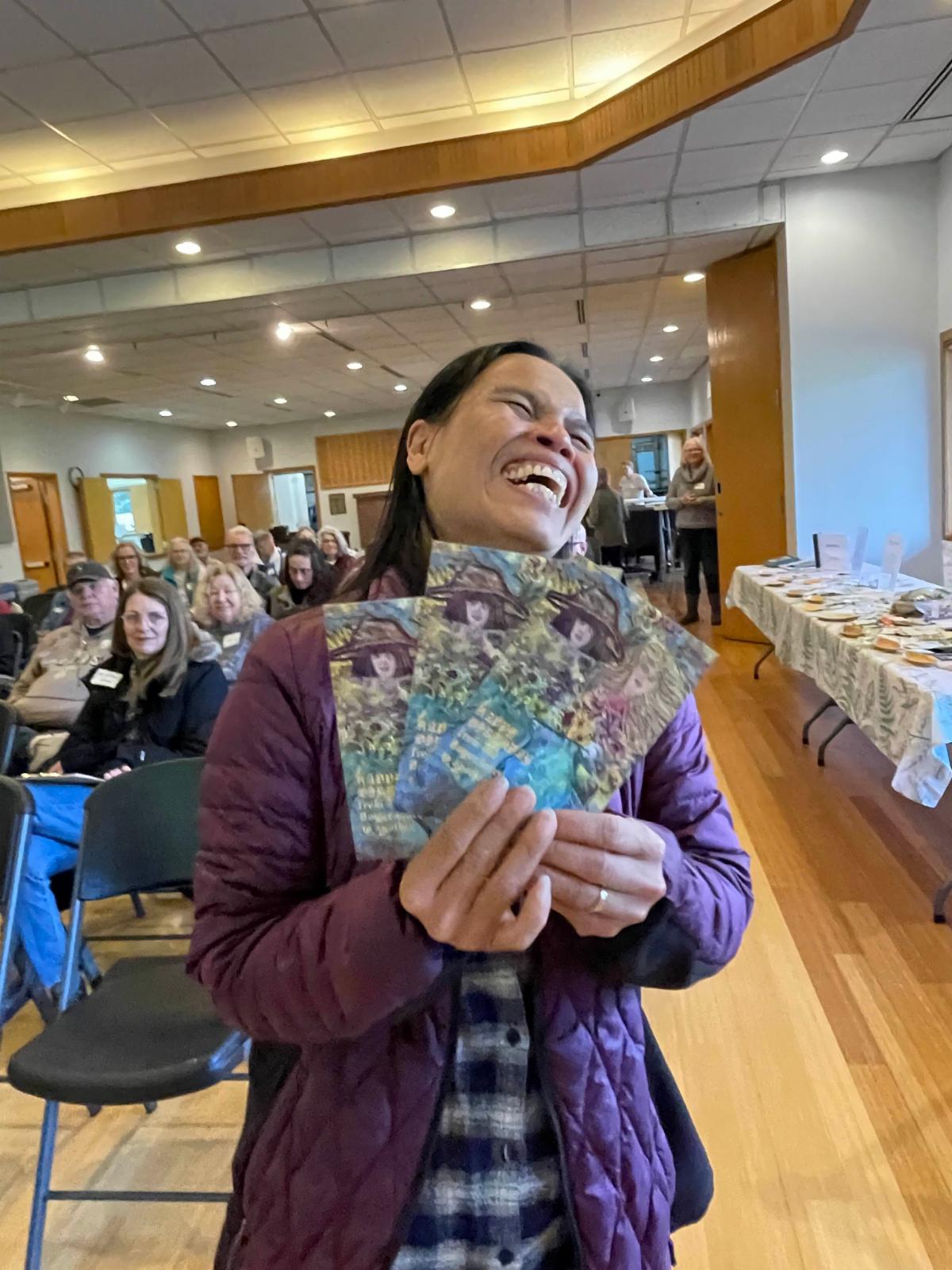
A second lucky door prize winner was Nuna Malaspina who won original Art Postcards that were graciously donated by Susan Slapin
Just look at that smile!
| At each monthly meeting, all members and guests joining us in person are entered for a chance to to win a door prize! | | | |
Congratulations Sharon Oviatt who won the book for March, Plan Your Gardening Year by Author, Andrew Mikolajski.
Sharon was happy to receive the book!
Monthly Member-Only raffle winners are chosen at random from a list of current garden club members. Remember to renew or join the club to join in this fun contest! To see if you are an active member, contact Karen Hiller.
| | |
Plan Your Gardening Year - Plan, Plant & Maintain by Author, Andrew Mikolajski
The secret to creating a glorious, productive garden is year-round love and attention; it's good-old-fashioned maintenance: remember to plant tulips and daffodil bulbs in autumn, and your garden will come alive with bright splashes of colour in early spring; remember to hoe the flowerbeds in April to prevent weeds choking the new growth; and, take cuttings of shrubs in August. Keeping track of what to do when is no simple task, but this straightforward new book will help you plan your year. It gives you seasonal lists of jobs to do, which plants to plant and plenty of expert advice and handy hints on how to improve your garden.
| | |
Did you guess the correct answers to the
Greenhouse and Cold-Frame questions?
1. C, 2. B, 3. B, 4. C, 5. B, 6. B, 7. D, 8. D
Warmly Submitted by Mary Nash
| | |
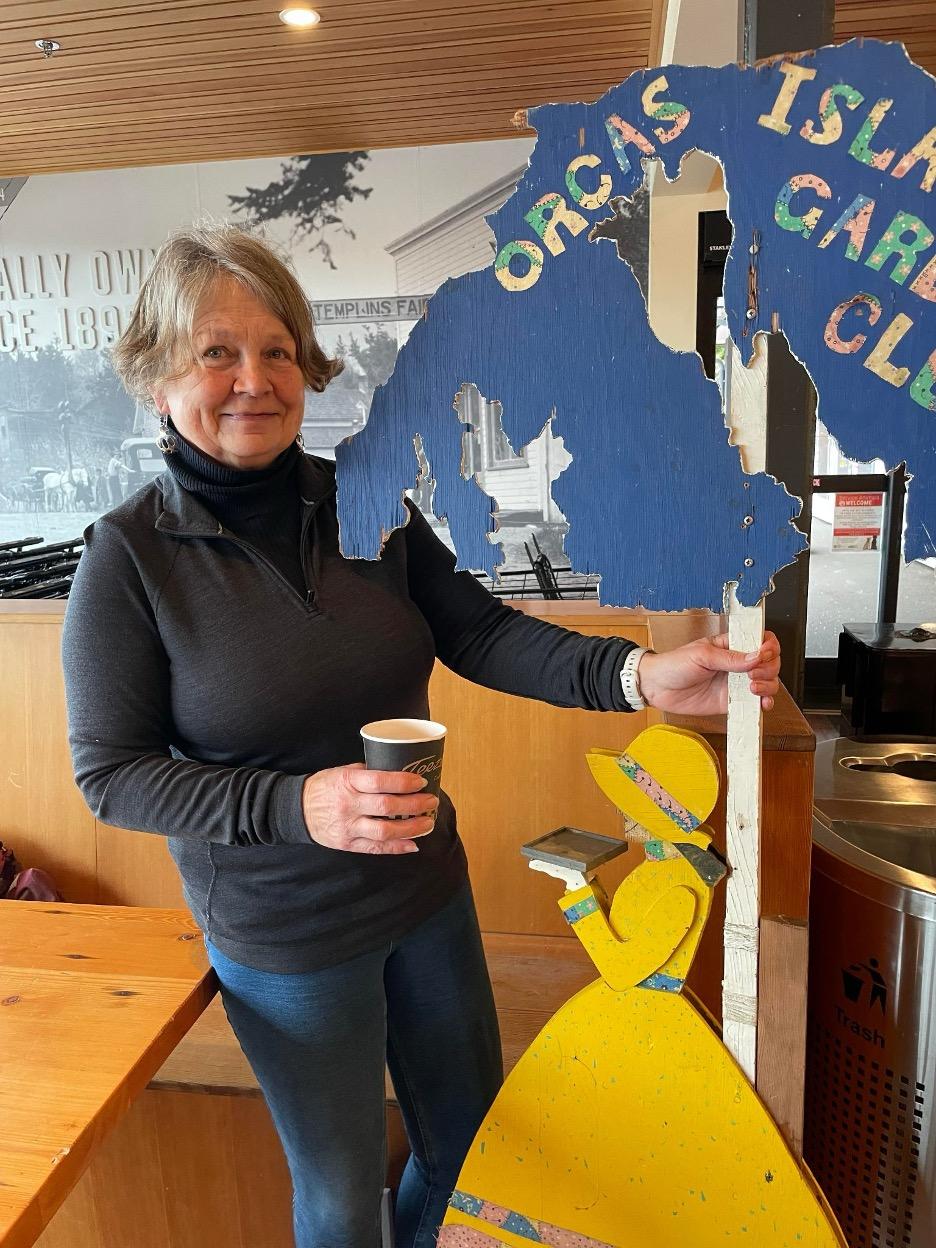
Miss Gardenia and Leith Templin Meet for Coffee...
Heads turned as Leith, Miss Gardenia, and Perri gathered at Island Market for a coffee date. At our February meeting we had solicited names from our members and received several worthy contenders. (See Last month’s Dirt on Our Roots article) Since the Garden Club was an offshoot of the Madrona Club, Leith’s connection to both made her the perfect choice to take on this weighty decision. With GARDEN in the name, the decision was clear. Members of the Garden Club and the Orcas community we are delighted to formally introduce to you...Miss Gardenia!
| | Miss Gardenia was too modest to respond publicly, but seemed grateful for the acknowledgment of her years of service and hopes to continue to be of value to the club. | | Membership Update - Here We Grow! | | 2026-2027 Membership to date: 253 | This year, we have a few free memberships available to those in financial need. Please reach out to our membership and we would love to help you. | | |
Membership Fees:
Individual: $25 / year
Couple: $35 / year
| |  | | | | |
Do you enjoy reading the monthly OIGC newsletter?
How can we make it better?
We'd love to hear your feedback, comments and suggestions.
Thank you in advance!
| | |
PRESIDENTS: Robin Sullivan & Laura Walker
MEMBERSHIP: Karen Hiller & Perri Gibbons
GARDEN TOUR: Sally Hodson, Robin Sullivan & Haven DePietro
| | | |
PROGRAMS: Jenny Pedersen
TREASURER: Tony Suruda
SECRETARY: Adrienne Walker
COMMUNICATIONS: Kristin Tolle
NEWSLETTER: Abby Deskins
| | Please contact oigcnewsletter@gmail.com if you encounter any technical issues regarding accessing the newsletter. Thank you! | | | | |