OG2021 Heading 2.jpg

Pollinator Gardens & Rain Gardens

THURSDAY

Ray Moranz Headshot_closeup_2019_IMG_8963 cr _002_.jpg

Awesome Plants for Keeping Oklahoma Gardens Buzzing with Pollinators 

courtesy of Ray Moranz

9AM


Pollinator gardening is a way to combine our desire to make the world a better place (through conservation) with our love for beauty and entertainment: pollinators entertain us with their diversity of form, function and their intriguing behaviors. Oklahoma is one of the best states for pollinator gardening: our climate helps us to have more pollinators than many other parts of the nation. In my presentation, I will discuss some of the main principles of pollinator gardening and then show (with high quality photos) many of the plants that are most attractive to Oklahoma pollinators. I will also talk about the culture of these plants and which pollinator groups they are most attractive to. If you aren't gardening for pollinators already, I think this talk will inspire you to do so. If you are already gardening for pollinators, I think this talk will get you excited about some plants that are new to you.  


Dr. Ray Moranz is the Grazing Lands Pollinator Ecologist for the Xerces Society for Invertebrate Conservation. Ray also serves as a Partner Biologist for the U.S. Department of Agriculture’s Natural Resources Conservation Service and assists the Central National Technology Support Center (CNTSC) in Fort Worth, TX with pollinator conservation throughout the central U.S. Ray began studying grassland plant and butterfly communities in 2004 and earned his Ph.D. in Natural Resource Ecology and Management from Oklahoma State University in 2010. Ray lives with his wife and two kids on a small farm just outside Stillwater, OK.   

Rain Garden Book.PNG

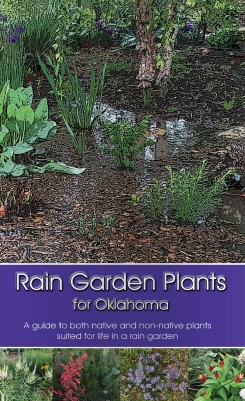
Rain Garden Plants for Oklahoma

courtesy of Mike Schnelle & Jason Vogel

3PM


Rain gardens are vegetated, shallow depressions in a landscape designed to collect and filter stormwater runoff. The Oklahoma Water Survey at the University of Oklahoma and the Oklahoma Cooperative Extension Service at Oklahoma State University are partnering for this presentation on appropriate rain garden plants for Oklahoma, including grasses and related species, herbaceous perennials, shrubs, and trees. We hope this presentation will be useful whether you’re a seasoned professional or this is your first rain garden, and is also supported by our new book of the same name. 

mike_schnelle.jpg

Mike Schnelle received his B.S. (Honors Program) and M.S. degrees in Horticulture at Kansas State University, Manhattan. He went on and completed a PhD in Horticulture at Colorado State University, Fort Collins. Starting in 1989, Schnelle currently serves as Extension Specialist and Shackelford Endowed Professor of Floriculture in the Department of Horticulture and Landscape Architecture at Oklahoma State University, Stillwater.  Mike’s specialty is in floriculture and woody plant production and culture. He has interests in areas of ornamental horticulture from flowers to trees as well as edible crops, both temperate and tropical. Schnelle has lectured on plant materials and worked/consulted on horticultural projects throughout the U.S. as well as Central America, South America, The Greater Middle East, Asia and Sub-Saharan Africa. Mike is currently focusing on working with the Oklahoma Nursery and Landscape Association as well as applied research on rose rosette disease in the field, native vs. non-native plants and their probability of invasiveness as well as plant materials for rain gardens, water conservation and other purposes. Mike can be contacted at mike.schnelle@okstate.edu.  

Jason Vogel.jpg

Jason Vogel, Ph.D., P.E. is a Professor in the School of Civil Engineering and Environmental Science and the Director of the Oklahoma Water Survey at the University of Oklahoma. He is recognized as one of the leading experts on rain gardens in the Great Plains region. Over the last decade he has worked to facilitate rain garden implementation throughout Oklahoma, developing an award-winning low impact development (LID) research and outreach program through his faculty positions at the University of Oklahoma and Oklahoma State University. His related activities include designing, implementing and/or monitoring over 50 LID installations across the state; leading the development of the first local LID design, inspection and maintenance criteria in Oklahoma; and founding the biennial Great Plains LID Research and Innovation Symposium.  

REGISTER TO ATTEND

ONLA | oknla.org

Facebook  Twitter  Instagram