On Global Trade & Investment
Published Three Times a Week (with occasional bonus quotes) by
The Global Business Dialogue, Inc.
Washington, DC 20006
|
|
THURSDAY, AUGUST 20, 2020, PART II
Click HERE for last Friday's quote on cheese, the UK, and Japan.
|
|
THE SWEET SMELL OF STILTON
“We passed Stilton, a town famous for cheese … .”
Daniel Defoe
Publication Year, 1724
|
|
Stilton and blue cheese generally featured prominently in our last entry. There, however, it was more a prop than the play. Our real subject in that piece was the still ongoing trade talks between the UK and Japan, where Stilton is the latest and, one hopes, the final stumbling block. Even so, our slight brush with Stilton in that setting called out for a second look, both at the cheese and at one of the prominent issues associated with it. Today’s quote is from Daniel Defoe’s 1724 travelogue A tour thro’ the whole island Great Britain, in which he wrote:
We pass’d Stilton, a town famous for cheese, which is called our English Parmesan, and is brought to the table with the mites and maggots* round it, so thick, that they bring a spoon with them for you to eat the mites with as you do the cheese.
Our thanks to the Wikipedia article on Stilton both for this bit of 18th century gastronomy and for the following three molecules of information.
The first is that “According to the Stilton Cheesemakers Association, the first person to market Blue Stilton Cheese was Cooper Thornhill, owner of the Bell Inn on the Great North Road in the village of Stilton,” which is in Cambridgeshire.
Second, in 1996 three counties in the UK received from the European Union a protected designation of origin (PDO) or, in more general terms, a geographical indication (GI). And so, as Wikipedia explains:
For cheese to use the name Stilton it must be made in one of the three counties of Derbyshire, Leicestershire, and [or] Nottinghamshire … .
And lastly, as the same article explains,
Stilton cheese cannot be produced in Stilton village, which gave the cheese its name, because it is not of any of the three permitted counties… .
|
|
Reading these sentences last week, we naturally began to wonder about the role of GIs in post-Brexit trade talks. And yet that issue didn’t really seem to be in play in the haggling over UK cheese exports to Japan. It is not that GIs are not barriers to market access, they often are, but, in the reports we read, they were not the barrier at issue. The argument there was over the more traditional market access questions of tariffs and quotas.
Still the episode led us to wonder how EU and UK GIs will be dealt with in the post-Brexit world: in the EU, in the UK, and in the UK’s negotiation with third countries, especially the United States. We shall have more to say about those things later, after we have had a chance to talk with the experts. We’ll close this entry with one further fact and a famous question from Shakespeare.
As for the fact, the British Government has announced that it is setting up its own registry for protected GIs. This will be handled by the Department for the Environment, Food & Rural Affairs. From the department’s announcement, it seems clear that the UK and the EU have agreed to continue protection in both jurisdictions for all existing British and EU GIs. It is less clear how new registration will be dealt with.
As for the Bard’s question, it is one that occurs to us whenever the subject of GIs or other such designations – appellation controlee for wine for example – arise. The question is from the famous balcony scene in Romeo and Juliet, where the maid expresses her frustration over the surname of her beloved, the accursed Montague, and she asks:
What’s in a name? That which we call a rose
By any other name would smell as sweet.
Or, in this case, as cheesy. (Yes, but would it be so dear?) Alas, Romeo was always a Montague, and GIs are here to stay. Assuredly, they will be at the root of countless arguments yet to come, but, with luck, no tragedies.
|
|
About Stilton Cheese is the Wikipedia entry for Stilton cheese. This was our source for today, featured quote (though, obviously, not the original) as well as the source for much of the material in the Context session above.
The Balcony Scene is a link to the text of Act 2, Scene 2 of Romeo and Juliet, which includes the lines quoted above.
Guidance on Names takes you to a notice issued by the UK Department for Environment, Food & Rural Affairs. This explains that GIs current in effect in the UK and in the EU will continue to be protected in both and, further, that the UK will set up its own registration system.
*Progress. Maybe we are missing out on something, but we give the name progress to the fact that Stilton no longer comes encased in mites and maggots.
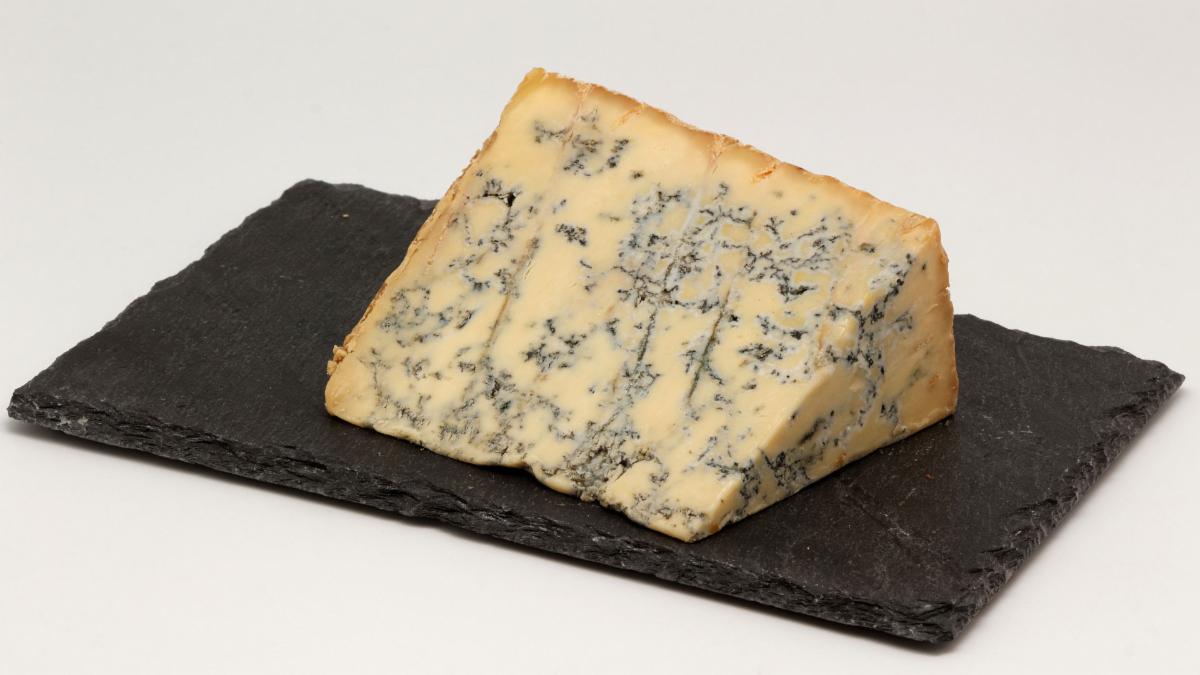
Photo of Blue Stilton by Coyau/Wikimedia Commons/CC BY-SA 3.0
|
|
TO GET THE TTALK QUOTES IN YOUR INBOX
Or Other GBD Notices, click below.
|
|
©2020 The Global Business Dialogue, Inc.
1717 Pennsylvania Ave., NW, Suite 1025
Washington, DC 20006
R. K. Morris, Editor
Joanne Thornton, Associate Editor
|
|
|
|
|
|
|