ONDCP DRUG THREAT NOTICE:


April 30, 2026


Cychlorphine, a synthetic opioid involved in at least 55 deaths, has potential to spread across Nation


Pursuant to its authority to monitor evolving and emerging drug threats, the White House Office of National Drug Control Policy has identified cychlorphine, a synthetic opioid, as a dangerous substance with the potential to spread across the Nation.


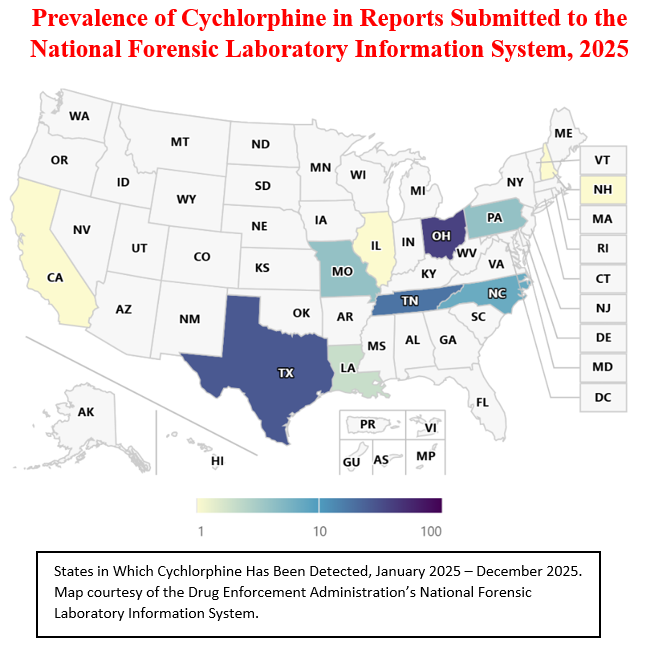
Key Information: Cychlorphine (N-Propionitrile Chlorphine) has been identified in the illicit drug supply in states covering all four U.S. Census regions, with the greatest prevalence in Ohio, Texas, and Tennessee. Cychlorphine is up to ten times more potent than fentanyl and an overdose may require multiple doses of naloxone. It can be found mixed in with fentanyl or drugs such as methamphetamine, bromazolam, cocaine, and others, and it has also been detected on its own. Cychlorphine belongs to a class of synthetic opioids called orphines, which includes brorphine, spirochlorphine, chlorphine, and others. Cychlorphine is not detected by drug test strips or in routine hospital opioid urine screens.


Where Is It? In 2025, 106 reports of cychlorphine in the drug supply were identified in 10 states across all four U.S. Census regions, up from one report in 2024. Reports are most concentrated in the South, Midwest, and Northeast regions. The Knox County Regional Forensic Center recently reported that cychlorphine has been linked to at least 41 overdose deaths in Tennessee between July 2025 and February 2026. Nationally, 55 deaths have been linked to it between 2025 and 2026.

What Can I Do? EMS,clinicians, law enforcement, and the general public should:

1) Be Aware of the prevalence of cychlorphine in the illicit drug supply.

2) Be Prepared to treat opioid overdoses with extra doses of naloxone.

3) Seek Immediate Medical Care for people who may be overdosing – call 9-1-1.


Resources:

CDC: How to Recognize an Overdose.

CFSRE Advisory: Increase in Fatal Overdoses Linked to Novel Synthetic Opioid N-Propionitrile Chlorphine (January 2026).

Poison Center: Call 1-800-222-1222 for advice if exposed to a potentially toxic substance.

DEA TOX: Clinicians can contact the DEA Toxicology Testing Program at deatox@dea.gov to request testing of clinical samples that are not explained by other testing.


About ONDCP Drug Threat Notices: The White House Office of National Drug Control Policy sets federal drug policy and tracks emerging drug threats. These products are intended to inform the medical, public health, and law enforcement communities, as well as the general public, about significant drug threats that may emerge in their communities. ONDCP’s Emerging Drug Threats team closely monitors threats across the nation and shares actionable information when a substance rises to a concerning level.