Welcome to the ORIHI Newsletter!
At the Osler Research Institute for Health Innovation (ORIHI), we are committed to advancing research, strengthening community partnerships, and transforming discoveries into practice for better health. We’re excited to share research news, events, and opportunities that foster connection, innovation, and impact across our growing community.
In this issue
- Evaluating T-cell engager therapy: Real-world insights from Osler
- Financial hardship, chronic kidney disease, and the case for policy action in Canada
- International Day of Women and Girls in Science
- Awards and publications
- Past events and recordings
| | | | |
Evaluating T-cell engager therapy: Real-world insights from Osler
Cancer treatment has evolved over time with recent advances expanding the options, including innovative approaches such as targeted therapies and immunotherapies. Immunotherapy now offers multiple modalities, including immune checkpoint inhibitors, chimeric antigen receptor (CAR) T-cell therapies and T-cell engagers, providing more precise and personalized alternatives for many patients.
This has created meaningful new options for patients with hematologic malignancies, particularly multiple myeloma and B-cell lymphomas and are now expanding into solid tumours, including small-cell lung cancer. While promising, these therapies introduce important clinical and operational complexities, and as their adoption expands understanding their real-world impact becomes increasingly critical.
Read the full article here >>
| |
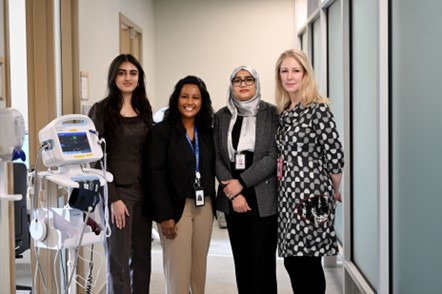
We would like to use this opportunity to congratulate the T-cell engager therapy research team belatedly for the International Day of Women and Girls in Science.
This day, celebrated every February 11, recognizes the vital contributions of women and girls in advancing scientific discovery, improving health outcomes, and strengthening communities. It also serves as a reminder of the ongoing importance of advancing equity, mentorship, and inclusive leadership in research.
| |
From Left to Right:
Diya Nijjar was a research student with the Osler Research Institute for Health Innovation (ORIHI) through the Summer Student Research Program and a fourth-year Neuroscience student at York University. She contributed to oncology research by analyzing adverse events in T-Cell Engager therapy and supporting outpatient care model initiatives.
Shalini Fernandes is the Clinical Services Manager for Oncology and Palliative Care at William Osler Health System (Osler), with extensive leadership experience in quality improvement and system alignment. A registered nurse with a Master of Nursing, PMP, and CHE designation, she led the development of a pleural effusion clinic that reduced emergency visits and inpatient stays.
Sabiha Delawala is the Lead Oncology Pharmacist at Osler with over 15 years of oncology experience. A University of Toronto graduate and pharmacy preceptor, she leads quality improvement initiatives focused on medication safety and patient experience.
Shannon Farley is a Nurse Practitioner with the Oncology and Transplant Programs at Osler and an Adult Acute Care NP graduate of the University of Toronto. She has led innovative oncology initiatives, including Canada’s first community-based bispecific T-Cell Engager program, and is a recipient of multiple leadership awards.
(Missing) Lollita Rahaman is the Clinical Nurse Educator for Oncology and Palliative Care at Osler , with over 30 years of nursing experience. She holds an MScN and advanced certifications, and is nationally recognized for her leadership, teaching, and mentorship in cancer and palliative nursing
| | | |
Financial hardship, chronic kidney disease, and the case for policy action in Canada
Canada’s universal health care system is often held up as a safeguard against financial hardship caused by illness. Yet for many people living with chronic kidney disease (CKD), financial strain is a defining feature of their care journey. In the recently published article, Financial hardship amongst patients living with chronic kidney disease in Canada, a persistent, and largely invisible problem is highlighted: non-medical costs and income loss associated with CKD can profoundly shape health outcomes and quality of life of patients.
CKD is a lifelong, progressive condition that often leads to dialysis or transplant. While core medical services are publicly funded, patients encounter high out-of-pocket expenses and hidden costs associated with the illness. These include transportation to dialysis, prescription drugs not fully covered by provincial plans, specialized diets, costs related to treatment and the need for additional space for home dialysis. For many, these costs begin just as their capacity to work declines, particularly when dialysis starts and the burden of illness intensifies.
Tyler Murphy, a frontline renal social worker at William Osler Health System and lead author of the study, describes this period as a critical transition point. “Dialysis doesn’t just change someone’s medical routine,” she explains. “It often changes their entire financial reality.” Patients who were previously employed may find full-time work impossible due to treatment schedules, fatigue, or complications. Even when income support programs exist, navigating them can be fragmented, complex, and slow. Financial strain also compounds mental health challenges, which in turn affect overall health outcomes.
Read the full research story here >>
For Clinicians and support workers, this article outlines Canadian resources available for patients struggling with financial hardship >>
| | |
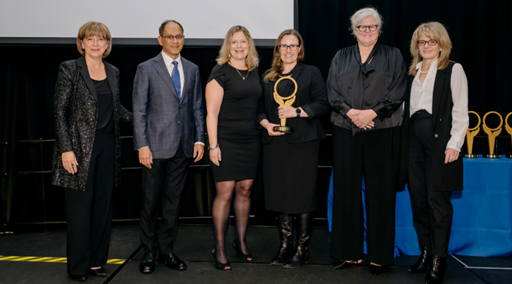
PoET Project Recognized with the “Increased Equity Award”
The Prevention of Error-based Transfers Spread (PoET) Project was recognized with the Increased Equity Award at the 2025 Ontario Health System Quality and Innovation Awards, celebrating outstanding leadership and innovation across Ontario’s health system.
Hosted by the Dalla Lana School of Public Health at the University of Toronto in partnership with Ontario Health, the Ontario Hospital Association, and the Ontario Medical Association, the awards highlight projects that are improving care for patients and communities province wide.
PoET, led by partners from Osler and the McMaster University Department of Family Medicine, was evaluated across 54 long-term care homes between 2019 and 2022. The project improves access to palliative care and reduces unnecessary Emergency Department transfers by aligning care with Ontario’s Health Care Consent Act, therefore advancing more equitable and people-centred care for long-term care residents.
Congratulations to the PoET team and all award recipients for their continued commitment to improving quality, equity, and innovation in Ontario’s health system.
| | |
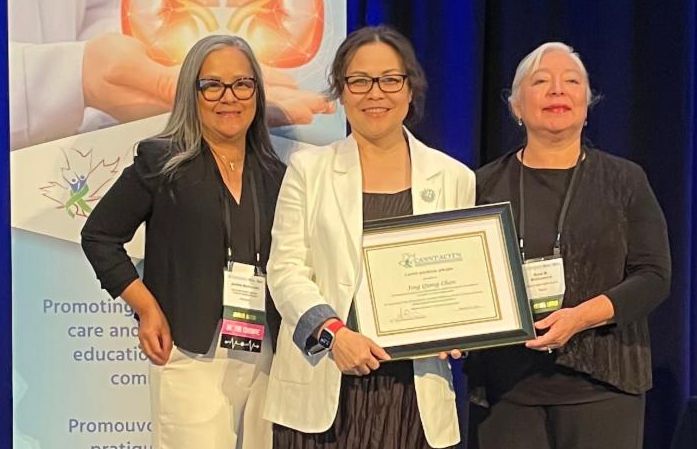
Irene Chen, Clinical Nurse Educator, Professional Practice, Osler and member of ORIHI’s Research Council recently won a national award for the article, Investigating the Efficacy of Interactive Live Model Training for Hemodialysis Providers in Crisis Management, receiving the 2025 CANNT Journal Award.
The award was presented at the national conference of the Canadian Association of Nephrology Nurses and Technologists (CANNT), held October in Victoria, BC.
The CANNT Journal Award is presented annually to recognize excellence in nephrology nursing and technological scholarship. It honours the best peer-reviewed article published in the CANNT Journal that advances knowledge and practice in the field. Irene was recognized for her research on hemodialysis crisis management and its contribution to strengthening provider training and patient safety.
Congratulations to Irene on this national achievement!
| | Past events and recordings | | Please share with your networks | | | | |