"How Microaggressions Keep Us From Being the Community We Hope to Be"
Rev. Sara Lewis
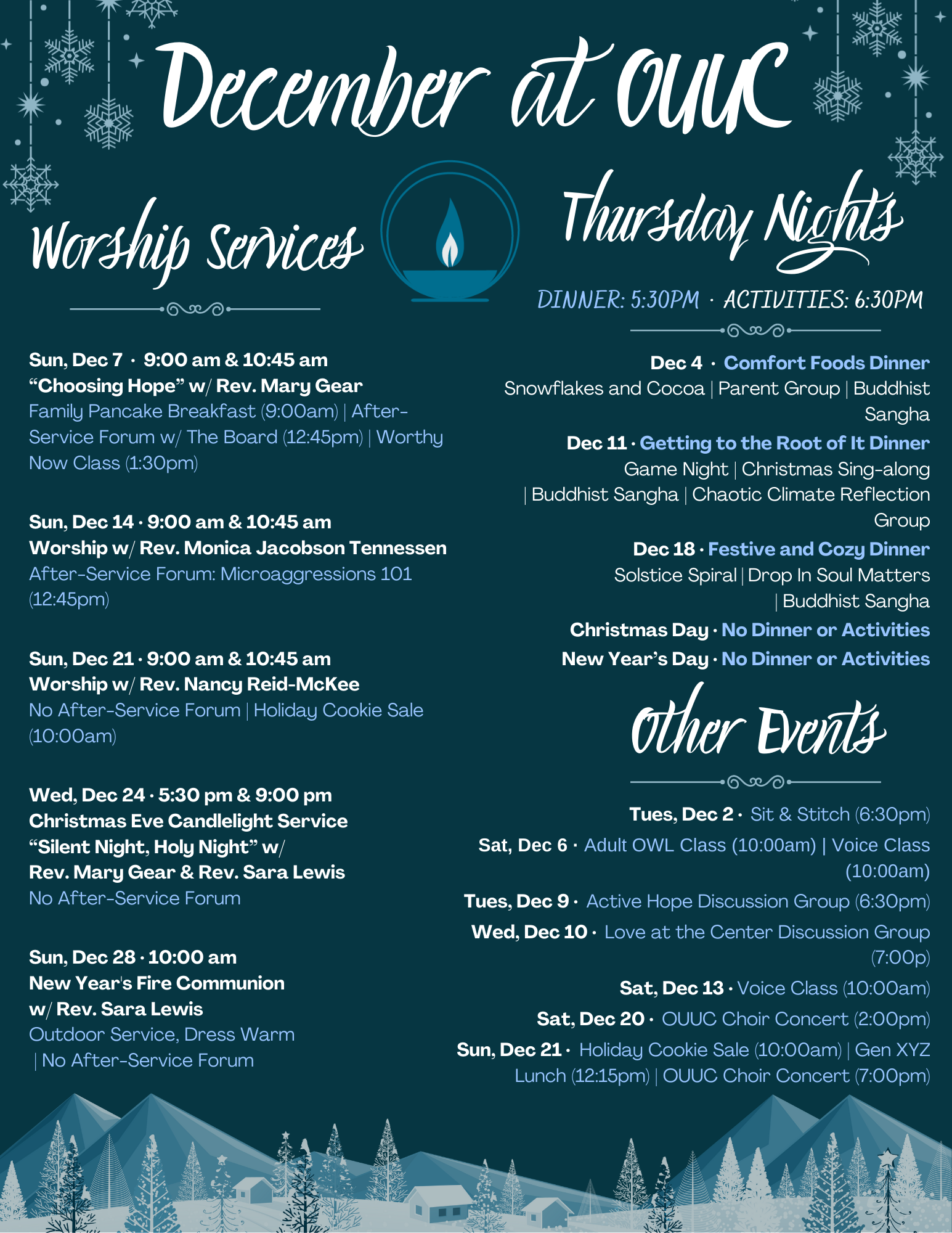
This Sunday I’ll be leading a skillbuilder forum called “Microaggressions 101”, at 12:15 in person and on zoom. This topic came up recently in an incident at a Thursday dinner which Rev Mary wrote about in her “Guilt and Gratitude” reflection on November 6th. We were reminded again that in our community microaggressions happen, and that they prevent us from truly being the beloved community we hope to be.
So what is a microaggression? Harvard psychiatrist Chester Pierce coined the term microaggressions in 1970 to describe racially charged "subtle blows ... delivered incessantly." He describes microaggressions as everyday verbal, nonverbal, and environmental slights, snubs, or insults, which communicates hostile, derogatory, and demeaning messages that threaten, intimidate and relegates marginalized groups to inferior status and treatment.
While the concept was originally understood in relation to race, a microaggression can be about anything and be directed against a member of any marginalized identity. The definition can also make it seem like you have to have ill-intent to commit a microaggression, but in fact many people actually mean well or have neutral intent and yet their actions can still be experienced as a microaggression.
A helpful model further breaks down the concept of microaggressions into sub-categories:
Microassaults: deliberate small actions such as displaying hate symbols, using hate language or epithets, or creating malicious barriers for others. I cannot think of any examples of this happening here at OUUC, but taking an ADA parking spot when you don’t need it does fall into this category. While a person may think it’s “no big deal”, it’s still a microassault if it blocks another person’s access.
Microinsults: verbal, nonverbal, and environmental communications that subtly convey rudeness or insensitivity. Not using a person’s pronouns or misgendering others is a microinsult, and profiling another person as needing a “know your rights” flyer can also be a microinsult. Microinsults do not have to be deliberate, and they may even be motivated by “good” intentions.
Microinvalidations: communications that subtly exclude, negate, or nullify another person’s thoughts, feelings, and experiences. Telling someone they “don’t look sick” or complaining that someone is making “too much of a big deal” or that it’s “just too hard to remember your pronouns” are examples of microinvalidations.
And I would add a fourth category beyond what is often listed: Microerasures.
Microerasures communicate that a person’s presence or identity is invisible or discounted. An example of this might be when someone says “we are all white here” when a person who does not identify as white is present (and people may appear white or be “white-presenting” when they identify as a different race or racial identity) or when we say “we are all women here” when a non-binary or trans person is present.
So how do these microaggressions harm our ability to be the community we hope to be? The most harmful thing is that this community becomes less welcoming and nourishing for people with marginalized identities. We hope to be diverse and inclusive, but we push away people with diverse identities. We also lose the opportunity to know each other more truly and authentically.
If you’d like to know more, including strategies to prevent yourself from committing microaggressions, please come to the forum on Sunday or watch the recording if you can’t make it. Together, we can move us toward the community we hope to be.
In faith,
Rev Sara
|