|
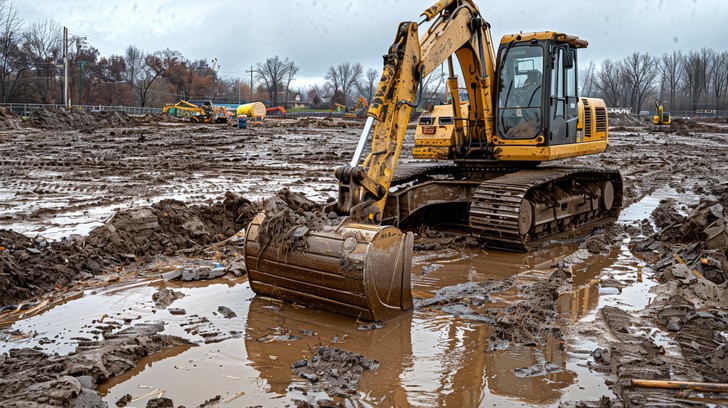
Mud, ruts, and unstable ground are common jobsite hazards, especially after rain or heavy equipment movement. These conditions reduce traction, hide trip hazards, and create unstable surfaces that can injure workers or destabilize machinery.
Why These Hazards Matter
-
Reduced traction: Wet, muddy surfaces make slips more likely.
-
Hidden obstacles: Mud can conceal holes, debris, or sudden elevation changes.
-
Unstable ground: Soft or shifting soil affects worker footing and equipment stability.
-
Uneven surfaces: Even small variations can cause trips and twisted ankles.
-
Equipment risks: Mud increases the chance of rollovers and unsafe mounting/dismounting.
Common High‑Risk Areas
- Walkways and access paths with mud buildup or ruts.
- Excavation zones with steep or soft edges.
- Natural terrain with roots, holes, or soft ground.
- Equipment routes where soil becomes compacted or washed out.
- Seasonal surfaces affected by rain or freeze‑thaw cycles.
Prevention Strategies
-
Ground inspections: Check for mud, soft spots, holes, and hidden debris; correct or barricade hazards.
-
Traction improvements: Add gravel, mats, or crushed stone; improve drainage.
-
Proper footwear: Require slip‑resistant boots with solid tread and ankle support.
-
Hazard marking: Rope off unstable areas and use clear signage.
-
Clear walking paths: Remove debris and grade paths regularly.
-
Equipment safety: Ensure stable ground, clean steps/rails, and use three‑point contact.
Worker Awareness
Training should reinforce:
- Watching footing and staying on designated paths.
- Reporting unstable or muddy areas immediately.
- Avoiding rushing or carrying loads that affect balance.
Mud and uneven terrain are everyday jobsite conditions, but they become serious safety hazards when they’re not actively managed. Consistent inspections, clear walking paths, proper footwear, and well‑marked hazard zones help prevent slips, trips, and equipment incidents before they happen.
|