|
IDEAS, NEWS AND RESOURCES | October 2017
We hope you enjoy receiving our newsletter which includes constructionist ideas and practices as well as news and resources from the Taos Institute.
|
|
Brief Encounters with The Taos Institute
October 2017
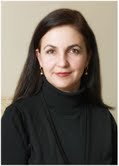
This month we welcome Monica Sesma, a member of the Taos Institute Board of Directors, as she reflects on ...
Social Construction, Emotions, and the Bodily Reactions of the Few-Many
I wonder how many of you have lived in different countries. For those who have had that privilege or forced condition, how has that experience shaped you or contributed to who you have become and how you experience things? To those of you who have lived in more than two countries, how many years have you been far from where you were born, where your "family" resides, the place where you were socialized in certain ways, and the people who speak your same "language"? How many have been away from "home" and "family" for several years and then traveled back? Perhaps a few, perhaps many.
I am one of those few-many. I have lived by choice and luck in three countries so far: Mexico, where I was born and raised, two years in the US (Bethlehem, Pennsylvania) in the late 90's, and four years in Canada (Calgary, where I currently live). This year I went back to Mexico after four years of "being away." I experienced what I think many few-many potentially experience: a wide variety of weird/new/confusing/interesting emotions that I could not name in either Spanish, English, French, or Italian. (It is not surprising that the few-many learn more than one language.)
As a few-many, what names have you assigned to those emotions? Have you wondered who decides how to name that spectrum of "emotions," what communities establish how many emotions humans can experience, or how we consensually determine what emotions humans can possibly experience? When I ask myself these kind of questions, I feel so grateful that I am immersed in social construction ideas. Social construction helps me to enjoy these reflections.
In the Brief Encounter piece last month, Duane Bidwell discussed his reactions to recent natural disasters and how people express their concerns and support to others using social media. He concluded his piece with this question: "Do we attend adequately to the embodied ways that meaning is constructed prior to being voiced through words? Experience-of our bodies, through our bodies, of other bodies-remains central to social construction. It precedes and shapes language, and it's shaped by language as well."
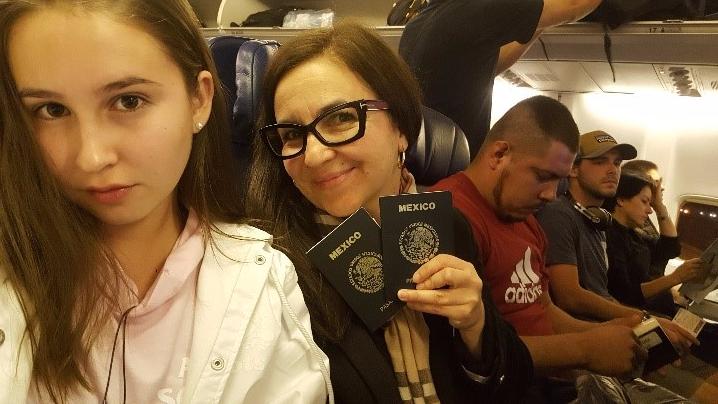
His question resonated with me. I vividly remember when I was recently in the Calgary Airport waiting to board the plane with Nina -my oldest child- to Mexico City. I was experiencing something new in my body. I felt some weird reaction in the muscles of my face, in my eyes, in my legs. Then Nina told me: "Mom, I do not know if I want to smile or cry. I feel an extreme emotion which I think could be happiness but I am not sure what it is. Maybe it is because I love to travel. But I also think this is because I cannot wait to the see the family, mi Abu, after so many years... or maybe this is because..." We spent many minutes talking about our different bodily reactions, trying to make sense of them using our Spanish and English words and local meanings, trying to match our bodily responses to our cultural and socially informed emotional dictionaries. To understand them, we were comparing these emotions with others that we had previously experienced. Were these the same or different? Were we experiencing these for the first time or not? And particularly, were we creating/inviting these emotions as we were speaking? Kind of an "emotions-forming-as-we-speak?" The flight boarding process interrupted our reflections. I decided not to label/name my emotions. At the moment, the words that I found for these bodily reactions were very limited and could not capture what I think I was living in that moment. When we were taking off from Calgary, when we were landing in the impressive Mexico City after four years, when we were leaving again the people we love and miss, The. Body. Reacts.
And then, Duane again said: "Experience-of our bodies, through our bodies, of other bodies-remains central to social construction. It precedes and shapes language, and it's shaped by language as well."
I am socialized to experience, perform, and discursively make sense of emotions in certain ways, according to the scenarios and the people with whom I am relating. However, as a few-many, I am struggling to name and make sense of them. How do you make sense of bodily reactions when you think they are contextual? Do you use the narratives of emotions to describe them? Are these narratives a good fit? What is missing if they do not fit? In the example that I share with you here, we were bodily responding to something impacted by our being a few-many. Something very contextual, of course influenced by our intersections, but where our migratory experience is playing a major role.
|
|

Taos Institute Events and Gatherings
The Many Ways to Get Involved.....
***************************************************************************************
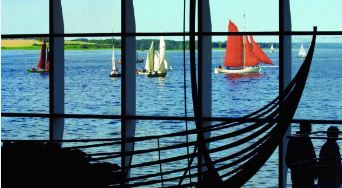
at University College Zaeland, Roskilde, Denmark
Nov. 16-17, 2017
Sharing, exploring and creating new ideas and practices... There is still time to register!
If you are in education in any capacity, this is the conference for you.
For more information visit:
***************************************************************************************
Workshops and Courses
Taos Online Courses
- Relational Theory and Practice - with Ken and Mary Gergen. Nov. 6 - Dec. 13. A 6-week online course.
-
Practical Tips for Writing Your Dissertation - with Rich Furman.
- Research Constructions - with Sally St. George and Dan Wulff. January 12 - April 6, 2018. An online course over 12 weeks with four live calls.
Friends of the Taos Institute Workshops and Events
*********************
*************
**********************************************
|
The Taos Institute and Kanankil Institute in Merida, Mexico, invite you to explore with us as we introduce our new masters program in English. This program has been successfully offered in Spanish for many years and is now available in English.
- A two-year online learning program
- Learn about and explore different applications of Collaborative and Dialogic Practices
- Focus on practices related to professional life as:
- educators, social workers, managers, coaches, mediators, lawyers, psychotherapists, doctors, nurses, and communications working with individuals or organizations.
The collaborative approach is based on an ideological shift in the way we think about language and knowledge. It is relating and conversing in a manner that includes a way of thinking with, talking with, acting with, and responding to the people with whom we meet in our professional activities. The Master of Arts degree in Collaborative and Dialogic Practices (CDP) will introduce social construction and CDP for those new to it and help those familiar with it to deepen their understandings and practices.
Drawing on the works of thinkers and practitioners such as Mikhail Bakhtin, Hans-Georg Gadamer,Kenneth Gergen, Jean Francois Lyotard, Maurice Merleau-Ponty, John Shotter, Ludwig Wittgenstein, as well as Harlene Anderson, Harry Goolishian, Lynn Hoffman, SheilaMcNamee, Tom Andersen, and Jaakko Seikkula, it specifically focuses on relational constructionist understandings of language and meaning-making, polyvocality, transformative dialogue, and appreciative and future-oriented perspectives.
Apply today! And help spread the word about this innovative program.
|
|
Dialogue with the Author Series -
Fall 2017
Free and open to anyone interested in these books - Join in conversation with the authors!
*******************************************************
November 6 -10:
Monday - Thursday engage with others online using the Taos Institute Online Learning Community website. Ask questions, share stories and resources, etc. as the authors join you online, chatting in a blog type platform. Join the online learning platform for free at:
Then on Friday, participate in a live webinar with the authors at 10:oo AM New York time/US Eastern time.
(Pre-registration is required for the webinar at the link below)
The Books:
- PATHS TO POSITIVE AGING: DOG DAYS WITH A BONE AND OTHER ESSAYS, BY MARY GERGEN & KENNETH GERGEN
- 70CANDLES! WOMEN THRIVING IN THEIR 8TH DECADE, BY JANE GIDDAN & ELLEN COLE
- RETIRING BUT NOT SHY: FEMINIST PSYCHOLOGISTS CREATE THEIR POST-CAREERS, EDITORS ELLEN COLE & MARY GERGEN
|
International Relational Research Network Meeting and Global Dialogues
The Fall Article Reading
and
Discussion Series
Continues...
The Article Series continues as we offer an opportunity, for anyone interested, to read a scholarly article or chapter on research, and then join in a conversation about that article. This article reading series is open to everyone. No need to pre-register. Free and open to the public.
Details: For all the information including host, article, date and time of the conversation and link to join the conversation please visit the Taos Institute website at:
How to join in the article series conversations:
- Visit and then download the articles at www.taosinstitute.net/relational-research-network
- Read the article
- Come prepared with questions, examples, comments
- Mark your calendar and arrive on time for the conversation
- No need to pre-register for these
- Use the zoom link provided on that web page to join the call
|
|
Announcing a New Focus Book!
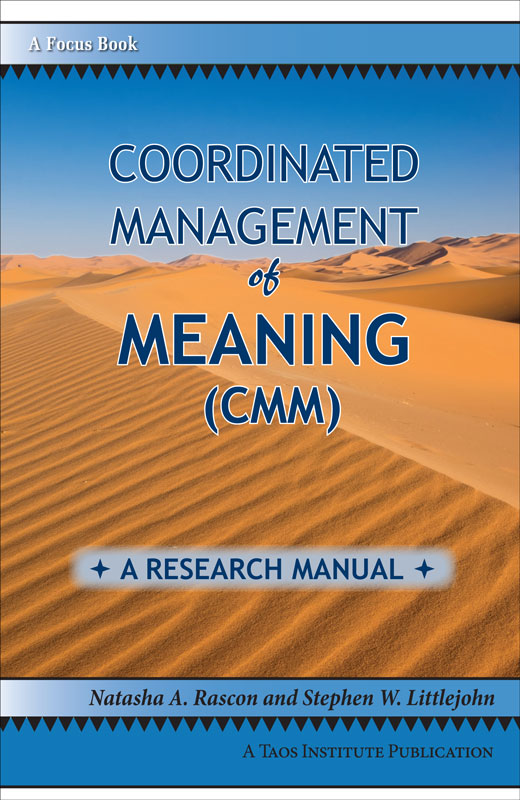
Coordinated Management of Meaning (CMM):
A RESEARCH MANUAL
Coordinated Management of Meaning (CMM): A Research Manual invites those who are interested, intrigued, or invested in CMM to explore the theory as method. Through conversations, Rascon and Littlejohn discussed the many research possibilities and created a manual that offers several frameworks for practical research. The manual provides contexts for applying CMM tools and models as well as many examples from researchers and professionals. Those who have been introduced to CMM and are interested in discovering possibilities for their research and practical interests at any level should enjoy the offerings of this book.
Order the book today at:
|
|
AI World Inquiry!
If you have ever participated in an Appreciative Inquiry, in your organization, community, family, etc., then this opportunity is for you!
Join the World Inquiry into the impacts of
AI!
You are invited to share your stories!
The AI World Inquiry invites everyone to share the stories and examples of how Appreciative Inquiry has impacted your organizations, communities, families, and life.
By sharing these stories you are helping to create viral and inspiring examples of positive change in the world, both the larger world and in our local worlds.
Participation is easy - simply visit the AI World Inquiry web page, decide which question or questions you would like to answer and record a short video to share!
Details are on the site at www.aiworldinquiry.com
And please feel free to invite others in your network to share as well...and help us lift up these untold stories of AI around the world!
|
|
|
Check out our Newest Books:
|
|
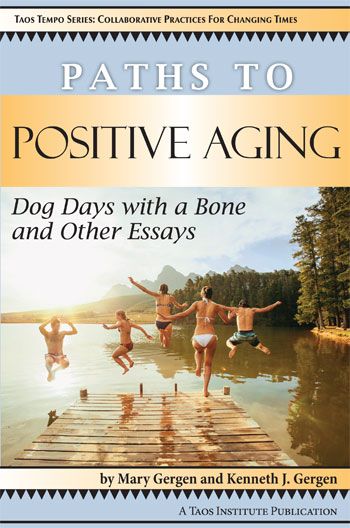
Paths to Positive Aging: Dog Days with a Bone and Other Essays
|
by Mary and Ken Gergen
Mary and Ken Gergen are devoted to the cause of reinventing aging. To focus on the gains of aging is to realize that the later years are among the richest and most rewarding of one's life. In their dedication to this reconstruction, the Gergens publish the Positive Aging Newsletter, an electronic newsletter, available in seven languages (
www.positiveaging.net).
In this book, the Gergens share ideas and experiences designed to inspire others as they age.
|
|
|
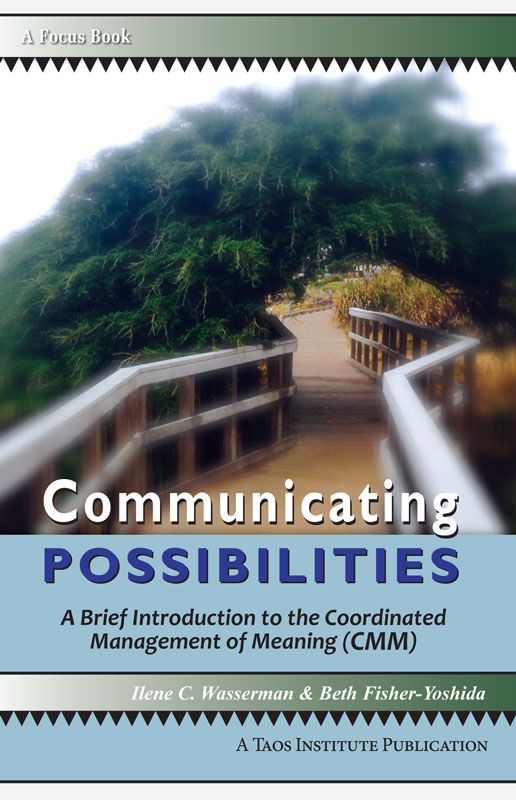
Communicating Possibilities:
A Brief Introduction to the Coordinated Management of Meaning (CMM)
by Ilene Wasserman and Beth Fisher-Yoshida
Communicating Possibilities is an introduction to the Coordinated Management of Meaning (CMM), a practical theory which at its roots, is an approach to looking at our social interactions. In the process of stepping back to look at our interactions and how we construct our social worlds, we open possibilities of alternative paths and outcomes. CMM offers tools and frameworks to use so when we pause and notice what we are making together and how, we open up spaces to make better choices with more desirable relationships each turn of the way.
|
|
|
|
|
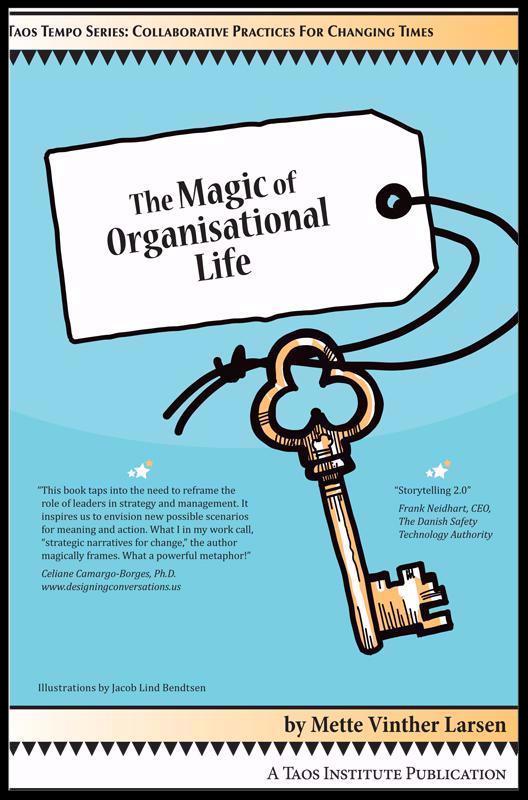
The Magic of Organizational Life
|
|
by Mette Vinther Larsen
The Magic of Organisational Life
is a story that invites you to look at your everyday work life through new eyes. It allows you to reflect upon well-known organisational, strategic and managerial challenges from a magical perspective. This perspective emphasizes what our imagination can do, if only we set it free. The Magic of Organisational Life
gently reminds us of our capacity to create flourishing ways of being at work.
For more information
→
|
|
|
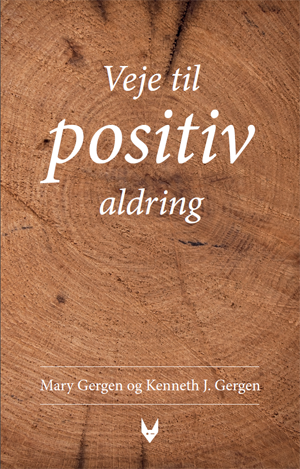
Positive Aging book in Danish Now Available
"Veje til positiv aldring" by Mary and Ken Gergen
|
|
We are thrilled to bring you all the WorldShare Books and we hope you will take a few minutes to download your free copies today.
Enjoy our newest WorldShare Books:
Construccionismo Social en Acción: Prácticas Inspiradoras en Diferentes Contextos
Donate to the Peggy Penn WorldShare Books Fund
This fund helps to cover the expenses of offering these online books free of charge to anyone in the world.
|
|
Sign up for this free newsletter in the following languages:
- English
- Spanish
- Danish
- German
- French
- Chinese
- Portuguese
- Greek
- Italian
By focusing on the positive aspects of aging, and the availability of resources, skills, and resiliencies, research not only brings useful insights into the realm of practice but creates hope and empowers action among older people. By moving beyond practices of repair and prevention, to emphasize growth-enhancing activities, practitioners also contribute more effectively to the societal reconstruction of aging.
|
|
Join the Taos Institute NING Online Community website
Participate in online conversations, share resources, ask questions, connect with others doing similar work. Also, we feature special events on this community website.
Join in many different forums, groups and conversations:
1. Taos Institute Europe
2. Collaborative Governance
3. Relational Learning
4. Relational Research
5. Taos Latin America
6. Intergenerativity and Innovation
and many more at:
http://taoslearning.ning.com/
|
|
|
|
Welcome (Bienvenidos) to the International Journal of Collaborative Practices. The Journal brings together members of a growing international community of practitioners, scholars, educators, researchers, and consultants interested in postmodern collaborative practices.
Sponsored by Taos Institute and Houston Galveston Institute
I
ssue 7- Available Now in English and Spanish -
|
|
|
You can help to make a difference...
These are challenging times, and you can make a difference by supporting the Taos Institute's efforts to bring about more promising futures.
Help us to continue our work in:
- Creating and Expanding Collaborative Practices Globally
- Promoting Dialogic Means for Reducing Conflict
- Providing Degree Opportunities for Practitioners
- Offering Cutting Edge Publications in Multiple Languages: Free or at Low Cost
- Generating Resources for Positive Aging
- Creating Global Forms and Conferences for Constructing New Futures
Given the perilous global context into which we are moving, we feel the work in which we are engaged is more important than ever. We hope you can join with us as we continue to develop resources to aid the global community in co-creating more viable futures.
The Taos Institute is a 501(c)(3) non-profit organization, and all donations are tax deductible in the US.
|
|
|
The Taos Institute's mission is to bring together scholars and practitioners concerned with the social processes essential for the construction of reason, knowledge, and human value.
We are committed to exploring, developing and disseminating ideas and practices that promote creative, appreciative and collaborative processes in families, communities and organizations around the world through a social constructionist lens.
We look forward to your participation in the dialogue.
Keep up with our updates!
Dawn Dole, Executive Director
The Taos Institute
|
|
|
|
|
|