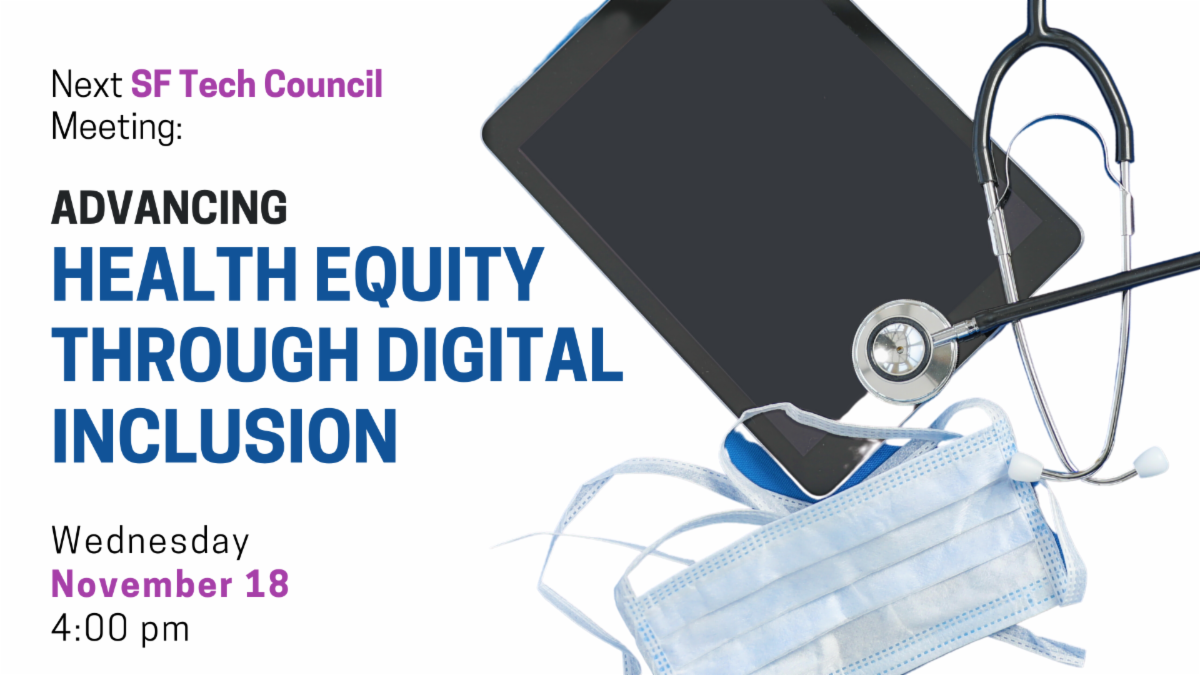
According to the "Broadband for America Now" report (October 2020), doctors and other medical professionals have been “seeing 50 to 175 times the number of patients via telehealth than they did before the pandemic.” Health care systems have done “a decade’s worth of work” to launch telehealth programs... But not all patients are benefiting.
Join us on Nov. 18 at 4:00 pm for a conversation with...
Find out what's happening in their neighborhoods as they assist clients with everything from meal delivery to telehealth access.
|
|
If Technology Is to Improve Health Equity, It Won’t Happen by Accident |
|
"...advancing health equity through technology will not happen by accident. If we are serious about identifying and eliminating those persistent inequities in health care that contribute to such poor outcomes for marginalized groups, we must create this future. We must be strategic in our planning and purposeful in our execution. This work is too important to leave it to chance, because now more than ever, technology is only as good as the data and planning behind it.
To read the full article by James Madara, MD, CEO and Exec. VP of the AMA (8/20/20), click HERE.
For more information on health equity, see the following:
|
|
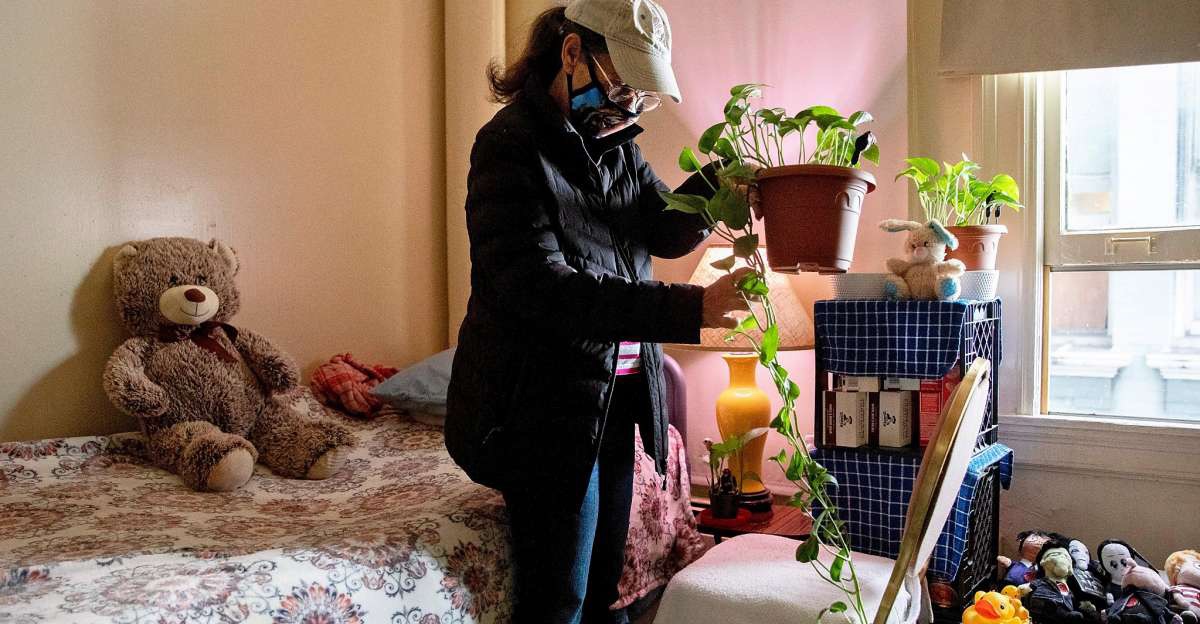
Bay Area Seniors Struggle With Loneliness as Pandemic Drags On: ‘It’s four walls and a TV’
|
|
"Even as much of San Francisco and the rest of the Bay Area starts to reopen, many seniors still feel trapped and unable to go back to anything like normal life. It may be a year or longer before vaccines are widespread and the pandemic is truly over, which means it’s critical for older adults’ mental and physical health that more efforts be made to help them connect with the world outside their homes, advocates say.
“We don’t think about things like how many old people have died of misery in this pandemic,” said Dr. Louise Aronson, a UCSF geriatrician. “We don’t think about the numbers of people just sitting at home weeping, or sitting there doing nothing." To read the full article by Erin Allday, SF Chronicle (10/26/20), click HERE.
|
|
KQED On Common Ground: Older and Overlooked |
|
Join KQED for a virtual conversation about what preparedness means for older Californians and the people who care for them. Find out what areas are most at risk and what kind of emergency planning is required of nursing homes and assisted-living centers where your loved ones live or work. And ask what state and local officials can do to protect the most vulnerable among us.
|
|
|
How to Take On the Tech Barons: Something Has to Be Done... |
|
"Consider just the past several months: While the coronavirus has felled countless businesses and put millions of Americans out of work, technology stocks have soared and buoyed an otherwise stagnant stock market, further enriching Silicon Valley executives. Record Amazon profits stand in contrast to the bankruptcies of well-known retailers like J.C. Penney and J. Crew. Netflix added millions of new customers this year, as movie theaters struggle to stay afloat. And Facebook and Google are drawing new advertising dollars as homebound users log more on-screen hours. The list continues.
“The next administration cannot take a hands-off position in addressing technology’s place in our day-to-day lives,” said Robert Atkinson, president of the Information Technology and Innovation Foundation, a think tank.
For the full article by the New York Times Editorial Board (10/30/20) click HERE.
|
|
The Raspberry Pi 400 Is a Compact Keyboard With a Built-in Computer |
|
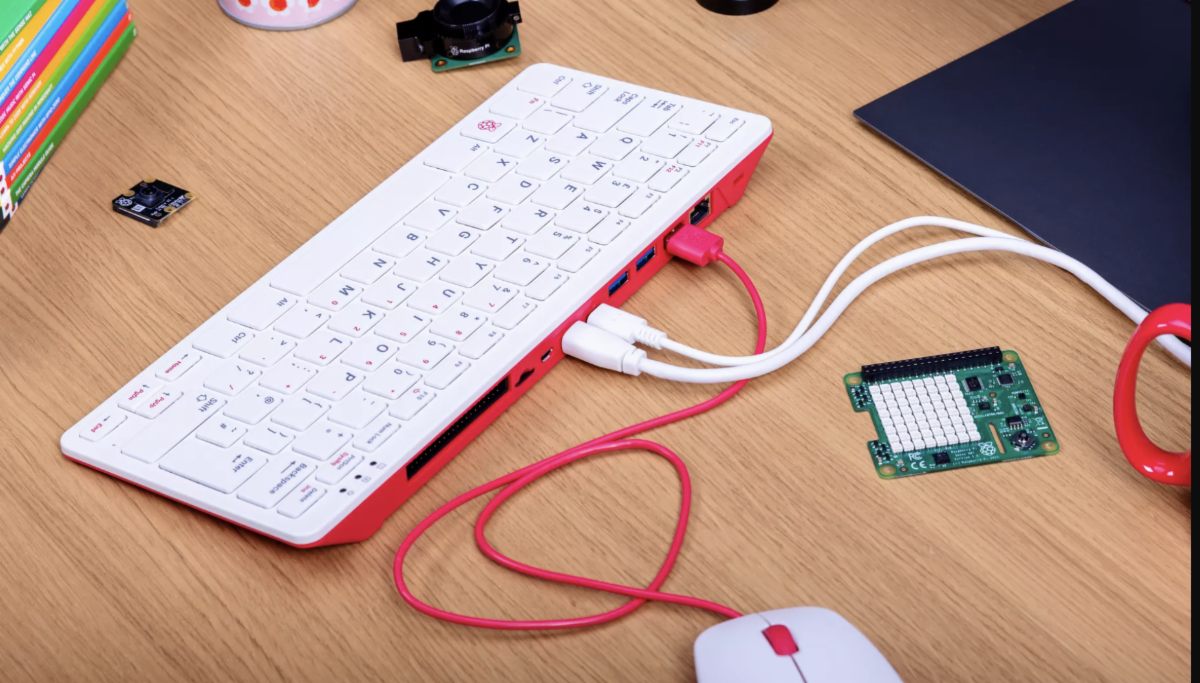
The Raspberry Pi Foundation has announced the Raspberry Pi 400, a compact keyboard with an ARM-based computer built in. Just plug it into a TV or monitor using one of its two micro HDMI ports, insert a microSD card, attach a power cord and mouse, and you’ve got yourself a basic computer for day-to-day tasks, coding, or media playback. It’s available as a standalone machine for $70 or in a bundle including a mouse, power supply, microSD card, HDMI cable, and beginner’s guide for $100.
|
|
Smartwatch App Notifies Deaf And Hard Of Hearing People Of Sounds |
|
Researchers have developed a smartwatch app called SoundWatch that can alert deaf and hard of hearing people to different sounds in their environment.
“While I use hearing aids, which help with sound awareness, they don't work for many situations such as areas of background noise, or to notice high frequency sounds. Many sounds are still missed,” says Dhruv Jain, a PhD student in the Paul G. Allen School of Computer Science & Engineering at the University of Washington and the driving force behind the app.
This technology is designed to help with that problem and provide useful and mobile input to users while they are going about their day-to-day lives. It shows a description of the sound on the watch screen combined with a vibration of the watch to alert users to the sound in a discreet way.
For the full article by Helen Albert, Forbes (10/31/20), click HERE.
|
|
Participate in Research Opportunities |
|
Live Music-making Experiences Empower People to Emerge From Isolation & Loneliness |
|
Health, aging and caregiving expert Anthony Cirillo is working on with students from Northeastern University on an exciting new research project for older adults. They are conceiving a virtual educational/entertainment network that would consist of live-streamed and recorded programming and broadcast in communal and one-on-one setting both in senior living and in the home. They have lots of questions and need your help.
Mental stimulation through educational programming and particularly through music programming is vital. As a veteran of some 2,000 performances, Anthony knows the value of music. John Carpenter, founder of the world-renowned Rebecca Center for Music Therapy in New York, shared that music helps stimulate communication and memory skills. Listening to live music and being involved in live music-making experiences empowers people to emerge from the isolation imposed by dementia or simply from loneliness.
|
|
New Website to Help People Find Affordable Housing |
|
Claire Schlessinger, product manager, San Francisco Digital Services, is working on building the website that helps people find affordable housing from the City of San Francisco. You can help her in an upcoming research project to provide feedback on our website.
If you participate, you’ll schedule a 1-hour session to meet with a researcher by video call between November 9 and November 20. You don’t need any specific knowledge or expertise and you’ll receive a $25 gift card. Your participation will help us improve our City’s online services. To see if you qualify to take part in this research session, please
complete a very short survey by clicking HERE.
|
|
|
|
Free Book and Course on New Life- and Career Pathways |
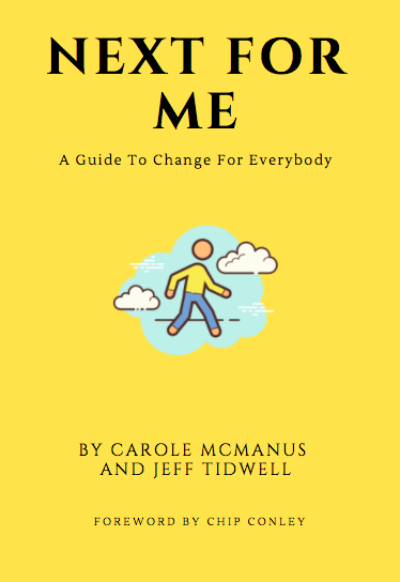
SF Tech Council has partnered with Next For Me to offer a course based on the book Next For Me: A Guide to Change For Everybody. Sign up and you can download the book and we’ll send you a link to take the free course.
Silicon Valley veterans Carole McManus and Jeff Tidwell deliver a philosophical and wide-eyed set of exercises for entrepreneurs and anyone looking to make a career move to see their new path in a more expansive light.
|
|
|
|
Questions?
Contact Karla Suomala or Andrew Broderick
Project Directors
info@sftechcouncil.org
www.sftechcouncil.org
|
|
|
|
|
|
|