|
Dear Community:
Caregivers hold families together, and we’re committed to holding caregivers up. Due to strong demand, we’ve added two new one-day Saturday sessions of our Caregiver Support Series in November. These intensives offer practical skills, peer connection, and resource navigation in one day. Details and registration links are below – please share with anyone who could use a boost.
I’m proud to share good news for our community. The City of Cincinnati, through the Office of Human Services, awarded $850,000 in 2026 Impact Award grants to more than a dozen local organizations, including the Center for Closing the Health Gap, to address food insecurity and reduce gun violence. This is only the second round since the program launched in 2024, and it strengthens collaborative, community-led solutions.
Thank you for walking with us. When we support caregivers and strengthen neighborhoods, we close the gap together. Wishing you all a safe and blessed week ahead.
Renee Mahaffey Harris
President & CEO
| | |
ARE YOU CARING FOR A LOVED ONE 60 YEARS OR OLDER?
New 1-Day Saturday Sessions Added for Caregiver Support Series
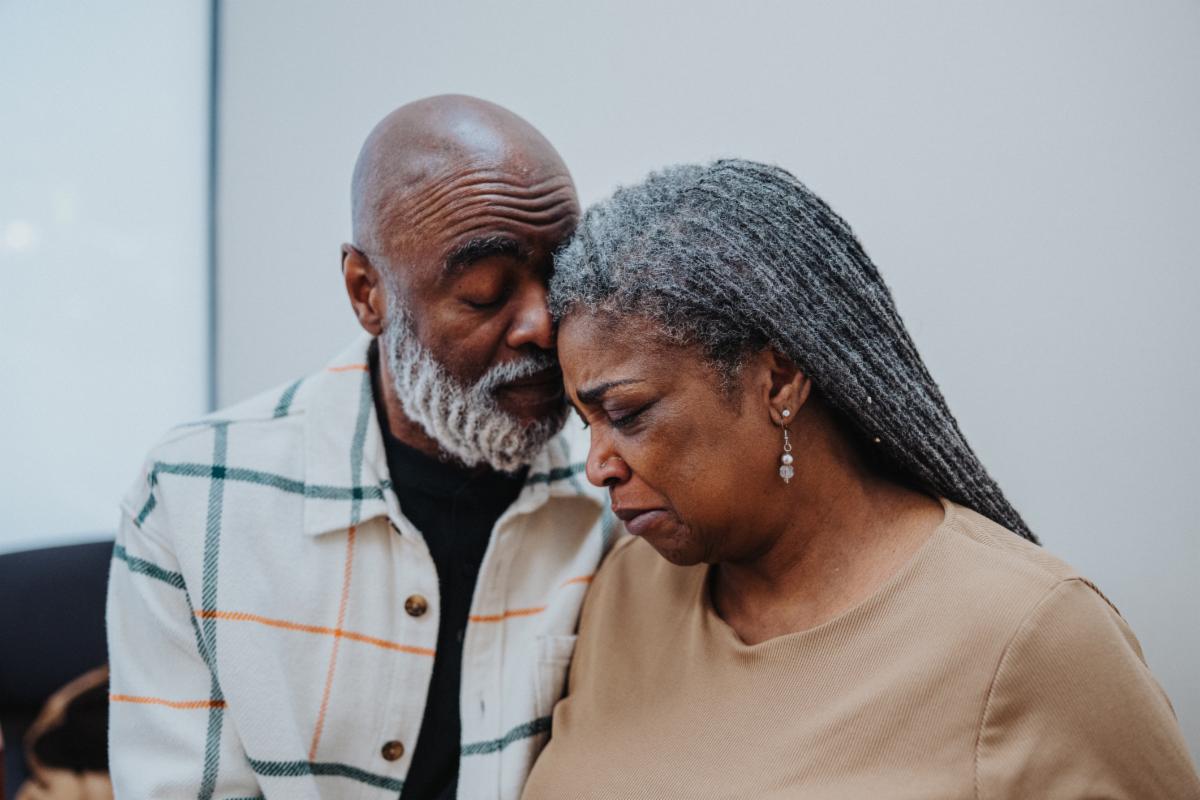
Caring for a loved one is both rewarding and challenging. Most people cannot truly understand these challenges. Our series allows you to be in community and learn from other Caregivers like you, and give you tools to fulfill your responsibilities even better.
Click the One-Day Saturday Session Best for Your Schedule
| | Spaces Also Still Available in Our November Monday Series | Call us at (513)585-9879 for more information. | | |
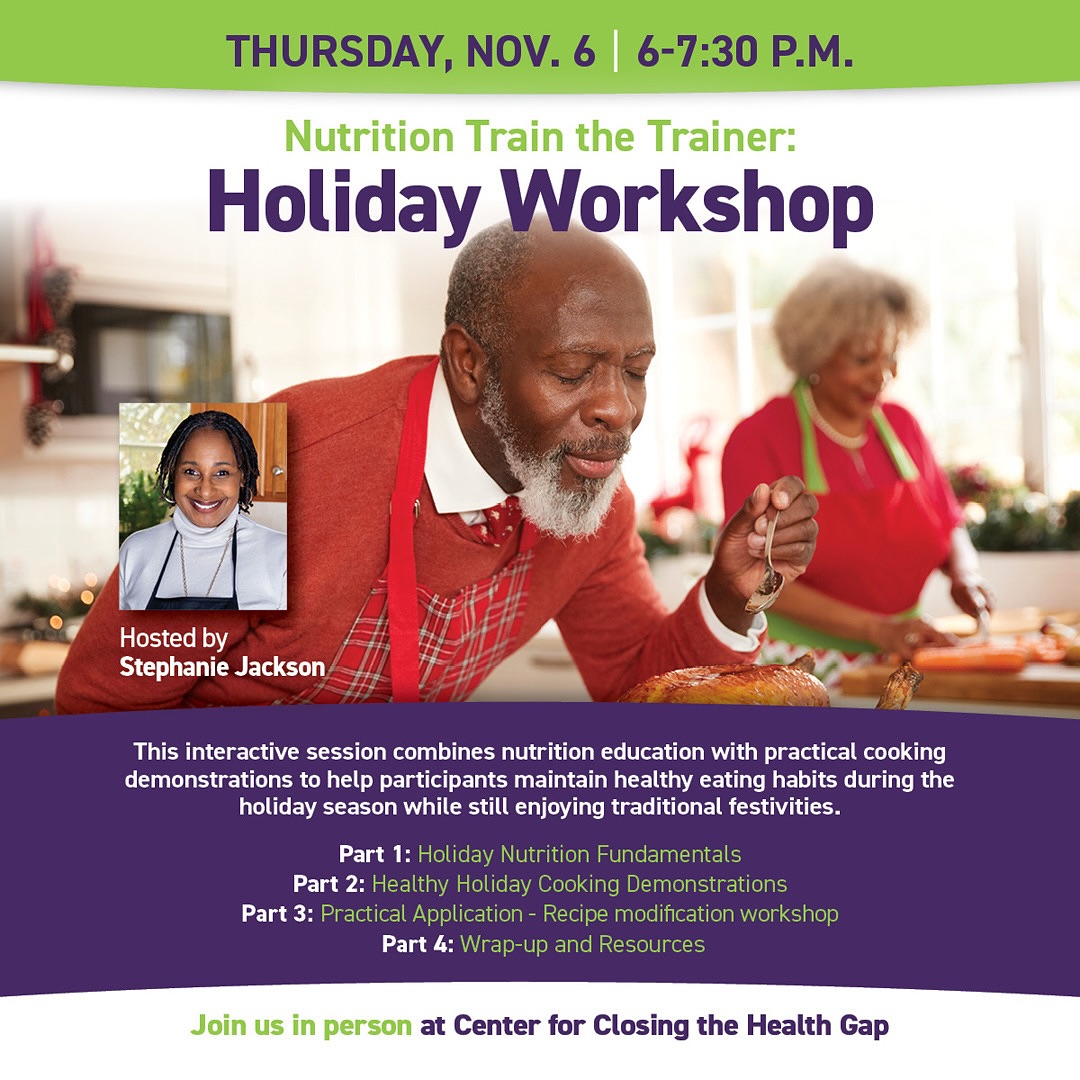
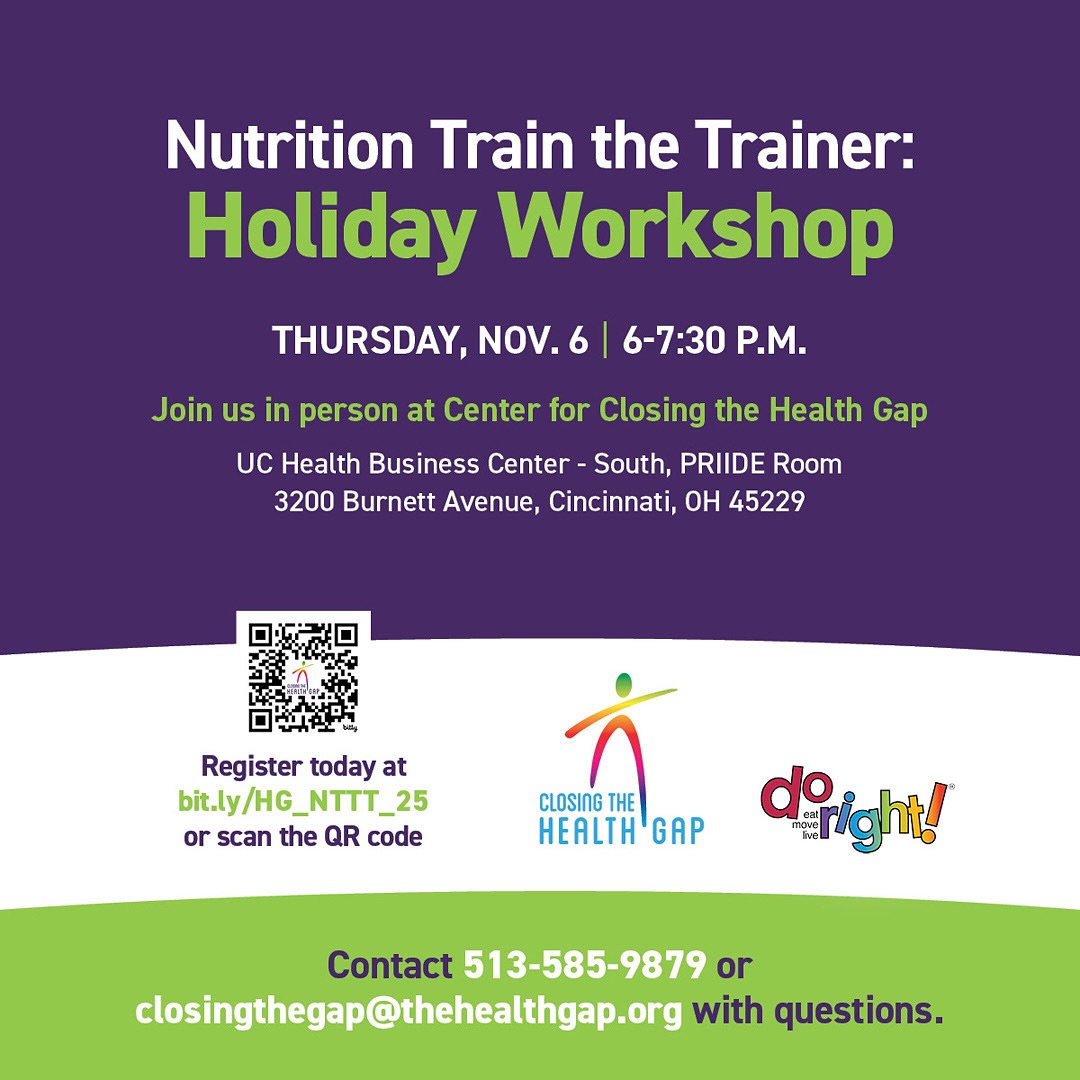
Holiday Eating, Reimagined: Nutrition Train the Trainer Holiday Workshop Planned for Nov. 6
Love your holiday favorites but not the guilt? Our nutrition training and healthy cooking workshop is here to show you the way! Discover how to indulge in your cherished holiday meals in a healthier manner. This class is your secret ingredient to a healthier holiday season. Link in our bio to register! Spots limited.
| |
Medicare Advantage Narrows Some Racial Gaps in Preventive Care, but Disparities Persist
Black and Latinx enrollees are overrepresented in Medicare Advantage plans, and prior research has found mixed evidence about differences in their satisfaction with health care access and affordability compared to traditional Medicare. Building on this work, Renuka Tipirneni, a faculty member at the Institute for Healthcare Policy and Innovation at the University of Michigan, and LDI Senior Fellow Eric T. Roberts investigated whether Medicare Advantage reduced racial and ethnic disparities in the receipt of preventive care.
The study analyzed data from a national survey of Medicare beneficiaries and found that Black beneficiaries enrolled in Medicare Advantage reported receiving more preventive services for cardiovascular disease and chronic conditions than those enrolled in traditional Medicare.
White beneficiaries also had higher rates of preventive care use in Medicare Advantage than in traditional Medicare. However, the differences were larger among Black beneficiaries, suggesting that Medicare Advantage may help narrow certain racial disparities in the receipt of preventive care. Despite these relative gains, the study found that Black-white disparities persisted in both traditional Medicare and Medicare Advantage.
|
How clinicians can combat health disparities in cardio-oncology
Significant health disparities persist in the field of cardio-oncology. There appear to be multiple reasons for this trend, including socio-economic factors the lack of diversity in clinical research. Daniel Addison, MD, director of translational research in the cardiology division and associate director for survivorship and outcomes research at the Harold C. Simmons Comprehensive Cancer Center at UT Southwestern Medical Center, spoke to Cardiovascular Business about this very topic. He said inequities in cancer and cardiovascular care often compound one another, especially among patients at risk for treatment-related heart disease.
"Increasingly we have realized or appreciated that just as there are differences in outcomes amongst generic or general cardiovascular disease and other forms of disease amongst various populations that are underserved, we see the same phenomenon in cancer patients and survivors, particularly as it relates to cardiotoxicity. In recent data, it appears that the effects of things like the social determinants of health may actually be exaggerated in patients with cancer or cancer survivors in terms of how they affect the likelihood of development of significant cardiovascular disease," Addison explained.
|
Cincinnati provides $850K grant to community organizations to address food insecurity and gun violence
The City of Cincinnati gave an $850,000 grant to more than a dozen local organizations, including The Center for Closing the Health Gap, in an effort to address food insecurity and reduce gun violence. Provided by the Cincinnati Office of Human Services, the grant is the city's 2026 Impact Award. It's the second award given since the program was created in 2024 to tackle systemic problems.
|
Health Care in the District: Progress Made, But Disparities Persist for Black Seniors
In Washington, D.C., many older Black residents continue to face serious challenges when it comes to accessing quality health care. While recent studies from AARP show signs of progress, they also reveal that deep disparities remain—especially for those living east of the Anacostia River.
According to the latest 2025 report from AARP’s Public Policy Institute, most adults in the District say they’re in good health and can access care when needed. In fact, 83% of residents aged 18 and older reported being able to get the health services they need, and 78% were satisfied with their care experiences. But satisfaction doesn’t tell the whole story.
A closer look shows that nearly one in five residents still face long wait times, feel unheard by their doctors, or experience cultural insensitivity. For Black adults, these issues are even more pronounced. Twenty-one percent said their providers didn’t understand or respect their background, values, or traditions—a troubling sign that cultural competence in care is still lacking.
|
Community Factors and County-Level Cancer Screening, Prevalence, and Mortality
Over 2 million new cancer cases will be diagnosed in the US and there will be over 600 000 deaths, according to 2024 estimates. Approximately 40.5% of people will be diagnosed with cancer during their lifetime. In addition to morbidity and mortality, cancer also accounts for a significant portion of total US health care spending. The costs of cancer-related health care could total $246 billion by 2030, 34% higher than 2015 costs.
However, cancer risk is not evenly distributed across the population or geographical regions. While genetics play a role, a range of external factors contribute to the risk to individuals and populations. There is growing recognition that the inclusion of community-level social risk measures improves the performance of models that predict health care use, which are increasingly used to direct services and policy. Given the importance of community-level factors on population health, we sought to evaluate the relative importance of these factors in relation to prevalent cancers, given that cancer is the second leading cause of death, only slightly behind heart disease.
|
Race and Ethnicity Disparities in Life’s Essential 8 Among Ever‐Pregnant Adults in the U.S.
Background
Cardiometabolic conditions are among the leading causes of maternal mortality in the United States. The American Heart Association’s Life’s Essential 8 provides an actionable summary measure for assessing cardiovascular health.
Methods
We conducted a cross‐sectional analysis using data from the 2011 to March 2020 National Health and Nutrition Examination Survey on ever‐pregnant adults. The exposure was race and ethnicity; outcomes included total Life’s Essential 8 scores and individual metrics. We used survey‐weighted linear and multinomial logistic regression, adjusting for confounders.
Results
Among 2208 ever‐pregnant adults (mean age, 52.0±19.6 years), non‐Hispanic (NH) Black adults had the lowest Life’s Essential 8 scores (57.20 [95% CI, 55.96–58.44]), compared with NH White (62.85 [95% CI, 61.39–64.30]), Mexican and Hispanic (62.26 [95% CI, 60.86–63.66]), and NH Asian adults (65.83 [95% CI, 63.47–68.19]).
Conclusions
Significant racial and ethnic disparities in cardiovascular health exist among ever‐pregnant US adults, with NH Black women exhibiting the poorest profiles. Educational attainment was highly correlated with ideal cardiovascular health.
|
How collaborative care can help close the mental health care gap
Nearly half of Americans will need mental health care in their lifetimes to treat issues such as mood or substance-use disorders. According to the Department of Health and Human Services, 127 million Americans live in areas with a shortage of mental health professionals. Prompted by the shortage, states such as Virginia are studying whether to give prescriptive power to psychologists. But physician experts have warned that doing so is not a safe or effective option. They also caution against improperly diverting psychologists from the vital behavioral health treatment they’re uniquely trained to provide.
The way forward should include expanding access to telemental health services, focusing on mental health parity and expanding federal funding for additional residency slots. But one answer offers the potential to dramatically increase the number of patients that psychiatrists can treat: collaborative care.
|
Gut Health & Your Spine: The Surprising Connection
By Cincinnati Healing Arts
When people think about gut health, digestion is usually the first thing that comes to mind. But your gut does more than process food – it plays a key role in how your whole body functions, including how you feel physically and emotionally.
The Gut-Brain Connection
Your gut and nervous system are constantly communicating. This link, known as the gut-brain axis, may influence mood, energy levels, and even how your body manages stress. Because your spine protects the spinal cord (which helps relay messages between the gut and brain), supporting both areas may contribute to a more balanced system overall.
| | | | |