(Not seeing images? Click 'Download Pictures')
|
|
Taking Steps to Understand the Early Universe |
Professor Stefan Bathe (Natural Sciences) is celebrating a milestone in his research group's work at Brookhaven National Laboratory: the installation of a massive superconducting magnet. The magnet is a key piece of sPHENIX, a detector that will begin collecting data in 2023 to help scientists understand matter as it existed in the early universe. A time-lapsed video of the magnet's installation (shown above) shows the scale of the project. The sPHENIX detector will track particles streaming from RHIC (relativistic heavy ion collider) collisions with what Brookhaven described as "unprecedented precision."
Bathe has been leading the assembly, testing, and calibration of a hadronic calorimeter (the blue circular structure pictured below the magnet), which measures particle energy.
|
|
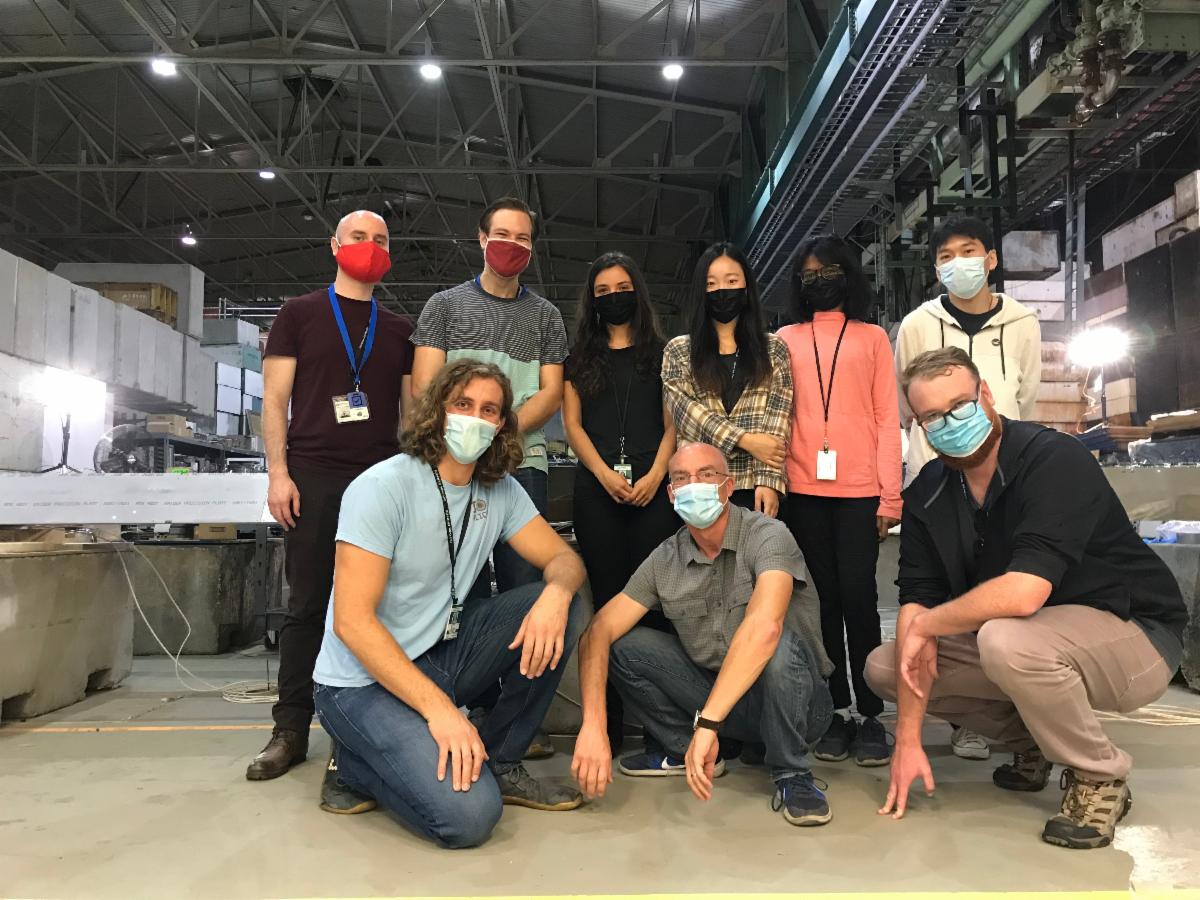
Bathe supervises a team of 40 students and postdocs from around the US, including two CUNY graduate students, Daniel Richford and Zhiyan Wang. Some of the team members are pictured here; Bathe is in the front row in the middle.
Now that the magnet is in place, "we are working on the next layer of calorimeter detectors, to be installed inside the magnet early next year," Bathe said. “Once the installation of this equipment is complete, we’ll be able to more carefully examine the particle soup that remains floating out there in the universe from the Big Bang.”
|
|
The 'Most Powerful Activist in America,' Ady Barkan |
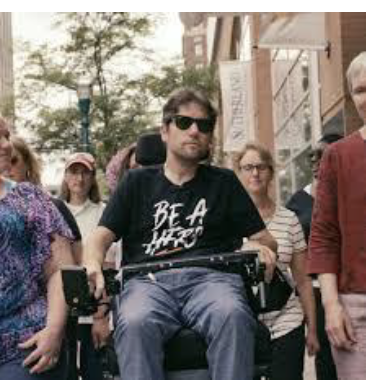
Attorney-activist Ady Barkan, who has ALS (Lou Gehrig’s disease) and is known for his advocacy of healthcare rights, is scheduled to participate in a Zoom event hosted by the Sandra K. Wasserman Jewish Studies Center. Barkan will be in conversation with Baruch Marxe Professor Jonathan Engel on November 1, 5:30 pm. Register here.
|
|
The Indispensable Stephanie Govan
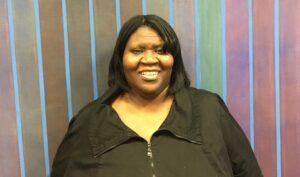
Students and faculty are the most visible members of the Baruch Weissman community. But behind the scenes, it’s people like Stephanie Govan who keep things running. She works in the Dean’s Office as director of scheduling, registration, and enrollment data management.
A two-time CUNY alumna, she holds a bachelor’s degree in computer science from Lehman College in the Bronx and a master’s degree in public administration from Baruch. She started at Baruch as an office assistant. Today she’s an administrator in charge of creating the block programs for entering freshmen, and she also serves as the liaison between Weissman departments and the registrar’s office.
"Stephanie has a depth of knowledge about enrollment numbers, student placement, and section availability that is extraordinary," said Interim Dean Jessica Lang. "It touches on the professional lives of all faculty and students. Many might not know that Stephanie has worked on their behalf–she has a light touch–but we couldn’t function without her.” Read more here.
|
|
Faculty Media Mentions and Projects |
|
ENVY: "The moment you are able to say 'I'm envious,' you can discuss it with yourself," says Professor Yochi Cohen-Charash (Psychology) in a BBC Reel story about envy as a motivational force. "What am I envious of? What can I do about it?" Watch the BBC video here.
Professor Cohen-Charash's research focuses mainly on emotions triggering the behavior of individuals, groups, and organizations. Her work was recently featured in Discover magazine and other outlets.
|
|
AESTHETICS & ART CRITICISM: Professor Jonathan Gilmore (Philosophy) has been named co-editor of The Journal of Aesthetics & Art Criticism along with Hunter College Professor Sandra Shapshay. “This is an extraordinary opportunity to help shape the field, and Sandy and I have extremely complementary interests and forms of expertise — she in the history of philosophy of art and I in the connection of philosophy of art to cognitive science, emotions, the imagination,” Gilmore said in an article published by the CUNY Graduate Center, where he holds an appointment. “The co-editors of the journal have not typically been at the same university. That allows us to work very closely.”
In announcing the news, the American Society for Aesthetics said: "The new co-editors anticipate enhancing the Journal’s on-line presence and advancing the gains the Journal has made in publishing authors and reviewing books by authors who belong to underrepresented minority groups in philosophy. They also aim to bring the work and relevance of aestheticians and philosophers of art to the attention of museum curators, gallerists, contemporary artists, musicians, dramaturges, art writers, and all manner of art practitioners/appreciators."
|
|
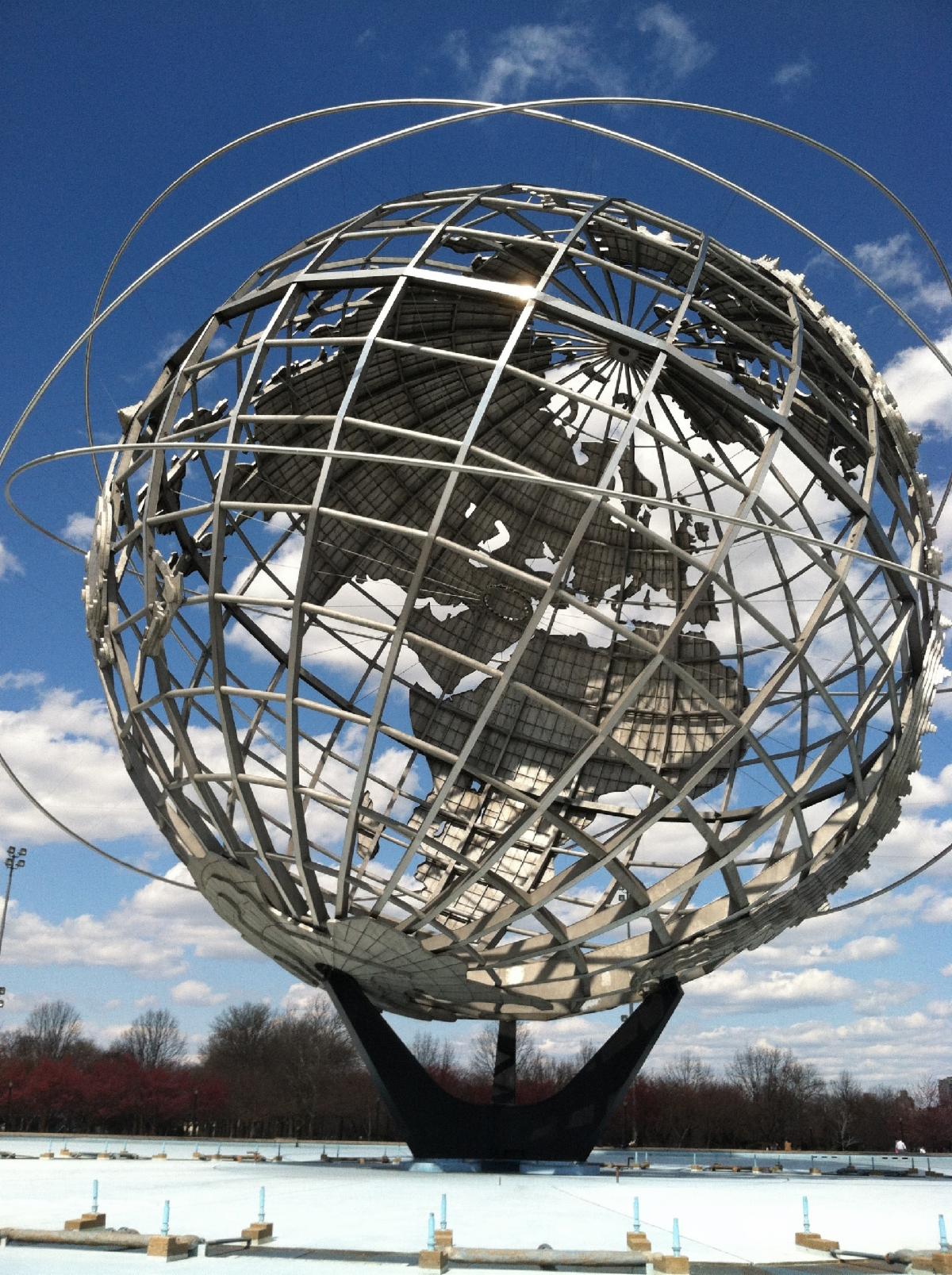
WORLD'S FAIR: Katie Uva, a History Department adjunct, created a digital project on the history of New York's World's Fairs. Uva is an editor at the Gotham Center for New York City History, which is housed at the CUNY Graduate Center. The project was published online by Urban Archive.
|
|
CUBA: Professor Ted Henken (Sociology/Anthropology) was interviewed by the Los Angeles Times for a story titled, "Despite promises to lift some Trump sanctions, Biden leaves Cuba in deep freeze." The story appeared in other outlets as well.
He also spoke about how internet access is changing Cuba in a story published by Reason magazine and other sites. "A key part of the control in Cuba is keeping people afraid, keeping them isolated from one another," he said. "The internet has mitigated this."
|
|
Fighting Racial Capitalism
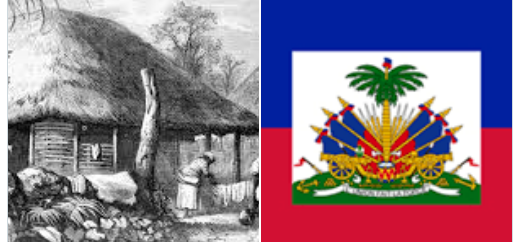
Baruch's Black Studies Colloquium presents Professor Tshombe Miles (Black and Latino Studies) in a talk November 3, 6 pm, about his work on the Black Radical Tradition titled, "The Fight Against Racial Capitalism: From Maroon Communities to the Haitian Revolution." The talk will focus on how these communities created spaces of economic development in the face of racial capitalism despite explicit efforts to destroy them. The event will be moderated by BLS Professor Rojo Robles. Register here.
|
Artists Respond to Climate Change
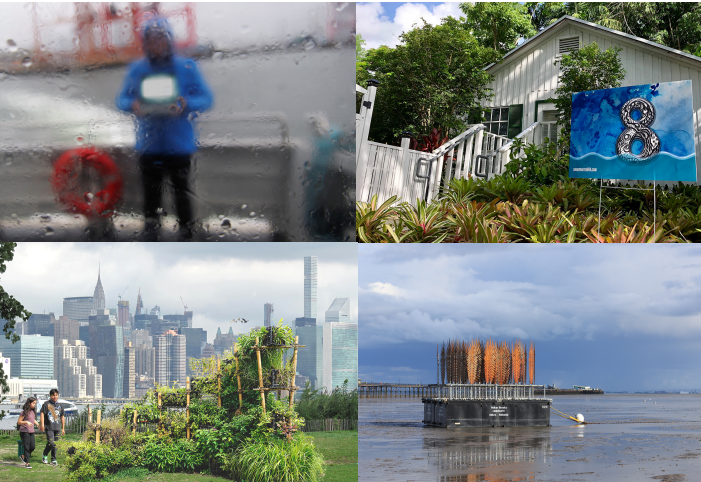
"Climate Change: Artists Respond" takes place November 18, 4-5:30 pm. The panel brings together contemporary artists whose work contributes to a broader public understanding of the consequences of climate change and the urgent need for action and mitigation.
The panelists are Professor Katherine Behar (Fine and Performing Arts, artwork image top left), Xavier Cortada (image, top right), Anina Gerchick (bottom left), and Mary Mattingly (bottom right). These artists have created art that is geographically specific and universally relevant, providing entry points around which people can coalesce. The event is organized by and will be moderated by art historian Julie Reiss, a Graduate Center PhD alumna, with Behar as co-moderator. Register here.
|
|
A Show Written by Students: And Then There Was Us
|
Students who took a class last spring with the Harman Program's Visiting Writer, the playwright Stew, are working on producing a show called And Then There Was Us. In-person rehearsals are underway for performances scheduled for November 16-20 in Mason Hall. Details on how audiences will get to see the show are being worked out. Stay tuned for details.
|
|
ICYMI: Helen Keller; Social Media; Climate Change |
|
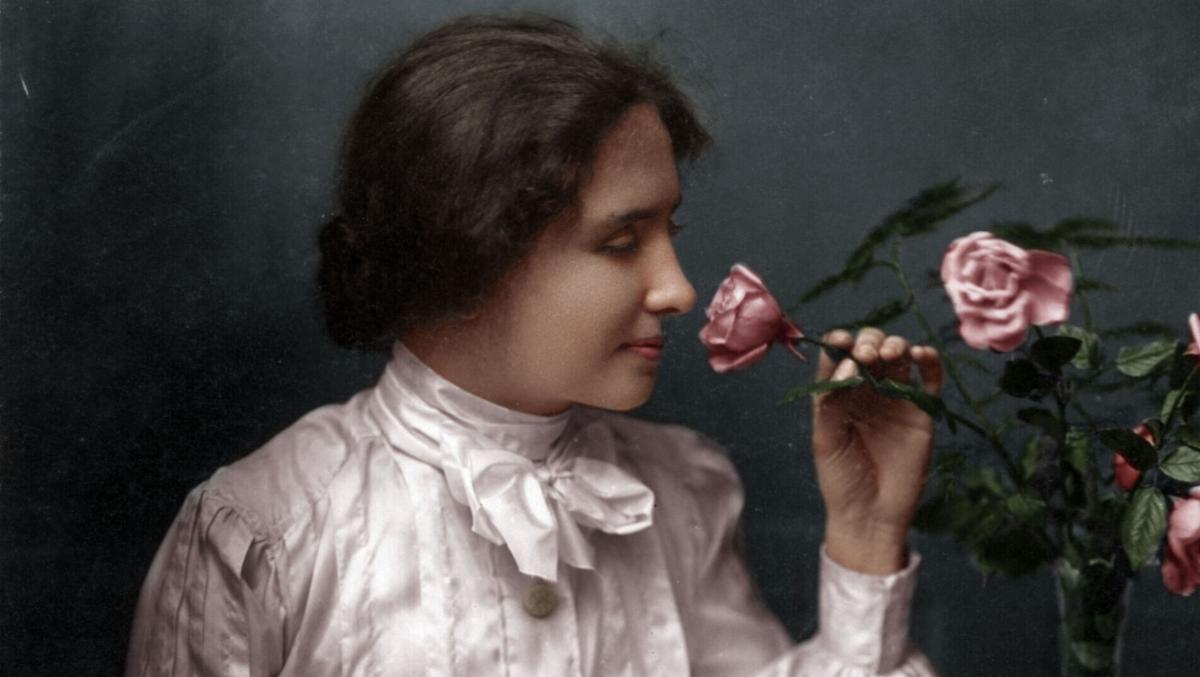
BECOMING HELEN KELLER: A new PBS American Masters documentary, Becoming Helen Keller, about Keller’s humanitarian work, features contributions from two Baruch faculty members. The program premiered October 19 and is streaming online here until December 1.
Professor Vincent DiGirolamo (History) served as an academic advisor on the film. The late Peter Dobkin Hall, who taught History and Theory in Baruch’s Marxe School, appears as a talking head. The documentary focuses on Keller’s work on social justice issues including women's suffrage, workers' rights, racial equality, and aid to the poor. The film also looks at her controversial positions in medical ethics debates and her personal life with Anne Sullivan. (Keller was deaf and blind; Sullivan taught her to communicate in a language breakthrough made famous on stage and screen by The Miracle Worker.) Read more about the film and the professors' involvement here.
|
|
SOCIAL MEDIA FOR ACADEMICS: Thanks to all who attended the social media workshop for Baruch and Graduate Center faculty. We had a great turnout--72 people. If you missed it or had to leave early, you can watch the video on our YouTube channel or click through the slideshow presentation here for tips on using Twitter, Instagram, and other platforms, including some great examples from your Baruch Weissman colleagues. An admittedly incomplete list of Baruch-affiliated Twitter accounts you may wish to follow can be found here. If you'd like to set up an in-person tutorial, email baruchwsas@baruch.cuny.edu. We hope to host more professional development workshops with our Graduate Center colleagues in the future.
|
|
CLIMATE CHANGE: We've uploaded videos of two recent "We Are Climate Change" events to the Weissman YouTube channel. Watch our panel on climate change and public health here and a discussion of New York City's plans for coping with climate change here. Both sessions feature a wealth of data, information, and analysis from nationally recognized experts. Students in search of a research topic related to climate change could easily take inspiration from either presentation.
|
|
-
October 26, 6-7:30 pm, lecture by New Media Artspace Visiting Artist kate-hers RHEE livestreamed on YouTube. Exhibition "Inventing Genealogies" here
-
November 1, 5:30 pm, Sandra K. Wasserman Jewish Studies Center presents healthcare activist Ady Barkan in conversation with Baruch Marxe Professor Jonathan Engel. Register here
-
November 3, 6 pm, Black Studies Colloquium presents Professor Tshombe Miles, "The Fight Against Racial Capitalism: From Maroon Communities to the Haitian Revolution." Register here.
-
November 5, 11 am-1 pm: New York City Latin American History Workshop at Baruch presents Isadora Mouro Motta (Princeton), “Looking South for Freedom: Brazil and African-American Abolitionists.” Email mark.rice@baruch.cuny.edu to attend
-
November 5, 12:30 pm: Marxe Fall Research Seminar presents Professor Carolyn Abott, “A Distaste for Deficits: Voter Opinion and Balanced Budgets in the U.S. States.” 135 E. 22nd St., Room 301, or attend via Zoom.
-
November 9, 5:30 pm: Listening to Veterans. Opening remarks by President S. David Wu. Speakers include Professor Glenn Petersen, US Navy veteran, author of War and the Arc of Human Experience, and Tanya Domi, director of public affairs at the CUNY Graduate Center, US Army veteran, activist on women's/LGBTQ issues in the military. Register here.
-
November 18, 4-5:30 pm: Climate Change: Artists Respond. Artists Xavier Cortada, Anina Gerchick, Mary Mattingly and Professor Katherine Behar; moderators, Behar and art historian Julie Reiss. Register here
|
|
Why It Matters That Journalists Won the Nobel Peace Prize
The Department of Journalism and the Writing Professions applauds the news that the Nobel Peace Prize has been awarded to two journalists, Maria Ressa in the Philippines and Dmitry Muratov in Russia. At a time when attacks on reporters are on the rise, this recognition of Ressa and Muratov for standing up for press freedom in the face of repression is significant. It serves as a powerful statement to the world that journalists are vital to upholding democracy and that disinformation undermines peace.
Previous journalists to win the Nobel Peace Prize were Tawakkol Karman, a Yemeni journalist and co-founder of Women Journalists Without Chains, in 2011, and Carl von Ossietzky in 1935. Ossietzky’s critical reporting of the Nazi party landed him in prison, where he died.
|
|
Past newsletters here. Next newsletter: November 8. Weissman blog here.
|
|
|
|
|
|
|