|
Dear Community:
This week’s update is a reminder of why our message – We Must Save Us – continues to guide everything we do. From the Walk to End Alzheimer’s and Making Strides Against Breast Cancer to groundbreaking new research addressing disparities in cancer rates among Black women, the local and national dialogue on critical issues continues to gain momentum and our community is showing up with courage and purpose.
We also share insights into the digital future of cardiology, the ongoing challenge of closing the gap between research and delivery, and the hard truths about disparities in COVID-19 mortality. Each of these stories underscores the urgency of addressing inequities in health and building systems that truly serve everyone.
I encourage you to read, share and, most importantly, get involved. Together, we are stronger. Together, we must – and we will – save us. Wishing you all a blessed week ahead.
Renee Mahaffey Harris
President & CEO
| | |
Walk To End Alzheimer’s
Join the fight against Alzheimer’s! With new treatments emerging in the fight against Alzheimer’s and all other dementia, now is the time for hope. Now is the time for action. So get out, get moving and attend the Cincinnati Tri-state Walk to End Alzheimer’s
WHEN: Saturday, October 4, 2025.
Registration at 8:30 a.m.
Opening & Promise Garden Ceremony at 9:40 a.m.
Walk at 10 a.m.
WHERE: Sawyer Point
705 E. Pete Rose Way, Cincinnati, OH 45202
| |
Making Strides of Greater Cincinnati
The American Cancer Society Making Strides Against Breast Cancer is a celebration of courage and hope, a movement uniting communities to end breast cancer as we know it, for everyone. Our movement is the nation’s largest and most impactful breast cancer movement and raises funds for lifesaving breast cancer research and programs
WHEN: Saturday, October 18, 2025
8:30am 5k Run
9:00am Walk
WHERE: Yeatmans Cove
705 E Pete Rose Way, Cincinnati, OH
| |
Cardiology’s digital future is within reach: here is how to close the gaps
In 2025, more than 20 million people will die from cardiovascular disease and conditions like high blood pressure and high cholesterol that increase its risk. By 2050, heart disease prevalence is projected to rise by 90% and deaths will increase to 35 million. In the United States alone, healthcare costs related to cardiovascular risk factors are expected to triple during that time.
Technology is essential to tackle this problem. In today’s fast-paced world, the integration of AI in healthcare sector and specifically cardiology is rapidly transforming the landscape. AI can make healthcare more precise, efficient and personalized and is already enhancing patient care and addressing staff shortages through innovative solutions like autonomous scanning and remote expert consultations. Existing technologies, however, are often not providing the assistance that cardiologists want and need.
To learn about cardiologists’ challenges and how they believe digital tools could help address them, Boston Consulting Group surveyed 300 cardiologists in the United States, the United Kingdom, Germany and China. Cardiologists reported that they spend an average of seven hours each week on administrative tasks. They estimated that with the right digital tools they could save five of those hours, leaving them more time to care for patients, particularly new ones. Overall, the added time could translate into an additional 8,500 clinic visits per year in the United States alone.
|
Fixing the imbalance in cancer rates between Black and white women
When epidemiologist Lauren McCullough began working in cancer research in the United States, she was struck by a glaring omission in population-level studies. “When thinking about large-scale cancer studies, one of the groups that have been left behind have been Black women,” she says. “That’s despite the fact that Black women are more likely to get an aggressive disease and, with very few exceptions, are more likely to die of their cancer.”
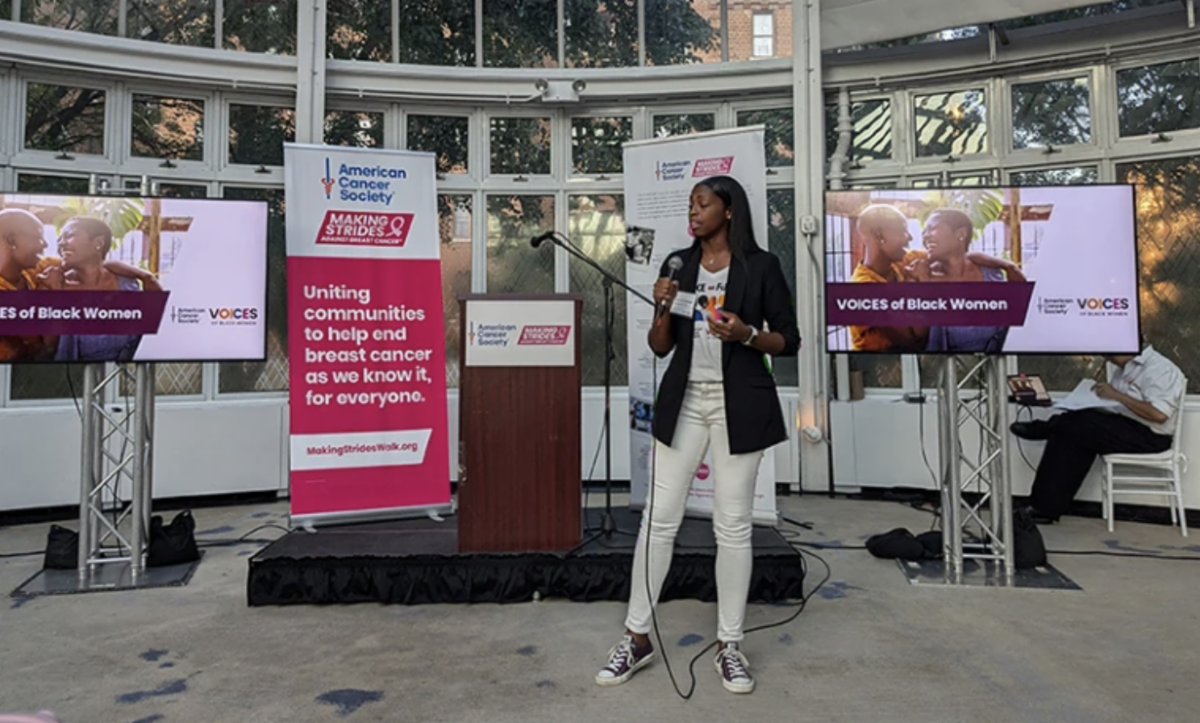
Now, McCullough, visiting scientific director at the American Cancer Society (ACS), is leading a research effort to help change that. The VOICES of Black Women study aims to enrol 100,000 Black women aged 25–55 with no prior history of cancer. The longitudinal study, which launched in 2024, will follow participants for at least 30 years, capturing a range of data on health, lifestyle and lived experience to reach a depth and scale not seen before for this population, say those involved.
|
Reporting on closing the research to health care delivery gap
By nearly every measure of population health, the U.S. continues to trail its peers despite spending more on health care than any other country in the world. Life expectancy remains lower than in other wealthy nations, deaths from preventable causes are higher and access to basic care is uneven. The disconnect between knowledge and practice offers an important story for journalists to tell: It’s not the quantity of research or dollars that matters, but how well evidence is applied to prevention, access and delivery of care.
A 2024 Commonwealth Fund report put it bluntly: the U.S. ranks last among 10 high-income countries in overall health system performance, despite spending nearly 20% of its gross domestic product on health care. The report found that Americans die younger than their peers abroad, often from conditions that could have been prevented or treated. In fact, U.S. life expectancy is more than four years below the average of comparable nations.
|
Disparities in COVID-19 mortality in the United States, 2020–2023
Objective
To examine demographic and regional disparities in age-adjusted and proportionate COVID-19 mortality in the US from 2020 to 2023.
Design, setting, and participants
In this repeated cross-sectional study, data from the Centers for Disease Control and Prevention Wide-ranging Online Data for Epidemiologic Research (CDC WONDER) multiple causes of death database were used to analyze death certificates from 2020 to 2023 for COVID-19-related mortality among persons aged ≥ 15 years in the U.S.
Results
From 2020 to 2023, 1,167,362 (8.91%) of 13,098,787 total deaths in the U.S. were attributed to COVID-19. The AAMR peaked in 2021 at 147.0 (95% CI: 146.6–147.5) per 100,000, with 13.45% of all deaths related to COVID-19, decreasing to 23.1 (2.49%) by 2023. Males exhibited a 1.56-fold higher AAMR than females. Non-Hispanic (NH) American Indian/Alaska Native experienced the highest cumulative AAMR (154), followed by NH Native Hawaiian/Pacific Islander (124.2) and NH African American (123.9) populations. Hispanics had the highest proportionate mortality, with COVID-19 contributing to 23.55% of all deaths in 2021. The oldest age group (≥ 75 years) had the highest cumulative AAMR, 71.6 times higher compared to the youngest group (15–44 years), whereas the highest proportionate mortality was seen in middle-aged adults (45–74 years). Regionally, the Southern U.S. census region recorded the highest cumulative and annual AAMR, except for the Northeast, in 2020.
Conclusion
From 2020 to 2023, males, older adults, and racial/ethnic minority groups, notably NH AI/AN, NH NH/PI, NH African American, and Hispanic populations, experienced higher COVID-19 mortality. Regionally, the Southern U.S. Census region had the highest COVID-19 mortality, except for the Northeast, in 2020. These disparities underscore the importance of implementing equitable public health strategies and ensuring preparedness for future health crises.
| | | | |