|
 |
Greetings from PCAP!
This month, the PCAP Steering Committee is meeting in Riverhurst to work in the renewal of the PCAP Framework. The new 2019-2023 Framework will outline our strategies and focus areas
for the mid-term future.
We look forward to seeing all the PCAP Partners represented in the meeting!
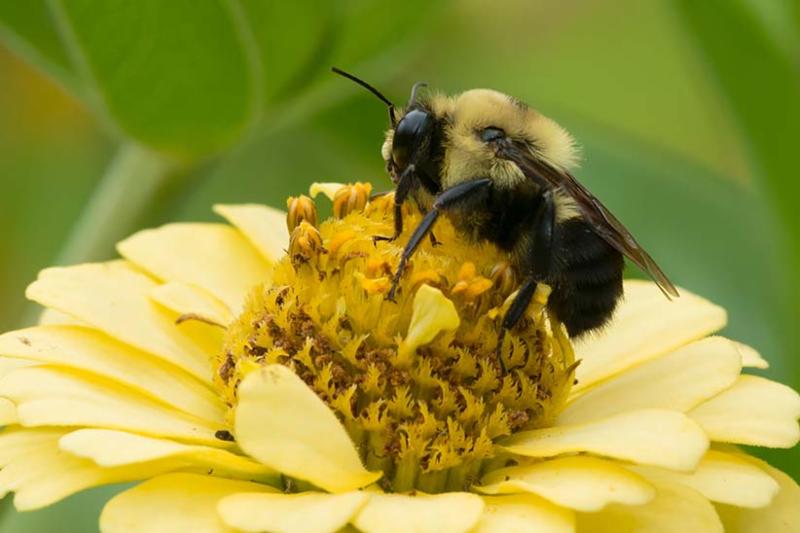
For the October edition of the Native Prairie Speaker Series, Kirsten Palmier from the University of Regina, is presenting her research on native Saskatchewan bumble bees. The webinar presentation will take place next Tuesday October 9, and you can
register for free
here
!
If you missed our last-week seminar, with Sarah Ludlow and Cameron Wood from Nature Conservancy presenting on Songbird Conservation Efforts and the Qu'Appelle Valley as a Focal Area for Conservation,
you can watch it on the PCAP YouTube
channel
.
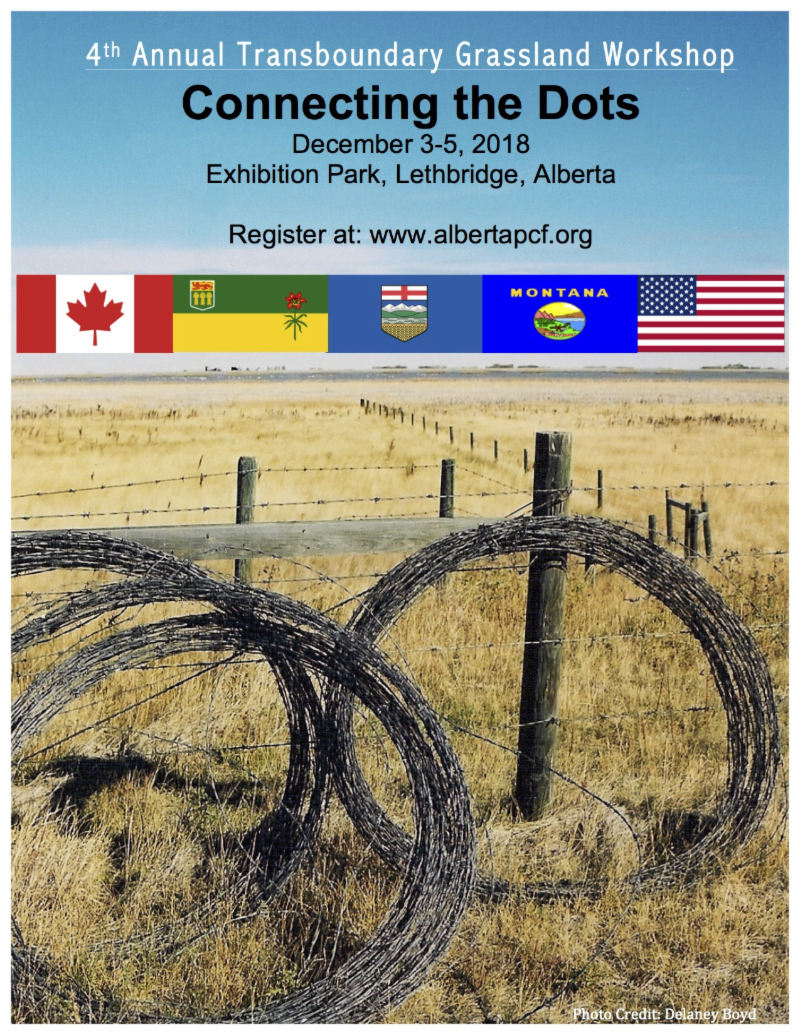
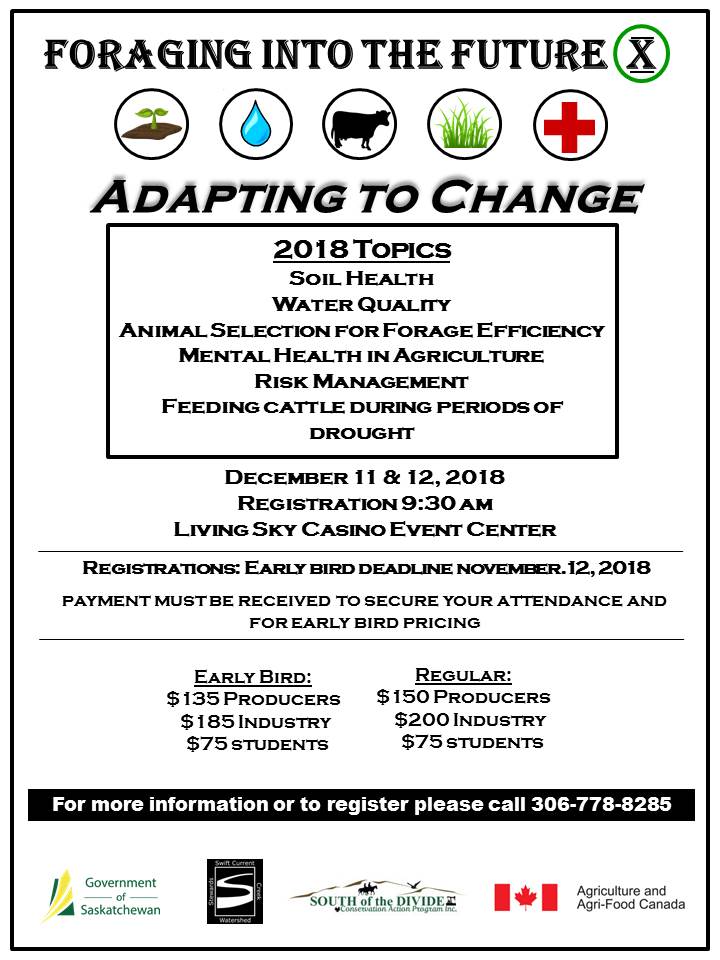
Many important events with the presence of PCAP are coming in the next few months: the "Canadian Western Agribition" in November in Regina, the "Transboundary Grasslands Workshop" in December in Lethbridge, the "Foraging Into The Future" conference in December in Swift Current, and the "Prairie Conservation and Endangered Species Conference" (PCESC) in February 2019, in Winnipeg. About the 2019 PCESC, it is open now the Call for Posters and Presentations (information here). It's also open a call for nominations for the Prairie Conservation Award, in recognition of significant long-term contributions to native habitat or species at risk conservation. For details on the nomination guidelines please click here.
Many other important upcoming events are attached in this newsletter.
Please feel free to contact me at any time; I'm pleased to receive your questions, comments or ideas.
Diego Steinaker
SK PCAP Manager
306 352 0472
pcap@sasktel.net
|
Transboudary Grassland Workshop
December 3-5, 2018
Lethbridge, AB
|
P
rairie Conservation and Endangered Species Conference - PCESC 2019
February 19-21, 2019. Winnipeg, MB
Early bird, until January 15, 2019
For details on the Conference Program please click here
|
|
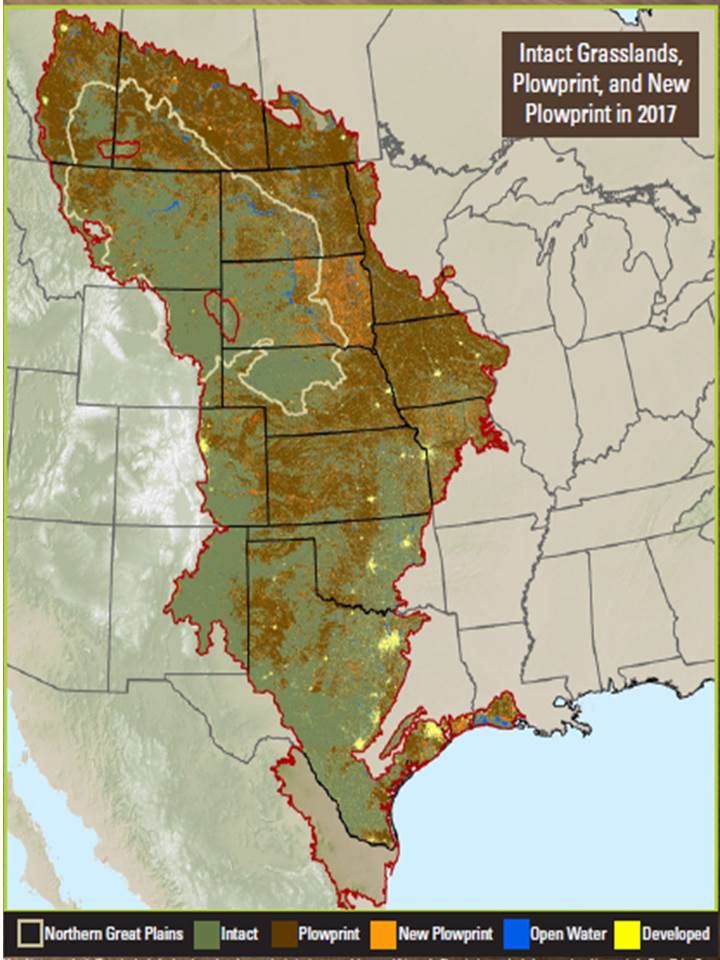
Temperate grasslands are being lost worldwide and North American grasslands are no exception. The leading cause of this loss is the conversion of grasslands to cropland.
The conversion of intact grasslands represents a significant ecological loss that cannot easily be recovered.
The purpose of the Plowprint analysis made every year by the World Wildlife Fund (WWF) is to identify remaining intact habitat across the Great Plains.
The Good News
: plow-up decreased
across the Great Plains in 2017. On average, over 800,000 fewer acres were converted to cropland across the Great Plains in 2017.
The Bad News: 1.7 million acres of grassland were lost across the entire Great Plains (
as compared to over 2.5 million acres in 2016).
Overall, approximately 53% of the Great Plains is still intact.
To track grassland loss, WWF used the USDA National Agricultural Statistics Service Cropland Data Layer in the U.S. and the Agriculture and Agri-Food Canada Annual Crop Inventory in Canada.
For this analysis, Grasslands refer to grasslands, shrubland, and wetland cover, and Cropland is defined as any annually planted agricultural commodity or fallow agricultural land.
Perennial Grass Cover: Gain & Loss
In 2017, perennial grass cover increased in the NGP portion of Saskatchewan, Alberta, Montana, Wyoming, North Dakota, and Nebraska, but decreased by 9,000 acres in South Dakota. Conversion of grassland to cropland, although damaging to native ecosystems, is not necessarily permanent, and cropland can rotate back into perennial grass cover through restoration or abandonment. Restoration and rotations into perennial cover, while important, are not always enough to conserve biological diversity.
In the Northern Great Plain, about 71% of the lands that have been plowed are on high quality soils. This means that almost 30% of NGP plow-up, or 15 million acres, is on low and marginal-quality soils.
Grassland Conversion Effect on Drinking Water
In Intact grasslands are important for protecting source water areas for downstream communities. Recent studies indicate that communities are spending hundreds of thousands, if not millions, of dollars to counteract the impact of increased sediment and nutrient loading.
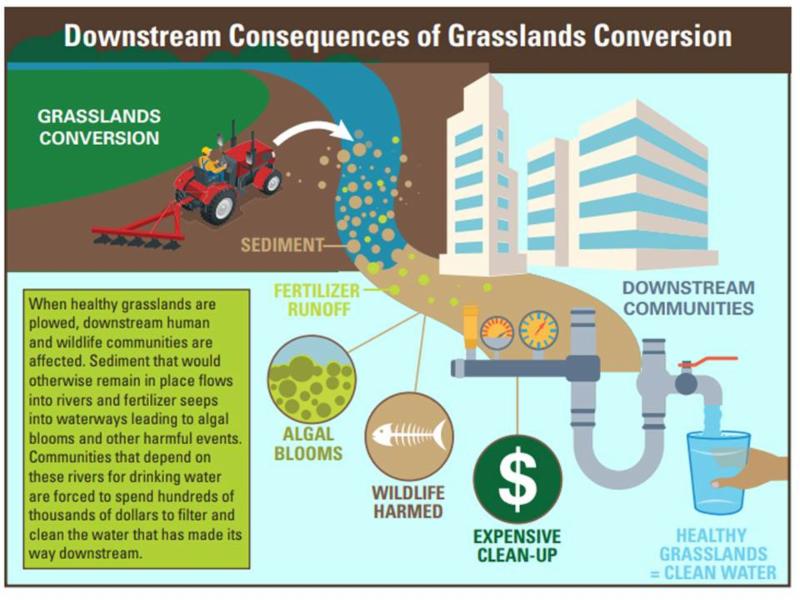
One study (1) found that farm fertilizer was the biggest contributor to nitrogen loading in water bodies, representing more than half of the total nitrogen loading. This study also suggested that small communities bear an unfair burden in dealing with the costs of removing nitrogen pollution from their drinking water
The second study in US (2) showed that communities located downstream from areas converted to cropland are spending significant amounts of money to combat the problem.
Keeping grasslands intact rather than plowing up marginal lands for farming is one obvious way to stop this trend.
(1) Vedachalam, S., Mandelia, A.J., and Heath, E.A. 2018. Source Water Quality and the Cost of Nitrate Treatment in the Mississippi River Basin, Northeast-Midwest Institute Report, 44 pp., http://www.nemw.org/
(2) LimnoTech. 2018. Assessing the Impacts of Land Conversion on Drinking Water in the Northern Great Plains, 34 pp.
|
The Nature Conservancy of Canada protects one of the most significant habitat corridors near Craven, SK
The Nature Conservancy of Canada (NCC) and its partners
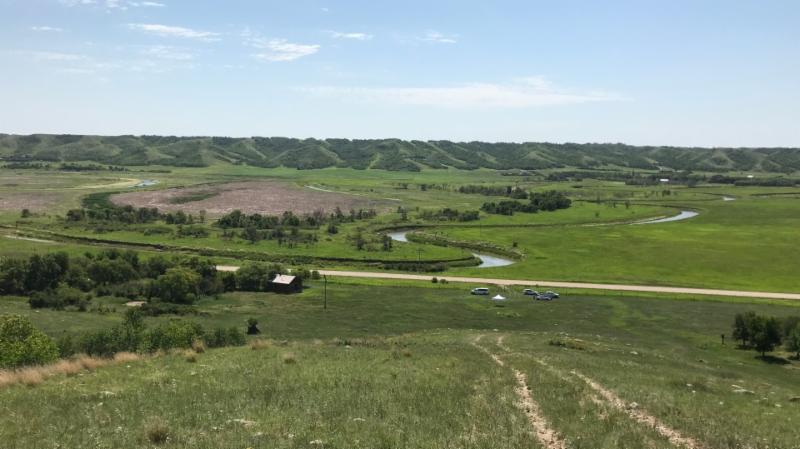
announced the purchase of 135.7 hectares (335 acres) of native grasslands and seasonal wetlands in the Upper Qu'Appelle Natural Area, approximately 40 minutes from Regina.
The Upper Qu'Appelle Natural Area provides important habitat for a number of species listed under the federal Species at Risk Act. Birds such as Sprague's pipit and chestnut-collared longspur, both threatened, and Baird's sparrow, special concern, are likely to be found at Valley View.
The Valley View conservation project enhances one of the most significant wildlife habitat corridors across southern Saskatchewan due to its location within the Qu'Appelle Valley, which stretches west to east across the province. The closeness to the towns of Craven and Lumsden and the city of Regina puts the acquired property at a high threat level for rural subdivision and acreage development. The area's native habitat is also at risk of conversion for annual cropping. The Valley View project is near several protected areas and other natural lands. For more information on this project please click here.
|
Released on August 29, 2018
The Government of Saskatchewan continues to implement key commitments made in the province's climate change plan to help reduce greenhouse gas (GHG) emissions and maintain a competitive economy.
As part of the made-in-Saskatchewan Prairie Resilience strategy, government has developed new output-based performance standards that will apply to more than 40 Saskatchewan industrial facilities. These facilities generate 11 per cent (or approximately 8.5 million tonnes) of total provincial emissions and are expected to reduce that portion by a total of 10 per cent by 2030. These measures are in addition to previously announced reductions in electricity generation (40 per cent) and methane from upstream oil and gas (40 per cent).
"Reductions in these three key areas will reduce emissions by 12 megatonnes of greenhouse gases each year by 2030," Environment Minister Dustin Duncan said. "Our bold and innovative system-wide strategy is designed to responsibly and tangibly reduce emissions without the imposition of an economy-wide carbon tax."
Saskatchewan's performance standards will increase over an established schedule from 2019 to 2030, cumulatively reducing GHG emissions by 5.3 million tonnes. The sector-specific performance standards are expected to achieve the following emissions intensity reductions:
- Potash, coal and uranium mining (5 per cent)
- Iron and steel mills (5 per cent)
- Fertilizer manufacturing (5 per cent)
- Pulp mills (5 per cent)
- Ethanol production (5 per cent)
- Refining and upgrading (10 per cent)
- Upstream oil and gas - combustion only (15 per cent)
Saskatchewan facilities will be able to choose from a suite of flexible compliance options including offset credits, best performance credits and a technology fund.
The SK Prairie Resilience Strategy is available
here.
Darby Semeniuk,
Environment,
Regina.
|
|
|
|
|
PCAP Native Prairie Speaker Series
Pathogens on the prairies: assessing health of native Saskatchewan bumble bees
by Kirsten Palmier
University of Regina
October 9, 2018, 12 pm
|
|
Upcoming Events!
November 19-24, 2018
Regina, SK
Organized by Manitoba Forage & Grasslands Association
November 27-28, 2018
Brandon, MB
Transboundary Grasslands Workshop
December 3-5, 2018
Lethbridge, AB
Foraging Into The Future X
December 11-12, 2018
Swift
Current, SK
February 19-21, 2019
Winnipeg, MB
|
Foraging Into The Future X
11-12 December, 2018,
Swift Current, SK
|
|
The Stewards of Saskatchewan (SOS) programs at Nature Saskatchewan are looking for article submissions for their SOS newsletter, and photos for their 2019 Calendar, by October 9th, 2018.
The annual newsletter and the calendar is sent out to the program participants (over 850 ranchers and farmers) as well as Nature Saskatchewan funders and partners.
The article must be between 250 and 500 words (1/2 to 1 page) and should focus on a topic relevant to landowners and producers, particularly those who have Species At Risk on their land. There is also a list of species applicable for the 2019 calendar.
|
|
The Saskatchewan Co-operative Wildlife Management Survey
The Saskatchewan Co-operative Wildlife Management Survey, formerly the Co-operative Deer Management Survey, is a long-standing, volunteer-based survey that provides the ministry with valuable productivity and herd structure information. Participants have the opportunity to conveniently record observations using the new mobile SK CWMS application, that is compatible with both Apple and Android smart phones.
Although the SK CWMS application will allow participants to record observations at any time of year, there are key periods where it is particularly important to record your observations for each species:
- White-tailed deer and mule deer: Sept 1 to Nov 30
- Moose: Sept 1 to Dec31
- Elk: Sept 1 to Feb 28
- Sharp-tailed Grouse: March 1-July 15
- Wild Turkey: Dec 1 to March 1
|
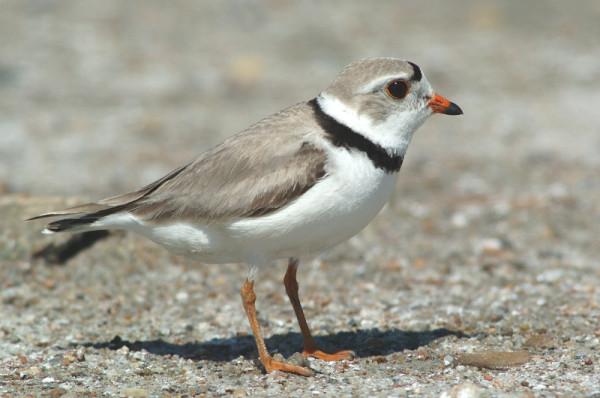
In Canada the prairie subspecies of the Piping Plover (
Charadrius melodus circumcinctus
) breeds in central Alberta, southern Saskatchewan, southern Manitoba and the Lake of the Woods region of western Ontario, using shorelines around saline/alkaline lakes, river islands and adjacent sand pits. The number of Piping Plovers has been decreasing everywhere.
This
guide determines local and landscape-scale habitat features that are optimal for Piping Plover at different life stages, as well as important non-habitat related beneficial management practices.
Piping Plover
(
Charadrius melodus circumcinctus)
This guide was developed by Sue Michalsky and Heather Peat Hamm with technical and editorial input from Corie White, Julie Mackenzie, Ashley Vass and Ryan Dudragne and GIS support from Michelle Lanoie.
|
|
Diego Steinaker, Editor, Saskatchewan Prairie Conservation Action Plan Newsletter
306-352-0472 |
|
|
SK PCAP gratefully acknowledges financial support in 2018-2019 from:
Ducks Unlimited Canada, Canada North Environmental Services, EcoFriendlySask.ca, Information Services Canada, Parks Canada - Grasslands National Park of Canada, Rancher's Stewardship Alliance Inc., Saskatchewan Cattlemen's Association,
Saskatchewan Ministry of Agriculture, Saskatchewan Ministry of Environment - Fish and Wildlife Development Fund,
SaskEnergy,
SaskPower, SaskTel, University of Saskatchewan - College of Agriculture and Bioresources, Water Security Agency.
SK PCAP gratefully acknowledges in-kind support for 2018-19 from:
Agriculture and Agri-Food Canada - Science and Technology Branch, Canadian Parks and Wilderness Association, Canadian Western Agribition, Environment Canada - Canadian Wildlife Service, Friends of Wascana Marsh, Meewasin Valley Authority, Native Plant Society of Saskatchewan, Nature Conservancy Canada, Nature Saskatchewan, Parks Canada - Grasslands National Park, Prairie Wind & Silver Sage, Ranchers Stewardship Alliance Inc., Redberry Lake Biosphere Reserve, Saskatchewan Association of Rural Municipalities, Saskatchewan Association of Watersheds, Saskatchewan Cattlemen's Association, Saskatchewan Environmental Society, Saskatchewan Forage Council, Saskatchewan Forage Industry Network, Saskatchewan Ministry of Agriculture, Saskatchewan Ministry of Environment, Saskatchewan Ministry of Economy, Saskatchewan Ministry of Education, Saskatchewan Ministry of Tourism, Parks, Culture and Sport - Royal Saskatchewan Museum and Friends of the Royal Saskatchewan Museum, Saskatchewan Research Council, Saskatchewan Stock Growers Association, Saskatchewan Wildlife Federation, Saskatoon Nature Society, SaskEnergy, SaskOutdoors, SaskPower, Society for Range Management - Prairie Parkland Chapter, South of the Divide Conservation Action Program Inc., University of Regina - Prairie Adaptation Research Collaborative, University of Saskatchewan - College of Agriculture and Bioresources, Wild About Saskatoon-Nature City Festival.
|
|
|
|