Upcoming meetings:
The October meeting of the Sustainability Commission has been cancelled. Our next meeting is scheduled for Monday November 9 th at 5:00 pm. The Climate Change Working Group will meet on Wednesday October 14 th from 3:00 to 5:00 pm. A discussion of potential Climate Action Plan strategies is on the agenda. Details for this online meeting can be found here: https://www.chulavistaca.gov/departments/city-clerk/boards-commissions
|
|
Free Sustainability Webinars Available on Demand!
Did you get a chance to join any of our live Summer Sustainability Series webinars over the last few months? If not, the recordings and slides are available at our website for you to view at any time. Topics covered include biking, electric vehicles, tips for avoiding food waste, new library Sustainable Home Toolkits, recycling and so much more. In addition, there will be live webinars throughout the next few months as part of our Sustainable Communities Series. Registration for upcoming webinars and recordings of previous webinars can be found here. |
|
Climate Change Working Group Online Meeting
The Climate Change Working Group will hold its next meeting on October 14 th from 3-5. Due to Covid-19 restrictions, this meeting will take place online. Anyone interested in attending can access the link to view the meeting or make comments at www.chulavistaca.gov/virtualmeetings. The commenting period will be open shortly after the agenda is published and will remain open through the meeting. After regularly meeting through 2018 and 2019, the working group will be voting on the climate action recommendations below that will be presented to City Council.
- Ban most single use plastics and items in lieu of compostable or recyclable products through Zero Waste Plan
- Support building decarbonization in new construction through education and outreach while evaluating potential building codes that reduce fossil fuel usage
- Review commercial solar permitting process and streamline where possible
- Support vehicle decarbonization through education and outreach while evaluating potential building codes that reduce fossil fuel usage.
- Increase protected bike lanes, or highest level of protection possible, in locations where traffic collisions have occurred while supporting other active transportation infrastructure
- Create a Climate Equity Index and Communities of Concern Map
- Adopt GHG reduction goal of an 80% reduction by 2050
|
|
Sustainable Communities Webinar Series
The City of Chula Vista Office of Sustainability is offering a series of webinars for the community about building codes related to CALGreen, insulation installation, ventilation and incentives. These webinars are held from 12:00 to 1:00 pm – perfect for a lunch and learn session! You are invited to register at the link below, as well as to watch the past webinars if you have missed them as all webinars will be recorded and posted to the website:
- October 13 CALGreen Residential Code
- November 17 CALGreen Non-Residential Code
- TBD - Indoor air quality and ventilation with a connection to COVID 19
- TBD - Energy efficient projects and tax incentives (federal and state)
|
|
Water Conservation Tips
Experiencing high water bills recently? Often, the most significant users of water in your home are your toilet, shower, clothes washer, dishwasher and outside irrigation systems. Keep reading and we’ll give you some tips to start looking for the culprits of the excessive water use and how to become more efficient with your water use.
Start indoors with your bathrooms. Inspect your toilets and check for leaks and the condition of the seals in the tank. If you hear running water between flushes, this is a good hint to check your seals! Once you take a peek inside the flushing mechanism, reach in and see if you can feel the seal on the bottom. If the seal feels soft and pliable, then the seal is in good shape. If it is dry and cracked, then you should replace the seal. In some cases, you may have to replace the whole mechanism. Should that be your situation, then it might be a good time to consider a replacement for a more efficient toilet.
Showerheads are the next thing to look at, are relatively easy to replace and you won't need to spend a ton of money on a plumber. You can get water-smart showerheads (and new seals for your toilets) at your local hardware store or online and these items use significantly less water.
The clothes washer and dishwasher are big-ticket items that don't need to be changed out, but the frequency of use can be modified to lower the amount of water used. By setting a washing schedule and full loads for both your dishes and clothing, you can save water and energy.
Moving outside, take a look at your yard. Your irrigation system is a bit more complicated depending on the types of vegetation (i.e. fruit trees, shrubs, grass) and because the options for irrigation are broad. There are options regarding changing out the sprinkler heads for rotating nozzles, adjusting your watering schedule or even looking at planting options that may require less water. There are also options to recycle water from your clothes washer, also know as laundry-to-landscape.
For more information on rebates, as well as tips regarding the information above, check out the San Diego County Water Authority website www.sdcwa.org.
|
|
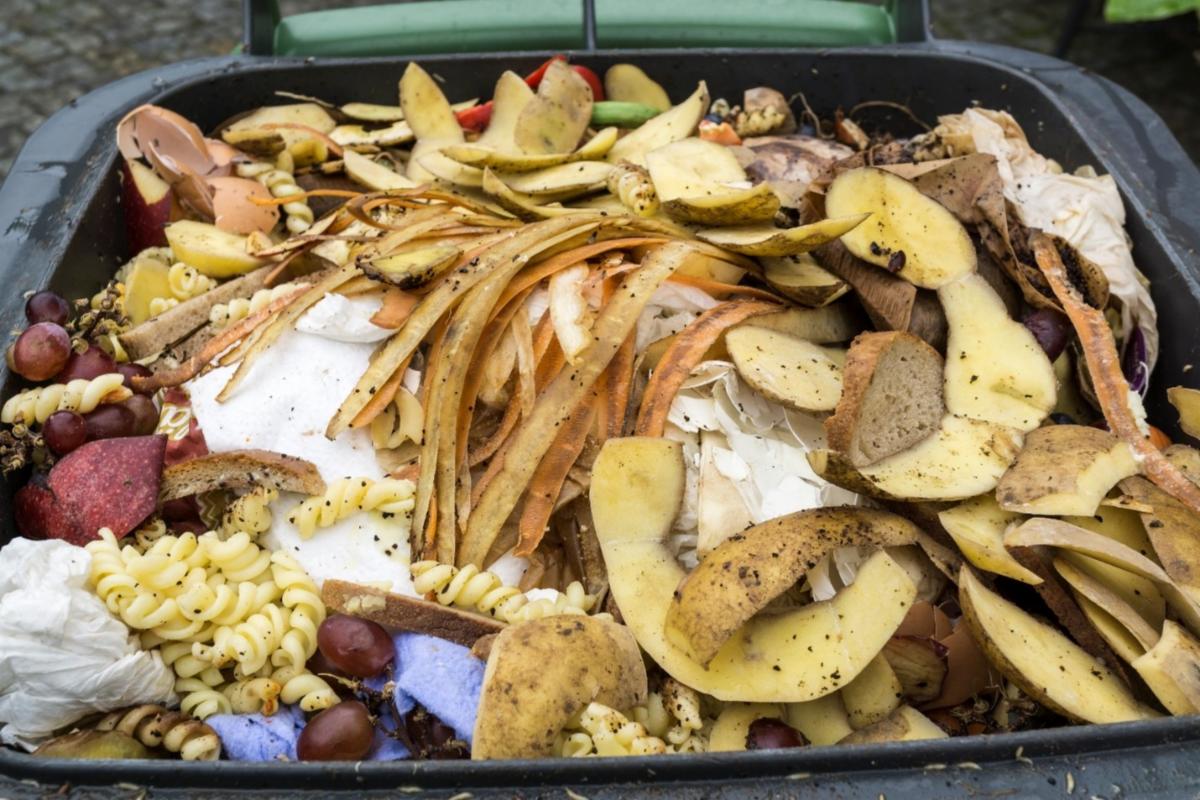
200 Major Food Companies Commit to Reduce Food Waste
Nearly 200 food suppliers, including some of the largest producers in the world, have pledged to cut their food waste in half by 2030. The companies, which make such products as Rice Krispies cereal, Hellmann’s mayonnaise and Spam, have joined the 10x20x30 initiative, a global effort to slash the staggering amount of food that is discarded every year. The big food makers, a list that includes Unilever, PepsiCo and Nestle Global have joined other large food retailers, who last year signed on to the campaign. Other participants include AEON, Ahold Delhaize, Carrefour, IKEA Food, Kroger, METRO AG, Migros, Pick n Pay, The Savola Group, Sodexo, Tesco, and Walmart.
The companies will make annual reports about their food loss and waste and will be encouraged to share the information on the Food Waste Atlas, a searchable website. But how they meet their targets will vary, an institute representative says.
The companies will make annual reports about their food loss and waste and will be encouraged to share the information on the Food Waste Atlas, a searchable website. But how they meet their targets will vary.
Deanna Bratter, the head of sustainable development for Danone North America, whose portfolio includes Dannon and Activia yogurts and Silk creamers, says her company is looking at options. At the low-sugar line Two Good, she says, the effort might entail using up surplus produce in special “limited batch” flavors. Elsewhere, she says, the company is looking for ways to turn what would have been waste into animal food or compost.
According to the U.N. Food and Agriculture Organization, about 30 percent of the world’s food is unharvested or thrown away at various points in the supply chain. And all that loss is a big contributor to climate change, accounting for 8 percent of global greenhouse gas emissions. An often-cited analogy posits that if food waste constituted its own country, it would trail only the United States and China in its contributions to global warming.
Food manufacturers are only part of the equation. Most of the food waste — about 80 percent — happens in homes and in consumer-facing businesses, such as grocery stores and restaurants, according to a report by the nonprofit ReFED. Food manufacturers account for only 2 percent of the problem, while consumers are responsible for 43 percent, per the report.
Brian Roe, a professor in the department of agricultural, environmental and development economics at Ohio State University, said producers can do more — not just to eliminate food waste in their operations, but to ultimately help keep consumers from pitching so much, too. “There may be systems that help the consumer to waste less food so it’s not just a matter of consumers acting badly,” he says. Those might include the right packaging and labeling, better instructions, or smaller portion sizes.
Roe said the willingness of big manufacturers to sign on to such an initiative is encouraging, but he’s hoping that collaborations will lead to more transparency and data sharing. That way, companies will know what’s working and what’s not.
|
|
City Wins Beacon Award for Climate Action
In recognition of the ambitious work the City has taken to reduce greenhouse gas (GHG) emissions, the Institute of Local Government and League of California Cities has awarded the City with their Beacon Award. To earn this award, the City had to showcase progress in the following areas below:
· Greenhouse Gas Reductions from City Operations
· Electricity Savings from City Operations
· Natural Gas Savings from City Operations
· Community Greenhouse Gas Reduction
· Activities in each of the Institute’s ten Sustainability Best Practice Areas
The City received its first awards for City Operations in 2013. But it was not until the most recent 2016 greenhouse gas inventory that showed a 12% reduction in community-wide emissions did we qualify for the full Beacon Award. This award showcases Chula Vista’s commitment to reducing carbon emissions and preserving the environment while growing our community and economy. Some of the efforts that help contribute to the reductions included SDG&E increasing the amount of renewable electricity we use, driving more efficient cars and supporting energy efficiency in City buildings and the community. For more information about ways you can reduce your own carbon footprint please visit www.cvclimatechallenge.com and for more information on the award please visit: https://www.ca-ilg.org/post/beacon-award-winners. |
|
Is Your Business Interested in Saving on Your Republic Services Bill?
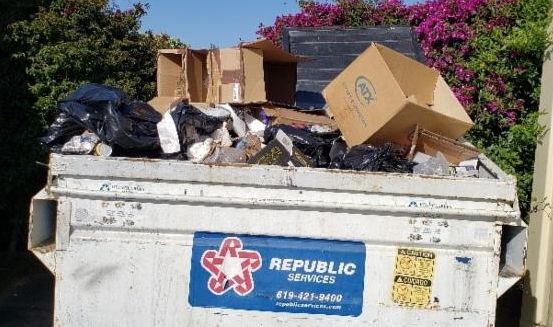
To help Chula Vista businesses Recycle Right, Environmental Services staff is reaching out to educate businesses on proper recycling techniques and “right sizing” their service levels. Right sizing determines the best service levels by analyzing the amount and contents in your recycling, trash and green waste containers. This involves City staff assessing if current container sizes and number of service days are appropriate and recommending possible changes. Recommendations may include a change in the size of the container, change in the day the service occurs or the number of service days. These evaluations have been successful in helping businesses allocate their waste disposal dollars more cost effectively and, in some cases, save some money on their monthly disposal costs.
In spite of the pandemic, City staff wants to continue this important outreach to businesses, so we are implementing a Virtual Outreach Pilot Program. This program was developed to keep business owners, their employees and City staff safe and avoid unnecessary potential exposure. This program will help staff to gather information from businesses to assist them to make better decisions on their recycling, trash and green waste service. Additionally, businesses can receive free employee training on proper disposal techniques and may be eligible for free recycling bins for use inside their business to refine their recycling practices. Bins come in various sizes ranging from 3- to 32-gallon size containers.
The entire virtual outreach process should take approximately 2-3 weeks for each business. During the virtual outreach, City staff will correspond with businesses via phone and e-mail, and provide clear instructions on taking photos of the contents inside your recycling, trash and green waste containers. These photos are key for providing data needed for staff to make evaluations before making any recommendations. Businesses will only need to take a few minutes of time on afternoons prior to their collection day to take photos of the contents inside their containers and send them back to City staff.
If you are interested in participating in the Virtual Outreach Program, call Environmental Services at 619-691-5122 or send an email to environmentalservices@chulavistaca.gov to request information on the program.
|
|
Did you know that October is Energy Efficiency Month?
On October 13th, as a way to celebrate and highlight Energy Efficiency month, the Empire State Building in New York, which has the Energy Star certification, will be lit with blue lights to celebrate energy efficiency efforts and the other 36,000 Energy Star certified buildings nationwide.
Not sure what Energy Star certified means? The Energy Star label on appliances or buildings is a label attached to those that have met the U.S. Environmental Protection Agency’s (EPA) strictest energy performance standards. To earn that certification, buildings, in this case, have to achieve a 75 or higher score indicating that they are performing at 75% or better than similar facilities. The City of Chula Vista will be celebrating by illuminating our three Civic Center campus buildings in blue on October 13th, all of which have earned the Energy Star certified label. We will also be showcasing the other energy efficiency milestones the City has achieved in striving for a greener and more energy-efficient future for our community.
|
|
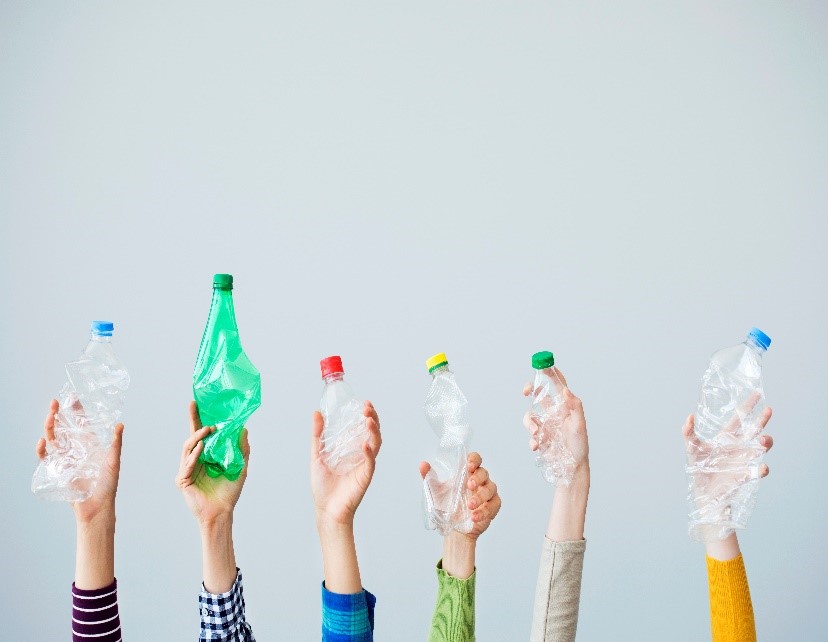
Don’t Give Up on Recycling Plastic
A new report casts serious doubt on whether the material can ever be reused economically. It doesn’t account for innovation.
Is plastics recycling a lie? That’s the question at the heart of a new investigation into whether Americans have been filling up their blue bins with misplaced hope.
The evidence on the side of recycling doesn’t look good. As far back as 1974, industry insiders were doubting whether plastics could ever be recycled economically. More recently, China’s decision to severely restrict its import of recyclables has left much of the world looking for new places to send used plastics — and falling short. Most damaging of all, waste plastics aren’t valuable, and “never have been,” according to authors of the investigation (a joint undertaking by National Public Radio and PBS’s “Frontline”).
It’s a disturbing story that’s roiling the industry and upsetting environmentalists. But Americans shouldn’t turn their backs on plastic recycling just yet. The production and use of plastics in emerging markets is growing rapidly, and there’s no reason to think that demand will weaken. Without a recycling solution, those tonnages are bound for landfills and incinerators. Fortunately, the global recycling industry has a history of transforming what was previously “unrecyclable” into useful products. It’s poised to do so again.
Recycling is as old as manufacturing. Garments have long been repurposed into rags; swords have been melted into plough shares. The Industrial Revolution, which created new demand for raw materials to feed factories, transformed this act of personal thrift into a commercial enterprise. In early 19th-century Yorkshire, a shortage of wool for the mills led Benjamin Law to develop a process for producing new fabric from old rags that had accumulated in homes and businesses. By 1855, 30 million pounds of rags were being used in the region each year.
But perhaps the industry’s most important innovation emerged in reaction to one of the 20th century’s biggest — and now forgotten — environmental crises: abandoned cars. In 1970, an engineer at General Motors estimated that over the previous 15 years Americans had abandoned between 9 million and 40 million cars in fields, rivers and city streets. Among other problems, the cars leaked oil and gas into soil and water and were such a blot on the landscape that they inspired Lady Bird Johnson’s highway beautification campaign. In 1970, President Richard Nixon told Congress that “few of America’s eyesores are so unsightly as its millions of junked automobiles.”
The problem was that cars are a pile of various metals and other materials that are expensive to separate for recycling, and the auto companies had made almost no effort to promote the reuse of their products (in the 1930s, Ford built, and quickly abandoned, a disassembly plant). So, owners took matters into their own hands, dumping their vehicles or occasionally burning them (in the 1950s, auto fires accounted for about 5% of ambient air pollution).
Fortunately, a few scrappy entrepreneurs in Texas, seeing an opportunity in all that abandoned metal, sought an alternative. Their solution was a complex shredding machine that reduced cars to fist-sized chunks that were separated via magnets and other processes (the second-ever shredder has been declared a National Historic Mechanical Engineering Landmark). Today, there are hundreds of auto shredders in the U.S., and nobody spends much time thinking about abandoned cars.
In many respects, plastics present a similar problem. Manufacturers developed them without any plan for disposal or recycling. Worse, different plastics are often used together and separating them can be uneconomical. Plastics aren’t impossible to recycle — a decade ago, China was home to tens of thousands of small, profitable businesses doing just that — but recycling them in a safe and environmentally sound manner is challenging and expensive.
Five years ago, Chinese demand for American plastics allowed consumers and regulators to overlook these problems. But thanks to China’s restrictions, as well as heightened awareness of ocean plastics and other negatives associated with the material, manufacturers, regulators and — most important — innovators are finally paying attention. According to one recent analysis, reuse and recycling could be a $60 billion market for the petrochemicals and plastics sector, representing almost two-thirds of its profits growth by 2030.
As a result of all these factors, the most intensive research-and-development effort in the 200-year history of the recycling industry is underway. Some of this investment comes from the U.S. government, including from a research fund established by the Trump administration. But several intensive commercial efforts are also underway, including the development of plastics engineered to be recycled repeatedly, and enzymes that help to separate different plastics more easily. Chevron Phillips Chemical is backing an effort to scale-up existing recycling technologies. Perhaps most crucially, other organizations are helping to provide waste collecting and recycling infrastructure to the one-third of the globe that still lacks it.
Some of these efforts won’t get beyond the research stage. Some may turn out to be too expensive to deploy. And some may take years to have an impact. But the world won’t stop producing and consuming plastic any time soon; total waste volumes are expected to nearly double by 2030. Recycling will be essential to managing all that trash — and that’s no lie.
|
|
New Jersey Passes Sweeping Bill Limiting Carryout Bags, Polystyrene Foam and Straws
Both chambers of the New Jersey state legislature passed a broad bill (S864) yesterday that would ban or limit the distribution of single-use plastic carryout bags, single-use paper carryout bags, polystyrene foam food service products and single-use plastic straws.
The plastic bag policy would apply to any "store or food service business," while the paper bag policy would specifically apply to larger "grocery stores" of a certain size. Polystyrene foam food service product limitations would apply to any "food service business" or person selling food. All policies would take effect within 18 months of the bill's final approval, with additional foam products phased in later. The straws on request policy would start within one year.
A Plastics Advisory Council would be established within the state's Department of Environmental Protection to evaluate the policy's effectiveness and study "various issues related to single-use plastics." Additionally, $500,000 would be appropriated annually, for three years, from an existing cleanup fund to help DEP launch a statewide education campaign and distribute free reusable carryout bags.
The bill has been described as one of the most comprehensive of its kind in the United States, achieving a trifecta of limitations on the increasingly popular targets of bags, polystyrene foam and straws. In addition to its wide scope, the bill's passage is notable in a year of significant waste-related policy activity for New Jersey. Long-debated laws on organics recycling and environmental justice have passed this year, and a recycled content bill made it out of committee in the Assembly earlier this month.
While this latest bill had been gaining signs of support in recent weeks, its final passage took some local observers by surprise and was hailed as a victory by numerous environmental groups. Multiple sources indicate the legislation experienced significant opposition from packaging and food retail trade groups ahead of its passage, and while some were awaiting the final version to be shared publicly, it appears no notable surprise amendments were included. Precise language around what constitutes a reusable bag – one with "stitched handles" rather than a thicker version of standard plastic bags – as well as other specifications about covered packaging types remained intact.
The overall emphasis on reducing plastics that are challenging to handle in traditional recycling systems is seen as a boon for local municipalities dealing with litter challenges, as well as MRF operators affected by plastic bags clogging up their equipment.
"Plastics are a problem for recycling facilities and for litter and the environment," said Marie Kruzan, executive director of the Association of New Jersey Recyclers, adding education will be key to driving a tangible change in consumer behavior around proper recycling. "It's going to help us, it's not going to solve it – yet."
The inclusion of a limitation on paper carryout bags was made to appease food retailers concerned they could end up spending more to provide paper bags if only plastic options went away, and New Jersey would be the first state to finalize such a move. In a statement, American Forest & Paper Association CEO Heidi Brock asked Gov. Phil Murphy to issue a conditional veto that removes the paper language, saying the legislature had "undermined an environmentally responsible option for consumers" and sent an "alarming message" by potentially affecting related jobs in the state.
The American Chemistry Council (ACC) opposed the measure for other reasons, but similarly called for Murphy to veto it. "New Jersey should amend the bill by dropping the polystyrene foam ban and allowing the Plastics Advisory Council to do its job, providing recommendations to the legislature on plastic packaging policies which help New Jersey residents," said Omar Terrie, director of ACC's Plastics Foodservice Packaging Group, in a statement.
Murphy's office said the governor supports the bill, according to multiple reports following the vote. Doug O'Malley, director of advocacy group Environment New Jersey, believes Murphy will sign it. He pointed to the more than 50 local policies in place throughout the state as a "citizen's movement" that policymakers have recognized. O'Malley also cited Murphy's veto of a related 2018 bill creating fees for single-use carryout bags, which the governor said did not go far enough, as another relevant factor.
“It would not have changed the way people approach the checkout counter," he said of the prior bill. "Now it's not 'paper or plastic?' It’s 'can I have your reusable bag?'"
If the bill is signed, New Jersey will become the ninth state to have a comprehensive or de facto plastic bag policy. While the enactment of some state and local policies has been delayed due to the pandemic, the majority are now back on track with multiple taking effect this fall or next year. New Jersey would also become the fifth state to ban polystyrene foam in some form (following New York's move earlier this year) and one of a smaller group of states to limit straw usage.
|
|
|
|
|
|
|