|
Happy Fall!
We had two Native Prairie Speaker Series presentations in September. We had Katie Willie, a Masters Candidate from the University of Saskatchewan and Wanuskewin Heritage Park present about Bison Reintroduction at Wanuskewin. We also had Diana Ghikas from Environment and Climate Change Canada present about badgers at the South of the Divide Conservation Action Program virtual AGM. Recordings of both presentations are available on our YouTube Channel!
Our October Native Prairie Speaker Series presentation will occur on October 29th at noon, with Andrew Didiuk from Environment and Climate Change Canada talking about Great Plains Toads and Northern Leopard Frogs. You can register for free here.
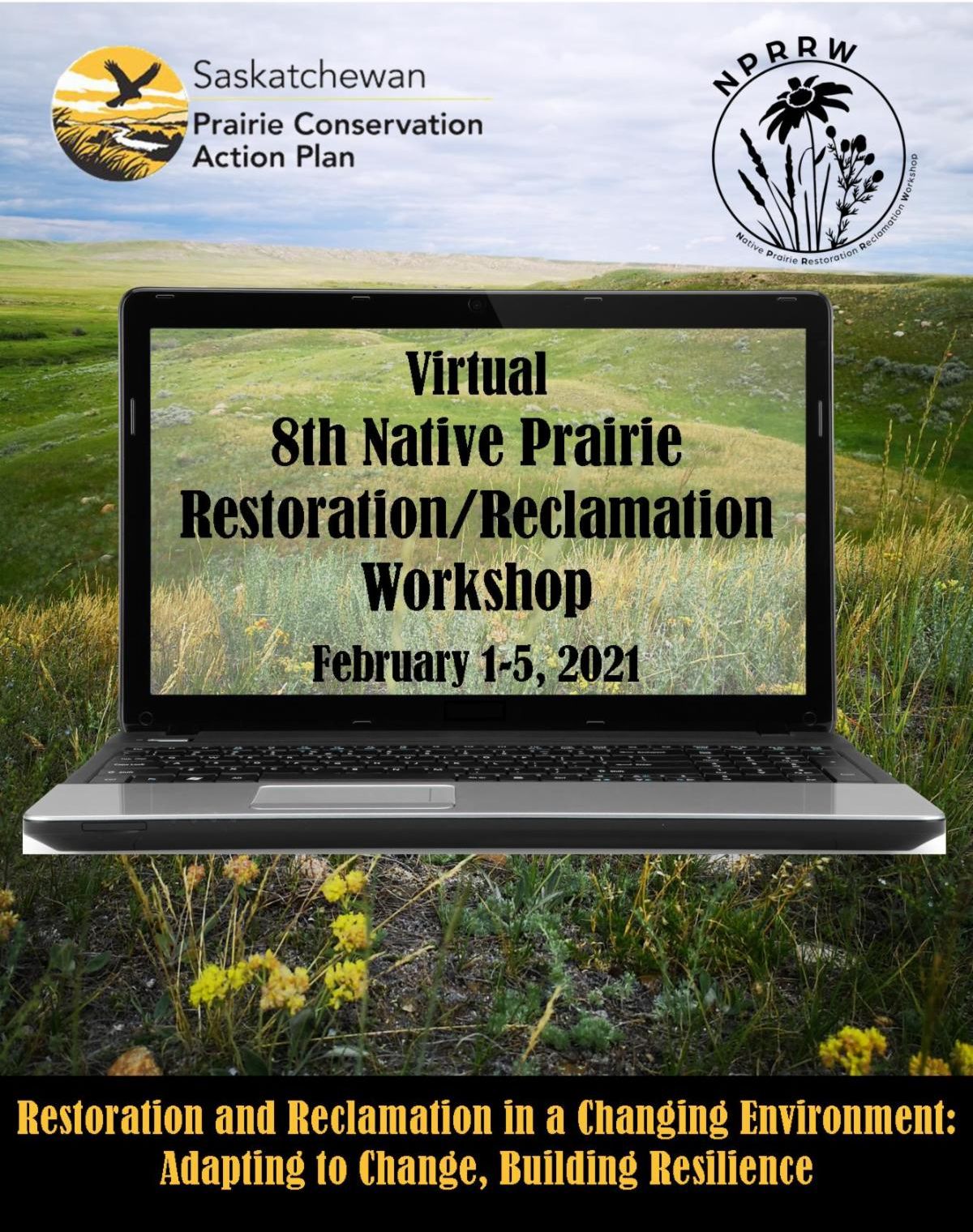
We have more information about the 8th Native Prairie Restoration/Reclamation Workshop including cost, call for posters and tradeshow information, please see below! Registration will open in November!
If anyone is interested in the virtual delivery of our education programs, Adopt a Rancher and Taking Action for Prairie, you can contact our Education Coordinator, Julie-Anne (pcap.education@gmail.com).
And finally, we would like to thank our sponsors for their generous support : Camp Wolf Willow, EcoFriendly Sask, K+S Potash, Pembina Pipelines, Ranchers Stewardship Alliance Inc, Saskatchewan Cattlemen's Association, Wildlife Habitat Canada and Environment and Climate Change Canada, as well as the continuous support of all the PCAP Partners.
Stay safe and take care!
Carolyn Gaudet, SK PCAP Manager
Ph. 306 352 0472
pcap@sasktel.net
|
|
The workshop will be on a PheedLoop virtual platform.
There will presentations on:
planning a project, invasive species, how to read a seed certificate, soil, oil and gas wells, and other industrial perspectives and many more!
Registration:
Registration will open in November! Stay tuned!
Early-bird registration (before January 15th) : $150+GST
Regular registration (after January 15th) : $200+GST
Student registration (no deadline) : $100+GST
Tradeshow:
Virtual Trade Show Booths will be in the "Exhibit Hall." Exhibitors will have their own profile to manage which includes company information and description, as well as links, videos, etc. Exhibitors will be able to engage in private or public chats with workshop participants. An upgrade is available for organizations who wish to have video chats with workshop participants as well as retrieve leads.
Corporate Tradeshow Booth: $275+GST
Non-profit Tradeshow Booth: $250+GST
Upgrade (video chat and lead retrieval): $100
You can find the Tradeshow application here.
Poster session:
New this year, poster presenters will have their own profile in the "Show Case" tab of the virtual platform. There will be designated poster session times during the week and we encourage poster presenters to be available during those times. The Call for Posters can be found here. The submission deadline is December 4th, 2020.
Networking:
Designated virtual networking sessions will be taking place throughout the week. Sessions will have specific topics and be scheduled in the event program. Workshop participants will have a choice of discussion groups and topics and they will communicate through chat boxes in the virtual platform.
If you have any suggestions for discussion topics, please send them our way!
More information will become available on the PCAP website shortly. In the meantime, please contact Carolyn Gaudet, SK PCAP at pcap@sasktel.net.
|
|
Playing our part: Environmental stewardship in an important ecological corridor
Provided by Husky Energy
The North Saskatchewan River valley is an important ecological corridor, and Husky understands the significance of the valley and its responsibility as a member of the community of users.
The North Saskatchewan River is a glacier-fed river that flows from the Rocky Mountains through Alberta and Saskatchewan. For more than 1,200 kilometres it winds its way east to meet the South Saskatchewan River to form the Saskatchewan River. Comprised of steep tributary ravines with the flat ridge lands above and shore line below, the valley is a blend of native prairie, agriculture and woodlands. The diverse flora promotes a unique and environmentally sensitive region that is home to assorted fauna, amphibians, and birds. The area is an important wildlife corridor as well as an essential stop over and nesting grounds for migratory birds each year. Due to the biodiversity of the area, the valley is also heavily used by nature lovers, hikers, and anglers alike. It is also important traditionally, culturally and spiritually to the Indigenous communities in the area.
Husky prioritizes the safe restoration of land function with environmental and social integrity, focusing over the past three years on reclaiming wells within the river valley. Given the importance of riparian zones Husky first looks to any site within 1,000 metres of the river. Since 2017, Husky has reclaimed and reestablished vegetation on 48 wellsites within the river valley, about 206 acres of restored land or the equivalent of 156 football fields. Husky takes preventative measures to mitigate risk to the surrounding habitat while conducting any work in the area, including working only outside of prime nesting periods, conducting sweeps for evidence of wildlife and avian usage near the wellsites, annual North Saskatchewan River Valley wildlife monitoring programs, erosion control on steep slopes, progressive reclamation and timely revegetation.
Husky holds over 50% of the abandoned wells in the river valley and has reclaimed nearly 90% of its fully abandoned sites. A key industry user of the area, Husky currently uses the area primarily for water source wells. It plans to reclaim all wellsites within the same year of downhole abandonment and surface equipment removal. This focused approach to restore river valley habitat decreases fragmentation of the wildlife corridor and promotes conservation in this important environmentally sensitive area.
|
| |
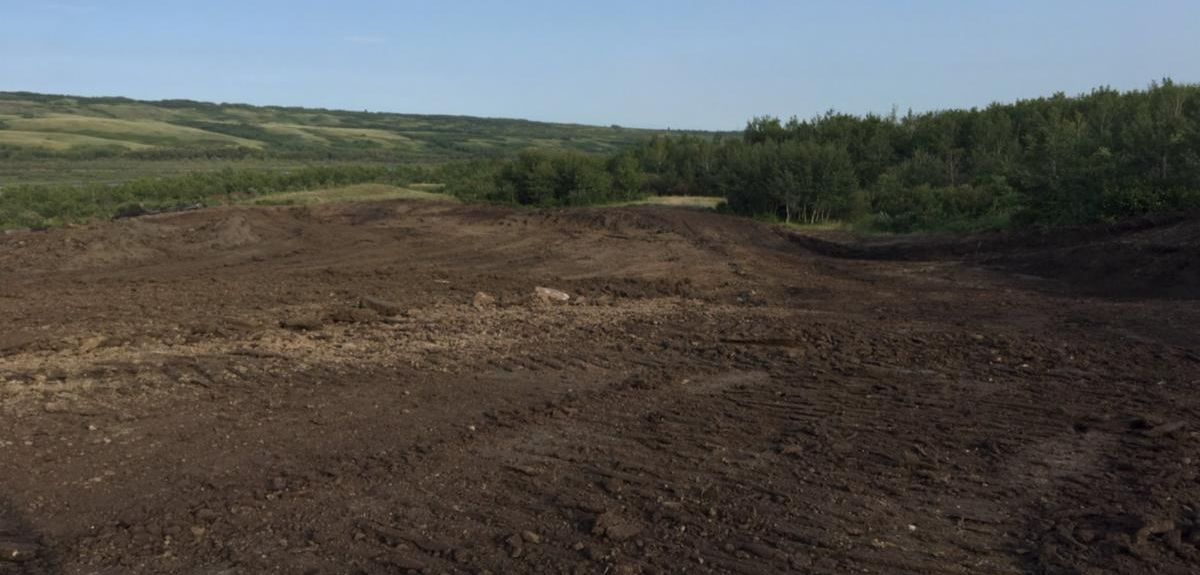
Site reclamation in progress.
|
|
| |
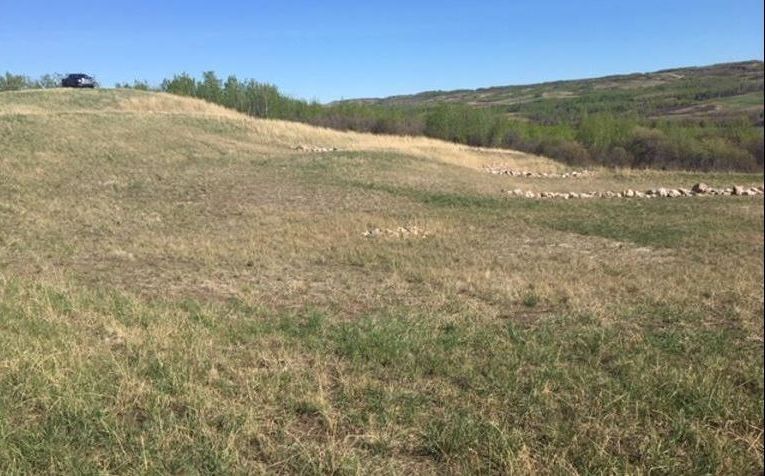
Site reclamation was completed in 2017 and the site is currently being monitored annually for vegetation establishment.
|
|
|
PCAP Partner Spotlight...
Saskatchewan Association of Watersheds
Submitted by Melanie Toppi, Saskatchewan Association of Watersheds
The Saskatchewan Association of Watersheds (SAW) is a non-profit organization dedicated to the protection of ground and surface water. SAW is the umbrella organization representing eight-member watershed stewardship groups (WSG) in Saskatchewan. The SAW Board of Directors is comprised of a representative from each of the member WSGs and five ex-officio representatives.
WSGs are grassroots, non-profit organizations that implement stewardship initiatives to protect the beauty, diversity, and integrity of their watersheds. Through stakeholder engagement and government technical support, a source water protection plan has been developed for each WSG. With a focus on the protection of water supplies, from a quantity and quality perspective, each plan is designed to identify threats and initiate opportunities to address these threats within each watershed.
SAW and its members implement diverse stewardship projects across Saskatchewan. For the past five years, WSGs have been monitoring Saskatchewan lakes and rivers for aquatic invasive species, specifically quagga and zebra mussels. Approximately, 50 lakes are monitored annually. This initiative has been supported by the Fish and Wildlife Development Fund and the Invasive Species Centre.
WSGs administer the Farm Stewardship and Farm and Ranch Water Infrastructure Programming through the Canadian Agricultural Partnership. The program focuses on helping agricultural producers implement Beneficial Management Practices (BMPs) on the landscape focusing on three priority areas - water quality, climate change and biodiversity.
SAW continues to work with the Water Security Agency on the province's Agricultural Water Management Strategy. For the past year, SAW has been developing educational materials (modules, workbooks, and videos) to help agricultural producers become more resilient in adapting to climate change.
SAW is a stakeholder on the Agriculture Water Management Demonstration Projects. These demonstration projects will test innovative solutions to help agricultural producers manage water on their land and mitigate water quality and quantity impacts locally downstream.
SAW hosts an Annual Provincial Watershed Conference in January in conjunction with the Prairie Water Stakeholder Meeting in Saskatoon. The conference brings groups and individuals passionate about source water protection together. Alongside the conference, SAW presents the Provincial Stewardship Award; an award that recognizes a group or individual that has shown leadership and/or commitment to the protection of source waters. The 2020 recipient of the Stewardship Award was the Muskeg Lake Cree Nation.
For more information on SAW and the WSGs, visit saskwatersheds.ca or follow us on Facebook @skwatersheds.
|
| |
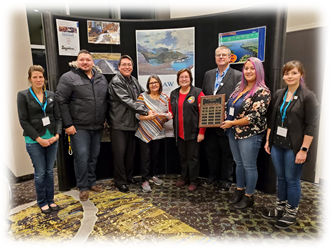
The Muskeg Lake Cree Nation accepts the 2020 Stewardship Award at the Annual Provincial Watershed Conference.
|
|
|
|
|
|
|
|
SK PCAP Native Prairie Speaker Series
Plan to attend our October Native Prairie Speaker Series webinar!
Topic: Great Plains Toads and Northern Leopard Frogs Presenter: Andrew Didiuk, Wildlife Biologist, CWS, Environment and Climate Change Canada Thursday October 29th at 12:00pm
Save the date for our November Native Prairie Speaker Series webinar:
Presenter: Dr. Nicola Koper, Professor, Resources Institute, University of Manitoba
Tuesday November 24th, 2020 at 12:00pm
|
|
Upcoming Events!
October 5-17, 2020
October 8, 2020 @ 12 PM
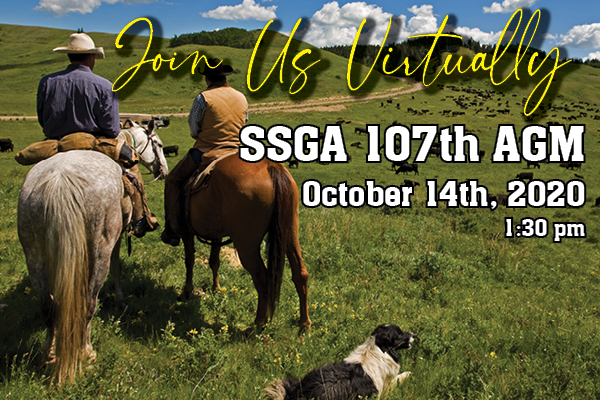
October 14, 2020 @ 1:30
|
|
Grasslands Roadmap Summit 2020
Over 300 people attended the virtual summit this year. Eight diverse sectors (Indigenous communities and nations, province and state-level agencies, industry, private land owners/managers/producers, academia, non-governmental organizations, foundations, and federal governments of Canada, the U.S. and Mexico) were brought together to identify the common principles and collaborative priorities for the many people and organizations living, working in and influencing the Central Grasslands.
The results of the Grasslands Roadmap Summit can be found here.
|
|
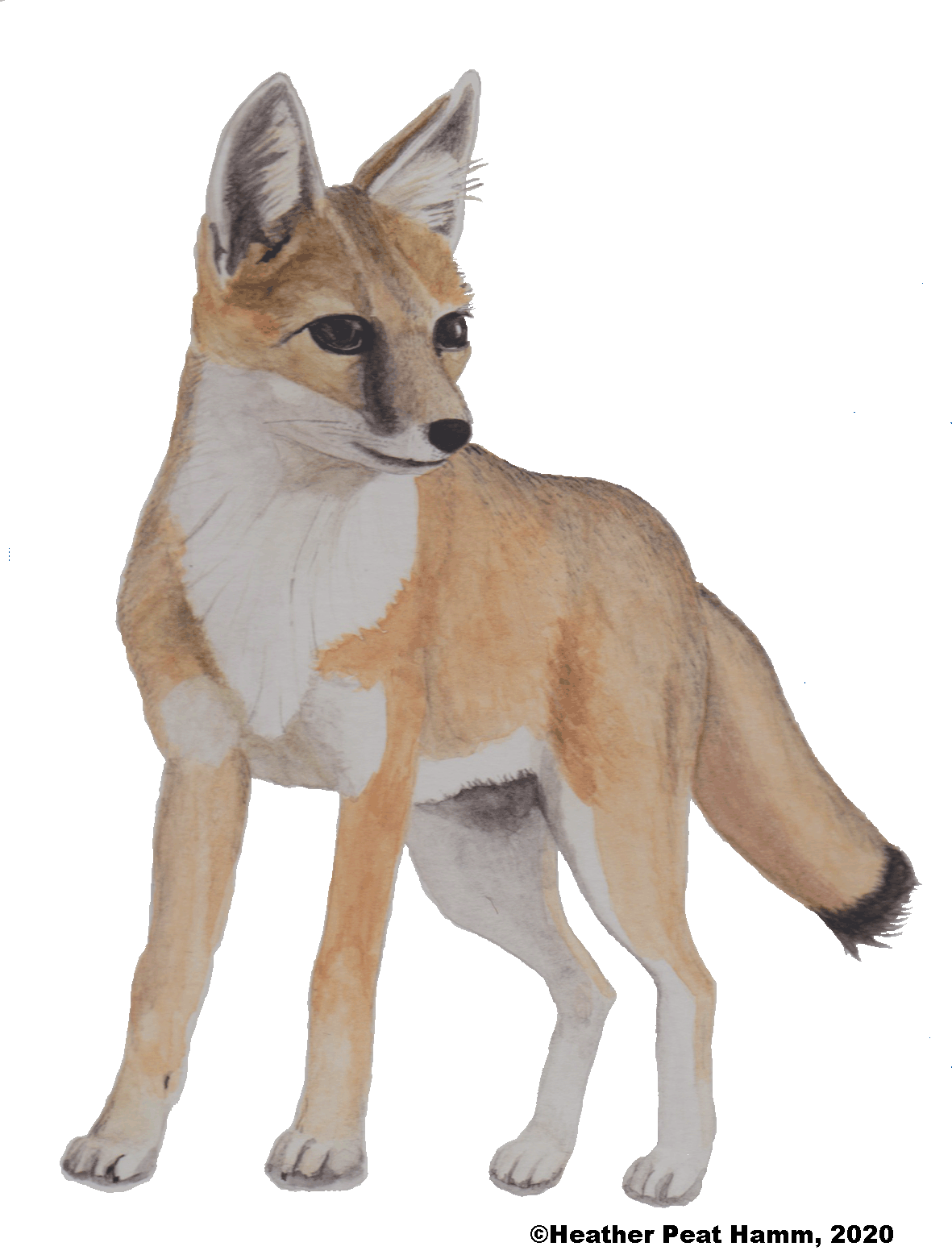
Copyrights of Swift Fox image belong to Heather Peat Hamm and was used with permission.
|
|
Online resources -incase you still need them :)
Explore.org - bison cam at Grasslands National Park
|
2020 Speaker Series
Supporting Sponsors
Camp Wolf Willow
Ranchers Stewardship Alliance Inc.
|
2020 Education Programs:
Presenting Sponsors:
2020 Education Programs
Supporting Sponsors:
|
|
Carolyn Gaudet, Editor, Saskatchewan Prairie Conservation Action Plan Newsletter
306-352-0472 |
|
|
SK PCAP gratefully acknowledges financial support in 2020-2021 from:
Camp Wolf Willow, Ducks Unlimited Canada, EcoFriendlySask.ca, K+S Potash, Parks Canada - Grasslands National Park of Canada, Pembina Pipelines, Ranchers Stewardship Alliance Inc., Saskatchewan Cattlemen's Association, Saskatchewan Ministry of Agriculture, Saskatchewan Ministry of Environment - Fish and Wildlife Development Fund, University of Saskatchewan - College of Agriculture and Bioresources, Water Security Agency and Wildlife Habitat Canada.
SK PCAP gratefully acknowledges in-kind support for 2020-21 from:
Agriculture and Agri-Food Canada - Science and Technology Branch, Canadian Parks and Wilderness Association, Canadian Western Agribition, Environment Canada - Canadian Wildlife Service, Friends of the Royal Saskatchewan Museum, Friends of Wascana Marsh, Meewasin Valley Authority, Native Plant Society of Saskatchewan, Nature Conservancy Canada, Nature Saskatchewan, Parks Canada - Grasslands National Park, Prairie Wind & Silver Sage, Ranchers Stewardship Alliance Inc., Redberry Lake Biosphere Reserve, Saskatchewan Association of Rural Municipalities, Saskatchewan Association of Watersheds, Saskatchewan Bison Association, Saskatchewan Burrowing Owl Interpretive Centre, Saskatchewan Cattlemen's Association, Saskatchewan Environmental Society, Saskatchewan Forage Council, Saskatchewan Forage Industry Network, Saskatchewan Ministry of Agriculture, Saskatchewan Ministry of Environment, Saskatchewan Ministry of Energy and Resources, Saskatchewan Science Centre, Saskatchewan Stock Growers Association, Saskatchewan Wildlife Federation, Saskatoon Nature Society, SaskEnergy, SaskOutdoors, SaskPower, Society for Range Management - Prairie Parkland Chapter, South of the Divide Conservation Action Program Inc., University of Regina, University of Saskatchewan - College of Agriculture and Bioresources, Wild About Saskatoon-Nature City Festival.
|
|
|
|