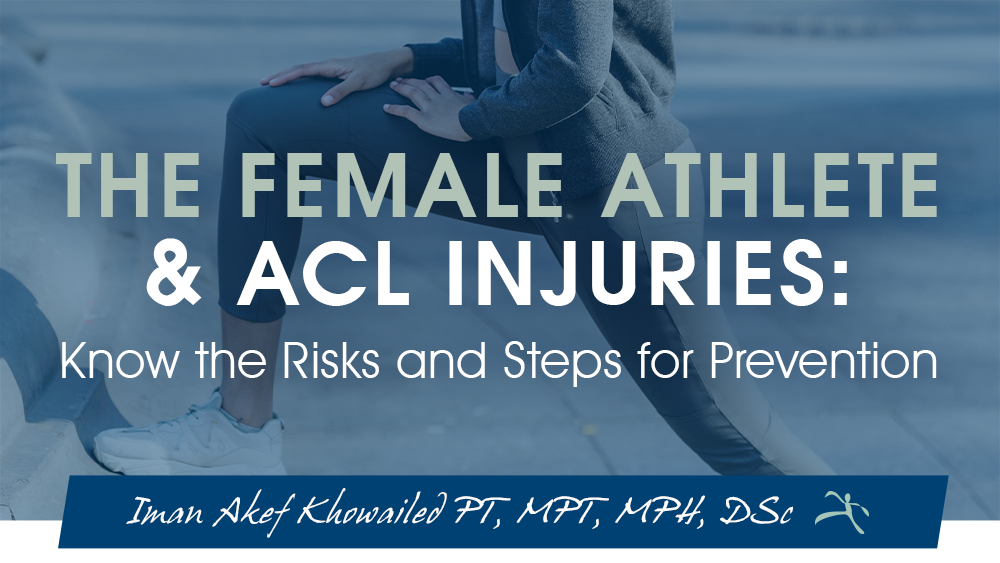
The Female Athlete & ACL Injuries: Know the Risks and Steps for Prevention

By Iman Akef Khowailed PT, MPT, MPH, DSc
Female athletes are two to eight times more likely to injure their ACL when compared to their male counterparts. Ovarian sex hormone fluctuations have been associated with tissue alterations and an increased incidence of noncontact ACL injuries. An association has been observed between hormonal fluctuation and ACL injury risk indicating that there were effects of hormonal fluctuation and potentially hormone stabilization on either passive or active dynamic knee stability. 

Evidence had shown that decreased neuromuscular control of the lower extremity during menstruation may increase the potential for valgus lower extremity position and increased ACL injury risk. Identification of these neuromuscular imbalances has potential for both screening of high-risk athletes and targeting interventions to specific deficits. Dynamic neuromuscular training can increase active knee stabilization and decrease the incidence of ACL injury in the female athletic population.
 
Training may facilitate neuromuscular adaptations that provide increased joint stabilization and muscular preactivation and reactive patterns that protect the female athlete’s ACL from increased loading. Neuromuscular training will help female athletes adopt muscular recruitment strategies that decrease joint motion and protect the athlete’s ACL from the high impulse loading while also improving their measures of performance. 

Understanding the underlying neuromuscular mechanism females utilize during different phases of menstrual cycles is beneficial for clinicians in the development of more effective ACL injury prevention programs.

Questions? Concerns? Give us a call! 858-457-8419

References
Khowailed IA, Petrofsky J, Lohman E, Daher N, Mohamed O. 17β-Estradiol Induced Effects on Anterior Cruciate Ligament Laxness and Neuromuscular Activation Patterns in Female Runners. J Womens Health (Larchmt). 2015;24(8):670-680. doi:10.1089/jwh.2014.5184

Myklebust G, Engebretsen L, Braekken IH, Skjolberg A, Olsen OE, Bahr R. Prevention of anterior cruciate ligament injuries in female team handball players: A prospective intervention study over three seasons. Clin J Sport Med 2003;13:71–78.

Myer GD, Ford KR, Palumbo JP, Hewett TE. Neuromuscular training improves performance and lower-extremity biomechanics in female athletes. J Strength Cond Res 2005;19:51–60.
National Physical Therapy Month highlights the importance of physical activity and the role PTs, PTAs, and PT students play in helping people get moving.

Follow us on Facebook and Instagram for PT Month content throughout October - stay tuned! 👀

Call us and get MOVING! 858-457-8419 📞
CTS Move of the Month
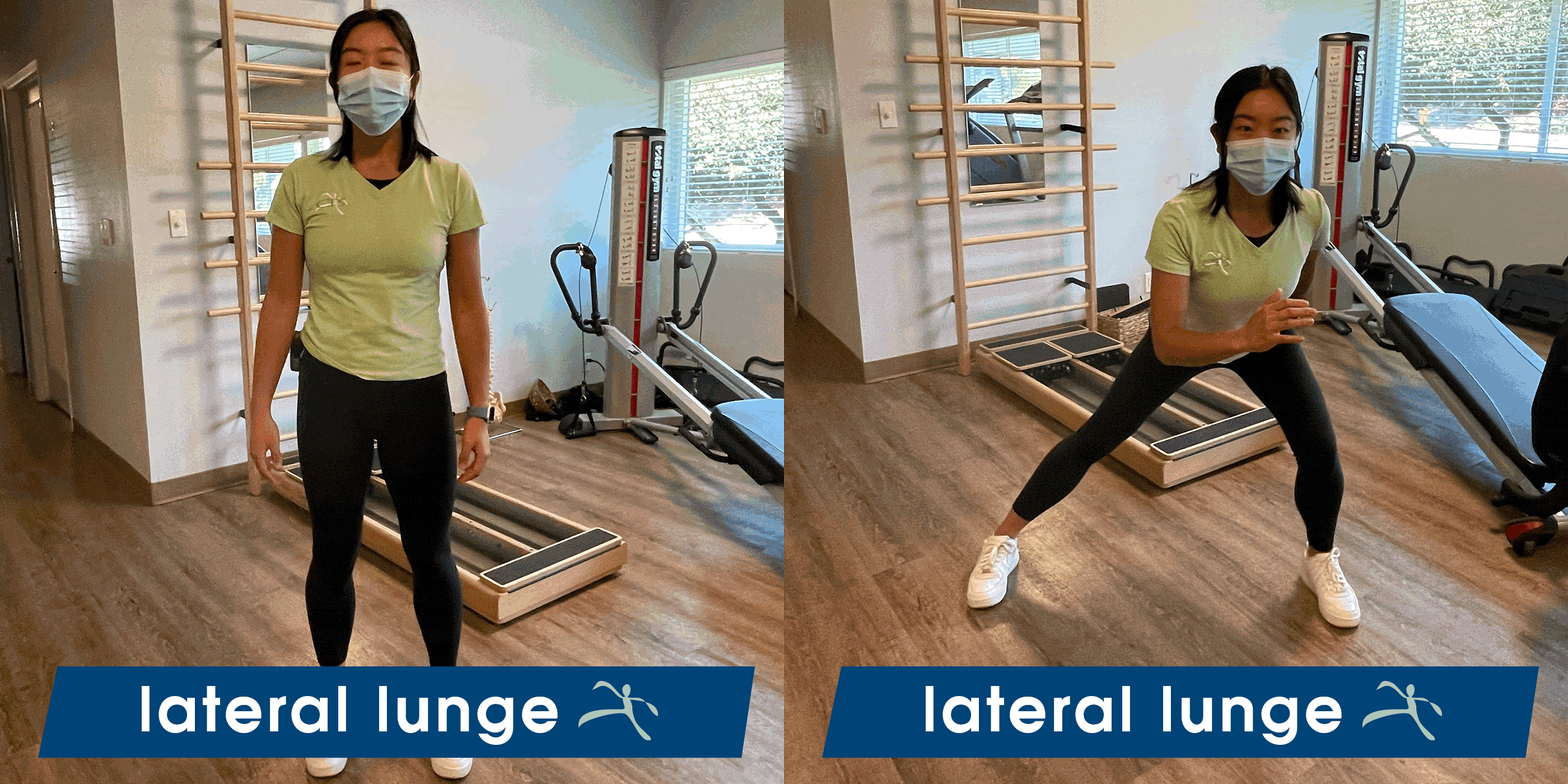
October 2022: Lateral Lunge
This simple side lunge, demonstrated by Ginny, is a great lower-body exercise that targets your hamstrings, quads, inner and outer thigh muscles and outer glutes.
🔹 Stand with your feet hip-width apart.

🔹 Take a big step to the side with your left leg, then bend your left knee.

🔹 Keeping your weight on your heels and your hips pushed back, lower your body until your left knee is bent 90 degrees, then push back to start.

🔹 You can alternate sides, or do several side lunges on one leg then switch sides. Aim for 20 lunges on each side total.
"On October 17, 2019, I was diagnosed with breast cancer." This was a grim reality for PT and CEO Cindy Furey. 💗

On December 4, 2019, Cindy had a bilateral mastectomy with expander placement and bilateral axillary node dissections. The final pathology reports read five tumors on the right and two on the left, none of which she ever felt.

"I've treated many cancer survivors through the years, but now I have a brand new perspective. I've learned many things through my diagnosis, recovery and survival."

One important tool in Cindy's recovery? 👉 Exercise! 💪

Physical activity 🚶‍♀️ can help cancer survivors manage many cancer-related problems and symptoms of treatment.

Exercise during and after breast cancer treatment can improve health and function, assist in the return to work and other important life activities, and reduce risk for a cancer recurrence, among many other benefits. 🙌

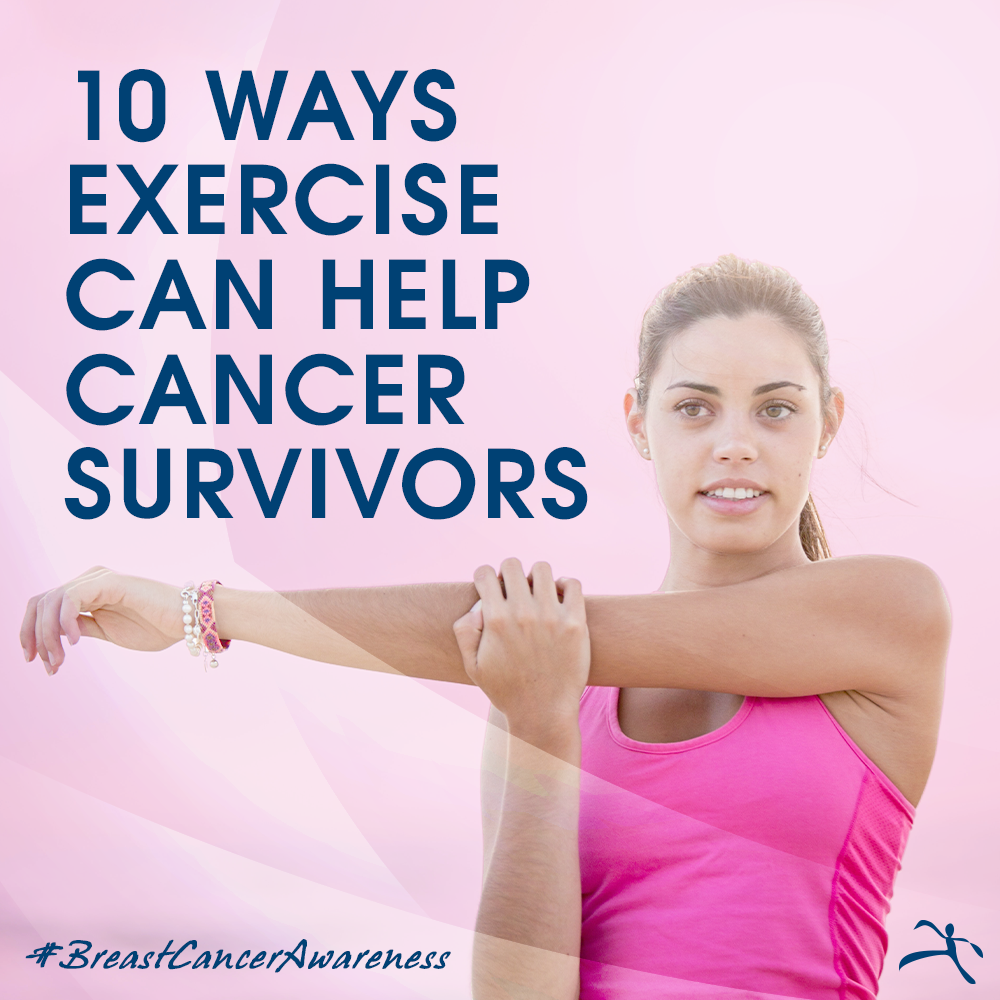
Here are 10 ways exercise can help cancer survivors: 👇

1️⃣ Reduce fatigue 💤

2️⃣ Maintain muscle strength 💪

3️⃣ Reduce stress 😫

4️⃣ Prevent or reduce lymphedema and swelling 👍

5️⃣ Reduce pain 💥

6️⃣ Prevent and reduce weight gain 💃

7️⃣ Reduce brain fog 🧠

8️⃣ Reduce bone density loss 🦴

9️⃣ Improve survival rate 🙏

🔟 Assist athletes to continue sports training 🤾‍♀️

Your PT at CTS can show you safe ways to exercise to aid in cancer recovery and survivorship.

We understand that breast cancer survivorship is no joke, and we're here to help you through it, physically and emotionally. Call us today - 858-457-8419 📞

In honor of Breast Cancer Awareness Month, we're highlighting information to help those on the road to breast cancer recovery. 💗

Early detection saves lives; go get your mammograms! 🤗


comprehensivetherapy.com / (858) 457-8419 / Open Monday-Friday 7am-7pm

ABOUT  | CLASSES  | CONTACT  | DIRECTIONS  | STAFF  | TESTIMONIALS