|
The Corresponder
The Newsletter of the Committees of Correspondence for Democracy and Socialism
| |
|
LAST THOUGHTS ABOUT THE ELECTION and FIRST THOUGHTS ABOUT WHAT NEXT
October 28,
8 pm Eastern
Committees of Correspondence,
Socialist Education Project
4th Monday Webinar
This SEP "4th Monday" is the last chance before the elections for us to have a conversation about where the United States is going politically-war, the climate, economic insecurity, race and gender, and the democracy as a system we would like to save and improve. We on the left have much experience, wisdom, and a diversity of ideas about where we would like to go in the future. This SEP webinar is specifically designed to give all CCDS members and participants the opportunity to share their thoughts about the nearing election and what comes next. Please attend and share your thoughts. Each and every one of you will be panelists in this never ending puzzle on the future of the US, the globe, the climate, and the human race.
Register for the webinar:
https://us02web.zoom.us/meeting/register/tZ0tcOispz0sH9wyRIUgmc-r6VPECNZ1bDWT
| |
Liz, Bruce and the Common Anti-MAGA Front
By Carl Davidson
LeftLinks Weekly for Oct 4, 2024
For those with an interest in the topic, this week's events have provided a fascinating array of present-day lessons in the strategic and tactical theory of the united front.
[An Immediate note to some purists: Yes, we know we're discussing the cross-class popular front, not the diverse but workers-only united front set out in the 5th Comintern. We're with many other later practitioners of the theory who used 'united front' to cover both. In our current case, if you prefer, we can even drop both and simply call it the wide common project to defeat Trump and the fascist MAGA bloc].
But onward to the current events. The media gave a great deal of attention to the joint appearance of Kamala Harris and Liz Cheney at a rally this week in Ripon, Wisconsin, the town where the Republican party was founded in 1854. The reason back in 1854? The groups gathered there wanted to oppose passage of the Kansas-Nebraska Act, which allowed for the expansion of slavery. They were a motley crew of former Whigs, Free Soilers, a few ex-Democrats, and some Liberty Party abolitionists. As such, they were now the new left wing in the array of U.S. political parties at the time. As we know, decades later, the GOP became the right wing.
What's important in Ripon today is that neither Harris nor Cheney have changed their politics. As Senator from California, Kamala was rated the most liberal of everyone in that body when she was there. As a three-term Wyoming Representative in the House, Liz was rated a high 95% by conservative think tanks.
But what's also important is both shared a core belief in the U.S. Constitution as a necessary framework for maintaining the U.S version of a bourgeois democracy. And they both saw Donald Trump as a clear and present danger who openly advocated destroying that framework for his fascist version of strongman dictatorship. The bottom line? It was important to include Cheney and others like her in the common anti-MAGA project. They had influence with both independents and those still in the GOP who disliked Trump. The Ripon meeting 'gave permission' for them to vote Kamala-Walz or to stay home. In tight 50/50 areas, it could matter. A lot.
The next event was a new campaign ad by Bruce Springsteen. For 50 years, the dynamic 'Born in the USA' and 'Youngstown' rocker has maintained a huge popular base reaching across generations. The core of his appeal has always been to working-class whites. They connected with the deep-rooted class alienation in Springsteen’s music, but Bruce’s songs never voiced an alienation that was anti-American. They constantly searched for another America to emerge from the shadows, the one built on the better angels of our nature.
In the ad, Springsteen is seated in a typical New Jersey diner, wearing a comfortable flannel overshirt: "Donald Trump is the most dangerous candidate for president in my lifetime…On the other hand, Kamala Harris and Tim Walz are committed to a vision of this country that respects and includes everyone, regardless of class, religion, race, your political point of view or sexual identity. And they want to grow our economy in a way that benefits all, not just a few - like me - on top."
The Springsteen endorsement, along with an earlier one from Taylor Swift, with her vast following among young women, has the virtue of energizing a large constituency of non-voters, registered and not registered, who vote infrequently or who have yet to vote at all. They are often young but come from families and communities that usually vote Democratic. They often avoid reading or viewing the standard media covering politics. It's a good reason why it mattered that Bruce released his 'Vote Kamala' message on Instagram. It went viral and bounced everywhere from there.
The impact of these cultural advocates was apparent on many campuses. Young DSAers are joining or starting local pro-Harris campaigns, despite the non-endorsement of DSA on the national level. On top, several leading DSA 'caucuses' are overtly hostile to supporting any Democrat. If a local DSA chapter held that view, the emerging campus left simply bypassed them and worked through the local Young Democrats.
In past elections, older people vote regularly, far outnumbering the younger vote. Seeing this new energy will likely make a difference in counties and Congressional Districts in college towns or in major cities with a large number of universities and colleges.
A third event for the week was Special Prosecutor Jack Smith’s indictment of Trump and his Jan. 6 insurrection crew. It was newly tailored to take into account the recent Supreme Court ruling assigning immunity to any of Trump’s ‘official’ activities, and then made public by the judge in the case. The content is a damning series of actions featuring Trump’s lies and his participation in a criminal conspiracy to overturn Biden’s election. For those who still think ‘seeking truth from facts’ is a good method for sorting out candidates, Smith provides what many may need to make up their minds. It’s also a refresher for those with short-term memories on such matters.
So how does all this apply to united front theory? At its best, such thinking starts with a comprehensive assessment of the current political terrain, from one end to the other. It needs to know all of the players and potential players on the field and their relative strengths and weaknesses. Then, it assesses the strength of the left’s core, which includes the insurgent 'militant minorities' of the multinational working class, the communities of the oppressed nationalities, and active women's and gender-related groups. Black women workers are usually at the center.
Next, the inactive or passive elements of these constituencies are also counted. The wider members of trade unions are assessed. It's worth noting that 85% of U.S. workers are not in unions, even though many would like to be. So to include and assess them, other institutions where workers gather, like their churches and sports leagues, are examined. Together with radicalizing youth, all these make up the progressive forces of the united front’s core 'strategic alliance.' Springsteen and Swift can help with the inactive here.
But there's more to it. The progressive forces usually can't win on their own. They have to seek a far wider progressive-center majority they can lead. This brings us to the mixed bag of middle forces, often found among the small producer class, the lower capitalist class, and better-off workers. They can swing back and forth between progressive and backward politics. But as many as possible need to be won to the current progressive project, even if not permanently. This is where Liz Cheney is helpful.
Finally, the backward forces must be considered. Here the rule is that it's unwise to fight all your adversaries at once. The principal danger must be identified and isolated. The others must at least be neutralized or, in a few cases, won over. Again, Liz Cheney is the prime case in point here. But it also matters that other former GOP leaders are at least remaining silent for the next month. These are called “tactical alliances aimed at neutralization.” Many of us will recall the importance of this tactic in helping end the Vietnam War, especially in its final phase.
What about the position and role of the socialist left in the united front? In a perfect world, we would be in the leadership, along with others who are not socialists. But in this world, we are far from having that much clout. This was not the case in the 1930s or even in Jesse Jackson's campaigns in the 1980s. But for now, our job is to grow our strength by building our organizations while carrying out the work of the common project, especially locally, in our base communities.
One final point that matters: The left must always avoid the practice of 'everything through the front.' Instead, we must always maintain the policy of 'independence and initiative in the common front.' Today, for example, it means we must speak out of the need for a ceasefire in Gaza and in opposition to Israel's various invasions seeking a wider war. These must be opposed, period. If these unfold in far larger ways, the chaos can bring Trump back to power. The path ahead can be tortuous, but we can win.
|  | |
|
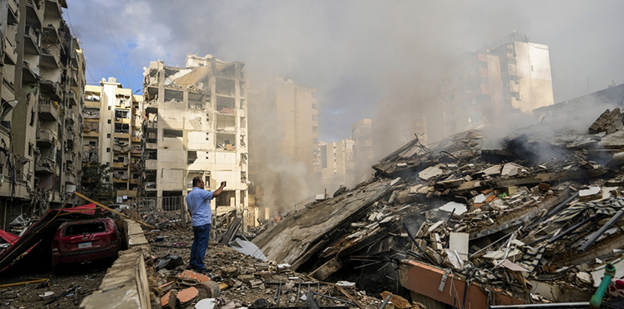
CCDS CONDEMNS THE WIDENING WAR IN LEBANON
The Committees of Correspondence for Democracy and Socialism (CCDS) condemns the
widening war initiated by Israel with its ground invasion of Lebanon and its campaign of
assassinations directed at Hamas, Hezbollah, and the Popular Front for the Liberation of
Palestine, all aided and abetted by the U.S. government.
To date, the Israeli escalation is primarily a campaign of indiscriminate bombing of the civilian
populations of Lebanon, Gaza, and the West Bank, a continuation of the war crimes and
campaign of genocide initiated one year ago in response to the Oct. 7, 2023 Hamas attack
although more may come, such as a direct attack on Iran. Israel used 2,000 pound bombs to
assassinate Hezbollah leader Hassan Nasrallah, killing hundreds of civilians and destroying an
entire city block in the Dahiya suburb of Lebanon’s capital, Beirut. It activated hundreds of
explosive-laden pagers and walkie-talkies in assassination attempts, an act that even former
Central Intelligence Agency director Leon Panetta labeled “terrorism.”
Rather than condemn the widening of the war and the bombing of civilians, the U.S. government
continued to furnish weapons to the Israeli government of Benjamin Netanyahu and promised to
aid in its defense by sending more warplanes and even U.S. troops to the region. The Biden
administration labeled legitimate political movements such as Hamas and Hezbollah as terrorist
groups and even promised to take part in air attacks against the Islamic Republic of Iran, which
responded to Israel’s assassinations and invasion of Lebanon by firing nearly 200 ballistic
missiles at Israeli military targets. The US government has already been directly involved in
Israel’s campaign, through missiles launched by US Naval vessels. If nothing else, more of the
same should be anticipated, with increased US missile, drone, and aircraft strikes.
CCDS calls on all progressives to support the resolution introduced by U.S. Senator Bernie
Sanders to impose an arms embargo on the state of Israel with the aim of achieving a
regionwide ceasefire. Only an arms embargo can persuade Israel to end its genocidal attacks
which seek to end the aspirations of the Palestinian people for self-determination and equal
rights. It is no secret that Netanyahu is striving to remain head of his openly apartheid coalition
to avoid going to prison on corruption charges while also hoping for the election of Donald
Trump as U.S. president.
Israeli and U.S. militarism are twin evils that threaten not only the peoples of southwest Asia but
also the entire world as they pursue regional and world hegemony. U.S. imperialism in particular
has long seen the settler-colonial state of Israel as an asset for protecting its access to oil
resources in the region. It has chosen not just to ignore but to oppose the legitimate national
aspirations of the Palestinian people, and is willing to support a genocide and undermine
international law in the process.
| |
|
What Is To Be Done Electorally
by Jay D. Jurie, CCDS Co-Chair
Note: this paper is based on a September 23, 2024 CCDS-Socialist Education Project 4th Monday Zoom webinar presentation on the elections, a debate between myself and fellow CCDS member Ellen Schwartz.
There are two premises for this paper. The first is the question of power. All politics are about power. According to late Black Panther Party leader Huey P. Newton, “political power is the ability to define phenomena and to make it perform in a desired fashion.” This is especially true in the “winner take all” electoral system of the US. From this it follows if one is not seriously contesting for power in the electoral arena, then one is simply playing games, or otherwise wasting time and valuable resources.
The second premise, following from the first, is that if progressive forces are seriously contesting for power in the US, then they must come to terms with the Democratic Party, they must have some relationship with that party. Both William Domhoff, a disciple of C. Wright Mills, and James Weinstein, an historian who wrote extensively of the Socialist Party experience, reached the conclusion that the only viable path forward for the socialist left is some engagement with the Democratic Party.
This does not invariably mean subsuming independent left identity within the Democratic Party, but it does mean understanding the Party as a vehicle for moving the broader progressive agenda forward. However, and this is important, we must understand the Democratic Party is not a monolith. At minimum, it can be argued that at its top the Democratic Party has an establishment, and that establishment is wedded to the ideology of capitalism and the commanding heights of economic power in this country.
It must also be pointed out the Democratic Party has a base, some of which is ideological aligned with the Party establishment, but other elements of which are more aligned with a variety of values, including those of a left-wing economic, more broadly small-d democratic, cultural, and progressive nature. It is with this wing of the Democratic Party that this paper contends we must find ways to work.
From these premises follow two basic points:
1). In terms of serious electoral work, at the national level and at most state levels, we must dismiss third party and independent candidate campaigns. As expressed in the initial premise of this paper, such campaigns will gain little or nothing, they are essentially dead ends. Attention might be paid to such campaigns at local levels where they stand some realistic chance of winning, as in certain California localities that have elected greens. Power in this country, if electoral democracy can be maintained in the face of fascist threats, might be built from red to purple to solidly blue, and from blue to green or socialist.
This is essentially what happened in Seattle with the election of socialist Kshama Sawant.
This is a process that would most likely build from the bottom to the top, not from the top down. Part of the reason for this is that the Democratic Party establishment maintains control of most statewide Party machines, and these can only be dislodged by concerted effort from the grass roots.
Another significant factor is that successful electoral work is typically built over time, through waging campaigns that provide the base for electoral victories – there is a dialectical relationship between “outside” organizing and “inside” electoral victories. This is the key aspect of an inside/outside strategy. Victories can thus build and advance in such a fashion. A current example is the fasion in which the women’s movement has pulled together a base sufficient to pass pro-cholce legislation in several states. Such is the model, the recipe to be followed.
2). An informed, politically aware and savvy domestic working class is essential to the struggle against global capitalist hegemony, colonialism, and imperialism, and for 21st Century Socialism. We in the US are mother country radicals, in the belly of the beast. As opposition to the war in Vietnam showed, the most effective way in which to support national liberation, socialist revolutions, and Third World struggles in general is for the domestic working class be aware of the struggles of their counterparts elsewhere, to act in solidarity with those in the lesser developed regions of the world. Our common interest is far stronger than the falsehoods those presently in power deploy to divide and defeat us.
Domestic gains must be linked to transnational needs, struggles, and advances. Central to this is confronting the military-industrial complex and militarism. The Sanders campaign and the Squad in Congress show the way, but the emphasis must be considerably strengthened, it must be more focused and determined. It must recognize this is a long-term proposition. We must build lasting staying power. we must sustain gains. As Gramsci has advised us, we must prepare for periods when enthusiasm wanes, and then be prepared to engage again in movement for further advances.
For further reading:
Angela Davis on 2024 elections:
https://peoplesworld.org/article/angela-davis-electing-harris-will-open-space-for-more-radical-struggles/?fbclid=IwZXh0bgNhZW0CMTEAAR3oyXYOlXDkEBG7LcMKNtypT3QLYHIQqA7hl51-J2OoIIeRdE_wijXKKW0_aem_xcp5K3ba64zXqJc07OOgMg
Max Elbaum on internationalism:
https://links.org.au/palestine-shifting-discourse-changing-us-policy
| |
|
The American News Media Is Derelict In Its Duty To Warn Voters That Trump Is A Fascist
Bonnie Fuller
Oct 04, 2024
Bonnie Fuller writes the blog Your Body Your Choice and is a contributing writer to Courier Newsroom and Ms. Magazine covering reproductive freedom and political issues. She is the CEO of HollywoodLife.com and former Editor-in-Chief of US Weekly, Glamour, Cosmopolitan, Marie Claire & YM.
The publisher of the New York Times, A.G. Sulzberger, recently wrote an op-ed in the Washington Post revealing how he was preparing for “a quiet war” against the press if Donald Trump is re-elected.
Sulzberger admitted that he and his colleagues have spent months studying how authoritarian leaders, including Trump’s favorite dictator, Viktor Orban of Hungary, have systematically destroyed their country’s independent media.
At the same time, Sulzberger does not think that Trump poses such a high risk to the survival of the free press that news organizations should “cast aside neutrality and directly oppose his re-election.”
I’m sure the Founding Fathers would disagree.
They believed the importance of a free press and free speech were so vital to the survival of a democratic American Republic that they protected it in the very first amendment to the Constitution (“Congress shall make no law abridging the freedom of speech, or of the press, or of the right of people peaceably to assemble…”).
That’s why it’s so unnerving that today many journalists, including those at the New York Times, are choosing to abdicate their own right to ensure a free press can survive after the possible election of a dictator who menaces them as the “enemy of the people.”
But there’s another responsibility of the Fourth Estate that Sulzberger, as the leader of the country’s most prominent news organization, is abdicating today: The “duty to warn.”
And he’s not alone. His peers at most of America’s elite news organizations - whether they are print, broadcast, or digital - have also decided to treat the openly fascist leader of the Republican party as normal. Today’s journalists are blind to the trust that has been placed in them by the Founding Fathers.
They should be making daily warnings in their news reporting, headline-writing, top of the site or top of the newscast placements, and in their opinion sections, that Trump and his Project 2025 plans would end democracy and therefore impact every aspect of their lives.
As a result of this journalistic dereliction of duty, millions of mainstream media consumers still have no idea of what is in the “Project 2025” plan drafted by Trump allies. Many mainstream news organizations have done some excellent coverage of Project 2025 but, considering its likely apocalyptic effects, their coverage is a pittance. And it’s not explicit nor alarmist enough. Note to political reporters - Project 2025 is Trump and the GOP’s policy package.
The public needs to be more effectively warned that, if elected, Trump plans to subvert and bypass Congress, disregard the rule of law, and explicitly treat more than half the country as his enemy. Yes, the small group of individuals who make up the New York Times Editorial Board has called Trump “unfit” in a handful of editorials and has endorsed Harris for president - but those actions are far outweighed by the voluminous “both sides” “normalization” and “sanewashing” political coverage that permeates the Paper of Record.
The top editors of leading news organizations should run giant tabloid - size headlines about the freedoms on Trump’s chopping block. Doing so would not be biased or partisan - it would be reporting reality. These include the freedom nationally to access abortion, contraception and IVF, the freedom of the press, the freedom to a non-Christian religious education, the freedom to marry who you love, the freedom to breathe clean air and drink clean water, the freedom to mitigate against climate change, the freedom from gun violence and the freedom to vote in future elections for representatives of your choice.
And let’s not forget - Trump has repeatedly threatened that anyone who opposes him politically will be punished. So just like in Putin’s Russia, there will likely no longer be an American right to ever replace Trump once he is in power.
Considering all this, why are Sulzberger and other influential media leaders missing the biggest news story of their lifetimes? The biggest since America actually became an independent country:
The end of American democracy.
Just in case they aren’t aware of what a fascist is, here’s a comprehensive definition from Robert Paxton, the highly regarded Mellon Professor Emeritus of Social Science at the Department of History at Columbia University.
“Fascism may be defined as a form of political behavior marked by obsessive preoccupation with community decline, humiliation or victim - hood and by compensatory cults of unity, energy and purity, in which a mass - based party of committed nationalist militants, working in uneasy but effective collaboration with traditional elites, abandons democratic liberties and pursues with redemptive violence and without ethical or legal restraints, goals of internal cleansing and external expansion.”
Media leaders need to stop failing in their responsibilities of leadership, and use the bullhorn of their platforms to link all of Trump’s fascistic characteristics together into compelling news and editorial stories which clearly demonstrate to Americans that he’s a fascist: his alliance with White “Christian” Nationalists, assertions to his mostly White followers that they are the “real Americans”, his dire declarations that America is a crime-infested “Third World hellhole”, his threats of violence, attacks on immigrants, migrants and political opponents as “vermin”, his attacks on Jews as “disloyal” and his hateful demonizing of people of color (including Kamala Harris), his misogynistic attacks on any woman who stands up to his bullying, and his efforts to subvert elections.
All of this is a part of a pattern that should be front page news.
Seven hundred bi-partisan senior former national security and military leaders have described Trump as “unfit”, “ill-informed”, “vengeful” and “Impulsive” in their endorsement of Kamala Harris. They describe the choice between Kamala Harris and Donald Trump, as the alternative between democracy and authoritarianism.
These national security experts believe that they have “a duty to warn” the public about a second term under Donald Trump. They are doing their job.
Their warning should have been at the top of every evening newscast and the top of every news site.
The Founding Fathers knew that a free, unhindered, outspoken press was essential to a democracy and they feared the persuasive power of demagogues like Donald Trump. The free press was also meant to be an essential check on the behavior of political leaders to prevent tyranny. They didn’t want the press to stay ‘neutral’ when there was a clear and present danger to democracy. They imbued the press with the duty to warn.
As a case study of mainstream media failures, take the example of the Trump/Vance-concocted Springfield, Ohio pet-eating propaganda.
How many major news outlets have:
(1) Clearly, prominently and repeatedly called out Trump and JD Vance for lying (instead of using less strong words like ‘mistruths’ or ‘unproven claims’) – about immigrants eating pets, the number of Haitians in Springfield and that they are “illegal”and spreading disease, or that VP Harris “waved a magic wand and made the Haitians legal.”
(2) Pointed out that this episode is the latest in a pattern of Trump using outlandishly racist propaganda about immigrants - to advance his narrative and agenda. The completely fictional Springfield pet crisis has stopped the media from reporting on Project 2025, his disastrous debate performance, and the devastating news that women are dying from his state abortion bans.
(3) How many have questioned both Trump and Vance’s fitness to hold the country’s highest offices when they are willing to attack a small midwestern city, and even when presented with the facts that their lies led to bomb threats terrorizing the city, continued their lying?
This is exactly what fascists do - provoke violence against groups within the country that they consider “impure.”
The media doesn’t have to give up any of its “journalistic independence” when it tells the unvarnished truth and reality about Trump to their audiences. It is simply a fact that Trump and his agenda are the biggest internal threat to democracy that the country has ever faced.
If A.G. Sulzberger and other mainstream media leaders don’t believe that Trump is a fascist and that a fascist leading America isn’t an existential threat to the world - they are either frighteningly naive, timid or delusional. If they “follow the facts” about Trump and give their audiences the essential context they deserve, then they will be fulfilling their fundamental duty to inform and warn.
| |
|
October 7, 2024
Hurricane Helene's reach was shocking, another example of how climate change 'is here and now,' scientists say
by Adriana Pérez, Chicago Tribune
Credit: Pixabay/CC0 Public Domain
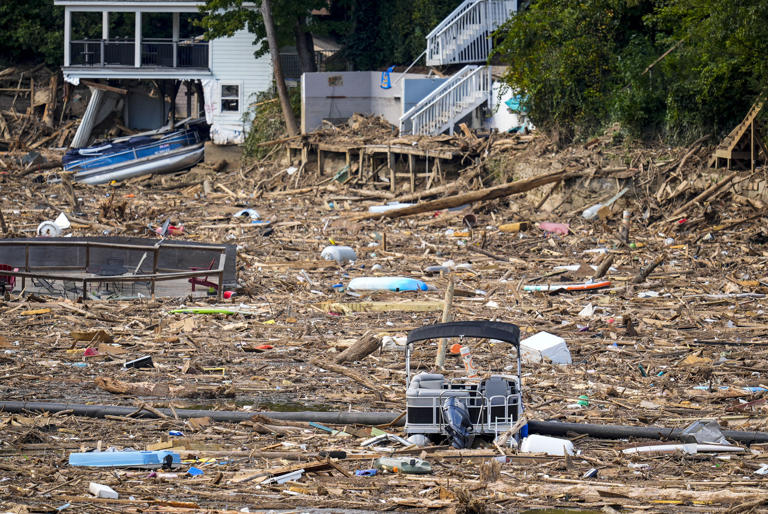
Many people were stunned to see the intense flooding and devastation caused by Hurricane Helene in western North Carolina communities, located inland and tucked thousands of feet above sea level in the Blue Ridge Mountains.
Asheville, North Carolina, has long been considered a "haven" from such disasters. So has the Great Lakes region.
"Unfortunately, extreme weather is always such a timely discussion. We're talking about Helene, but every week it's something different, every day it's something different," said Bernadette Woods Placky, chief meteorologist at the climate science education nonprofit Climate Central. "Weather is the primary way that people experience climate change."
But the topic of climate change continues to be contentious, especially in the run-up to November's presidential election.
During Tuesday's vice presidential debate, Donald Trump's running mate, Ohio Sen. JD Vance, downplayed the role of fossil fuel emissions in climate change, labeling it "weird science" despite overwhelming scientific consensus that these heat-trapping greenhouse gases are indeed the leading cause.
Today, experts are better equipped than ever to draw connections between climate change from human activities and extreme weather including heat waves, heavy rainfall, storms and droughts.
Called weather attribution science, researchers have honed and refined their methods for almost two decades using real-world data and models to establish if and how climate change might have influenced the intensity and likelihood of a specific event.
"This is the key idea behind attribution: We look at possible weather in the world we live in today and compare it to possible weather in the world that might have been without climate change," said Friederike Otto, a climatologist who in 2015 helped launch World Weather Attribution, a collaborative initiative based in Europe and the United Kingdom.
The methodology seeks answers to two crucial questions: Would an extreme weather event have been just as likely to happen now as it was before humans started burning fossil fuels in the late 1800s? Would it have the same intensity in a world without climate change as it would in today's world, with 2.2 degrees Fahrenheit of global warming caused by greenhouse gas emissions from human activities?
The results are often eye-opening. In many cases, they help dispel misconceptions that a disaster is a one-off rarity or that some areas will be unaffected by the impacts of climate change—places like Asheville and the Midwest.
Even if a certain location were unaffected by direct damage, what happens in vulnerable places can have ripple effects, leading to more widespread power and cellphone service outages, as well as limited access to clean water and food supplies.
"Why we care about climate change and why we do these attribution studies is because climate change affects the lives and livelihoods of people across the world, people in every country, in every city," Otto said. "It's not just some people, somewhere else or some time in the future. It is here and now."
Heavier rains and worse flooding
These studies have found that, across the world, extreme rainfall has become more common and intense due to climate change; there is a high degree of confidence that such is the case in the central part of the United States.
This occurs mainly because a warmer atmosphere can hold more water vapor—for every 1.8 degree Fahrenheit increase in temperature, the atmosphere can hold 7% more moisture. It's evident in the Midwest, where experts say summers are becoming more humid, leading to severe storms and sticky, dangerous levels of heat.
Between 1895 and 2019, average precipitation in Illinois increased by 15%. Last year, eight of nine weather events that affected Illinois and cost billions of dollars were all severe storms.
More common and intense rainfall has also resulted in more frequent and severe flooding in noncoastal areas—though these events can also be exacerbated by other factors such as land use, infrastructure and water management. A national climate assessment released last year indicated the Midwest has incurred over $49 billion in economic damages due to flooding since 1980.
In urbanized areas like Chicago, the predominance of built-up areas like roads, parking lots and rooftops means water can't be easily soaked up by soil. Good stormwater infrastructure like drains, gutters and pipes can control the flow of rainfall, but they can also be easily overwhelmed. Such was the case with the area's Deep Tunnel system during particularly heavy rains in early July 2023.
Weather attribution scientists point out that natural hazards become disasters as a result of social vulnerabilities in the United States, affecting low-income communities of color disproportionately. For instance, where there are more plants and green spaces, these can absorb more of that rain and prevent stormwater runoff and floods. In Chicago, however, a Tribune investigation in 2022 found the city had planted more trees in whiter, wealthier neighborhoods.
More than a year later, some West Side residents are still dealing with the damage from last July's flooding and paying for expensive repairs. Understanding precipitation patterns is key to improving prediction models and preparing for more intense, frequent rainfall and possible subsequent flooding so those most vulnerable don't bear the brunt of the impact.
Hurricanes and tornadoes
While the total number of tropical cyclones, including hurricanes, per year hasn't changed, weather attribution scientists have found that climate change has increased the number of the most intense and destructive tropical storms. This is because of increased atmospheric moisture and more intense rainfall, as well as warming oceans that create more powerful, rapidly intensifying hurricanes that carry more water.
Before Helene made landfall, Woods Placky said, ocean temperatures in the Gulf of Mexico were some 2 degrees hotter than normal—something climate change made 300- to 500-times more likely.
"That's what helped with the rapid intensification that we saw, and then all of the inland flooding that we saw," she said.
Heightened storm surges from rising sea levels, combined with reasonable speculation that cyclones are shifting away from the equator because of warming water, means that tropical cyclones might be able to reach locations historically less prepared for them. Even in areas used to hurricanes, quick intensification can significantly shorten reaction periods for emergency preparations. read more
|  | |
Hurricanes and Climate Change: Deliberately
Not Connecting the Dots
by Jay D. Jurie, CCDS Co-Chair
In all the corporate media coverage of Hurricane Helene, and preceding storms, very rarely are seen or heard the terms "climate change" or "global warming." To its credit, a recent Orlando Sentinel article mentioned "The 100-mile stretch from Cedar Key to Perry (Florida) has been hit three times in 13 months by three hurricanes...The odds for a catastrophic event keep increasing dramatically and the best evidence of all of these [are the] very strong hurricanes that are occurring at a much faster rate than ever before. Too many deny science. I think the dream of many people is still to have a house on an ocean. They make a huge investment, then experience a damaging event, restore their property, and are now more leveraged and more invested." While the words climate change and global warming are not explicitly mentioned, this article does a great public service, it does connect the dots.
While it is tragic some have lost their lives and regrettably others their homes and possessions, many of the property owners referenced above, a number of whom no doubt profess anti-government views, nonetheless expect multimillions in taxpayer funding to subsidize rebuilding and to restore the beachfront. That is, to underwrite their privilege at public expense. Some years ago the South Carolina Beachfront Management Act prohibited reconstruction in coastal danger zones, but ever compliant with private sector interests, the right-wing dominated legislature reversed the law in conformance with intense lobbying from these interests
.
The obvious failure to connect the dots between more frequent, more intense, and larger hurricanes with climate change and global warming isn't just an oversight or coincidental. It's deliberate, as private sector interests, the corporate media, and their willing legislative laps dogs steer the issue away from public awareness and the sort of action so urgently needed to safeguard public safety, community viability, and environmental sustainability.
| |
Will the U.S. elections make or break the climate?
Harris and Trump promise vastly different climate policies
by Lily Hess
07 October 2024
Never before have so many people gone to the polls in a single year: nearly half of the world’s population are set to cast their vote in 2024.
Soon, it’ll be the U.S.’s turn.
On 5 November, Americans will elect their new president, as well as a slew of new legislators in both houses of Congress: all 435 seats in the House of Representatives and 34 of the 100 seats in the Senate. State- and some local-level elections will also be held that day.
The two main political parties in the U.S., the Republican Party and the Democratic Party, have vastly different visions for the world’s second-largest carbon emitter.
And the climate crisis has no boundaries – meaning the effects of American emissions will continue to wreak havoc on communities both within and beyond the U.S.’s borders.
“This is a really big make-it-or-break-it moment for our country and the world to meet our climate targets for 2030,” says Kwolanne Felix, the fellowship director for Black Girl Environmentalist.
So, what do the upcoming elections mean for U.S. climate policy?
Incumbent President Joe Biden. Photo: The White House via Wikimedia Commons
A shifting race
Incumbent President Joe Biden, a Democrat, was originally set to run for reelection.
That was until a televised debate between him and the Republican candidate, ex-president Donald Trump, in June. A disastrous performance from Biden prompted him to drop out of the race – just over three months before the election.
Biden and the rest of the Democratic Party then coalesced around Kamala Harris, the current vice president, to be the new candidate for their party.
The two main parties are more polarized than ever, including their approaches to the climate crisis.
If Harris wins the election
Harris has not been very specific in her plans for the climate, but she is expected to build upon Biden’s climate platform, which has been considered one of the most ambitious in U.S. history.
The centerpiece of Biden’s climate record is the Inflation Reduction Act (IRA), a law passed in 2022 that marked the largest ever U.S. investment in reducing greenhouse gas emissions.
For a law to pass, both the House of Representatives and Senate usually have to approve it by a simple majority.
Back when the IRA was working through Congress in 2022, the bill passed the then-Democratic majority in the House but was split within the Senate. Harris, as vice president, cast the tie-breaking vote that allowed the IRA to become law.
The IRA is a sprawling piece of legislation that invests hundreds of billions of dollars toward programs like tax credits that encourage renewable energy production and assistance for farmers adopting climate-friendly practices.
Another important law is the 2021 Bipartisan Infrastructure Bill, which channeled USD 1.2 trillion into improving the country’s infrastructure, including public transportation and electric vehicle charging stations.
According to Jack Hanson, executive director of Run on Climate, policies like the IRA are mostly a mechanism to deliver funding to state or local governments to implement the transition to clean energy.
“It’s not the federal government coming into communities and putting in heat pumps or putting in solar, putting in bike lanes and making these energy efficiency upgrades,” says Hanson.
Biden’s administration also rejoined the Paris Agreement, joined the Global Methane Pledge and promised to halve carbon emissions by 2030.
But his climate record hasn’t been perfect. While his administration recently tried to pause the construction of new gas export terminals, it also approved the Willow oil drilling project in Alaska and a new oil export terminal in Texas.
And under Biden’s tenure, the U.S. has grown into the world’s largest exporter of natural gas and increased its lead as the world’s largest oil producer.
On the campaign trail, Harris has stated that she supports fracking, despite having previously opposed it.
This is likely because fracking is a major industry in the swing state of Pennsylvania, which holds a large number of the votes needed to win the election under the U.S.’s first-past-the-post electoral system.
This, along with the Biden administration’s stance on Israel’s wars in Gaza and Lebanon, has turned off some young people despite Trump’s disregard for the climate crisis, says Ariela Lara, a spokesperson for the Sunrise Movement and a student at the University of California, Berkeley.
“There is a major danger of people who do feel that there is no perfect candidate,” she says. “I do think that for many young people, it’s hard for them to cast their ballot.”
Before she became vice president, Harris was a Senator who co-sponsored the Green New Deal, a national mobilization to transition away from fossil fuels and other progressive policies.
And before she was a senator, as California’s attorney general, she investigated oil and gas companies and obtained a settlement from Volkswagen during its vehicle emissions scandal.
In August, Harris chose Minnesota governor Tim Walz as her pick for vice president.
While vice presidents don’t always influence the president’s policy choices, Walz comes with a climate record of his own: he has streamlined renewable energy permitting and set a goal for Minnesota to be 100 percent powered by clean energy by 2030.
If Trump wins the election
If reelected, Trump has stated that he would move in the opposite direction: promoting more oil and gas production, repealing environmental regulations and slashing subsidies for renewable energy.
“We will drill, baby, drill,” said Trump at the Republican National Convention in July, referring to oil and gas.
Trump has long downplayed or outright denied the existence of climate change.
Now, he has also promised to encourage oil drilling on public lands like the Arctic National Wildlife Refuge, protect tax breaks for fossil fuel producers, and approve natural gas pipelines “on my very first day back.” He claims these measures are necessary to lower energy prices and create jobs.
He has also railed against tax incentives to encourage electric vehicle purchases, claiming that they will destroy the country’s auto industry – though his rhetoric softened somewhat last month, possibly after receiving Tesla CEO Elon Musk’s endorsement.
Trump says he will repeal parts of the IRA, including tax credits for operating or investing in zero-emissions power plants, as well as other Biden-era environmental provisions like those incentivizing more energy-efficient homes.
His current stances align with his record during his term as president between 2017 and 2021. One of his first actions was to withdraw the U.S. from the Paris Agreement (which it then rejoined under Biden). Trump says he will do so again if reelected.
Trump also overturned roughly 100 environmental regulations as president, such as one requiring oil and gas companies to report their methane emissions and rules that limit toxic emissions from industrial polluters.
His vice-presidential pick, J.D. Vance, is a first-time Ohio senator who has largely changed his mind on the climate crisis.
As late as 2020, Vance acknowledged man-made climate change and invested in green start-ups. Now, he denies it and supports tax credits for fossil fuel-powered vehicle purchases.
Overshadowing Trump’s campaign is a document called Project 2025, a plan for a second Trump presidency written by the Heritage Foundation, a conservative think tank. The 887-page document includes more extreme measures to orient U.S. policy toward fossil fuels.
Project 2025 proposes slashing climate-focused foreign aid funding, removing the office that supports energy efficiency and renewable energy, and changing how the Environmental Protection Agency regulates toxic substances, pesticides and pollution.
It also advocates eliminating several offices from the agency, including one focused on environmental justice – an issue important to disadvantaged communities that tend to be disproportionately affected by climate disasters and pollution.
Felix says the climate crisis harms gender and racial communities that already face other forms of marginalization.
“A great example is extreme heat,” she explains. “When we think of workers who have to use public transportation or who predominantly work outside, those communities are usually low-income communities or Black and brown communities.”
On the campaign trail, Trump has repeatedly denied having anything to do with Project 2025. The document, however, was written by many former members of his administration.
What about Congress and state governments?
While the presidential election gets most of the media attention, the Congressional elections could also influence the future of U.S. climate legislation.
The Republicans currently have a slender majority in the House, while the Democrats control 51 of the 100 Senate seats. If either party were able to gain control of both chambers, they would have considerable sway over the country’s direction.
Meanwhile, elections for state legislators, governors and more local positions will be held at the same time and could also affect the implementation of either candidate’s policies.
Hanson says state and local governments have considerable power in areas like housing, zoning and transportation, but “it’s going to be a lot easier for us to make more progress if we continue to see funding coming from the federal government and efficiency standards and other policies.”
With time running out to prevent climate catastrophe, the consequences of these elections will ripple across the world. And with the polls showing an extremely tight race, no one will sit easy until November.
| 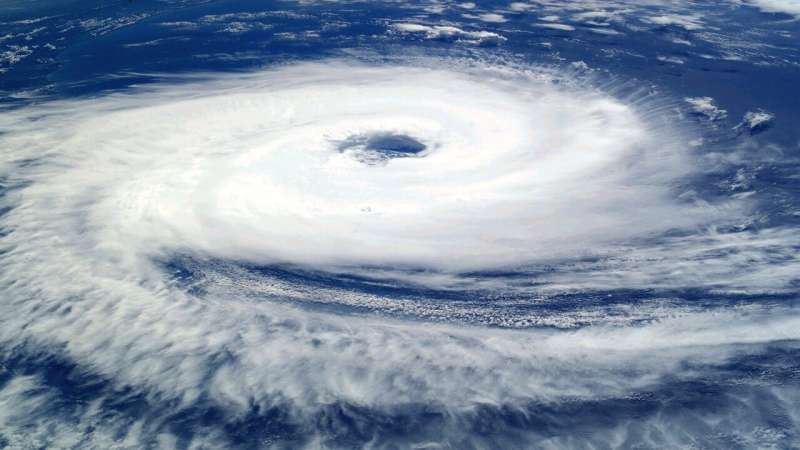 | |
When it comes to hurricanes, the U.S. can learn a lot from Cuba
Cuba devised a system that minimizes death and destruction from hurricanes
Perspective by Mikael Wolfe
September 1, 2021 at 6:00 a.m. EDT
As Hurricane Ida made landfall in Louisiana on Sunday, knocking power out to the entire city of New Orleans and beyond, many people nervously wondered, “Will Ida be another Katrina?” Katrina, of course, struck the city 16 years ago to the day that Ida hit. The disastrous federal response to Katrina by the George W. Bush administration combined with the failure to act on the long-standing knowledge that the city’s levees probably would be unable to resist an intense storm surge. Both failures contributed to the death of 1,833 people in the majority-Black city, hundreds of thousands of people displaced and more than $100 billion in property damage. Katrina was a national catastrophe that revealed an appalling lack of governmental disaster preparedness rooted in systemic racism.
Unfortunately, the Federal Emergency Management Agency’s record since Katrina, particularly under the Trump administration, has not improved much, as Hurricane Maria’s devastation of Puerto Rico in 2017 tragically reinforced.
This failure to learn from past mistakes stands in stark contrast to Cuba, which is also regularly battered by the same powerful hurricanes that, like Ida this past week, eventually reach the U.S. coastline.
After the 1959 revolution brought Fidel Castro to power, Cuba became a U.S. Cold War enemy — something made clear with the 1962 Cuban missile crisis that brought the world to the brink of nuclear war. But there was another event in October 1963 that is little remembered in the U.S.: Hurricane Flora, the first major hurricane to strike the island nation after Castro assumed power. One of the worst in Cuba’s history, its catastrophic effects prompted Castro to establish a civil defense system in 1966 that became a global model, according to the United Nations and the charitable development agency Oxfam International.
After killing as many as 5,000 people in Haiti, Flora barreled west into eastern Cuba on Oct. 4, 1963. Unlike Haiti’s U.S.-backed right-wing president, François Duvalier, Castro’s Communist government ordered residents living in the hurricane’s projected path to evacuate their homes, and if they were unable, to stay and prepare appropriately for the storm. And despite the Cold War divide, Cuban meteorologists worked closely with their U.S. counterparts projecting Flora’s course and then reporting on its actual path. Gordon E. Dunn, director of the Miami-based U.S. Weather Bureau, praised Cuban meteorologists for having “carefully surveyed the hurricane area and on the basis of the survey and hourly observations during the storm,” allowing them to determine its track.
Yet these efforts proved insufficient when the hurricane dumped more rain in 100 hours on the eastern provinces than the entire country had received during all of 1962. As a result, Castro, his brother Raúl, his Argentine comrade-in-arms Ernesto “Che” Guevara and other revolutionary leaders personally put themselves in harm’s way to lead rescue and relief operations for those who could not escape.
Seeking to combat the hurricane as if it were a human enemy, Castro wore a soldier’s helmet during rescue operations. He flew in an army helicopter that landed as close as possible to affected areas and then rode in — and sometimes even drove — amphibious vehicles to reach victims. In one harrowing moment, the overflowing La Rioja River nearly drowned him in his vehicle, but local peasants and soldiers rescued their leader just in time by attaching a tow cable to a tree to prevent his vehicle from sinking. One survivor of the hurricane recalled to me how Castro went “everywhere” to help victims, while another remembered that medical care was readily available in hospitals for her children when she needed it right after the storm.
These efforts mitigated the death toll that Flora’s fury inflicted (particularly compared with the horrific devastation in neighboring Haiti). Still, they were too little, too late. The storm finally passed on Oct. 8, 1963, and two weeks later Castro announced during an Oct. 21 news conference that 1,157 people had died, 176,490 had been evacuated, 11,103 had lost their homes and 21,486 had suffered damage to their homes — in a country with only 6 million people.
In classified reports, the CIA initially predicted that Castro’s regime would experience grave difficulties recovering from the catastrophe. Meanwhile, publicly in U.S. media, anti-Castro Cuban exiles hoped that the hurricane would cause Castro’s demise in ways that the 1961 Bay of Pigs invasion and years of covert CIA-sponsored sabotage operations had failed to do.
The predictions proved to be wrong, and the hope was in vain.
To the chagrin of exiles and the CIA, the Cuban government’s response to Flora helped to burnish Castro’s credentials as “comandante en jefe” (commander in chief) and revive his popularity. Indeed, as Guevara explained in his famous 1965 book “Socialism and Man,” “During the October [1962 missile] crisis and in the days of Hurricane Flora we saw exceptional deeds of valor and sacrifice performed by an entire people.” Guevara explained that “finding the method to perpetuate this heroic attitude in daily life is, from the ideological standpoint, one of our fundamental tasks.”
This was a difficult task, even for an authoritarian government. But the Civil Defense System established in 1966 proved up to the challenge, successfully harnessing the social power of the revolution for relief and rescue operations during and after natural disasters. It coordinates annual drills on a national level, promotes education and oversees communication, from early warnings and emergency alarms to forced evacuations before storms strike followed by guidance for recovery afterward.
These efforts have created, according to an independent study on Cuban disaster preparedness, “an innate culture of hurricanes, resilience and safety,” ensuring “that the population is aware of the country’s risk reduction system, educated in risk consciousness and disaster mitigation, able to use the lifeline structures in an emergency and actively participate in disaster preparation.” As one ordinary Cuban interviewed in the study put it, “We have a history, every Cuban knows what to do. … We say that every Cuban person is a meteorologist.”
The result? Disaster preparation in Cuba has been successful at saving lives. For instance, in 2004 Hurricane Jeanne killed 3,000 people in Haiti but none in Cuba, even though Cuba was struck harder. Jeanne was not exceptional: the large discrepancy in casualties between Cuba and other developing countries is attributable to the Civil Defense System. The U.N. emergency relief coordinator has called Cuba “number one … in having people respond responsibly when there is an alert for a hurricane in the region.” Even a more critical FEMA analysis acknowledged that Cuba “has a strong record when it comes to certain features of disaster preparedness and response.” Indeed, according to a former U.S. diplomat, Cuba’s record compares favorably with FEMA, which oversaw 15 times more deaths from hurricanes than Cuba from 2005 — the year that Katrina struck New Orleans — to 2015.
As of this writing, Hurricane Ida appears not to have become another Katrina. Fortunately, the levees of New Orleans held up after the U.S. government invested billions of taxpayer dollars to repair and replace them — in this capacity, the U.S. government did its job to invest in the necessary infrastructure to protect people from the storm.
And yet, millions of Louisianans and Mississippians will be without power for weeks due to, in the words of Jefferson Parish president, a “system breakdown.” To further minimize the loss of life and property from increasingly extreme storms exacerbated by climate change, the United States needs a better systemic approach — one that could learn a lot from the historical success of Cuba’s Civil Defense System. While Cuba unfortunately remains a nemesis thanks to a continued Cold War mentality by Democrats and Republicans alike, in this area at least the United States would be wise to actively and directly cooperate with Cuba — both because many of the same hurricanes strike both countries, but also because Cuban authorities have a long and successful history of managing such disasters.
By Mikael Wolfe
Mikael Wolfe is associate professor of history at Stanford University and author of “Watering the Revolution: An Environmental and Technological History of Agrarian Reform in Mexico." He is currently working on a book project titled “Rebellious Climates: How Extreme Weather Shaped the Cuban Revolution."follow on X
@Mikaeloup
| |
|
By Alejandra Garcia on October 1, 2024
Reprinted from Resumem
https://resumen-english.org/2024/10/claudia-sheinbaum-i-will-rule-for-all-mexicans/Claudia Sheinbaum Sworn in as President of Mexico, Photo: @TiempoDigitalMx
On Tuesday, Claudia Sheinbaum went down in Mexican history as the first woman president in 200 years of independence. Before presidents and other high-ranking officials from more than 100 countries and 22 international organizations, she promised to continue the legacy of her political mentor and predecessor, Andres Manuel Lopez Obrador, emphasizing the need to focus on addressing the poverty that affects 40% of Mexico’s 127 million people.
The path will not be easy. There’s much to be done amid the recent wave of drug cartels-related violence and economic challenges, as well as historic promises, such as clarifying what happened to the 43 Ayotzinapa students. However, the people are receiving Sheinbaum’s vision with hope and fresh energies and are relieved by the new president’s commitment to follow AMLO’s legacy of humanism. “With the people everything, without the people nothing,” she said.
Amidst applause, cheers, and hugs, the president of Mexico, Claudia Sheinbaum, received the presidential sash from the hand of Ifigenia Martinez, the historic leader of the left wing in the country. Afterward, Sheinbaum recognized the work of Andrés Manuel López Obrador, defining him as the best and most beloved president of Mexico. She also stressed the importance of reaching the position she holds today, “together with all of them,” she said, referring to Mexico’s illustrious men and women who have defended democracy throughout time.
New Emblem of the Mexican Government.
The leader also welcomed and thanked “the presence of representatives from 105 countries who are joining us today as a demonstration of Mexico’s commitment to the international community and the friendship that unites us with all the peoples of the world,” she mentioned during her first address as president, months after she romped to victory, last June, with nearly 60% of the votes.
Presidents of Cuba, Miguel Díaz-Canel; Brazil, Luiz Inácio Lula da Silva; Colombia, Gustavo Petro; and Chile, Gabriel Boric, attended the inauguration; along with the leaders of Venezuela, Nicolas Maduro; Honduras, Xiomara Castro, and Guatemala, Bernardo Arevalo, among others. Latin America unites to welcome the new leader, who is willing to follow AMLO’s steps regarding his policy of tolerance and respect toward the self-determination of the people of the region and the world.
In her first speech as president, Sheinbaum also ensured her willingness to improve the fiscal discipline and the autonomy of the country’s central bank and increase the relocation of companies during her six-year term. She also assured that domestic and foreign investments are secured in Latin America’s second-largest economy and that women will continue to play a major role in the development of the North American country. However, these goals are a long way ahead and will take a determined struggle to achieve.
“Woman first are powerful symbols, but they do not gain magic power,” she said. “Especially when the governance challenges are so large, expecting magic solutions overnight can also generate outsized disappointment.”
Hundreds of people are trying to enter Mexico City’s Zócalo on Tuesday afternoon to witness President Claudia Sheinbaum’s inauguration ceremony up close. The capital police have marked the pedestrian path for the entrance of guests and the public, which has made it difficult for supporters, who hope to advance in the streets surrounding the Constitution Square overflowing with people. Everyone wants to see with their own eyes the woman who is ushering in a new era for Mexico
.
Source: Resumen Latinoamericano – US
| |
|
U.S. and Israel are Pushing the World to the Brink of WW III
Their Crimes Against Humanity Must Be Stopped Immediately!
From the US Peace Council
Just short of one year since Israel’s criminal attack and invasion of the Gaza Strip and brutal bombardment and genocide of Palestine, the Zionist state committed yet another crime against humanity, on September 23, 2024.
Israel carpet bombed Lebanon and assassinated the top leaders of the Resistance Front, including Seyyed Hassan Nasrallah, the widely revered leader of Hezbollah, and brigadier general Abbas Nilforoushan, commander of Iran’s Quds Brigade in Lebanon, among others. Since the start of this criminal attack, Israel has continued to assassinate more leaders of the Hezbollah, including the organization’s communications chief, Mohammad Rashid Sakaf, on October 4.
Iran has exercised restraint in response to extreme Zionist provocation. In retaliation, and fully within its rights in accordance with Article 51 of the United Nations Charter, Iran launched close to 200 ballistic missiles into Israel. Iran targeted Israel’s military facilities and security installations in various parts of the country, while intentionally avoiding the population centers, unlike Israel. Iran has also warned that any military response by Israel, the United States, and any other country that helps in this response, will face more devastating consequences.
There is no doubt that Israel’s criminal violations of international law in Palestine, Lebanon, Iran, and other parts of West Asia, has increased the possibility of a full-fledged regional war, which can easily escalate into a global, possibly nuclear, confrontation. Such escalation must be avoided at any cost, first and foremost by stopping Israel’s blatant criminal actions.
We should have no illusions that the U.S. is in any way restraining the Zionist’s escalation of the war and the continuation of genocide. Whether the Israeli tail is wagging the Yankee dog is their problem. For the rest of humanity, it is all one beast. Washington is as much complicit as Tel Aviv.
The imperialist project and the Zionist project are one and the same. Without active U.S. diplomatic, financial, and military support, Zionist Israel would not have been able to commit such crimes. For many decades, every U.S. administration has vetoed every UN resolution to stop Israeli crimes. Even today, as we are witnessing the massacre of Palestinians and Lebanese by the Zionist state, the Biden administration is urgently allocating an additional $8.7 billion in military aid to Israel.
There are strong imperialistic reasons for this support. Israel is the largest and most powerful U.S. military base in West Asia. The U.S. needs this base for controlling the region and its resources, as well as for creating divisions among the Arab states of the region to weaken any resistance to U.S. domination.
In addition, the world is going through a fundamental transition, and the U.S. is increasingly losing its hegemonic control over it. This transition is on the verge of becoming — like the present climate crisis — irreversible. The U.S. ruling class does not care about the climate crisis, but it is super-sensitive about losing its imperialistic hegemony in every corner of the world. The ever-increasing U.S.-Israel military attacks on the regional resistance movement is based on the awareness of the fact that the defeat of Zionist Israel fundamentally threatens U.S. hegemony in the region and, through it, a shift in the global balance of forces against the empire itself.
As a result of the unconditional and unwavering U.S. support of the blatant crimes of Israel, they both have lost any semblance of moral and diplomatic credibility. The only weapon left for the imperialist-Zionist project is escalation of military conflict and instigation of a regional and, if necessary, a global war for maintaining hegemony. It is now at a stage where the U.S. and Israel may be ready to bring down the whole world with them as they fall. And all this at a time when the post-war institutions established and now controlled by the West have failed to defend international law and the functionality of the structures and institutions established through the UN process.
Today, a counter-hegemonic movement — internationally and here in the belly of the beast — is rising with the understanding that the Zionist enterprise exists because it is an integral part of the U.S. empire. The barbarism of the genocide has exposed the essential nature of US-led imperialism. We commend the peace and justice movement’s deepening consciousness of the fact that imperialism is the main enemy of humanity. From its sound moral foundation for peace, the anti-war movement is becoming more consciously anti-imperialist.
We specially salute the U.S. student movement for its brave and heroic protests on various university campuses against Israeli aggression and its genocidal policies. It is our hope that this movement, which has been rekindled for the first time since Vietnam War protests, will be able to overcome the effects of the recent suppression and resume its historical role as the vanguard of peace and social justice.
Global humanity cannot and should not allow this disaster to continue. We must all mobilize to stop the crime of war, destruction, and genocide that is being committed against humanity. We call upon all defenders of peace and human rights in the U.S. to:
• Organize broad mass demonstrations in every corner of the country against U.S. and Israel atrocities and demand an immediate end to Israel’s occupation of Palestine and a halt to its military actions in Gaza and against Lebanon and Iran.
• Organize public events to spark a public discussion of these crimes and inject the issue of U.S.-Israel war crimes into the ongoing process of the presidential election.
• Join hands to develop a common strategy to counter U.S. militarism and imperialist policies.
U.S. Peace Council • P.O. Box 3105, New Haven, CT 06515 • (203) 387-0370 • USPC@USPeaceCouncil.org
• https://uspeacecouncil.org • https://www.facebook.com/USPeaceCouncil/ • @USPeaceCouncil
| 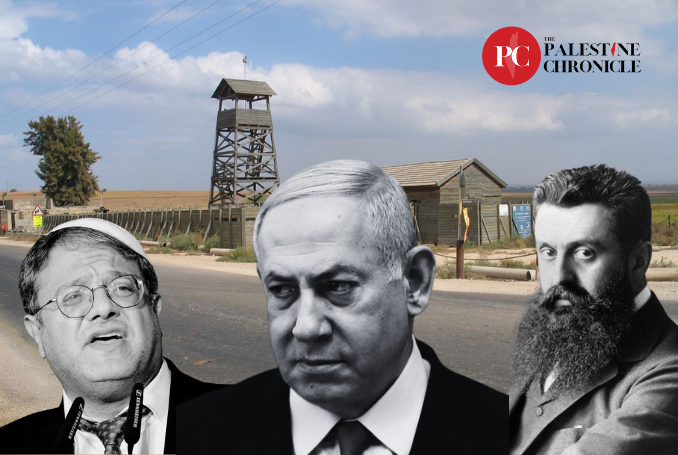 | |
Zionism is a racist, colonial ideology. (Image: Palestine Chronicle)
A Wall and a Watchtower: Why is Israel Failing?
By Ilan Pappe – The Palestine Chronicle
It all began with Homa and Migdal – literally, a wall and a watchtower.
It is quite possible that the early thinkers and leaders of the Zionist movement, back in late 19th century Europe, imagined, or at least hoped, that Palestine was an empty land and if there were people there, they were rootless nomadic tribes that, in essence, did not inhabit the land.
If this had been the case, quite possibly the Jewish refugees making their way to that empty land would have built a prosperous society and, maybe, would have found a way to prevent polarizing themselves from the Arab World.
What we do know, as a matter of fact, is that quite a few of the early architects of Zionism were perfectly aware of the fact that Palestine was not an empty land.
These architects of Zionism were too racist and orientalist, like the rest of Europe, to realize how progressive Palestinian society was in relation to that period, with an educated and politicized urban elite and a rural community living at peace within a genuine system of co-existence and solidarity.
Palestinian society was on the threshold of modernity – like so many other societies in the region; a blend of traditional heritage and new ideas. This would have been the basis for a national identity and a vision of freedom and independence on that very land they had inhabited for centuries.
Zionists certainly knew in advance that Palestine was the land of the Palestinians, but they perceived the native population as a demographic obstacle, which had to be removed in order for the Zionist project of building a Jewish state in Palestine to succeed.
This is how the Zionist phrase “The Palestine Question” or “The Palestine Problem” entered the political lexicon of world politics.
In the eyes of the Zionist leadership, this “problem” could only be solved by displacing the Palestinians and replacing them with Jewish immigrants.
Moreover, Palestine had to be torn out of the Arab world and built as a front post, serving the aspirations of Western imperialism and colonialism to take over the Middle East as a whole.
It all began with Homa and Migdal – literally, a wall and a watchtower.
‘Wall and Watchtower’
These two elements were seen as the most important landmarks in the Jewish “return” to the supposedly empty land, and they are still present in every Zionist settlement until today.
At the time, Palestinian villages had no walls or watchtowers, and they still do not have them today.
People moved freely in and out, enjoying the view of villages along the road, as well as the food and water available for every passerby.
Zionist settlements, on the contrary, religiously guarded their orchards and fields and perceived anyone touching them as robbers and terrorists. This is why, from the very beginning, they did not build normal human habitats, but bastions with walls and watchtowers – blurring the difference between civilians and soldiers in the settler community.
For a short moment, the Zionist settlements won the accolade of the socialist and communist movements around the world, simply because they were places where communism was unsuccessfully and fanatically experimented with. The nature of these settlements, however, tells us, from the very beginning, what Zionism meant to the land and its people.
Whoever came as a Zionist, whether hoping to find an empty land, or determined to make it an empty land, was drafted into a settler military society that could only implement the dream of the empty land by sheer force.
The native population declined the offer to, in the words of Theodore Herzl, be “spirited away” to other countries.
Despite the huge disappointment by the British retraction from its early promises to respect the right of self-determination for all the Arab peoples, the Palestinians still hoped that the Empire would protect them from the Zionist project of replacement and displacement.
By the 1930s, the leaders of the Palestinian community understood that this would not be the case. Therefore, they rebelled, only to be brutally crushed by the Empire that was meant to protect them, according to the ‘Mandate’ it received from the League of Nations.
The Empire also stood by when the settler movement perpetrated a huge ethnic cleansing operation in 1948, resulting in the expulsion of half of the native population during the Nakba.
After the Catastrophe, however, Palestine was still full of Palestinians, and those expelled refused to accept any other identity and fought for their return, as they do to this day.
Keeping the ‘Dream’ Alive
Those who remained in historical Palestine continued to prove that the land was not empty and that the settlers needed to use force to achieve their goal of turning an Arab, Muslim and Christian Palestine into a European Jewish one.
With every passing year, more force needed to be used to achieve this European dream at the expense of the Palestinian people.
By 2020, we have already marked one hundred years of an ongoing attempt to implement, by force, the vision of turning an ‘empty land’ into a Jewish entity. Moreover, for some democratic as well as some theocratic reasons, it seems that there is no Jewish consensus on this part of the ‘vision’
Billions and billions of American taxpayers’ money was, and is still needed to maintain the dream of the empty land of Palestine – and the relentless Zionist quest to realize it.
An unprecedented repertoire of violent and ruthless means had to be employed on a daily basis against Palestinians, their villages and cities, or the whole Gaza Strip, in order to maintain the dream.
The human cost paid by the Palestinians for this failed project has been enormous – and is around 100,000 to date.
The number of wounded, traumatized Palestinians is so high that probably every Palestinian family has at least one member, whether a child, a woman or a man, who can be included in this list.
The nation of Palestine – whose human capital was able to move economies and cultures around the Arab world – has been fragmented and prevented from exhausting this incredible potential for their own benefit.
This is the background for the genocidal policy that Israel is now enacting in Gaza and for the unprecedented killing campaign in the West Bank.
Only Democracy?
These tragic events raise, once more, the conundrum: How can the West and the Global North claim that this violent project of maintaining millions of Palestinians under oppression, is carried out by the only democracy in the Middle East?
Maybe even more importantly, why do so many supporters of Israel and the Israeli Jews themselves believe that this is a sustainable project in the 21st century?
The truth is, it is not sustainable.
The problem is that its disintegration could be a long process and a very bloody one, whose principal victims would be the Palestinians.
It is also not clear if the Palestinians are ready to take over, as a united liberation movement, following the final stages of the disintegration of the Zionist project.
Will they be able to shake off the sense of defeat and rebuild their homeland as a free country for all in the future?
Personally, I have great faith in the young Palestinian generation, who will be able to do so.
This last phase could be less violent; it could be more constructive and productive for both societies, that of the settlers and that of the colonized people, if only the region and the world intervened now.
If some nations stopped enraging millions of people by claiming that a century-old project – aimed to empty a land from its indigenous people by force – is a project that reflects an enlightened democracy and a civilized society.
If this happened, Americans could stop asking “Why do they hate us?”.
And Jews around the world would not be forced to defend Jewish racism by weaponizing antisemitism and holocaust denial.
Hopefully, even Christian Zionists would return to the basic human precepts Christianity stands for and would join at the forefront of the coalition determined to stop the destruction of Palestine and its people.
Multinational corporations, security companies and military industries, of course, would not join a new coalition that opposes the project of emptying the land. However, they could be challenged
.
The only necessary prerequisite is that we, a naive people who still believe in morality and justice, who serve as lighthouses in this age of darkness, truly understand that stopping the attempt to empty Palestine is the beginning of a new era, of a much better world for everyone.
| |
– Ilan Pappé is a professor at the University of Exeter. He was formerly a senior lecturer in political science at the University of Haifa. He is the author of The Ethnic Cleansing of Palestine, The Modern Middle East, A History of Modern Palestine: One Land, Two Peoples, and Ten Myths about Israel. He is the co-editor, with Ramzy Baroud of ‘Our Vision for Liberation.’ Pappé is described as one of Israel’s ‘New Historians’ who, since the release of pertinent British and Israeli government documents in the early 1980s, have been rewriting the history of Israel’s creation in 1948. He contributed this article to The Palestine Chronicle.
| | |
|  |
|
New Studies
on the Left
Paperback $19.95
...is a journal of socialist theory and practice. It is the successor to ‘Dialogue and Initiative, published as an annual journal of the Committees of Correspondence for Democracy and Socialism in book form from 2012 to 2022. It will continue the CCDS policy of left unity, including articles with a variety of left perspectives, including debates.
This issue contains over 30 articles grouped under the headings of Analysis and Global Reach, Debate and Controversy, Labor, Socialism, and Book Reviews. Some are reprinted from other sources, but many appear here for the first time.
Among the authors are David Bacon, Joan Braune, Carl Davidson, Bill Fletcher, Jr., Jerry Harris, Jay Jurie, Paul Krehbiel, Sun Liping, Adewale A. Maye, Duncan McFarland, Jasmine Payne-Patterson, Vijay Prashad, Nikhil Pal Singh, Harry Targ, and Janet Tucker.
Table of Contents
Click HERE to purchase
| | |
CHANGEMAKER PUBLICATIONS: Recent works on new paths to socialism and the solidarity economy
Remember Us for Gift Giving and Study Groups
We are a small publisher of books with big ideas. We specialize in works that show us how a better world is possible and needed. Click Gramsci below for our list.
| |
522 Valencia St.
San Francisco, CA 94110
415 863-6637
| | | | | |